
Truck Crane Parts FAQ: Matching HC4900, LWG208, IC4600, IC3600 and 1032300052
Truck Crane Parts FAQ: Matching HC4900, LWG208, IC4600, IC3600 and 1032300052
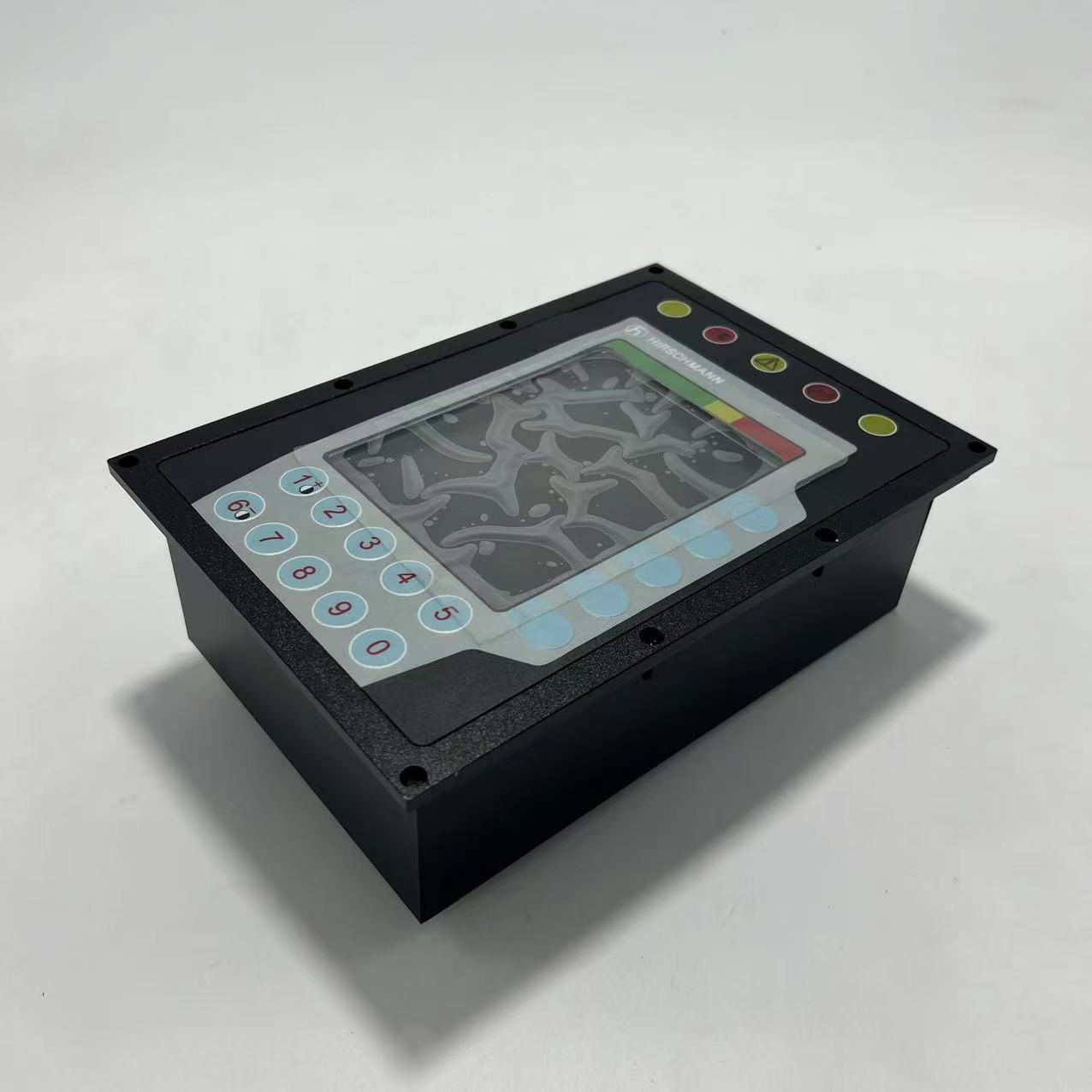
Display units belong to the electrical group of a truck crane accessory set, where the OE number — not the housing — decides whether a replacement fits.
Truck crane parts sourcing rarely fails because a component does not exist. It fails because the wrong component is ordered, shipped, and then discovered to be wrong inside a maintenance window that has already been scheduled. For fleets running XCMG, SANY and Zoomlion truck cranes in the 20–150 ton class, five designations appear repeatedly in technical and procurement enquiries: HC4900, LWG208, IC4600, IC3600 and 1032300052 — an LMI controller, a length and angle sensor, two display units and a steering unit.
This FAQ reference answers the questions that fleet owners, buyers and maintenance planners raise at the evaluation and execution stages of procurement, when the decision is no longer which supplier to talk to but which part to order and how to prove that it fits. It explains how each designation is identified, how matching is verified against the machine, what materials stand behind load-bearing, hydraulic and shock-absorbing components, and where these individual parts sit inside a complete truck crane accessory set.
The commercial context is straightforward. The global truck crane market was estimated at USD 9.34 billion in 2024 by Market Research Future, and China's crane exports reached USD 5.98 billion in the same year — 34.3% of global crane exports, according to the Observatory of Economic Complexity (OEC). The machines behind those figures are maintained in Africa, Latin America, the Middle East, Russia, South and Southeast Asia, frequently far from the dealer network that originally sold them.
Why identification, not availability, is the binding constraint
In this category, a supplier's ability to verify a part number matters more than its ability to ship quickly, because a fast shipment of the wrong part extends downtime instead of reducing it.
Three characteristics of truck crane parts explain why identification is difficult. Components are often visually indistinguishable from their alternatives, so a display unit, controller or sensor built for one machine generation can share a housing shape with a different configuration. Part numbers do not map to machine models in a way a buyer can memorise: the same crane family can carry different control configurations across production years, and a mixed fleet of XCMG, SANY and Zoomlion machines multiplies the number of combinations a maintenance planner has to track. And electrical and safety-related parts interact with the machine as a system — a load moment indicator only performs its function when it corresponds to the machine it is installed on, because its purpose is to prevent overloading and tipping.
The practical rule that follows is simple: a truck crane parts enquiry should begin with identification data — the OE number read from the removed component, the machine model, the tonnage class and the year of manufacture — and only then move to price, quantity and lead time.
The five designations: what each one is and where it sits
Each of the five designations in this FAQ belongs to a different functional group, and each is matched differently. HC4900 is a load moment indicator (LMI) controller — the electronic control element of the crane's safety and load monitoring group. LWG208 is a length and angle sensor, the boom instrumentation component that reports boom geometry to the crane's control system. IC4600 and IC3600 are display units in the operator interface group. 1032300052 is a steering unit, a hydraulic component acting in the machine's steering circuit.
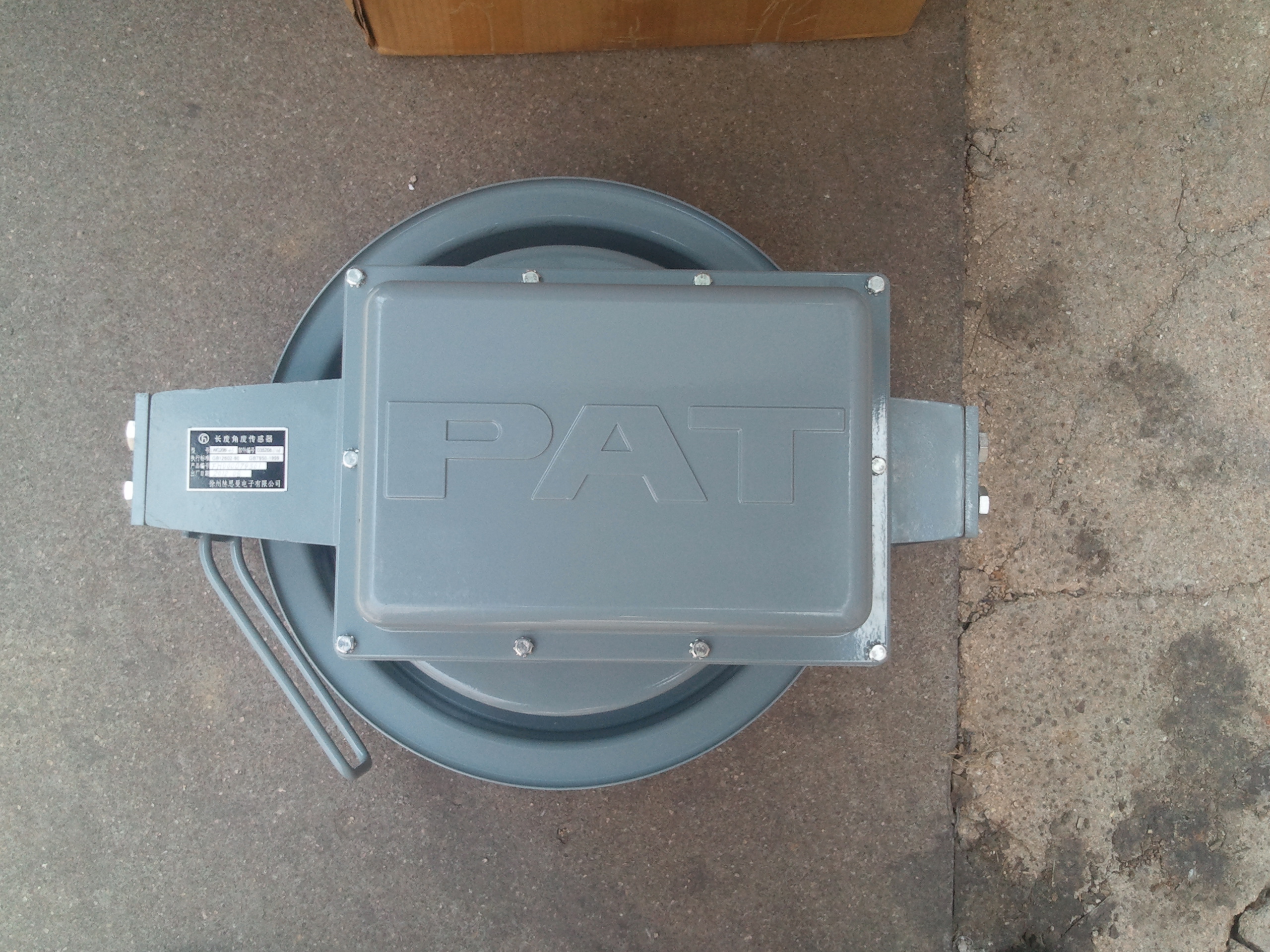
The LWG208 length and angle sensor: electrical compatibility and mounting geometry are checked together, because both affect the readings delivered to the control system.
| Designation | Component function | System group | Primary matching control |
|---|---|---|---|
| HC4900 | Load moment indicator (LMI) controller | Electrical and safety control | OE number plus machine configuration; the unit must correspond to the crane's load monitoring setup |
| LWG208 | Length and angle sensor | Electrical / boom instrumentation | OE number plus mounting position and linkage on the boom |
| IC4600 | Display unit | Electrical / operator interface | OE number plus machine series and control generation |
| IC3600 | Display unit | Electrical / operator interface | OE number plus machine series and control generation |
| 1032300052 | Steering unit | Hydraulic / steering circuit | OE number plus the steering configuration of the machine |
These designations sit inside the truck crane parts range supplied by Qingdao Top Run International Trade Co., Ltd (TOP RUN), which covers XCMG truck crane parts, SANY truck crane parts and Zoomlion truck crane parts. The applicable tonnage range is 20 to 150 ton truck cranes in long-term alternating heavy load operation. Within that range, a single fleet can require all five designations plus the surrounding accessory groups, which is why the identification question usually arrives as a batch rather than as a single part enquiry.
How matching is verified in practice
Matching a replacement part to a machine runs through three checks, in sequence.
1. The number check
Read the OE number from the component that has been removed, or from the machine documentation — not from a photograph of a similar machine or a parts diagram for a similar year. For original and OEM parts this check is decisive, because those parts are produced according to factory specifications and are not subject to independent customization; the number either corresponds to the machine or it does not.
2. The function and group check
Confirm which system the part serves and how it participates in that system. The distinction matters at the point of ordering: an LMI controller, a length and angle sensor and a display unit belong to the same signal chain on the machine, so confirming the status of the other elements is part of the same decision rather than a separate project.
3. The physical and interface check
Verify mounting points, port positions and connector arrangement against the machine. For aftermarket equivalents, this step also fixes the order specification. Aftermarket supply can include custom logos, packaging and dimensional adjustments, and those adjustments have to be agreed before production — not negotiated after delivery. Original and OEM parts follow factory specifications without independent customization, so the specification conversation is shorter, but the tolerance for a wrong number is zero.
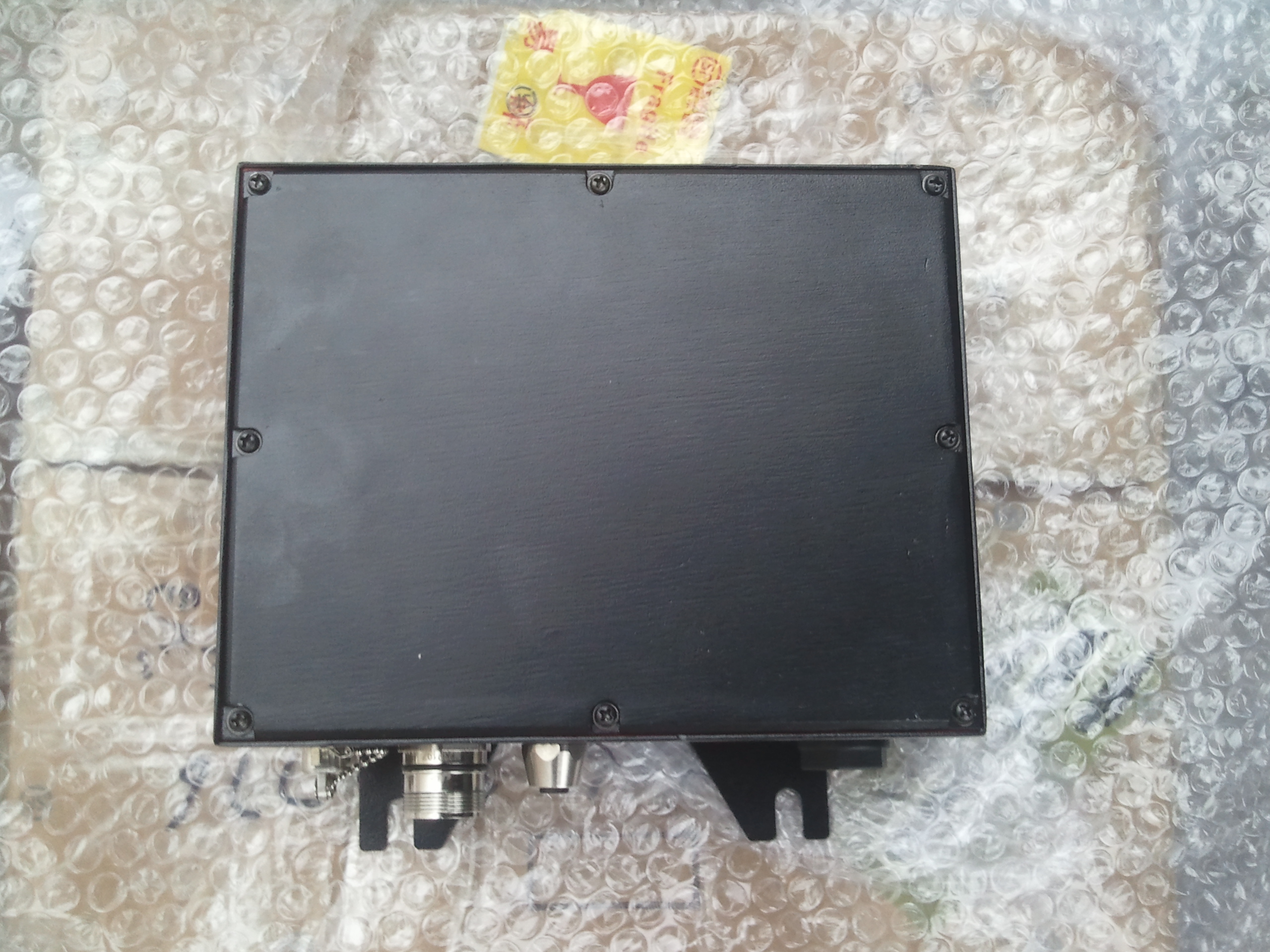
An LMI controller is a safety-relevant component, so the number check and the configuration check are treated as one step, not two.
Top Run performs this verification in reverse. The supplier's technical team checks the OEM numbers provided by the customer against the machine information in order to avoid mismatching problems, and it supplies both genuine and premium aftermarket crane spare parts, so that criticality and budget — rather than availability — drive the choice between the two.
Materials: what decides whether a replacement part survives its duty cycle
For a replacement part, the material class is not a marketing detail. It is the variable that decides whether the part reaches its expected service life under the duty cycle of a working crane.
Load-bearing structural parts — pins, boom components and pulley blocks — are mainly made of high-strength alloy steel, selected for high toughness and anti-fatigue performance, because these parts cycle continuously under alternating load. Pipe fittings and valve bodies are made of precision cast steel and forged steel, chosen for high pressure resistance and corrosion resistance, since they contain the hydraulic pressure that operates the crane's functions. Hydraulic seals and buffer components use wear-resistant rubber and polyurethane, while rubber and plastic shock-absorbing parts use high-elasticity polymer materials to adapt to frequent vibration and impact working conditions.
| Component group | Material route | Functional property | What the buyer should confirm |
|---|---|---|---|
| Pins, boom components, pulley blocks | High-strength alloy steel | High toughness and anti-fatigue performance under alternating load | That the part is intended for the machine's duty cycle and that the material class is stated on the offer |
| Pipe fittings and valve bodies | Precision cast steel and forged steel | High pressure resistance and corrosion resistance | That the component is treated as a pressure-containing part in the matching process |
| Hydraulic seals and buffer components | Wear-resistant rubber and polyurethane | Sealing and abrasion performance under cycling pressure | That the seal set corresponds to the cylinder or circuit being serviced |
| Rubber and plastic shock-absorbing parts | High-elasticity polymer materials | Absorption of frequent vibration and impact | That the component's role in isolating vibration and impact is understood before replacement |
The buyer-side implication is that material specifications should be requested in the same conversation as the part number. A number confirms the position; the material route confirms whether the part is appropriate for the machine's working conditions.
How these parts fit into a complete truck crane accessory set
These five designations illustrate the shape of a full crane accessory set, which spans four groups. The structural group covers load-bearing items such as pins, boom components and pulley blocks. The hydraulic group covers pipe fittings, valve bodies, seals, buffer components and units such as the 1032300052 steering unit. The electrical and control group covers the HC4900 LMI controller, the LWG208 length and angle sensor and display units such as the IC4600 and IC3600. The steering and chassis-level group links hydraulic and structural supply through components that act directly on machine control.
Procurement for a mixed fleet tends to consolidate across these groups, because each additional brand and group adds a separate verification path. A supplier covering XCMG, SANY and Zoomlion truck crane parts for 20–150 ton machines reduces that count. Qingdao Top Run International Trade Co., Ltd, founded in 2004 and based in Qingdao, Shandong Province, operates a 2,000-square-metre warehouse with a team of 20 employees and exports 100% of its volume to Africa, Southeast Asia, the Middle East, Latin America and Russia, supplying parts for China brand construction machinery including XCMG, SANY, Zoomlion, Lingong, Liugong, Shantui, Lovol, Weichai, Cummins, Shangchai and Yuchai.
Direct replacement and on-site maintenance
A direct replacement is a component supplied to occupy the original position and perform the original function without modification to the machine. Whether that condition is met depends on the three checks described above being completed before shipment rather than after.
On-site maintenance is realistic for activities that involve removing and refitting external components — a display unit, a length and angle sensor, a steering unit or a hydraulic seal set — provided the replacement has been verified and the machine can be isolated safely. Work on pressure-containing castings and valve bodies is normally scheduled for workshop conditions, where the component can be tested before it returns to service. Parts supplied by Top Run are 100% tested, and pre-shipment testing is the stated acceptance criterion for orders, which matters for field work because a component verified at the supplier and again at the machine is less likely to consume a second maintenance window.
The use cases behind those orders are the ordinary ones: routine maintenance, breakdown repair, equipment overhaul, and crane renovation or modification. Order records covering 50,000 units over a three-month cycle include construction machinery spare parts wholesalers, local maintenance service companies, truck crane rental companies, crane owners, construction contractors, crane refurbishment factories, spare parts distributors, and overseas parts traders and importers.
Market trend: multi-brand fleets, export flows and regulated safety devices
Three trends are visible in the data surrounding the truck crane parts trade.
Demand follows the exported installed base. China's crane exports reached USD 5.98 billion in 2024, equivalent to 34.3% of global crane exports, and India alone accounted for USD 709 million of that value, according to the Observatory of Economic Complexity. Parts demand therefore concentrates where the machines are working — frequently not where the brand's service network is densest.
Brand concentration shapes parts coverage. XCMG Group held an 8.2% global market share in truck-mounted cranes as of 2024, SANY Group's international revenue reached USD 10.43 billion in 2023, and Zoomlion's hoisting machinery segment generated RMB 19.29 billion in 2023. For a supplier, coverage of these three brands corresponds to a large share of the machines a mixed fleet is likely to operate, which is why multi-brand parts coverage has become a procurement criterion rather than a convenience.
Safety devices are moving from optional to regulated. Load moment indicator systems are increasingly mandated by safety regulations to prevent overloading and tipping, and the surrounding standards are explicit: EN 13000:2010+A1:2014 is the mandatory safety standard for mobile and truck cranes in the European Union, and ASME B30.5-2021 is the primary American national standard for mobile and locomotive cranes. The consequence for parts procurement is that an LMI controller or a display unit is not a convenience item — it belongs to a compliance-relevant system.
Component supply depth matters as well. The global industrial hydraulic equipment market was valued at USD 37.5 billion in 2024 by Custom Market Insights, a reminder that the hydraulic side of a crane's accessory set draws on a broad industrial base rather than a single source.
Published market estimates should be read with their definitions attached. Market Research Future put the truck crane market at USD 9.34 billion in 2024, while a Market Intelo estimate for truck-mounted cranes was USD 5.8 billion. The gap reflects different segment boundaries rather than contradictory growth, and buyers using market reports to justify inventory investment should check the definition first.
Comparison with traditional sourcing routes
Three sourcing routes are commonly compared for truck crane parts. Each carries a real limitation.
| Sourcing route | Strength | Limitation | Appropriate when |
|---|---|---|---|
| Single-brand authorized channel (genuine parts) | Certified quality, precise matching, official warranty and standardized after-sales service | No independent customization — custom logos, packaging and dimensional adjustments are not available — and coverage is limited to one brand, which is a constraint for machines operating far from the dealer network | Safety-critical assemblies, machines within warranty, and projects with strict compliance standards |
| Open local parts market or unverified traders | Fast local availability and a low entry price | Quality differs among manufacturers, matching depends on the buyer's own verification, and counterfeit parts carry no formal after-sales guarantee | Only where the part is cosmetic or non-safety related and the buyer can verify it independently |
| Multi-brand specialist supplier covering genuine and premium aftermarket parts | Combined genuine and aftermarket options, technical matching support, pre-shipment testing, export documentation and consolidated logistics | The supplier does not manufacture the crane and cannot change factory specifications, so the final fit decision remains with the buyer; aftermarket parts also carry a negotiable warranty and flexible support rather than a factory-standardized service route | Mixed fleets, out-of-warranty equipment and routine maintenance programmes where cost and continuity both matter |
The limitation buyers most often underestimate is in the third row. A specialist supplier can verify numbers, test parts before shipment and consolidate logistics, but it cannot alter factory specifications — which is why the identification data described above should be collected before the order rather than after delivery.
A short evaluation checklist before ordering
- Record the machine model, tonnage class and year of manufacture for every crane in the fleet.
- Photograph and transcribe the OE number from the removed component.
- State the system group and the failure mode, not only the part name.
- For load-bearing and pressure-containing components, confirm the material route and the intended duty cycle.
- Confirm which documentation accompanies the shipment, including test records and supplier audit scope.
- Agree aftermarket customization requirements — logos, packaging, dimensional adjustments — before production starts.
- Confirm MOQ, lead time, delivery terms and payment terms in writing.
- Decide between genuine and aftermarket supply on the basis of criticality, not price alone.
Future Outlook
The direction of this market is set by two forces. Regulation is expanding the role of electronic safety systems, which raises the value of correct matching for controllers, sensors and displays and makes documentation part of the parts offer rather than an afterthought. At the same time, the exported installed base continues to grow, which keeps parts demand distributed across regions where multi-brand supply is the practical option.
For buyers, the operational consequence is that procurement capability — part identification, verification workflow and supply continuity — becomes as important as unit price. Parameters such as a minimum order quantity of 1 pcs, a lead time of 10–15 days and a monthly capacity of 50,000 units describe how quickly a fleet can respond to a failure. A supplier audited by SGS under the Made-in-China Supplier Audit scheme (report QIP-ASI2351381, issued 16 October 2023, covering truck crane spare parts, wheel loader parts, grader parts and road roller construction machinery replacement parts) provides a traceable reference point against which that capability can be checked.
What none of this replaces is engineering judgement on safety-critical assemblies. Matching reduces the risk of a wrong part; it does not remove the need for correct installation and verification on the machine.
Frequently Asked Questions
How is an HC4900 LMI controller matched to a specific crane?
Matching starts with the OE number read from the controller being replaced and confirmed against the machine model, tonnage class and year of manufacture. Because an LMI controller supervises the crane's load monitoring function and exists to prevent overloading and tipping, the replacement must correspond to the machine's configuration rather than to a visually similar unit. Original and OEM parts are produced to factory specifications without independent customization, so the number check is decisive; aftermarket equivalents are produced to reference dimensions and should be verified dimensionally before the order is placed.
What does the LWG208 length and angle sensor do, and why does mounting matter?
LWG208 is a length and angle sensor, the boom instrumentation component of the crane's electrical group. It reports boom geometry — length and angle — to the crane control system, which means its performance depends on both electrical compatibility and mechanical mounting position and linkage on the boom. When a replacement is ordered, the mounting arrangement should be verified together with the part number, because a sensor that is electrically compatible but mounted or linked incorrectly will not deliver correct readings.
IC4600 and IC3600 are both displays — how do buyers choose the right one?
Both are display units in the operator interface group, and the correct one is determined by the machine's control configuration and generation. Housing appearance is not a reliable selector. The working method is to take the OE number from the removed display, confirm the machine series and control generation from the machine documentation, and then verify the number against the supplier's records. Where documentation is missing, identification takes longer, because the number has to be established from the machine's configuration instead of confirmed from a label.
What is the 1032300052 steering unit, and what must be checked before ordering?
1032300052 is a steering unit in the hydraulic group, acting in the machine's steering circuit. As with other pressure-containing hydraulic components, two checks apply: the OE number from the removed unit, and the steering configuration of the machine. The material route for pipe fittings and valve bodies — precision cast steel and forged steel with high pressure resistance and corrosion resistance — is relevant to how the component is expected to behave in service.
Which materials are used across truck crane replacement parts?
Materials are selected by function. Pins, boom components and pulley blocks are mainly made of high-strength alloy steel with high toughness and anti-fatigue performance, because they carry alternating structural load. Pipe fittings and valve bodies use precision cast steel and forged steel for pressure and corrosion resistance. Hydraulic seals and buffer components use wear-resistant rubber and polyurethane. Rubber and plastic shock-absorbing parts use high-elasticity polymer materials suited to frequent vibration and impact.
Which crane brands and tonnage classes do these parts cover?
The parts described here are supplied as XCMG truck crane parts, SANY truck crane parts and Zoomlion truck crane parts, and the applicable tonnage range is 20 to 150 ton truck cranes operating under long-term alternating heavy load. The range covers both OEM truck crane parts and aftermarket truck crane parts, so a coverage question should specify brand, tonnage class, year of manufacture and the OE number where it is available.
How should a buyer choose between genuine and aftermarket parts?
Genuine or original parts are manufactured by the crane brand's factory following original drawings and official quality control; aftermarket parts are produced by independent suppliers as alternatives, cost less, and differ in quality between manufacturers. Genuine parts are the more appropriate choice for safety-critical core assemblies, heavy-duty frequent operation, machines within warranty, and projects with strict compliance standards. High-quality aftermarket parts serve as an economical alternative for common non-safety wear parts, out-of-warranty equipment and cost-controlled routine maintenance, provided the supplier is properly selected. Aftermarket parts can carry custom logos, packaging and dimensional adjustments; original and OEM parts cannot be independently customized; counterfeit parts carry no formal after-sales guarantee.
What purchasing terms and acceptance criteria are typical for these orders?
For Top Run truck crane parts orders, the minimum order quantity is 1 unit; delivery terms are FOB, CNF, CIF, EXW and CPT; the acceptance criterion is pre-shipment test; and payment terms are 30/70. Lead time is typically 10–15 days, and monthly capacity is 50,000 units.
Reference Material
A downloadable parts reference covering truck crane accessories for XCMG, SANY and Zoomlion machines is available as the Qingdao Top Run parts catalogue (PDF). The supplier's parts reference is published at xcmg-sany-zoomlion-shantui.com.