
Truck Crane Parts Q&A: Terms, Acceptance and Top Run Fit
Truck Crane Parts Q&A: Terms, Acceptance and Top Run Fit
Three questions sit behind almost every China truck crane parts purchase order: which purchasing terms must be fixed before quotations can be compared, what acceptance criteria will actually be enforced when the goods are packed, and how one exporter's capability compares with other China-based suppliers. This reference answers those questions in that order, using Qingdao Top Run International Trade Co.,Ltd as the worked example. Qingdao Top Run is a Qingdao-based supplier of China brand construction machinery spare parts, founded in 2004, whose stated product scope includes truck crane parts for XCMG, SANY and Zoomlion applications.
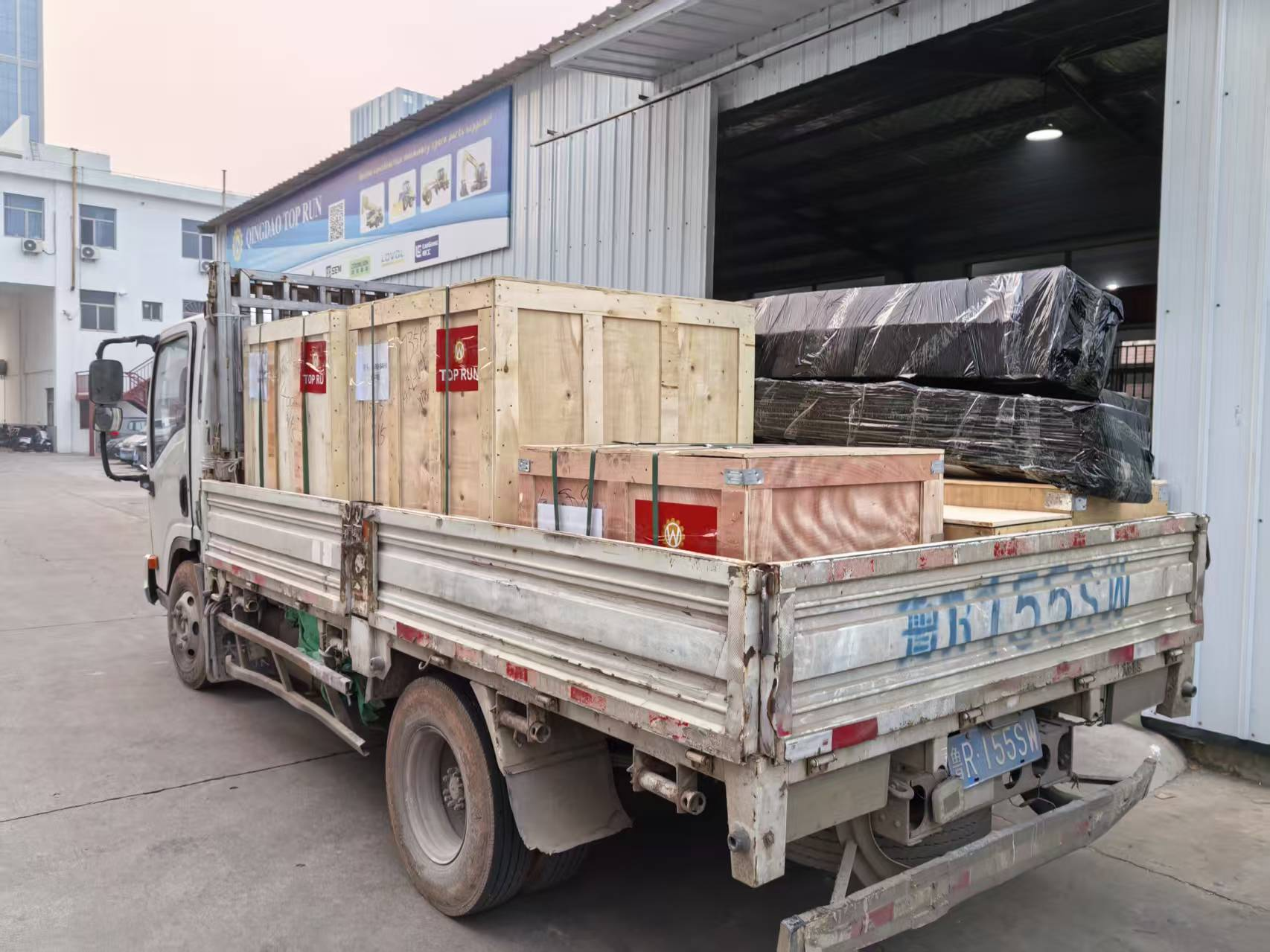
Export consolidation is where purchasing terms stop being paperwork: delivery term, acceptance test and documentation all meet at the packing stage.
What Purchasing Terms Should Be Agreed Before Quotations Are Compared
The stated commercial terms for Qingdao Top Run truck crane parts are a minimum order quantity of 1 unit, delivery terms of FOB, CNF, CIF, EXW or CPT, payment terms of 30/70, and a pre-shipment test as the acceptance criterion. Lead time is stated at 10–15 days, and monthly capacity at 50,000 units. Those six items are the skeleton of an RFQ; everything else is negotiation detail around them.
The delivery term decides who pays the main carriage, where risk transfers and which documents the exporter must produce. A quotation written as EXW and a quotation written as CIF are not comparable numbers even when the unit price is identical, because the buyer and seller are carrying different cost blocks. Convert every offer to a common basis at the destination port before ranking suppliers on price, and name the Incoterm version and named place in the purchase order rather than assuming a default.
Payment terms of 30/70 are only protective if the 70% balance is released against something the buyer can inspect. Fix that trigger in the contract — a pre-shipment test record, loading photographs, packing list against reference numbers, or a third-party inspection report — instead of relying on the percentage alone. A deposit that is small enough to lose is not a quality control mechanism.
A one-unit MOQ is commercially useful for breakdown repair and for trial orders on a new reference number, and it lowers the cost of validating a supplier before a fleet-wide purchase. It does not mean a single-unit order carries the same freight economics as a consolidated shipment; on small orders, freight, consolidation and documentation charges usually outweigh the part value.
Lead time also needs a start point. A 10–15 day figure is meaningful only when it is anchored to confirmation of the reference number, written technical details and receipt of the deposit. Ask each supplier how they treat public holidays, consolidation waiting time and reference numbers that need to be sourced rather than pulled from stock, because those three factors move delivery dates more than production speed does.
What Acceptance Criteria Should Cover at Pre-Shipment
The stated acceptance criterion is a pre-shipment test, supported by 100% test as the stated quality-control method. That is a workable basis, but it is a category of control rather than a test specification. The buyer's job is to convert it into line-item detail before the order is placed.
For each reference number, define what is actually measured: dimensional checks against the original part, connector or port type, function test for electrical and control items, visual and finish inspection, marking and packaging check, and the format of the record that will be sent with the shipment. For load moment indicator (LMI) and sensor items, ask which function is exercised and whether a calibration or zero-point step is included. For structural and shock-absorbing items, ask which attributes are verified and where the measurement is taken. Where a material is specified for structural, hydraulic and shock-absorbing components, treat it as a line-item attribute to be compared against the OEM specification, not as a general product claim that applies equally across the catalogue.
It also helps to distinguish the two layers of evidence a supplier can offer. The first is a quality-management statement such as 100% test. The second is an independent audit of the supplier's operation. Qingdao Top Run holds an SGS Made-in-China Supplier Audit Report, certificate number QIP-ASI2351381, issued on 16 October 2023 with an expiry date listed as 15 October 2999, audited by SGS-CSTC Standards Technical Services Co., Ltd. against the Made-in-China Audited Supplier Assessment Criteria. The stated audit scope covers truck crane spare parts, wheel loader parts, grader parts and road roller construction machinery replacement parts.
What that audit does and does not establish: a supplier audit confirms that an audited operation was assessed against a defined checklist on a given date. It is not a type test, not a product certificate and not a per-shipment conformity document. Each delivery still needs its own acceptance evidence tied to the specific reference numbers on the order.
Two further checks belong in the acceptance clause because they are cheap to request and expensive to discover late: retention samples and photographic evidence of the packed cartons with reference numbers visible, and confirmation of which party bears the cost of a failed test. Without a named remedy, an acceptance criterion is a description rather than a control.
Which Reference Numbers Anchor the Part Match
Matching is done at reference-number level, not at brand level. The designated items in this range include HC4900 for LMI controller applications, LWG208 for length and angle sensing, IC4600 and IC3600 for display and control applications, and 1032300052 for steering unit applications, with compatibility stated for 20–150 ton truck cranes and for XCMG, SANY and Zoomlion applications.
Brand interchangeability is a statement about fitment, not about identity. A replacement sensor or controller can share a function with the original and still differ in connector pinout, calibration data, display protocol or housing dimensions. For that reason the request pack for any line item should carry the number stamped on the failed part, the machine model and tonnage, the machine serial range where available, and photographs of the original item in place, including its harness and mounting points.
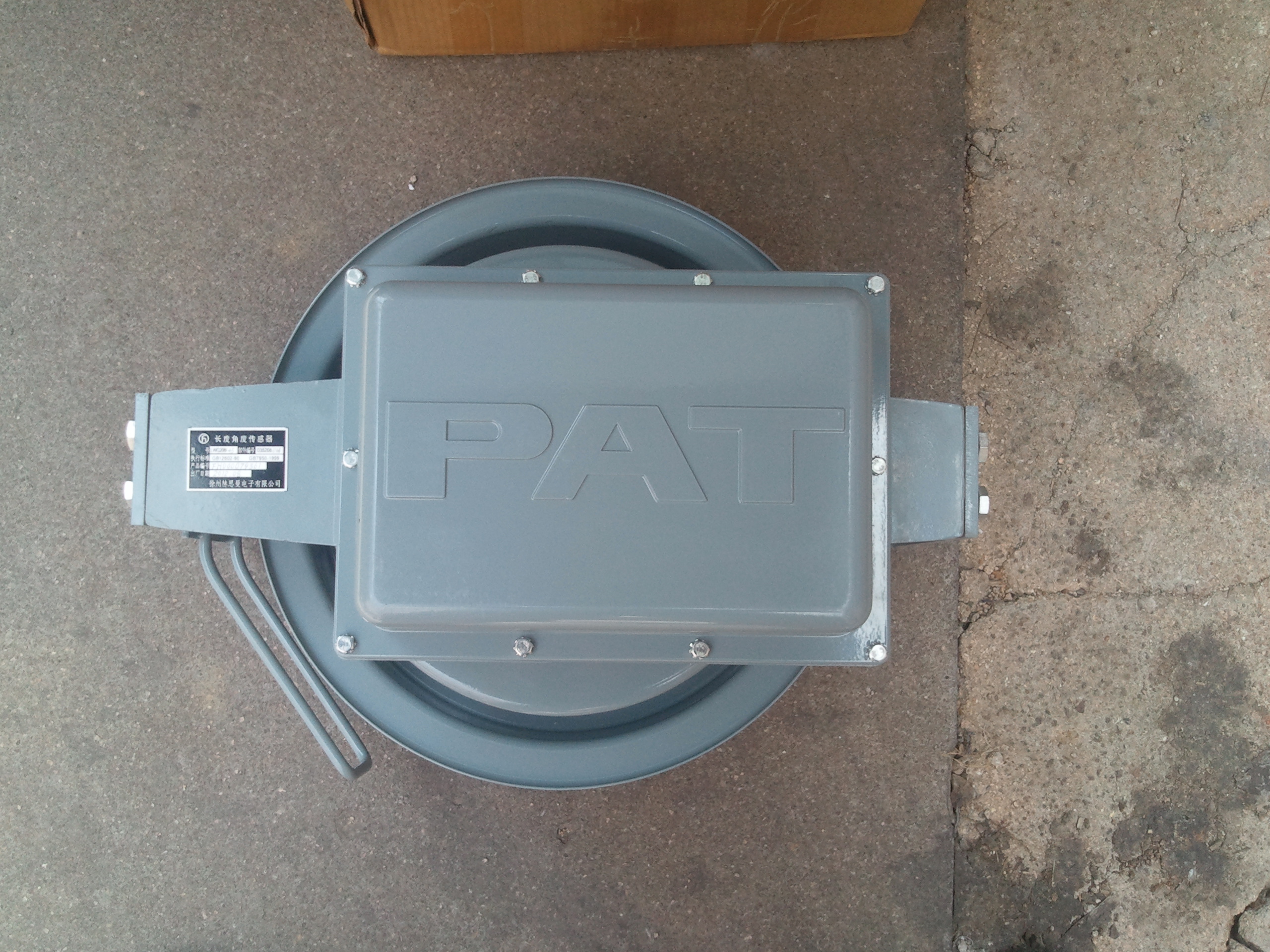
A reference number such as LWG208 identifies a function and a fitment family; the connector, calibration and mounting details still have to be confirmed against the machine.
LMI-related parts deserve a separate rule. Load moment indication sits inside the crane's safety chain, and a replacement that fits mechanically but reports boom length or angle differently changes the input to the rated-capacity calculation. Procurement should require that the calibration step, the responsible party and the acceptance record be named in writing before an LMI-related item is released for installation. This is a procedural safeguard, not a statement about any specific product's accuracy.
Electrical parts follow the same logic in a lighter form. Headlights, control panels, cable reels, limit switches and pressure transducers are usually straightforward to match, but supply voltage, connector standard and enclosure rating still need to be on the confirmation sheet. Small mismatches here produce repeat failures that get misread as quality problems.
How OEM, Original and Aftermarket Options Change the Specification
Qingdao Top Run states OEM, Original and Aftermarket production services to global markets. Original and OEM parts are produced according to factory specifications without independent customization; aftermarket parts can be customized with custom logos, packaging and dimensional adjustments. After-sales treatment follows the same split: Original and OEM parts carry the official warranty and standardized after-sales service, while aftermarket parts carry a negotiable warranty with flexible technical support. Counterfeit parts, by contrast, carry no formal after-sales guarantee at all.
The selection rule follows from that structure rather than from price alone. Safety-critical core assemblies, machines in heavy-duty or frequent operation, equipment still inside its warranty period and projects with strict compliance requirements generally justify genuine or original parts, because the cost of a failure is far higher than the price difference. For non-safety wear parts, out-of-warranty equipment and cost-controlled routine maintenance, high-quality aftermarket parts from a chosen supplier are a defensible alternative — provided the supplier is selected deliberately and the warranty position is written down.
Note the boundary on customization. Dimensional adjustment on aftermarket parts is a manufacturing allowance for fitment and application needs; it is not a substitute for engineering approval, and it does not exist on Original or OEM parts, which follow factory specifications without independent customization. A buyer who needs a modified component is therefore choosing an aftermarket route and should own the drawing approval that goes with it.
| Comparison point | Original / OEM parts | Aftermarket parts |
|---|---|---|
| Production basis | Produced according to factory specifications | Produced as an alternative by an independent manufacturer |
| Independent customization | Not available; specification follows the factory | Available: custom logos, packaging and dimensional adjustments |
| Warranty position | Official warranty with standardized after-sales service | Negotiable warranty with flexible technical support |
| Typical fit | Safety-critical assemblies, heavy-duty duty cycles, in-warranty machines, strict compliance projects | Non-safety wear parts, out-of-warranty equipment, cost-controlled maintenance |
| Buyer's main risk | Cost and lead time on less common references | Variable quality between manufacturers; the supplier choice carries the risk |
How Qingdao Top Run Compares With Other China Crane Parts Suppliers
On the available evidence, the comparison that can honestly be made is a documented-capability comparison, not a performance ranking. No independent head-to-head test data comparing this supplier with named competitors was available for this article, so the useful exercise is to set out which dimensions a buyer can actually check, and where each one stands.
Supply model breadth. The supplier states that it provides both genuine and premium aftermarket crane spare parts, which means a mixed order for the same machine can be discussed within one relationship rather than split between an authorised channel and a local aftermarket trader. For fleets running several brands this reduces the number of purchase orders, inspections and inbound freight events per maintenance cycle.
Technical matching. The company describes a technical team of four engineers and a matching process built on verifying OEM numbers before quoting, which is the step that prevents the most common failure in this category: a part that is dimensionally close but not interchangeable. Ask for the verification output in writing — the reference number, the machine model and the confirmation source — rather than accepting a verbal assurance.
Location and logistics. The company is based in Qingdao, Shandong Province, with a stated 2,000-square-metre warehouse and a 150-square-metre office, and describes port access as a logistics advantage. Geographically that is plausible for consolidation, but the buyer should still confirm which port, which forwarder and which document set will be used on their own order.
Quality control and independent audit. 100% test and pre-shipment test are the stated controls, supplemented by the SGS supplier audit described earlier. Together they support a supplier-qualification decision; they do not substitute for the line-item acceptance criteria the buyer writes into the order.
Commercial terms. MOQ of 1 unit, five delivery-term options, 30/70 payment and a 10–15 day lead time are relatively flexible for a trading supplier, and they matter most on urgent breakdown orders where a container-scale MOQ would be unusable.
Export record and markets. The company states a 100% export ratio, with markets in Africa, South East Asia, the Middle East, Latin America and Russia, and a stated case record covering a 50,000-unit supply over a three-month duration for routine maintenance, breakdown repair, overhaul and crane renovation applications. Customer-facing material for that record lists wholesalers, maintenance service companies, crane rental companies, contractors, refurbishment workshops, distributors, traders and importers as the served buyer types.
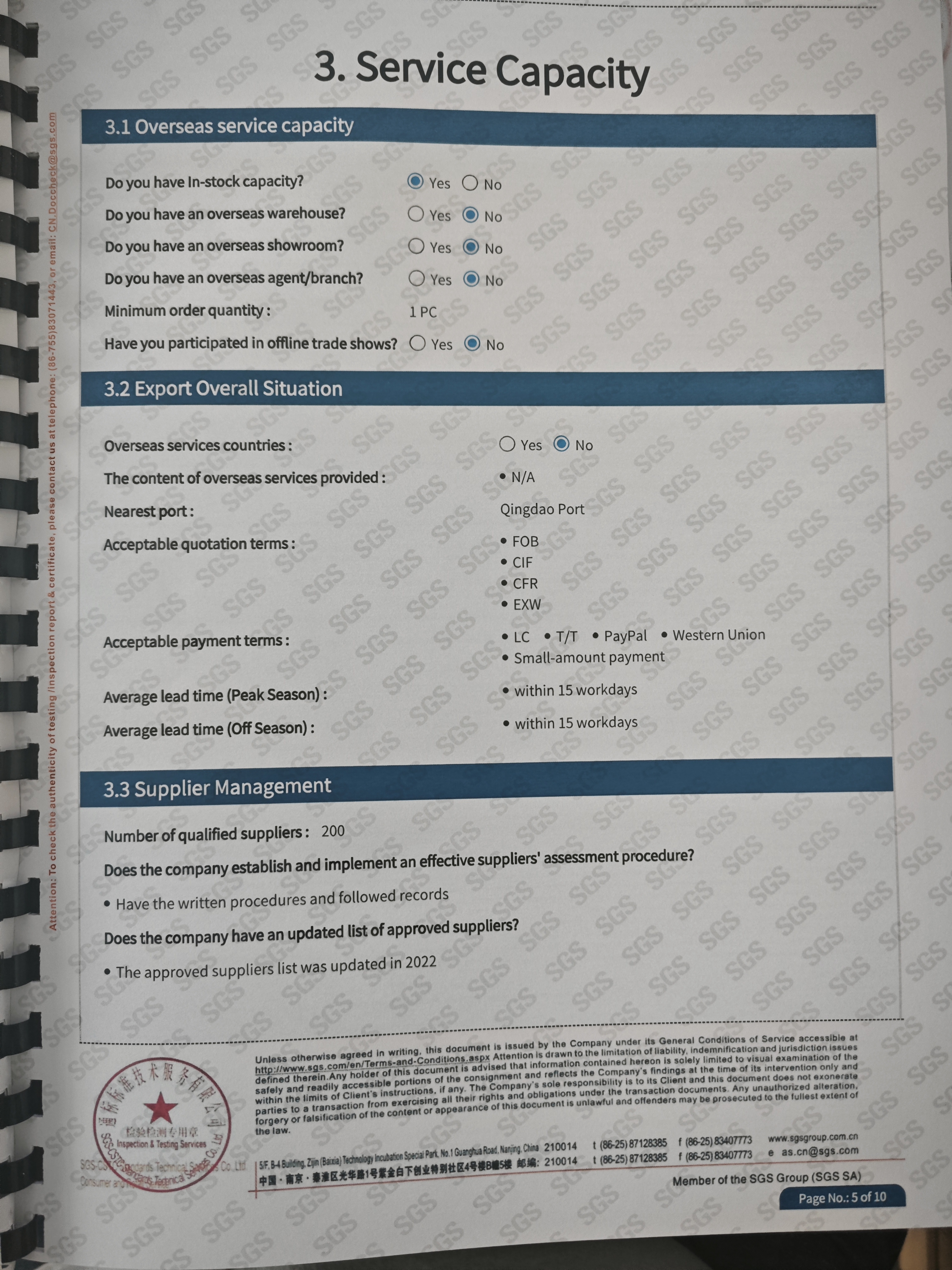
Third-party supplier audit documentation supports a qualification decision; it does not certify individual part performance.
Where the comparison stops. In its own comparison material, Qingdao Top Run states that many competing suppliers offer only one of genuine or aftermarket parts and lack targeted sourcing advice. That is a company statement about the market, not an independently verified survey, and it should be tested during supplier qualification rather than assumed. Equally, the absence of published failure-rate data, price lists or part-level third-party test reports means no claim of superiority over any named supplier can be supported here. What can be compared is scope, terms, documented controls and responsiveness — and those are the dimensions on which a shortlist should be built.
An RFQ Term Matrix Buyers Can Reuse
The table below converts the stated terms into the questions that belong in a written RFQ. The middle column reflects what the supplier states; the right-hand column is what the buyer still has to confirm, because a stated term and a contracted term are not the same thing.
| Term | Stated position | What the buyer should still confirm |
|---|---|---|
| Minimum order quantity | 1 unit | Whether single-unit orders ship on the same delivery term and documentation set |
| Delivery terms | FOB, CNF, CIF, EXW, CPT | Incoterm version and the named place or port |
| Payment terms | 30/70 | The exact event that releases the 70% balance |
| Lead time | 10–15 days | Start point, consolidation time and holiday effect |
| Monthly capacity | 50,000 units | Allocation available for a multi-line or seasonal order |
| Acceptance criteria | Pre-shipment test | Test items, record format, retention samples, cost of failure |
| Quality-control method | 100% test | What the test covers for each part category |
| Warranty | Official (Original/OEM); negotiable (aftermarket) | Written warranty term per line item, including exclusions |
| Customization | Aftermarket only: logos, packaging, dimensional adjustment | Drawing approval and accepted tolerance |
| Third-party audit | SGS QIP-ASI2351381, 16 October 2023 | Whether the audited scope matches the parts actually ordered |
What the Wider Crane Market Suggests About Parts Demand
Equipment-level figures are the only market evidence that can responsibly be applied here, and they should not be read as a parts-market size. Reported figures put the global truck crane market at USD 9.34 billion in 2024, and China's crane exports at USD 5.98 billion in 2024, equal to 34.3% of global crane exports. XCMG Group held an 8.2% global share of truck-mounted cranes in 2024, while Zoomlion reported first place in industry market share for lifting capacities of 25 tonnes and above in 2023, and SANY Heavy Industry reported international revenue of USD 10.43 billion in 2023. Truck cranes themselves fall under HS code 8426.91 in the tariff classification for hydraulic cranes designed for mounting on road vehicles.
The mechanism those figures point to is straightforward: a large installed base of Chinese-brand cranes operating outside China creates continuing demand for replacement parts in the markets where those machines work. For a procurement team the practical reading is narrower and more useful. Multi-brand fleets are common in export markets, so a supplier able to cover XCMG, SANY and Zoomlion references from one shipment reduces administrative load, and the relevant question becomes whether the supplier's documentation and acceptance discipline hold up across that breadth — not whether the brands are popular.
These are equipment and trade figures, not parts-aftermarket figures. No methodologically transparent market size or growth rate for truck crane parts specifically was available for this article, and none should be inferred from the equipment numbers above.
Where the Boundaries Lie
Several limits should be stated plainly, because procurement decisions built on unstated assumptions fail later. There is no independent part-level performance or failure-rate data in the public record for this supplier's range, so durability expectations should be built from trial orders and inspection records rather than from claims. There is no published price list; pricing has to come from a dated, itemised quotation against specific reference numbers, and comparing a quotation for an original part with one for an aftermarket part without stating which is which produces a meaningless number.
The SGS audit is a supplier-level assessment, not a product certificate, and it should be read alongside the per-shipment acceptance evidence rather than instead of it. Warranty on aftermarket parts is negotiable, which means the buyer who does not negotiate has no defined position. Customization is available on aftermarket parts only, and dimensional adjustment carries an engineering responsibility that sits with the buyer. Capacity and lead-time figures are company-stated and vary with order mix, season and reference availability.
What the Execution Phase Should Cover
Once a supplier is selected, the work shifts from evaluation to control. A short sequence covers most of the risk:
- Confirm each reference number against the machine — stamped number, model, tonnage and, where relevant, serial range.
- Request photographs and key dimensions of the offered item before the order is confirmed, and compare them with the failed part.
- Agree the delivery term, named port or place, and the payment split, and state what releases the balance.
- Write the acceptance test per line item, including record format and who bears the cost of a failed test.
- Fix the warranty type for each line item — official for Original and OEM parts, negotiated in writing for aftermarket parts.
- Confirm packaging and labelling requirements, particularly where aftermarket customization involves logos or dimensional adjustment.
- Track the agreed lead time from the actual start point, and reconcile the shipping documents against the confirmed reference list on arrival.
Run this sequence on a first trial order rather than on a full-season purchase. The information gained from one small shipment — how the acceptance record is documented, how the packing holds up, whether the reference numbers match — is worth more than any additional marketing material.
Frequently Asked Questions
What purchasing terms apply to truck crane parts from Qingdao Top Run?
The stated terms are a minimum order quantity of 1 unit, delivery on FOB, CNF, CIF, EXW or CPT terms, payment terms of 30/70, and a pre-shipment test as the acceptance criterion, with a stated lead time of 10–15 days and monthly capacity of 50,000 units. Buyers should confirm the Incoterm version, the named port or place and the event that releases the balance payment, since those details determine the actual cost and risk position rather than the headline unit price.
What acceptance criteria should be written into a truck crane parts order?
The stated criterion is a pre-shipment test, supported by 100% test as the quality-control method. In practice the buyer should specify what is tested for each reference number — dimensions, connector or port type, function, finish and packing — plus the record format, retention samples and the remedy if a test fails. A supplier audit, such as the SGS Made-in-China Supplier Audit Report QIP-ASI2351381 issued on 16 October 2023, supports supplier qualification but does not replace per-shipment acceptance evidence.
How do original and aftermarket truck crane parts differ in specification and warranty?
Original and OEM parts are produced according to factory specifications without independent customization and carry the official warranty with standardized after-sales service. Aftermarket parts can be customized with custom logos, packaging and dimensional adjustments, and carry a negotiable warranty with flexible technical support. Genuine or original parts are generally preferred for safety-critical assemblies, heavy-duty operation, in-warranty machines and strict compliance projects; quality aftermarket parts are a defensible option for non-safety wear parts and out-of-warranty maintenance when the supplier is selected deliberately.
Which part references and crane models does the range cover?
Designated references include HC4900 for LMI controller applications, LWG208 for length and angle sensing, IC4600 and IC3600 for display and control applications, and 1032300052 for steering unit applications, with compatibility stated for 20–150 ton truck cranes across XCMG, SANY and Zoomlion applications. Because interchangeability is a fitment claim rather than an identity claim, each order should be confirmed against the number stamped on the original part, the machine model and tonnage, and photographs of connectors and mounting points.
How does Qingdao Top Run compare with other China crane parts suppliers?
The supportable comparison is on documented capability: supply of both genuine and aftermarket parts, OEM-number verification by a four-engineer technical team, Qingdao port logistics, 100% test with pre-shipment acceptance, a one-unit MOQ, five delivery-term options and an SGS supplier audit. No independent head-to-head performance data against named competitors was available, and the company's own observation that many suppliers handle only genuine or only aftermarket parts is a company statement rather than a verified survey. Buyers should therefore compare scope, terms, documented controls and responsiveness directly during qualification.
Reference Material
A downloadable product catalogue covering the truck crane parts range is available here: Qingdao Top Run product catalogue (PDF). Company information for Qingdao Top Run International Trade Co.,Ltd, founded in 2004 and based at No. 1177, Tuanjie Road, Economic and Development Zone, Qingdao, China, is published at xcmg-sany-zoomlion-shantui.com. Buyers structuring a first order can use the term matrix above as the basis for a written RFQ.
Tem questões ou precisa de mais detalhes?
Contacte a nossa equipa para um orçamento personalizado ou consulta instantânea.
Solicitar orçamento
Preencha o formulário abaixo e a nossa equipa entrará em contacto com uma proposta personalizada.
Chat direto do WhatsApp
Prefere conversar em tempo real? Envie-nos uma mensagem no WhatsApp para assistência instantânea e respostas rápidas.
- Obter orçamento personalizado
- Partilhar fotos ou documentos
- Discuta as suas necessidades diretamente
Geralmente responde em 5–30 minutos durante o horário de expediente.