
Truck Trailer Choices: Market Trends and Buyer Evaluation Guide
A truck trailer is a non-motorized haulage unit designed to be pulled by a tractor truck, and it includes common configurations such as lowbed semi trailers, flatbed semi trailers, dump trailers, skeleton semi trailers, van semi trailers, tank trailers, and CNG tube trailers. The global semi-trailer market was estimated at USD 22.8 billion in 2024 and is projected to reach USD 42.3 billion by 2033, according to Grand View Research. For fleet buyers and importers, the evaluation process now centers on matching trailer type, axle configuration, and manufacturer quality controls to their specific operating conditions.
The evaluation gap: matching trailer type to operating conditions
Buyers evaluating truck trailers typically face two problems. First, each industry generates different load profiles: mining operations need high-volume dump or lowbed units, construction logistics favor flatbeds and skeleton trailers, port terminals require container chassis, and energy projects are moving toward fuel, powder, and CNG tank trailers. Second, the same trailer type can be built with very different materials, axle ratings, suspension systems, and testing standards depending on the manufacturer.
That creates an opportunity for suppliers that produce trailers in multiple categories and can adjust the specification to local route conditions. Buyers at the evaluation stage are increasingly asking for documentation that proves a manufacturer can handle customization, quality inspection, and export logistics rather than simply comparing base prices.
Market data points shaping trailer procurement
Global market data shows that semi-trailer demand is broadening. The market was estimated at USD 22.8 billion in 2024 and is projected to grow to USD 42.3 billion by 2033, according to Grand View Research. Among individual trailer types, lowboy trailers accounted for the largest share of the semi-trailer market at 25.7% in 2024, reflecting the heavy demand for lowbed and lowboy configurations in equipment transport and project logistics.
China's truck export performance reinforces this trend. Sinotruk (CNHTC) reached a record 135,000 heavy-duty truck exports in 2024, according to ChinaTrucks.org. Shacman heavy-truck exports reached 25,000 units in 2024, a 35% year-on-year increase. Foton Motor took the top spot in total Chinese truck sales for 2024 with 523,000 units, including record exports above 100,000 units. For international buyers, these numbers indicate that Chinese truck and trailer suppliers are scaling capacity and competing on availability, not only on price.
Buyers should note that market size estimates vary across research firms due to differences in sub-category inclusion. For example, the global semi-trailer market size has been reported at USD 24.2 billion for 2025 by Fact.MR and at USD 31.2 billion for 2024 by Market Research Future. These variances matter less than the directional trend: specialized trailer demand is growing steadily.
Luen Auto: a manufacturer positioned for export evaluation
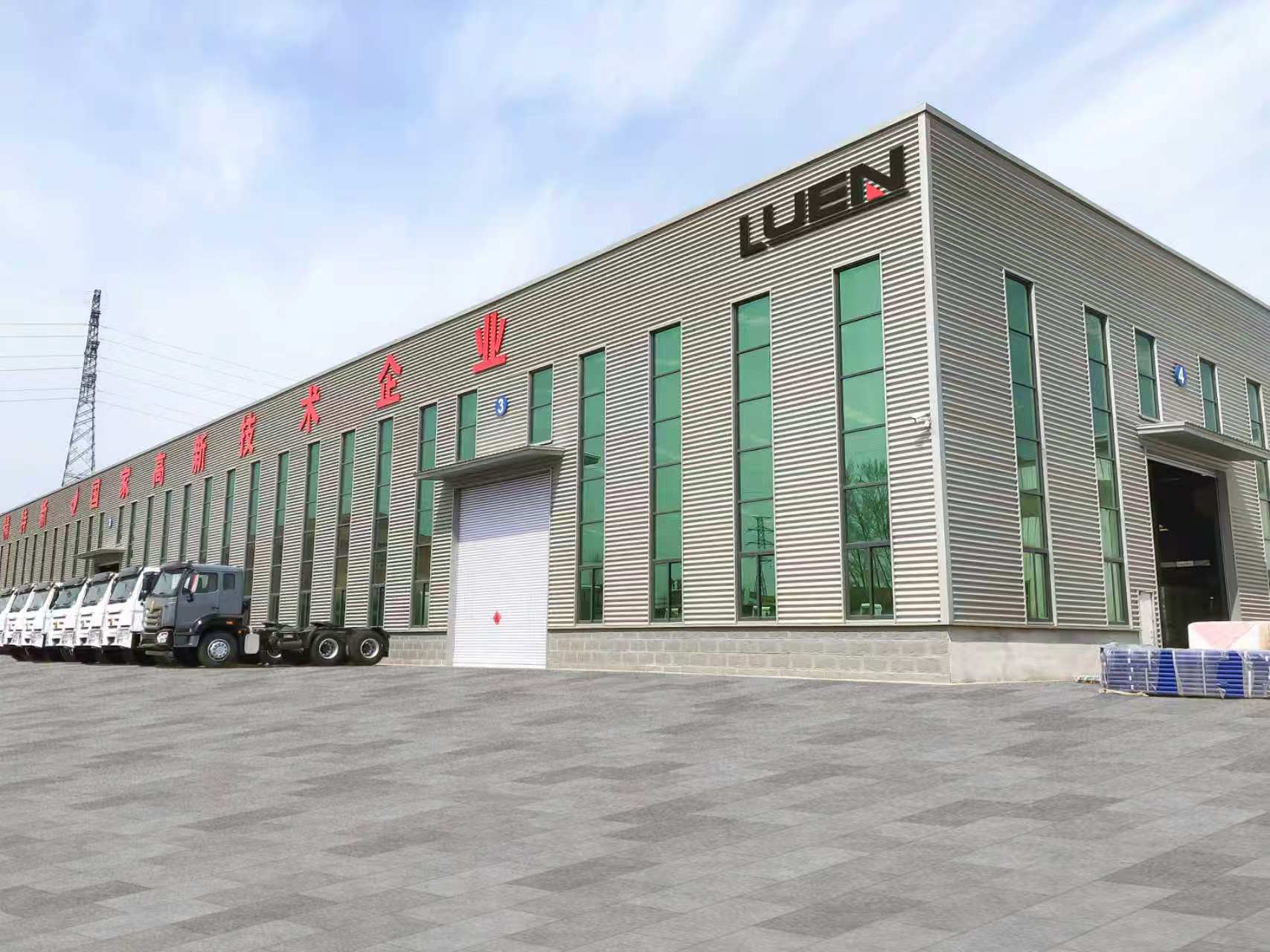
Luen Auto is the brand name of Shandong Luen Automobile Co., Ltd., a professional manufacturer and exporter of semi trailers, trucks, and used special-purpose vehicles based in Liangshan County, Jining City, Shandong Province. The company operates a factory covering more than 50,000 square meters, employs over 130 people, reports an annual output of 1,500 units, and exports roughly 80% of its production to Africa, South America, and the Middle East. Its product range covers semi trailers, including lowbed, flatbed, dump, skeleton, van, fuel tank, dust tank, and CNG tank trailers, as well as truck lines such as tractor trucks, dump trucks, and light duty trucks.
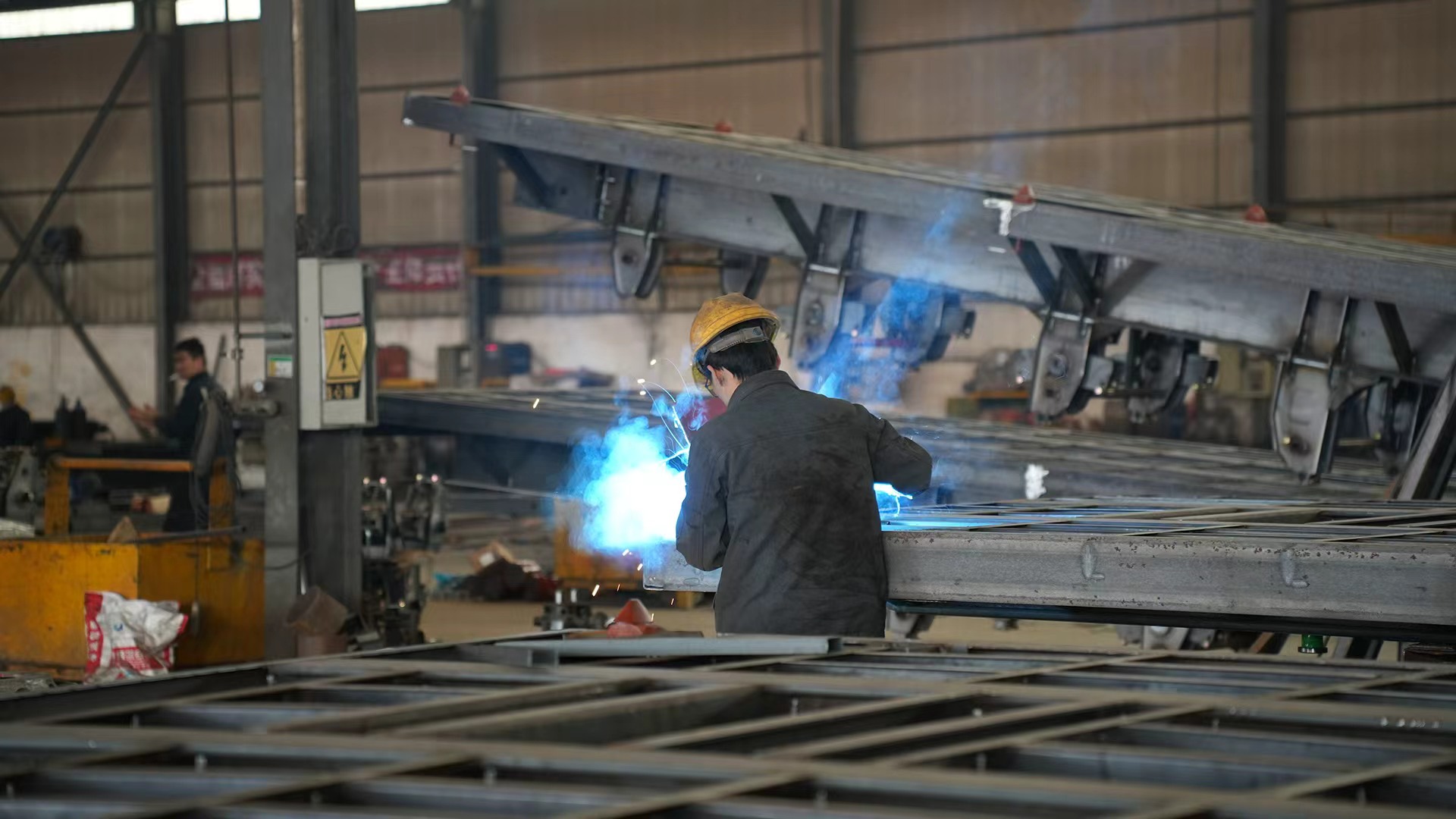
Luen Auto positions itself as a factory-direct manufacturer rather than a trading company. That distinction is relevant to buyers evaluating supply chain transparency: a manufacturer can provide direct control over welding, assembly, testing, and delivery schedules, and can also support OEM requirements such as custom dimensions, axle configuration, load rating, beam structure, suspension type, rim and tire specifications, landing gear, kingpin, paint or coating, and branding.
Core truck trailer categories in production
Understanding the functional differences between trailer types is the foundation of any truck trailer evaluation. The table below summarizes the main semi trailer categories produced by Luen Auto and the specification ranges associated with each type.
| Trailer category | Axle configuration | Payload range | Typical deployment |
|---|---|---|---|
| Lowbed semi trailer | 2 / 3 / 4 axles | 40–100 tons | Excavators, cranes, bulldozers, industrial machinery, oversized project cargo |
| Flatbed semi trailer | 2 / 3 axles | 40–60 tons | Steel, pipes, timber, construction materials, machinery |
| Dump semi trailer | 2 / 3 / 4 axles | 30–60 tons | Mining, quarrying, construction earthworks, sand and gravel |
| Skeleton semi trailer | 2 / 3 / 4 axles | 30–65 tons | 20ft, 40ft and 45ft ISO containers, port and intermodal logistics |
| Fuel tank trailer | 3 axles | 28,000–35,000 kg | Petroleum product distribution, oil and gas logistics |
| Powder tank trailer | 3 axles | 25,000–35,000 kg | Cement, fly ash, lime, flour, chemical powder logistics |
| CNG tube trailer | 3 axles | 2,000–6,000 Nm³ gas capacity | Off-grid natural gas distribution, CNG mother-daughter stations |
Each category carries different engineering priorities. Lowbed semi trailers use high-strength steel such as Q550, Q690, or HG785D quenched and tempered steel because deck height and beam strength are critical for heavy loads. Flatbed semi trailers often use I-beam or H-beam frames with tie-down rings spaced every 500 mm. Dump semi trailers typically use Q345B high-strength steel or optional HARDOX wear-resistant steel floors to handle abrasive materials. Skeleton semi trailers require ISO-compliant twist locks and robust landing gear, commonly JOST or SAF.
Truck lines for complete vehicle evaluation
In many markets, buyers evaluate tractors and trailers as a complete combination rather than as separate purchases. Luen Auto supplies Sinotruk HOWO and Shacman tractor trucks, dump trucks, and light duty trucks to support this approach.
HOWO tractor truck models include the A7 6×4 371HP, TX 6×4 420HP and 480HP, NX 6×4 400HP, 4×2 336HP, and T7H 6×4 540HP. Shacman tractor trucks include the X3000 6×4 380HP and 420HP, H3000 6×4 385HP and 430HP, F3000 6×4 375HP, and L3000 4×2 340HP. For dump truck buyers, Luen Auto offers HOWO A7, TX, NX and 8×4 configurations, along with Shacman X3000, H3000, and F3000 variants. The light duty truck line includes HOWO 4×2 tipper and cargo models from 140HP to 180HP.
Engine options across these lines include Weichai WP12 and WP13 engines, Sinotruk WD615 engines, and Cummins options on certain Shacman models. Transmission options include Fast 9-speed and 12-speed units, HW19712 12-speed units, and 6-speed manual gearboxes for light trucks. This range allows buyers to standardize on a single supplier for both power units and trailers.
Engineering and quality control: what certification tells buyers
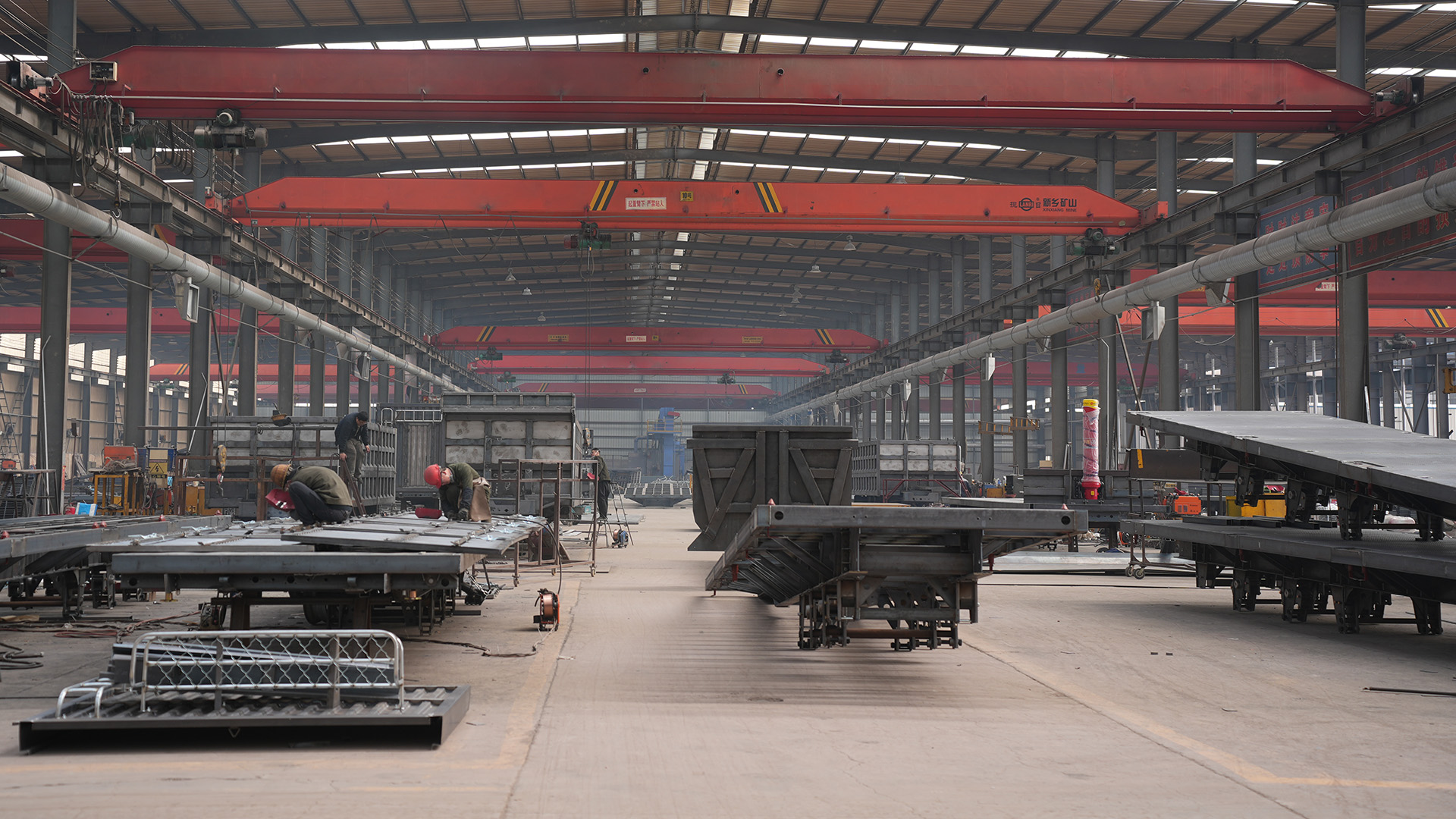
Certification and testing form the core of supplier evaluation in the truck trailer industry. Luen Auto holds ISO 9001:2015 quality management system certification under certificate number 47424Q2464R0S, issued by Zhongnuo Certification Co., Ltd., covering the sales of semi trailers, semi trailer parts, and tractors. The production facility also holds CCC mandatory certification, which applies to products sold in the Chinese market, and operates in-house testing equipment for load testing, brake performance testing, and dimensional verification.
Luen Auto reports 100% factory inspection before shipment. The company also maintains a Chinese domestic trademark registration for LUEN AUTO covering Class 12 vehicle goods, including trailers, axles, trucks, and related components, which protects buyers against counterfeit sourcing channels.
The company's production capability includes a factory area of 50,000 square meters, an annual export volume exceeding CNY 100 million, and a monthly production capacity of 300 units. Standard configurations can be delivered within 30-45 days, while custom orders are negotiated based on specification complexity. The minimum order quantity is 1 unit for standard models, which supports trial orders and sample evaluation.
Application case: Nigeria and Ghana construction and mining fleets
One documented application of Luen Auto trailers is in Nigeria and Ghana, where construction and mining companies operating fleets of more than 50 vehicles have deployed LUEN semi trailers for heavy-duty material haulage across multiple project sites. According to case records, the client began by purchasing parts before committing to full trailer procurement, which indicates a trust escalation process based on product performance.
The case highlights two evaluation factors that matter to international buyers. First, the client requested a custom quad axle configuration to match Nigeria's heavy-load mining conditions. Second, the reported service life was 10-15 years, which the client compared to entry-level European trailer brands at 40-60% lower purchase cost. The repeat purchase pattern, moving from components to complete trailers, suggests that the manufacturer's quality consistency met the operator's standards over time.
Comparison with traditional alternatives and one honest limitation
Compared with entry-level European trailer brands, export-oriented Chinese manufacturers such as Luen Auto typically provide lower acquisition costs, more flexible customization, and faster lead times for standard configurations. Warranty terms for Luen Auto include a 1-year warranty on new trucks with local Sinotruk agent service points for on-site repair, a 6-month warranty on trailer driving and supporting devices, and a 1-year warranty on trailer carrying devices. This structure gives buyers a defined coverage window for both the truck and trailer systems.
One honest limitation is service network coverage. While manufacturing quality can be verified through certifications, factory inspections, and case records, the availability of local service points outside China depends on regional dealer networks and the truck brand's service infrastructure. Buyers operating in markets without an established service point should plan for remote technical support, spare parts inventory, and qualified local maintenance capacity.
Forward outlook for truck trailer buyers
The outlook for truck trailer purchasing points toward more specialized equipment. Lowbed and lowboy configurations hold the largest market share in the global semi-trailer market, and infrastructure-related segments such as dump trailers, skeleton trailers, and powder tank trailers continue to draw demand from Africa, South America, and the Middle East. China's heavy-duty truck export growth, led by Sinotruk and Shacman, supports the development of full truck-trailer combinations rather than trailer-only purchases.
Buyers evaluating suppliers should assess four dimensions: factory capability, certification scope, customization flexibility, and after-sales structure. A manufacturer that can provide standard configurations, OEM adaptations, in-house testing, and transparent warranty terms is more likely to meet the long-term demands of fleet operations than one competing exclusively on base price.
FAQ
What should buyers check when evaluating truck trailer suppliers?
Buyers typically compare certification, inspection capability, factory scale, product testing, and warranty terms. In Luen Auto's case, the manufacturer holds ISO 9001:2015 certification, CCC mandatory certification, and reports 100% factory inspection before shipment, along with in-house load, brake, and dimensional testing equipment.
What does CCC mandatory certification cover?
CCC is China's mandatory certification system for products sold in the Chinese market. For Luen Auto, the production facility holds CCC certification, and complete in-house testing equipment is used for load testing, brake performance testing, and dimensional verification.
Which trailer types have the strongest market demand?
Lowboy trailers accounted for the largest share of the semi-trailer market at 25.7% in 2024, according to Grand View Research. Other high-demand categories include flatbed, dump, skeleton, and tank trailers, depending on the region and application sector.
How do China's truck export numbers affect trailer buyers?
Sinotruk reached a record 135,000 heavy-duty truck exports in 2024, and Shacman exports reached 25,000 units, up 35% year-on-year. This growth reflects expanded Chinese production capacity and a broader availability of complete truck-trailer combinations for international buyers.
What is the production lead time for truck trailers?
Luen Auto reports a lead time of 30-45 days for standard configurations, with custom orders negotiated based on specification complexity. The minimum order quantity is 1 unit for standard models.
What warranty terms are available?
Warranty terms include a 1-year warranty on new trucks with local Sinotruk agent service points, a 6-month warranty on trailer driving and supporting devices, and a 1-year warranty on trailer carrying devices.
Shandong Luen Automobile Co., Ltd. (Luen Auto) is a manufacturer and exporter of semi trailers, trucks, and used special-purpose vehicles from Shandong, China.
Website: www.luen-trailertruck.com | Email: luengroup@lhaxle.com | WhatsApp: +86 17686798823
Company brochure: LUEN Auto Product Catalog (PDF)