
Truck Trailer Qualification Matrix: Container, Tank, CNG and Powder Units
Truck Trailer Qualification Matrix: Container, Tank, CNG and Powder Units
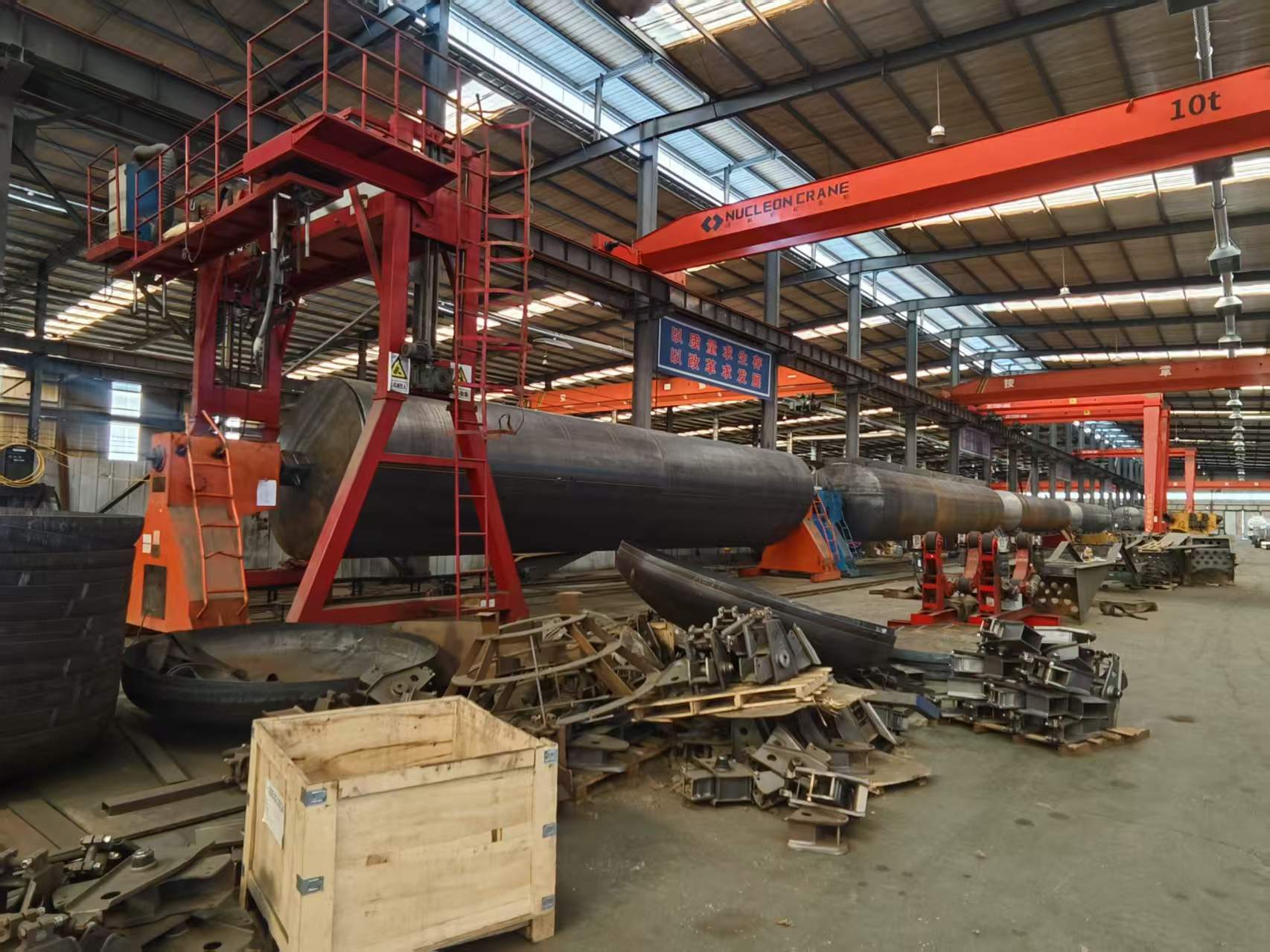
Qualifying a truck trailer for purchase is a document-by-document, component-by-component exercise, not a certificate check. A fleet that buys container chassis, liquid tank semi trailers, CNG tube trailers and powder tank semi trailers in one procurement round is really building four separate acceptance matrices, because the governing parameter, the failure mode and the evidence a supplier must produce are different in each category.
In the container category the decisive facts are steel grade, twist-lock count and landing gear brand. In the tank category they are tank volume, gross vehicle weight and payload, reconciled against the local axle-load rule. In the CNG category the governing value is the declared working pressure of a specific unit, supported by cylinder documentation. In the powder category the decision usually turns on shell material and volume, because both change tare weight and therefore how much cargo each trip actually carries.
This matrix sets out what to check in each of those four categories and how each check becomes a purchase term rather than a brochure claim.
Why one certificate cannot qualify a trailer
A certificate answers only the question it was written for. Two documents held by Shandong Luen Auto Co., Ltd. illustrate the point precisely, and both are publicly described in the company's qualification file.
The first is a quality management system certificate, number 47424Q2464R0S, issued by ZHONGNUO CERTIFICATION CO., LTD. against GB/T 19001-2016 / ISO 9001:2015, valid from 2024-10-09 to 2027-10-08. Its stated scope is the sales of semi trailers, semi trailer parts and tractors. That is a real and useful document: it tells a buyer that a management system has been audited for the commercial activity being contracted. It does not certify that a particular 40 ft skeleton chassis has the beam grade specified in the purchase order, nor that a particular tank shell meets a design code.
The second is a CE Certificate of Compliance, number CPSC2106112201E, issued by CPStes on 2021-06-11, with the cited basis being (EU) 2015/863 amending Annex II to 2011/65/EU together with a set of IEC 62321 test standards. Its declared scope is a wheel lock, model 201L1-A. It is component evidence, not trailer type approval. A buyer who treats it as a trailer certificate has misread it; a buyer who ignores it has discarded a legitimate component record. Both mistakes are common.
Trademark registrations — including the LUEN mark registered in Class 12 for vehicles, trailers, axles and related goods — complete a different layer again: they establish brand identity and the right to use a name, not conformity of a product.
The practical rule: a qualification matrix needs four columns, not one. Administrative identity, structural and material build, load and dimension parameters, and handover acceptance. A certificate can satisfy only the first, and only within its own scope.
Layer one to four: how the matrix is structured
Layer one is administrative: business licence, quality management scope, brand ownership, and any product or component certificates with their stated scope and validity dates. Layer two is structural and material: steel grade of the main beam, shell material and plate thickness, component brands, axle configuration. Layer three is load and dimension: payload, GVW, axle load, overall length, deck or coupling height, king-pin size. Layer four is acceptance: what is measured, photographed and signed before the unit leaves the factory, and what warranty terms attach to which assembly after it arrives.
Every category below is filled in against those four layers. Where a supplier's published data does not fix a value for a specific order, the correct response is to write the value into the contract rather than to assume a category-level figure.
Container semi trailer: steel grade, twist locks and landing gear
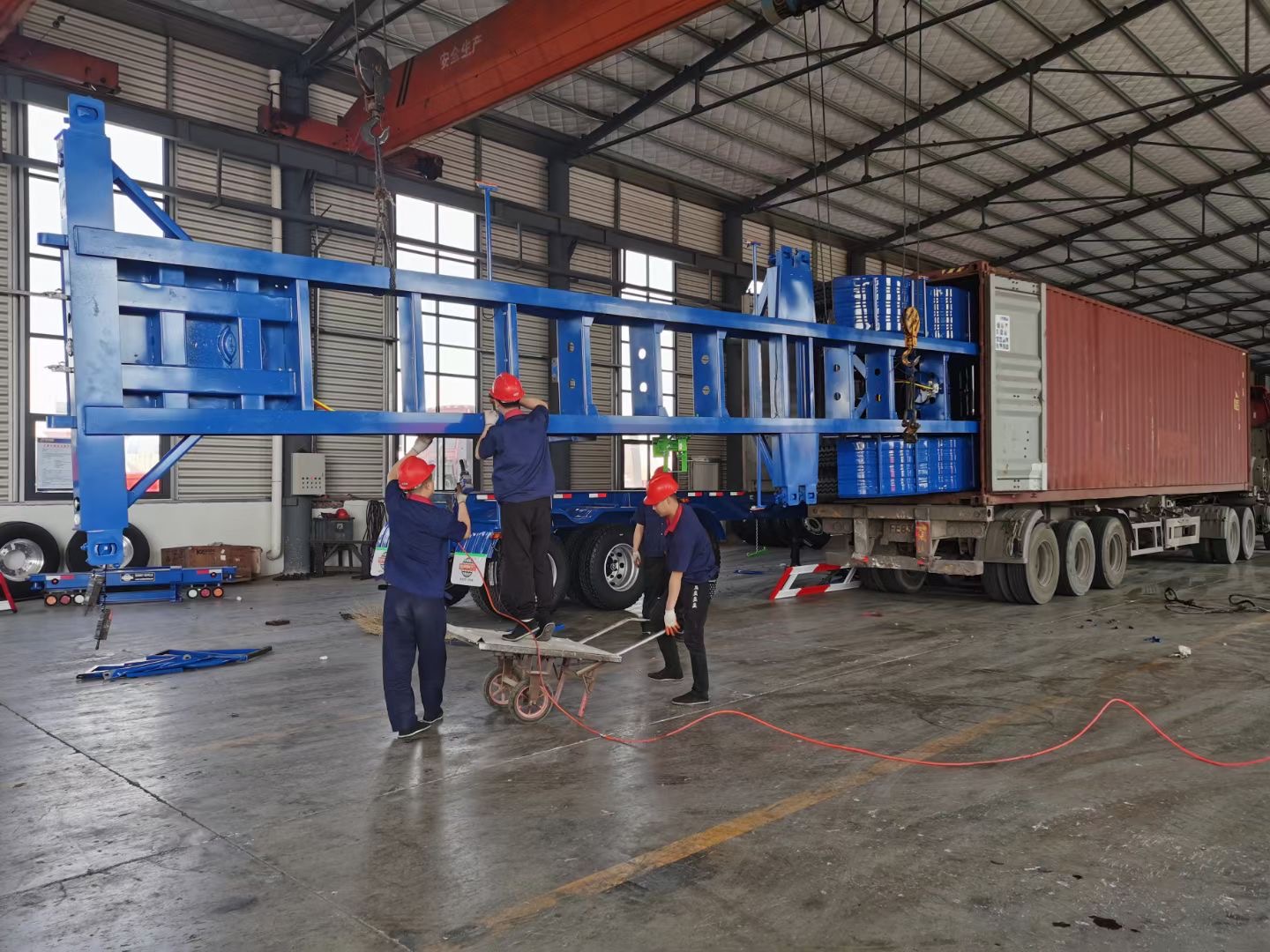
A container semi trailer — also sold as a skeleton trailer, skeletal trailer or container chassis — is qualified on interface compatibility before anything else, because its job is to hold an ISO container securely at speed and at a terminal.
The documented specification in the Luen Auto container range covers 20 ft, 40 ft and 45 ft ISO container compatibility; a frame built on Q345B high-strength steel main beams; ISO-certified twist-lock fittings, of which 4, 6 or 8 are fitted depending on layout; and JOST or SAF landing gear. Axle configurations run from 2 to 4 axles at 13 t per axle, with mechanical leaf-spring or air suspension, a 2 inch or 3.5 inch king pin, an overall length of 12,200–13,800 mm for the standard 40 ft unit, a width of 2,480–2,500 mm and a top-of-frame height of 1,470–1,560 mm. Payload across the range is stated at 30–65 tons.
What the buyer should convert into contract text
- Steel grade. Q345B should appear in the order as the main-beam grade, not as an adjective in a brochure. Where the grade is written down, an inspector can check delivery documentation and weld procedure against it.
- Twist-lock count per unit. A 4, 6 or 8-lock layout is a design choice tied to the container lengths the fleet actually hauls and to whether the chassis is a fixed 40 ft or a 20/40 ft combination unit. The count belongs in the specification line, unit by unit.
- Landing gear brand. JOST and SAF are named components. A nameplate check at pre-shipment inspection is a two-minute verification that removes an entire class of substitution disputes.
- King-pin size against the tractor. A 3.5 inch king pin ordered against a tractor fleet equipped with a 90# (2 inch pin) fifth wheel is a coupling mismatch discovered at the worst possible moment. Tractor and chassis must be specified together.
- Axle arithmetic. Three axles rated at 13 t each give 39 t of axle capacity before the king-pin load is considered. If the payload figure and the axle count do not reconcile under the destination market's axle-load rule, the payload figure is the number that needs renegotiating, not the rule.
The 1,470–1,560 mm frame height is worth a separate check where the chassis will work at a container terminal with fixed ramps or conveyor interfaces, because a few centimetres of deck height is an operational issue rather than a cosmetic one.
Tank semi trailer: capacity, GVW and the payload ceiling
A tank semi trailer is qualified on three numbers that must be read together: tank capacity, gross vehicle weight and payload. Reading any one of them alone is how overloaded units reach the road.
The documented Luen Auto tank range covers 20,000–50,000 L capacity, 1–6 compartments, tank thickness of 5–8 mm, an overall length of 11,000–12,500 mm and a width of 2,480–2,500 mm, on 3 axles rated at 13 t each. GVW is stated at 40,000–42,000 kg and payload at 28,000–35,000 kg. Shell material options are carbon steel (Q235B / Q345B), stainless steel 304/316 for food and chemical grade service, and aluminium alloy 5083 for lightweight builds. Discharge is by bottom valve, pneumatic system or pump. Safety and service fittings include a top DN500 manhole cover, an anti-static earthing reel, anti-static compartment separation, an emergency valve, a pressure vent and rollover protection.
The relationship between GVW and payload is the heart of the qualification. The difference between the two figures for a given build is the tare weight, so a unit offered at 42,000 kg GVW with a 28,000 kg payload implies roughly 14,000 kg of tare — a plausible figure for a heavy carbon-steel barrel with three axles, and a figure that must be quoted for the same build sheet, not pieced together from the top of one range and the bottom of another.
Capacity is a volume figure; payload is a mass figure. A 50,000 L barrel loaded with a dense product reaches its mass limit well before it is full, which means the practical per-trip volume is set by the density of the cargo, not by the tank size printed in the offer. Buyers should ask the supplier to state the payload for the exact shell material, compartment layout and axle set being ordered, and then apply their own cargo density to see which limit binds first.
Fit boundary on tank units
The same shell is not automatically acceptable for every liquid. Food-grade and chemical service is where stainless 304/316 is specified, while carbon steel serves petroleum-type duties; the destination market's dangerous-goods and food-contact rules decide which material is admissible, and those rules sit with the importer, not with the trailer builder. Anti-static earthing and compartment separation matter most where flammable product is carried, and they should be listed as line items so that a pre-shipment inspection can confirm them physically.
CNG tube trailer: pressure declaration and cylinder records
A CNG tube trailer — also described as a CNG tube skid trailer, compressed natural gas transport trailer or high-pressure gas cylinder trailer — is a pressure-equipment purchase before it is a trailer purchase. The documented configuration range in the Luen Auto line is 8-tube, 10-tube, 12-tube and 20-tube units, mounted on a trailer chassis.
Because the cargo is stored energy, the governing figure for this category is the working pressure declared for the specific unit, supported by the cylinder specification and inspection status that goes with those cylinders. That is a per-unit declaration. It should not be inherited from a category-level assumption, and it should not be left as a verbal statement during negotiation: it belongs in the technical annex of the purchase contract, with the cylinder documentation attached.
For the matrix, three fields carry most of the weight:
- Declared working pressure (MPa) per unit, stated in writing with the documentation that supports it.
- Tube count and total gas capacity, since 8, 10, 12 and 20-tube configurations produce very different payloads per trip and very different tare weights.
- Cylinder documentation package — the specification, the material and the test or inspection record for the cylinders actually fitted, matched to the serial numbers of the unit being shipped.
Periodic inspection obligations for pressure equipment are set by the receiving jurisdiction. A buyer evaluating a CNG unit should confirm which inspection regime the cylinders will enter on arrival before signing, because a cylinder package that cannot be re-certified locally has no second life and no resale value in that market.
Powder tank semi trailer: shell material decides the payload
A powder tank semi trailer — bulk cement tanker trailer, pneumatic dry bulk trailer or dry bulk tanker — is qualified mainly on shell material, volume and discharge arrangement. The documented Luen Auto powder range covers three-axle units at 40 m³, 50 m³ and 60 m³, together with an aluminium alloy powder tanker variant.
Shell material is not a cosmetic choice here. Aluminium alloy reduces tare weight relative to a steel shell of the same volume, and lower tare means more cement per legal load; the trade-off is that the aluminium variant is a specific build with its own handling and repair requirements. Because of that, the qualification matrix should record the shell material, the volume and the payload for the exact unit being ordered. A volume figure alone does not tell a fleet what it will earn per trip.
Discharge is the second decision. Dry bulk trailers are unloaded by air and pressure, and the discharge arrangement has to match the silo, hose and air supply at the receiving site. That interface belongs on the buyer's checklist in the same way a twist-lock count belongs on a chassis order: it is easy to specify and expensive to discover later.
The matrix in one view
| Category | Governing parameter | Document to obtain | Physical check at inspection |
|---|---|---|---|
| Container semi trailer | Twist-lock layout, beam steel grade, king-pin size | Build sheet naming Q345B main beams, ISO 1161 twist locks, JOST/SAF landing gear | Lock count and ISO marking; landing gear nameplate; king-pin dimension |
| Tank semi trailer | Payload and GVW for the same build; shell material | Material certificate line (Q235B/Q345B, 304/316, 5083), compartment and thickness schedule | Earthing reel, compartment separation, emergency valve, pressure vent, DN500 manhole |
| CNG tube trailer | Declared working pressure per unit; tube count | Cylinder specification, material and inspection record matched to unit serial numbers | Tube count, manifold and valve set, chassis rating plate |
| Powder tank semi trailer | Shell material and volume; payload for that build | Material and volume declaration (40/50/60 m³, aluminium alloy variant) | Discharge arrangement and connection sizes; shell thickness at inspection points |
Turning checks into purchase terms
A matrix only has value if it changes the paperwork. In practice that means the technical annex of a trailer order should contain named values, not categories. The following wording pattern works for all four types:
- Named components by brand and model where they exist — JOST or SAF landing gear on a container chassis, for example.
- Named steel grade for the structural element that carries the load — Q345B main beams on the chassis, Q235B or Q345B shell on a carbon-steel tank.
- Payload, GVW and axle count quoted for the same build sheet, with the axle rating stated per axle.
- For CNG units, a declared working pressure per unit plus the cylinder documentation package delivered with the shipping documents.
- For powder units, shell material and volume, plus the discharge arrangement matched to the receiving silo.
- Pre-shipment inspection terms stating what is physically checked and what evidence is handed over.
Luen Auto's documented commercial terms support that structure: factory-direct manufacturing rather than trading, with OEM customisation covering trailer type, overall dimensions, axle configuration, load rating, beam structure, suspension type, rim and tyre specification, landing gear, king pin, paint and branding. Standard configurations are quoted at 30–45 days lead time, with a one-unit minimum for standard models, and 100% factory inspection before shipment is a stated control. After-sales terms are split by assembly — one year on new trucks, six months on trailer driving and supporting devices, and one year on trailer carrying devices — which is itself a reminder that the warranty a buyer signs covers specific assemblies, not a whole vehicle in the abstract.
Where Luen Auto sits in the matrix
Shandong Luen Auto Co., Ltd. is a trailer and used special-purpose vehicle manufacturer and exporter established in 2020, operating a factory of more than 50,000 m² with 130+ employees, five engineers and an annual output of 1,500 units. Export accounts for roughly 80% of output, with documented markets in Africa, Southeast Asia, Central Asia, the Middle East and Latin America. Its trailer range covers the four categories discussed here — container and skeleton semi trailers, liquid tank trailers, CNG tube trailers and powder tank semi trailers — alongside lowbed, flatbed, dump and van semi trailers, and a truck range that includes HOWO and Shacman tractors and dump trucks plus light-duty trucks.
That breadth matters for a qualification exercise in one specific way: where the trailer and the tractor are bought from the same supplier, the coupling interface — king pin against fifth wheel, air and electrical lines, discharge air supply — can be specified once and checked once, instead of being reconciled between two suppliers after delivery.
Fit boundaries a buyer should confirm independently
Three boundaries should be stated plainly, because they affect what the paperwork can and cannot prove.
First, the ISO 9001 certificate covers sales activity within its stated scope and validity period; it is not a product conformity certificate for a specific trailer. Second, the CE documentation on file applies to a wheel lock model, not to a complete trailer, and should be read at that scope. Third, homologation, type approval and registration in the destination market remain the importer's responsibility, and no supplier document replaces that route. A buyer who needs per-vehicle approval in the receiving country should confirm the applicable regime before the order is placed, not after the unit arrives at port.
Outlook: documentation-led procurement
If fleets continue to consolidate trailer buying across categories, the practical difference between suppliers will be less about catalogue breadth and more about how quickly a supplier can produce a unit-specific document set: a build sheet naming the steel grade and component brands, a payload and GVW pair quoted for the same configuration, and a cylinder package matched to serial numbers on pressure equipment.
That is a conditional outlook rather than a forecast. What can be said with confidence is that the categories behave differently under inspection, and a matrix built category by category will surface a mismatch earlier — and more cheaply — than a single certificate ever will.
FAQ
Does an ISO 9001 certificate on its own qualify a trailer for import?
No. An ISO 9001 certificate such as number 47424Q2464R0S, issued against GB/T 19001-2016 / ISO 9001:2015 with a scope covering the sales of semi trailers, semi trailer parts and tractors, evidences an audited management system for that activity. It does not certify the beam grade, shell material, payload or pressure rating of a particular unit. Import qualification additionally depends on the destination market's own approval regime, which sits with the importer.
Which component details should be written into a container chassis order?
At minimum: the main-beam steel grade (Q345B in the documented Luen Auto container range), the twist-lock count and ISO conformity of the fittings (4, 6 or 8 locks depending on layout), the landing gear brand (JOST or SAF), the king-pin size (2 inch or 3.5 inch) matched to the tractor's fifth wheel, the axle count and rating (2 to 4 axles at 13 t each), and the frame height, which is stated at 1,470–1,560 mm for the standard 40 ft unit.
How should payload and GVW be reconciled on a tank semi trailer?
Both figures must come from the same build sheet, because their difference is the tare weight. In the documented Luen Auto tank range, GVW is stated at 40,000–42,000 kg and payload at 28,000–35,000 kg across configurations, with tank capacity at 20,000–50,000 L. Capacity is a volume figure and payload is a mass figure, so the buyer should apply the density of the intended cargo to establish whether the tank fills before the payload limit is reached, and confirm the result against local axle-load rules.
What should be recorded for a CNG tube trailer before signing?
The declared working pressure for the specific unit, in writing and supported by documentation; the tube count and total gas capacity, given that 8, 10, 12 and 20-tube configurations exist in the range; and the cylinder documentation package — specification, material and test or inspection record — matched to the serial numbers of the unit being shipped. The receiving market's periodic inspection regime should also be confirmed in advance, because it determines whether the cylinders can be re-certified locally.
Does aluminium construction change the qualification checks for a powder tanker?
It changes the payload calculation rather than the category of check. An aluminium alloy powder tanker is a documented variant alongside three-axle 40 m³, 50 m³ and 60 m³ units, and lighter shell material generally means lower tare and more cargo per legal load. The qualification record should therefore state shell material, volume and payload for the exact unit, together with the discharge arrangement required at the receiving site.
For a full view of the trailer and truck configurations referenced in this matrix, the LUEN Auto product catalog is available for download.
Tem questões ou precisa de mais detalhes?
Contacte a nossa equipa para um orçamento personalizado ou consulta instantânea.
Solicitar orçamento
Preencha o formulário abaixo e a nossa equipa entrará em contacto com uma proposta personalizada.
Chat direto do WhatsApp
Prefere conversar em tempo real? Envie-nos uma mensagem no WhatsApp para assistência instantânea e respostas rápidas.
- Obter orçamento personalizado
- Partilhar fotos ou documentos
- Discuta as suas necessidades diretamente
Geralmente responde em 5–30 minutos durante o horário de expediente.