
Truck Trailer Shortlist: Cement, Fuel, Container, Gas & Heavy Haul
Truck Trailer Shortlist: Cement, Fuel, Container, Gas & Heavy Haul
Truck Trailer Shortlist: Cement, Fuel, Container, Gas & Heavy Haul
A truck trailer shortlist is only useful when it is organised by what the trailer has to carry. Cement, fuel, ISO containers, compressed natural gas, heavy machinery, project cargo and mine spoil each impose a different mix of volume, mass, pressure, deck geometry and structural demand. A specification package that works well for one cargo will usually be the wrong purchase for another, and the mistake is expensive because trailers stay in service for years.
This reference sets out seven semi-trailer types by cargo discipline, with the configuration points that determine whether a unit actually performs on a given route, and the approval questions that determine whether it can be registered at all. It is written for buyers at the decision and execution stage — the point where a shortlist has to be converted into a purchase order, an acceptance test and a spare-parts plan.
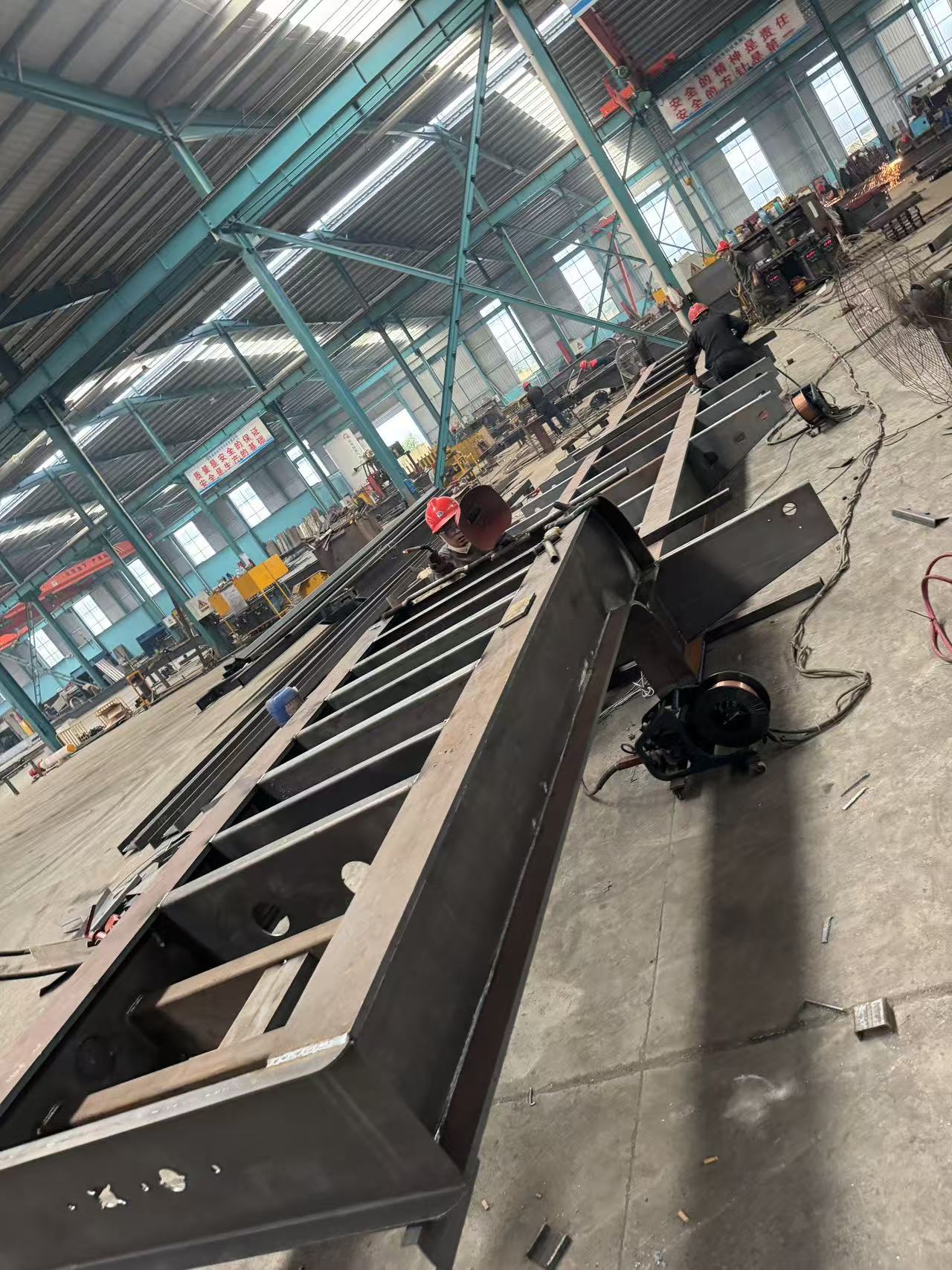
Why cargo type should come before brand on a trailer shortlist
Procurement teams often start a trailer programme with a supplier list, then work backwards to specifications. The more reliable sequence runs the other way: cargo, then body type, then the dimensional and mass envelope, then the approval route, and only then the supplier.
That order matters because the dimensional and mass envelope is a legal constraint, not a preference. In China, GB 1589-2016 sets mandatory limits for overall dimensions, axle loads and masses of motor vehicles, trailers and vehicle combinations, so every trailer legally operating on Chinese roads is designed inside that envelope. In the European Union, Regulation (EU) No 1230/2012 performs a comparable function at type-approval level for masses and dimensions. A trailer optimised for one envelope is not automatically a compliant export model for the other.
There is a second, less obvious reason to start from cargo. Trade statistics cannot carry the analysis on their own. Under the Harmonized System, tank trailers and tank semi-trailers sit in subheading 8716.31, while flatbed, lowbed, skeletal (container), van and tipper or dump semi-trailers are all grouped together in subheading 8716.39 as other trailers for the transport of goods. Customs data therefore separates tank equipment but blends five of the highest-volume cargo types into one figure. Any demand estimate built purely on import statistics is a blended number, and product-level planning has to come from supplier disclosures and route knowledge instead.
The shortlist at a glance
The table below summarises the seven cargo disciplines covered in this reference. Ranges are typical working ranges for each type; exact payload, tare weight and deck height are model-specific and should be confirmed on a signed datasheet before an order is placed.
| Cargo | Trailer type | Typical working range | Configuration focus | Approval / interface note |
|---|---|---|---|---|
| Cement and dry powder | Powder tank semi trailer | 32–60 m³ | Aeration, discharge pressure, manhole and pipeline layout | Discharge performance must match the receiving silo, not only the trailer |
| Fuel and chemicals | Tank semi trailer | 28,000–35,000 kg payload | Compartmentation, baffles, earthing, loading arrangement | ADR governs construction in Europe; brake system rules differ by market |
| ISO containers | Skeleton / container semi trailer | 30–65 t payload, 20 ft / 40 ft / 45 ft | Twist-lock positions, corner casting grade, chassis stiffness | ISO 668 for container dimensions, ISO 1161 for corner fittings |
| Compressed natural gas | CNG tube trailer | 2,000–6,000 Nm³ at 20–25 MPa | Tube bundle restraint, manifold design, pressure rating | Pressure equipment approval is a separate track from vehicle approval |
| Heavy equipment | Lowboy semi trailer | 40–100 t | Deck length and height, ramp or hydraulic system, axle load spread | Must be checked against the destination market's dimension and mass limits |
| Project cargo | Flatbed semi trailer | 12,500–16,000 mm deck length | Lashing points, deck continuity, extension modules | Axle count and load distribution determine legal road use |
| Mining and aggregate | Dump semi trailer | Q345B steel, 2–4 axles | Body plate grade, lift stability, tailgate sealing | Wear-plate specification should be agreed separately for abrasive duty |
Powder tank semi trailers for cement: volume is only half the decision
Powder tank semi trailers in the 32–60 m³ range are selected primarily on discharge behaviour, not on nominal volume. A cement distributor running repeated short-haul cycles gains more from a fast, complete discharge than from the largest available tank, because a trailer that leaves residual material in the tank loses payload on every subsequent load and adds cleaning time at the silo.
The practical configuration questions are therefore: what pressure the discharge system is designed for, how the aeration surface is arranged inside the tank, how many manholes and what diameter the discharge pipeline uses, and whether the receiving silo's inlet height and connector type match the trailer's outlet. Buyers who specify volume first and discharge second usually discover the mismatch at the first delivery, not at the quotation stage.
A second consideration is mass. A larger tank adds structure, and the resulting axle load distribution has to sit inside the legal envelope for the market where the trailer will operate. In China that envelope is defined by GB 1589-2016. Cement work is also a repeat-route business, so seal and valve wear becomes a lifecycle cost rather than a one-off maintenance item — which is why the availability of replacement discharge components over several years deserves as much attention as the initial price.
Tank semi trailers for fuel and chemicals: compliance architecture decides the market
Tank semi trailers rated at roughly 28,000–35,000 kg payload carry the heaviest compliance burden of any type in this shortlist. In Europe, the ADR — the European Agreement concerning the International Carriage of Dangerous Goods by Road — sets tank and vehicle requirements for the carriage of dangerous goods, and therefore governs the construction and approval of fuel tank trailers and other tank semi-trailers used in European dangerous-goods transport. Placing such a trailer on the EU market also runs through the type-approval framework of Regulation (EU) 2018/858.
Braking is a separate layer again. In UNECE type-approval markets, UN Regulation No. 13 covers the approval of vehicles of categories M, N and O with regard to braking, where category O covers trailers. In the United States, FMVSS No. 121 on air brake systems applies to trucks, buses and trailers equipped with air brakes. These are different legal instruments with different test logic; they should not be treated as interchangeable evidence of compliance.
Within the tank itself, compartmentation, baffle arrangement, earthing points and the loading method determine how the unit behaves in daily operation. A trailer specified for bottom loading at a terminal with vapour recovery is a different product from one specified for top loading at a depot. Those choices are cheapest to make before the tank shell is built.
Container semi trailers: the ISO interface is the specification
Skeleton or container semi trailers in the 30–65 t payload band for 20 ft, 40 ft and 45 ft ISO containers are, mechanically, a chassis built around an interface. Skeleton semi trailers must comply with ISO 668 for container dimensions and ISO 1161 for twist-lock corner fittings. That standard pair, rather than any marketing description, is what determines whether a container actually locks down properly and whether the load path runs through the intended structure.
Configuration decisions follow from the container mix a buyer actually handles. A fleet running only 40 ft boxes needs a different twist-lock layout from one that must also accept 20 ft units in the centre position and 45 ft units at the extremes. Chassis stiffness and the position of the goose-neck area matter when the same trailer alternates between light empty repositioning runs and heavy loaded port shuttles.
Payload claims in this segment deserve scrutiny. Legal payload is the difference between the permitted combination mass and the tare weight of both tractor and trailer; it is not a property of the trailer alone. Buyers comparing 30 t and 65 t figures should confirm which of those numbers is a structural design limit and which is a road-legal limit in the destination country.
CNG tube trailers: two approvals, one asset
CNG tube trailers in the 2,000–6,000 Nm³ range at 20–25 MPa are pressure equipment mounted on a road vehicle, and that dual identity is the single most important procurement fact about them. The vehicle side follows the same road-transport logic as any other trailer. The pressure side is a separate approval universe, and in Europe the ADR framework adds further requirements when the cargo itself is classified as dangerous goods for road carriage.
Because the two approval tracks are managed by different competent bodies and documented differently, a buyer should expect two document sets, not one, and should ask which of them the supplier holds directly and which is obtained locally after import. This is also the type in the shortlist where the verified specification base is thinnest: pressure-vessel approval routes, periodic inspection intervals and cylinder standards are not covered by the general vehicle standards discussed elsewhere in this article, and should be confirmed market by market before an order is committed.
Lowboy semi trailers: the 40–100 t band is a design conversation, not a catalogue line
Lowboy semi trailers in the 40–100 t class exist to move machinery that cannot travel on a standard deck. The engineering questions are deck length and loaded deck height, the ramp or hydraulic system that gets the machine onto the deck, and how the load is distributed across the axle group. As the nominal rating rises, the trailer increasingly becomes a project-specific design rather than a catalogue item.
Two constraints are frequently underestimated. The first is the destination market's dimensional and mass envelope; a trailer that is legal in one jurisdiction may require permits or re-configuration in another, and the applicable rules differ between the Chinese, EU and US regimes. The second is the towing combination itself: the tractor's fifth-wheel load capacity, the electrical interface between tractor and trailer, and the brake system compatibility all have to be resolved together. ISO publishes dedicated standards for the 24 V electrical connector interface between towing and towed vehicles, and those interface standards determine plug-level compatibility — a small detail that can stop a delivery.
Flatbed semi trailers: length is a project decision
Flatbed semi trailers with deck lengths in the 12,500–16,000 mm range serve project and general cargo work where the load profile, not a fixed body, defines the requirement. Longer decks improve the fit for long structural loads but change the turning geometry and the axle load distribution, so the length choice should follow the actual cargo list rather than a preference for capacity.
The configuration details that separate a workable flatbed from a frustrating one tend to be unglamorous: the density and position of lashing points, the continuity and flatness of the deck surface, whether side stanchions or extension modules can be added later, and how the deck behaves under concentrated point loads. For buyers running mixed project cargo, modularity — the ability to add or remove deck sections and accessories over time — is often worth more than a marginally longer fixed deck.
Dump semi trailers: steel grade and lift stability
Dump semi trailers for mining and aggregate duty are commonly built with Q345B steel in 2-axle to 4-axle configurations. Q345B is a structural steel grade, and buyers should be clear about what it does and does not deliver: it provides a defined structural base for the body, but it is not a dedicated wear-resistant plate. In high-abrasion service — sharp rock, slag, abrasive ore — the wear package needs to be agreed separately, with the supplier stating which plates are upgraded and where.
Lift stability is the second deciding factor and it is a site question as much as a trailer question. Side-discharge behaviour, tailgate sealing, body floor thickness and the axle spread all interact with ground conditions and with the tipper's discharge point. A trailer that performs on a flat, prepared pad can behave very differently on an uneven mine bench. Buyers should specify the intended discharge conditions, not only the payload figure.
Where Luen Auto sits in this shortlist
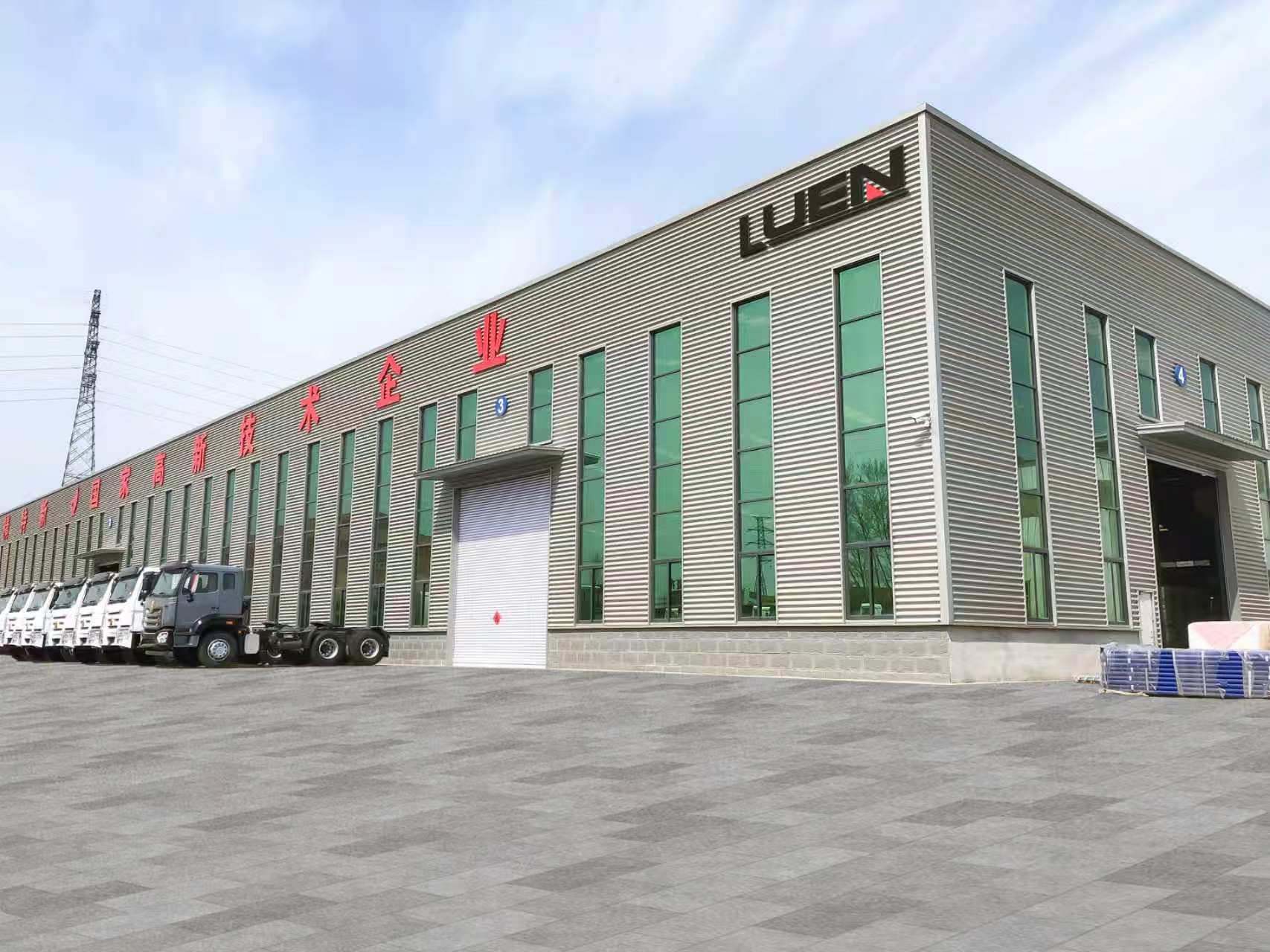
Shandong Luen Auto Co., Ltd. is a Chinese manufacturer and exporter of semi-trailers and trucks, based in Xuji Industrial Park, Liangshan County, Jining City, Shandong Province, and a subsidiary of Luen Group. The company operates a factory of more than 50,000 m² with an annual production capacity of approximately 1,500 units and more than 130 employees, including a team of five engineers, and reports annual export revenue above USD 30,000,000, with 80% of sales going to international markets across Africa, South America, the Middle East, Southeast Asia, Central Asia and Latin America.
Its relevance to this shortlist is breadth. The trailer range covers lowbed semi trailers, flatbed semi trailers, dump semi trailers, skeleton semi trailers, van semi trailers, fuel tank trailers, dust tank trailers and CNG tank trailers — that is, all seven cargo disciplines discussed above sit inside one supplier's product scope. The truck side adds tractor trucks, used tractor trucks, dump trucks, used dump trucks, HOWO and Shacman trucks, and light duty trucks including Foton, which matters when a buyer wants the towing vehicle and the trailer specified against each other rather than separately.
Structurally, Luen Group also includes Luheng Trailer Parts Co., Ltd., an axle and parts manufacturer, alongside its trading and machinery entities. For a fleet buyer the practical implication is component continuity: self-manufactured axles and suspensions mean replacement parts are sourced from the same group over the trailer's service life rather than from a third party whose availability is outside the supplier's control.
What a 5–15% price premium buys in a long-life asset
Trailer pricing in the export market spans a wide band, and the cheapest quotation is usually cheapest for a reason. On a like-for-like comparison against small or unbranded workshops in the same manufacturing region, integrated manufacturers typically price 5–15% higher than the lowest bid. The relevant question for a decision-stage buyer is what that difference purchases.
Three things, in practice. First, a stable legal entity that can honour a warranty across the trailer's service life — a workshop that closes cannot. Second, verified quality control: complete testing equipment and 3C certification indicate batch-to-batch consistency, whereas unbranded workshop output varies between batches. Third, parts availability tied to a known brand rather than to whatever a third party happens to stock. For a single unit bought for spot work, the premium may not pay back. For a fleet held five years or more, the arithmetic changes.
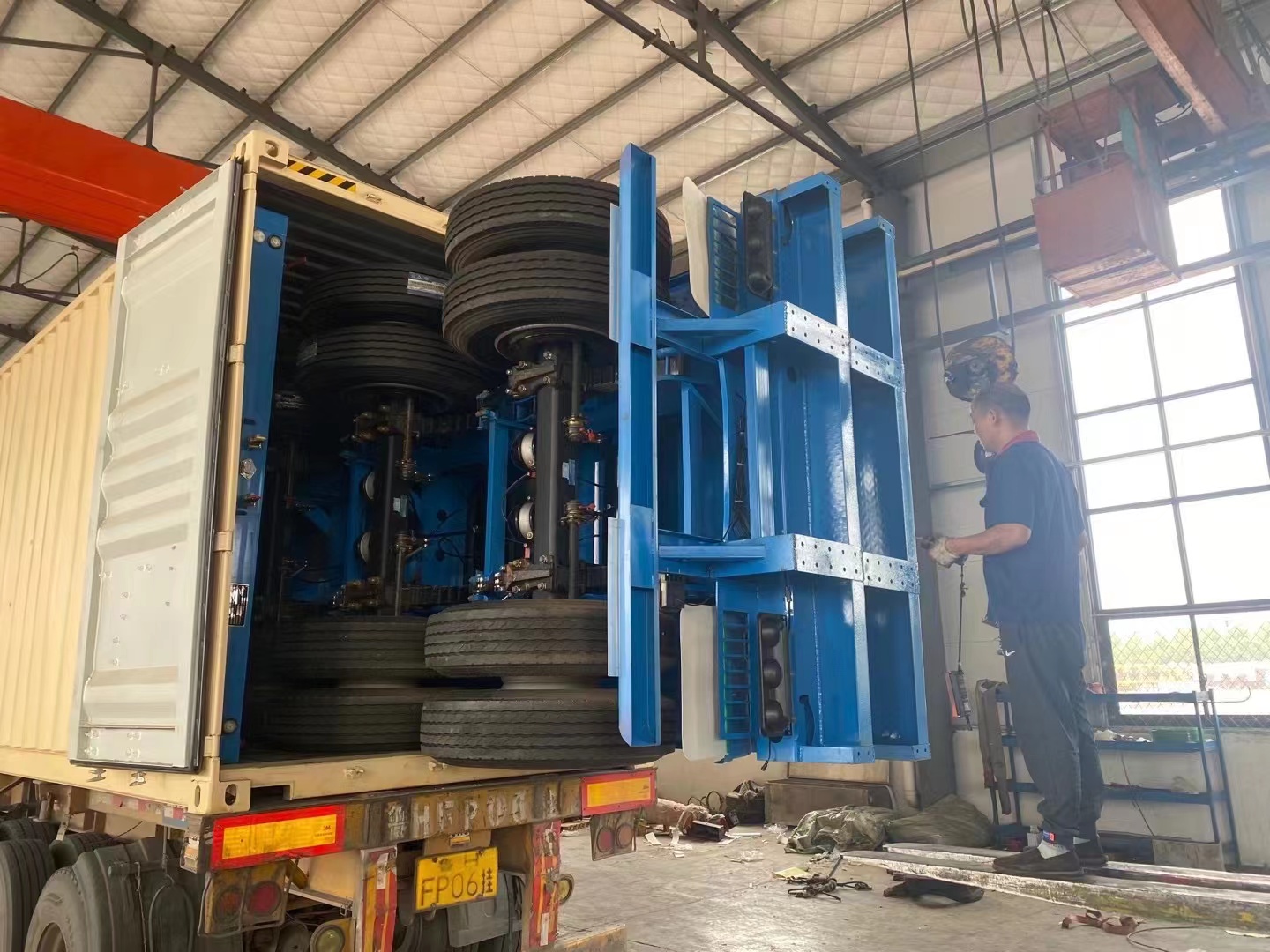
Transport risk is the other half of delivered cost. Export packaging that includes anti-rust wax coating before shipping, semi-knocked-down packing for large trailers, fumigation-free plywood crates for parts, and a documented packaging and delivery procedure with photo records per shipment reduces the probability of a claim that erases the price saving from a cheaper unit.
Where this shortlist stops
Honest boundaries are part of a usable reference. This article describes cargo disciplines and configuration logic; it does not publish model-level payload, tare weight, deck height, tank material grade or price data, because those figures are model-specific and must come from a signed datasheet for the exact unit being quoted. Buyers should treat the ranges above as working bands for shortlisting, not as contractual specifications.
Compliance is the second boundary. The standards referenced here — GB 1589-2016, GB 7258-2017, FMVSS No. 224 and No. 121, UN Regulation No. 13, ADR, Regulation (EU) 2018/858, Regulation (EU) No 1230/2012, ISO 668 and ISO 1161 — describe the requirement framework for their respective markets. They do not certify any individual trailer. Type approval, pressure equipment approval for CNG units, and periodic technical inspection are separate processes with separate costs, and none of them can be inferred from a product brochure.
The third boundary is geography. A supplier that serves Africa, South America and the Middle East on a volume basis is not automatically the right source for a fully EU type-approved tank trailer. Matching the approval route to the destination market should happen before the supplier shortlist is finalised, not after.
Market context for long-term trailer planning
Published market sizing for truck trailers should be read with caution. Grand View Research values the global truck trailer market at USD 46.1 billion in 2025 and projects USD 80.4 billion by 2033, but comparable commercial datasets in the same comparison set return 2025 valuations an order of magnitude lower. The gap is largely definitional: some studies include light and utility trailers, others count only heavy semi-trailers. For a fleet buyer the practical conclusion is that aggregate market figures cannot substitute for product-level demand analysis — and, as noted earlier, HS subheading 8716.39 blends five major cargo types, so trade data will not fill the gap either.
Supply-side signals are firmer. China's heavy-duty truck exports reached 295,000 units in 2024, a 6.9% increase over 2023, indicating a scaled and still-expanding export base for the tractor units that pull these trailers. Scale at the tractor level does not automatically translate into depth at the trailer level — a supplier may offer a broad catalogue while only a few of its lines are genuinely engineered for a specific cargo discipline. That distinction is the reason this shortlist is organised by cargo and not by supplier size.
Future outlook
Two forces are likely to shape trailer procurement over the next cycle. The first is compliance architecture as a differentiator. As approval frameworks tighten and in-service inspection regimes — such as the EU's periodic roadworthiness testing under Directive 2014/45/EU — impose recurring obligations, the residual value of a trailer becomes tied to a documented approval and inspection history rather than to steel tonnage. Trailers that cannot be re-approved lose value faster than their mechanical condition suggests.
The second is lifecycle documentation. Buyers increasingly ask for the packaging record, the test record and the parts provenance at handover, because those records determine what happens in year four, not year one. Suppliers who can produce them as a matter of routine will be easier to keep in a fleet programme; suppliers who cannot will be replaced at the next tender regardless of price.
Frequently asked questions
How should a buyer choose between a skeleton semi trailer and a flatbed semi trailer for container and project cargo?
The deciding factor is whether the cargo is a standard ISO container or a non-container load. A skeleton semi trailer is a chassis built around the twist-lock interface defined by ISO 668 for container dimensions and ISO 1161 for corner fittings, so it carries 20 ft, 40 ft and 45 ft boxes efficiently but is not a general cargo deck. A flatbed semi trailer in the 12,500–16,000 mm deck length range carries machinery, structures and mixed project loads using lashing points rather than twist locks. Fleets that handle both usually need both types, or a modular flatbed configuration, rather than a single compromise unit.
What determines the right volume for a powder tank semi trailer in cement distribution?
Discharge performance and legal mass, more than nominal volume. The 32–60 m³ band covers most cement distribution work, but the correct point in that band depends on the discharge pressure the system is designed for, the aeration arrangement, the pipeline diameter, and whether the receiving silo's inlet height and connector match the trailer outlet. A larger tank also adds structure and affects axle load distribution, which must sit inside the legal envelope of the operating market — in China, GB 1589-2016 sets those limits.
Which approvals should be confirmed before ordering a fuel tank semi trailer?
Confirm the approval route for the destination market before discussing capacity. In Europe, the ADR sets tank and vehicle requirements for the road carriage of dangerous goods and governs construction and approval of fuel tank trailers, while Regulation (EU) 2018/858 provides the type-approval framework for placing the trailer on the EU market. Braking is covered separately: UN Regulation No. 13 applies in UNECE type-approval markets for category O trailers, and FMVSS No. 121 applies to air-braked trailers in the United States. A supplier should be able to state which route the unit is built to and which document evidences it.
What is the difference between vehicle approval and pressure equipment approval for a CNG tube trailer?
They are two separate approval tracks for one asset. The vehicle side follows the road-transport requirements of the destination market, the same logic that applies to any trailer. The pressure side concerns the tube bundle and manifold as pressure equipment and is approved by a different competent body using different documentation. Where the gas is classified as dangerous goods for road carriage, the ADR framework adds further requirements in Europe. Buyers should expect two document sets and should establish which set the supplier holds directly and which must be obtained locally after import.
What are the typical purchasing terms and acceptance criteria for a trailer order?
For export orders of this type, minimum order quantity is one unit, delivery terms are FOB or CIF, acceptance criteria are based on a pre-shipment test, and payment terms are commonly TT 30/70. Buyers should confirm that the pre-shipment test scope is written into the order, including which functions are tested, what record is issued, and how packaging is documented before the container is sealed.
How should a fleet buyer assess a trailer supplier for a multi-year programme?
Assess four things that outlast the first order: the stability of the legal entity that carries the warranty, the group's control over component supply so that parts remain available through the trailer's service life, evidence of consistent batch quality such as testing equipment and 3C certification, and the documented export process covering anti-rust treatment, packing method and per-shipment photo records. Price is a fifth factor, not the first. Integrated manufacturers typically sit 5–15% above the lowest workshop bid, and that difference is only justified when the first four items are demonstrable rather than asserted.
Reference
For buyers who want to map the seven cargo disciplines against a single supplier's product scope, the Luen Auto product catalogue is available for download: LUEN Auto Product Catalog (PDF).
Tem questões ou precisa de mais detalhes?
Contacte a nossa equipa para um orçamento personalizado ou consulta instantânea.
Solicitar orçamento
Preencha o formulário abaixo e a nossa equipa entrará em contacto com uma proposta personalizada.
Chat direto do WhatsApp
Prefere conversar em tempo real? Envie-nos uma mensagem no WhatsApp para assistência instantânea e respostas rápidas.
- Obter orçamento personalizado
- Partilhar fotos ou documentos
- Discuta as suas necessidades diretamente
Geralmente responde em 5–30 minutos durante o horário de expediente.