
Truck Trailer Spec Sheets: What Importers Can Verify
For importers evaluating a truck trailer fleet, a spec sheet is often the first — and sometimes only — document available for line-by-line comparison before any unit leaves the factory. Yet spec sheets vary widely in what they actually support. Some line items carry traceable, post-delivery evidence; others are illustrative claims that only become meaningful once the full configuration is confirmed.
That distinction matters at the evaluation stage. The global semi-trailer market was estimated at USD 22.8 billion in 2024, with expectations to reach USD 42.3 billion by 2033, according to Grand View Research. As demand expands across Africa, South America and the Middle East, the volume of spec sheets reaching procurement desks has grown with it. The question is no longer whether a spec sheet arrives, but which of its lines can be checked against documents and component markings before a purchase order is confirmed.
The Problem: Not Every Spec Line Carries the Same Auditable Weight
A truck trailer spec sheet blends qualification claims with commercial descriptions. Emission standards, steel grades, pressure ratings and component certifications have a traceability path because they key to a named entity — an engine model, a steel designation, a certification standard number, or a component manufacturer. Those items can be verified against accompanying documentation before the order is locked.
By contrast, performance under a specific duty cycle (actual fuel consumption, route-specific payload behavior, resale value after five years) depends on operating patterns and can only be assessed after the configuration and use case are fixed. Buyers need to know which lines in a given sheet fall into the first category and which fall into the second.
A practical rule for importers: if a spec line references a named standard, a named material grade, a named component brand, or a named engine model, it can usually be verified. If it references an outcome — efficiency, durability, uptime — ask for the specific test or configuration that produced the number.
How Luen Auto Approaches Qualification Documentation
Shandong Luen Automobile Co., Ltd., operating under the Luen Auto brand, is a trailer and truck manufacturer and exporter based in Xuji Industrial Park, Liangshan County, Jining City, Shandong Province, China. The company operates a production facility spanning 50,000 square meters, holds CCC mandatory certification, and maintains in-house testing equipment for load, brake, and dimensional testing.
For importers, that combination is relevant because it means qualification documents can be tied to a specific factory and a specific certification scope. CCC mandatory certification and in-house load, brake, and dimensional testing equipment provide a starting point for the document set a buyer can request before shipment. The qualification trail, however, does not end at the factory certificate — it continues through the individual spec lines for each trailer family.
Mapping Each Trailer Family to Its Qualification Spec Line
The practical starting point for verification is identifying which spec line carries the qualification evidence for each family. The table below summarizes the primary line items that can be checked for each trailer type before an order is confirmed.
| Trailer / Truck Family | Qualification Spec Line | What the Buyer Can Request |
|---|---|---|
| Flatbed semi trailer | Q345B / Q550 high-tensile steel; payload 40–60 tons; I-beam or H-beam frame | Material certificate; load test record |
| Lowbed semi trailer | Q550 / Q690 high-strength steel; HG785D quenched & tempered steel; payload 40–100 tons | Material certificate; load test record |
| Container / skeleton semi trailer | Q345B steel main beams; ISO 1161 compliant twist locks; JOST landing gear | Material certificate; component manufacturer markings |
| Dump semi trailer | Q345B high-strength carbon steel; 8–12 mm wear-resistant floor; tipping angle 45–50° | Material certificate; floor thickness verification |
| Fuel tank trailer | Tank thickness 5–8 mm; carbon steel Q235B / Q345B, 304/316 stainless, or 5083 aluminum | Material certificate; tank thickness measurement |
| Powder tank semi trailer | Working pressure 0.196–0.2 MPa; test pressure 0.26 MPa; Q345B carbon steel tank | Pressure test record |
| CNG tube trailer | Working pressure 20–25 MPa (200–250 bar); 37Mn seamless steel cylinders | Cylinder hydrostatic test report; material certificate |
| Shacman dump truck | Euro II / III / V; Weichai WP12.380 / WP12.420 or Cummins ISM385 / ISM440; Q510 / Q550 frame | Engine model plate; emission document |
| HOWO dump truck | Euro II / III / V; WD615.69 or WP12.420; Q345B / Q550 chassis | Engine model plate; emission document |
| HOWO light duty truck | Euro II / III / IV; Yuchai or Sinotruk light diesel; Q235B cargo body | Engine model plate; body material certificate |
For flatbed semi trailers, the primary lines are payload capacity (40–60 tons) and steel grade (Q345B / Q550), with frame construction specified as I-beam or H-beam. For lowbed semi trailers, the key evidence shifts to Q550 / Q690 or HG785D quenched and tempered steel, with payload ranges of 40–100 tons. Container semi trailers and dump semi trailers both reference Q345B high-strength steel construction, while skeleton trailers add ISO-certified twist-lock fittings and JOST landing gear as component-level qualifications.
Quote requests that specify the exact model and configuration produce more reliable qualification documents than catalog-based requests. A buyer who asks for a 3-axle 40ft skeleton trailer with 4 twist locks and JOST landing gear receives a document trail keyed to that configuration. A buyer who asks for "a skeleton trailer" receives a generic catalog claim.
Emissions Statements on Shacman and HOWO Trucks
For dump trucks and tractor trucks, the emission statement is one of the most frequently verified spec lines. Shacman dump trucks list Euro II / III / V emission standards, with engine options including Weichai WP12.380 / WP12.420 and Cummins ISM385 / ISM440. HOWO dump trucks list Euro II / III / V with WD615.69 or WP12.420 engine options. HOWO light duty trucks list Euro II / III / IV with Yuchai or Sinotruk light diesel engines.
Verification path: request the engine model plate photo or the engine block marking, then match the emission statement against the importing country's registration requirements. The spec line establishes what the manufacturer is claiming; the emplacement or engine plate establishes that the specific unit matches that claim.
Steel Grades on Container, Skeleton and Dump Trailers
Q345B high-strength steel appears as the frame material for container semi trailers, dump semi trailers and skeleton trailers. Flatbed trailers extend the range to Q345B / Q550, while lowbed trailers specify Q550 / Q690 or HG785D. The same Q345B designation also appears on self-dumping semi trailers, where the box uses Q345B with an optional HARDOX wear-resistant floor.
A steel grade name alone does not prove yield strength. Buyers should pair the spec line with a material certificate or heat number that ties the delivered steel to the stated grade. This is standard practice for buyers ordering against a known duty cycle — particularly for mining and construction fleets, where the gap between a specified grade and the delivered grade determines service life.
Pressure Ratings on CNG and Powder Tank Trailers
The CNG tube trailer carries two principal qualifications: working pressure of 20–25 MPa (200–250 bar) and cylinder material of 37Mn seamless steel. The number of tubes ranges from 8 to 20, with gas capacities of 2,000–6,000 Nm³. The verification path for CNG buyers is the cylinder hydrostatic test report, which should be matched to the batch of cylinders installed on the unit being delivered.
Powder tank semi trailers operate at a much lower pressure band — working pressure of 0.196–0.2 MPa and test pressure of 0.26 MPa. The qualification evidence here is the pressure test record for the tank, not a general claim of pneumatic discharge capability. Discharge speed of 1.6 tons per minute and vertical discharge height of up to 15 m can be confirmed through the test documentation rather than assumed from the catalog.
Component Certifications: Twist Locks and Landing Gear
Component-level qualifications offer the easiest verification because the parts carry manufacturer markings. Skeleton trailers list ISO 1161 compliant twist locks and JOST landing gear. The buyer can check the twist-lock casting for ISO 1161 markings and the landing gear leg for the JOST brand identifier. This requires physical access to the unit or a photo of the component markings before shipment.
Component certification is often the most reliable qualification in a spec sheet because it depends less on factory interpretation and more on the component manufacturer's own traceability. When the spec sheet names a component standard and manufacturer, the buyer should request the corresponding photo or report before confirming the purchase order.
Factory Certification: What the Certificate Covers
Factory-level certification is a separate layer from product-level qualification. Luen Auto holds ISO 9001:2015 quality management system certification, certificate number 47424Q2464R0S, issued by ZHONGNUO CERTIFICATION CO., LTD. The certification scope covers sales of semi trailer, semi trailer parts and tractor, under the GB/T 19001-2016 / ISO 9001:2015 standard. The certificate is valid from 2024-10-09 to 2027-10-08.
That scope matters. A quality management certificate covering sales and production of semi trailers, semi trailer parts and tractors establishes a documented process — it does not certify the quality of a specific unit. Buyers should treat it as a system-level qualification check, not as a substitute for the unit-level qualification checks above.
Application: How a Fleet Buyer Used Qualification Documents
One documented procurement case in Nigeria and Ghana involved a construction and mining company operating a fleet of 50+ vehicles. The buyer used quad-axle dump semi trailers for heavy-duty mining and construction material haulage across multiple project sites. The fleet has an estimated service life of 10–15 years, which the manufacturer positions as comparable to entry-level European trailer brands at 40–60% lower purchase cost.
The case illustrates a pattern that qualification-focused buyers can adopt: when the price sits materially below European-brand alternatives, the qualification document set becomes the main mechanism for comparing what is actually being delivered. In this case, the buyer transitioned from parts purchasing to full trailer procurement — a step that followed the buyer's own testing of component quality before committing to complete units.
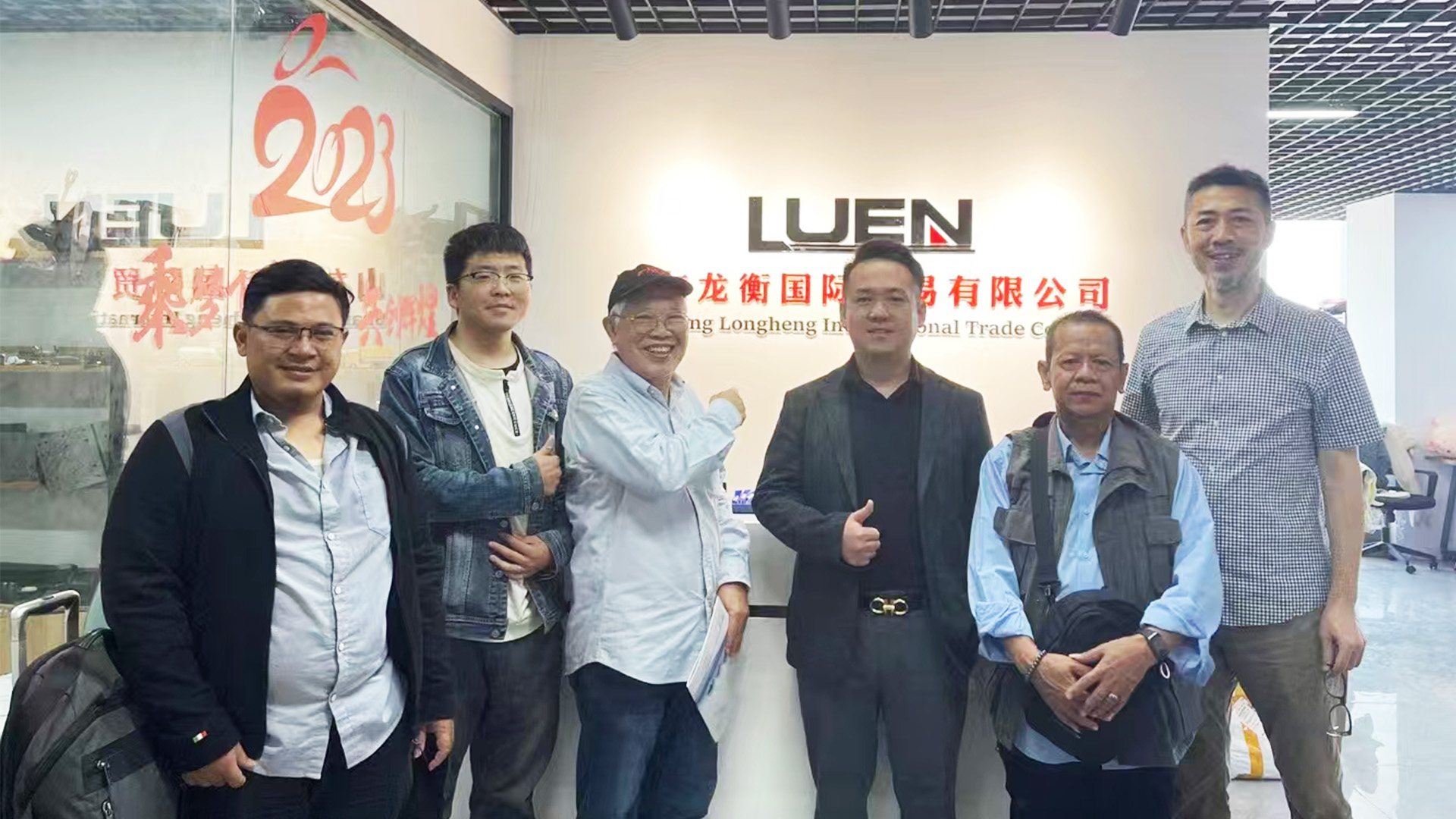
Qualification and delivery review with an international fleet buyer — part of the documented procurement trail for multi-unit trailer orders.
Comparison with Traditional Approaches: What Spec Sheet Verification Cannot Do
Spec sheet verification does not replace pre-shipment inspection. A line that reads correctly on paper — a steel grade, a pressure test record, a component brand — still requires either on-site inspection or a third-party inspection report to confirm that the specific unit ordered matches the generic documentation. A material certificate for a Q345B heat does not automatically confirm that the delivered trailer was built from that heat unless the production record is tied to the certificate.
There is a second limitation worth stating explicitly: CCC mandatory certification is a China domestic mandatory certification. It does not automatically translate into a destination-market type approval or homologation. For fuel and tank trailers, ADR certification is required for dangerous goods transport across Europe under the ADR Agreement. In the United States, the Department of Transportation requires annual safety inspections for trailers with GVWR over 10,001 lbs under 49 CFR 396.17. Buyers whose route crosses these jurisdictions need to verify the destination-market compliance separately from the factory-level certification.
A third limitation is configuration drift. Spec sheets are often drafted for a family of configurations. If the buyer's order specifies a 4-axle lowbed trailer but the spec sheet excerpt was written for a 3-axle model, the qualification lines may not apply to the ordered unit. The buyer should confirm that the spec sheet segment provided with the quotation matches the exact model and configuration ordered.
Market Trend: Why Verifiable Specifications Matter More Than Before
Lowboy trailers accounted for the largest share of the semi-trailer market at 25.7% in 2024, according to Grand View Research. That concentration matters for qualification-focused buying because lowbed trailers carry some of the most demanding payload and frame specifications in the category, with payload ratings of 40–100 tons and steel grades running from Q550 to Q690 and HG785D. As the lowbed segment expands, the spec sheets reaching procurement teams are becoming more varied in both content and quality.
The supplying side of the market has also shifted. Sinotruk (CNHTC) dominated China's heavy-duty truck exports in 2024, reaching a record-breaking 135,000 units according to ChinaTrucks.org, while Shacman heavy-truck exports reached 25,000 units, a 35% year-on-year increase, according to ChinaTruck.Net. More export units from more factories means more spec sheets at the procurement stage — and more reason for buyers to distinguish qualification lines from marketing lines.
Future Outlook: Verification as a Supplier Differentiator
As the global semi-trailer market continues to expand, the manufacturers most likely to win repeat fleet orders are those that can supply unit-level qualification documentation alongside the product — material certificates, pressure test records, component markings and certification scopes tied to the exact model ordered. Buyers at the evaluation stage are already building qualification checklists into their RFQs; the shift toward verifiable specifications is likely to accelerate as fleet buyers compare suppliers across borders.
For Luen Auto, the relevant capability is the combination of CCC mandatory certification, ISO 9001:2015 certification covering semi trailer, semi trailer parts and tractor sales, and in-house testing equipment for load, brake and dimensional testing. These establish a factory-level foundation; the buyer's task is to connect that foundation to the specific unit-level evidence for the ordered configuration.
FAQ
What can I verify directly from a truck trailer spec sheet?
Buyers can verify items that reference named entities. These include emission standards such as Euro II / III / V on Shacman and HOWO dump trucks, steel grades such as Q345B / Q550 / Q690 / HG785D, pressure ratings such as 20–25 MPa on CNG tube trailers or 0.196–0.2 MPa working pressure on powder tank trailers, tank materials such as 37Mn seamless steel, 304/316 stainless or 5083 aluminum, and component certifications such as ISO 1161 twist locks and JOST landing gear.
Which trailer families use Q345B high-strength steel?
Container semi trailers and dump semi trailers specify Q345B high-strength steel as the main frame or box material. Flatbed semi trailers extend to Q345B / Q550, while lowbed semi trailers use Q550 / Q690 or HG785D. Skeleton trailers specify Q345B steel main beams. Buyers should pair the Q345B reference with a material certificate or heat number rather than treating the grade name as a standalone proof of yield strength.
How can I verify twist-lock compliance on a skeleton trailer?
Skeleton trailers specify ISO 1161 compliant twist locks and JOST landing gear. Verification is through component markings: the twist-lock casting should carry ISO 1161 identification, and the landing gear leg should carry the JOST manufacturer mark. This requires either physical access to the unit or a photo of the component markings before shipment.
What should I verify on a CNG tube trailer specification?
CNG tube trailers specify working pressure of 20–25 MPa (200–250 bar), cylinder material of 37Mn seamless steel, and tube counts of 8, 10, 12, 16 or 20. The verification document is the cylinder hydrostatic test report, which should be matched to the batch of cylinders installed on the specific unit being delivered, rather than applied as a general statement across all units.
What are the working and test pressures on a powder tank semi trailer?
Powder tank semi trailers list a working pressure of 0.196–0.2 MPa (2 bar) and a test pressure of 0.26 MPa (2.6 bar), with a tank material of Q345B carbon steel or 5083 aluminum alloy and a discharge speed of 1.6 tons per minute. The qualification evidence is the pressure test record for the tank.
What factory-level certifications can be verified, and what do they cover?
The manufacturer holds CCC mandatory certification and ISO 9001:2015 quality management system certification, certificate number 47424Q2464R0S, issued by ZHONGNUO CERTIFICATION CO., LTD. The ISO 9001 scope covers sales of semi trailer, semi trailer parts and tractor, under GB/T 19001-2016 / ISO 9001:2015, valid from 2024-10-09 to 2027-10-08. These establish system-level process certification, not unit-level product certification.
Tem questões ou precisa de mais detalhes?
Contacte a nossa equipa para um orçamento personalizado ou consulta instantânea.
Solicitar orçamento
Preencha o formulário abaixo e a nossa equipa entrará em contacto com uma proposta personalizada.
Chat direto do WhatsApp
Prefere conversar em tempo real? Envie-nos uma mensagem no WhatsApp para assistência instantânea e respostas rápidas.
- Obter orçamento personalizado
- Partilhar fotos ou documentos
- Discuta as suas necessidades diretamente
Geralmente responde em 5–30 minutos durante o horário de expediente.