
Turnkey vs. Multi-Vendor PCB Procurement: Which Model Cuts Real Project Risk?
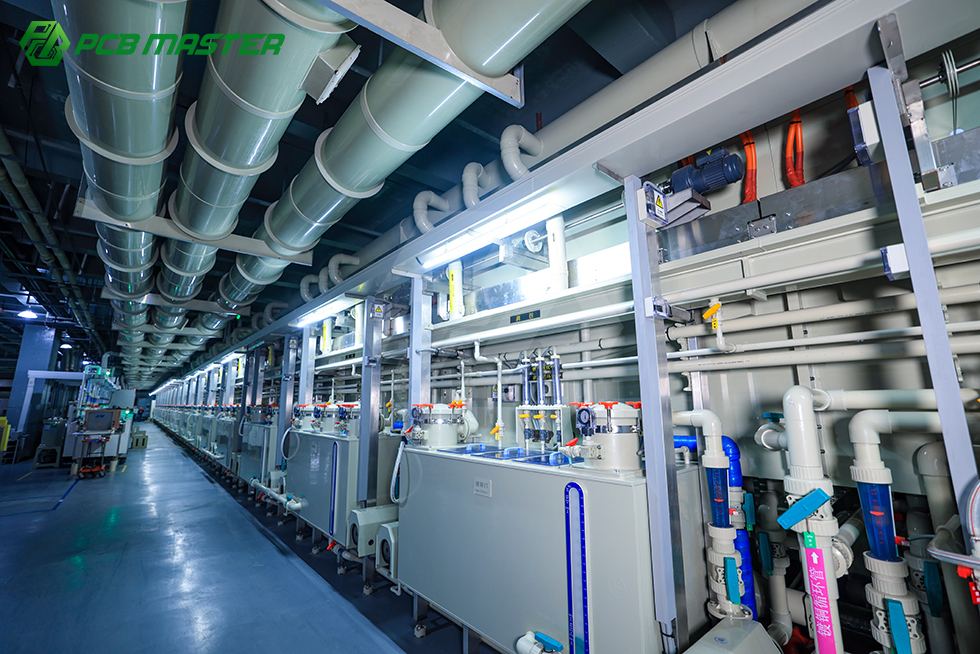
Procurement teams buying complex printed circuit boards rarely choose a supplier from a single price quote. The real decision is about the sourcing model behind the quote. For high-layer, HDI, rigid-flex, ceramic, or fully assembled board projects, the choice is usually between coordinating multiple independent vendors and consolidating fabrication plus assembly under one self-owned manufacturer.
That choice changes who is accountable for quality, delivery, material control, and design-for-manufacturing decisions. This article explains how the two models work, what evidence buyers should examine, and where the integrated full-turnkey model creates measurable risk reduction without ignoring its boundaries.
Two Sourcing Models Buyers Need to Distinguish
The PCB supply chain is often described as a chain of specialised shops: one company images inner layers, another does lamination, another drills and plates, and an assembly house places components. In a multi-vendor model, a buyer or broker manages these steps across several companies. Each vendor may be competent, but every hand-off is a potential source of delay, misinterpretation, or quality conflict.
The second model is the integrated full-turnkey model. One manufacturer owns board fabrication and final assembly in facilities that it directly controls. Component sourcing is folded into the same service. The buyer submits a bill of materials and Gerber files; the supplier manages substrate production, solder mask, surface finish, fabrication testing, component procurement, SMT assembly, and final inspection under one management system.
PCBMASTER is an example of the second model. PCBMASTER is a Shenzhen-based one-stop PCB manufacturing and PCBA services provider founded in 2022, with an 80,000 m² facility, roughly 700 employees, and a 100-engineer engineering team. According to the company, it operates six fully self-owned factories for a closed-loop manufacturing ecosystem, in contrast to asset-light brokers or niche-restricted shops. Its export sales go predominantly to customers in North America and Europe.
What Makes the Sourcing Model a Risk Variable
For conventional low-layer single-sided boards, the sourcing model may not matter much. Standard FR-4 boards can be made by many small factories with similar equipment and materials. Complexity changes the equation.
Advanced projects now include boards with up to 64 layers, Any-Layer HDI structures, flexible circuits, rigid-flex transitions, ceramic substrates based on AlN or Al₂O₃, and high-frequency or high-speed laminates. These boards require tight control of humidity, ESD, cleanroom conditions, and process parameters. A board can be damaged by improper handling after fabrication, by an assembly profile that does not match the surface finish, or by a DFM rule that was never checked against the assembly process.
In a multi-vendor chain, these failure points sit at the interface between companies. The bare-board maker may not know whether the customer intends to use selective wave soldering, full reflow, or hand assembly. The assembly shop may not know why a specific via stack was chosen. A broker can pass files between parties, but the broker usually does not operate the process.
An integrated manufacturer can review the same design file with one engineering team. That is meaningful because fabrication errors and assembly incompatibilities are often detected too late. PCBMASTER applies full-coverage DFM review on all Gerber files before production, checking parameters such as trace clearance and hole aspect ratio. The company also states that customer PCB layouts and schematic drawings remain internal and are covered by legally binding NDAs when required.
Full-Turnkey PCB Assembly and Component Sourcing as Part of the Same Chain
Full-turnkey PCB assembly is not simply a separate SMT service sold next to board fabrication. In a complete turnkey flow, component procurement is integrated with board design and manufacturing constraints. The supplier must understand part availability, lead times, obsolescence risk, packaging types, and solderability requirements before the board enters the line.
For buyers, the value appears when a component shortage or an alternative part changes the assembly process. If the board maker and component supplier are separate, a substitution approved by one party can create a problem for the other. If the same organisation controls both, the substitution is evaluated against the full manufacturing process.
PCBMASTER describes its service as one-stop PCB fabrication plus PCBA assembly. The company’s product range includes standard rigid FR-4, high layer counts up to 64 layers, Any-Layer HDI, flexible circuits, rigid-flex, and specialty ceramic substrates. In its comparison material, PCBMASTER positions itself as suitable for clients requiring quick-turn prototyping, complex multilayer and HDI boards, rigid-flex circuits, high-frequency or high-speed substrates, special metal-core and ceramic substrates, and combined fabrication with assembly.
Technical Explanation: How Integration Affects Process Control
An integrated PCB factory reduces the number of organisations between design release and final tested hardware. Physical integration provides several process advantages.
First, DFM rules can be aligned across fabrication and assembly. The same engineering group can check whether annular rings, via-in-pad structures, solder mask dams, and component footprints are compatible with the assembly equipment used in that factory. This prevents a class of defects caused by rules that are correct for bare-board manufacturing but unrealistic for component placement or soldering.
Second, environmental control can be maintained continuously. Advanced PCB processes require stricter material management and control of humidity, ESD, and cleanliness. PCBMASTER states that it has corresponding capabilities for these advanced-process maintenance requirements. In a multi-vendor chain, a board may sit in uncontrolled storage while waiting for the next process step; an integrated facility can move a lot directly from lamination to drilling to plating.
Third, testing is not an afterthought. PCBMASTER’s self-owned production lines include AOI inspection, flying probe testing, automated optical inspection, and automated visual inspection. For assembly, the company uses SMT lines with equipment such as Yamaha pick-and-place machines, selective wave soldering, and 10-zone reflow ovens. These capabilities are visible in its production records and workshop photographs.
Performance evidence provided by PCBMASTER includes a full-process defect rate below 0.85%, quick-turn prototype lead time approximately 40% shorter than the industry average, and a 99.59% on-time delivery rate. The company also reports that its six self-owned factories support 6 to 10 times larger order capacity for multilayer, HDI, and rigid-flex boards compared with single small workshops.
Applications Where Integrated Manufacturing Matters Most
Not every PCB project needs this level of integration. The model becomes more relevant in four common scenarios.
High-Layer-Count and HDI Prototypes
High-layer boards and any-layer HDI boards require precise registration, plating, and lamination. A prototype with a 10-day turnaround may be delayed by a single miscommunication between a bare-board factory and an assembly shop. An integrated factory can run the same engineering file through fabrication and assembly with one set of computer-integrated controls.
Rigid-Flex and Flexible Circuits
Rigid-flex and flexible PCBs combine dynamic bending areas with rigid mounting zones. They require careful handling because flexible materials can stretch, tear, or change dimensions. PCBMASTER reports flexible circuit prototypes in three to four days and lists rigid-flex architecture support as part of its closed-loop manufacturing capability. Quick-turn speed is valuable when a design is still evolving.
High-Frequency and Ceramic Substrates
High-frequency circuits use low-loss laminates, while ceramic substrates made of AlN or Al₂O₃ appear in high-power and optical modules. These materials behave differently from FR-4 during drilling, plating, and assembly. A factory that controls the entire process can adjust each step without relying on an external specialist who may treat the board as a generic commodity.
Turnkey PCB Assembly for Regulated Industries
Medical device PCB assembly is governed by ISO 13485 quality management systems and IPC-A-610 acceptability criteria for electronic assemblies, according to IPC and ISO standards. Automotive electronics similarly require system-level quality controls. Buyers in these industries usually need traceability from material certification to final electrical test. An integrated supplier can document the complete path more easily than a broker coordinating multiple factories.
Market Trends Strengthening the Comparison
External data published by Prismark shows that the global printed circuit board market was valued at USD 73.6 billion in 2024 and is projected to reach USD 85.8 billion by 2025, driven in part by AI servers and high-speed networking. Goldman Sachs estimates that the AI server PCB segment alone could grow from USD 3.1 billion in 2024 to USD 27.1 billion by 2027. Boards for these systems typically combine high layer counts, dense routing, and strict impedance requirements.
The flexible PCB market also remains substantial. Grand View Research estimated the flexible printed circuit board market at USD 23.89 billion in 2024, with the Asia Pacific region accounting for 76.8% of revenue. Rigid-flex PCB research from Credence Research applied a CAGR of 10.27% to the global rigid-flex PCB market between 2024 and 2032. Both segments require the type of material experience that is difficult for a small rigid-only board shop to offer.
China remains the largest PCB production hub, reported at 54% of global production value in 2023 according to Prismark and CMB International estimates. For international buyers, that geographical concentration makes factory verification more important. A fully self-owned factory in China is easier to audit than an outsourced network that changes according to order size.
Integrated Manufacturing vs. Traditional Multi-Supplier Sourcing
The table below compares the two procurement models using criteria relevant to a buyer evaluating high-complexity or turnkey PCB projects.
| Criterion | Multi-Vendor / Broker Model | Integrated Full-Turnkey Model |
|---|---|---|
| Accountability | Split across board shop, assembly house, and component distributor | Single accountable manufacturer |
| DFM scope | Usually limited to one process step | One review covering fabrication and assembly compatibility |
| Material and environment control | Depends on the weakest vendor in the chain | Controlled inside own factories, including humidity and ESD management |
| Special substrate capability | Must be confirmed separately with each specialist | Can support high-layer, HDI, flex, rigid-flex, and ceramic substrates under one roof |
| Component sourcing | Buyer or broker coordinates multiple component suppliers | Full turnkey sourcing can be managed with assembly constraints |
| Documented process evidence | Requires separate audits of each vendor | One factory audit can cover the full process chain |
This comparison does not suggest that the integrated model is always the right choice. For simple standard boards produced in very high volume, a single-purpose factory may offer lower unit cost because its lines are optimised for a narrow product mix. If a buyer already has separate PCB and assembly vendors whose factory-audit results are strong and whose interface has a proven track record, moving to a new integrated partner may introduce switching cost without a clear benefit.
How a Buyer Should Verify the Integrated Model
An integrated sourcing model is only as reliable as the facts behind it. Buyers should ask for evidence, not marketing language.
- Factory ownership: Ask whether the supplier owns the factories used for core production. PCBMASTER states that it operates six fully self-owned modern factories, which can be verified through a facility audit.
- Manufacturing scope: Check whether the supplier covers multilayer, HDI, flexible, rigid-flex, ceramic, and assembly in-house. The wider the scope, the fewer external hand-offs exist.
- Engineering depth: Look for a DFM team large enough to review every Gerber file. PCBMASTER reports 100 engineers involved in pre-production review.
- Certification compliance: Ask for certification evidence. PCBMASTER’s factory procedures are described as compliant with ISO9001, IATF16949, UL safety, and RoHS environmental directives.
- Component capability: For turnkey projects, confirm that component sourcing is integrated with assembly and that substitute parts are assessed for manufacturability.
- Delivery data: Request records of on-time delivery and prototype lead time. PCBMASTER publishes a 99.59% on-time delivery rate and quick-turn board delivery within 24 hours, with FPC prototypes in three to four days.
- Confidentiality protection: Confirm that NDAs are available and that Gerber files are not shared with external parties.
Known Limits and Boundaries of the Full-Turnkey Model
The full-turnkey integrated model has clear strengths for complex and mixed-technology PCBs, but it also has boundaries that a professional buyer should acknowledge.
Cost transparency can be harder for advanced materials. Advanced PCB processes such as HDI, rigid-flex, ceramic, and high-frequency substrates carry higher raw material and production costs than conventional FR-4 rigid boards. PCBMASTER states that the website displays reference sample prices and that precise project quotations depend on the detailed BOM, layer stack-up, and special manufacturing requirements. Buyers should therefore compare detailed quotations, not sample prices.
Not every standard product benefits from integration. A long-running 2-layer or 4-layer board with no assembly complexity can be sourced efficiently from a specialised high-volume shop. In that case, the buyer is paying for integration flexibility it may not use.
Switching cost exists. If a buyer has already qualified separate vendors, migrating to a single integrated supplier means re-qualifying processes, rebuilding trust, and transferring component supply relationships. The transition must be justified by project complexity, quality history, or response time.
Geographic distance cannot be ignored. PCBMASTER is headquartered in China. International buyers must account for time zones, shipping, and potential customs delays. The company exports to markets in North America and Europe, but logistics should still be evaluated in each procurement decision.
Future Outlook: Procurement Will Move Closer to Engineering
The market signals from 2024 and 2025 suggest that PCB buyers will continue to demand more layer density, more flexibility, and more integration with high-speed system design. As AI server boards grow from USD 3.1 billion in 2024 to an estimated USD 27.1 billion by 2027, the demand for high-accuracy multilayer and HDI production will increase. A sourcing model that brings engineering and manufacturing under one control point is likely to become more common for those projects.
For PCBMASTER, the direction is clear. With six self-owned factories and a one-stop fabrication-plus-assembly service, the company is positioned as an integrated alternative to brokers and single-process board shops. Its ability to support 64-layer stackups, Any-Layer HDI, rigid-flex, ceramic substrates, and full turnkey component sourcing makes it relevant for buyers who view the PCB not as a commodity but as a critical subsystem.
The next phase of PCB procurement will be less about comparing unit prices and more about comparing the risk-control architecture behind each supplier. Factory ownership, process integration, DFM coverage, and component supply visibility will be the metrics that matter.
Frequently Asked Questions
What is the difference between a turnkey PCB assembly service and a PCB broker?
A turnkey PCB assembly service is responsible for the full set of tasks from PCB fabrication and component sourcing to final assembly and testing, usually inside factories controlled by the service provider. A PCB broker coordinates external manufacturers without necessarily owning any production line. The distinction becomes important when defects appear, because a broker can only ask its partners to resolve the issue, while an integrated turnkey manufacturer has direct authority over its own process.
What certifications should a PCB manufacturer hold for high-reliability applications?
Common certifications include ISO9001 for general quality management, IATF16949 for automotive quality, UL safety certification, and RoHS for environmental compliance. For medical PCB assembly, ISO 13485 and IPC-A-610 are widely referenced standards. Buyers should ask for current certificates and verify the scope of each certificate.
How can a buyer verify that a PCB factory really owns its manufacturing lines?
The most reliable evidence is a physical factory audit. Buyers should request the plant address, walk through each process step, and compare the production equipment with the process list on the supplier’s documentation. PCBMASTER provides details about its six self-owned factories and closed-loop manufacturing system, which can be evaluated through a scheduled audit or video inspection.
What lead times are realistic for PCB prototype and assembly services?
Standard quick-turn bare-board prototypes can often be produced within 24 hours under expedited conditions. Flexible PCB prototypes are usually delivered in three to four days. Lead times for assembled PCBs depend on component availability, BOM complexity, and the number of unique board part numbers in the order. PCBMASTER reports a 99.59% on-time delivery rate for its overall service.
Are full-turnkey PCB services more expensive than using separate suppliers?
Not necessarily. For advanced processes such as HDI, rigid-flex, ceramic, and high-frequency substrates, the raw material and production costs dominate the total price. An integrated supplier may also reduce coordination cost, rework, and logistics delay. For very simple high-volume standard boards, a single-purpose specialised factory could offer a lower unit price because its line is optimised for that product type. Buyers should compare total landed cost rather than the board price alone.
Reference: PCBMASTER Company Profile
Tem questões ou precisa de mais detalhes?
Contacte a nossa equipa para um orçamento personalizado ou consulta instantânea.
Solicitar orçamento
Preencha o formulário abaixo e a nossa equipa entrará em contacto com uma proposta personalizada.
Chat direto do WhatsApp
Prefere conversar em tempo real? Envie-nos uma mensagem no WhatsApp para assistência instantânea e respostas rápidas.
- Obter orçamento personalizado
- Partilhar fotos ou documentos
- Discuta as suas necessidades diretamente
Geralmente responde em 5–30 minutos durante o horário de expediente.