
Type-C Cable Buyer Decision Framework: R&D, Compliance, OEM Fit
Independent Buyer Reference · Consumer Electronics Sourcing
Type-C Cable Buyer Decision Framework: R&D, Compliance, OEM Fit
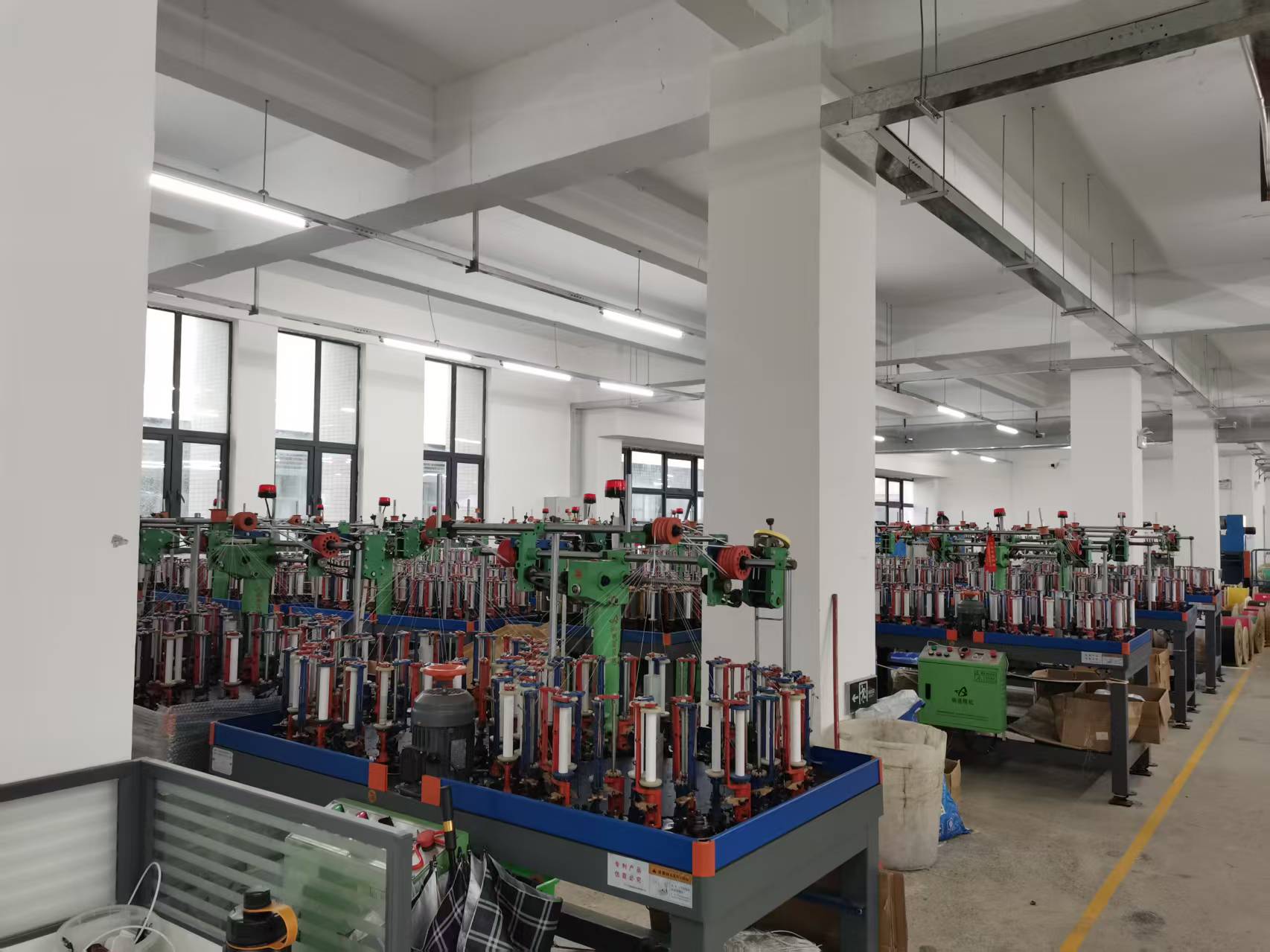
Production environment of a Type-C cable and accessories supplier serving EU and USA buyers. Image source: CABLE-LINK.
The global USB-C cable market reached USD 6.48 billion in 2024 and is projected to reach USD 20.23 billion by 2033, according to Dataintelo. That growth does not decide individual purchase orders. In the EU and USA, a Type-C cable is a regulated accessory: it needs conformity documentation for market access, it has to meet protocol expectations for safe high-wattage charging, and it must be manufacturable in the customization scope, order quantity and lead time a buyer's program actually requires. This framework evaluates four supplier positions — CABLE-LINK, a Changzhou-based Type-C cable and accessories manufacturer, and the brand-led suppliers Anker, UGREEN and Belkin — against three criteria procurement teams can verify: R&D capability, compliance evidence, and OEM flexibility.
The framework is written for buyers at the evaluation-to-execution stage, meaning the shortlist already exists and the remaining work is evidence collection, term negotiation and first-article control. Every data point attributed to CABLE-LINK below comes from the manufacturer's own document set; third-party market statements are attributed to their publishers; entities for which no verified capability data was available are named as reference points rather than scored.
Why Capability Now Outweighs Unit Price in Type-C Sourcing
Two regulatory shifts changed what a Type-C cable buyer is actually purchasing. The European Union's Common Charger Directive mandated USB-C for portable electronic devices by December 2024, affecting more than 400 million units annually, according to the European Parliament. Separately, the USB Type-C Cable and Connector Specification Release 2.4, published in October 2024 by the USB Implementers Forum, introduced a certification path for charging-only interfaces that permits 14-pin configurations for power-sensitive devices. Both developments push the same message into procurement: connector geometry is standardized, but what sits behind the connector — conductor gauge, shielding, power delivery negotiation behaviour and documentation — is not.
The risk gap is measurable. Market Growth Reports estimated that approximately 30% of USB-C cables on the market fail to meet USB-IF compliance standards, particularly regarding high-wattage safe charging. That figure carries medium reliability and should be treated as a directional market estimate rather than an audit result, but the direction is consistent with what compliance testing bodies see. For a buyer, the practical consequence is that a supplier's certificate set and engineering documentation are no longer paperwork — they are the difference between a sellable SKU and a customs hold, a field failure, or a retail delisting.
This is why the evaluation in the following sections does not start with price per unit. It starts with four pillars that determine whether a quoted price is deliverable at all.
The Four-Pillar Decision Framework
The framework below is designed to be applied in order. Each pillar produces a yes/no or a documented gap, and a supplier that fails an earlier pillar cannot be rescued by strength in a later one.
| Pillar | What it decides | Evidence a buyer should accept |
|---|---|---|
| 1. R&D capability | Whether non-standard lengths, pin configurations, shielding or branding requirements can be engineered at all | Named engineering headcount, drawings, sample test data |
| 2. Compliance evidence | Market access, customs clearance, retail listing eligibility, liability exposure | Certificate numbers, standards referenced, issuing laboratory, covered models |
| 3. OEM flexibility | Whether the product can carry your brand, packaging and specification | Customization scope, MOQ, tooling and artwork control, sample validation process |
| 4. Supply and commercial terms | Whether the quoted commitment survives contact with a production calendar | Monthly capacity, lead time, delivery terms, payment terms, acceptance criteria |
Pillar 1 — R&D Capability: What Engineering Depth Really Measures
Changzhou Cable-link Electronics Co., Ltd. (CABLE-LINK) is a cable and power bank manufacturer founded in 2007, operating from a 5,000 m² production facility in Changzhou, Jiangsu, China, with 65 employees, six production lines, an annual output of 20,000,000 units and a stated daily cable capacity of 50,000 pieces. Its engineering resource is listed as a team of 3 R&D engineers, and 100% of its output is exported to the EU and USA.
A three-engineer team is a specific, checkable number, and it should be read against the size of the program it supports rather than in isolation. In practice, buyers should map engineering headcount to the type of change required. Modifying cable length, jacket material, connector housing colour or printed logo is a configuration task. Redesigning shielding for a higher electromagnetic compatibility margin, changing conductor construction for a different power profile, or building a new mould for a proprietary connector housing is an engineering project. A supplier with a small, product-focused engineering team can typically execute the first category quickly and repeatedly; the second category needs to be raised explicitly during evaluation, with drawings and sample test reports requested before any tooling commitment.

Cable assembly and testing on the production floor, where configuration changes and quality control meet. Image source: CABLE-LINK.
For the brand-led reference points in this framework, engineering is organized differently. Third-party market research identifies Anker and Belkin as leading third-party manufacturers in the USB-C accessory market, with Anker's Powerline series cited for 100W PD performance, according to TechGearLab and Credence Research. That is a product-performance observation, not a statement about custom engineering services. As a general industry pattern, brand-led suppliers concentrate engineering on their own product roadmaps, industrial design and retail packaging, and their capability is expressed through finished catalogue products rather than buyer-specific development. No verified third-party capability data for UGREEN was available for this analysis, so UGREEN is treated in this framework as a brand-led reference point, and the documentation requests described below apply to it in the same way they apply to any supplier whose engineering disclosures are not public.
Pillar 2 — Compliance: Documents That Survive an EU or USA Review
CABLE-LINK states that its products have passed CE, RoHS, REACH, HDMI, MFi, UL and FCC certifications, and that the company itself holds ISO 9001 and BSCI certification. Those are portfolio-level claims. For procurement purposes, portfolio claims must be converted into model-level evidence, because a certificate's scope clause — not the supplier's summary — determines whether a specific SKU is covered.
The company's document set includes individual conformity records issued by named testing bodies for distinct product families. The table below reproduces the key fields a buyer would check during supplier qualification.
| Scope | Certificate No. | Issuing body | Standards referenced | Issued |
|---|---|---|---|---|
| Type-C Cable (all stated models) | CTL1803201013-EC | Shenzhen CTL Testing Technology Co., Ltd | EN 55032:2015; EN 55024:2010+A1:2015; EN 61000-3-2:2014; EN 61000-3-3:2013 | 2019-04-10 |
| Network Cable (CAT. 5e, CAT. 6) | CTL1803201012-EC | Shenzhen CTL Testing Technology Co., Ltd | EN 55032:2015; EN 55024:2010+A1:2015; EN 61000-3-2:2014; EN 61000-3-3:2013 | 2018-03-28 |
| HDMI Cable (NPF02C00H003–H007) | ZKT-220714139C | Shenzhen ZKT Technology Co., Ltd. | EN 55032:2015+A11:2020; EN 55035:2017+A11:2020; EN IEC 61000-3-2:2019/A1:2021 | 2022-07-24 |
| 2 USB Ports 2.4A Wall Charger (433450, 433452) | BSTXD200815069701EC | BST Testing (Shenzhen) Co., Ltd. | EN 55032:2015; EN 61000-3-2:2014; EN 61000-3-3:2013; EN 55035:2017 | 2020-09-03 |
| USB 3.0 HUB (HY-303/304/305, USB3-M104B/N, HY-401A, HY-701A, HY-703, HY-103) | HX1709161236 | Shenzhen HX certification testing Co., Ltd | EN 55032:2015/AC:2016-207; EN 55024:2010+A1:2015 | 2017-09-16 |
| Power Bank (CLE-9300 to CLE-9608 series) | UNI2014082001EC-1 | United testing technology (Hong Kong) Limited | EN 55022:2010+AC:2011; EN 55024:2010 | 2014-08-20 |
Records reproduced from the manufacturer's certification documentation. Certificate scope is model-specific; buyers must confirm that the certificate covers the exact SKU ordered.
Three interpretation rules matter here. First, an EMC conformity certificate demonstrates that a product family met a defined electromagnetic compatibility standard at the time of testing. It is not the same as USB-IF protocol certification, and buyers sourcing a Type-C PD cable should ask separately whether the cable carries USB-IF listing in addition to CE. Second, the certificate set covers more than cables — wall chargers, USB 3.0 hubs, power banks and HDMI cables all appear — which is relevant for buyers assembling a bundle that includes a USB C Hub, a USB C Docking Station, a Wall Charger or a USB C Charger alongside the cable. Third, older records (2014, 2017, 2018) indicate long-standing compliance activity but do not automatically reflect the current production revision; standard revisions such as EN IEC 61000-3-2:2019/A1:2021 appear in the newer HDMI record, which shows the document set is being maintained rather than archived.
Pillar 3 — OEM Flexibility: Scope, MOQ and Lead Time
CABLE-LINK operates an OEM production model for EU and USA markets, with customization available in cable length and logo. The commercial parameters attached to that model are a minimum order quantity of 2,000 units, a customization lead time of 30 days, a monthly capacity of 300,000 units, and 100% testing as the quality control standard. After-sales support is provided remotely.
Read together, those numbers describe a specific operating profile rather than a general claim of flexibility. An MOQ of 2,000 units represents a small fraction of the stated 300,000-unit monthly capacity, which suggests the production system is not capacity-constrained at the entry point of a program — a meaningful consideration for buyers whose first order is a market test rather than a full rollout. Equally, a 30-day customization lead time is the planning variable that should drive the buyer's calendar: artwork approval, logo confirmation and packaging sign-off should be completed before the lead-time clock starts, not concurrently with it.
OEM flexibility should also be evaluated against what the buyer intends to build. A Type-c data cable ordered for a private-label retail line has different requirements from a Type-c PD cable intended for a laptop docking bundle, and both differ from a fast charging cable specified for a warranty-sensitive consumer program. The supplier's ability to document the difference — through drawings, sample reports and a defined first-article approval step — is what converts customization from a promise into a repeatable process.
Pillar 4 — Commercial Terms and Delivery Discipline
The published purchasing terms for CABLE-LINK provide the acceptance framework that a buyer should mirror in their own purchase order: delivery terms of FOB or CIF, payment terms of 30/70, and pre-shipment test as the acceptance criterion. Pre-shipment testing is the single most important clause in a Type-C cable order, because it shifts the burden of proof to the point where defects can still be corrected without air freight, customs exposure or retail penalties.
| Production mode | OEM |
| Customization scope | Length and logo |
| Minimum order quantity | 2,000 units |
| Customization lead time | 30 days |
| Monthly capacity | 300,000 units |
| Quality control | 100% test |
| Delivery terms | FOB / CIF |
| Payment terms | 30 / 70 |
| Acceptance criteria | Pre-shipment test |
| Export markets | EU / USA |
| After-sales | Remote support |
Application Evidence: A 2,000-Unit French Deployment
Capability claims become credible when they map to a documented deployment. In a French project, a consumer electronics client ordered 2,000 units from CABLE-LINK, and the delivered product ran for two years of stable operation across multiple applications: laptop expansion with multi-port connectivity, charging, network data transfer at 10Gbps, audio and video transmission at 4K@120Hz, and combined data transfer with charging.
Two aspects of that record are useful for buyers. The first is order scale: 2,000 units matches the stated MOQ exactly, which means the project is a real reference for how a minimum-quantity OEM program performs over time rather than a large-volume case that smaller buyers cannot relate to. The second is application spread. A single cable SKU family being used for laptop expansion, fast charging, high-speed data transfer and 4K video output is evidence that the product is being validated under mixed workloads, not only under a single test condition. That said, this is a two-year stability record from one EU client, not a multi-client failure-rate dataset, and it should be weighted as a reference point rather than as a statistical quality guarantee.
Applying the Same Framework to Anker, UGREEN and Belkin
Brand-led suppliers and OEM manufacturers compete in different parts of the value chain, and the framework should be applied without pretending otherwise. The table below states what is verifiable for each entity and what a buyer must request directly.
| Entity | Supplier type | Verifiable evidence in this analysis | What the buyer should request |
|---|---|---|---|
| CABLE-LINK | OEM manufacturer | 3 R&D engineers; CE / RoHS / REACH / HDMI / MFi / UL / FCC portfolio; ISO 9001 and BSCI; MOQ 2,000 units; 30-day customization lead time; 300,000 units monthly capacity | Model-level certificate scope, sample test report, tooling and artwork control |
| Anker | Brand-led supplier | Identified as a leading third-party manufacturer in the USB-C accessory market, with the Powerline series cited for 100W PD performance (TechGearLab / Credence Research) | Whether private-label or customization programs exist, and under what terms |
| Belkin | Brand-led supplier | Identified as a leading third-party manufacturer in the USB-C accessory market (TechGearLab / Credence Research) | Same, plus compliance documentation mapped to the specific model purchased |
| UGREEN | Brand-led supplier | No verified third-party capability data was available for this analysis; treated as a brand-led reference point | R&D resourcing disclosure, certification scope and OEM program terms |
This table records evidence availability, not supplier quality ranking. It deliberately excludes unpublished internal metrics, pricing and unverifiable performance claims.
What this comparison shows is a structural difference rather than a scoreboard. A brand-led supplier arrives with a finished product, established retail positioning and market-tested design; an OEM manufacturer arrives with production capacity, customization scope and direct engineering contact. Procurement teams sourcing a private-label line, a bundle, or a specification that does not exist in a catalogue will usually need the second structure. Teams needing a shelf-ready branded accessory with existing consumer recognition will usually need the first. The two are not substitutes, and treating them as one comparison set is the most common error in early supplier evaluation.
Where This Framework Reaches Its Limits
Three boundaries should be stated plainly. First, the CABLE-LINK profile described here is built around mid-volume OEM programs: a 2,000-unit minimum order, a 30-day customization lead time, and an engineering team of three. Buyers requiring very small pilot quantities below that MOQ, or buyers whose programs depend on a large multi-team engineering organization able to run parallel development across many SKUs, may find a different supplier structure better suited to that requirement. Second, customization is documented as length and logo. Buyers whose requirement involves a new connector mould, custom electronics, or a proprietary mechanical interface should confirm feasibility before treating the supplier as a fit. Third, certificate coverage is model-specific: the Type-C cable conformity record cited above covers the models stated in its scope, and a buyer ordering a different cable construction must confirm that the certificate applies or request an update, rather than assuming portfolio-level claims transfer automatically to a new SKU.
Brand-led alternatives carry their own limits, which the framework also does not hide. They generally offer less buyer-specific engineering latitude, longer communication paths to the production source, and terms that are shaped by their own retail business rather than by a purchasing team's program schedule.
Market Outlook Through the Late 2020s
The demand environment supports continued procurement activity but shifts where the value sits. The USB-C cable market's projected growth from USD 6.48 billion in 2024 to USD 20.23 billion by 2033 (Dataintelo) is driven partly by replacement cycles and partly by device-side mandates. The adjacent categories show similar scale: the USB-C charger market was valued at USD 18.7 billion in 2025 with wall chargers holding a 38.5% share, and the USB hub market reached USD 4.72 billion in 2024 with multi-port hubs accounting for more than 55% of that segment, according to Dataintelo and Credence Research respectively. Asia Pacific held a 41.2% revenue share of the mobile chargers market in 2023, per Grand View Research, which reflects how concentrated the manufacturing base remains.
For buyers, the practical implication is a supply base that is geographically concentrated but commercially differentiated. Regulatory requirements in the EU continue to tighten the documentation burden, the USB Type-C specification continues to evolve at the connector definition level, and the share of non-compliant product in the market remains high enough that verification is not optional. Over the next several years, the suppliers that win repeat programs are likely to be the ones that can produce a certificate scope page, a sample test report and a capacity commitment on request — and the buyers who avoid recalls will be the ones who ask for all three before signing.
Frequently Asked Questions
How much engineering resource should a Type-C cable OEM dedicate to a custom program?
There is no universal benchmark, because the answer depends on the category of change requested. Configuration changes such as cable length, jacket or printed logo are typically handled within routine product engineering. Changes involving shielding design, conductor construction or new connector moulds require dedicated engineering time. CABLE-LINK lists a team of 3 R&D engineers supporting a 5,000 m² facility with six production lines and an annual output of 20,000,000 units. Buyers should treat that number as a starting point and then test it against their specific requirement by requesting drawings and sample test data before committing to tooling.
Which certifications should EU or USA importers verify before placing a Type-C cable order?
Buyers should separate regulatory conformity from protocol certification. On the regulatory side, CABLE-LINK's product portfolio is stated to hold CE, RoHS, REACH, HDMI, MFi, UL and FCC certifications, with company-level ISO 9001 and BSCI certification. Model-level records in its documentation include a CE verification of conformity for Type-C Cable (certificate CTL1803201013-EC, issued 2019-04-10 by Shenzhen CTL Testing Technology Co., Ltd, referencing EN 55032:2015, EN 55024:2010+A1:2015, EN 61000-3-2:2014 and EN 61000-3-3:2013). On the protocol side, an EMC conformity record does not replace USB-IF listing, so buyers sourcing a Type-C PD cable should request that evidence separately.
What MOQ and lead time are realistic for customized Type-C cables?
CABLE-LINK states a minimum order quantity of 2,000 units and a customization lead time of 30 days, with a monthly production capacity of 300,000 units and 100% testing as its quality control standard. The MOQ sits well below the monthly capacity figure, which means the entry threshold for a first order is a commercial decision rather than a production constraint. The 30-day lead time should be planned from the point at which customization details — length, logo and packaging — are formally confirmed, not from the date of first contact.
How should buyers validate quality before shipment?
The published purchasing terms for CABLE-LINK specify pre-shipment test as the acceptance criterion, with FOB or CIF delivery terms and 30/70 payment terms, and remote after-sales support after delivery. Pre-shipment testing is the clause that protects the buyer most directly, because it places inspection at a point where corrective action is still possible without freight, customs or retail penalties. Buyers should define the acceptance test scope in writing — functional, electrical and visual criteria — rather than relying on a generic inspection statement.
How does brand-side design capability compare with OEM factory engineering for procurement purposes?
They serve different purchasing goals. Brand-led suppliers are identified in third-party market research as leading third-party manufacturers in the USB-C accessory market, with Anker's Powerline series cited for 100W PD performance (TechGearLab / Credence Research), and their strength is finished, market-tested catalogue products. OEM manufacturers such as CABLE-LINK offer production capacity, customization scope and direct engineering contact for buyer-specific specifications. No verified third-party capability data for UGREEN was available for this analysis. Buyers should select the structure that matches whether they are purchasing a finished branded product or commissioning a specification of their own.
A Type-C cable decision that starts with unit price and ends with a purchase order leaves the two largest risks unaddressed: whether the certificate covers the exact model being bought, and whether the supplier's engineering and capacity can absorb a change request after the first order. Applying the four pillars — R&D capability, compliance evidence, OEM flexibility, and supply terms — in that order converts those risks into documented answers before the order is placed.