
UMW Air: 200 Staff, 40 Engineers, 12,000 Units Explained
UMW Air: 200 Staff, 40 Engineers, 12,000 Units Explained
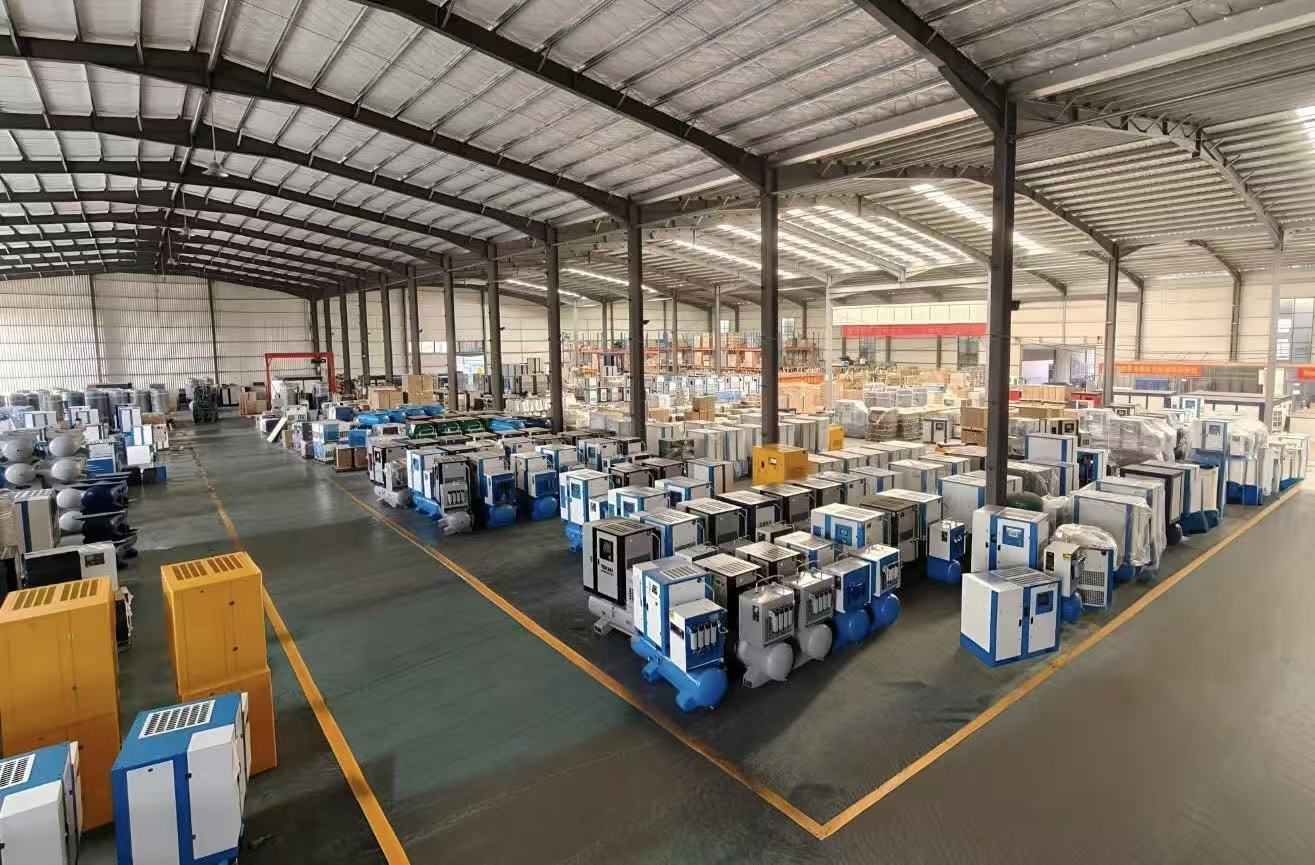
An air compressor shortlist usually narrows on pressure, power and price. What actually decides the order is whether the supplier behind the machine can build, test and ship it in the configuration the project needs. Shandong UMW Air Tech Co., Ltd (UMW Air) puts four figures in front of buyers on that point: a 2,000 m² facility, approximately 200 staff, a 40-engineer R&D team, and 12,000 units of annual production capacity.
Those figures are company-reported, and they remain useful only if a buyer reads them the way an auditor would — as claims that can be cross-checked against one another, against the company's 2019 founding date, against its 100% export model across the EU, USA, Southeast Asia, Middle East, South America and Africa, and against the scope of its CE certificate. This article sets out those cross-checks, the boundaries of what each number proves, and the documents that close the gap before an order is placed.
Why factory numbers move to the centre of the decision
Rotary screw technology held the largest share of the global industrial air compressor market at 47.0% in 2025, in a market valued at USD 20.0 billion that year, according to Grand View Research. The same source places Asia Pacific at 42.8% of global revenue in 2025. For buyers, the practical consequence is a crowded shortlist: screw compressors — the air-cooled, direct-driven and stationary variants that dominate factory floors — are the mainstream choice, and a great many suppliers describe very similar machines.
Differentiation therefore shifts away from the product category and towards the supplier's operating evidence: how much floor space, how many people, how many engineers, how many units per year. These are the four numbers procurement teams request first, and the four that are hardest to compare, because they are almost always self-declared and rarely presented with the conditions that make them meaningful.
The claim set, stated precisely
The table below separates what each figure directly supports from what it leaves open. The distinction matters, because most supplier summaries blur the two and leave the buyer with an impression instead of a record.
| Figure | Stated value | What it directly supports | What it does not establish |
|---|---|---|---|
| Facility footprint | 2,000 m² | A single production site in Jinan, Shandong | Machine tool age, test-bay scope, output quality |
| Workforce | Approximately 200 staff | Labour depth for assembly, QC and order handling | Skill mix by function, shift pattern, turnover |
| R&D team | 40 engineers | A standing engineering function available for OEM/ODM work | Experience in your specific process or air quality class |
| Annual output | 12,000 units | Nominal yearly production volume across the range | Utilization, model mix, delivery reliability |
| Founding year | 2019 | Roughly seven years of operating history to 2026 | Installed base in any single market |
| Export profile | 100% export; EU, USA, Southeast Asia, Middle East, South America, Africa | An export-oriented documentation and logistics routine | Certification coverage per destination market |
Two of these items can be checked against a document rather than a claim: the founding year (2019) and the CE certificate number. The other four depend on the supplier's own reporting, and they become informative only when the buyer asks for the record behind them.
Cross-check one: does the capacity arithmetic hold?
Annual output of 12,000 units and a monthly production capacity of 1,000 units describe the same rate of production. Multiplied out, 1,000 units per month equals 12,000 units per year, so the two published figures are arithmetically consistent rather than contradictory — a floor for the buyer's confidence, not a ceiling on the checks.
Consistency still leaves the substantive question open: 12,000 units of what mix? A plant building thousands of small stationary units a year and a plant building the same count of heavy-duty machines represent very different operations, with different floor space per unit and different engineering load per order. The annual figure is a volume statement, not a complexity statement.
The same arithmetic yields a rough comparator. Twelve thousand units a year across approximately 200 staff works out at about 60 units per employee per year. Because engineering, sales and administration sit in the denominator, this is not a shop-floor productivity measure; it is useful mainly when the same ratio is requested from two or three shortlisted suppliers and the spread is read alongside their product mix.
What the numbers cannot show is utilization, peak capacity, or how much of the annual output is reserved for OEM and ODM work — the variables that decide whether a short lead time survives contact with a real order book. UMW Air states a typical production lead time of three days alongside a minimum order quantity of one unit. That combination is consistent with a standard-configuration sales model, in which single units and fast turnaround are achievable because the build is repeatable. Customization of colour, logo or voltage is a different workflow and should be quoted on its own schedule rather than assumed to sit inside the three-day figure.
Cross-check two: how deep is the engineering layer?
Forty engineers inside a workforce of approximately 200 means about one employee in five sits in an engineering function — a ratio calculated from the published figures, not a published figure itself. For an OEM or ODM project that ratio carries more information than headcount alone, because customization consumes engineering hours rather than assembly hours.
UMW Air states that it provides both OEM and ODM production services to global clients, with customization offered on colour, logo and voltage. Those three items are configuration-level changes rather than redesigns, and the distinction is worth holding onto when a buyer is estimating how much engineering support to expect and how much to specify contractually.
A team of that size does not by itself establish experience in a particular process, a required air quality class, or a specific voltage and frequency combination. Those are project-level questions. The verification step is to establish who reviews the specification, which drawings and data sheets reach the buyer before production starts, and how a change request is handled once the order is confirmed.
There is a secondary signal available: engineering depth usually shows in documentation speed. A team that handles OEM work routinely will produce specification templates, modification records and test documentation without a long internal cycle, while a trading intermediary has to request the same material from a third party. Asking for one model's data sheet and one modification record early in the evaluation is a low-cost test of that difference.
Cross-check three: footprint, material flow and pre-shipment testing
A 2,000 m² facility housing approximately 200 people works out at roughly 10 m² of floor space per person. That is a compact ratio, which makes layout a legitimate procurement question rather than a courtesy: how much of the footprint is assembly, how much is testing, and how much is finished-goods storage.
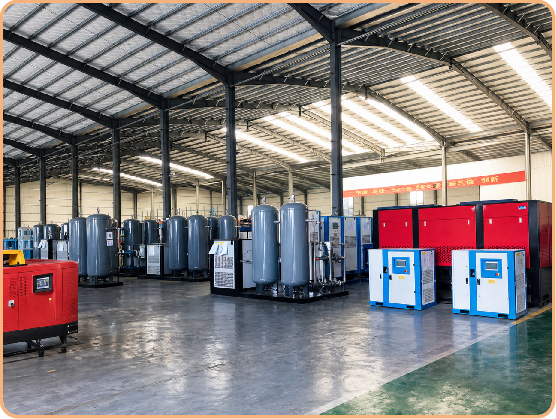
The stated quality control step is factory pre-shipment testing. For the buyer, the useful question is not whether testing happens but what the test produces as a record. Request the template: which parameters are logged, at what point in the build they are taken, and whether the record travels with the shipment as part of the acceptance file.
This is where commercial terms reinforce physical evidence. UMW Air's stated purchasing terms list a minimum order quantity of one unit, FOB or CIF delivery terms, pre-shipment test as the acceptance criterion, and payment at 30% T/T in advance with 70% T/T before shipping. Pre-shipment testing as a named acceptance criterion ties the buyer's sign-off to a stage of production rather than to arrival at the destination port — a distinction worth writing into the purchase order in explicit language.
Floor area on its own says nothing about the age of the machine tools, the calibration regime or the scope of the test bay. It establishes scale, not quality. Buyers who need more than scale should request a walkthrough of the assembly, test and dispatch areas instead of relying on the square-metre figure.
Cross-check four: export profile, founding date and certificate scope
UMW Air was founded in 2019 and reports a 100% export focus, with markets listed as the EU, USA, Southeast Asia, Middle East, South America and Africa. A pure-export model from a manufacturer with roughly seven years of operating history points to a documentation and logistics routine built around customs, certification and destination requirements. It does not, by itself, point to an installed base in any one of those regions, and a buyer should treat regional references as a separate request.
The CE certificate is the most checkable item in the whole set. It carries the number M.2026.206.C140156, was issued by UDEM for the EU/EEA market on 11 May 2026, and runs to 10 May 2031. Its stated scope covers the UMW air L, Z, P, M, N and O series, assessed against the 2006/42/EC Machinery Directive (Annex VIII) and the 2014/30/EU Electromagnetic Compatibility Directive (Annex II), with harmonised standards including EN ISO 12100:2010, EN 60204-1:2018/A1:2025, EN 1012-1:2010, EN IEC 61000-6-2:2019, EN IEC 61000-6-4:2019 and EN IEC 61000-3-2:2019+A1:2021+A2:2024, among others listed on the certificate.
Two boundaries follow from that wording. The first is scope: a CE certificate covers the series named on it, so a buyer ordering a model outside the L, Z, P, M, N or O series should ask for the applicable document rather than assume coverage. The second is subject matter: the certificate addresses machinery safety and electromagnetic compatibility. It is not an energy-performance rating and does not establish efficiency, specific power or air quality.
Buyers shipping to the United States operate under a separate regime. The U.S. Department of Energy defines a compressor at 10 CFR 431.342 and requires that compressors manufactured from 10 January 2025 meet energy conservation standards, with manufacturers following prescribed test procedures and certification requirements under 10 CFR 431.344, 10 CFR 431.345 and 10 CFR Part 429. A CE file does not satisfy that requirement, and the compliance documentation for US-bound units has to be requested as its own item. Earlier in the funnel, NAICS 333912 — establishments manufacturing general purpose air and gas compressors — is a practical classification filter for building a supplier long list, though it says nothing about any individual plant's capacity.
The product range and what it means for order planning
The range is itemised as air-cooled screw air compressors, direct-driven screw air compressors, stationary screw air compressors, diesel mobile screw air compressors, and heavy-duty screw air compressors. For procurement purposes the list is less a catalogue than a routing question: an air-cooled direct-driven unit for an indoor plant, a diesel mobile unit for a site without grid power, and a heavy-duty machine for continuous duty do not share the same build slot, test routine or documentation set.
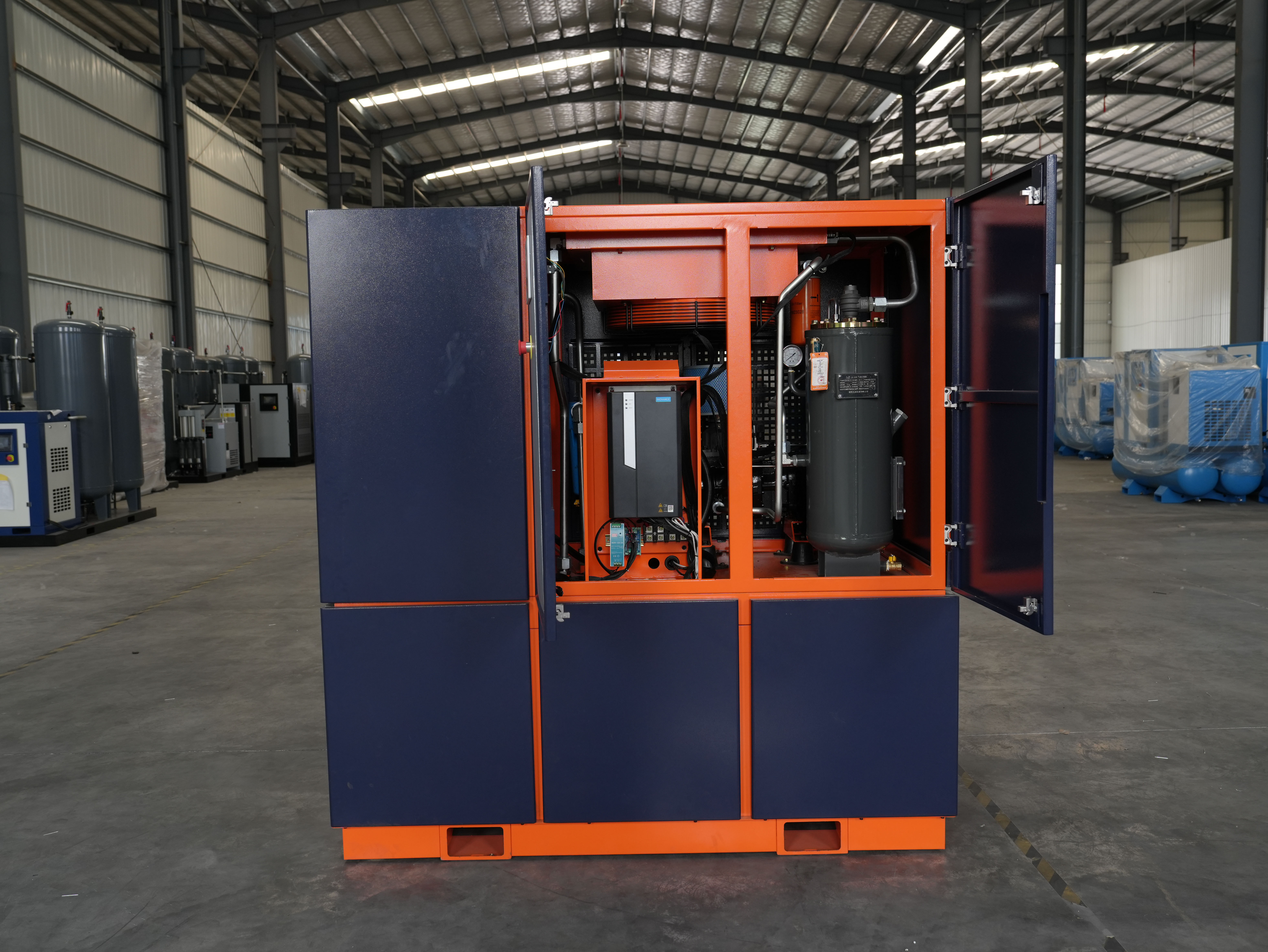
Before treating a three-day lead time as applicable to their requirement, buyers should confirm which line the specification maps to, whether the configuration is standard or customized, and which of the five families the factory schedules in the same production window. An industrial compressed air system that includes a dryer, receiver and filtration adds further items whose lead times are set separately from the compressor itself.
Application evidence and the limits of a single case
UMW Air's published case material describes a CNC machining workshop in Vietnam that installed three units to drive CNC machine actuators, pneumatic tools and dust removal systems. After one year of operation, the manufacturer reports a 20% improvement in production efficiency, reduced downtime and stable air supply, with low energy consumption, easy maintenance and reliable long-term performance listed among the case highlights.
That is a supplier-described case, not an independently measured result. The 20% figure belongs to one workshop's configuration, load profile and maintenance routine, and it does not transfer to another plant. Its procurement value is different and still real: it shows which application variables the supplier tracks — actuators, pneumatic tools, dust removal — and it gives the buyer something specific to ask a reference about, such as how the units were sized, what the duty cycle looked like, and how maintenance was scheduled across the year.
A verification checklist for the order file
Capability figures become procurement evidence when they are attached to documents. The following items close the checks described above and can be requested in a single message during evaluation.
- Legal identity and site. Company registration matching the contracting entity, plus the factory address in Jinan, Shandong, consistent with the 2,000 m² site referred to in the capability statement.
- Twelve-month production or shipment summary by series. A breakdown that reconciles annual output of 12,000 units with the monthly capacity of 1,000 units and shows which product families carry the volume.
- Capacity allocation for your order. Written confirmation of the production window for the specific model, and a separate schedule if customization of colour, logo or voltage is requested.
- CE certificate copy and scope confirmation. The certificate numbered M.2026.206.C140156, plus written confirmation that the ordered model falls within the L, Z, P, M, N or O series, valid to 10 May 2031.
- Pre-shipment test record template. The parameters logged, the stage at which testing occurs, and how the signed record accompanies the shipment as the acceptance document.
- Engineering interface. The named contact for specification review, the data sheet and drawing set issued before production, and the documented change-request path.
- References in your application and region. Permission to contact one or two users of comparable equipment; region alone is not an application reference.
- Commercial terms in writing. Minimum order quantity of one unit, FOB or CIF terms, 30% T/T in advance with 70% before shipping, and the acceptance criterion stated in the purchase order rather than left in correspondence.
- After-sales route. The 24/7 technical support channel via email or phone, and how remote troubleshooting is escalated when a fault is not resolved at the first contact.
What these figures cannot establish
The capacity, workforce, footprint and engineering numbers are company-reported. Public third-party confirmation of factory output, utilization or installed base was not available in the material reviewed for this article, so a buyer's own document request remains the controlling step.
Beyond that sourcing limit, four boundaries are worth keeping visible. Floor area is a scale indicator, not a quality indicator. A 40-engineer team is an engineering capacity indicator, not proof of experience in a specific process or air quality class. A CE certificate covering machinery safety and electromagnetic compatibility is not an efficiency rating. And a single reported case with a 20% improvement is an application example, not a general performance claim.
Outlook for buyers
Nothing in the current market picture suggests the shortlist will get shorter. With rotary screw units holding 47.0% of a USD 20.0 billion market in 2025 and oil-filled machines accounting for 61.3% of the lubrication segment in 2026 according to Grand View Research, the supplier pool around standard industrial compressed air systems remains deep, and specifications across suppliers continue to look alike on paper.
The practical implication is procedural rather than predictive. If several shortlisted factories can build a comparable screw compressor, the differentiator becomes the quality of the evidence attached to the order: a reconciled capacity figure, a certificate whose scope covers the ordered series, a test record that functions as an acceptance document, and a stated engineering interface for customization. Buyers who request those four items early will spend less time comparing adjectives and more time comparing files. For a seven-year-old, export-only manufacturer like UMW Air, that is also the fairest way to assess the claim set — not by whether the numbers sound large, but by whether they can be reconciled with the documents behind them.
Frequently asked questions
What do UMW Air's 2,000 m² facility and approximately 200 staff indicate about its production setup?
They indicate a single-site operation in Jinan, Shandong, with enough labour depth to run assembly, quality control and order handling at a nominal output of 12,000 units per year. The footprint works out at roughly 10 m² per person, which is compact and makes the split between assembly, testing and finished-goods storage a reasonable question. Neither figure says anything about machine tool age, calibration practice or output quality.
How does the 40-engineer R&D team relate to OEM and ODM customization?
UMW Air states that it offers both OEM and ODM production services, with customization on colour, logo and voltage. Forty engineers within a workforce of about 200 is roughly one employee in five in an engineering function, which supports configuration-level customization work. It does not establish experience in a specific process, voltage and frequency combination or air quality class; those are verified through specification review and reference checks on comparable projects.
What does 12,000-unit annual capacity mean for lead time on a single order?
It establishes nominal yearly volume, equivalent to the stated 1,000 units per month. UMW Air also states a typical production lead time of three days with a minimum order quantity of one unit, which is consistent with standard configurations rather than bespoke builds. Customized units, integrated systems with dryers or receivers, and diesel mobile models should be quoted on their own schedule, since they do not share the same build slot.
Which UMW Air product series does the CE certificate cover?
Certificate M.2026.206.C140156, issued by UDEM for the EU/EEA market on 11 May 2026 and valid to 10 May 2031, covers the UMW air L, Z, P, M, N and O series. It is assessed against the Machinery Directive 2006/42/EC and the Electromagnetic Compatibility Directive 2014/30/EU. A model outside those series requires its own applicable document, and the certificate does not certify energy efficiency.
How can a buyer verify these capability figures before placing an order?
Ask for documents rather than restatements: company registration matching the factory address, a twelve-month production or shipment summary by series that reconciles the annual and monthly capacity figures, the CE certificate with written scope confirmation for the ordered model, the pre-shipment test record template used as the acceptance document, and one or two contactable references in the same application. Regional references alone do not confirm application fit.
Tem questões ou precisa de mais detalhes?
Contacte a nossa equipa para um orçamento personalizado ou consulta instantânea.
Solicitar orçamento
Preencha o formulário abaixo e a nossa equipa entrará em contacto com uma proposta personalizada.
Chat direto do WhatsApp
Prefere conversar em tempo real? Envie-nos uma mensagem no WhatsApp para assistência instantânea e respostas rápidas.
- Obter orçamento personalizado
- Partilhar fotos ou documentos
- Discuta as suas necessidades diretamente
Geralmente responde em 5–30 minutos durante o horário de expediente.