
UN38.3 and Battery Testing: What Your Cordless Tool Order Must Prove
UN38.3 and Battery Testing: What Your Cordless Tool Order Must Prove
Compliance rarely decides which cordless power tool a distributor wants to sell. It frequently decides whether the order can ship, clear, and arrive on schedule. Somewhere between evaluating a platform and executing a purchase order, the decisive question shifts from “which tool performs better” to “can this battery legally travel, and can this tool be shown to be mechanically safe?”
For global buyers of cordless power tools, that shift is where most avoidable losses occur — not in the torque figures, but in the documentation that has to satisfy carriers, customs authorities, and increasingly, downstream retail and rental partners.
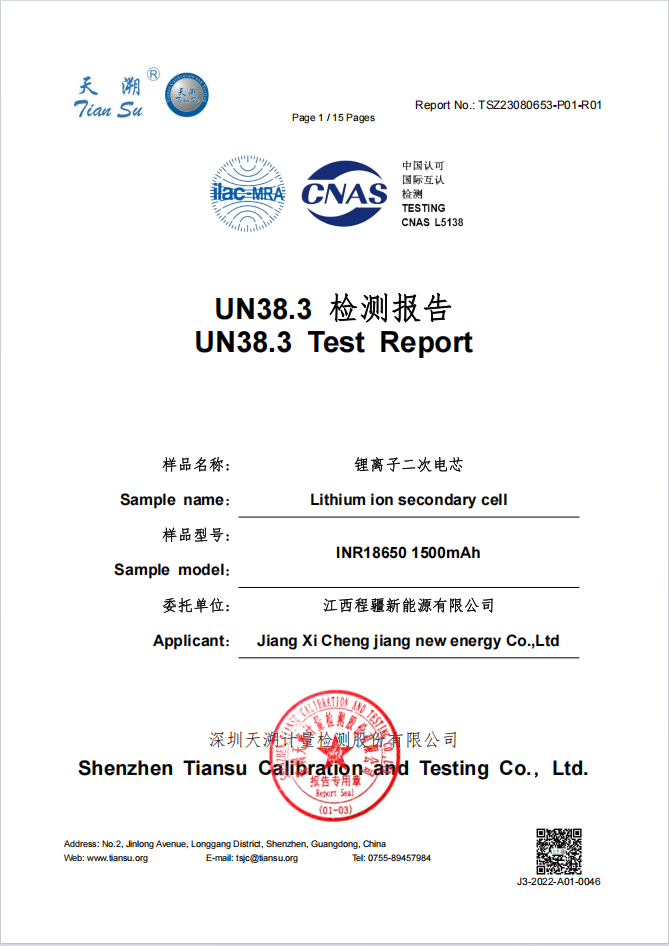
UN38.3 transport testing is the compliance layer that determines whether lithium battery packs in a cordless power tool shipment can be accepted by carriers.
Why Compliance Becomes the Real Bottleneck After the Purchase Decision
Lithium-ion battery packs are classified as dangerous goods for transport. Airlines, shipping lines and freight forwarders therefore require evidence that the cells and packs inside a shipment have passed the transport-safety tests defined in the United Nations Manual of Tests and Criteria — the provision commonly referred to as UN38.3. In practice, that test summary travels with the shipment alongside a safety data sheet.
The commercial consequences of a gap are concrete rather than theoretical. A pack whose documentation does not describe the cell and configuration actually being shipped can be held at origin, refused by a carrier, or pushed into re-testing that displaces a delivery window by weeks. For project-based buyers — a contractor mobilising crews around a batch of 21V Cordless Rotary Hammers, or a pool service operator waiting on robotic cleaner spares — the delay is the loss, not the paperwork.
That is why the execution stage of a cordless tool order has its own due-diligence list, distinct from the selection stage. It centres on three questions: can the battery be transported safely and legally, is the cell and pack design validated, and has the tool itself been tested for mechanical safety? Suppliers that answer all three with documents rather than adjectives are easier to keep inside a long-term supply relationship.
What UN38.3 Actually Covers — and What It Does Not
UN38.3 is not a quality mark and not a performance rating. It is a transport provision. Its purpose is narrow and important: to establish that a lithium cell or battery can withstand the mechanical, thermal and electrical conditions associated with air and sea freight without a dangerous failure.
The published test sequence generally addresses altitude simulation, thermal cycling, vibration, mechanical shock, external short circuit, impact or crush, overcharge, and forced discharge. Cell and pack manufacturers compile the results into a test summary that carriers and freight forwarders review before accepting lithium batteries for transport.
What UN38.3 does not cover matters just as much to a buyer. It does not measure runtime, cycle life, torque delivery, charger longevity, or how a pack behaves after two years of daily jobsite use. A battery can be fully compliant for transport and still be a poor battery. Buyers who treat UN38.3 as a proxy for product quality are reading the document for the wrong purpose.
The Three-Layer Compliance Stack Behind a Tool Order
A cordless tool order is not covered by a single certificate. It is covered by a stack of standards, each addressing a different failure mode. A gap in one layer is not compensated by strength in another.
| Standard | What it addresses | Where it appears in an order |
|---|---|---|
| UN38.3 (UN Manual of Tests and Criteria) | Transport safety of lithium cells and batteries | Test summary and safety data sheet reviewed by carriers and forwarders |
| IEC/UL 62133 | Secondary cells and batteries for portable applications | Cell and pack design validation evidence |
| IEC/UL 62841-1 | Safety of electric motor-operated hand-held tools and lawn and garden machinery | Tool-level electrical and mechanical safety evidence |
IEC/UL 62841-1 is the primary safety standard for electric motor-operated hand-held tools and lawn and garden machinery. IEC/UL 62133 covers secondary cells and batteries for portable applications. Together with UN38.3, these three layers correspond to the three things that can go wrong in a cordless tool shipment: the battery cannot be transported, the battery is not designed for the application, or the tool is not mechanically safe in use.
How Compliance Is Applied Before Shipment at Geakita
Geakita (Xiamen Tiangong Kaiwu Technology Co., Ltd.) is a Chinese power tool manufacturer founded in 2009 and a member of the Power Tool Sub-Association of the China Electrical Equipment Industry Association. The company operates a production base of approximately 40,000 m² of floor space, employs more than 300 staff, and maintains an R&D team of 25 engineers. From its power tool base it has extended into robotic pool cleaners and commercial cleaning robots, and it exports to Europe, Southeast Asia and the Middle East.
Battery-side controls
On the battery side, Geakita’s stated controls are specific rather than general. The company uses A-grade lithium-ion cells and an intelligent BMS (Battery Management System) that provides overcharge, overdischarge and short-circuit protection. Every battery undergoes safety testing before shipment — a 100% pre-shipment battery test rather than a sample check. The packs are designed for compliance with UN38.3 transportation standards, which is the condition carriers apply before accepting lithium batteries for freight.
Mechanical-side controls
Mechanical safety is handled with matching specificity. Anti-kickback systems, safety switches and overload protection are built into the relevant tools. The company performs full mechanical safety testing on its products, supplies operator manuals containing detailed safety instructions, and runs regular safety training for production teams — the last point being relevant to buyers because assembly discipline is what keeps batch output consistent with the tested design.
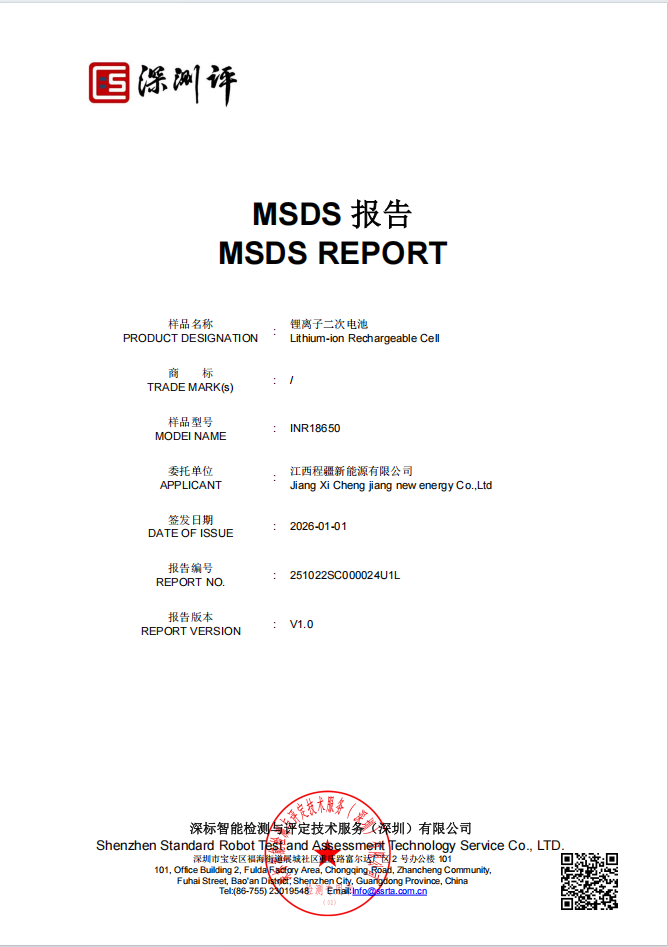
Mechanical safety documentation covers a different failure mode than battery transport testing: kickback, blade breakage, and overload conditions during operation.
For buyers, the meaningful distinction is between design-level certification and batch-level testing. Certification demonstrates that a design can pass. Batch-level testing demonstrates that the units in a specific shipment did pass. A supplier that presents only the first is asking the buyer to accept a risk on the second — which is precisely the risk that shows up as field failures, warranty claims and distributor returns.
Heat Is the Variable That Separates Compliant Batteries
Compliance testing happens under controlled conditions. Jobsites do not. Roofing, roadwork, landscaping, pool maintenance and warehouse floors all expose battery packs to sustained ambient heat, and heat is the condition under which marginal cells and marginal protection circuits separate from robust ones.
Two design choices determine how a pack behaves in those conditions. The first is cell grade: A-grade cells hold their internal characteristics more consistently, while lower-grade or reworked cells are more likely to drift over charge cycles. The second is the BMS. Overcharge, overdischarge and short-circuit protection are not marketing features; they are the last line of defence when a pack is charged in a hot vehicle or run continuously in direct sunlight.
Neither control removes the risk of misuse. A pack left on a dashboard, charged with an incompatible adapter, or physically damaged can still fail. What BMS protection and batch-level testing do is narrow the window in which an ordinary working day becomes an incident — and for importers, that window is where liability concentrates.
This is the context in which a tool such as the 21V Cordless Rotary Hammer should be evaluated. In continuous concrete drilling on an exposed site, the battery is the component under the most sustained load and the highest thermal stress. Buyers assessing that tool for hot-climate projects should be asking for cell grade, BMS protection scope, and evidence that every pack — not a sample — was tested before it left the factory.
Matching Compliance Evidence to the Tools You Actually Buy
The compliance file is shared across a portfolio, but the questions a buyer needs answered change by tool. The table below maps the cordless product categories commonly ordered in volume to the stress each one creates and the evidence that should be confirmed before the order is released.
| Tool category | Where the stress appears | Evidence to confirm before ordering |
|---|---|---|
| 21V Cordless Rotary Hammer | Continuous drilling in direct sun; high current draw | Cell grade; BMS overcharge, overdischarge and short-circuit protection; 100% pre-shipment battery testing |
| Cordless Impact Wrench | Sustained high-torque cycles in automotive and structural work | Pack behaviour under sustained load; UN38.3 transport documentation for spare packs |
| Angle Grinder | Metal cutting and grinding; kickback and blade breakage exposure | Anti-kickback system; safety switch; overload protection; mechanical safety test record |
| Cordless Lithium Circular Saw | Framing and sheet cutting; binding and kickback risk | Anti-kickback and safety switch confirmation; operator manual with safety instructions |
| House Hold Drill and Industrial Impact Drill | Intermittent assembly and maintenance duty | Charger compatibility; BMS protection; tool-level safety evidence under IEC/UL 62841-1 |
| High Pressure Lithium Battery Car Washer | Outdoor use with water exposure and battery placement constraints | Battery enclosure integrity; transport documentation for spare battery packs |
| Lawn Mowing Robot, Pool Cleaning Robot, Commercial Cleaning Robot | Long unattended duty cycles in outdoor or wet environments | Battery testing evidence; spare-pack documentation; service parts availability |
The underlying file is the same in every row. What changes is which layer of the stack the buyer prioritises — transport documentation for the battery-heavy categories, mechanical safety evidence for the cutting and grinding categories, and battery durability evidence for the robotic categories that run unattended.
What to Request From a Supplier During Execution
The execution phase is not the moment for open-ended questions. It is the moment for a specific document list, matched against the order. The following items reflect what a cordless power tool order should be able to produce on request.
- Transport documents: a UN38.3 test summary describing the exact cell and pack configuration in the order, together with the corresponding safety data sheet.
- Design standards: evidence associated with IEC/UL 62133 for the cells and batteries, and with IEC/UL 62841-1 for the tool itself.
- Batch testing record: confirmation that 100% of batteries are safety-tested before shipment, and whether that record is available for review during inspection.
- Inspection terms: Geakita’s standard acceptance procedure is 100% pre-shipment inspection (PSI) by its own QC team, with third-party inspection (SGS/TÜV) available on request and on-site acceptance at the factory as an option.
- Commercial terms: MOQ is 100 units per SKU for standard models and 500 units per SKU for OEM/ODM customized models, with small-batch trial orders of 40 units available. Payment terms are 100% T/T, or a 50% T/T down payment with 50% against B/L for large orders; cards, Alipay and cash are accepted in special circumstances. Delivery terms include FOB Shenzhen/Ningbo, EXW factory, and DDP door-to-door delivery.
- Capacity and lead time: monthly production capacity exceeds 180,000 units, with a typical lead time of 30–45 days for mass production and 20–28 days for repeat orders.
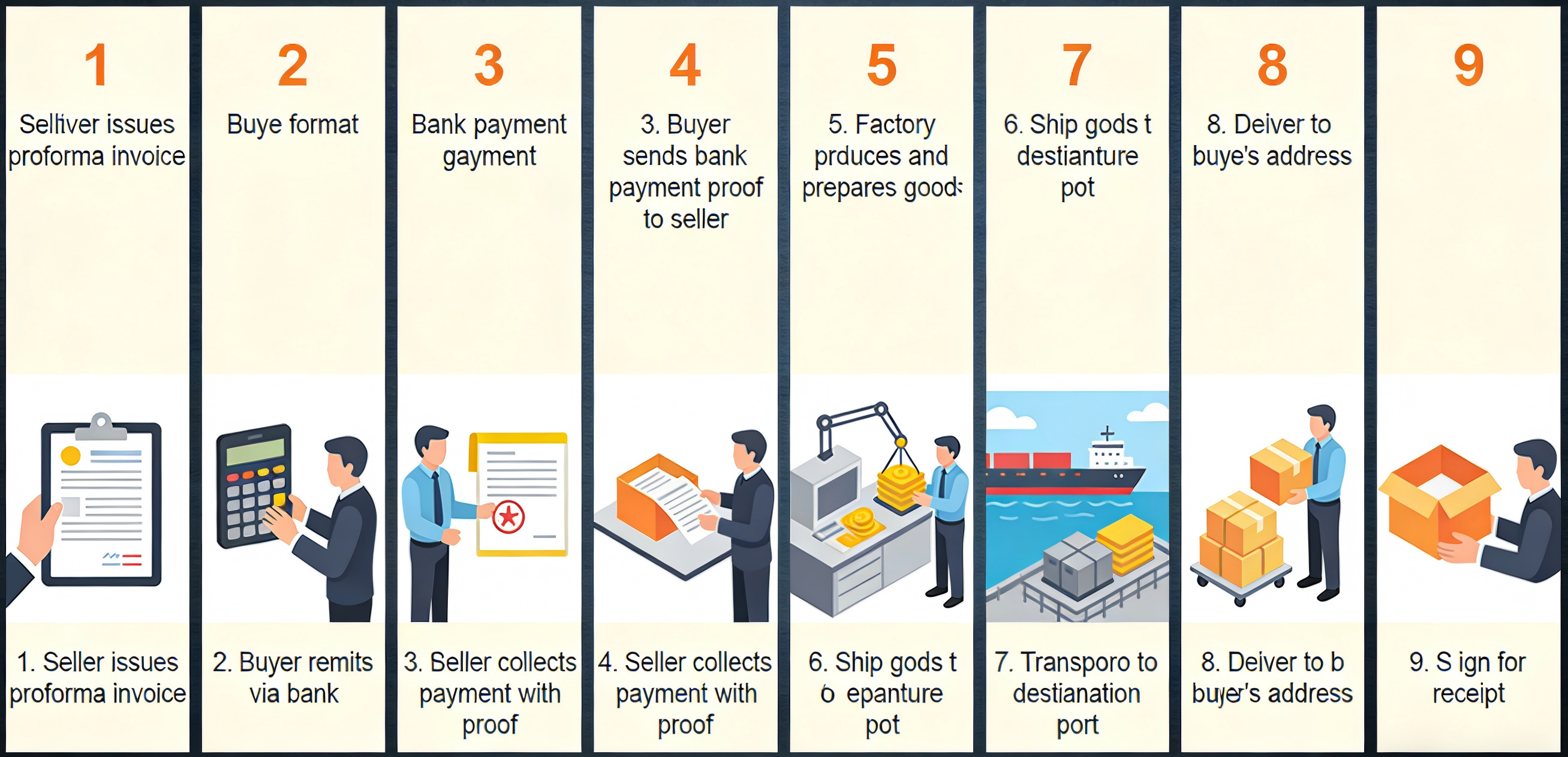
Inspection and delivery terms are part of the compliance file, not a separate commercial conversation: pre-shipment inspection is the point at which batch-level testing claims can be verified.
For a distributor, the value of this list is that it converts compliance from a trust question into a verification question. Trust is required at the selection stage. Verification is what protects margin at the execution stage.
Comparison With Traditional Solutions — and Where the Limits Are
Brushless platforms are frequently presented as the answer to reliability concerns. The comparison below reflects Geakita’s own platform comparison between its brushless tool range and traditional brushed or low-cost generic equivalents; these are manufacturer-side figures rather than independent benchmark results, and should be read as directional.
| Metric | Brushless platform (Geakita data) | Traditional brushed / low-cost generic |
|---|---|---|
| Working efficiency | 30% higher | Baseline |
| Service life | 50% longer | Baseline |
| Battery runtime | 20% longer | Baseline |
| Defect rate | 0.5% | 3–5% |
| Total cost of ownership over 3 years | 10–15% lower | Baseline |
| Maintenance | 50% less; no brush replacement | Brush replacement required |
| Energy efficiency | 25% higher; supports compliance with EU energy efficiency standards | Baseline |
| Warranty coverage | Global warranty program | Varies by supplier |
Where the advantage stops — six limits worth stating plainly:
- Certification is a floor, not a differentiator. Credible suppliers present the same family of standards; the real difference lies in batch discipline and documentation accuracy.
- UN38.3 says nothing about runtime, torque or cycle life. A buyer who accepts transport compliance as proof of performance is misreading the standard.
- Design-level type testing does not guarantee every production unit. 100% pre-shipment battery testing narrows that gap; independent third-party inspection is what closes it.
- Mechanical protection reduces risk rather than removing it. Anti-kickback systems, safety switches and overload protection still depend on correct use and on operator training.
- Documentation is design-bound. Any change of cell or pack configuration normally requires new testing, so documents should be re-confirmed at each program renewal rather than assumed to carry over.
- Supplier-stated capability is not a substitute for the buyer’s own verification. Capacity, testing scope and portfolio claims should be validated during a supplier audit or through third-party inspection.
Market Trend: Compliance Is Turning Into a Procurement Criterion
The commercial weight behind these requirements is growing with the category itself. Grand View Research valued the global cordless power tools market at USD 13.44 billion in 2024, projected to reach USD 32.58 billion by 2033. Within that market, drilling and fastening tools accounted for the largest segment, at a 36.51% revenue share in 2024, according to Horizon Databook / Grand View Research data.
Regional supply is concentrated. China’s power tools market reached USD 5.30 billion in 2024, functioning as a major global export hub for cordless lithium technology, per Fortune Business Insights. Adjacent categories are expanding in parallel: Strategic Market Research valued the global angle grinder market at USD 3.2 billion in 2024, with cordless models increasingly reshaping site mobility; SNS Insider projects the robotic pool cleaner market to reach USD 5.18 billion by 2032 at a 16.51% CAGR from 2024; and Market Research Future valued the global robotic lawn mower market at USD 1.15 billion in 2024.
Competition in the cordless segment includes established global players such as Makita, Stanley Black & Decker (DeWalt), Bosch, and Techtronic Industries (Milwaukee), as identified by Global Market Insights. Their presence sets the documentation expectations that carriers, retailers and rental chains apply across the category — expectations that now reach specialised suppliers as well.
Future Outlook
Two shifts are likely to define the next few compliance cycles in cordless tool sourcing. The first is that compliance documentation is becoming a routine procurement deliverable rather than a favour requested at the last minute — distributors increasingly pass battery and tool documentation downstream to retail, rental and institutional customers, which pushes the requirement back up the supply chain to the manufacturer.
The second is that battery systems, not individual tools, are setting the boundaries of product ranges. As platforms extend across power tools, robotic pool cleaners, lawn mowing robots and commercial cleaning robots, the battery pack becomes a shared compliance asset whose documentation must cover an expanding set of applications and transport scenarios. Manufacturers holding that documentation centrally, and testing every pack rather than a sample, will find it easier to add categories without renegotiating trust with each new buyer.
What is unlikely to change is the underlying logic. Compliance evidence does not make a tool better; it makes an order deliverable. In a market measured in tens of billions of dollars and increasingly served through global distribution networks, deliverability is not a secondary attribute.
FAQ
1. What does “100% battery safety testing before shipment” actually cover?
It means every battery pack in an order is tested before dispatch, rather than a sample drawn from the batch. In Geakita’s production, this sits alongside two upstream controls: the use of A-grade lithium-ion cells, and an intelligent BMS providing overcharge, overdischarge and short-circuit protection. The packs are designed for compliance with UN38.3 transportation standards. Buyers can verify the claim during 100% pre-shipment inspection by the QC team, or through third-party inspection on request.
2. Which standards should appear in the compliance file for a cordless power tool order?
Three layers are relevant and they address different risks. UN38.3 covers the transport safety of the lithium cells and batteries. IEC/UL 62133 covers secondary cells and batteries for portable applications. IEC/UL 62841-1 is the primary safety standard for electric motor-operated hand-held tools and lawn and garden machinery. A complete file therefore contains transport documentation, cell and pack validation evidence, and tool-level safety evidence.
3. How does compliance documentation affect delivery timelines in a long-term supply program?
Documentation prepared in advance removes the main source of delay, which is re-testing triggered by a mismatch between the certificate and the configuration being shipped. Geakita reports a monthly production capacity exceeding 180,000 units, with a typical lead time of 30–45 days for mass production and 20–28 days for repeat orders. For programme buyers, maintaining a matching compliance file across seasons is what keeps repeat orders inside that shorter window.
4. What acceptance and inspection terms should a distributor expect on a cordless tool order?
Geakita’s standard terms apply 100% pre-shipment inspection (PSI) by its own QC team, with third-party inspection by SGS or TÜV available on request and on-site acceptance at the factory as an option. MOQ is 100 units per SKU for standard models and 500 units per SKU for OEM/ODM customized models, with 40-unit small-batch trial orders available. Payment is 100% T/T, or a 50% T/T down payment with 50% against B/L for large orders. Delivery can be arranged as FOB Shenzhen/Ningbo, EXW factory, or DDP door-to-door.
5. Does compliance testing guarantee performance in high-heat environments?
No. UN38.3 tests transport safety; it does not measure runtime, cycle life or torque under sustained thermal load. High-heat performance depends on cell grade and on the scope of BMS protection — overcharge, overdischarge and short-circuit protection in particular — rather than on a transport certificate. Buyers sourcing for hot-climate projects should request cell grade specification, BMS protection scope, and evidence of pre-shipment battery testing, and should validate the configuration through their own samples before committing to volume.
6. What changes invalidate existing battery compliance documentation?
Transport and cell documentation is tied to a defined cell and pack design, including protection circuitry. A change of cell model or supplier, a change in pack architecture, or a meaningful change to the protection components normally means the existing documentation no longer describes the product. Buyers should therefore confirm at each programme renewal that the documents on file match the configuration in the current purchase order.