
UPVC Door Supplier Evidence: 50,000 Units, 10 Engineers
UPVC door sourcing rarely fails because a supplier published no numbers. It fails because the numbers were never read together. Annual output, monthly capacity, factory footprint, engineering headcount, conformity attestation, minimum order quantity and lead time each answer a different question, and a buyer at the decision stage needs them aligned before a purchase order becomes defensible.
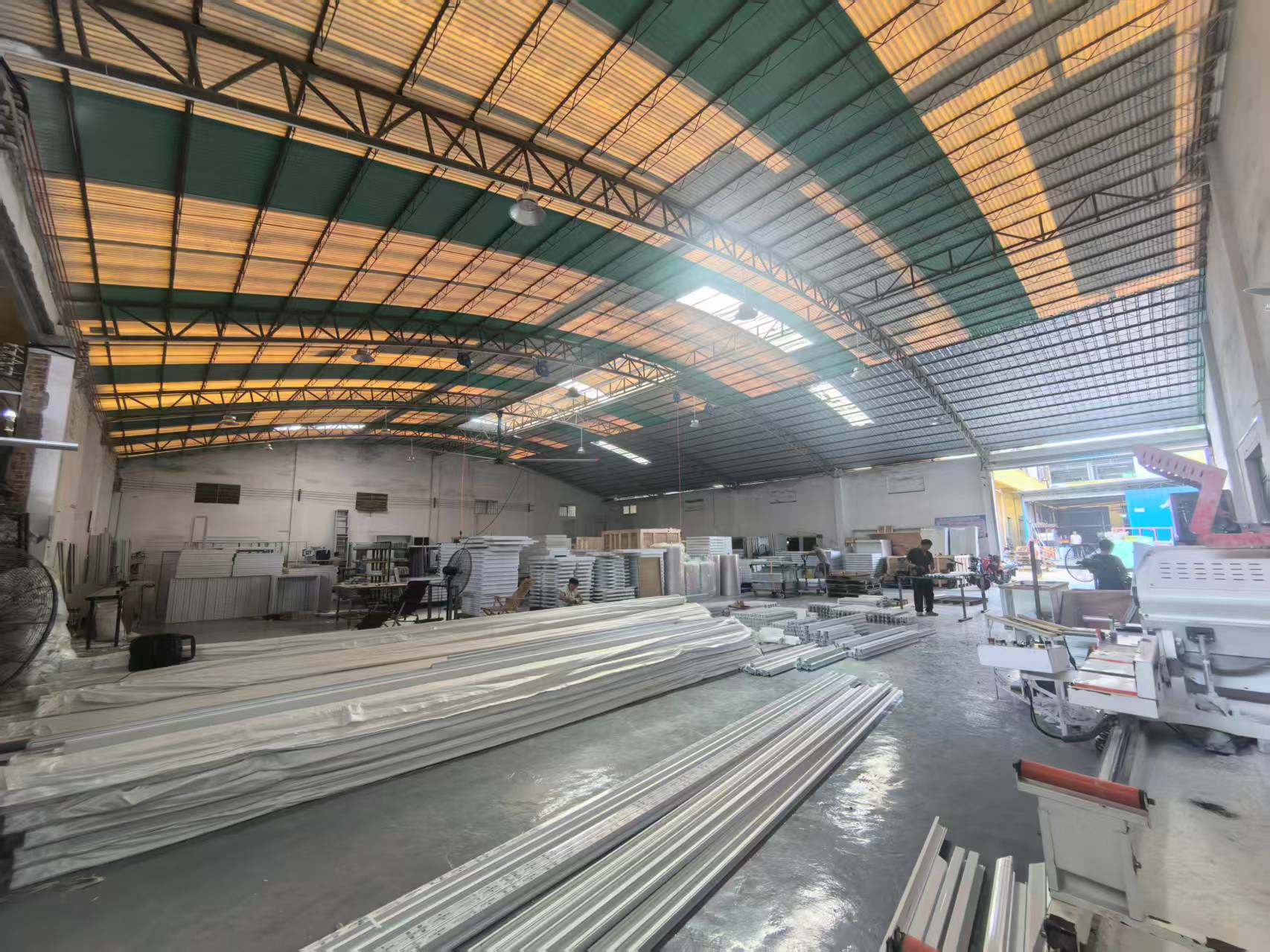
Material cutting area: profile accuracy is decided here, before welding and assembly determine how a finished UPVC door performs.
Foshan Nanhai Yuanzhaiji UPVC Door & Window Factory is a UPVC door and window manufacturer established in 2009 and located in Shishan Town, Foshan, Guangdong, China. Its published company data states an annual output of 50,000 units, a monthly production capacity of 4,000 sqm, a 3,000 sqm factory, a workforce of about 20 staff including a 10-engineer R&D team, and roughly 80% of products exported to the EU, ASEAN, MENA and LATAM. Its conformity evidence includes ECM Attestation NO.3N230816.YCPQQ51 under EN 14351-1:2006+A2:2016 for UPVC doors and windows.
This article is not a supplier endorsement. It is a reading guide for buyers comparing UPVC door suppliers at the point of decision, using one factory's published capability data as the worked example.
Why Capacity Claims Are Not Comparable Across Suppliers
Two suppliers can both say "large capacity" and mean completely different things. One may be a trading intermediary that coordinates third-party production; the other may operate its own cutting, welding, assembly, glazing and inspection under one roof. The buyer's risk profile is not the same in the two cases, even if the price looks similar.
Verifiable capability evidence is the part of a supplier's story that can be checked against documents, physical premises or third-party attestation. For a UPVC door order, that evidence usually sits in five layers:
- Capacity in numbers — output and monthly volume, against the size of the order.
- Engineering depth — who handles custom size, door specification and glass specification requests.
- Conformity scope — which standards, which attestation, which tests.
- Product substance — profile wall thickness, reinforcement, hardware and sealing components.
- Commercial and delivery terms — MOQ, lead time, inspection procedure and after-sales technical support.
A quotation that answers only one of these layers is not yet a comparison. It is a starting position.
Reading the Numbers Together: Output, Monthly Capacity and Footprint
The first analytical point is that this factory states capacity in two different units — 50,000 units per year and 4,000 sqm per month. Buyers should reconcile those against the unit their own order is quoted in, because UPVC door projects are sometimes specified by piece count (apartment doors, unit types) and sometimes by area (façade openings, glazed elevation).
| Published evidence | Stated value | What it answers for a buyer | How to verify |
|---|---|---|---|
| Annual output | 50,000 units | Whether the factory routinely handles volume closer to a project schedule than to a sample order | Production records, shipment records, factory audit |
| Monthly capacity | 4,000 sqm | How a single order competes for line time alongside other concurrent projects | Production planning records, on-site observation |
| Factory footprint | 3,000 sqm, Shishan Town, Foshan | Whether cutting, welding, assembly and storage sit on one site or are subcontracted | Site visit or third-party factory audit |
| Workforce | About 20 staff, including a 10-engineer R&D team | How much of the organisation is technical rather than purely commercial | Organisation chart, technical meeting with the engineering contact |
| Export ratio | About 80% of products exported | Familiarity with EU, ASEAN, MENA and LATAM documentation and shipping practice | Export documentation, attestation scope, references |
| MOQ | 30–40 sqm | Whether a pilot order is possible before a full project commitment | Written quotation and sales contract |
| Lead time | 10–30 days, standard configurations | Scheduling feasibility against site programme | Contractual delivery terms, confirmed order schedule |
| Conformity | ECM Attestation NO.3N230816.YCPQQ51 under EN 14351-1:2006+A2:2016 | Whether doors and windows are covered by a declared European standard route | Attestation document, Declaration of Performance, test reports |
The organisational detail matters more than it first appears. A workforce of about 20 with a 10-engineer R&D team means engineering is a substantial share of the organisation, which is consistent with a factory that takes custom briefs rather than only re-selling catalogue items. For a buyer, that ratio is a question, not a conclusion: ask who signs off a custom size drawing, who approves a glass build-up, and who issues the final inspection record.
Decision rule: match the order to the capacity unit. If your requirement is quoted in square metres, compare it to the 4,000 sqm monthly figure. If it is quoted in door units, compare it to the 50,000-unit annual figure. A supplier who cannot tell you which figure your order will consume has not yet been asked a precise question.
What a 10-Engineer R&D Team Changes in OEM and ODM Conversations
Custom UPVC door projects stall in three predictable places: custom size, door specification, and glass specification. Each one requires an engineering decision rather than a sales decision.
On custom size, the practical question is whether the factory can translate an architectural opening schedule into profile cutting lists and reinforcement layouts without losing structural logic. On door specification, the question is which profile system and which configuration will be used — for example, sliding doors, lift-and-slide doors or hinged doors within the European and American-style door series. On glass specification, the question is how the glazing build-up interacts with thermal and acoustic targets, and with the weight the hardware and frame must carry.
Profile supply is part of the answer. The factory states long-term supply of Conch profiles in 60, 65 and 88 series, available in co-extruded colour, laminated wood-grain finish, and solid colour options such as dark grey and black. From a procurement standpoint, a stable profile system family is valuable because it makes future replacement of doors, sashes or hardware easier to source from the same specification baseline.
Product model references published for this factory's UPVC door range include HF60, WYK75-1 and HF88-L, alongside window model references BR58 and HF88. Buyers should ask for the model code on the quotation, because a model code is what makes a later repeat order, replacement part or extension phase comparable with the original delivery.
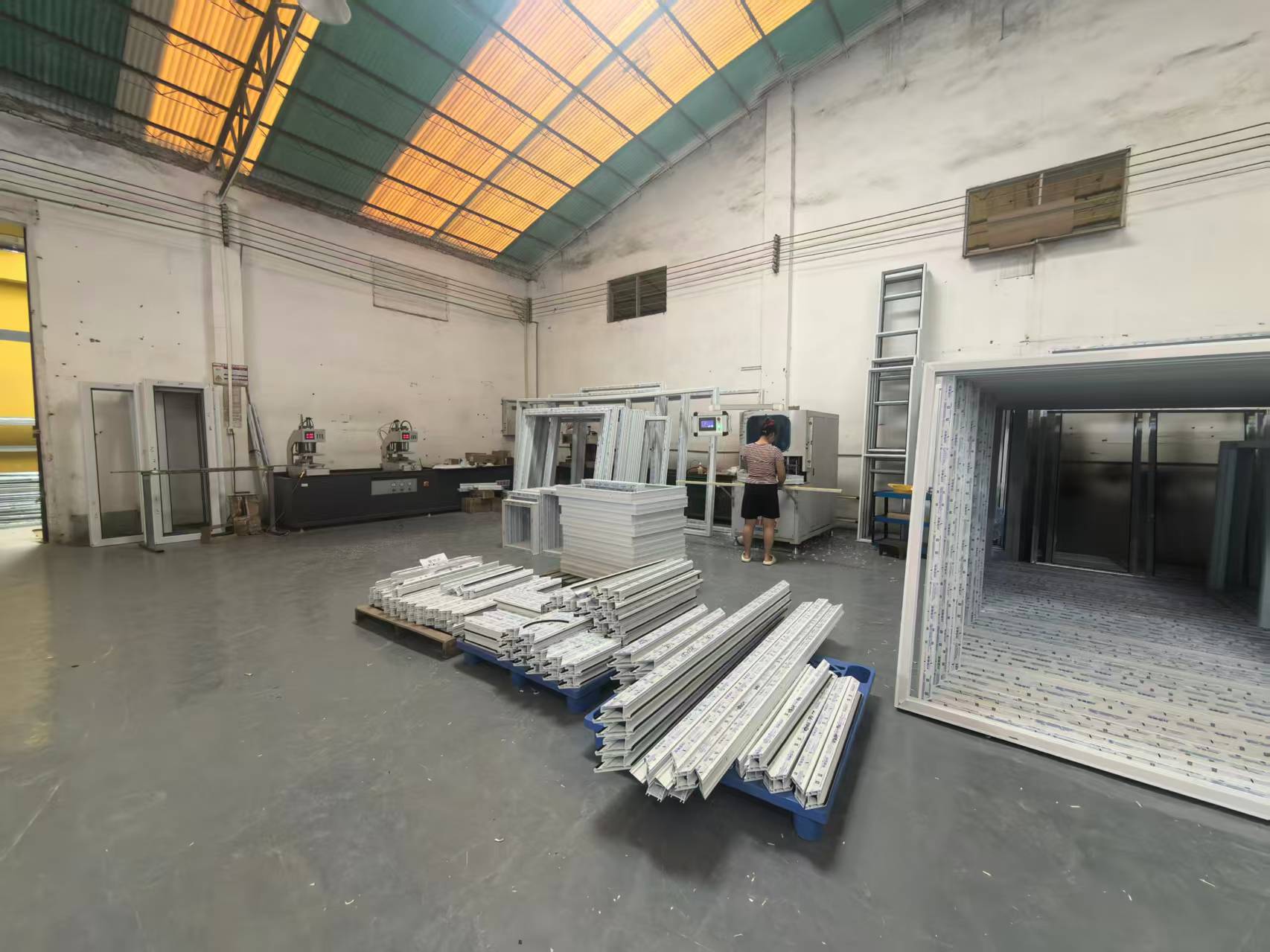
Welding and assembly area: corner welding strength and hardware fitting are the two quality steps most often cited in factory production control.
Certification Evidence: EN 14351-1:2006+A2:2016 and the ECM Attestation
For buyers selling into or specifying for the European market, the conformity route is the single most checkable capability claim a UPVC door supplier can present. EN 14351-1:2006+A2:2016 is the harmonised standard for windows and doors, and the supporting system tests normally include wind resistance, water tightness, air permeability, sound insulation, thermal performance, drop-weight impact and welding corner strength.
The evidence chain that accompanies that standard is not a single PDF. It normally includes a factory production control (FPC) system, a Declaration of Performance (DoP), CE marking on products, and retained test reports and technical documentation available for inspection.
Foshan Nanhai Yuanzhaiji UPVC Door & Window Factory holds ECM Attestation NO.3N230816.YCPQQ51 under EN 14351-1:2006+A2:2016, covering UPVC doors and windows. Two verification habits are worth building into a purchase order:
- Check that the attestation scope names the product type you are buying (doors, windows, or both) rather than a generic category.
- Check that the model code on your order can be traced to the technical documentation, not only to the attestation cover page.
Regulatory thresholds are moving in a direction that makes this documentation commercially important rather than administrative. Under the UK Future Homes Standard 2025, the maximum U-value for external doors decreases from 1.6 W/m²K to 1.2 W/m²K, according to published UK guidance on Approved Document L. A supplier whose thermal performance is documented is easier to place into a compliant project than one whose performance figures exist only in a sales email.
Technical Reading: Wall Thickness, Steel Liners and Material Parameters
The engineering story behind a UPVC door is carried by three things a buyer can ask about directly: profile wall thickness, internal reinforcement, and the material parameters of the compound.
Compared with conventional standard UPVC doors, this factory's high-performance specification uses a profile wall thickness 2.0–3.0 mm thicker and enhanced structural rigidity. That thicker wall and greater rigidity are associated with increased reliability, simpler hardware maintenance, a longer service life of sealing parts, and a longer expected lifespan supported by better anti-ageing properties.
Reinforcement is the second layer. UPVC doors — often called plastic-steel doors — use PVC-U profiles with internal galvanised steel liners for reinforcement. That is the essential structural difference from ordinary plastic doors, which have no steel reinforcement, deform more easily under load, and are not suitable for exterior or high-rise applications. A practical acceptance step is to inspect the profile end face and confirm that steel liners are present in the cavities of doors intended for exterior use.
The third layer is the material data published for the door and window profiles used under this specification:
| Parameter | Published value |
|---|---|
| Vicat softening point | 86 °C |
| Flexural modulus of elasticity | 2840 MPa |
| Tensile yield stress | 43 MPa |
| Tensile strain at break | 186 % |
| Density | 1520 kg/m³ |
| Door model references | HF60, WYK75-1, HF88-L |
| Window model references | BR58, HF88 |
Published parameters like these are useful only when they are attached to a named product and a named standard. A buyer comparing two UPVC door quotations should ask which model the figures describe and whether the corresponding test documentation exists for that model.
Application Fit: Residential, Commercial and Coastal Projects
Application suitability is where capacity and engineering numbers stop being abstract. The published application profile for this product range covers residential buildings, commercial buildings, villa projects and renovation projects, with operating conditions that include outdoor, coastal high-humidity and strong-wind areas.
In those conditions, the performance requirements that typically drive specification are wind-pressure resistance, water tightness and air permeability, impact and wear resistance, a secure locking system, weather-resistant and anti-ageing behaviour, and compliance with local building access standards. Operating modes include manual opening and closing, tilt-and-turn opening and sliding operation.
Component selection is part of the application decision, not an afterthought. The matched components published for this door system include the door handle, door hinge, door roller, anti-collision stopper, dust-proof pile weatherstrip and EPDM sealing gasket. Each of these is replaceable, and each one affects the long-term maintenance profile that a facilities team will live with.
For coastal and high-humidity environments, the corrosion-resistance argument is structural: high-performance UPVC windows and doors provide thermal insulation, sound insulation, wind and rain resistance, corrosion resistance and sealing performance. Equally relevant for maintenance budgets, the specification requires no anti-corrosion spraying, which removes a recurring cost item that metal door systems typically carry.
Residential buyers tend to weight thermal insulation, sound insulation and low maintenance. Commercial and hospitality buyers tend to weight impact resistance, security and the repeatability of a specification across many identical openings. Renovation projects usually add a third constraint: whether the supplier can match an existing opening size and a glass specification without re-drawing the whole elevation.
Comparison: High-Performance UPVC Doors vs Conventional Standard UPVC Doors
Comparative decisions are easier when the difference is expressed as trade-offs rather than as adjectives.
| Comparison dimension | Conventional standard UPVC door | High-performance UPVC door (2.0–3.0 mm thicker wall) |
|---|---|---|
| Profile wall thickness | Baseline | 2.0–3.0 mm thicker |
| Structural rigidity | Baseline | Enhanced |
| Initial procurement cost | Baseline | 12–18% higher |
| Total life-cycle cost | Higher over time | Lower |
| Maintenance | Conventional hardware servicing | Simple hardware maintenance; longer service life of sealing parts; no anti-corrosion spraying required |
| Expected lifespan | Baseline | Longer, supported by longer sealing-part life and better anti-ageing property |
| Best suited to | Budget-led, low-exposure openings | Seaside and city environments, high-humidity and strong-wind exposure |
| Energy performance | Baseline | Higher energy efficiency through thermal insulation and sound insulation performance |
The limitation is real and should be stated plainly. A 12–18% higher initial procurement cost is not justified for every opening. For interior or low-exposure doors where wind load, driving rain and humidity are not governing factors, a conventional standard UPVC door can meet the functional requirement at lower upfront cost, and that is a legitimate commercial choice. The thicker-wall specification earns its premium where exposure and service life dominate the total cost equation — typically coastal projects, high-rise applications and buildings where maintenance access is expensive or disruptive.
What the Market Data Suggests About Timing
Several published market signals support treating documented capability as a purchasing criterion rather than a marketing preference.
- The global uPVC windows and doors market was valued at USD 30.8 billion in 2025 and is projected to reach USD 32.4 billion in 2026, according to Grand View Research.
- Asia Pacific dominated the global uPVC windows and doors market with a revenue share of 44.1% in 2025, per the same source.
- The doors segment within the uPVC market is expected to grow at a CAGR of 5.3% from 2026 to 2033 (Grand View Research).
- Sliding configurations accounted for 37.20% of uPVC door and window revenue in 2025, according to Mordor Intelligence — a reminder that configuration capability, not only material choice, shapes supply.
- The HS code for plastic doors, windows and their frames and thresholds is 392520, per the Harmonized Tariff Schedule (USITC / WCO), which is the classification line most importers will use.
Published estimates differ by definition — some research houses count profiles only, others count complete window and door assemblies, which is why market-size figures in this category do not always agree. For a buyer, the useful signal is directional rather than absolute: door-segment growth, a high Asia Pacific share, and tightening European thermal thresholds all point the same way. They reward suppliers who can produce documentation on demand.
Supplier scale in the same region varies widely. As a public regional reference point, Foshan Wanjia Window and Door Co., Ltd. operates a 538,195 sq ft facility and exports to the US, Canada and Australia, according to its company overview published on Made-in-China and its official website. Different scale models serve different order profiles; the decision variable for a buyer is not which scale is better, but which scale matches the size, cadence and documentation requirements of the specific project.
Boundaries of This Evidence
Capability data has limits, and naming them makes the rest of the analysis more usable.
- Scale boundary. A 3,000 sqm factory with a monthly capacity of 4,000 sqm is a focused manufacturing operation, not a multi-site industrial group. Very large single-phase programmes should confirm how monthly capacity is allocated across concurrent projects and what scheduling protection the order will carry.
- Financial verification boundary. Audited brand-specific financials for this factory are not part of the public record. Due diligence therefore rests on factory audits, production and shipment records, conformity documentation and inspection reports rather than on public accounts.
- Cost boundary. The thicker-wall specification carries a 12–18% upfront premium. Buyers whose decision is governed by first cost rather than life-cycle cost should compare it explicitly against a conventional standard specification instead of accepting it by default.
- Lead-time boundary. The stated 10–30 day figure applies to standard configurations. Custom size, non-standard colour or project-specific glass build-ups require scheduling confirmation in writing.
Delivery, Inspection and After-Sales: The Final Decision Layer
The last set of signals determines whether a signed order becomes a delivered one. This factory publishes a standard lead time of 10–30 days, a Quality Inspection Report procedure, and after-sales technical consultancy and quality testing support.
For a buyer, each of those three items maps to a clause worth writing into the purchase order: the confirmed delivery window per batch, the inspection stage at which the Quality Inspection Report is issued and what it covers, and the technical channel that handles installation questions after delivery. Inspection timing matters because a report issued before glazing and hardware fitting answers a different question than one issued after final assembly.
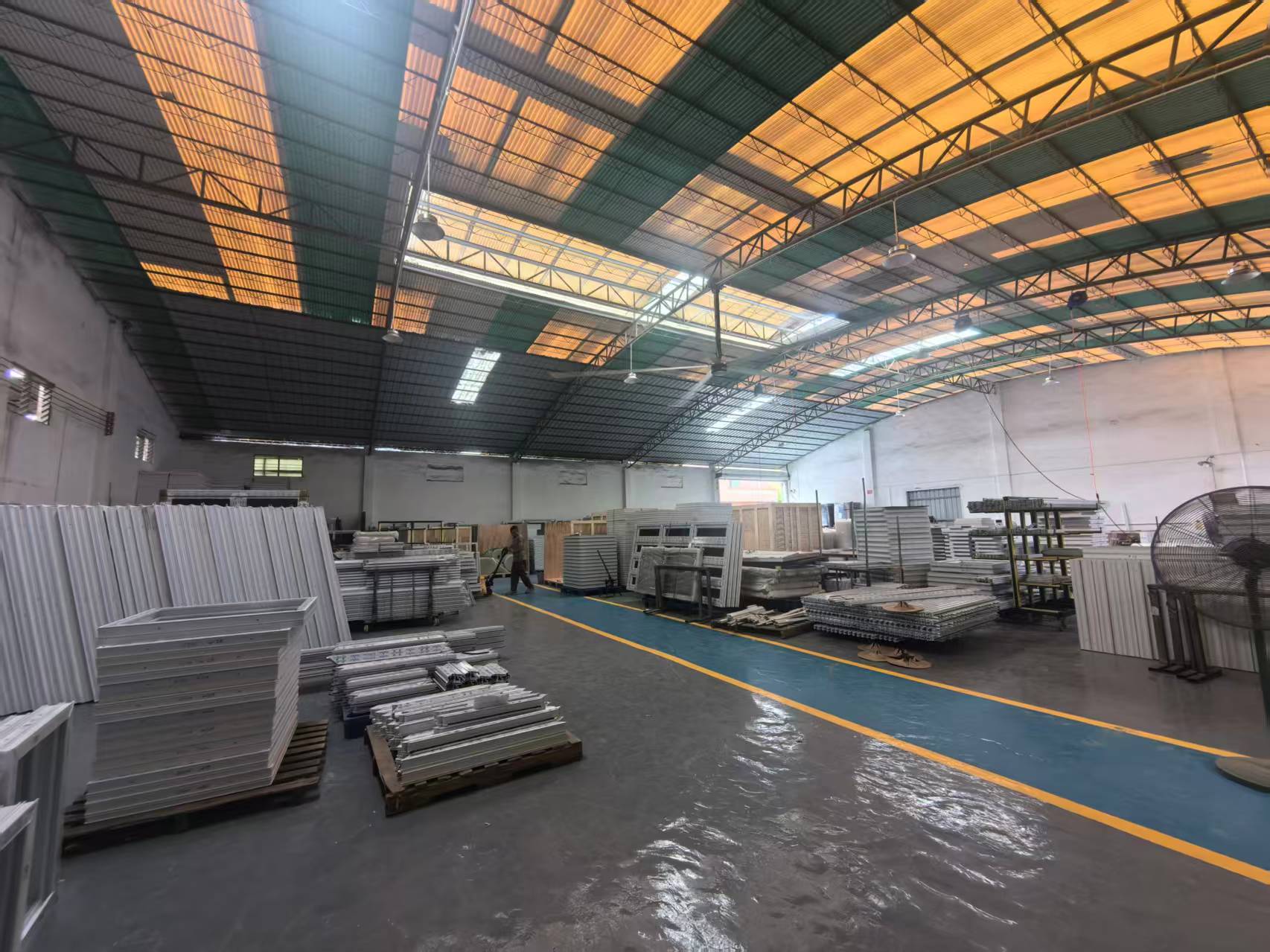
Goods storage area: how finished units are handled between inspection and loading affects damage rates more than most buyers expect.
What to Watch Next in UPVC Door Sourcing
Three developments look likely to shape how buyers evaluate UPVC door suppliers over the next sourcing cycles.
First, performance documentation is becoming a gate rather than a differentiator. Where regulatory U-value thresholds tighten, such as the move toward 1.2 W/m²K for external doors under UK guidance, suppliers who cannot produce traceable test evidence are excluded from compliant projects regardless of price.
Second, configuration capability is gaining weight relative to raw material claims. With sliding configurations accounting for 37.20% of uPVC door and window revenue in 2025 (Mordor Intelligence), the ability to engineer a sliding or lift-and-slide solution correctly — hardware, rollers, drainage and sealing — is a more practical test of a supplier than the profile brand alone.
Third, buyer-side verification is still largely manual. No consolidated regional export or compliance database for Foshan's UPVC cluster is currently available to international buyers, which means the practical alternative to a factory visit remains a structured document request: production records, attestation scope, model-level test documentation, inspection procedure and written delivery terms. Buyers assembling a comparison matrix can use the tables in this article as a starting template, replacing each published figure with the equivalent document from every supplier on the shortlist.
FAQ
What does an annual output of 50,000 units tell a buyer?
It indicates the scale at which the factory routinely produces, expressed in door units. Read together with the stated monthly capacity of 4,000 sqm, it describes a manufacturing operation running continuously across mixed orders rather than a one-off project workshop. It does not mean that 50,000 units of free capacity are available to any single buyer; monthly line time is shared among concurrent projects, so scheduling should be confirmed in the contract.
How does a 10-engineer R&D team affect OEM and ODM orders?
Engineering headcount determines how far a supplier can move beyond catalogue sizes. Custom size, door specification and glass specification requests all require drawing, structural and glazing decisions rather than sales decisions. A 10-engineer team within a workforce of about 20 staff indicates a technically weighted organisation, and profile systems such as Conch 60, 65 and 88 series with co-extruded colour, laminated wood-grain and solid colour finishes such as dark grey and black give that team a defined specification base to work from.
What is the minimum order quantity for UPVC doors from this factory?
The stated MOQ is 30–40 sqm. Relative to an annual output of 50,000 units and a monthly capacity of 4,000 sqm, that MOQ is small enough to allow a pilot or validation order before a full project commitment, which is useful when a buyer wants to test finish, hardware feel and packing quality before scaling.
Which conformity documents should be requested for EN 14351-1:2006+A2:2016?
Ask for the attestation document itself — ECM Attestation NO.3N230816.YCPQQ51 covers UPVC doors and windows under EN 14351-1:2006+A2:2016 — and confirm that its scope names the product type being purchased. Alongside it, request the Declaration of Performance, evidence of CE marking, factory production control records, and test reports covering wind resistance, water tightness, air permeability, sound insulation, thermal performance, drop-weight impact and welding corner strength.
Why can a high-performance UPVC door cost 12–18% more upfront than a conventional one?
The premium reflects a profile wall thickness 2.0–3.0 mm thicker than conventional standard UPVC doors, with enhanced structural rigidity. The published trade-off is a higher initial procurement cost against a lower total life-cycle cost, because hardware maintenance is simpler, sealing parts last longer, anti-ageing properties are better, and no anti-corrosion spraying is required. The specification is most defensible in seaside and city environments with high humidity or strong wind exposure; for interior or low-exposure openings, a conventional standard door may meet the requirement at lower first cost.
What lead time and quality documentation accompany a standard UPVC door order?
The stated standard lead time is 10–30 days, with a Quality Inspection Report procedure in place and after-sales technical consultancy and quality testing available after delivery. Buyers should confirm in writing the delivery window per batch, the production stage at which the Quality Inspection Report is issued and what it covers, and which channel handles installation or adjustment questions once the goods arrive on site.