
UPVC Window Supplier Longevity: Capacity, Certification, Staff
UPVC Window Supplier Longevity: Capacity, Certification, Staff
A UPVC window program that repeats across three to five years carries risks a single container does not. The profile series has to stay the same, the certificate covering the product has to stay valid, the engineers who approve shop drawings have to remain on the payroll, and the inspection and payment routine has to work at lot twenty as cleanly as at lot one. Supplier longevity is therefore a document check, not a compliment.
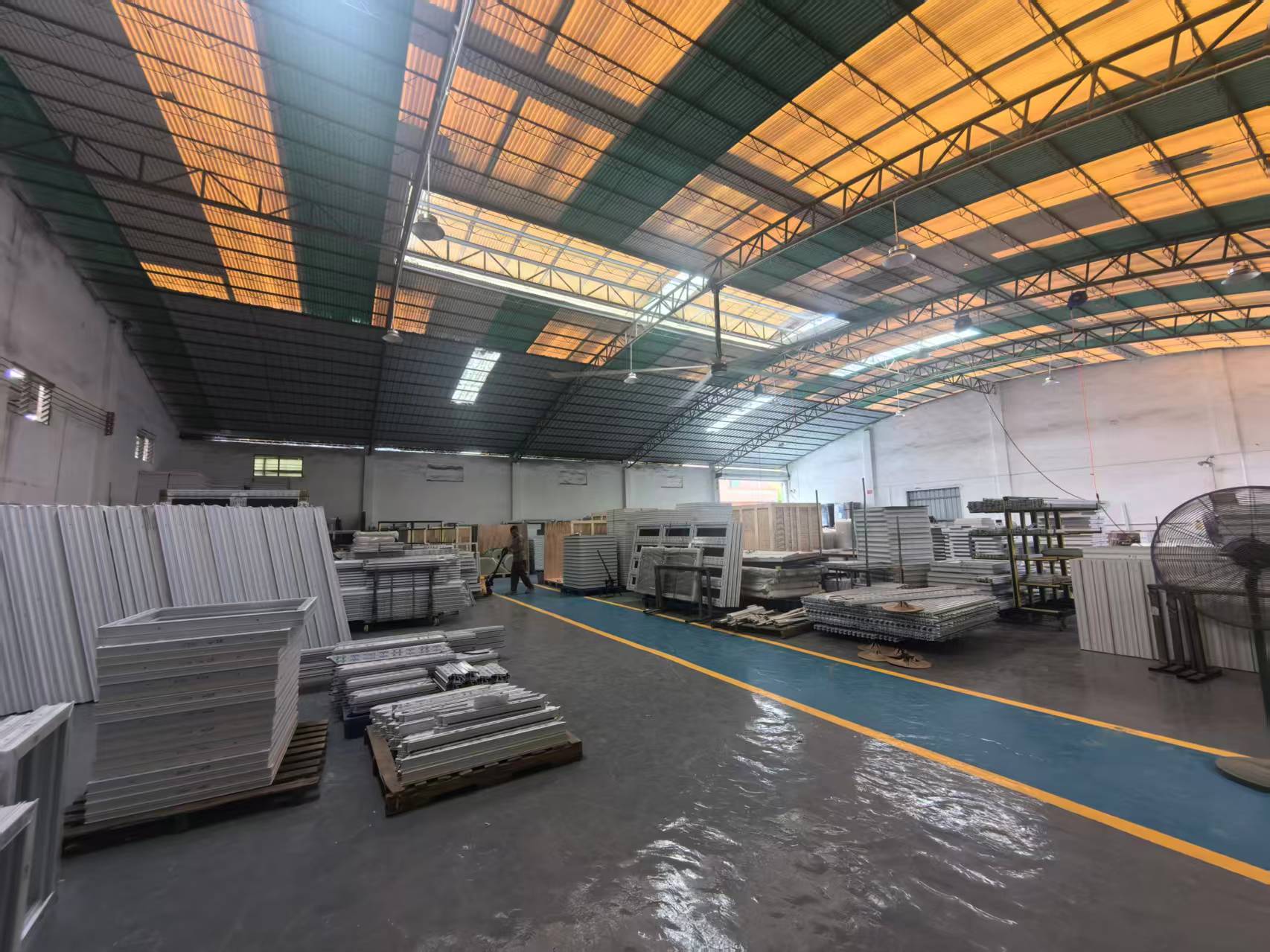
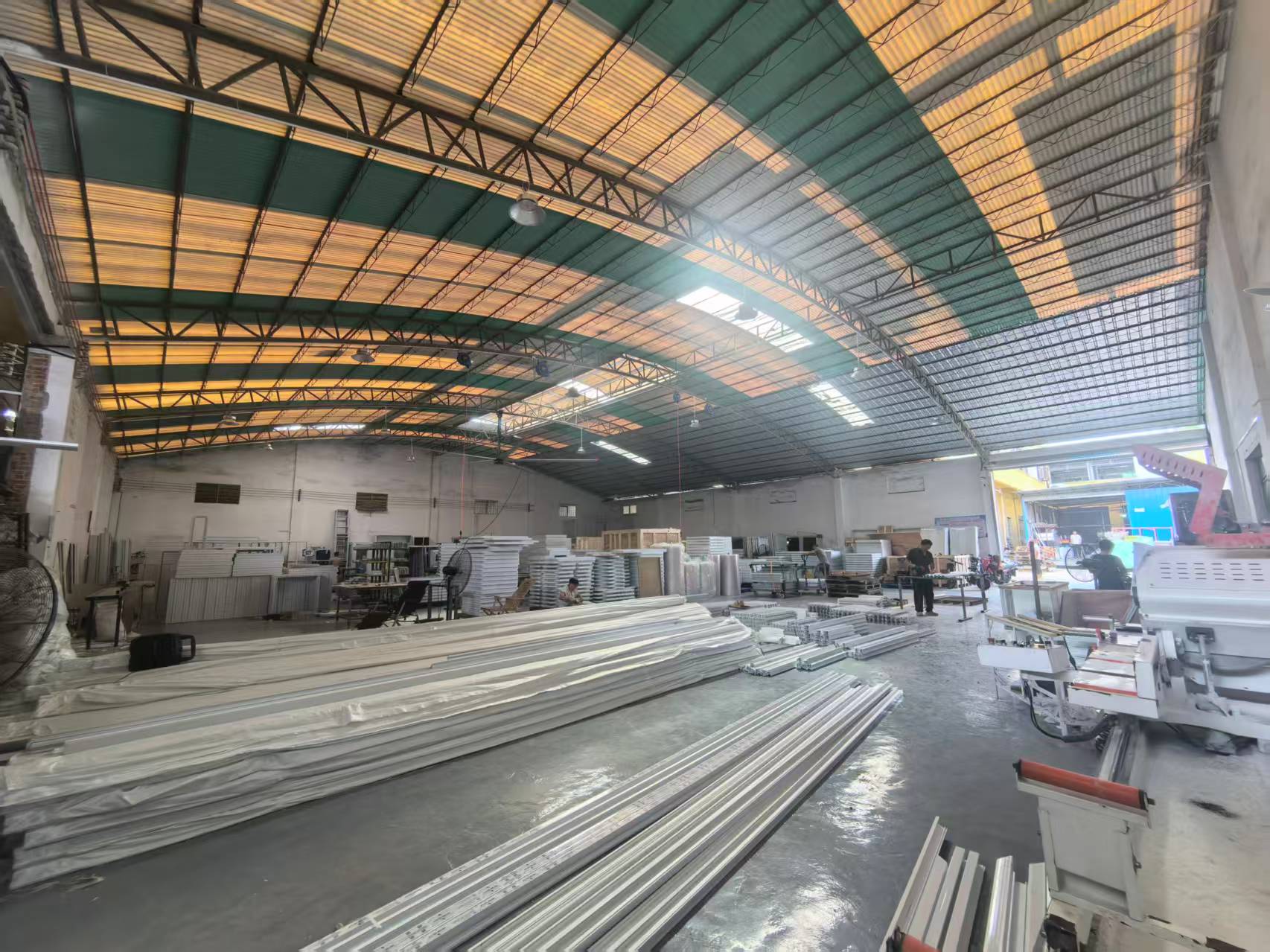
Foshan Nanhai Yuanzhaiji UPVC Door & Window Factory, a manufacturer of UPVC doors and windows established in 2009 and therefore in its fifteenth-plus year of operation by 2026, publishes a compact set of figures that can be tested directly against those risks. The company states an annual output of 50,000 units, a 3,000 m² factory, approximately 20 staff including 10 R&D engineers, and an export share of about 80% across LATAM, MENA, ASEAN and the EU. It also holds ECM Attestation NO.3N230816.YCPQQ51, valid to 15 August 2028. The analysis below reads each figure as procurement evidence: what it establishes, what it leaves open, and what a buyer should fix in writing before year one.
Why Long-Term UPVC Window Programs Fail on Supplier Factors, Not Product Factors
In repeat procurement, three supplier-side failure modes account for most of the damage. The first is profile discontinuity: a supplier changes profile source, colour batch or wall thickness between phases, and the extension no longer matches the windows already installed. The second is certification lapse: an attestation expires mid-contract and the buyer's own compliance file no longer holds. The third is execution thinness: the people who understood the drawings, the hardware combinations and the buyer's inspection expectations leave, and every subsequent lot has to be re-explained.
Each of these is checkable before a contract is signed, using documents and headcount rather than impressions. That is why this evaluation uses four dimensions — stated capacity, certification runway, staff depth, and profile continuity — and then ties them to the commercial routine that governs how each lot is paid for and accepted. The order matters: capacity tells a buyer whether the volume is plausible, certification runway tells them whether the compliance position survives to the last shipment, staff depth tells them who executes, and profile continuity tells them whether year-three windows will match year-one windows.
The stated minimum order of 30–40 m² per order is relevant here. It is small enough that a phased program can be released in modest lots rather than committed in one block, which reduces exposure if an early phase reveals a mismatch. Small lot sizes only help, however, if the acceptance protocol is identical each time; otherwise the buyer simply repeats the learning cost.
Capacity: What 50,000 Units a Year Establishes
A stated annual output of 50,000 units on a 3,000 m² site is a throughput figure, not a delivery promise. Read arithmetically, it averages roughly 4,167 units a month if output were distributed evenly across the year. That is a calculated average from the stated annual number, not a scheduling commitment — monthly loading, seasonality and line allocation are not disclosed, and a buyer should treat the average as a scale indicator only.
The more useful question is whether that throughput fits the way the program is actually ordered. Capacity is expressed in units, while the minimum order is expressed in square metres. The two are not interchangeable without the unit-to-area conversion for the specific window type, because a 1.2 m × 1.5 m casement and a compact awning unit consume very different amounts of profile, glass and hardware. Buyers planning a multi-year schedule should request that conversion explicitly and then map each phase's square metres against the monthly average, phase by phase, rather than against the annual total.
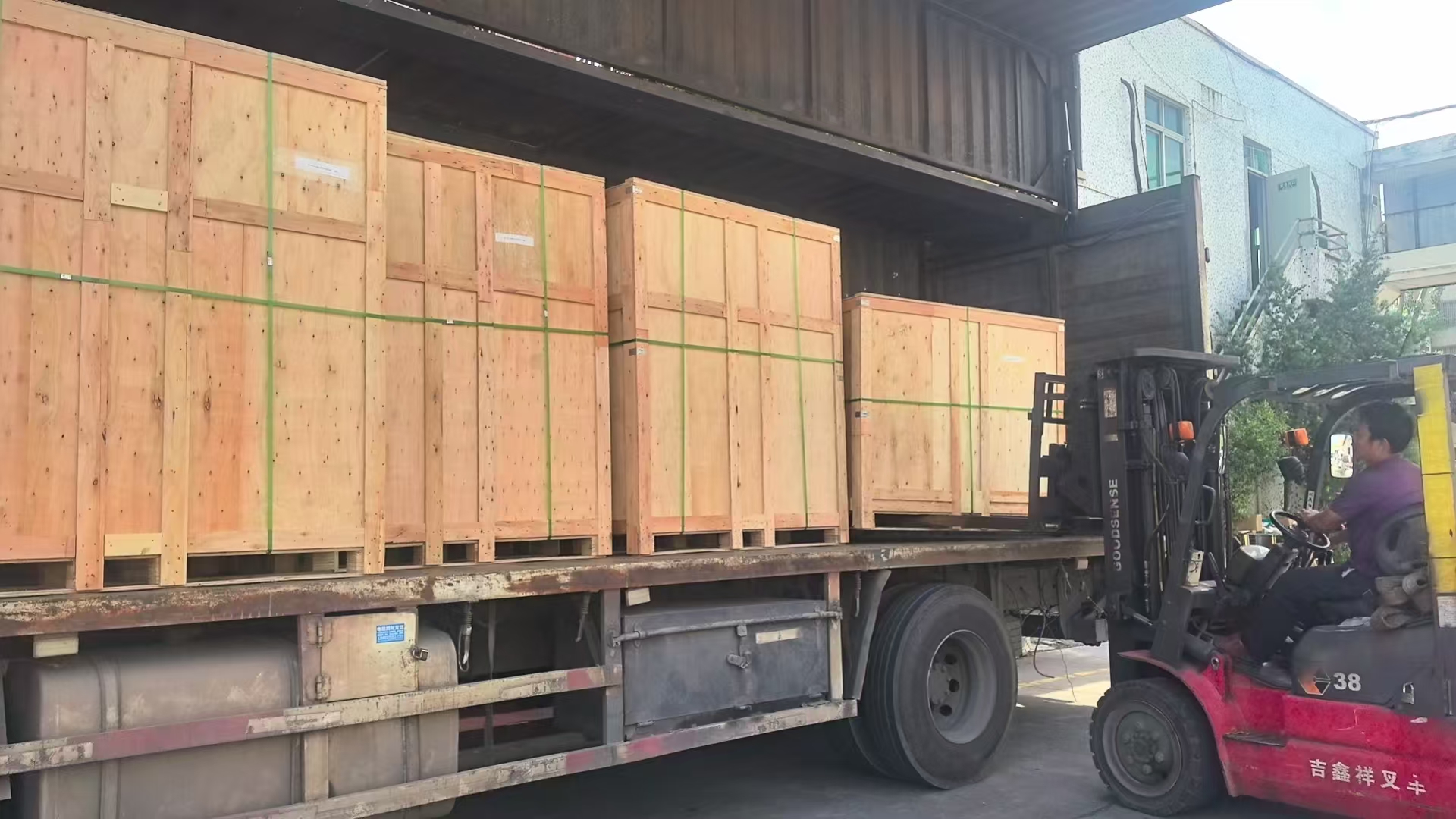
What the figure does establish is that the factory states capacity for repeat series production, and that an export share of about 80% means export packing, documentation and dispatch are a routine part of the operation rather than an occasional add-on. What it does not establish is reserved capacity for a named customer, lead time in a peak month, or the number of production lines and welding stations behind the total. Those items are simply not disclosed. It is worth stating plainly that “not disclosed” is not evidence of weakness; it means the figure falls outside the published data and should be raised as a question rather than filled in with an assumption.
Certification Runway: What the 2028 Date Means for a Multi-Year Contract
ECM Attestation NO.3N230816.YCPQQ51 is valid to 15 August 2028. That date defines the certification runway: the interval inside which shipments can be made against the current attestation. For a program whose final lots leave before that date, the runway comfortably covers the contract. For a program extending into 2029 or beyond, the expiry becomes a project milestone rather than an administrative detail, because a buyer's compliance file typically cites the attestation number and its validity period.
The practical handling is unglamorous but effective. Record the attestation number and expiry date in the contract schedule. Require a current copy at a defined interval — annually, or with each shipment — rather than once at the start. Set an internal review point roughly six months before expiry to confirm the status of the document after 15 August 2028, and decide in advance what the buyer's position will be if the attestation is replaced rather than renewed. None of this requires the supplier to commit to an outcome; it requires the buyer to keep the file current.
Project-level requirements sit outside the attestation and should not be confused with it. In England and Wales, for instance, replacement windows in existing homes are assessed against a whole-window U-value limit of 1.4 W/m²K under Approved Document L. That is a calculation about a specific window in a specific dwelling; no supplier document replaces it, and the attestation is evidence in the file rather than the answer to the calculation.
The company also states that CE and ISO documentation can be provided as required. Buyers who need those documents for customs clearance or tender submissions should request them at quotation stage, so that they travel with the contract instead of being chased after the first shipment is booked.
Staff Depth: Ten Engineers Inside a Twenty-Person Team
Approximately 20 staff with 10 R&D engineers is an unusual ratio: roughly half the team sits in engineering, calculated from the two stated figures. For a buyer ordering standard sliding or casement windows, the practical meaning is that drawing review, custom-size profile optimisation and hardware selection are handled by people whose function is engineering rather than sales support. For tilt-and-turn, American-style hung or multi-glazed specifications, where sash clearance, drainage path and hardware loading interact, that concentration is an advantage at the design stage.
The same number carries a boundary that buyers should not skip. A 20-person operation is a small team. The depth of the production labour pool, the shift pattern and the number of people able to run a welding or assembly station are not stated. Three questions convert the headcount into an execution plan: who signs the shop drawing that goes to the floor, who performs final inspection before packing, and what happens to scheduling when the responsible engineer is unavailable. A supplier that answers all three has an execution system; one that answers only the first has a contact person.
Staff depth also governs how much customisation is realistic across a repeat program. A 10-engineer team can support custom sizes and the colour range available in Conch 60, 65 and 88 series. It does not follow that unlimited variant proliferation is efficient. Repeat programs are better served by consolidating variants, because every additional variant adds a drawing revision, a stocking decision and a chance that a later lot is assembled to an earlier drawing. Variant discipline is an engineering management question, and it is fair to ask how revisions are controlled.
Profile Continuity: Conch Series vs Mid-Range Profiles
The window fitted in year one has to be matched in year three, and that is a profile question before it is a price question. The factory states long-term supply of Conch profiles in 60, 65 and 88 series, available in co-extruded colour, laminated wood-grain finish, and solid colours including dark grey and black. Conch is a brand-grade UPVC profile with a standardised raw-material formulation, consistent wall thickness and good anti-ageing performance. General mid-range UPVC profiles vary considerably in quality between manufacturers. Where installation and processing are competent, the Conch route brings longer service life and fewer later-stage problems — which is exactly what a phased program is buying when it specifies a profile rather than a window.
The risk attached to mid-range profiles is not that all of them are defective. It is that quality is uneven: some manufacturers reduce wall thickness or adjust the stabiliser system to reach a lower purchase price, and the consequences — yellowing, deformation, air leakage — typically appear after several years, when replacement is expensive and matching is impossible. Counterfeit Conch profiles carry a similar risk, so confirming the supply channel matters as much as confirming the brand on the drawing.
The verification anchor is GB/T 8814-2017, the standard for unplasticised PVC-U profiles for doors and windows, which sets requirements on wall thickness, impact resistance, heat stability and anti-ageing performance, and calls for test reports on physical properties. A compliant profile is a document-backed profile. Buyers writing a multi-year specification should require those test reports per series and keep them alongside the contract, so that a later lot can be checked against the same reference rather than against a memory of the sample.
The factory's own comparison material distinguishes a high-performance build from a conventional standard window: profile walls 2.0–3.0 mm thicker, a 12–18% higher initial procurement cost, and lower total life-cycle cost, with simple hardware maintenance, longer sealing-part life and better anti-ageing behaviour that removes the need for anti-corrosion spraying. That comparison positions the thicker build for seaside and urban sites. The 12–18% premium should be read as a supplier-stated range — useful for budgeting, not an audited price index — and it should be weighed against the cost of a failed lot in year four rather than against a single quotation.
Service life explains why continuity deserves contractual weight. Industry publication on the Foshan cluster, a major manufacturing base for UPVC profiles and windows, estimates lifespans of 30 to 40 years for high-quality profiles. No supply contract runs that long; the window does. Buyers should therefore treat profile series stability and hardware availability as contract items, because the first replacement gasket, handle or sash will be needed long after the original purchase order has been closed and filed.
Payment and Acceptance Across Multiple Lots
The stated commercial routine is short and repeatable: minimum order 30–40 m², delivery under FOB or CIF terms, payment by bank transfer, and acceptance through pre-shipment photo inspection or on-site inspection. For a single order this is straightforward. For a multi-year program the value lies in applying an identical protocol to every lot, so that lot twelve is accepted on exactly the same basis as lot one.
Each element has a defined reach, and the reach is worth stating precisely. Photo inspection before dispatch is effective for what a camera can record: profile surface and colour, hardware fitted, glazing and spacer appearance, labels, quantity and packing condition. It is not a substitute for wall-thickness measurement, weld strength testing or hardware torque checks, which require section samples, test reports or physical presence. On-site inspection is accepted as part of the acceptance process, which gives the buyer a second route — most efficiently scheduled at the first production lot, at a mid-program lot and at the final lot, rather than at every shipment where travel cost outweighs the information gained.
Bank transfer as the payment term means the timing risk sits with the buyer's treasury planning rather than with the supplier's credit function. Tranche release is more defensible when tied to defined inspection milestones than to calendar dates alone, because a milestone-based release keeps payment and evidence in the same sequence. Where a buyer's internal policy requires a letter of credit or an escrow arrangement, that should be confirmed in writing at quotation stage; the stated term covers bank transfer only, and assuming otherwise is how programs stall at the first shipment.
FOB and CIF shift who controls freight and insurance, and therefore where the risk boundary sits for each lot. A program that uses both across different phases should record which term applies to which phase inside the contract, not in an email thread that will be difficult to retrieve two years later.
A Four-Dimension Longevity Check Buyers Can Run
The table below converts the published figures into a checking instrument. Each row states what the figure supports, and what still has to be verified before a multi-year contract is signed. The final column is the operative one: it is where a supplier either produces a document or does not.
| Check | Stated figure | What it supports | Verify before signing |
|---|---|---|---|
| Throughput | 50,000 units a year on a 3,000 m² site | Repeat series production at program scale; a calculated average of about 4,167 units a month if evenly spread | Per-phase allocation, lead time in peak months, unit-to-square-metre conversion, minimum order of 30–40 m² acknowledged |
| Certification runway | ECM Attestation NO.3N230816.YCPQQ51 valid to 15 August 2028 | Documented coverage for shipments made before expiry; a dated planning milestone | Scope against ordered series, glazing and hardware; document refresh interval; position after expiry |
| Staff depth | Approximately 20 staff, 10 R&D engineers | Engineering capacity for drawings, custom sizes and hardware selection | Shift pattern, QC sign-off owner, drawing approval owner, key-person cover |
| Profile continuity | Long-term Conch 60, 65 and 88 series supply; co-extruded, laminated and solid colours | Consistent profile and colour for repeat lots; a basis for matching later phases | Genuine-channel confirmation, GB/T 8814-2017 test reports per series, substitution approval clause |
| Commercial routine | Minimum order 30–40 m², FOB or CIF, bank transfer, photo and on-site inspection | A repeatable lot-level protocol that can be reused unchanged across phases | Payment milestones tied to inspection, on-site inspection points, term-by-phase record |
Market Context, Kept in Proportion
Market sizing is background, not a selection criterion. Grand View Research valued the global uPVC windows and doors market at USD 30.8 billion in 2025, with Asia Pacific holding a 44.1% revenue share and windows taking 58.0% of product revenue. Dataintelo places casement windows and doors as the largest design type at 38.5%. Mordor Intelligence estimates the same 2025 market at USD 42.15 billion. The gap between USD 30.8 billion and USD 42.15 billion is large enough to demonstrate that the headline depends on what the researcher counts — which is precisely why a buyer should not use a market-size figure as a proxy for a specific supplier's durability over a five-year program.
The design-type share is more directly useful. If casement systems hold the largest global share, hardware and profile availability for casement construction is broadly supported across the supply chain, which is generally read as lower long-term spares dependency. Sliding, tilt-and-turn, awning, hopper and hung variants remain available and are all listed in the factory's product range, but each carries more configuration-specific dependency on the original supplier, so the spare-parts question should be asked earlier for those types.
What to Fix in the Contract Before Year One
None of the following clauses asks a supplier to promise something new. Each converts a published fact into a checkpoint that survives staff changes on both sides of the transaction.
- Certification: attestation number, scope statement, validity to 15 August 2028, document refresh interval, and the buyer's position if the document is replaced rather than renewed.
- Profile: named series (Conch 60, 65 or 88), colour and finish, GB/T 8814-2017 test reports per series, genuine-channel confirmation, and a clause requiring written approval before any substitution.
- Capacity: phase-by-phase square metres, the unit-to-area conversion used, lead time requested for each phase, and acknowledgement of the 30–40 m² minimum order.
- Acceptance: a photo-inspection checklist per lot covering surface, colour, hardware, glazing, labels, quantity and packing; named on-site inspection points; a named sign-off role.
- Payment and delivery: bank transfer tranches tied to inspection milestones, and a record of whether FOB or CIF applies to each phase.
- Continuity: hardware specification retained in the contract file, with a spare gasket and handle allocation for the duration of the program.
Looking toward 2028, one change is predictable. Any program that ships after 15 August 2028 will need a document plan for the period beyond the current attestation, and buyers who specify double or triple glazing against project thermal limits — the 1.4 W/m²K whole-window limit in England and Wales being one reference point — will lean on the certificate file more heavily than on the quotation. Building that plan at signature is cheaper than discovering the gap during the final phase, when the windows are ready and the paperwork is not.
Frequently Asked Questions
What annual capacity should a UPVC window supplier have for a three-year project?
There is no universal threshold; the figure has to fit the phase volumes. As a reference point, Foshan Nanhai Yuanzhaiji UPVC Door & Window Factory states 50,000 units a year, which averages about 4,167 units a month if output were spread evenly — a calculated average, not a scheduling commitment. Because that capacity is stated in units while the minimum order is stated in square metres (30–40 m² per order), buyers should ask for the unit-to-area conversion for their specific window type and compare each phase against the monthly average rather than the annual total.
What does a certification runway mean in a UPVC window contract?
It is the interval between the order date and the expiry date of the attestation the buyer's compliance file relies on. For this supplier, ECM Attestation NO.3N230816.YCPQQ51 is valid to 15 August 2028, so shipments made before that date fall inside the current validity, while a program running beyond 2028 needs a documented plan for the period after expiry. The attestation also has a defined scope, so the profile series, glazing build and hardware in the specification should be checked against that scope rather than assumed to be covered.
Why do mid-range UPVC profiles and Conch profiles behave differently over a long service life?
The difference sits in formulation and consistency. Conch is a brand-grade UPVC profile with a standardised raw-material formula, consistent wall thickness and reliable UV resistance and anti-ageing performance. Mid-range profiles vary widely between manufacturers, and some reduce wall thickness or adjust the stabiliser system to reach a lower price, which can lead to yellowing, deformation and air leakage after several years. GB/T 8814-2017 covers wall thickness, impact resistance, heat stability and anti-ageing performance, so test reports per series are the practical way to compare. Counterfeit Conch profiles create the same risks, which is why supply-channel confirmation matters alongside the brand name.
How should payment and acceptance be structured for repeat UPVC window orders?
The stated terms are bank transfer for payment, pre-shipment inspection via photos before dispatch, and on-site inspection as an accepted part of the procedure, with delivery under FOB or CIF terms and a minimum order of 30–40 m². For repeat orders, the workable structure is an identical protocol for every lot: a photo checklist covering surface, colour, hardware, glazing, labels, quantity and packing; on-site inspection scheduled at the first, mid-program and final lots; and payment tranches released against those inspection milestones rather than against calendar dates. Photo inspection does not verify wall thickness, weld strength or hardware torque, so those points need test reports or physical inspection.
How much engineering depth should a UPVC window supplier have?
Depth matters most for custom sizes, tilt-and-turn and multi-glazed specifications, where drawing review and hardware selection affect fit and drainage. This factory states approximately 20 staff with 10 R&D engineers, roughly half the team in engineering by simple arithmetic. The practical test is not the number itself but who owns each step: who signs the shop drawing released to production, who performs final inspection before packing, and who covers scheduling and revision control when the responsible engineer is unavailable.
Tem questões ou precisa de mais detalhes?
Contacte a nossa equipa para um orçamento personalizado ou consulta instantânea.
Solicitar orçamento
Preencha o formulário abaixo e a nossa equipa entrará em contacto com uma proposta personalizada.
Chat direto do WhatsApp
Prefere conversar em tempo real? Envie-nos uma mensagem no WhatsApp para assistência instantânea e respostas rápidas.
- Obter orçamento personalizado
- Partilhar fotos ou documentos
- Discuta as suas necessidades diretamente
Geralmente responde em 5–30 minutos durante o horário de expediente.