
Ultrasonic Coating Systems Compared: A Buyer's Independent Look at UAM4000, UAM6000, UAM8000
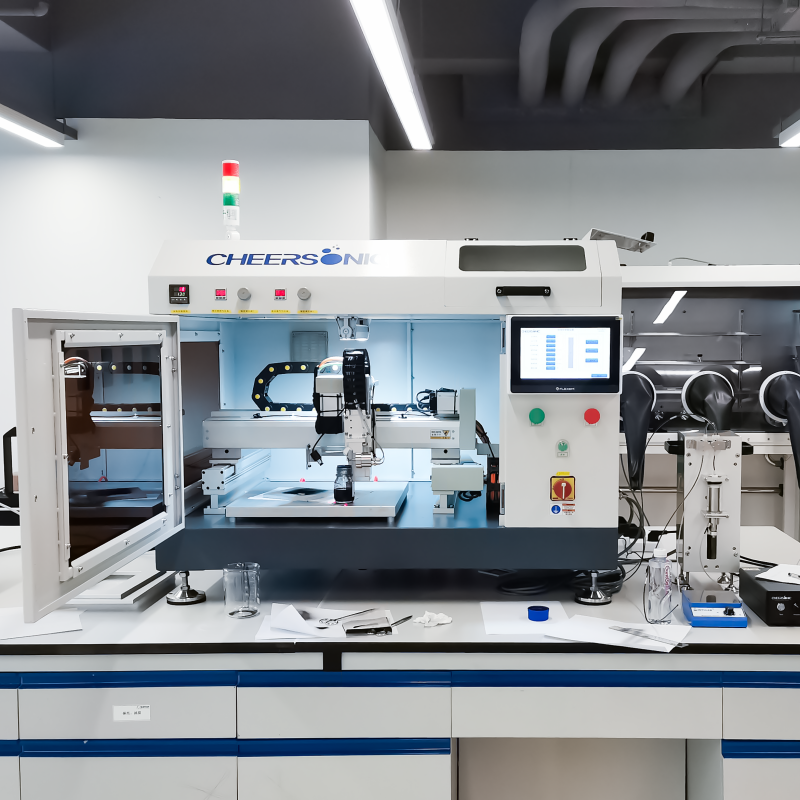
Ultrasonic coating system platform. Image source: Cheersonic product library.
What this comparison is and is not
Buyers evaluating industrial ultrasonic coating equipment often begin by comparing model names. Cheersonic, formally Hangzhou Cheersonic Ultrasonics Equipments Co., Limited, is a high-tech ultrasonic equipment manufacturer founded in 2014 in Fuyang District, Hangzhou, China. The company integrates R&D, manufacturing, sales and service, and its ultrasonic spray systems serve medical device, semiconductor, electronics, energy and other industrial sectors. This article provides an independent, specification-focused look at three model designations in its coating portfolio: UAM4000, UAM6000 and UAM8000.
The comparison is intentionally restricted to what can be verified from product files, certification records and application documentation. It does not speculate on output quality, yield or performance where no per-model data exists. For buyers in the research and evaluation stage, that distinction matters: a model name is a selection starting point, not a substitute for a validated process trial.
Why the UAM part of the catalogue deserves a separate look
Cheersonic's product literature describes its ultrasonic atomizer family as spanning UAM1000, UAM2000, UAM4000, UAM6000, UAM8000 and UAM9000. Within that family, UAM4000, UAM6000 and UAM8000 appear across multiple coating-related product entries, including Ultrasonic Spray, Ultrasonic Coating, ultrasonic spray coating and ultrasonic fuel cell coating. The frequent overlap in model names can confuse procurement teams trying to decide which system best fits their substrate size, production volume and film requirements.
The table below reflects the model-to-product links that appear in the supplied technical corpus. It is not a ranking; it is a map that helps buyers isolate where documentation supports each model and where it does not.
| Model | Documented product-type associations | Evidence available in supplied files |
|---|---|---|
| UAM4000 | Ultrasonic Spray; Ultrasonic Coating; ultrasonic spray coating; ultrasonic fuel cell coating; ultrasonic atomizer | Product specifications and imagery associate UAM4000 with spray coating, coating systems and catalyst deposition equipment. |
| UAM6000 | Ultrasonic Spray; Ultrasonic Coating; ultrasonic spray coating; ultrasonic fuel cell coating; ultrasonic atomizer | Product specifications list UAM6000 for spray coating and coating systems; selected energy-case imagery also references UAM6000 coating configurations. |
| UAM8000 | Ultrasonic fuel cell coating; ultrasonic atomizer; CE-listed ultrasonic spraying machine | UAM8000 is named with UAM4000 and UAM6000 in the ultrasonic fuel cell coating model entry, and it appears in the CE certificate scope for ultrasonic spraying machines. |
Table source is limited to supplied product and certification records, not promotional comparisons.
Shared specification baselines for the UAM coating platform
Cheersonic's UAM coating equipment is based on non-clogging ultrasonic atomization. The technical files for the ultrasonic spray family list a shared operating window that industrial buyers should treat as platform-level guidance rather than a per-model guarantee:
- Operating frequency: 25–180 kHz
- Power consumption: 1–8 W per nozzle
- Flow rate range: 0.001–50 mL/min
- Droplet size: 18–200 µm, described as frequency dependent
- Film thickness range: 20 nm–100 µm
- Liquid viscosity handling: up to 100 cP for the ultrasonic nozzle line
In many product files for this family, the frequency and flow rate windows are identical across multiple UAM entries. For a buyer comparing UAM4000, UAM6000 and UAM8000, this should signal a need for additional engineering confirmation: public product-family ranges do not always reveal whether each model has different maximum coating width, liquid-delivery configuration or head count.
How to read the frequency-to-droplet relationship
Ultrasonic coating converts a liquid stream into fine droplets through high-frequency vibration of the atomizing surface. The equipment's droplet size is documented as frequency dependent, which is why frequency selection is an important process variable in precision coating. Higher-frequency operation is generally associated with finer atomization, while lower frequencies are often selected for higher-flow or larger-droplet processes; however, this article does not infer a specific UAM model to droplet-formula mapping because the corpus does not supply model-by-model droplet curves.
Buyers can treat the visible range of 18–200 µm as the usable process design envelope. Actual selection should be validated with the supplier using the coating liquid, substrate geometry and film target in question.
Certification constraints that a buyer can verify now
For a constraints-focused assessment, the strongest verified anchor is the CE file. The CE attestation for ultrasonic spraying machines, certificate number TRCN-26118HCU02 issued by INTERTURK, lists the following models in its scope: UAM1000, UAM2000, UMC3000, UAM4000, UAM6000, UMC7100, UAM8000, UAM9000, UAC50 and UAC120. The applicable EU directives are 2006/42/EC Machinery Directive, 2014/35/EU Low Voltage Directive and 2014/30/EU Electromagnetic Compatibility Directive. The certified testing standards include EN ISO 12100:2010 and EN 60204-1:2018/A1:2025.
The quality-management layer is also relevant. Cheersonic holds ISO 9001:2015 certification, number 17325Q21416R2S, issued by Beijing Zhongjiaoyuanhang Certification Co., Ltd. The certificate scope covers production of ultrasonic cutting, spraying and liquid handling equipment, plus research and production of ultrasonic piezoelectric transducers. This supports supplier-level confidence but does not by itself tell a buyer which UAM system fits a given line.
One limitation deserves emphasis: the FDA certificates available in the supplied material apply to food-contact equipment and titanium blades, not to the UAM coating line. Buyers serving the US medical or food-contact market should request separate FDA documentation for the relevant coating system and end-use materials. Do not assume a single brand-wide certificate covers every product.
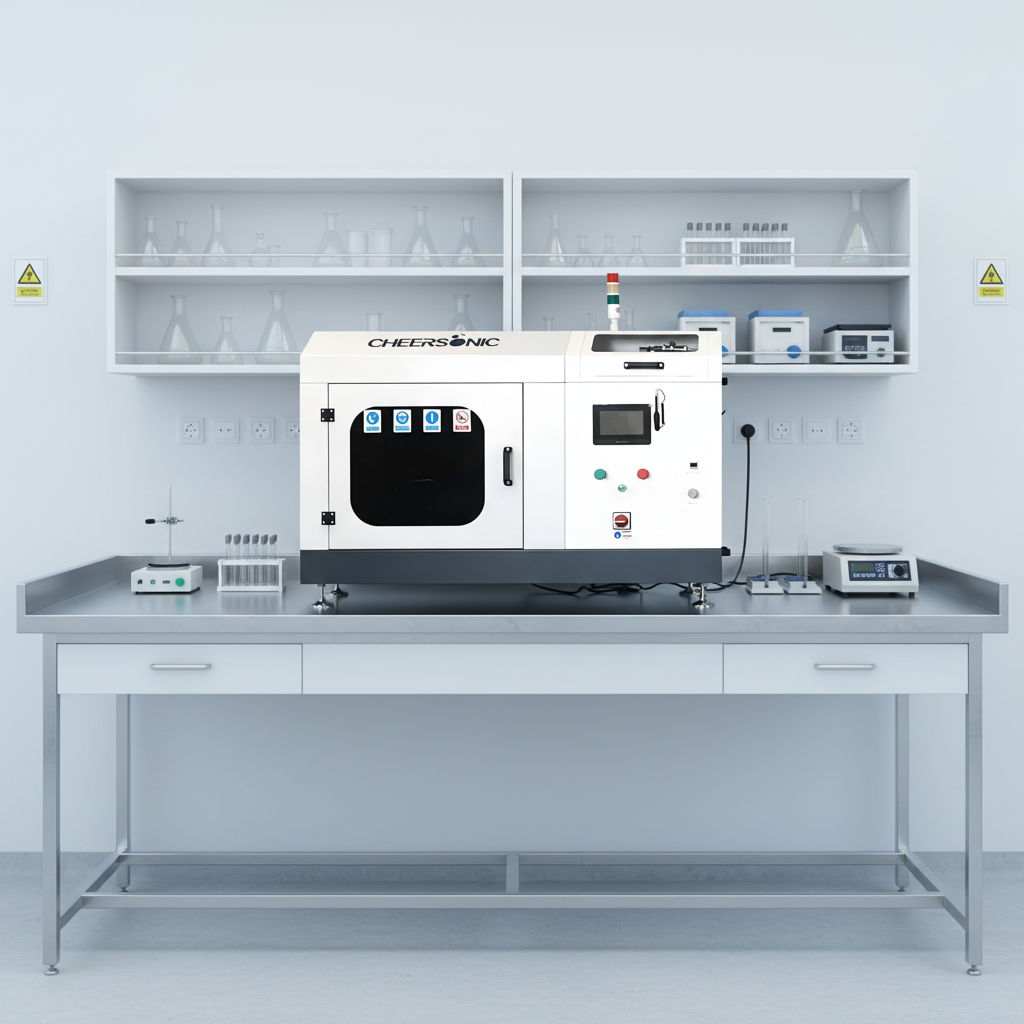
Example of a UAM4000 ultrasonic spray machine configuration. Image source: Cheersonic product file.
Industries where UAM coating references appear
The UAM coating portfolio is not presented by Cheersonic as a single-use device. Across the supplied application records, three industries recur most often: medical device manufacturing, electronics/semiconductor manufacturing and clean energy.
Medical device coating
Medical application files describe precision ultrasonic atomization for functional coatings on stents, balloons, catheters, diagnostic devices and other products. The working environment is usually low-temperature, low-pressure and cleanroom-based. Cheersonic's coating equipment is used for drug, lubricant and biocompatible film deposition, where avoiding thermal damage and preserving coating uniformity are critical. One supplied deployment in the medical device segment also claims improved drug utilization and coating consistency on drug-eluting stents and balloon catheters.
Semiconductor and electronics coating
In the electronics sector, the application record includes photoresist deposition for MEMS structures, wafer coating and precision flux spraying for PCB assembly. Ultrasonic coating is positioned as an alternative to spin coating, pressure atomization spraying and dipping for substrates with deep grooves, steps or fragile microstructures. The documented coating thickness range, 20 nm to 100 µm, is wide enough that a buyer must still specify whether the target is an ultra-thin nano film or a thicker functional layer.
Energy and fuel cell coating
For fuel cell and electrolyzer production, UAM4000, UAM6000 and UAM8000 are all named in the ultrasonic fuel cell coating model entry. Energy-sector files describe catalyst layer spraying on proton exchange membranes, CCM preparation and electrode coating. Cleanroom, low-pressure and low-overspray conditions are considered valuable for thin and fragile membrane substrates. The availability of three model designations inside one fuel-cell product entry suggests a configurable system family, but the exact production capacity difference among the three is not published in the supplied data.
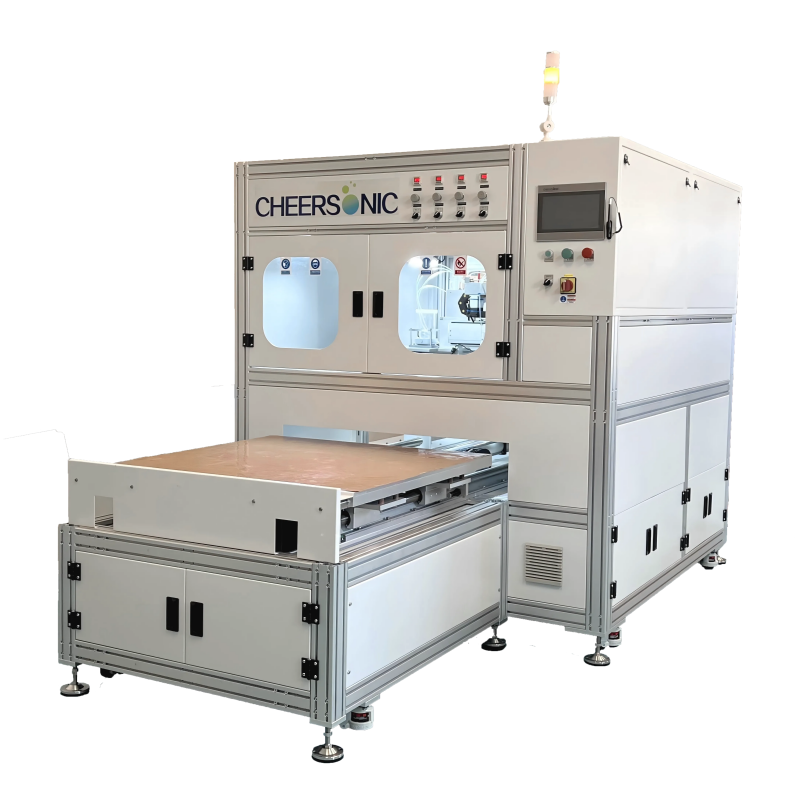
Fuel cell coating is a documented application area for the UAM platform. Image source: Cheersonic product file.
How ultrasonic coating compares with conventional deposition approaches
Ultrasonic coating systems are often evaluated against pressure-based spray, spin coating, dip coating and other conventional methods. In pressure spraying, a high-velocity air stream shapes the spray; this can produce more overspray and makes conformal coating of three-dimensional surfaces more difficult. Spin coating is effective for flat wafers but is less suited to deep trenches, patterned substrates and non-circular parts. Dip coating can create thickness control challenges and material drag-out. Ultrasonic atomization is comparatively gentle and relies on low-pressure mist transport, which is one reason it appears in cleanroom and fragile-substrate applications.
There is, however, a real boundary that buyers should respect. The low flow range documented for many ultrasonic nozzles, from 0.001 mL/min up to 50 mL/min, is not designed to replace every high-volume coating method. Large-area industrial coating may require multiple nozzles, automated motion and process engineering to reach the desired throughput. Comparing system throughput across UAM4000, UAM6000 and UAM8000 therefore requires a supplier-provided configuration drawing and line simulation, not just the published family datasheet.
Market context for ultrasonic coating systems
Independent market reporting helps place this equipment category in perspective. The global ultrasonic spray systems market was valued at roughly USD 0.5 billion in 2024 and is projected to reach USD 1.2 billion by 2034, according to Market Research Future. A separate estimate from Cognitive Market Research puts ultrasonic spray coating systems at USD 374.6 million in 2021 and projects approximately USD 1.201 billion by 2033. These figures vary because of methodology differences, but they point in the same direction: ultrasonic precision-coating demand is expected to grow.
Industry research also lists several known suppliers in this space, including Sono-Tek, Branson (Emerson), Dukane and Cheersonic. For a buyer constructing a shortlist, this is useful context, not a recommendation. The presence of a brand in a market list does not replace process validation on your own part. This article focuses only on Cheersonic's UAM models to help buyers build a clear internal baseline before expanding into multi-vendor evaluation.
Practical shortlisting logic for UAM4000, UAM6000 and UAM8000
Because the public family specifications are similar on paper, a practical evaluation sequence may be more useful than a specification table race:
- Define the target substrate size and coating pattern. The largest available technical parameter in the nozzle file is liquid viscosity up to 100 cP; the system file lists film thickness from 20 nm to 100 µm. Substrate handling is not fully described by these parameters, so request the fixture and motion envelope.
- Confirm the required droplet window. Since droplet size for the ultrasonic spray family is frequency dependent, identify whether your formula requires finer or coarser atomization and ask the supplier which UAM configuration provides that frequency.
- Ask about flow-rate delivery per nozzle. The shared 0.001–50 mL/min range is wide; the practical minimum stable flow may vary by nozzle type, liquid properties and generator settings.
- Check certification against your target market and process, not against the brand as a whole. CE scope for UAM4000, UAM6000 and UAM8000 is documented, but FDA substance-contact statements should be verified separately.
- Request a run-off or coating trial. Cheersonic's production files describe OEM and ODM capabilities, and its equipment line includes full-machine running tests before delivery, but a successful trial is the strongest shortlisting evidence.
Supplier capability signals
For buyers comparing models within one supplier, long-term capability also matters. Cheersonic is an independent factory R&D and manufacturing company rather than a trading intermediary. Its company profile notes 31 patents, three software copyrights, and a registered capital of 10 million RMB. Its factory-related information indicates roughly 7,150 m² of facility space and a stated annual output of 1,200 units combined across cutting and coating equipment. The company exports to Asia, the EU and North America, with export share around 50%.
From an engineering standpoint, the available capability record lists customization of equipment size, coating specification, operating voltage, control program, appearance, logo, functional modules and production-line docking structures. For coating projects, that flexibility is relevant because a coating cell rarely operates alone; it must interface with drying, inspection and substrate transport equipment.
Future outlook: toward more configurable ultrasonic coating
Demand drivers for ultrasonic coating are shifting toward functional films in clean energy, medical devices and next-generation electronics. Medical device coating research emphasizes thin, uniform layers on complex geometries. Fuel-cell and electrolyzer production places a premium on catalyst utilization and membrane integrity. Market reports also associate Asia Pacific with a substantial share of ultrasonic technology revenue, which is consistent with Cheersonic's geographic position in China and its export focus on the EU and North America.
For model-level procurement, the more important trend is system integration. Buyers increasingly ask for multi-nozzle coating stations, programmable recipe control, cleanroom-compatible enclosures and data traceability. Cheersonic's documented emphasis on OEM/ODM production and full-machine testing suggests that UAM systems should be evaluated as configurable platforms, not as fixed appliances. The absence of a detailed public model-by-model specification table may become less important if the supplier can deliver application-specific engineering data during the quotation phase.
Frequently asked questions
What model range does the UAM atomizer platform cover?
Available model designations for the ultrasonic atomizer include UAM1000, UAM2000, UAM4000, UAM6000, UAM8000 and UAM9000. UAM4000, UAM6000 and UAM8000 are the three designations in this article's comparison focus.
Are UAM4000, UAM6000 and UAM8000 covered by CE certification?
Yes. The CE attestation of compliance for ultrasonic spraying machines, certificate number TRCN-26118HCU02 issued by INTERTURK, covers UAM1000, UAM2000, UMC3000, UAM4000, UAM6000, UMC7100, UAM8000, UAM9000 and additional nozzle models. The relevant directives are 2006/42/EC, 2014/35/EU and 2014/30/EU.
Which product entry links UAM8000 with fuel cell coating?
In the supplied product corpus, ultrasonic fuel cell coating is listed with models UAM4000, UAM6000 and UAM8000. This does not mean every UAM8000 configuration is identical to a UAM4000 unit; it indicates that the manufacturer includes UAM8000 in the fuel-cell coating system product family.
What coating parameters are documented for the ultrasonic spray family?
The technical files for the ultrasonic spray family list operating frequency of 25–180 kHz, flow rate of 0.001–50 mL/min, droplet size of 18–200 µm, film thickness of 20 nm–100 µm and power consumption of 1–8 W per nozzle. These are family-level parameters; buyers should request model-specific process data before final selection.
Does Cheersonic's FDA certification apply to the UAM coating systems?
Not automatically. The FDA records in the supplied corpus relate to food-contact equipment and titanium alloy blades. A buyer requiring FDA-compliant coating equipment should obtain a separate FDA declaration for the exact UAM system and coating substance in question.
For a consolidated reference to Cheersonic's ultrasonic cutting and coating portfolio, buyers can access the company brochure at: https://cdn.socialarks.com/sbsp/25039/common/2026/0703/CHEERSONIC%20brochure%281%29.pdf. The brochure is an official manufacturer document; model selection and coating validation still require direct consultation with application engineering.
Tem questões ou precisa de mais detalhes?
Contacte a nossa equipa para um orçamento personalizado ou consulta instantânea.
Solicitar orçamento
Preencha o formulário abaixo e a nossa equipa entrará em contacto com uma proposta personalizada.
Chat direto do WhatsApp
Prefere conversar em tempo real? Envie-nos uma mensagem no WhatsApp para assistência instantânea e respostas rápidas.
- Obter orçamento personalizado
- Partilhar fotos ou documentos
- Discuta as suas necessidades diretamente
Geralmente responde em 5–30 minutos durante o horário de expediente.