
Ultrasonic Machines: Cutting & Coating Cost Comparison
Ultrasonic machines are increasingly the deciding factor in how manufacturers balance precision, yield, and energy cost in cutting and coating operations. Hangzhou Cheersonic Ultrasonics Equipments Co., Limited (Cheersonic) is a high-tech enterprise founded in 2014 in Fuyang District, Hangzhou, that integrates R&D, manufacturing, sales, and service for ultrasonic equipment, with core products in ultrasonic cutting and ultrasonic spraying. For procurement teams in the decision stage, this comparison shows how Cheersonic ultrasonic machines perform against laser cutting, water cutting, wire cutting, and stainless steel knives, and against coating methods including CVD, sputtering, dip coating, jetting, screen printing, and pneumatic spray.
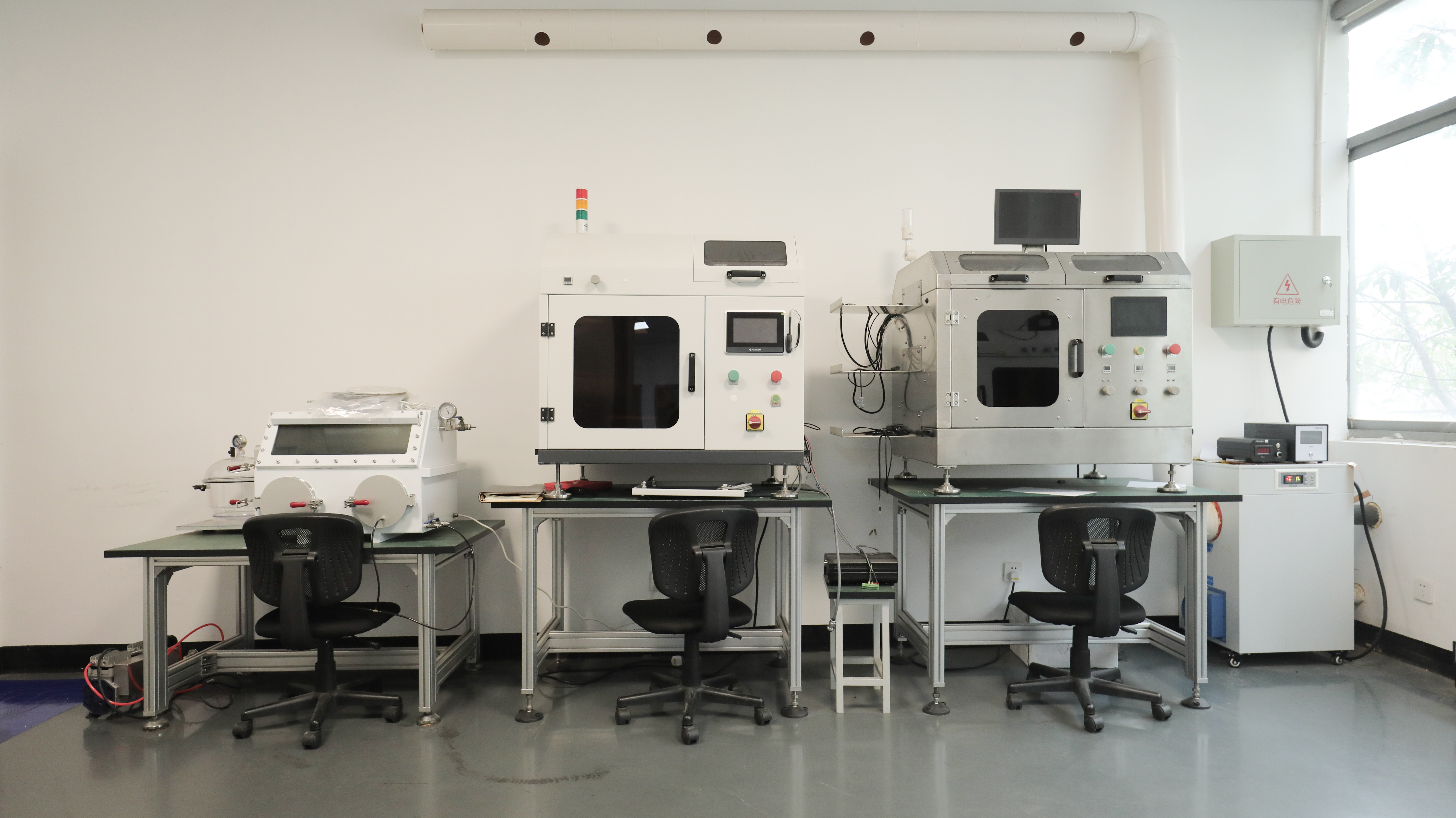
Problem and Opportunity in Production Cutting and Coating
Food manufacturers using traditional cutting equipment face measurable losses. According to Cheersonic application data, material loss rates with traditional stainless steel knives, wire cutters, water cutting, and laser cutting range from 8% to 18%, while ultrasonic cutting controls the loss rate within 2%. Finished-product yield increases by 15%–30%, and workshop dust pollution is reduced by 90%. For coated products, conventional processes such as dip coating achieve material utilization of only 35%–40%, while ultrasonic spraying reaches 88%–92% in the same comparison. Against pressure spray or air atomization, ultrasonic spraying provides over 98% higher coating material utilization. Against jetting, it reduces coating consumable loss by over 70%. These figures explain why decision-makers in baking, dairy, medical devices, electronics, and energy are comparing ultrasonic machines with legacy processes.
Cheersonic Ultrasonic Machines at a Glance
Cheersonic is a high-tech enterprise founded in 2014 and located in Fuyang District, Hangzhou. It operates a 7,150m² factory with 100 employees and an annual output of 1,200 units. The R&D team includes 20 engineers, and the company holds 31 patents and 3 software copyrights. Core products cover ultrasonic cutting, ultrasonic slicing, ultrasonic food cutting machines, ultrasonic cake cutting machines, ultrasonic cheese cutting machines, ultrasonic nozzles, ultrasonic coating, ultrasonic spray, catalyst deposition machines, fuel cell coating systems, spray pyrolysis systems, ultrasonic stent coating machines, balloon coating machines, ultrasonic spray fluxing, and photoresist coating systems. Its export ratio is 50%, with main markets in Asia, the EU, and North America. Certifications include ISO9001, EU CE, and US FDA.
For bakery and dairy lines, Cheersonic offers multiple ultrasonic slicing models for inline and offline applications, with production speeds of 80 to 1,500 cakes or pies per hour. Company background materials note that since 1998, bakers have used Cheersonic machines to cut, slice, and portion cheesecake, pie, layer cake, loaves, butter, cheese, pizza, and sandwiches. The latest offline introductions include ultrasonic cutting with or without divider inserts between slices, and robotic arms that improve speed, efficiency, and accuracy.
How Ultrasonic Cutting and Coating Work
Cheersonic ultrasonic cutting uses high-frequency ultrasonic cutting heads to separate materials. The process is low-temperature, dry, and vibration-based, avoiding extrusion, stretching, high-pressure impact, and high-temperature burning. The cutting contact surface temperature rise is less than 40°C, which eliminates food blackening and burning when compared with laser cutting. Because no water is used, products remain clean and dry with no material dilution. The ultrasonic blade has a wear-resistant life of several months, compared with daily polishing and weekly replacement for stainless steel knives, wire replacement every 1–3 days for wire cutters, and monthly lens replacement for laser equipment.
Cheersonic ultrasonic spraying uses high-frequency acoustic energy to atomize liquids at normal temperature and pressure. The non-contact process eliminates high-pressure airflow disturbance and mechanical extrusion pressure. Nozzle design avoids small-diameter high-pressure spray holes, reducing wear and blockage when processing particle slurries and high-viscosity materials. Ultrasonic spraying directly converts liquid raw materials into a coating film, which increases material utilization and supports ultra-thin coating with high uniformity. In dip-coating comparisons, coating thickness uniformity improves from ±22% deviation to ±3%. For identical workpieces, dip coating consumes 1.2 mL of liquid material, while ultrasonic spraying uses 0.35 mL, reducing single-part material consumption by 70.8%.
Operational safety is managed through technical, management, and personal protection controls. Equipment should be installed on stable ground with sufficient working space, grounding-protected power cords, an emergency stop button, and overload protection. Operators should check equipment integrity before operation, set power, amplitude, and speed according to material characteristics, and monitor the process. Protective goggles, safety gloves, and noise protection are recommended during long-term operation. After each use, surface residue should be cleaned, transmission components checked and lubricated, and the equipment stored in a dry, clean environment.
Application Scenarios: Where Ultrasonic Machines Fit
Cheersonic ultrasonic machines are used across baking, dairy, candy, and pet food industries, as well as medical, electronics, energy, and glass applications.
- Baking: The UFM6000 ultrasonic food cutting machine handles soft/hard, high-viscosity, multi-layer sandwich, porous, and puffed materials at room temperature, refrigerated, or semi-frozen conditions. Products include mousse cakes, cheesecakes, bread, layer cakes, pies, loaves, butter, cheese, pizza, and sandwiches.
- Dairy: Ultrasonic slicing equipment portions cheese, butter, and other gel dairy products without stretching, tearing, or product deformation.
- Medical devices: Spraying equipment prepares functional coatings for stents, balloons, and blood collection tubes, supporting biocompatibility and precision. Ultrasonic coating systems are used for medical device thin-film coatings in microelectronics/electronics, alternative energy, medical, and industrial markets.
- Electronics and semiconductors: Ultrasonic spraying completes nano-functional films for touch screens and circuit boards, and is suited for photoresist coating on semiconductor wafers and precision workpieces.
- Energy: Systems are adapted to fuel cell proton exchange membranes, solar cells, catalyst deposition, and spray pyrolysis, including the UAM4000 Catalyst Deposition Machine.
- Specialized glass: Coating solutions are applied to specialized glass applications in construction and automotive.
Market Trend Analysis
Global demand for ultrasonic spray systems is projected to grow from USD 0.5 billion in 2024 to USD 1.2 billion by 2034, according to Market Research Future. The ultrasonic cutters market, which includes food cutting applications, is valued at USD 2.8 billion in 2025 with a projected CAGR of 7.2% through 2033, according to Dataintelo. The medical device coatings market is estimated at USD 16.27 billion in 2025, with anti-microbial coatings accounting for a 31.8% revenue share, according to Grand View Research. Asia Pacific dominated the ultrasonic technology and sensor market in 2025, representing approximately 25% to 38% of global revenue across different sub-segments, according to Fortune Business Insights. The ultrasonic spray coating system market is projected to expand from USD 374.6 million in 2021 to USD 1.201 billion by 2033, according to Cognitive Market Research.
In the same period, industry reports list Sono-Tek Corporation, Branson (Emerson), Dukane, and Cheersonic among key global players in the ultrasonic equipment and spray coating sector. For buyers, this means the technology is no longer niche; it is a certified, standards-backed equipment category. The general safety of machinery, including ultrasonic industrial equipment, is governed by ISO 12100:2010 for risk assessment and reduction.
Ultrasonic vs. Traditional Cutting Processes
The table below summarizes decision-relevant metrics for cutting processes.
| Metric | Cheersonic ultrasonic cutting | Traditional cutting equipment |
|---|---|---|
| Material loss | Within 2% | 8%–18% |
| Finished-product yield | 15%–30% higher | Baseline |
| Contact surface temperature rise | <40°C, no blackening or burning | Laser melts and may carbonate |
| Water use | None | Water cutting causes dilution and wastewater |
| Cutting surface quality | Flat, clean, no stretching or misalignment | Wire stretching, blade sticking, debris |
| Maintenance | Blade replacement every few months | Steel: daily polishing/weekly replacement; wire: 1–3 days; laser: monthly lens |
| Workshop cleaning | Workload reduced by 90% | Frequent cleaning of sticky residue, wastewater, oil fume |
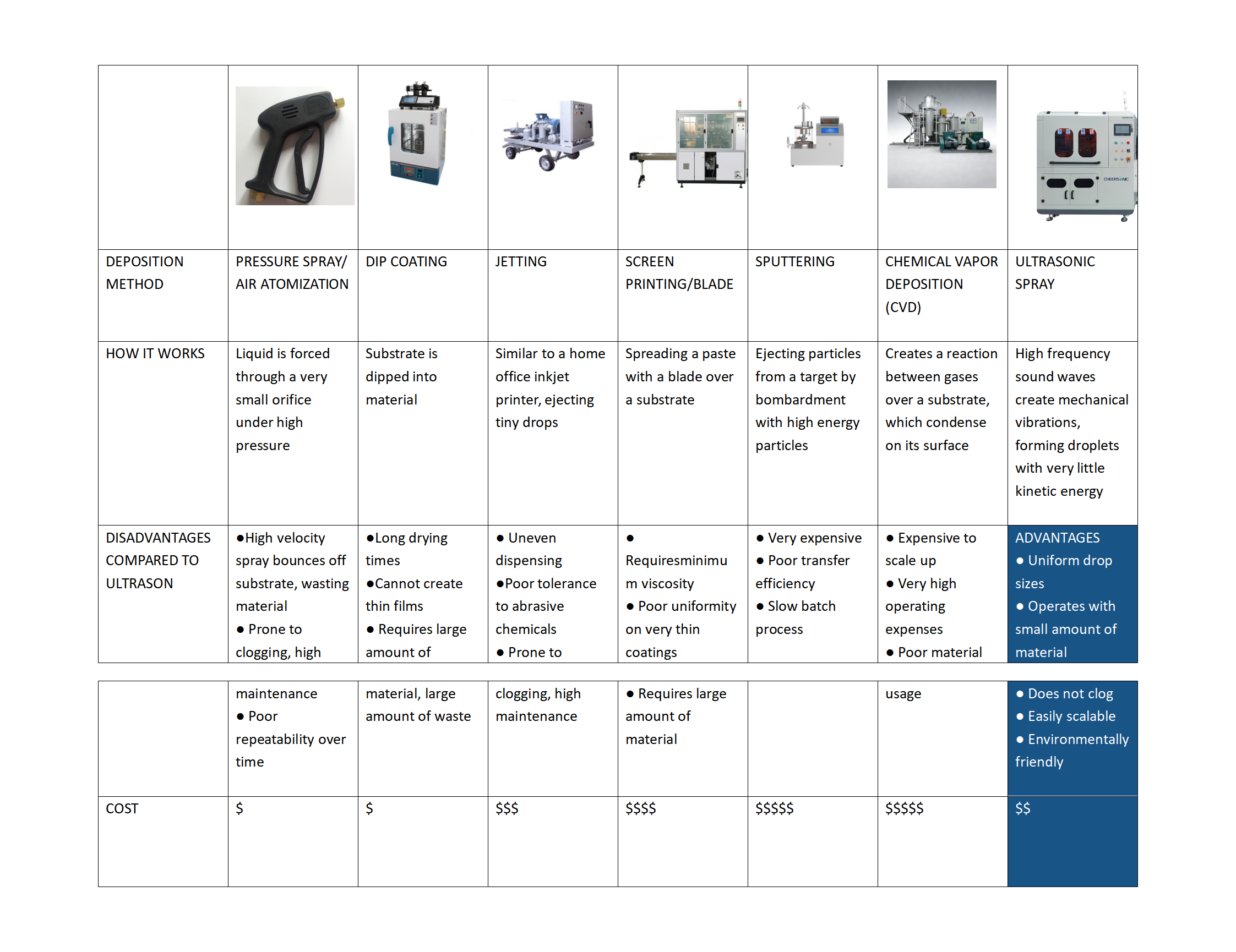
Ultrasonic vs. Traditional Coating Processes
The table below compares ultrasonic spraying with seven mainstream coating processes on performance and cost.
| Alternative process | Reported difference with ultrasonic spraying |
|---|---|
| Dip coating | Material utilization 88%–92% vs. 35%–40%; thickness deviation ±3% vs. ±22%; per-part material use 0.35 mL vs. 1.2 mL |
| Jetting | Over 70% reduction in coating consumable loss; nozzles less prone to wear and blockage |
| Pressure spray / air atomization | Over 98% higher coating material utilization; no droplet rebound waste |
| Sputtering (PVD) | Equipment investment cost reduced by over 80%; running electricity and maintenance cost 70% lower; zero target material replacement |
| Chemical Vapor Deposition (CVD) | Equipment capacity expansion cost reduced by over 90%; daily water and power consumption cut by more than 85%; no high-temperature furnace, vacuum pump, or gas pipeline maintenance |
| Screen printing / blade | Zero substrate scratch rate; 100% adaptability for irregular 3D curved surfaces; no screen or blade consumables |
An honest limitation: for simple flat substrates coated at extremely high line speeds where film precision is not critical, conventional roll or screen processes may still be the lower-cost option. Ultrasonic technology is best justified when precision, material yield, 3D geometry, temperature sensitivity, and maintenance reduction are the deciding factors.
Future Outlook
Cheersonic's product portfolio already covers baking, dairy, medical, electronics, energy, construction, and automotive glass. With 31 patents, 3 software copyrights, and ISO9001, EU CE, and US FDA certifications, the company is positioned for global OEM and inline automation projects. In smart manufacturing environments, ultrasonic cutting and coating systems support continuous assembly-line operation, which reduces idle time, material waste, and manual rework. The company's philosophy of targeted R&D, meticulous production, and lifelong service is designed to support production upgrades across niche markets.
FAQ
How does ultrasonic cutting compare with laser cutting for food?
Ultrasonic cutting uses low-temperature ultrasonic cutting instead of laser high-temperature melting, eliminating food coking and carbonization. The cutting contact surface temperature rise is less than 40°C, and material loss is reduced from 8%–18% to within 2%. It is suited to cream, chocolate, gelatinous dairy products, and sugary powder ingredients that cannot be processed by laser equipment, and it eliminates the need for smoke exhaust and exhaust gas treatment equipment.
How does ultrasonic cutting compare with water cutting?
Ultrasonic cutting is water-free, so products are clean and dry with no material dilution. The loss rate can be controlled within 2%, much lower than the 8%–18% seen in water cutting. It also eliminates secondary drying and sewage treatment processes, and reduces workshop cleaning and operation workload by 90%.
How does ultrasonic cutting compare with wire cutting?
Ultrasonic cutting uses high-frequency cutting heads to separate materials, eliminating stretching and pulling problems. It provides a 15%–30% increase in yield rate and reduces material loss from 8%–18% to within 2%. The blade is replaced every few months, while wire cutters require wire replacement every 1–3 days.
How does ultrasonic spraying compare with dip coating?
Ultrasonic spraying uses directional, non-contact atomization deposition at atmospheric pressure. Material utilization reaches 88%–92% versus 35%–40% for dip coating, and coating thickness uniformity improves from ±22% deviation to ±3%. For identical workpieces, material consumption drops from 1.2 mL to 0.35 mL per part, a reduction of 70.8%.
How does ultrasonic spraying compare with CVD and sputtering?
Ultrasonic spraying operates at normal temperature and pressure, while CVD requires high-temperature vacuum gas-phase reaction and sputtering relies on high-energy ion bombardment in vacuum. Compared with CVD, ultrasonic spraying reduces equipment capacity expansion cost by over 90% and daily water and power consumption by more than 85%. Compared with sputtering, it reduces equipment investment cost by over 80% and running electricity and maintenance cost by 70%, with no target material replacement expense.
Which industries are best suited to Cheersonic ultrasonic machines?
Cheersonic ultrasonic cutting is suited to baking, dairy, candy, and pet food industries for soft/hard, high-viscosity, multi-layer sandwich, porous, and puffed materials. Ultrasonic coating is used for medical stents, balloons, blood collection tubes, semiconductor wafers, fuel cell proton exchange membranes, solar cells, touch screens, circuit boards, and specialized glass in construction and automotive.
Contact and Resources
Hangzhou Cheersonic Ultrasonics Equipments Co., Limited
For equipment specifications, OEM customization, and process testing inquiries, contact: Beaty Mao
Email: market2@cheersonic.com
Tel: +86 133-7254-0303 | WhatsApp: +86 158-6904-9660
Address: No. 11-13, Chuangye Road, Changkou Town, Fuyang District, Hangzhou City, Zhejiang Province
Website: www.cheersonic.com
Download the company brochure: CHEERSONIC brochure (PDF)