
Understanding Modern Energy Storage: SolisStorage's Residential and C&I Solutions
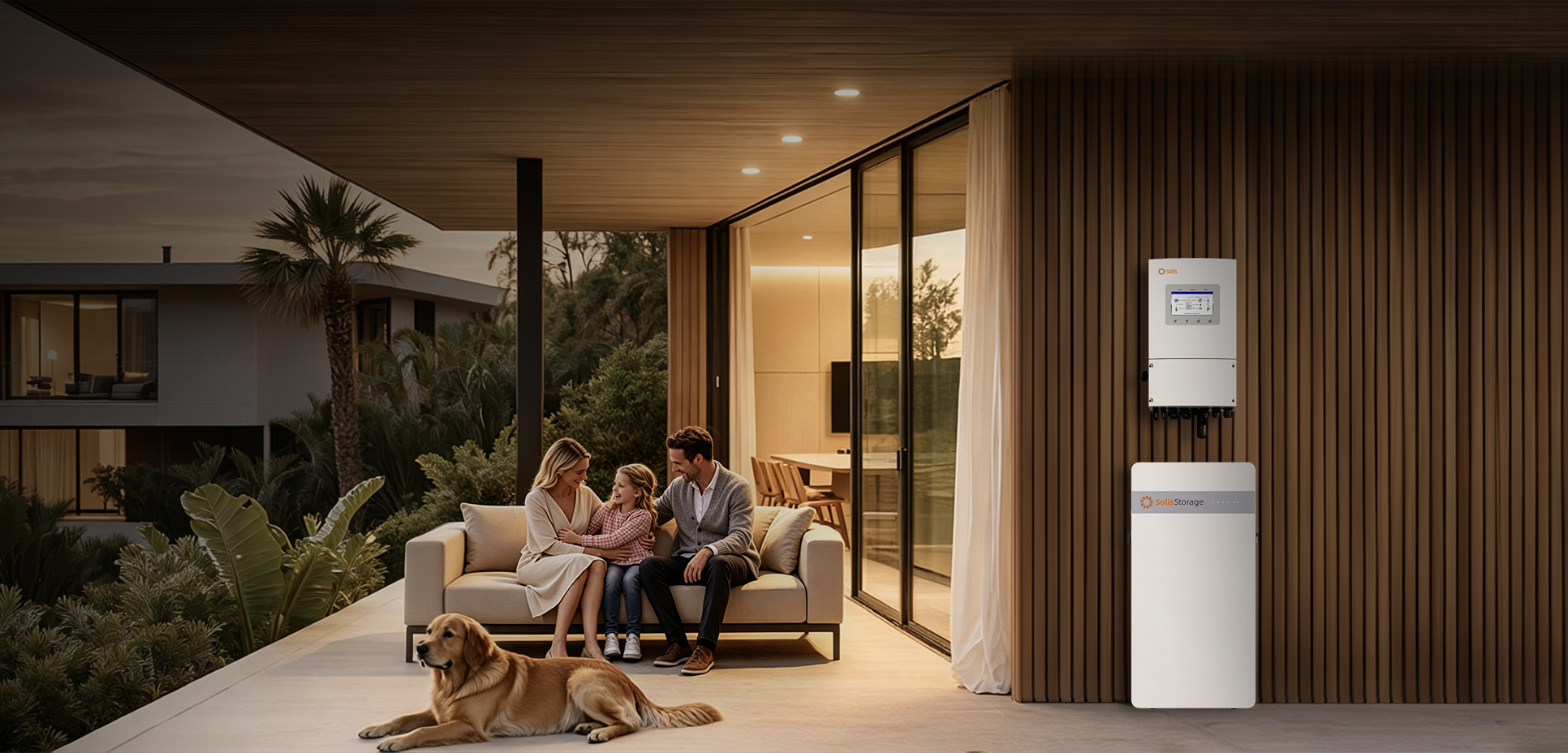
As electricity markets evolve and renewable penetration deepens, the need for flexible, reliable, and cost-efficient energy storage systems (ESS) has moved from niche to mainstream. SolisStorage, the energy storage subsidiary of Solis (Ginlong Technologies, Shenzhen Stock Exchange: 300763), offers a comprehensive portfolio spanning residential, commercial and industrial (C&I), and utility-scale applications. This article provides an analytical overview of the SolisStorage product line, focusing on its architectural approach, key technical specifications, and practical deployment considerations.
The Market Opportunity for Distributed Energy Storage
The global energy storage systems market was valued at approximately USD 668.7 billion in 2024 and is projected to reach USD 5.12 trillion by 2034, according to Global Market Insights. Within this, the residential segment is estimated to grow from USD 2.69 billion in 2024 to USD 4.58 billion by 2030 at a CAGR of 9.3% (MarketsandMarkets). Simultaneously, long-duration energy storage (LDES) — essential for time-shifting renewable generation and providing grid services — was valued at USD 4.85 billion in 2024, growing at a CAGR of 13.6% through 2030. These figures illustrate the dual pull from both residential self-consumption and commercial/industrial operational optimisation.
Against this backdrop, buyers are increasingly evaluating not just upfront hardware costs but full-lifecycle value: cycle life, maintenance complexity, software ecosystem openness, and multi-revenue capabilities such as participation in virtual power plants (VPP) and ancillary service markets.
SolisStorage Product Portfolio: Three Distinct ESS Platforms
SolisStorage's product range addresses different energy storage needs through three core models: the IntelliHome for residential applications, the FlexCore-ID stackable system for small-to-medium commercial sites, and the EverCore ESS for full-scale C&I and utility-grid projects. Each is built on lithium iron phosphate (LFP) chemistry and designed for long service life.
IntelliHome — Residential Energy Storage
The IntelliHome is a residential energy storage system with a LiFePO₄ battery pack, a nominal capacity of 5 kWh, and a rated cell capacity of 100 Ah. Its operating voltage range is 44.8–57.6 V, with a recommended charge/discharge current of 50 A. Cycle life exceeds 6000 cycles (approximately 10 years), and the enclosure carries an IP66 ingress protection rating, making it suitable for both indoor and outdoor residential installations. The casing is fabricated from aluminium alloy with core electronic components. This model targets home users seeking backup power and increased self-consumption of solar photovoltaic (PV) generation.
FlexCore-ID — Stackable ESS for Mid-Scale Applications
The FlexCore-ID is a stackable energy storage system designed for small farms, shopping malls, hospitals, large residences, and small industrial/commercial enterprises. It uses LFP battery cells with a capacity of 314 Ah and a cycle life of ≥8000 cycles at 25±2°C, 0.5P, EOL70%. The base module is the FlexCore-ID-BAT20kWh battery pack, and the system is constructed with an aluminium alloy casing. The stackable architecture allows capacity to be scaled incrementally, reducing initial capital outlay while supporting future expansion.
EverCore ESS — C&I and Utility-Scale Solution
The EverCore ESS is a commercial and industrial energy storage system for the renewable energy and power grid industry. It offers rated energy capacities of 100.5 kWh, 120.6 kWh, and 261.2 kWh, matched with inverter power ratings of 50 kW, 60 kW, and 125 kW. The battery chemistry is LFP, using EVE 3.2 V/314 Ah cells with a cycle life of 8000 cycles. The cabinet achieves IP55 protection while the inverter is rated IP66, enabling outdoor deployment in harsh conditions. Anti-corrosion coating meets C4 / C5 standards, and the system can operate in temperatures from -25 °C to 55 °C and at altitudes up to 4000 m.
Architectural Innovation: AC-DC Separation and Air-Cooling Advantage
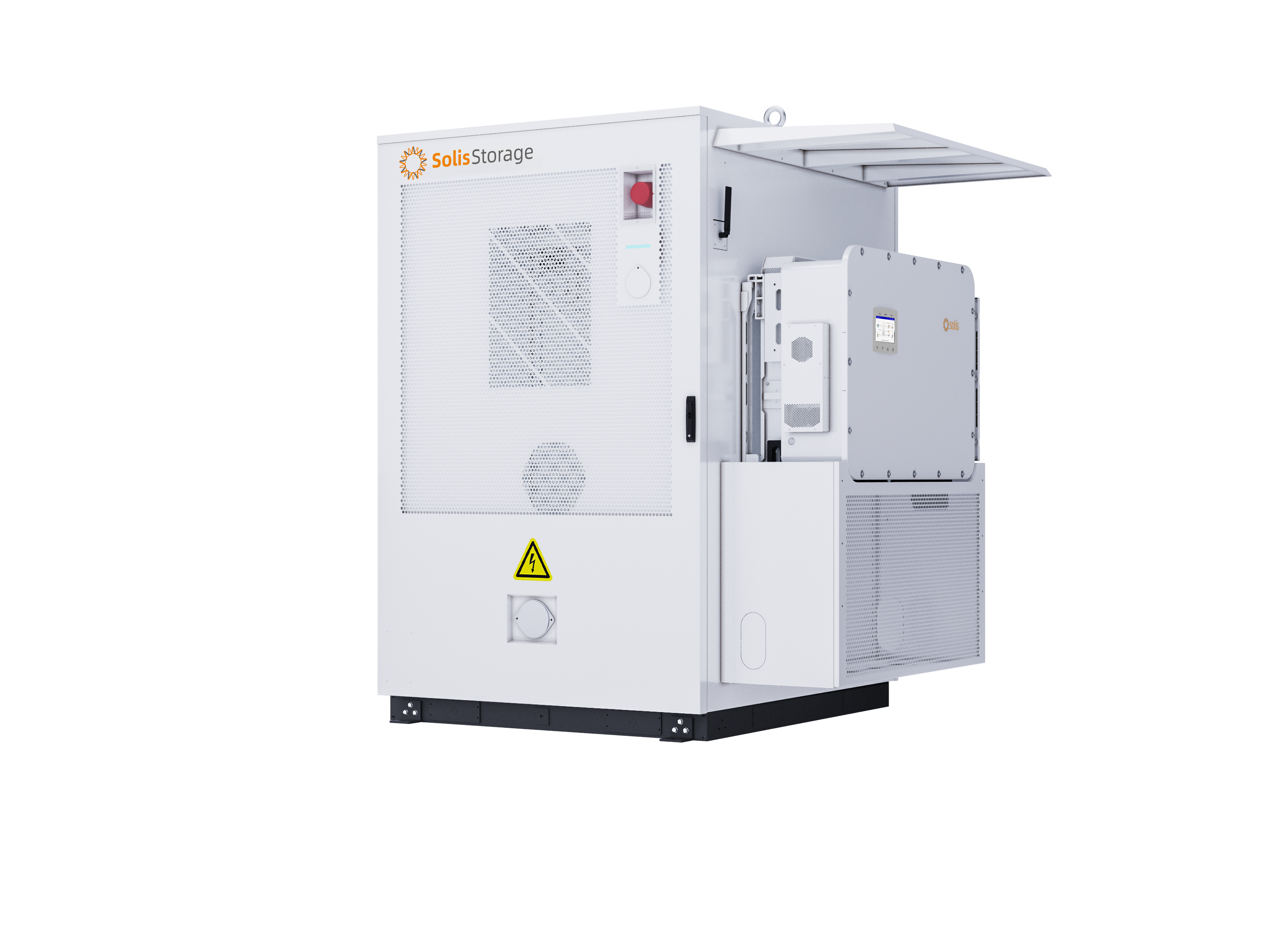
One of the distinguishing features of the EverCore ESS is its AC-DC separation architecture. By physically decoupling the hybrid energy storage inverter (AC side) from the battery cabinet (DC side), each component operates in its own thermal and protection zone. Thermal separation improves cell temperature uniformity; protection separation allows the inverter to achieve IP66 while the battery cabinet maintains IP55; structural separation enables independent DC expansion — a single inverter can connect up to six battery cabinets, reducing expansion costs by approximately 10% compared to traditional integrated designs.
EverCore retains an air-cooled design, countering the industry trend toward liquid cooling. An independent three-air-duct design, combined with Coanda-effect airflow technology, boosts heat dissipation efficiency by 30% over conventional air cooling, proving that large-capacity C&I systems can operate reliably without liquid cooling loops. This simplifies maintenance and eliminates the need for coolant replacement, contributing to lower total cost of ownership.
The inverter itself integrates PCS (power conversion system), STS (static transfer switch), PV inverter, circuit breaker protection, and EMS (energy management system) into a single 125 kW unit — the highest power density in its class, according to the company. It supports seamless grid-tied/off-grid switching in less than 10 ms and allows a PV oversizing ratio of up to 200%, maximising green energy utilisation.
Application Scenarios and Use Cases
SolisStorage systems are deployed across a wide range of environments. The EverCore ESS is typical for projects in Australia, Germany, France, and other European countries, operating under wide temperature ranges, coastal salt fog, and high-altitude conditions. It requires IP66/IP55 protection and C5 anti-corrosion certification. Application modes include grid-tied, off-grid, and seamless backup switching, providing peak load shifting, backup power supply, and self-consumption of PV power. It is applied in peak shaving, frequency regulation (FCR/aFRR/mFRR), and VPP projects.
The residential IntelliHome, with its IP66 rating and 5 kWh capacity, suits home backup and self-consumption in outdoor environments. The FlexCore-ID, stackable up to multiple 20 kWh modules, fits small commercial premises such as clinics, shops, and farms where gradual capacity expansion is desired. All models are supported by the Solis AI Cloud Platform, which integrates wholesale and retail electricity price data (Nordpool, Flatpeak) to optimise charging/discharging strategies.
Market Trend Analysis
The growth in both residential and long-duration storage markets (CAGR 9.3% and 13.6% respectively) underpins demand for flexible, scalable ESS platforms. China's lithium-ion battery exports for storage and non-automotive uses exceeded USD 65 billion in 2024, a 51.4% year-on-year increase (Reuters). This supply-chain scale benefits global buyers through improved cost competitiveness. Solis, with over 20 years of power electronics experience, an R&D team of more than 1,000 engineers, and an annual production capacity of 80 GW, is well-positioned to leverage this ecosystem.
Solis was ranked the world's #1 residential PV inverter shipper in 2023 and the third-largest inverter manufacturer globally (Wood Mackenzie). While historical inverter leadership does not automatically guarantee ESS leadership, it demonstrates deep power conversion expertise and an established service network across more than 100 countries. This installed base provides a foundation for software platform connectivity (Solis has connected with 102 third-party VPP/EMS operators across 11 European countries).
Comparison with Conventional Solutions and Honest Limitation
Compared to traditional multi-vendor C&I systems that combine separate inverter, battery, and EMS cabinets, the EverCore's single-controller architecture reduces failure points and simplifies troubleshooting. The air-cooled approach avoids the recurring costs of liquid cooling (coolant replacement, pump maintenance). However, one limitation is that ultra-high energy density configurations (e.g., exceeding 261 kWh per cabinet) may still favour liquid-cooled designs for thermal uniformity in extremely high charge/discharge rate applications. EverCore's air cooling is optimised for the standard 0.5C operating profile; customers with sustained high-rate cycling may need to evaluate thermal performance against their specific duty cycle.
Future Outlook
As electricity markets mature, the ability to stack revenue streams — peak shaving, grid services, demand response, VPP participation — becomes a decisive factor in ESS selection. SolisStorage's open software ecosystem and growing list of third-party integrations position its EverCore platform as a future-proof choice for multi-market trading. Continued investment in AI optimisation (Solis AI Cloud) and battery cycle life improvements (8000 cycles for the 314 Ah cell) suggest a trajectory toward longer asset life and higher project IRR.
Frequently Asked Questions
Q1: What ESS models does SolisStorage offer?
A: SolisStorage offers three core models: the IntelliHome (residential, 5 kWh, LiFePO₄, IP66), the FlexCore-ID (stackable for small-to-medium sites, LFP, 314 Ah cells, ≥8000 cycles), and the EverCore ESS (C&I/utility, up to 261.2 kWh, 125 kW inverter, LFP, 8000 cycles).
Q2: What are the key specifications of the IntelliHome residential ESS?
A: Nominal capacity 5 kWh, LiFePO₄ chemistry, operating voltage 44.8–57.6 V, rated cell capacity 100 Ah, recommended charge/discharge current 50 A, cycle life >6000 cycles (10 years), ingress protection IP66, aluminium alloy casing.
Q3: What is the cycle life of the FlexCore-ID battery pack?
A: The FlexCore-ID-BAT20kWh pack uses LFP cells with a cycle life of ≥8000 cycles at 25±2°C, 0.5P, EOL70%.
Q4: What protection ratings does the EverCore ESS have?
A: The battery cabinet is rated IP55, and the inverter is rated IP66, enabling outdoor installation in dusty and wet environments.
Q5: How does Solis ensure long-term reliability and global support?
A: Solis, established in 2005, has over 20 years of power electronics experience, an R&D team of more than 1,000 engineers, an annual production capacity of 80 GW, and products deployed in over 100 countries. The company offers a global service network on five continents.
Download Solis Global Brochure (PDF)
For inquiries: phone +86 574 65802188, email sales@ginlong.com, or visit No.188 Jinkai Road, Xiangshan, Ningbo, Zhejiang, China.
Tem questões ou precisa de mais detalhes?
Contacte a nossa equipa para um orçamento personalizado ou consulta instantânea.
Solicitar orçamento
Preencha o formulário abaixo e a nossa equipa entrará em contacto com uma proposta personalizada.
Chat direto do WhatsApp
Prefere conversar em tempo real? Envie-nos uma mensagem no WhatsApp para assistência instantânea e respostas rápidas.
- Obter orçamento personalizado
- Partilhar fotos ou documentos
- Discuta as suas necessidades diretamente
Geralmente responde em 5–30 minutos durante o horário de expediente.