
Unicorn Laryngoscope Shortlist for Tender-Ready Procurement
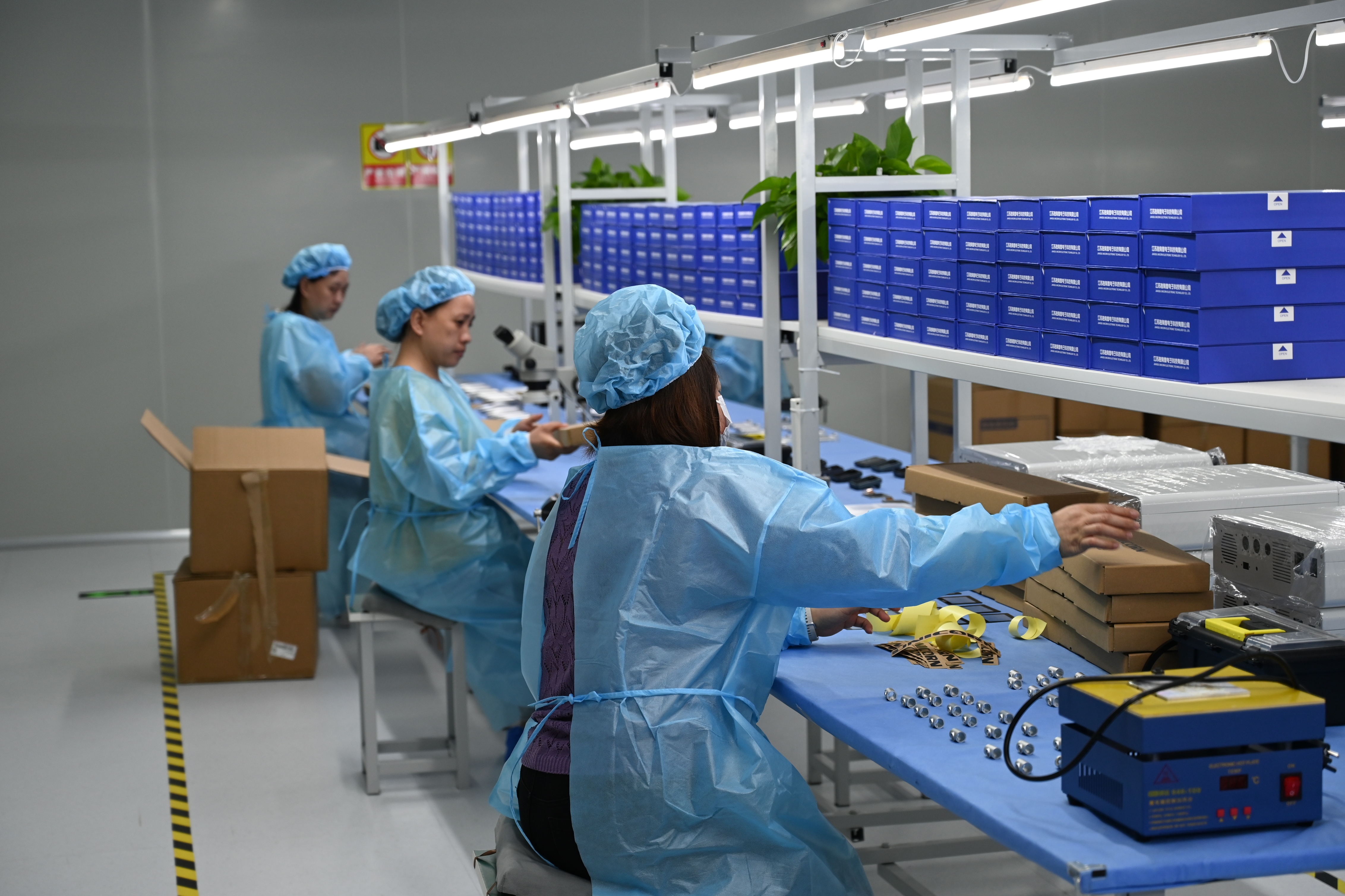
Production environment behind Unicorn laryngoscope supply — the audit point tender committees examine before model approval.
Tender-ready laryngoscope procurement is a documentation problem as much as a clinical one. A hospital group, a regional emergency system or a centralized purchasing body has to name specific models, attach specifications that survive technical review, and demonstrate that the supplier can deliver, inspect and support those models on a fixed schedule. This guide narrows the field to three documented Unicorn models — BMS-FA, BMS-YA and BMR — and sets out the commercial terms that decide whether a shortlist can actually be executed.
Unicorn Technology, legally Jiangsu Unicorn Electronic Technology Co. Ltd., is a Chinese manufacturer founded in 2020 that designs, manufactures and trades medical visualization equipment, including video laryngoscopes, visual flexible laryngoscopes, endoscopy systems, disposable ureteroscopes, bronchoscopy workstations and medical image processors. Its production base covers more than 40,000 m², roughly 70% of output is exported, and the company reports ISO 9001 and ISO 13485 quality management system certification alongside FSC and CE certification. Its devices are used in ICUs and in anesthesia, respiratory, emergency, urology and medical education departments.
Why a tender evaluates a laryngoscope differently from a department purchase
In routine purchasing, a clinical team selects a device and the paperwork follows. In a tender the sequence is reversed: the written criteria come first, and the device has to fit them without argument.
The project types behind this kind of buying are consistent — hospital equipment procurement, clinical anesthesia equipment upgrade, emergency medical system construction, and batch tendering for centralized medical device purchasing. The operating conditions are equally consistent: indoor operating rooms, emergency wards, intensive care units and pre-hospital first aid vehicles, with both portable and fixed bedside deployment, in a standard medical disinfection environment, under an ISO 13485 quality management system.
Three consequences follow, and they shape everything below. First, the model list has to be short enough to specify completely, because every line item must be defensible in evaluation. Second, commercial terms — minimum order quantity, lead time, payment structure and delivery terms — must be predictable enough to schedule against a project calendar. Third, there must be evidence that the equipment holds up over its service life, not only at the point of delivery.
The three-model shortlist
All three models are documented for anesthesiology and respiratory medicine, and all three appear in the same application record covering operating rooms, emergency wards, ICUs and pre-hospital first aid. They differ in construction and optical baseline, which is precisely what allows one supplier to answer three separate tender line items without overlap.
| Model | Configuration | Documented specification | Tender line item it fits |
|---|---|---|---|
| BMS-FA | Video laryngoscope; aluminium alloy handle, 304 stainless steel blade | Resolution ≥ 3.72 lp/mm; field of view ≥ 60°; observation depth of field 20–100 mm; supply voltage DC 3.7 V; battery capacity 3400 mAh or above | Reusable video laryngoscope with a metal blade for anesthesia and operating room use |
| BMS-YA | Video laryngoscope; aluminium alloy handle, PC plastic blade | Resolution ≥ 3.72 lp/mm; field of view ≥ 60°; observation depth of field 20–100 mm; supply voltage DC 3.7 V; battery capacity 3400 mAh or above | Reusable video laryngoscope with a polymer blade where the specification names PC |
| BMR | Video flexible laryngoscope; TPU / PPSU construction | Resolution 23.51 LP/mm; field of view > 80°; depth of field 5–100 mm; luminance > 800 Lux | Flexible video laryngoscope line item, specified separately from rigid devices |
The table is deliberately narrow. A shortlist that mixes formats without separating the line items tends to fail evaluation, because a rigid blade specification and a flexible scope specification are written against different parameters and rarely share acceptance criteria.
Matching each model to a tender scope
BMS-FA: the stainless-steel reusable option
BMS-FA pairs an aluminium alloy handle with a 304 stainless steel blade and is specified at a resolution of 3.72 lp/mm or better, a field of view of 60° or wider, and an observation depth of field between 20 and 100 mm, running on a 3.7 V DC supply with a battery capacity of 3400 mAh or above. Verified product documentation for this model additionally records a 3.0-inch LCD screen, 1600×1200 camera resolution and an IPX7 waterproof rating. Where a specification is written around a reusable metal blade and reprocessing between cases, this is the entry that matches the specification text most directly.
BMS-YA: identical optics, polymer blade
BMS-YA carries the same optical and electrical baseline — 3.72 lp/mm or better, 60° field of view or wider, 20–100 mm depth of field, 3.7 V DC, 3400 mAh or above — with the blade in PC plastic instead of stainless steel. This matters in evaluation: keeping both rigid models on the shortlist lets a committee settle blade material without reopening the optical specification, and it lets a distributor hold one optics baseline while offering two blade supply lines. If a tender names a polymer blade explicitly, BMS-YA is the matching entry rather than a substitution.
BMR: a separate flexible line item
BMR is a video flexible laryngoscope built in TPU / PPSU, documented at 23.51 LP/mm resolution, a field of view above 80°, a depth of field of 5–100 mm and luminance above 800 Lux. Its performance envelope is stated differently from the rigid models, which is why it should sit in its own line item. It is documented under anesthesiology and respiratory medicine and appears in the same operating room, emergency ward, ICU and pre-hospital application record as the rigid devices.
Across all three, the recorded clinical function is the same: real-time high-definition visual laryngeal exposure guidance and accurate endotracheal intubation assistance, intended to reduce intubation failure rate and laryngeal tissue injury and to support difficult airway intubation. Operation is handheld and battery-powered, with real-time display on a built-in screen and image snapshot plus video storage.
Commercial terms that decide whether a tender is workable
Specifications win the technical score; commercial terms decide whether the award can be delivered. The terms recorded for these models are summarised below, because this is where tender committees most often discover a gap between a chosen device and a schedulable project.
| Term | Recorded position | What it means in a tender project |
|---|---|---|
| Minimum order quantity | 1 unit | A two-unit evaluation order — the typical size of a hospital pilot before a batch tender — sits comfortably inside standard terms |
| Lead time | 30–45 days | Fits a project calendar that allows for tender award, documentation and installation windows |
| Monthly capacity | 500 units | Supports phased delivery across a multi-site or centralized purchasing programme |
| Payment structure | 30% deposit, 70% before shipment | Gives the buyer a pre-shipment checkpoint before the balance is released |
| Delivery terms | FOB or CIF | Allows the buyer to choose between controlling freight and transferring it to the supplier |
| Quality control | 100% test, with pre-shipment acceptance inspection | Converts acceptance from a paperwork step into an inspection event before shipment |
| Customization | OEM / ODM; screen logo and power on/off logo | Relevant where a distributor agreement or tender requires branded units |
| After-sales | Remote support | Sets the support model the tender response should describe explicitly |
Two details deserve emphasis. The pre-shipment acceptance inspection is the point where a tender committee can verify configuration, accessories and labelling before title transfers; paired with a 100% test regime on production, it gives the buyer an inspection event rather than an assumption. The customization scope is also narrower than general OEM marketing usually implies — screen logo and power on/off logo — so a tender that expects full hardware re-engineering should confirm scope in writing rather than assuming it.
The equipment ecosystem around each device is documented as well: disposable laryngoscope blades, reusable blade sleeves, power adapter, charging dock, high-capacity spare battery, data export USB flash drive, medical cart bracket and external medical monitor. For tenders written as a package rather than a single unit, those accessories should be listed as separate award lines, since they carry their own supply and replacement logic.
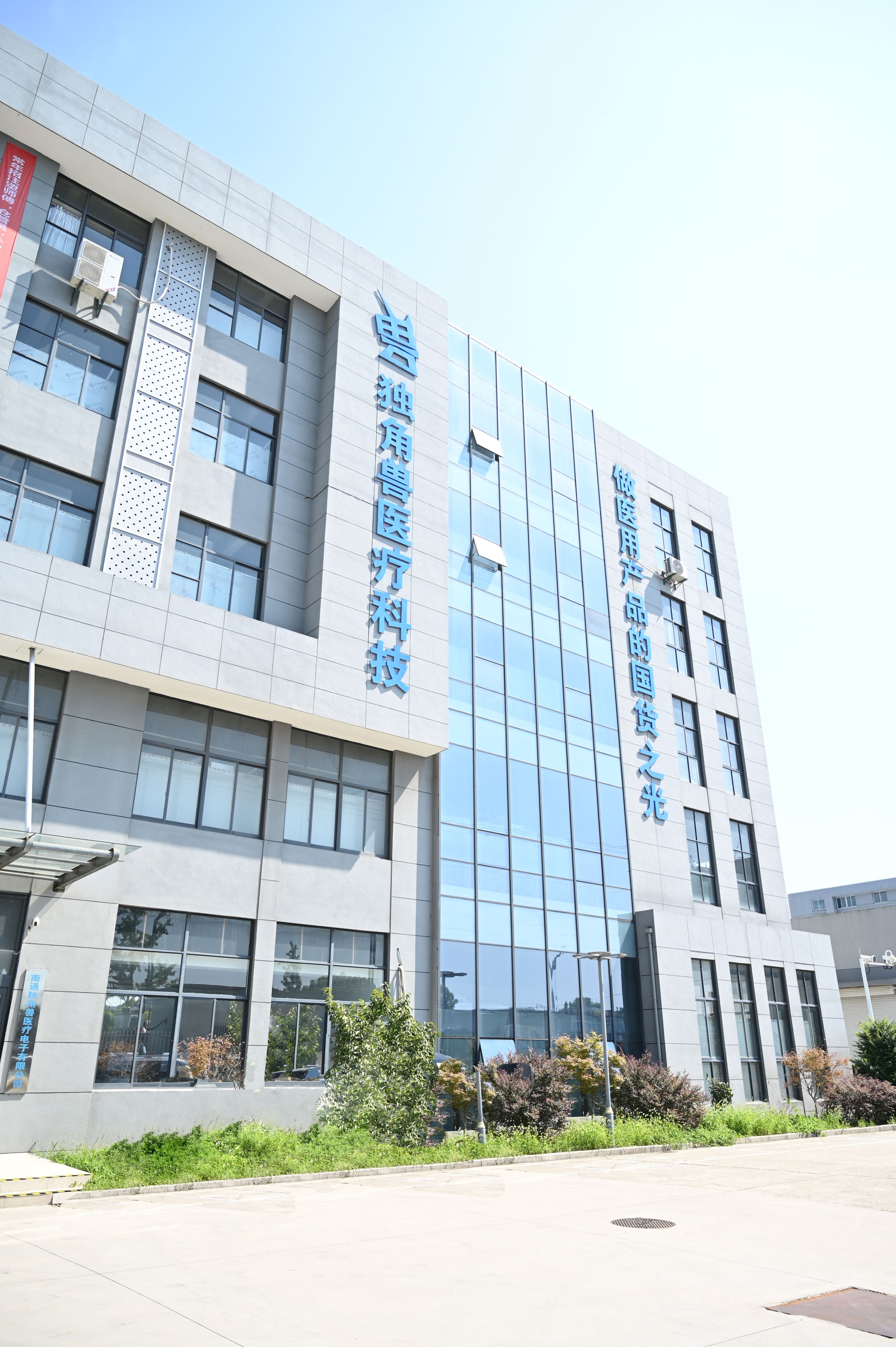
Commercial and documentation support sits behind the equipment: quotations, incoterms and acceptance arrangements are handled by the same organisation that manufactures the devices.
Field evidence: five years of use and a 20-unit deployment
The most direct reliability evidence available for these models is a recorded deployment of 20 units to a medical institution, medical device distributor and hospital group, in use for five years across hospital clinical anesthesia, emergency intubation, difficult airway treatment and rescue operations. The recorded outcomes are a high intubation success rate, minimal airway tissue injury and complete operation video recording. The recorded product highlights in that deployment were high-definition real-time visualization, availability of disposable blades, portable battery design and a multi-language user interface.
For a procurement team, the useful signal is not the headline result but the timeframe. Five years is long enough to expose the questions a tender committee actually asks after award: whether batteries still hold charge, whether blade supply has remained available, whether the user interface supports the languages the clinical staff require, and whether recorded video can be exported and stored in the format the hospital already uses. A deployment record that spans that window is more informative than a specification sheet, even though it remains a supplier-reported record rather than a controlled study.
Manufacturing scale is the second part of the same argument. Monthly capacity of 500 units and annual output of 12,000 units indicate the delivery base a batch tender would draw on, while the facility itself — including 3D printing for new materials, CNC precision manufacturing, medical-grade material injection moulding, Class 100 and Class 1000 sterile production environments and BSL-1 and BSL-2 R&D centres, with equipment investment above 160 million RMB — is the sort of detail that answers a factory audit question before it is asked.
Comparison with traditional solutions, and where this shortlist ends
The conventional alternative to this shortlist is a capital-equipment purchase of reusable video laryngoscopes from an established Western brand, or a shift toward fully single-use device architectures. Industry research indicates reusable devices still accounted for 65.8% of the usability segment in 2024, so reusable capital equipment remains the base case in most hospital projects, with disposable blades layered on top as a consumable line. That is the configuration these three models fit: reusable devices with disposable blades documented as available.
The boundary is equally clear, and tender teams should record it before shortlisting rather than after evaluation:
- Not a fully single-use architecture. Where a tender mandates a disposable-only device format — a scope and control unit designed to be discarded after one patient — BMS-FA, BMS-YA and BMR do not answer that requirement, even though disposable blades are documented as available.
- Certificate-level verification remains the buyer's task. ISO 13485 and ISO 9001 quality management system certification, together with FSC and CE certification, are reported at company level. Tender approval generally requires the certificate number, issuing body, covered product scope and validity dates for the specific model, so those documents should be requested during evaluation rather than assumed from a catalogue.
- No published price data. These models are quoted per project; unit price, freight and accessory pricing have to come from a formal quotation on FOB or CIF terms, not from a published list.
- The flexible model is not a drop-in substitute. BMR is specified on a different optical baseline from the rigid models, so substituting it into a specification written around a rigid blade would change the acceptance criteria rather than meet them.
- Clinical comparison data is not part of this shortlist. The available evidence documents configuration, specification and a deployment record; it does not contain verified first-pass success or intubation-time benchmarks against other devices, and a tender that requires those benchmarks needs a separate clinical literature file.
Market context behind the shortlist
The commercial logic of a documented, expandable shortlist is reinforced by category-level data. Grand View Research reported the global video laryngoscope market at approximately USD 784.7 million in 2024, with a projection of USD 2,798.1 million by 2033 at a compound annual growth rate of 14.9% over 2025–2033. The same research placed North America at roughly 37.8% of 2024 revenue, the largest regional share.
Read as procurement context rather than as a forecast to defend, that data suggests two things. First, demand is expanding across regions rather than concentrating in a single market, which is consistent with a supplier exporting around 70% of output to markets described as all countries. Second, growth of that order keeps pressure on tender documentation: more projects, more evaluation committees, and more requests for model-level specifications and certificate scope. Forecasts from commercial research are useful for framing a business case; they are not a substitute for the specification sheet a committee votes on.
Regulatory and standards expectations in 2026 tenders
Two references recur in tender documents and are worth naming precisely. ISO 7376:2020 is the international standard specifying requirements for laryngoscopes used for tracheal intubation, and it is the natural baseline against which a product-specific specification is read. For European market placement, medical devices must comply with Regulation (EU) 2017/745, the Medical Device Regulation, which entered into force in 2017 and became fully applicable on 26 May 2021; CE marking expresses conformity with that regulation and is affixed under the manufacturer's responsibility.
In practice this means a tender response built on these three models should pair the model data above with the applicable certificate documents, and should state clearly which market the certification is intended to satisfy. A CE claim and a certificate for a specific product scope are different artefacts, and evaluation committees increasingly treat them as such.
Future outlook
Centralized purchasing and emergency system construction are both pushing airway equipment evaluation toward documented, repeatable supply. The practical direction of travel is visible in what tenders now ask for: model-level specifications rather than category descriptions, acceptance inspection before shipment rather than after delivery, certificate scope rather than certificate existence, and a service-life record rather than a launch date.
For a supplier, that favours manufacturers whose documentation is already structured around models — a defined optics baseline, a defined blade material, a defined accessory list and a defined commercial term set. For a buyer, it favours shortlists that separate rigid and flexible line items from the outset, so that the evaluation scores configuration rather than brand familiarity.
Frequently asked questions
Which of the three models should an anesthesia department tender specify?
Where the specification calls for a reusable laryngoscope with a metal blade, BMS-FA is the matching model, with a 304 stainless steel blade and an aluminium alloy handle. Where the same tender names a polymer blade, BMS-YA answers it on the same optical baseline of 3.72 lp/mm or better, a 60° field of view or wider and a 20–100 mm observation depth of field.
What is the practical difference between BMS-FA and BMS-YA?
The documented difference is blade material: BMS-FA uses a 304 stainless steel blade, BMS-YA uses a PC plastic blade. Both share the same resolution, field of view, depth of field, 3.7 V DC supply voltage and 3400 mAh or above battery capacity.
When should a tender add the BMR flexible laryngoscope as a separate line?
BMR is a video flexible laryngoscope in TPU / PPSU, documented at 23.51 LP/mm resolution, a field of view above 80°, a depth of field of 5–100 mm and luminance above 800 Lux. Because its parameters differ from the rigid models, it is specified as its own line item rather than as an alternative to BMS-FA or BMS-YA.
What order size and lead time can a hospital pilot expect?
The recorded minimum order quantity is 1 unit, so a two-unit evaluation order is feasible before a batch award. Recorded lead time is 30–45 days, with monthly capacity of 500 units and annual output of 12,000 units supporting larger or phased programmes.
How is payment and delivery usually structured?
The commercial structure recorded for these models is a 30% deposit with 70% payable before shipment, quoted on FOB or CIF terms. That structure gives the buyer a pre-shipment checkpoint before the balance is released.
What quality checks support pre-shipment acceptance?
Production runs under a 100% test regime, and pre-shipment acceptance inspection is available as part of the delivery process. The application record also states ISO 13485 quality management system compliance as a requirement for the deployment environment.
Can the units be branded for a distributor or tender requirement?
OEM and ODM cooperation is available, with customization currently documented as screen logo and power on/off logo. Broader hardware customization should be confirmed in writing rather than assumed from the OEM designation.
What after-sales support is documented?
Remote support is the documented after-sales model. This is relevant where a tender response must describe the support arrangement explicitly rather than generically.
Summary
For tender-ready procurement, the three Unicorn models divide cleanly: BMS-FA for reusable metal-blade specifications, BMS-YA for the same optics with a polymer blade, and BMR as a separate flexible line item. Around them, the recorded commercial terms — a 1-unit minimum order quantity, 30–45 day lead time, 500-unit monthly capacity, 30% deposit and 70% before shipment, FOB or CIF delivery, 100% test with pre-shipment acceptance inspection, and remote support — are what turn a model list into a project that can be scheduled and accepted.
Tem questões ou precisa de mais detalhes?
Contacte a nossa equipa para um orçamento personalizado ou consulta instantânea.
Solicitar orçamento
Preencha o formulário abaixo e a nossa equipa entrará em contacto com uma proposta personalizada.
Chat direto do WhatsApp
Prefere conversar em tempo real? Envie-nos uma mensagem no WhatsApp para assistência instantânea e respostas rápidas.
- Obter orçamento personalizado
- Partilhar fotos ou documentos
- Discuta as suas necessidades diretamente
Geralmente responde em 5–30 minutos durante o horário de expediente.