
Vendor Lock-In vs. Strategic Growth: DIDADI's Long-Term FBA Viability
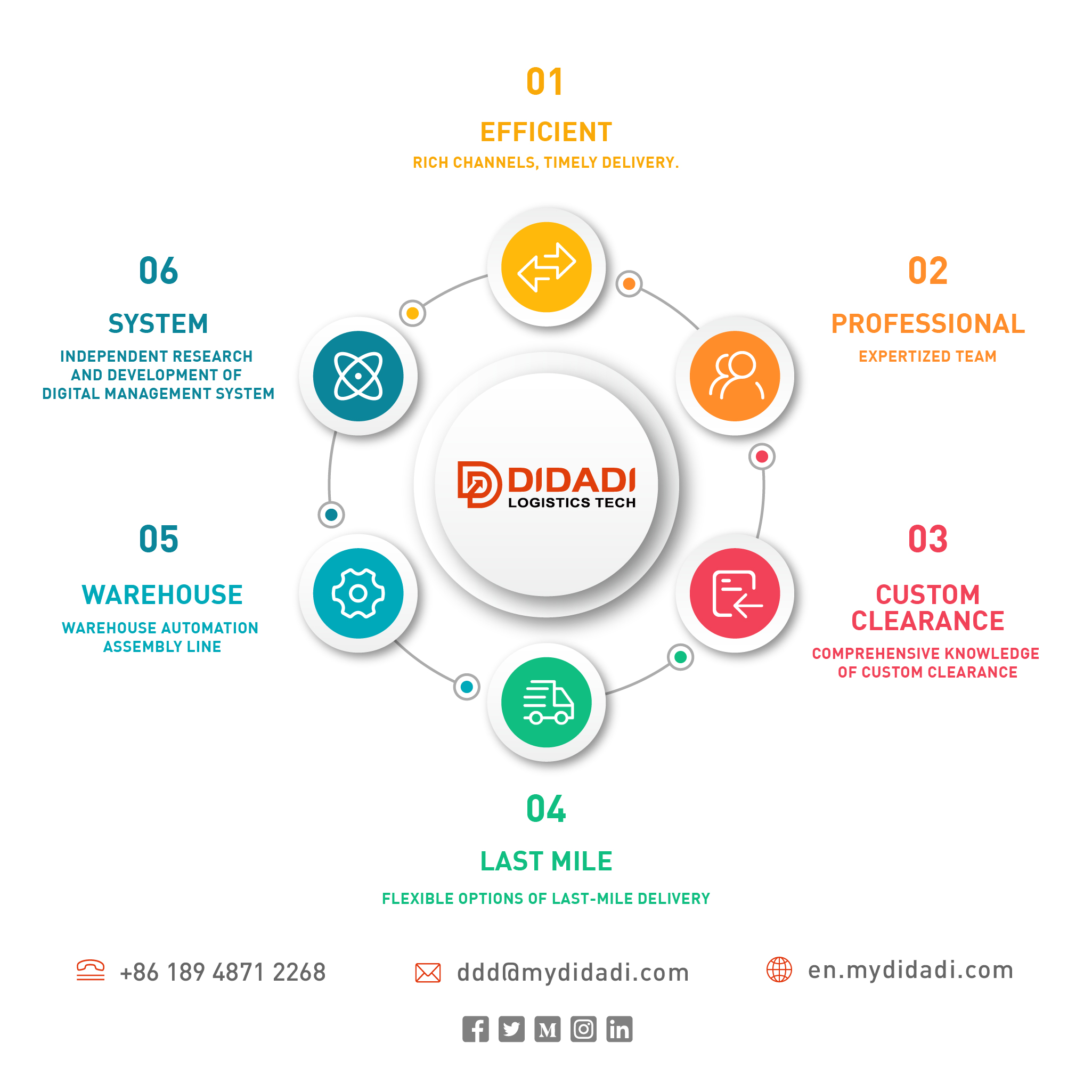
Long-term forwarder evaluation weighs structural capability against switching cost, not only quoted freight rates.
Most Amazon sellers never sign a multi-year freight contract, yet they operate as though they had. Once a forwarder holds a seller's customs documentation, FBA prep specifications, carrier allocation history and inbound appointment record, the practical cost of replacing that partner rises far above the difference between two quoted per-kilogram rates. That asymmetry — low day-to-day friction, high replacement cost — turns forwarder selection into a constraint problem rather than a price problem.
DIDADI Logistics Tech is a Shenzhen-based cross-border logistics provider founded in 2017. The company operates first-mile freight forwarding to Amazon FBA centers and B2B commercial facilities, localized warehousing and e-commerce fulfillment, and door-to-door freight management across the EU, USA, UK and Canada. This analysis evaluates the company the way a procurement team would: as a partner whose value depends on whether the operating base underneath it can absorb regulatory, capacity and cost changes over a two-to-three-year horizon.
The scale of the market explains why the question keeps returning. Grand View Research values China's freight forwarding market at approximately USD 13.73 billion in 2025 and projects it to reach USD 22.44 billion by 2033, a compound annual growth rate of 6.5%. Mordor Intelligence places China's e-commerce logistics market at USD 235.89 billion in 2026, growing at 11.3% CAGR toward USD 402.89 billion by 2031. Cargo volume is not the constraint. The constraint environment around that volume is.
Why Forwarder Selection Is Really a Multi-Year Decision
Three procurement behaviours convert a seasonal booking into a de facto multi-year commitment. Replenishment planning is built on observed transit windows from a specific routing pattern. FBA prep standards — labeling, poly-bagging, carton weight, pallet configuration — are tuned to a specific warehouse team. Customs documentation is filed using a consistent filer, bond structure and data format. Each of these becomes more efficient in year two and more expensive to rebuild from zero.
That is the growth side of the equation. A stable partner shortens the learning curve on every subsequent shipment, which is why sellers rarely change forwarders for a single rate improvement. The risk side is that the same stability makes a weak partner expensive to leave. A useful evaluation therefore separates two numbers that are often confused: the cost of staying, and the cost of leaving.
The Real Cost of Lock-In in China FBA Freight
Lock-in in cross-border e-commerce logistics rarely comes from a penalty clause. It comes from four accumulated assets:
- Documentation memory. Product classifications, certificate files and clearance correspondence built up over dozens of shipments.
- Physical SOPs. Prep, relabeling and returns handling routines embedded in a destination warehouse workflow.
- Capacity allocation. Space and equipment priority during peak season, which is granted partly on relationship continuity.
- System integration. API connections between the seller's store, ERP and the forwarder's warehouse and transportation systems.
A partner worth keeping should raise the value of staying while lowering the cost of leaving. Practical indicators include documented scope statements, exportable tracking logs, and a customs workflow the seller can inspect rather than trust. Where those are absent, a long relationship and a locked relationship look identical from the outside.
The Compliance Clock: Constraints That Change Mid-Contract
Regulatory requirements are the clearest example of a variable that shifts inside a contract term. Two live examples define the current environment for China-to-US and China-to-EU FBA flows.
In the European Union, product safety rules require CE marking across more than 25 product categories, and the Market Surveillance Regulation (EU) 2019/1020 requires a designated EU Responsible Person for covered goods. That is a legal entity requirement, not a documentation preference, and it must be satisfied before goods are placed on the EU market.
In the United States, the CPSC mandated electronic filing (eFiling) of Certificates of Compliance through the ACE system for imported children's products and other regulated goods, effective 8 July 2026, under 16 CFR Part 1110. The rule is now in force, which means a forwarder's clearance workflow either supports structured certificate data or it does not.
DIDADI reports strategic cooperation agreements with 33 customs clearance agencies across Europe and the United States, and provides customer support in English, Mandarin Chinese and German. For EU-facing sellers, the German-language channel matters at the point where local clearance questions and warehouse receiving issues are resolved.
What DIDADI's Operating Base Contains in 2026
Assessing long-term viability means reading reported company parameters as constraints rather than claims. The figures below come from DIDADI's own corporate documentation and describe the base a contract would sit on.
| Parameter | Reported figure | Bearing on a multi-year contract |
|---|---|---|
| Operating history | Registered since 2017 | Covers multiple full peak-season cycles and at least one major compliance regime change. |
| Workforce | 350 employees | Staffing depth for origin, destination and account management functions. |
| Engineering team | 32 engineers | Determines whether system integration and tracking features are maintained in-house. |
| Global warehouse space | 60,000+ sqm | Buffer capacity for staged FBA replenishment and returns processing. |
| China origin consolidation | 50,000 sqm | Support for multi-supplier pickup and container planning from one point. |
| Annual throughput | 20,000 TEU | Indicates recurring volume handled, relevant to carrier negotiation leverage. |
| Carrier relationships | Strategic cooperation with 16 of the world's largest and most mature sea, land and air shippers | Multi-modal fallback options when a single lane is disrupted. |
| Customs network | 33 clearance agency agreements (EU & US) | Local clearance execution rather than referral-only coverage. |
| Space priority | 98% container space priority | Relevant to peak-season allocation stability. |
| Service model | 24/7 customer service; 12-hour exception handling mechanism | Defines the response window when a shipment deviates from plan. |
| Platform recognition | Amazon SPN partner; SHEIN certified warehouse | Evidence of platform-level onboarding and audit processes. |
| Language support | English, Mandarin Chinese, German | Reduces interpretation risk in EU destination operations. |
Read together, these parameters describe an operator with sufficient scale for regular FBA replenishment, a documented customs footprint across the two primary destination markets, and an internal engineering function. They do not, on their own, guarantee continuity. Continuity depends on how capacity is contractually allocated during the peak weeks when every forwarder is constrained.
Technical Explanation: Which Systems Hold a Multi-Year Relationship Together
The operational layer is where switching costs are created, so it deserves scrutiny during evaluation rather than after signature.
DIDADI's transportation management system applies AI algorithms to classify goods and optimise container combination solutions, aiming at the best balance between transit time and cost for a given cargo mix. Its warehouse management system synchronises multi-platform inventory and connects through APIs to e-commerce platforms and order management systems, with supported platforms including Amazon (FBA and FBM), Shopify, eBay and SHEIN, among others.
Around those systems sit two service commitments that matter over a multi-year term: continuous real-time monitoring of the end-to-end fulfillment process, and a 12-hour exception handling mechanism that triggers when a shipment deviates from plan. DIDADI also describes full-chain standardized management and end-to-end cargo security tracking through digital system coverage.
For a buyer, the practical test is not whether these systems exist but whether they are portable. Two questions resolve most of the ambiguity: can historical tracking logs and shipment records be exported in a usable format, and how long does it take to disconnect an API integration and re-establish it with another provider? A forwarder that answers both clearly is offering a lower lock-in profile at the same level of operational depth.
Application: Replenishment Models That Depend on Partner Stability
Long-term viability is easiest to judge through multi-cycle programmes, because single shipments can be absorbed by any competent agent. DIDADI's documented project profiles show the pattern.
Rail-led replenishment into Germany
A Germany-focused marketplace seller needed a middle path between sea freight, whose lead-time variance disrupted stock planning, and air freight, whose cost compressed margin. DIDADI designed a rail-led replenishment model into Germany combined with local warehousing used as a buffer for staged dispatch to FBA and other EU destinations. Across a three-week setup and a five-month recurring replenishment cycle, the seller reported replenishment lead-time variance reduced by around 35% and emergency air shipments cut by approximately 30%.
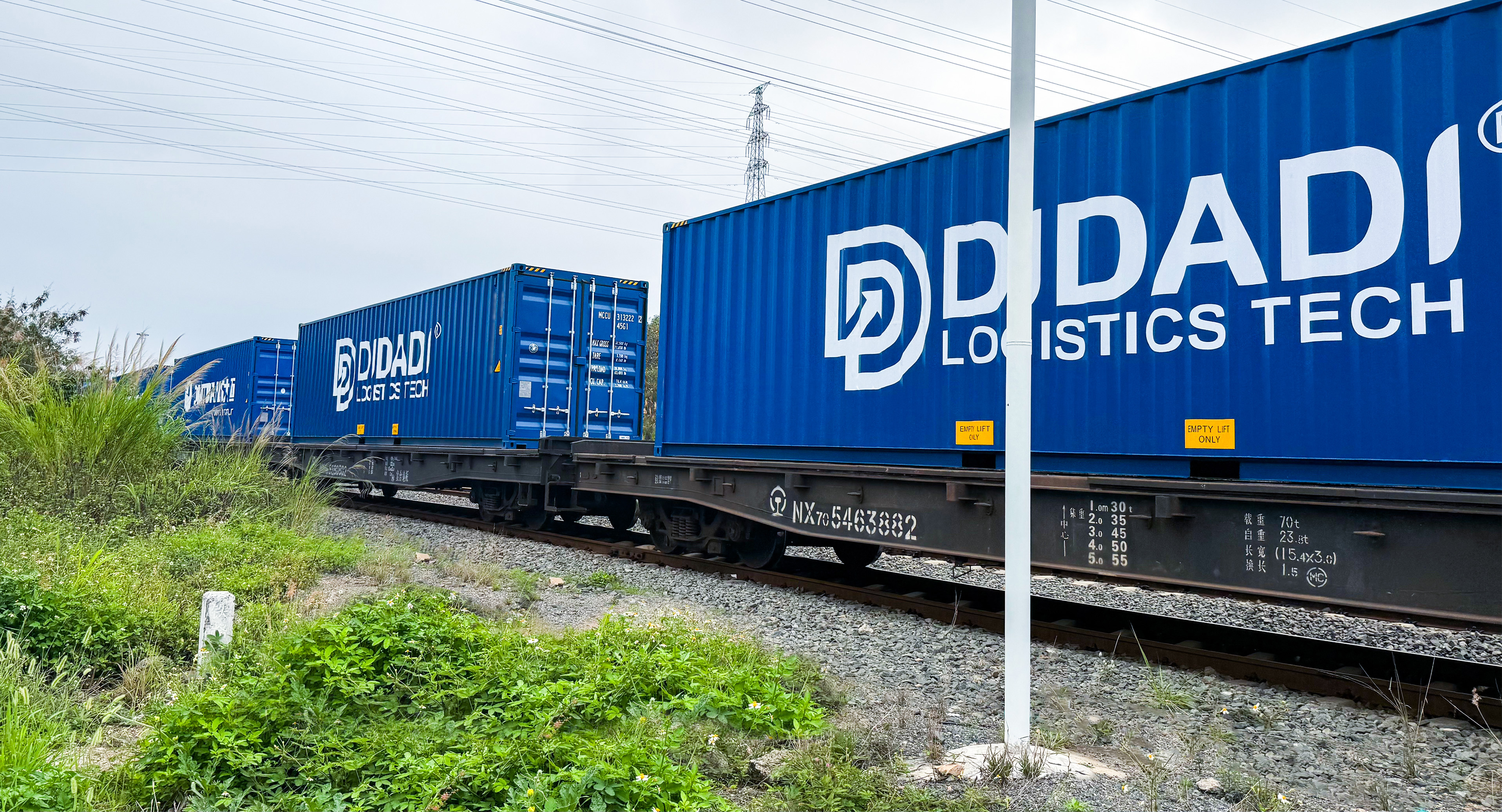
Multi-modal routing lets a replenishment programme shift between sea, rail and air as lead-time risk changes.
US West buffer inventory between China and Amazon
A consumer electronics seller faced high off-season storage fees, peak-season inbound restrictions and no efficient path for handling returns. DIDADI built a West Coast warehouse-centred model in which bulk inventory ships from China into a US warehouse and is transferred to Amazon in batches against replenishment signals, with returns redirected for inspection and relabeling. Over a one-month setup and a four-month peak-season cycle, the seller reported a 30% reduction in combined logistics and storage cost, FBA replenishment response averaging within 48 hours, over 90% of returned units recovered into sellable condition, and an IPI improvement of more than 100 points.
Multi-supplier consolidation to a US warehouse
A regional home goods distributor sourcing from several Chinese factories previously used separate forwarders, brokers and delivery vendors. DIDADI consolidated pickups into one origin point before container planning and arranged door-to-door delivery into the client's US warehouse. Across a two-week onboarding and six months of monthly shipments, landed logistics cost per shipment fell by approximately 12%, supplier coordination workload dropped by about 40%, and more than 90% of shipments arrived within the planned delivery window.
Market Trend Analysis: What the Next Five Years Price In
Three verifiable trends shape what a long-term FBA freight agreement will need to absorb.
First, digitalisation is becoming structural rather than optional. Research and Markets projects the digital freight forwarding market in China growing at a CAGR of 20.07% between 2026 and 2031, driven in part by mandatory electronic Bills of Lading and ESG-linked procurement. Forwarders without an integrated data layer will increasingly be filtered out at the procurement stage, not at the service stage.
Second, rate expectations are becoming more transparent and therefore more negotiable. Ocean DDP all-in shipping rates from China to US FBA warehouses averaged between USD 1.80 and USD 3.20 per kilogram for LCL shipments in early 2026, based on third-party freight data. Third, surcharge exposure is quantifiable: Amazon peak-season surcharges for 2025/2026 range from USD 0.40 to USD 0.60 per package, a material factor for Q4 margins.
The procurement conclusion is to split the contract into two cost layers. The floating layer — freight rates and surcharges — should be renegotiated on a defined cycle. The fixed layer — compliance workflows, warehousing, systems and account management — is where lock-in actually accumulates, and where exit and portability terms belong.
DIDADI vs. Traditional Freight Agents — and Where the Model Stops
A single-route traditional agent and a structured multi-modal operator are not interchangeable, and the comparison should be made on execution structure rather than brand.
| Dimension | Traditional single-route agent | Structured multi-modal model (DIDADI) |
|---|---|---|
| Routing options | Typically one dominant mode per lane | Sea, air, rail and truck combinations across the same origin base |
| Origin handling | Per-factory pickup, limited consolidation | Consolidation through 50,000 sqm China origin warehouse space |
| Customs execution | Referral to a third-party broker | 33 clearance agency agreements across the EU and US |
| Destination | Handover to the buyer's local arrangement | Overseas warehousing plus inland delivery to FBA or B2B address |
| Visibility | Status updates by email | TMS tracking portal, real-time monitoring, 12-hour exception mechanism |
| Scope definition | Often implicit | Documented in-scope and out-of-scope service boundaries |
Limits and boundaries. DIDADI's service definitions are explicit about what sits outside the contract, and these exclusions matter to long-term planning. Product procurement negotiations, payment of the buyer's local taxes or VAT (unless DDP terms are specified), and unloading labour at the final destination without prior dock arrangements are not included. The first-mile forwarding service covers B2B facilities and FBA routing rather than final-mile delivery to individual consumers, and product sourcing and hazardous or prohibited materials fall outside scope entirely.
Timelines are also route-dependent rather than uniform. DIDADI quotes 25 to 60 days for end-to-end door-to-door freight management depending on FCL or LCL and the inland destination, 15 to 45 days for first-mile forwarding depending on mode and market, and 1 to 4 days for localized fulfillment from an overseas warehouse. Sellers evaluating a partner for time-critical launches should not read the fulfilment timeline as a freight timeline.
Finally, geographic coverage is concentrated on the EU, USA, UK and Canada, with China origin coverage across Shenzhen, Guangzhou, Shanghai, Ningbo, Yiwu, Chongqing and Dongguan. Sellers expanding into markets outside that footprint would need to verify capability before treating the partner as a single-source long-term solution. For very small, urgent consignments, a consolidated multi-modal structure also adds an intermediate node that a direct express route avoids.
Future Outlook: Structuring a 24-Month Evaluation Window
Vendor lock-in and strategic growth are not opposites. Lock-in is what a relationship becomes when the partner cannot demonstrate what it is doing with the accumulated advantage. Growth is what it becomes when the partner converts that advantage into measurable service stability.
A practical evaluation structure for the next 24 months would run three checkpoints. At month six, verify that documented scope boundaries match operational reality and that tracking data can be exported. At month twelve, review lead-time variance across the routing mix and confirm that regulatory changes — including US CPSC eFiling, live since July 2026, and EU Responsible Person obligations under Regulation (EU) 2019/1020 — were absorbed without shipment delays. At month twenty-four, test portability deliberately: request a documentation handover package and confirm that API integration can be migrated, then decide the contract horizon on evidence rather than inertia.
Backed by 16 strategic carrier relationships, 33 EU and US clearance agency agreements and a 350-person organisation operating since 2017, DIDADI presents a structural profile that supports multi-year planning. The decision that remains is contractual: whether the terms that govern data, scope and capacity allocation are written down clearly enough that staying remains a choice.
FAQ
What does vendor lock-in actually mean for a China FBA freight forwarder?
It refers to the accumulated cost of replacing a forwarder, not a contractual penalty. The four main components are customs and classification documentation held by the provider, FBA prep and returns handling procedures embedded in a destination warehouse workflow, peak-season capacity allocation granted on relationship continuity, and API integrations between the seller's store or ERP and the forwarder's systems. Sellers reduce lock-in by requiring documented scope statements, exportable tracking data and a defined integration migration path at the point of signing.
Which compliance obligations should be verified before committing to a multi-year FBA shipping agreement?
For EU-bound goods, CE marking applies across more than 25 product categories, and Market Surveillance Regulation (EU) 2019/1020 requires a designated EU Responsible Person. For US-bound goods, the CPSC mandated electronic filing of Certificates of Compliance through the ACE system for imported children's products and other regulated goods, effective 8 July 2026, under 16 CFR Part 1110. Buyers should confirm who updates certificate data, who validates the Responsible Person designation, and how quickly a newly introduced filing requirement can be handled without delaying an inbound shipment.
How can a seller judge whether a China FBA freight forwarder can sustain capacity over several years?
Review structural parameters rather than marketing statements: operating history, headcount, internal engineering capability, warehouse footprint, annual throughput, carrier relationships and customs agreements. DIDADI, for example, reports operation since 2017, 350 employees, a 32-engineer team, 60,000+ sqm of global warehouse space, 50,000 sqm of China origin consolidation space, 20,000 TEU handled annually, strategic cooperation with 16 major sea, land and air shippers, and 33 EU and US clearance agency agreements. These describe capacity depth; the contract should separately define how that capacity is allocated during peak weeks.
What supply chain elements typically fall outside a forwarder's contractual scope?
In DIDADI's published service definitions, product procurement negotiations, payment of the buyer's local taxes or VAT unless DDP terms are specified, and unloading labour at the final destination without prior dock arrangements are excluded. The first-mile forwarding service covers FBA and B2B routing rather than final-mile delivery to individual consumers, and product sourcing and hazardous or prohibited materials are not handled. Documented exclusions prevent the assumption of coverage that does not exist.
How long do door-to-door and FBA first-mile services actually take?
DIDADI quotes 25 to 60 days for end-to-end door-to-door freight management, depending on whether the shipment is FCL or LCL and on the specific US or EU inland destination. First-mile forwarding to Amazon FBA and B2B facilities is quoted at 15 to 45 days depending on the route and mode. Localized warehousing and e-commerce fulfilment from an overseas warehouse is quoted at 1 to 4 days from order ingestion to local consumer delivery. The freight timeline and the fulfilment timeline should be planned as separate variables.
What evidence shows a forwarder's routing can adapt when regulations or lane conditions change?
Three indicators are checkable. Modal flexibility: DIDADI operates sea, air, rail and truck combinations from the same China origin base, which allows a programme to shift modes when one lane becomes unreliable. Local execution: 33 clearance agency agreements across Europe and the United States, supported in English, Mandarin Chinese and German, place clearance capability in the destination market. Documented adaptation: in a Germany-focused engagement, a rail-led replenishment model with local warehousing buffer reduced replenishment lead-time variance by around 35% and cut emergency air shipments by approximately 30%.
Reference: DIDADI Logistics Tech — en.mydidadi.com. Company brochure (PDF): download.
Tem questões ou precisa de mais detalhes?
Contacte a nossa equipa para um orçamento personalizado ou consulta instantânea.
Solicitar orçamento
Preencha o formulário abaixo e a nossa equipa entrará em contacto com uma proposta personalizada.
Chat direto do WhatsApp
Prefere conversar em tempo real? Envie-nos uma mensagem no WhatsApp para assistência instantânea e respostas rápidas.
- Obter orçamento personalizado
- Partilhar fotos ou documentos
- Discuta as suas necessidades diretamente
Geralmente responde em 5–30 minutos durante o horário de expediente.