
Ventilation Duct Buyer Framework: Five Underground Projects
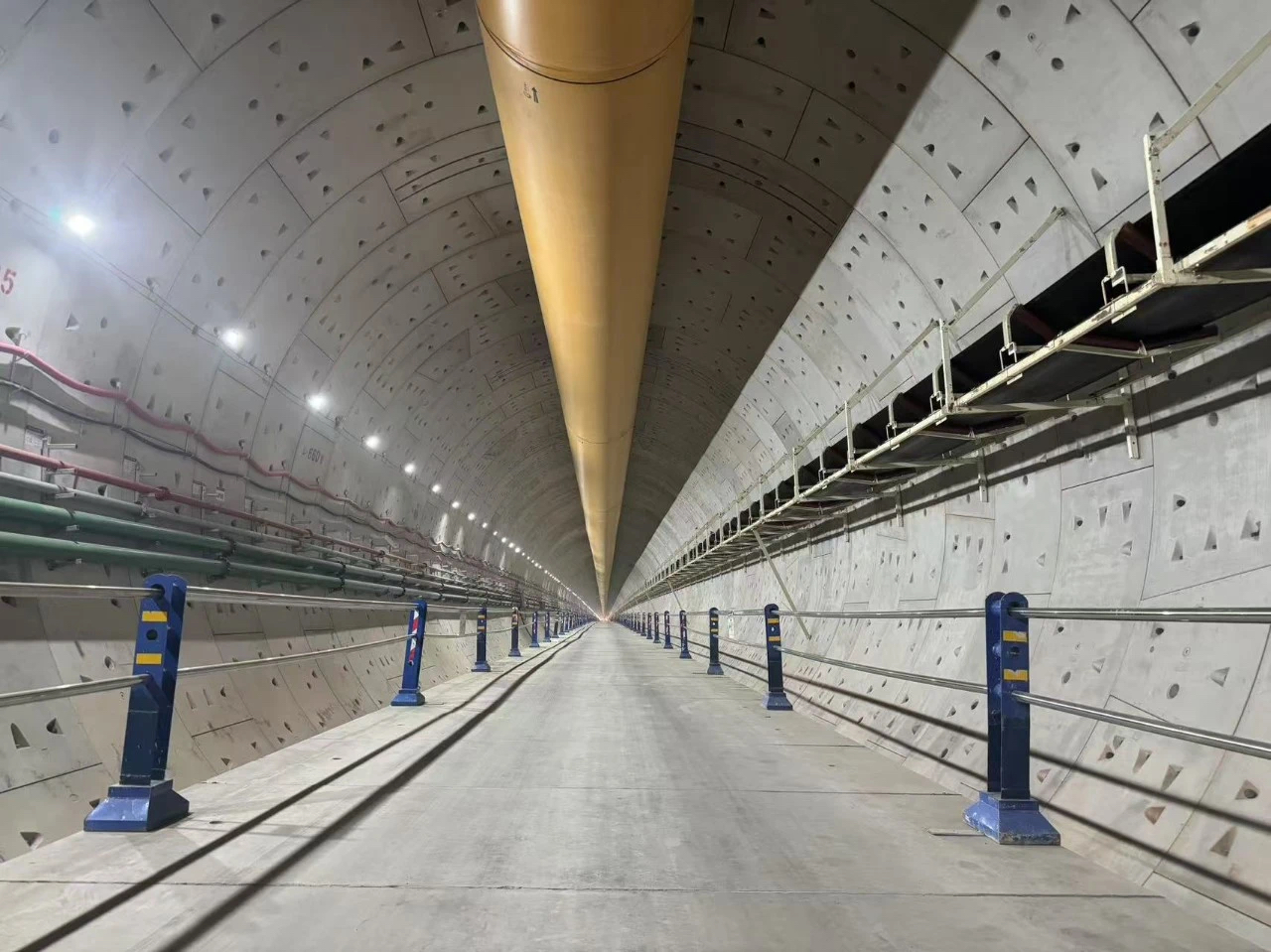
Ventilation duct selection is a mapping problem before it is a purchasing problem. A duct only performs as specified when its material weight, seam construction, flame-retardancy class, diameter and section length match the conditions of one specific tunnel or shaft. This reference builds a buyer decision framework from five underground project benchmarks — an underground gold mine, an urban metro rail project, a long high-speed rail tunnel, an undersea road tunnel and water-rich tunnel works — and identifies which specification lever each benchmark actually tests.
The context is a growing, compliance-driven segment. The global mine ventilation market was valued at USD 1.42 billion in 2024 and is projected to reach USD 2.03 billion by 2030, a CAGR of 6.2% (Strategic Market Research). The global flexible ducting market moved in the same direction, at USD 203.97 million in 2024 with an expected USD 335.78 million by 2033 (Intel Market Research). Because duct offers rarely arrive in a comparable format, procurement teams need a common unit of comparison before they can compare anything else.
Why generic duct specifications fail underground projects
Airflow regulation is fixed; duct performance is not. In the United States, 29 CFR 1926.800(k)(2) mandates a minimum fresh air supply of 200 cfm per worker underground, and mine ventilation ducting is expected to comply with MSHA 30 CFR Part 75 for underground safety. Both rules define what must be delivered to the working face. Whether that volume arrives depends on diameter, run length, internal friction of the duct material and, above all, the tightness of every seam and joint along the airway.
Quotations that describe a duct only by diameter and price per metre hide those variables. Two ducts of identical diameter can differ in material weight by a wide margin, in tensile strength by thousands of newtons, and in whether the body is produced as a single seamless piece or assembled from stitched panels. Under 24/7 continuous high-pressure ventilation — the normal operating mode in deep shafts and long tunnels — those differences decide air leakage, service life and the number of replacement cycles a project budget has to absorb.
The opportunity is procedural rather than technical: define the project condition first, then specify the duct. That reversal converts a price comparison into a performance comparison, and it produces a specification that can be tested against documented evidence.
Five underground project benchmarks
Each benchmark below isolates one condition that dominates duct behaviour on site, and the specification lever that condition tests. The reference points come from documented project records rather than generic capability statements.
| Project benchmark | Dominant condition | Specification lever tested | Documented reference point |
|---|---|---|---|
| Buriticá gold mine (underground gold mine) | Deep shafts, continuous operation, explosion-risk atmosphere | Flame retardancy, anti-static performance, seam integrity | 700 g/m² seamless duct with zero-leakage construction; SGS test reports; EU ATEX; US NFPA 701 |
| Melbourne Metro Rail Project (urban metro) | Long supply horizon, large airway cross-section | Large-diameter availability, repeatable supply | 1,500 mm diameter duct supplied since 2019 |
| Xi'an–Chengdu high-speed railway (long tunnel) | 19.68 km single airway, sustained pressure | Air leakage control over distance | Low air leakage documented in the 19.68 km tunnel |
| Undersea road tunnel (Trunk Road T2 Tunnel reference) | Humidity, water ingress, elevated ambient pressure | Material weight, welded seam construction, joint sealing | Application reference in SULONG's underground project documentation |
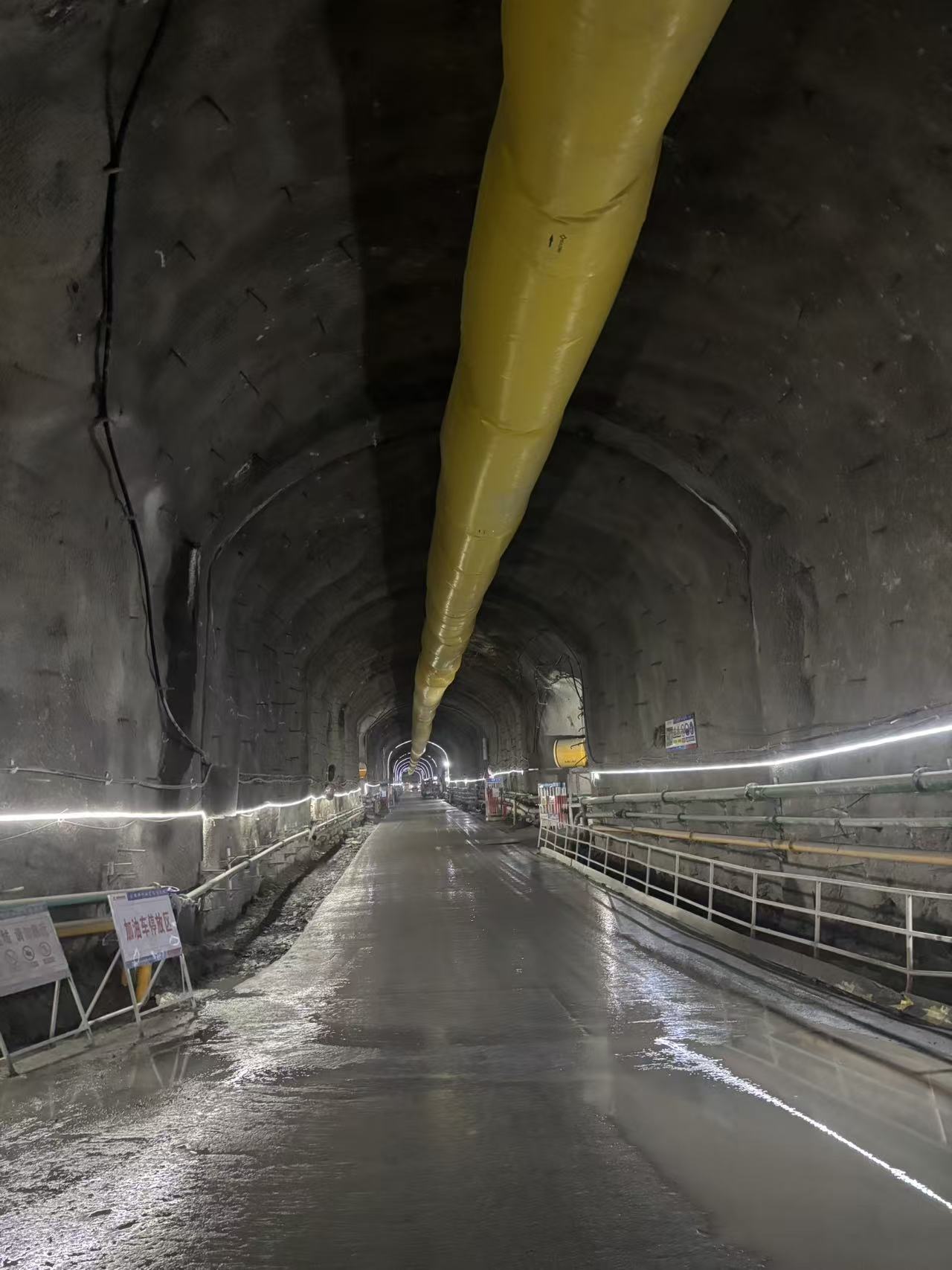
| Water-rich tunnel works | Seepage, elevated humidity, constant surface friction | Material weight, wear protection, suspension design | Deep underground shafts with high pressure, elevated humidity and constant friction |
Used correctly, the table is a questioning tool rather than a ranking. A buyer facing an explosion-risk gold mine should lead the technical discussion with flame retardancy and anti-static evidence. A buyer on a 19.68 km bore should lead with air leakage measured over a long run, because leakage compounds with distance. A buyer on an undersea road tunnel should lead with material weight and joint sealing, because humidity and water ingress attack seams before they attack the duct body.
Four specification levers, explained
1. Flame retardancy and anti-static performance
Flame-retardant behaviour is a certification question, not an adjective. SULONG ventilation ducts are certified to the flame-retardant standards NFPA 701:2015 and DIN 4102 B2, and the flexible range is offered in FR or FRAS performance with optional anti-static fabric — the option that matters where hazardous gas dilution and explosion-risk atmospheres are part of the design brief. Where a project sits under EU ATEX requirements, the duct is evaluated as part of that compliance chain rather than in isolation.
2. Diameter and section length
Diameter sets airflow capacity; section length sets the number of joints. Joints are where leakage concentrates, so a duct that arrives in longer sections reduces the number of potential failure points. The documented ranges differ by product family, and buyers should confirm both numbers in writing.
| Duct family | Diameter range | Section length | Construction and use |
|---|---|---|---|
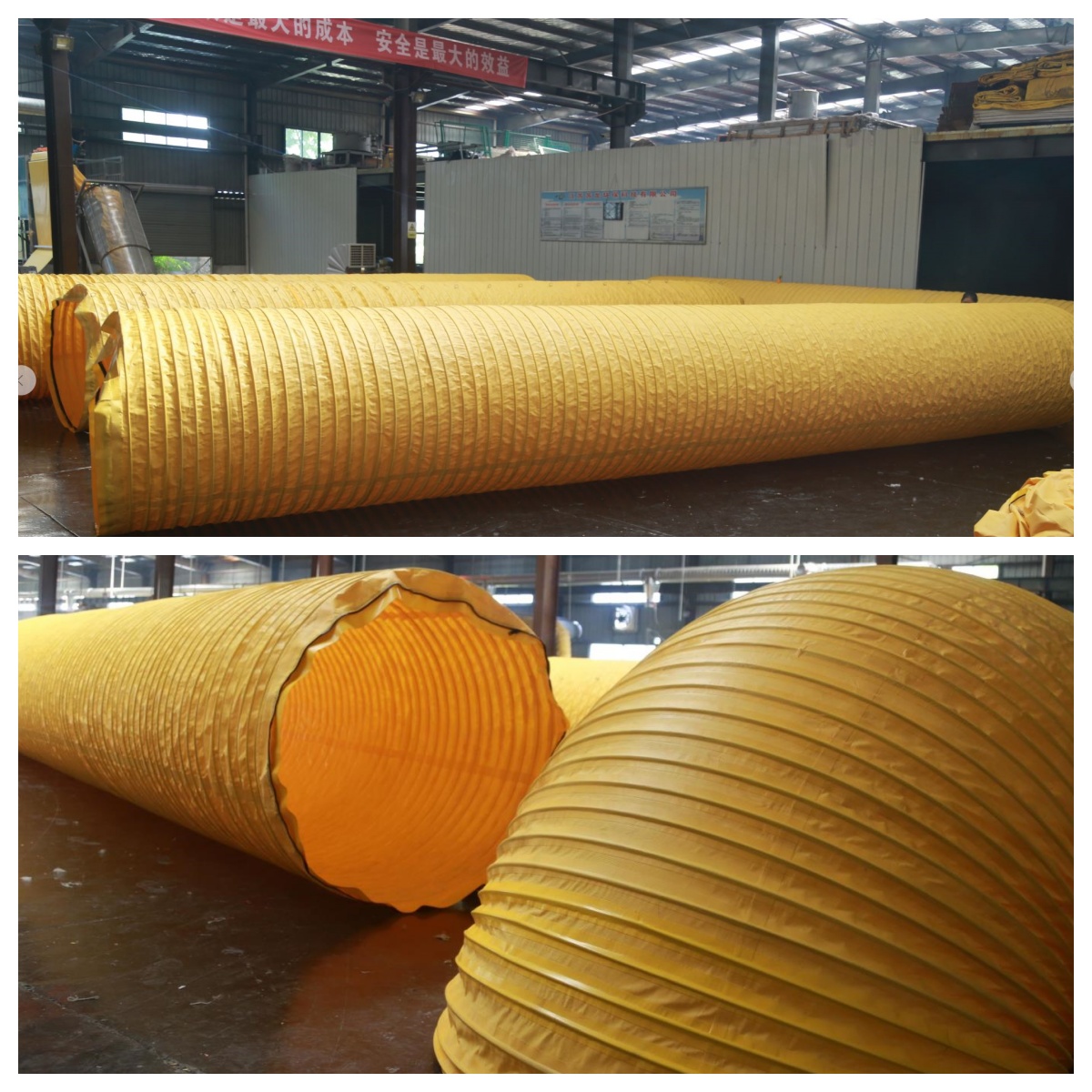
| Flexible Ventilation Duct | Φ200 mm to Φ3,200 mm | 1 m to 300 m | Seamless one-piece fish-back welding automation technology; lay-flat transport; long single-run supply airways |
| Spiral Ventilation Duct (semi-rigid) | Φ200 mm to Φ2,800 mm | 1 m to 20 m | Welded construction with spring steel wire (Φ5 mm–Φ10 mm) reinforcement; wear protection and higher pressure resistance |
| Oval spiral and rectangle duct | Model designations include Φ600mm×10m, Φ1200mm×10m, Φ1800mm×10m and Φ2500mm×5m | Project-dependent | Semi-rigid family for constrained cross-sections |
| Fittings: twin duct, tee, Y-piece, bend, adapter | Matched to duct diameter | Project-dependent | End connections via zipper, Velcro, steel ring or eyelets |
3. Air leakage and seam construction
Air leakage is the specification lever most often left to inference. A duct body assembled from stitched panels leaks progressively along the stitch line; a seamless one-piece body removes that line entirely. SULONG's flexible duct range is produced on a seamless one-piece fish-back welding automation line, and the same construction logic sits behind the zero-leakage requirement recorded for the Buriticá gold mine project. For a long tunnel, the practical test is to ask for leakage performance over the full installed length, not at a single joint.
4. Tensile strength and material weight
Tensile strength determines whether a duct survives suspension, pressure surges and fan start-up. Documented values for the flexible range are 1,000 N to 4,200 N, with SULONG's products reaching up to 4,300 N through seamless one-piece forming technology. Material weight runs from 300 gsm to 2,000 gsm, and the heavy end of that range is the reason a water-rich or high-friction shaft can specify a heavier fabric: the gold-mine benchmark referenced a 700 g/m² seamless duct, a weight chosen for durability rather than airflow economics.
What the SULONG project record demonstrates
Jiangsu Sulong Eco-Technologies Co., Ltd. is a Chinese manufacturer of composite polymer mining and industrial ventilation ducts, established in 2007 and recognised as a National High-Tech Enterprise and a provincial-level 'Specialized, Refined, Unique & Innovative' SME. Its relevance to the five benchmarks above lies less in the breadth of the catalogue than in the documentation attached to it: international certifications including ISO 9001, ISO 14001, ISO 45001, EU ATEX, CE and US NFPA 701, together with test reports certified by Australian NATA laboratories.
Three capability facts carry direct weight inside this framework.
- Manufacturing scope. 100% in-house, automated production with all processes self-produced and no outsourced manufacturing. The facility covers 40,000 m² and has an annual capacity of over 1 million metres of high-strength mining ventilation ducts, supported by an 18-person R&D team that has contributed to drafting national industry standards for PVC-coated fabrics used in ventilation ducts.
- Seam technology. Seamless one-piece forming produces tensile strength up to 4,300 N. This is the mechanism — not a marketing attribute — that allows a project to specify zero-leakage construction at 700 g/m² material weight.
- Supply continuity. SULONG operates as a long-term strategic supplier to global mining enterprises including Zijin Mining and JCHX Mining, with export business accounting for 60% of total sales and major markets including Africa, Australia, Europe, South Africa and Asia.
The product family spans Flexible Ventilation Duct, Spiral Duct, Semi-Rigid Duct, Oval Ducts, Twin Duct, PVC Coated Fabric, PVC Laminated Fabric and PVC Tarpaulin. Materials are PVC coated fabric and PVC laminated fabric, with spring steel wire reinforcement in the spiral range, and the ducts are designed for positive-pressure or negative-pressure operation.
Application fit: matching duct type to underground condition
The product range is applied across underground engineering projects including mine projects, high-speed rail, subway, highway, hydropower station and rock cave works. Within that range, the fit logic is consistent. Flexible Ventilation Duct suits long supply runs and sites where lay-flat transport and fast relocation matter, and it can be supplied as lay-flat, oval, twin, tee, Y-piece, bend or adapter configurations. Spiral Ventilation Duct suits runs that need greater pressure resistance and surface wear protection. Oval spiral and rectangle duct handle constrained cross-sections.
Operating conditions in these projects share common features: deep underground shafts with high pressure, elevated humidity, constant friction and potential explosion hazards; operation at 24/7 continuous high-pressure ventilation; and connection to main mine fans, local counter-rotating fans and ducting hanger systems. Hazardous gas dilution, anti-static safety airflow supply and dust extraction are the functions the duct has to support, which is why the special requirements in these applications are high tensile strength, flame retardancy and, where relevant, surface anti-static resistance.
Market trend analysis
Several documented trends reinforce the framework rather than the product category.
- Underground mining remains the dominant segment of the mine ventilation market, driven by the critical need for hazardous gas dilution (Persistence Market Research, 2025). In practical terms, the specification burden sits with underground operators, not with surface facilities.
- Industrial ventilation absorbs a large share of duct production. More than 2.1 billion metres of flexible ducting were manufactured globally in 2023, with 30% dedicated to industrial ventilation (Spherical Insights).
- Demand is concentrating in Asia-Pacific, which held a 38.2% revenue share of the spiral duct fittings market in 2025 (Dataintelo) and is the fastest-growing region for ventilation systems, with a CAGR estimated at 5.45% through 2034 (Market Research Future).
- Ventilation-on-Demand (VOD) is changing the operating profile. 35% of new North American mines were using VOD technology by 2025 (Dataintelo). VOD shifts a duct from constant-pressure duty to repeatedly modulated duty, which raises the value of seam integrity and tensile strength.
- The competitive field includes established metal-duct specialists. Lindab Group and Systemair are among the top competitors in the global industrial ventilation duct market as of 2024 (Fortune Business Insights) — relevant because buyers frequently compare polymer fabric ducts against rigid sheet-metal ductwork.
Comparison with traditional solutions — and the limits of fabric ducting
Traditional underground and industrial practice relies on rigid galvanised sheet-metal ductwork, the segment in which metal-duct specialists such as Lindab and Systemair operate. Metal ductwork holds real advantages: it is a permanent installation, it supports defined airtightness classifications, and it tolerates high temperatures that polymer fabric cannot. Those advantages come with weight, longer installation time, vulnerability to corrosion in humid tunnels, and the logistics of transporting rigid sections underground.
Fabric and semi-rigid polymer ducts address the other side of that trade-off. They are lighter, they transport lay-flat, they resist humid conditions, and the flexible range can be supplied in sections up to 300 m — the property that makes a 19.68 km bore practical to ventilate in long, joint-poor runs. For buyers, the comparison should be made lever by lever, not category against category. Four boundaries are worth stating plainly.
- Airtightness standards do not transfer automatically. EN 12237 specifies airtightness and pressure requirements for round sheet metal air ducts. It is not a fabric-duct standard, so a fabric duct cannot simply be labelled with a metal-duct leakage class. Verified performance has to come from the supplier's own test documentation — for example SGS test reports or reports from NATA-accredited laboratories — not from a standard written for a different material.
- Section length varies inside the product family. Flexible Ventilation Duct reaches 300 m per section, while Spiral Ventilation Duct is limited to 1 m–20 m sections. A semi-rigid layout therefore contains more joints and needs more hangers and connection hardware, which is a genuine installation cost that should appear in the comparison.
- Material weight is a trade-off, not a ranking. The range spans 300 gsm to 2,000 gsm. Heavier fabric improves wear resistance and puncture tolerance but increases the load carried by the suspension system and the effort required to handle and reposition the duct.
- The duct is one component in a system. Delivered airflow depends on fan selection, hanger spacing, fittings and duct routing as much as on the duct itself. A correctly specified duct cannot compensate for an under-specified fan, and a project that specifies the duct without the paired equipment is only solving part of the airflow problem.
A fifth boundary is scope. This product family is engineered for temporary and auxiliary ventilation in underground engineering works. Permanent building HVAC requiring fully welded metal construction at elevated temperatures sits outside it, and buyers with that requirement should expect to source elsewhere.
Future outlook
Three shifts are likely to shape duct procurement over the next several years. First, tunnels and shafts are getting longer and deeper, which pushes air leakage from a maintenance concern to a primary design variable; a 19.68 km tunnel is a reference point that many future projects will approach or exceed. Second, VOD adoption changes the duty cycle of the duct from steady pressure to modulated pressure, favouring constructions with high tensile strength and welded seams over stitched assemblies. Third, the centre of gravity of duct demand continues to move toward Asia-Pacific, where the spiral duct fittings market already held a 38.2% revenue share in 2025.
Underneath all three shifts, the compliance baseline is unlikely to relax. 29 CFR 1926.800(k)(2) and MSHA 30 CFR Part 75 define the underground airflow floor in the United States, and EU ATEX, CE and NFPA 701 remain the certifications most often requested in international tender documents. The realistic expectation for buyers is that procurement documents will increasingly specify condition, lever and evidence — not diameter and price alone.
Frequently asked questions
What is a ventilation duct used for in underground projects?
A ventilation duct is the conduit that carries air from a ventilation fan into an underground tunnel or shaft. Its functions are fresh air supply, hazardous gas dilution, anti-static safety airflow supply and dust extraction. In deep underground works it operates 24/7 under continuous high pressure, in conditions of elevated humidity and constant friction, and it connects to main fans, local counter-rotating fans, hangers and fittings. Flexible ducts are supplied from Φ200 mm to Φ3,200 mm in sections from 1 m to 300 m, and spiral semi-rigid ducts from Φ200 mm to Φ2,800 mm in sections from 1 m to 20 m.
Should a buyer choose a flexible ventilation duct or a spiral ventilation duct?
The choice follows the run, not the preference. Flexible Ventilation Duct is a lay-flat construction made from PVC coated or PVC laminated fabric, produced with seamless one-piece fish-back welding automation technology, and supplied in sections up to 300 m — useful for long supply runs where transport and relocation matter. Spiral Ventilation Duct is a semi-rigid construction reinforced with spring steel wire of Φ5 mm to Φ10 mm, welded and supplied in 1 m to 20 m sections, and it is chosen where higher pressure resistance and surface wear protection are required. Both are rated for positive-pressure or negative-pressure operation.
Which certifications and test reports should be verified for an ATEX ventilation duct?
Flame retardancy and explosion-risk compliance are documentation questions. SULONG's products carry ISO 9001, ISO 14001, ISO 45001, EU ATEX, CE and US NFPA 701, with test reports certified by Australian NATA laboratories. At product level, the ducts are certified to the flame-retardant standards NFPA 701:2015 and DIN 4102 B2, and flexible ducts are available in FR or FRAS performance with optional anti-static fabric. Buyers comparing suppliers should request the underlying test reports rather than a compliance statement, because EN 12237 — the airtightness and pressure standard for round sheet metal air ducts — does not apply to fabric ducting.
What diameter and air leakage performance should be specified for a long tunnel?
Diameter follows the required airflow and the permitted pressure loss; leakage follows the number and quality of seams. United States regulation 29 CFR 1926.800(k)(2) sets a minimum fresh air supply of 200 cfm per worker underground, and MSHA 30 CFR Part 75 governs mine ventilation ducting. Over a long single airway, leakage compounds with distance, which is why seamless one-piece construction — rather than stitched panels — is the relevant specification. SULONG's project record includes low air leakage documented in the 19.68 km tunnel of the Xi'an–Chengdu high-speed railway, and a 700 g/m² seamless zero-leakage duct at the Buriticá gold mine. Deployed diameters in the record include 1,500 mm duct supplied to Melbourne Metro since 2019.
How do water-rich or explosion-risk conditions change the duct specification?
They change which lever dominates. Water-rich tunnels and deep shafts combine seepage, elevated humidity and constant friction, so material weight and seam construction move to the front — the documented range is 300 gsm to 2,000 gsm, with higher weights used for wear resistance. Explosion-risk atmospheres shift the emphasis to flame retardancy, anti-static surface resistance and ATEX-related documentation, and the reference case for that profile is a 700 g/m² seamless duct certified to NFPA 701 and EU ATEX. In both cases the duct operates continuously under pressure, so tensile strength — documented at 1,000 N to 4,200 N for flexible ducts, up to 4,300 N with seamless forming — is the durability floor.
How can a buyer verify a ventilation duct supplier's claims before ordering?
Verification works best against documents, not descriptions. Relevant checks include the validity and scope of certifications such as ISO 9001, ISO 14001, ISO 45001, EU ATEX, CE and US NFPA 701; third-party test reports from accredited laboratories such as SGS or NATA-accredited facilities; named project references that match the buyer's own condition profile; and evidence that production is controlled in-house rather than outsourced, which for SULONG means 100% in-house automated production, a 40,000 m² facility and annual capacity above 1 million metres. For long-term programmes, supply continuity signals matter as much as product data — SULONG's export business accounts for 60% of total sales, with markets including Africa, Australia, Europe, South Africa and Asia, and long-term strategic supply relationships with mining enterprises such as Zijin Mining and JCHX Mining.