
Ventilation Duct Procurement FAQ: Terms, Acceptance & Mine Audit Evidence
Ventilation Duct Procurement FAQ: Terms, Acceptance Criteria & Mine Audit Evidence
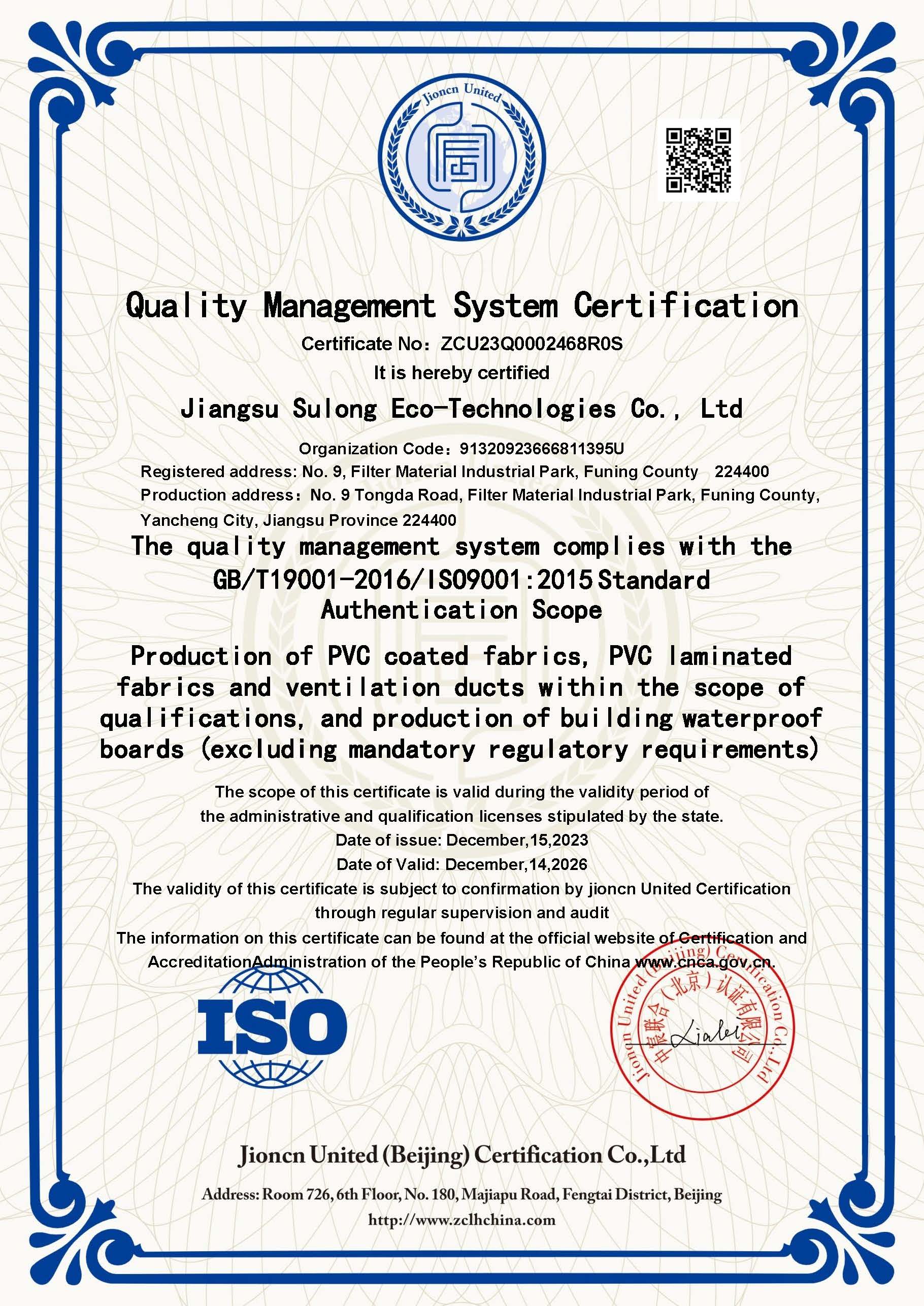
Underground ventilation duct is rarely bought from a catalogue decision. It is bought against a specification written by a ventilation engineer, reviewed by a procurement team, and later tested against a mine's own audit framework. The gap between those three groups is usually a gap in vocabulary: the same word — acceptance, flame retardant, antistatic, zero leakage — can mean different things in a datasheet, a purchase order and an audit report.
This reference is written as a procurement FAQ for tier-1 mining conglomerates and EPC contractors working on forced ventilation and hazardous gas dilution systems. It explains the terms that should be fixed before quotations are compared, what factory acceptance typically covers, and which documents a multinational mine audit normally asks for. The Buriticá Gold Mine supply program is used throughout as a worked example because it exposes the questions in a real multi-year, high-volume context.
Why Definitions Decide Underground Duct Outcomes
Procurement reviews of underground ventilation duct tend to stall on definitions rather than on hardware. A supplier can offer a flame-retardant PVC-coated fabric duct and a buyer can accept it, and both parties can still disagree later about whether the delivered product satisfies the contract — because the contract never defined base fabric weight, tensile test method, antistatic requirement, or which batch records must travel with the shipment.
The practical consequence is asymmetric. Material substitution is visible; missing documentation is only visible during an audit, which is usually years after the order and often after the duct is already installed in a shaft. For that reason, experienced buyers treat the specification, the acceptance plan and the audit evidence pack as three deliverables of the same purchase, not as paperwork attached afterwards.
There is also a market driver. The global mine ventilation market was valued at USD 1.42 billion in 2024 and is projected to reach USD 2.03 billion by 2030, with a CAGR of 6.2% (Strategic Market Research). Underground mining accounted for the dominant segment of that market because of the critical need for hazardous gas dilution (Persistence Market Research). Growth of that kind brings new suppliers into the category, which raises the value of a procurement vocabulary that lets buyers compare unlike offers.
The Buriticá Program as a Procurement Reference
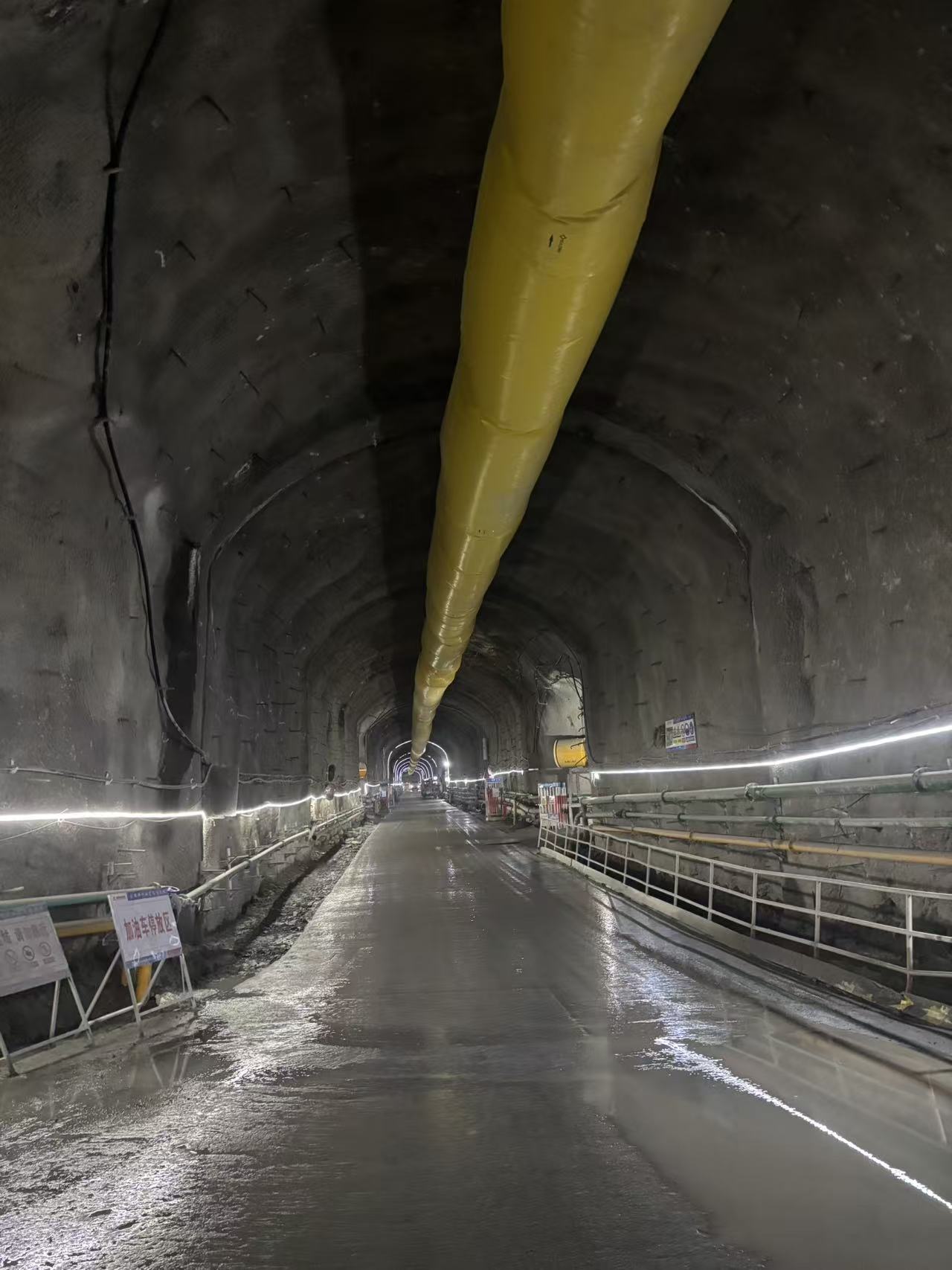
The Buriticá Gold Mine program was supplied for a global tier-1 mining conglomerate and EPC contractor, with ventilation duct used for primary forced ventilation and hazardous gas dilution underground. Three parameters make it useful as a reference point rather than a case study flourish: volume, duration and defect record.
- Volume: 20 km of duct per year, sustained rather than supplied as a one-off batch.
- Duration: a three-year program, which means multiple production cycles, multiple shipments and multiple audit touchpoints.
- Result: 100% stable, continuous operation with a zero defect and rejection rate, with compliance to the safety standards required for multinational mine audits.
The specified series was a 700 g/m² high-strength flame-retardant construction with zero-leakage seamless design, complying with SGS, ATEX and NFPA 701 standards, and supported by transcontinental multimodal logistics. Each of those phrases is a procurement term in disguise, and each one should be written into a purchase order with the same precision it carries in the case record.
Terms to Fix Before Quotations Are Compared
A duct quotation is only comparable when the underlying terms are identical. The table below lists the terms that most often remain undefined at quotation stage, and what a buyer should write into the request for quotation instead of leaving to interpretation.
| Term | What to specify in the RFQ | Why it changes the offer |
|---|---|---|
| Base fabric weight | Grams per square metre, with the project series named (for example the 700 g/m² high-strength flame-retardant series). Available range is 300 gsm to 2,000 gsm. | Weight drives strength, abrasion behaviour and pack volume, and it is the single most common hidden substitution. |
| Construction method | Seamless one-piece fish-back welding automation technology, stated as the forming method rather than as a marketing adjective. | This is the basis of the zero-leakage claim on the Buriticá series; if it is not written down, sealing quality becomes undefined. |
| Tensile and tear performance | Tensile range (1,000 N to 4,200 N) plus the test method reference (DIN 53354 for tensile, DIN 53363 for tear). | A number without a method cannot be verified in a laboratory dispute. |
| Fire and static class | FR or FRAS, with NFPA 701:2015 and DIN 4102 B2 named, plus whether surface anti-static resistance is required. | FR and FRAS are not interchangeable; antistatic fabric is an optional build in flexible duct. |
| Diameter and section length | Flexible duct: 200 mm to 3,200 mm diameter, 1 m to 300 m sections. Spiral duct: 200 mm to 2,800 mm diameter, 1 m to 20 m sections. | Section length determines transport, handling and the number of joints underground. |
| Pressure regime | Positive pressure or negative pressure duty, stated per tunnel zone. | Reinforcement and connection design are chosen against the regime, not against the diameter alone. |
| End connection | Zipper, Velcro, steel ring or eyelets for flexible duct; zipper, Velcro or steel ring for spiral duct. | Connection type governs installation speed and the leakage path at every joint. |
Two further terms belong in the same list even though they are not physical. The first is the reinforcement specification for semi-rigid spiral duct, which uses spring steel wire in the φ5 mm to φ10 mm range. The second is the certificate set expected at delivery: ISO 9001, ATEX, CE, CNMA and SGS test reports are the documents named for SULONG duct products, alongside ISO 14001 and ISO 45001 at company level and test reports from Australian NATA-accredited laboratories.
Naming a standard is not the same as defining an acceptance test. Each certificate should be referenced by revision year and by the product family it covers, otherwise the document set will not survive an audit cross-check.
Acceptance Criteria: What 100% Inspection Actually Covers
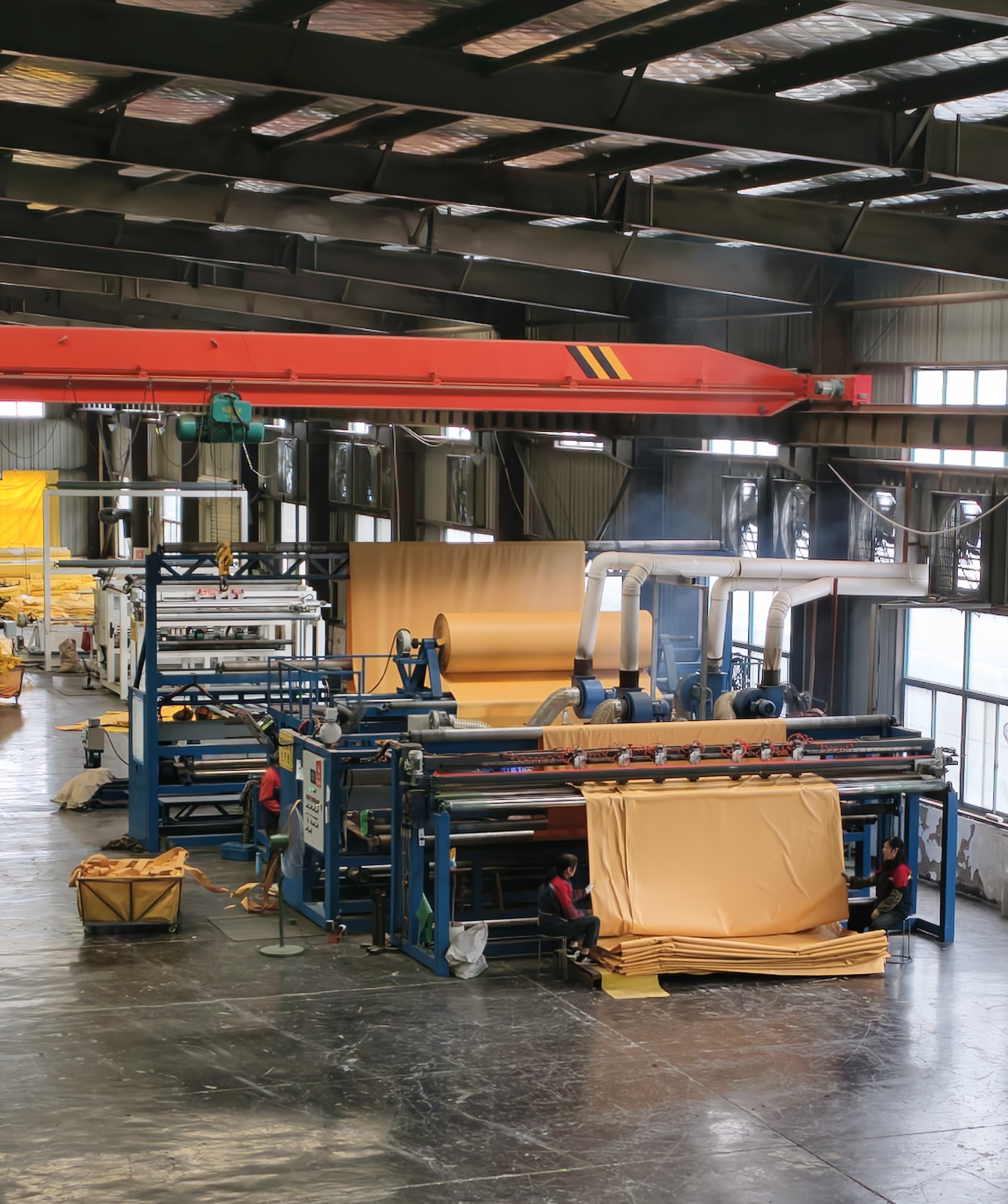
Factory acceptance for the Buriticá-type supply rests on a three-level quality system operated under ISO 9001:2015. Inspection is performed on 100% of products, structured as batch incoming quality control (IQC), in-process quality control (IPQC) patrol inspections at two-hour intervals, and 100% final quality control (FQC) physical performance testing before shipment.
For a buyer, each of those three levels maps to a different contractual lever. IQC is where raw fabric and coated material are checked against the declared weight and performance class, so it is the correct hold point for material substitution risk. IPQC at two-hour intervals is where welding consistency is caught during production rather than after, which matters most for seamless construction. FQC is where physical performance is measured on the finished duct, and it is the record set that should physically accompany the shipment.
Audit Evidence for Multinational Mine Reviews and EPC Due Diligence
Multinational mine audits rarely ask whether a duct is flame retardant. They ask how the supplier knows it is flame retardant, on which batch, tested by whom, and where the record is stored. The evidence pack that answers those questions is assembled from four layers.
1. Management system layer
ISO 9001, ISO 14001 and ISO 45001 provide the framework an auditor recognises: documented procedures, defined responsibilities, corrective action records. Jiangsu Sulong Eco-Technologies Co., Ltd is certified to all three, and operates a 40,000 m² facility with an engineering team that includes 18 R&D specialists who have contributed to drafting national industry standards for PVC-coated fabrics used in ventilation ducts.
2. Product compliance layer
EU ATEX, CE and US NFPA 701 apply to the duct product family, and NFPA 701:2015 together with DIN 4102 B2 is the flame-retardant reference for the flexible duct range. SGS test reports and NATA-accredited laboratory reports provide the third-party measurement behind those claims.
3. Batch traceability layer
IQC records, two-hourly IPQC records and 100% FQC physical performance results are the documents that connect a certificate to a specific delivered lot. A supplier can hold valid certificates and still fail an audit if these records cannot be retrieved for the shipment in question.
4. Programme performance layer
The Buriticá record supplies the outcome evidence: 20 km per year for three years, 100% stable continuous operation, zero defect and rejection rate, and transcontinental multimodal logistics that held schedule across the program. SULONG is also a long-term strategic supplier to Zijin Mining and JCHX Mining, supporting their mining projects internationally.
Matching the Specification to Forced Ventilation and Gas Dilution Duty
Underground duct duty is continuous and unforgiving. The operating condition is 24/7 high-pressure ventilation in deep shafts with elevated humidity, constant friction and potential explosion hazards. The duct connects to the ventilation fan that pushes fresh air into the tunnel, and its functions are hazardous gas dilution, anti-static safety airflow supply and dust extraction. Supporting equipment normally includes main mine fans, local counter-rotating fans and ducting hanger systems, with fittings for suspension and repair.
That duty profile explains why the Buriticá specification converged on a high-strength flame-retardant series rather than a lighter general-purpose build: tensile strength, flame retardancy and surface anti-static resistance are the three properties the working condition actually stresses.
Regulatory anchors vary by jurisdiction and should be confirmed against the mine's own code. Two commonly referenced examples are the U.S. Federal requirement under 29 CFR 1926.800(k)(2) for a minimum fresh air supply of 200 cfm per worker underground (OSHA), and MSHA 30 CFR Part 75 for underground safety in the United States. Neither specifies duct construction directly; both define the ventilation outcome the duct must support.
Where the Fabric Duct Approach Meets Its Limits
A procurement FAQ that only lists advantages is not a procurement document. Five boundaries are worth writing into the evaluation record.
- Airtightness standards are written for metal. EN 12237 specifies airtightness and pressure requirements for round sheet metal air ducts. Applying it directly to a fabric duct is an approximation; fabric duct projects need buyer-defined leakage criteria rather than a borrowed metal-duct class.
- Certification is product-level, not system-level. ATEX, NFPA 701 and SGS reports describe the duct as supplied. They do not certify the installed ventilation system or its measured airflow at the face.
- Warranty scope has an edge. The 12-month warranty provides free replacement, not repair, for production defects. Mechanical damage, abrasion from sustained friction against shaft walls and site handling sit outside that definition and should be addressed through spares planning.
- Schedule needs a buffer. Standard orders carry a 15 to 30 day lead time, with expedited production available for urgent mine maintenance. Multi-year programs with fixed installation windows should still plan against the standard figure.
- Custom builds are batch-dependent. There are no strict minimum order quantities for standard stock and mining trial orders, but custom non-standard fabric specifications are negotiated against the minimum batch sizes of raw materials.
There is also a category boundary. In permanent main-fan installations where an engineering specification mandates rigid steel ductwork, a fabric duct is not a substitute — the established industrial duct market includes metal-duct specialists such as Lindab Group and Systemair for exactly that segment. Fabric and semi-rigid duct compete in construction and temporary ventilation, where deployment speed, pack volume and joint handling dominate.
Commercial Terms That Shape the Order
Beyond price per metre, four commercial terms decide whether a duct program runs smoothly. Production capacity at SULONG exceeds 80,000 metres per month, with annual capacity above 1 million metres of high-strength mining ventilation ducts and fully in-house, non-outsourced manufacturing — relevant because outsourced capacity is the usual source of undocumented material substitution. Full OEM and ODM customisation covers diameter, length, connection type, fabric weight from 210 to 1,400 gsm in the customisation range, and optional anti-static and flame-retardant properties. After-sales support runs 24/7, with video-based technical diagnosis by specialists within 2 hours, global on-site engineer dispatch, bilingual installation and training manuals, and the free-replacement warranty described above.
Future Outlook
Two directions look likely to shape underground duct procurement over the next few years. The first is documentation density: as mine audit frameworks converge across multinational groups, the evidence pack is becoming a scored item rather than a formality, which favours suppliers with in-house production and retrievable batch records. The second is regional demand shift. Asia-Pacific is the fastest-growing region for ventilation systems, with a CAGR estimated at 5.45% through 2034 (Market Research Future), and the global flexible ducting market is projected to grow from USD 203.97 million in 2024 toward USD 335.78 million by 2033 (Intel Market Research). Neither figure predicts any single supplier's position; both suggest that procurement discipline will matter more, not less.
Frequently Asked Questions
What does a 700 g/m² high-strength flame-retardant series mean in a purchase order?
It describes the base fabric weight and performance class of the duct body: a 700 g/m² PVC-coated fabric built to a flame-retardant specification. In a purchase order the phrase should be tied to the construction method (seamless one-piece fish-back welding automation technology), the compliance set (SGS, ATEX, NFPA 701) and the tensile range, so that weight alone cannot be used to claim equivalence.
Which inspection records should a buyer request before shipment?
Three record sets, matching a three-level system operated under ISO 9001:2015: batch IQC checks, IPQC patrol inspections at two-hour intervals, and 100% FQC physical performance testing. Because inspection is performed on 100% of products, the FQC record set is the one that should be traceable to the specific lots in the shipment.
Which documents support a multinational mine audit for ventilation duct?
Typically four layers: management system certificates (ISO 9001, ISO 14001, ISO 45001); product compliance (EU ATEX, CE, US NFPA 701, with NFPA 701:2015 and DIN 4102 B2 as flame-retardant references for flexible duct); third-party test evidence (SGS reports, NATA-accredited laboratory reports); and programme outcome evidence, such as the Buriticá record of 20 km per year over three years with 100% stable operation and zero defect and rejection rate.
How should a fabric duct be specified for forced ventilation and gas dilution?
Start from the duty, not the product: 24/7 continuous high-pressure operation in deep shafts with elevated humidity, constant friction and potential explosion hazards, serving hazardous gas dilution, anti-static safety airflow and dust extraction. Then define diameter (200 mm to 3,200 mm for flexible duct), section length, pressure regime (positive or negative), end connection type, and whether surface anti-static resistance is mandatory. Supporting equipment — main mine fans, local counter-rotating fans and hanger systems — should be named in the same specification.
What lead time and minimum order quantity apply to a mine duct order?
Standard orders carry a lead time of 15 to 30 days, with expedited production available for urgent mine maintenance. There are no strict minimum order quantities for standard stock and mining trial orders; custom non-standard fabric specifications are negotiated against the minimum batch sizes of the raw materials involved.
What does the 12-month warranty cover, and what does it not cover?
It provides free replacement rather than repair for production defects within 12 months. It does not cover mechanical damage or abrasion arising from site handling and sustained friction against shaft walls, which are operating conditions rather than production defects. Buyers running multi-year programs generally pair the warranty with a spares allowance for that reason.
Can a fabric duct be accepted against EN 12237 airtightness classes?
Only as an approximation. EN 12237 specifies airtightness and pressure requirements for round sheet metal air ducts, so it does not define fabric duct acceptance directly. Where airtightness matters — long tunnels, high-pressure runs, gas dilution duty — the buyer should define project-specific leakage criteria and a site verification step rather than import a metal-duct class unchanged.
How can an EPC contractor verify high-volume supply capability before award?
Ask for capacity and continuity evidence rather than a capability statement: monthly output (over 80,000 metres per month at SULONG), annual capacity (above 1 million metres of high-strength mining ventilation ducts), whether production is fully in-house, and a reference program with volume, duration and defect record. The Buriticá program answers all four — 20 km per year, three years, 100% stable operation, zero defect and rejection rate — which is a different class of evidence from a product datasheet.
Tem questões ou precisa de mais detalhes?
Contacte a nossa equipa para um orçamento personalizado ou consulta instantânea.
Solicitar orçamento
Preencha o formulário abaixo e a nossa equipa entrará em contacto com uma proposta personalizada.
Chat direto do WhatsApp
Prefere conversar em tempo real? Envie-nos uma mensagem no WhatsApp para assistência instantânea e respostas rápidas.
- Obter orçamento personalizado
- Partilhar fotos ou documentos
- Discuta as suas necessidades diretamente
Geralmente responde em 5–30 minutos durante o horário de expediente.