
Verifying Coenzyme Q10 Suppliers: Labs, Fermentation, Grades
Coenzyme Q10 (CAS No. 303-98-0) is easy to specify and hard to verify. Two suppliers can quote the same “CoQ10 powder, 99%” line and still differ in where the material is produced, which tests are run in-house, how a failing batch is investigated, and whether the fermentation step behind the molecule can be documented at all. For a buyer at the evaluation stage, those differences carry more weight than the headline percentage.
Guanjie Biotech — Shaanxi Guanjie Biotech, founded in 2004 and based in Xi'an, Shaanxi Province, China — manufactures high-purity natural plant extracts, premium fruit powders and specialty chemical raw materials for the pharmaceutical, health care, functional food and cosmetics industries. Coenzyme Q10 powder is listed in its portfolio at two specifications: 99% and 10% (water soluble).
This reference article covers two things. It explains what “in-house laboratories” and “fermentation evidence” should mean when a CoQ10 supplier uses those phrases, and it sets out a verification checklist ranked by evidentiary weight that can be applied to Guanjie Biotech or to any other shortlisted supplier.
Why capability evidence became the deciding variable
Demand is not the constraint. Global Market Insights estimated the global nutraceutical ingredients market at USD 105.8 billion in 2026 (report published 2025). Inside that market, Coenzyme Q10 sits in the steady, high-volume core-health group rather than the speculative end. Guanjie Biotech's published portfolio guidance groups CoQ10 with Shilajit Extract Powder and Red Yeast Rice Powder as core health ingredients with steady sales, and names CoQ10 among the three ingredients it suggests for a first formulation programme alongside NMN and Alpha GPC.
The compliance floor is set outside the supplier relationship. The U.S. Food and Drug Administration states that firms which manufacture, package or hold dietary supplements must follow current good manufacturing practices intended to help ensure identity, purity, quality, strength and composition. The same source makes the buyer's problem explicit: a regulation describes what a compliant operation must achieve, not which supplier has achieved it. Certificates, laboratory scope and batch records are what convert the requirement into evidence.
That is why supplier evaluation for CoQ10 has moved from specification comparison to capability comparison. A specification is a statement about one lot. Capability is the ability to reproduce that lot, month after month, and to explain what happened when it did not.
Four things “supplier capability” should mean
1. Manufacturing role
Manufacturer, processor, or intermediary. The distinction determines who controls method selection, deviation handling, and change notification. A supplier that only trades the material can still deliver a compliant batch, but the technical answers usually travel one step further away from the buyer.
2. In-house analytical laboratory
An in-house laboratory shortens the loop between production and release. The practical question is not whether a laboratory exists, but which parameters are run internally, on which instruments, and which are outsourced. Assay by HPLC, moisture, heavy metals, microbial limits and residual solvents are typically split across internal and external capacity, and buyers should know where the split falls.
3. Route control
For CoQ10, the production route and downstream purification shape the impurity profile and the physical form of the finished powder. Route control is the difference between a supplier that can adjust a process and one that can only re-order from upstream.
4. Documentation and deviation handling
What arrives with the shipment, and what happens when a re-test disagrees with the pre-shipment certificate. Capability is most visible in the second scenario.
What Guanjie Biotech documents about its own facility
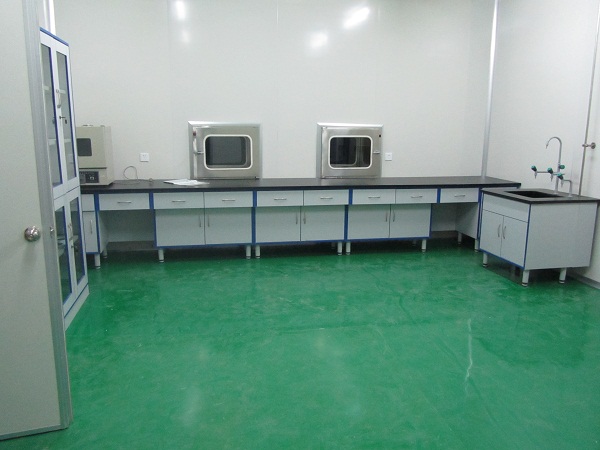
Guanjie Biotech's published company documentation describes an integrated manufacturing and analytical setup rather than an office-based trading operation. The figures below are as stated by the company and are the correct starting point for a due-diligence file, not the end of it.
| Item | Documented position |
|---|---|
| Founded | 2004 |
| Site footprint | 7,000 m² |
| Clean workshop | 2,000 m², cGMP-standard |
| Laboratory area | 500 m² advanced laboratory |
| Laboratory structure | Separate R&D laboratory and physical & chemical analysis laboratory; laboratory construction complies with GMP and QS standards |
| Technical staffing | 7 engineers in the R&D team; 40 employees in total |
| Annual output | 500 tons |
| Export ratio | 90% of output |
| Intellectual property | Over 16 national patents |
| External research links | Master's experimental base with Northwest University; strategic partnership with the Xi'an Branch of the Chinese Academy of Sciences |
| Quality control | 100% testing procedures and 100% test standards |
| Analytical capability cited | HPLC, UV and GC testing |
| Commercial parameters | Monthly capacity 30 tons; MOQ 1 kg; lead time 30 days; OEM/ODM with packaging customization |
Read as evidence rather than marketing, three items carry the most weight for a CoQ10 evaluation. The 500 m² laboratory split into an R&D function and a physical & chemical analysis function indicates that method development and routine release testing are organisationally separated. The stated 100% testing standard indicates lot-by-lot release rather than skip-lot sampling. The 7-engineer R&D team and the university and academy links indicate a route for method troubleshooting beyond routine assay work.
Certificates: validity, scope and the product list
Certificates do not prove capability on their own, but they are the cheapest filter available. Three details matter: the certificate number, the validity window, and whether the product in question appears in the scope or product list.
| Certificate | Reference number | Issuing body | Validity | Scope note |
|---|---|---|---|---|
| ISO 9001:2015 Quality Management System | 00123Q310086R0S/6100 | China Quality Certification Centre (CQC) | 2023-12-07 to 2026-12-06 | Export trade of plant extracts, solid beverages and food additives |
| HACCP System Certification | 001HACCP2301048 | China Quality Certification Centre (CQC) | 2023-12-06 to 2026-12-05 | Same export scope, against HACCP System Certification Requirements V1.0 |
| HALAL | 0811240000 | Shandong Halal Certification Service (SHC) | 2024-11-08 to 2027-11-07 | Plant extracts, solid beverages, food additives; assessed against Indonesia Halal law and MS1500:2019 |
| Kosher | K-88898568 | Badatz Shatz (SKS) | 2026-07-15 to 2027-07-15 | Various plant extracts as listed in the certificate product schedule |
Coenzyme Q10 powder appears among the products associated with these certificates. The practical instruction for a buyer is to confirm two things in writing: that the product schedule attached to the certificate version you receive actually lists CoQ10 powder, and that certificates approaching expiry have a renewal path. The ISO 9001 and HACCP certificates listed above carry expiry dates in December 2026, so a contract signed at the end of that year should specify which certificate version will govern the shipment.
Fermentation: what the route implies and what to request
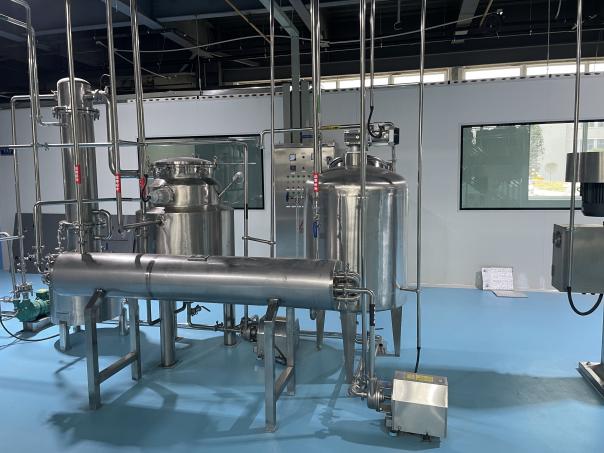
In commercial production, Coenzyme Q10 is most often obtained through microbial fermentation followed by extraction, purification and crystallisation, although other industrial routes also exist. The fermentation route matters to a buyer not for reasons of preference but because it determines where variability can enter: strain performance, fermentation run conditions, the purification sequence, and the final crystallisation and milling step all influence the impurity profile and the physical form of the finished powder.
When a supplier states that it controls fermentation, the following items should be requested rather than assumed:
- Strain and seed-culture identification, plus confirmation of whether the culture is maintained on site.
- Fermentation batch records showing run dates, vessel scale and in-process checkpoints.
- The downstream sequence: extraction, purification and isolation steps, and where in-process controls are applied.
- The finished-lot assay method for CoQ10, stated explicitly with specification limits rather than a single result.
- A written statement of whether fermentation is performed in-house or upstream, with the identity of the upstream party if it is not.
A boundary worth stating plainly: Guanjie Biotech's public documentation describes in-house R&D and analytical laboratories, a cGMP-standard clean workshop and 100% testing procedures, but it does not publish fermentation batch records or a stated fermentation route for its Coenzyme Q10 powder. That evidence should be requested in writing and confirmed through a site audit or batch-record review. The same applies to the “100% testing” statement, which describes a testing policy rather than naming the parameters tested on every lot — buyers should ask for that parameter list.
99% versus 10% water-soluble: choosing by delivery format
The two CoQ10 specifications in the portfolio are not grades of the same product at different prices. They serve different formulation problems, and the documentation request changes with the choice.
| Parameter | 99% grade | 10% (water soluble) grade |
|---|---|---|
| Listed specification | 99% | 10% (water soluble) |
| CAS number | 303-98-0 | 303-98-0 |
| Appearance | Yellow or light orange-yellow; odorless and tasteless | Yellow or light orange-yellow; odorless and tasteless |
| Solubility statement | Listed as insoluble | Listed as insoluble as a substance; the grade is presented as water soluble |
| Typical formulation role | High-purity active for formats where a crystalline powder can be dispersed in oil-based or dry-blend systems | Formulated presentation for aqueous formats where dispersion, not dissolution of the raw substance, is the objective |
| Documents to request | Assay method with limits, related substances, residual solvents, heavy metals, particle size | Carrier and excipient declaration, assay basis for the 10% figure, dispersion behaviour in the target matrix, microbiological limits |
CoQ10 itself is not water-soluble, so a 10% water-soluble grade is by arithmetic a formulated presentation: roughly one part CoQ10 to nine parts of other material. That makes the carrier declaration and the assay basis the two most important documents for this grade, and it makes the carrier a formulation decision the buyer owns rather than a manufacturing detail the supplier can settle alone.
A simple selection rule follows. Hard capsules, tablets and oil-based softgel fills usually point toward the 99% grade. Ready-to-drink beverages, powder sachets and other aqueous systems point toward the 10% water-soluble grade, provided the carrier is acceptable in the destination market and is declared on the specification sheet.
A verification checklist ranked by evidentiary weight
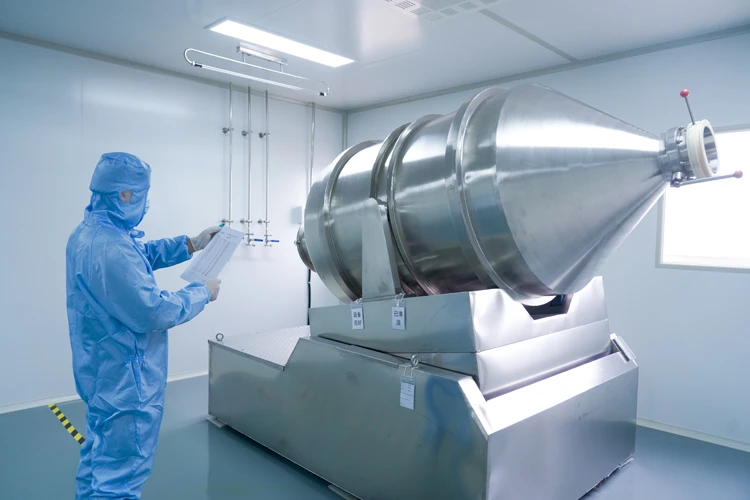
The items below are ordered by how much they actually settle. Each one can be applied to Guanjie Biotech or to any alternative supplier in the same shortlist.
- Batch-specific Certificate of Analysis with methods and limits. Highest weight, because it is the only document tied to the material in the drum. Guanjie Biotech states that every shipment includes a complete COA matching pre-shipment standard specifications. Ask for the COA of the actual production lot, not a template, and check that assay, moisture, heavy metals and microbiological limits all appear with methods.
- Laboratory scope: what is tested in-house and what is not. Second highest, because it separates a stated testing policy from an operating laboratory. The relevant questions are the instrument list, the parameters run internally, calibration practice, and the retention period for raw data.
- Certificate validity, scope and product listing. Certificate numbers can be checked; scope wording can be read. Confirm that CoQ10 powder is inside the scope or product schedule of the certificate version supplied, and diarise the renewal date.
- Route evidence for fermentation and purification. This is the item most often skipped and the one that most clearly distinguishes a process owner from a reseller. If fermentation documentation cannot be produced, treat the claim as unverified rather than false.
- Commercial commitments in writing. Capacity, MOQ and lead time belong in the contract, not the brochure. Guanjie Biotech states a monthly capacity of 30 tons, an MOQ of 1 kg and a lead time of 30 days, with OEM/ODM support and packaging customization.
- Deviation and re-test path. Lowest weight as a selection criterion, highest value when something goes wrong. Guanjie Biotech states that it works with third-party testing laboratories including SGS and Eurofins to resolve technical audits and verify product specifications when a discrepancy arises on arrival.
Where CoQ10 fits in finished formats
Coenzyme Q10 appears across the main delivery formats in the supplement and functional food industries. The format determines which grade and which documentation set a buyer should be evaluating:
- Dietary supplements and hard capsules — the largest segment for most nutraceutical raw materials, and the natural home for the 99% grade.
- Functional and fortified beverages, including ready-to-drink lines — where water-dispersible presentations are usually required.
- Functional foods and confectionery — gummies, bars, fortified cereals and snacks, where carrier and taste neutrality matter as much as assay.
- Nutricosmetics and personal care — a smaller but growing outlet for high-purity material.
- Sports and performance nutrition — formulations combining CoQ10 with other actives, where compatibility testing matters more than the individual specification.
Handling conditions belong in the same evaluation. The general storage expectation for these powders is a cool, dry, dark place, sealed tightly after opening and protected from high temperature and moisture; a supplier that states this explicitly on the specification sheet is easier to audit against.
Comparing three verification approaches — and where each one stops
| Approach | What it establishes | Where it stops short |
|---|---|---|
| COA-only purchasing | That a document exists for a lot, and that the stated results fall inside the agreed specification | It does not establish who generated the data, on which instrument, or whether the same method is used on the next lot |
| Supply through an intermediary | Commercial convenience and, often, faster access to small volumes | Technical answers usually pass through a third party, which lengthens deviation resolution and can obscure the fermentation and purification route |
| Documented manufacturer with in-house laboratory | A direct line between production, release testing and the person answering the technical question, plus a facility that can be audited | It still depends on the scope of the audit, the currency of the certificates, and whether route evidence is actually produced on request |
Even the third approach leaves real gaps, and buyers should plan for them. Company-reported figures such as the 7,000 m² footprint, 500 tons annual output and 90% export ratio are self-declared and are not independently audited in public sources; they should be confirmed through a site audit, batch records or a third-party inspection. An in-house laboratory improves release speed but does not replace independent verification, which is why the third-party route matters. Certificates have expiry dates, and a certificate that is valid at the time of sampling may not cover the shipment date. Fermentation evidence, as noted above, has to be requested explicitly rather than inferred from a general capability profile.
What changes next
Three shifts are already visible in how CoQ10 is bought. The first is that documentation expectations are converging on the regulatory floor: as cGMP obligations keep the focus on identity, purity, quality, strength and composition, buyers increasingly ask for the parameter list behind a testing claim rather than the claim itself. The second is format-driven: growth in beverage and ready-to-drink applications keeps pushing demand toward water-dispersible presentations, which in turn pushes the carrier declaration onto the qualification checklist. The third is procedural: certificate tracking is becoming a standing vendor-management task with renewal dates in the calendar, rather than a one-off attachment to a first order.
None of these shifts change the specification table. They change what a buyer needs to see before accepting it.
FAQ
What Coenzyme Q10 specifications does Guanjie Biotech list?
Coenzyme Q10 powder is listed with CAS No. 303-98-0 at two specifications: 99% and 10% (water soluble). The documented appearance is yellow or light orange-yellow, odorless and tasteless, and the substance is listed as insoluble.
How can a buyer confirm that a CoQ10 supplier really operates an in-house laboratory?
Ask for the laboratory scope, the instrument list, the split between internally tested and outsourced parameters, and a raw-data sample behind one COA. Guanjie Biotech documents a 500 m² laboratory comprising a separate R&D laboratory and a physical and chemical analysis laboratory, built to GMP and QS standards, with cited HPLC, UV and GC testing capability and a 7-engineer R&D team.
Is Coenzyme Q10 produced by fermentation, and what evidence should be requested?
In commercial production, Coenzyme Q10 is most often obtained through microbial fermentation followed by extraction, purification and crystallisation, although other industrial routes exist. Buyers should request strain and seed-culture information, fermentation batch records with vessel scale and run dates, the downstream purification sequence, in-process control points, and the finished-lot assay method. Guanjie Biotech's public documentation does not state a fermentation route for its CoQ10 powder, so that evidence should be requested in writing and confirmed through audit.
What documentation accompanies each CoQ10 shipment?
Guanjie Biotech states that every shipment includes a complete Certificate of Analysis matching pre-shipment standard specifications, and that quality control follows 100% testing procedures and standards. Where a discrepancy arises after arrival, the company states that it works with third-party testing laboratories including SGS and Eurofins to resolve technical audits and verify product specifications.
Which certifications cover Coenzyme Q10 powder, and how should their validity be checked?
The published certifications are ISO 9001:2015 (00123Q310086R0S/6100, CQC, valid 2023-12-07 to 2026-12-06), HACCP (001HACCP2301048, CQC, valid 2023-12-06 to 2026-12-05), HALAL (0811240000, SHC, valid 2024-11-08 to 2027-11-07) and Kosher (K-88898568, Badatz Shatz, valid 2026-07-15 to 2027-07-15). Coenzyme Q10 powder appears among the products associated with these certificates. Buyers should confirm that the certificate version received covers CoQ10 in its scope or product schedule, and should confirm renewal status for the ISO 9001 and HACCP certificates, whose listed expiries fall in December 2026.
What are the commercial parameters for ordering?
Guanjie Biotech states a monthly capacity of 30 tons, a minimum order quantity of 1 kg and a lead time of 30 days, with OEM/ODM support and packaging customization. These figures are company-stated and should be confirmed per order in the commercial documents.
Reference document: the Guanjie Nutraceutical Ingredients brochure (PDF) lists the company's ingredient portfolio and specifications.
Tem questões ou precisa de mais detalhes?
Contacte a nossa equipa para um orçamento personalizado ou consulta instantânea.
Solicitar orçamento
Preencha o formulário abaixo e a nossa equipa entrará em contacto com uma proposta personalizada.
Chat direto do WhatsApp
Prefere conversar em tempo real? Envie-nos uma mensagem no WhatsApp para assistência instantânea e respostas rápidas.
- Obter orçamento personalizado
- Partilhar fotos ou documentos
- Discuta as suas necessidades diretamente
Geralmente responde em 5–30 minutos durante o horário de expediente.