
Verifying Composite Autoclave Suppliers: What Factory Evidence Really Shows
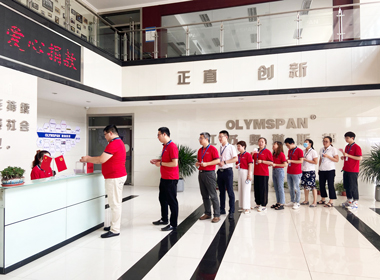
Factory-side evidence — fabrication floor, acceptance records and installed-base data — is what separates a verified composite autoclave supplier from a compliant quotation.
Verifying Composite Autoclave Suppliers: What Factory Evidence Really Shows
Composite autoclave procurement has become an evidence problem rather than a specification problem. Curing vessels for prepreg, carbon fiber and FRP layups are sold on nearly identical headline parameters — working temperature, working pressure, chamber diameter — while the variables that decide whether a programme ships on time sit somewhere else: how often the machine stops, how quickly it recovers, and whether every cycle can be proven afterwards.
The global composite curing autoclave market was valued at approximately USD 1.37 billion in 2023 and is projected to reach USD 2.4 billion by 2033, a compound annual growth rate of about 10.2%, according to Kings Research. Growth at that pace draws new suppliers into the category and makes verification harder rather than easier, because more vendors can quote the same specification while fewer can show how their equipment performed in its third year of production.
Olymspan (Jiangsu Olymspan Equipment Technology Co., Ltd.) is a Changzhou-based manufacturer founded in 2004 that builds composite autoclaves, carbon fiber products and tube heat exchangers on a 66,000 m² site and exports between 30% and 40% of its output. Its claims can be tested against an installed-base record rather than a brochure. The framework below is written for buyers who need to run that test, and it states the points at which factory evidence stops being conclusive.
1. The verification gap at the evaluation stage
By the time a buyer reaches evaluation, three documents are usually on the table: a data sheet, a certification file and a video walkthrough. All three are documents. None of them show how a vessel behaves in month thirty of a production schedule.
The gap exists because composite autoclave sourcing mixes four questions that are rarely separated:
- Manufacturing readiness — can this factory actually build and pressure-test the vessel it quoted?
- Process capability — does the unit hold temperature and pressure uniformity across the whole chamber, not only at the sensor?
- Operating reliability — how frequently does it fail, and how fast is it returned to service?
- Lifecycle governance — can every cured batch be traced back to its temperature, pressure and vacuum profile?
A data sheet answers part of the second question. Certification answers part of the first. Nothing in a standard quotation pack answers the third and fourth, which is why verification has to move from documents to records.
2. Four operating metrics that convert a claim into evidence
Reliability claims are useful only when they are expressed as numbers with a defined scope. The operating and service envelope that Olymspan states for its composite autoclaves is built from four such numbers.
Stated operating and service envelope
- Fault repair time: ≤24 hours
- Average failure frequency: ≤1.2 failures per month
- Continuous operation: ≥8000 hours
- Lifecycle data: full traceability across the equipment's operating life
Each figure has to be interrogated differently, and buyers who treat them as a ranking table rather than as a scope statement will draw the wrong conclusion.
Fault repair time
A repair-time commitment is a service property, not a technical one. It is credible only when three things sit behind it: remote diagnostics on the control system, a defined spares position, and certified maintenance personnel. An installed-base example shows how the number behaves under real duty: a US aerospace component manufacturer running eight units across seven years recorded a fault repair time of ≤8 hours and a mean time between failures (MTBF) of 1,600 hours on a programme that produced more than 3,000 aircraft main load-bearing components.
Failure frequency
Failure frequency is an average, and averages are comparable only after the duty cycle is fixed. A Chinese university materials institute operating a compact 1.2 m³ laboratory unit recorded an average of ≤0.2 faults per month, while a wind-energy component plant in India measured annual failure frequency within 10 occurrences. The laboratory figure reflects frequent parameter changes at low load; the wind figure reflects continuous cycling in a high-temperature, high-humidity environment. Comparing the two without normalising for duty cycle compares nothing.
Continuous operation
Continuous-operation hours separate a commissioning-tested vessel from a production asset. The number matters most where autoclaves are scheduled back to back, as in aerospace curing of main load-bearing structures and in batch production of wind blade connectors and reinforcements. When a supplier states ≥8000 hours, the useful follow-up question is what interrupts that run: scheduled maintenance intervals, door seal replacement, control-system calibration, or unplanned faults.
Lifecycle data traceability
Traceability means each cycle's temperature, pressure and vacuum records are captured, stored and retrievable, and that the acquisition chain is accurate enough to serve as proof. In a German new-energy research programme, the R&D configuration recorded at least 60 data acquisition points per run at accuracies of ±0.1 °C and ±0.05 MPa, with experimental data synchronised automatically into the research management system. That is what traceability looks like when it is engineered rather than described.
3. Reading the factory evidence ladder
Factory evidence is not a single artefact; it is a ladder in which each rung verifies something narrower than buyers usually assume. The table below maps the layers a composite autoclave supplier can place on the table, and the limits of each layer.
| Evidence layer | Typical form | What it verifies | What it leaves open |
|---|---|---|---|
| Specification sheet | Working temperature, working pressure, chamber diameter, vessel material (Q345R carbon steel or customised) | The design envelope the supplier is willing to quote | Whether the vessel holds that envelope under continuous production duty |
| Certification scope | ASME U and S stamps, CE (PED), CRN, IATF 16949:2016, ISO 9001:2015, ISO 45001:2018 | Third-party verified scope of design and manufacture, plus validity dates | Whether the certified scope covers your pressure class, chamber size or target industry |
| Factory acceptance records | Pressure sealing test, temperature uniformity test, electrical safety test, data acquisition accuracy calibration | Build quality of the specific unit being shipped | Long-term reliability of the design behind it |
| Safety and control architecture | Dual redundant control system; interlock logic for over-temperature, over-pressure and leakage emergencies | How the machine behaves when a limit is approached | How often that situation arises in the first place |
| Installed-base operating data | Repair time, failure frequency, continuous operating hours, MTBF | Reliability under real production cycles | Transferability to a different chamber size, resin system or climate |
| Lifecycle data records | Per-cycle temperature, pressure and vacuum logs with acquisition accuracy statements | Process proof for each cured batch | Whether the records can be exported into the buyer's own quality system |
The practical implication is that a supplier audit should be sequenced from the bottom of this ladder upward. Certificate scope and acceptance records are cheap to request and quick to falsify; installed-base data and lifecycle records are the layers that take years to accumulate and cannot be produced on demand.
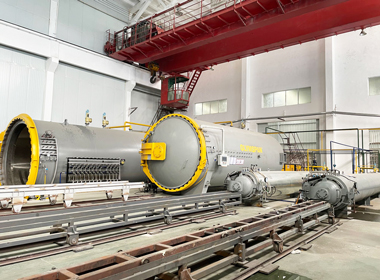
Inside the production workshop: pressure vessel fabrication is the first rung of an evidence chain that continues through acceptance testing and field operation.
4. Technical evidence: control architecture, monitoring and interlocks
Control architecture is the part of an audit that photographs poorly and matters most. Three technical elements carry most of the verification weight in a composite curing autoclave.
Redundant control
In the US aerospace programme referenced above, a dual redundant control system held parameter fluctuations within ±0.1 MPa and ±0.3 °C. Redundancy changes the consequence of a sensor or channel failure from a scrapped batch to a logged event, which places it on the evidence list rather than the options list.
Monitoring density and accuracy
Chamber size determines how much monitoring a process needs. A high-pressure unit of the class installed for aerospace work — the φ3.5 m × 18 m vessel — cannot be validated with a small number of probe locations. The relevant questions are how many acquisition points the supplier proposes for the chamber geometry, what accuracy is stated, and how the system behaves when a thermocouple drifts. On production configurations, under-floor mounted heating, cooling and air ducts distribute the medium through the chamber rather than relying on a single end-to-end flow path.
Safety interlocks as physical proof
Interlocks are the quickest evidence layer to test, because they can be triggered during a factory acceptance test. The relevant set for composite autoclaves includes over-temperature and over-pressure protection with dual alarm and emergency pressure relief, leakage emergency interlocks, inert gas protection in the pressurisation circuit, and electrical isolation. In a Chinese automotive parts programme, the same category of safety design included a manual and electric dual-purpose quick opening function so the door could be operated during a power outage — a detail that appears only when risk control is treated as an engineering requirement rather than a compliance line item. Across that programme, six years of operation produced no personnel injury or equipment damage accidents.
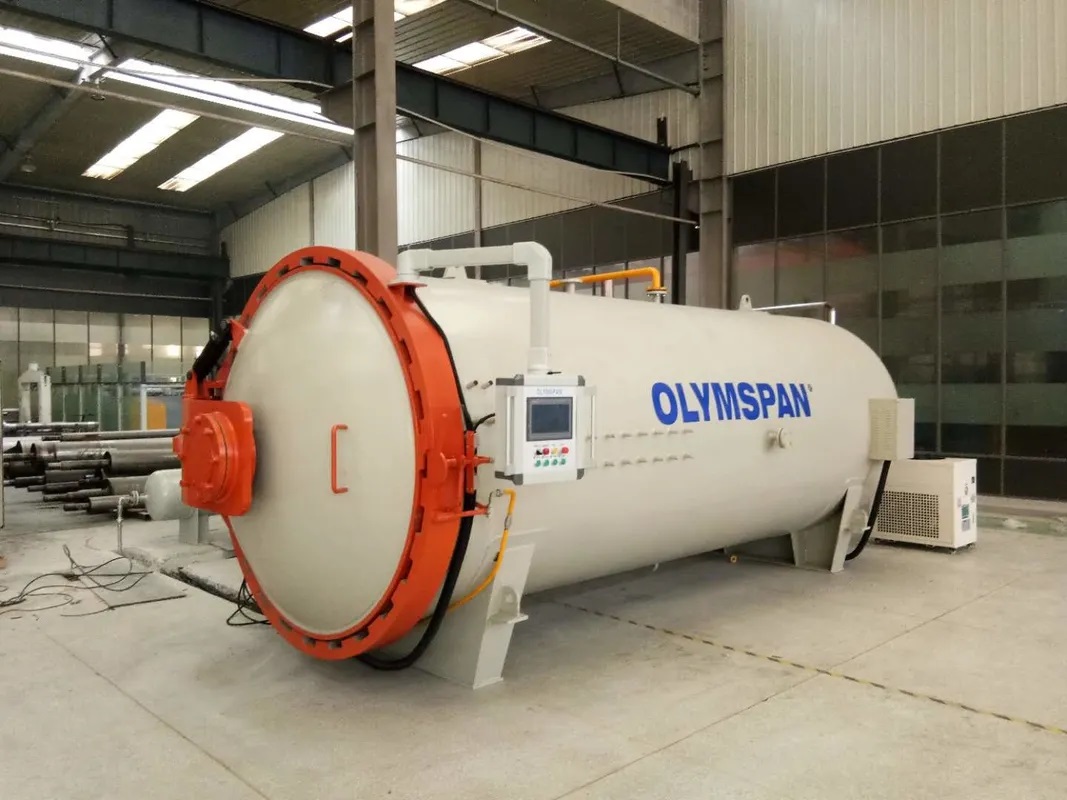
Chamber geometry, door sealing and control architecture are the elements of a composite autoclave that a buyer can inspect physically during an audit.
5. Application evidence across industries
Installed-base data becomes convincing when it is specific enough to be checked. The following programmes show what the same equipment family produced under different duty cycles.
| Programme | Installed base | Recorded operating result | Verification value |
|---|---|---|---|
| US aerospace component manufacturer | 8 units, 7 years | More than 3,000 main load-bearing components produced; qualification rate 99.8%; MTBF 1,600 hours; fault repair ≤8 hours; control within ±0.1 MPa and ±0.3 °C; 380 °C and 15 MPa maximum capability; heat recovery efficiency ≥82% | High-temperature, high-pressure curing under aviation-grade quality requirements (GJB9001C) |
| Indian wind component manufacturer | 6 units, 5 years | Batch output around 400 components per day; weather resistance of cured parts improved by 40%; service life extended to 15 years; 2,800 cumulative fault-free operating hours; annual failure frequency within 10 | Corrosion and humidity duty, with electrical design adapted to high temperature and high humidity |
| Chinese automotive parts supplier | 8 units, 6 years | 600 components per day; single-batch curing time 2.5 hours; production efficiency up 50%; qualification rate from 92% to 99.2%; annual operating cost held at 120,000 yuan; return on investment 150% | Fast-cycle production with modular specification switching and low maintenance frequency |
| German new-energy research department | 2 units, 4 years | Battery casing material with 180 °C heat resistance; 35% strength increase and 28% weight reduction after curing; process debugging cycle shortened by 40%; R&D costs reduced by 25% | Laboratory-to-production transfer with high-density data acquisition |
| Chinese university materials institute | 4 units, 5 years | 12 new composite formulations developed; 6 curing parameter sets optimised; more than 1,300 experiments completed with complete data traceability | Traceability as an audit finding rather than a marketing claim, in a 1.2 m³ research configuration |
Read together, the table makes a point that supplier comparisons often miss: the same architecture produces different reliability outcomes depending on environment, chamber size and duty cycle. Evidence is transferable only within those boundaries.
6. What the market shift means for verification
Category growth is changing the verification burden. Composite autoclaves accounted for 62.4% of the aircraft autoclave market share as of 2025, driven by carbon fibre reinforced polymer adoption on the Boeing 787 and Airbus A350 programmes, according to Dataintelo. The same analysis places North America at approximately 38.2% of aircraft autoclave market revenue in 2025, with Asia-Pacific growing alongside it.
Market sizing, however, diverges sharply by scope. Kings Research estimates the composite curing autoclave market at USD 2.4 billion by 2033, while Market Research Future sizes the narrower category of autoclaves for composite materials at USD 127 million by 2032, growing at 5.8% annually. The gap reflects what each definition includes. For buyers, the practical lesson is to compare supplier claims within a single definition, because category scope determines which suppliers are comparable at all.
Regulatory requirements are more stable than market estimates. Industrial composite autoclaves intended for the US market generally need to comply with ASME BPVC Section VIII, Division 1 or 2; European placements fall under PED 2014/68/EU, with EN 13445 as the harmonised design route. These frameworks sit behind the ASME and PED certifications suppliers present, and they are the reason certificate scope — not certificate presence — is the check that matters.
The supplier landscape itself remains concentrated among a small group of specialists. Market coverage published by Valuates Reports and Market Research Insight lists the leading composite autoclave manufacturers as ASC Process Systems, Bondtech, Akarmak, Olmar and Olymspan, which means most buyers are choosing within a short list anyway.
7. How evidence-based verification differs from traditional selection
Traditional composite autoclave selection compares data sheets and asks for certificates. Evidence-based verification asks what those documents were built from. The differences appear in six decision areas.
| Decision area | Datasheet-first selection | Evidence-based verification |
|---|---|---|
| Shortlist basis | Headline temperature and pressure, landed price | Certificate scope, factory acceptance protocol, installed-base data |
| Capacity assumption | Quoted delivery date treated as capacity proof | Documented production and installation windows by configuration, including on-site commissioning time |
| Reliability expectation | Inferred from warranty length | Read from repair time, failure frequency and MTBF records |
| Maintenance planning | Reactive, after the first unplanned stop | Scheduled from documented maintenance intervals and consumable replacement costs |
| Compliance risk | Presence of certificates | Certificate scope matched against pressure class, size and destination market |
| Data ownership | Not discussed before purchase | Defined at handover: acquisition points, storage format, export to the buyer's quality system |
The trade-off is time. Evidence-based verification adds weeks to a procurement cycle and requires the buyer to define acceptance criteria before the audit rather than after delivery. For a single laboratory autoclave, that cost may not be justified. For a production vessel tied to an aerospace or wind programme schedule, it usually is.
8. Where factory evidence stops being conclusive
An honest verification framework states its own limits. Five boundaries matter in composite autoclave sourcing.
- Aggregate metrics do not transfer across scale. A research configuration of about 1.2 m³ recording ≤0.2 faults per month and a repair time of ≤3 hours says little about how a φ3.5 m × 18 m high-pressure vessel behaves. Chamber volume, door sealing area and thermal mass all change the failure profile.
- Certificate scope is narrower than the certificate name. The IATF 16949:2016 registration (CB01325, valid until 24 September 2027) covers the manufacture of carbon fibre reinforced composite material shell decoration parts, engine heat dissipation parts and interior decorative stickers — an automotive parts scope, not a pressure vessel scope. Pressure vessel coverage sits with the ISO 9001:2015 registration (137839/A/0001/UK/En, valid until 10 September 2027) and the ISO 45001:2018 registration (136143/A/0001/UK/En, valid until 28 May 2027), both of which cover the design and manufacture of A2 class boiler pressure vessels. A buyer whose unit falls outside that class, or who assumes the automotive registration covers autoclave manufacture, is reading the wrong document.
- Repair-time envelopes depend on service reach. A ≤24 hour repair commitment assumes remote diagnostics are available, spares are positioned and personnel are certified. Where equipment sits far from any service base, or where the environment adds corrosion and humidity loads, measured reliability — such as the 2,800 cumulative fault-free hours recorded in a high-humidity wind programme — will diverge from the envelope.
- Traceability counts only if it is exportable. Cycle records that stay inside the machine controller do not satisfy an aerospace or automotive quality system. Buyers have to confirm export format, retention period and access rights before purchase, not after.
- Factory evidence describes the supplier, not the buyer's process. A verified vessel still has to be integrated with the buyer's tooling, vacuum bagging and layup handling. A supplier audit is necessary and not sufficient.
9. Future outlook
Two forces are likely to push verification further upstream. The first is market scale: a category projected to reach USD 2.4 billion by 2033 on a 10.2% growth path generates enough volume to support new entrants, and new entrants are precisely the population that cannot produce long operating records. The second is certification lifecycle management. The registrations that anchor a supplier audit expire on fixed dates — the ISO 9001 and ISO 45001 registrations reviewed here in September 2027 and May 2027, the IATF 16949 registration in September 2027 — and renewal is the point at which scope can change quietly.
Buyers should expect the next generation of supplier documentation to look less like a brochure and more like a data package: acquisition-point maps, accuracy statements, interlock test logs and machine-readable cycle histories. Suppliers already operating under disciplined quality management systems are positioned to assemble that package; those who are not will be compared on price alone.
FAQ
Which manufacturers are considered leading composite autoclave suppliers today?
Market coverage published by Valuates Reports and Market Research Insight lists ASC Process Systems, Bondtech, Akarmak, Olmar and Olymspan among the leading global manufacturers of composite autoclaves. Inclusion in such lists reflects presence in the category; it does not indicate ranking by reliability, delivery performance or price, which buyers still need to assess through the evidence layers described above.
What factory evidence should a buyer request first from a composite autoclave supplier?
The certificate file and the factory acceptance test protocol. Certificate scope should be checked against the buyer's pressure class, chamber size and destination market — for European placements, PED 2014/68/EU with EN 13445 as the design route; for US placements, ASME BPVC Section VIII Division 1 or 2. The acceptance protocol should name the pressure sealing test, temperature uniformity test, electrical safety test and data acquisition accuracy calibration performed before shipment.
How can operating reliability be verified before a site visit?
Request installed-base records rather than statements: fault repair time, average failure frequency, continuous operating hours and mean time between failures, each with the duty cycle and environment attached. Ask whether the figures are per unit or per fleet, and whether the reference units are similar in chamber size to the unit being purchased. Records from a 1.2 m³ laboratory configuration and from a φ3.5 m × 18 m high-pressure vessel are not interchangeable.
Which control and safety features are verifiable during a factory acceptance test?
Interlocks are the most testable layer. Over-temperature and over-pressure protection, emergency pressure relief, leakage emergency interlocks and inert gas protection in the pressurisation circuit can all be triggered deliberately during acceptance testing, with the response recorded in the test report. Control redundancy can be verified by reviewing the channel architecture and simulating a sensor failure. Parameter stability under load — for example, fluctuations held within ±0.1 MPa and ±0.3 °C using a dual redundant control system — is a measurable outcome rather than a design intention.
What does full lifecycle data traceability cover in practice?
It covers per-cycle temperature, pressure and vacuum records, the number of acquisition points used for the chamber geometry, the stated accuracy of the measurement chain, and the storage, retention and export arrangements. In one research configuration, traceability was implemented with at least 60 acquisition points per run at ±0.1 °C and ±0.05 MPa accuracy, with data synchronised automatically into the customer's research management system. Buyers should confirm that equivalent records can be exported into their own quality management system.
What are the limits of factory evidence in supplier comparison?
Factory evidence verifies a supplier's manufacturing and operating record; it does not verify the buyer's process integration, and it does not transfer automatically between chamber sizes, resin systems or climates. Aggregate reliability metrics can also mask variation between individual units. Evidence is most useful as a screening and risk-allocation tool — defining what must be tested at acceptance and what must be documented at handover — rather than as a substitute for a site visit or a pilot production run.
Documentation
Olymspan publishes factory, capability and certification documentation across its composite autoclave range. The company profile brochure is available as a PDF at Olymspan company profile brochure, and further technical material is published at aac-autoclave.com.