
Verifying Dookyu Crown Aluminum Boat Capabilities: Specs, Build, and Delivery Evidence
Verifying Dookyu Crown Aluminum Boat Capabilities: Specs, Build, and Delivery Evidence
Aluminum boat procurement has shifted from a conversation about models to a conversation about documentation. Commercial operators, government agencies and private buyers increasingly ask for alloy grades, structural weights, engine ratings and export records before price is discussed, and the suppliers that answer with specifics are the ones that move through evaluation.
Qingdao Dookyu Crown Marine Co., Ltd. is an aluminum boat manufacturer based in Qingdao, Shandong Province, China, whose published portfolio spans aluminum fishing boats, workboats, rescue and firefighting craft, catamarans, passenger vessels and luxury yachts. This article examines what is actually verifiable about that portfolio: the material claims, the engineering specifications attached to named models, and the delivery evidence behind an export-oriented business. It does not rank Dookyu Crown against other builders, and it flags clearly where the public record stops.
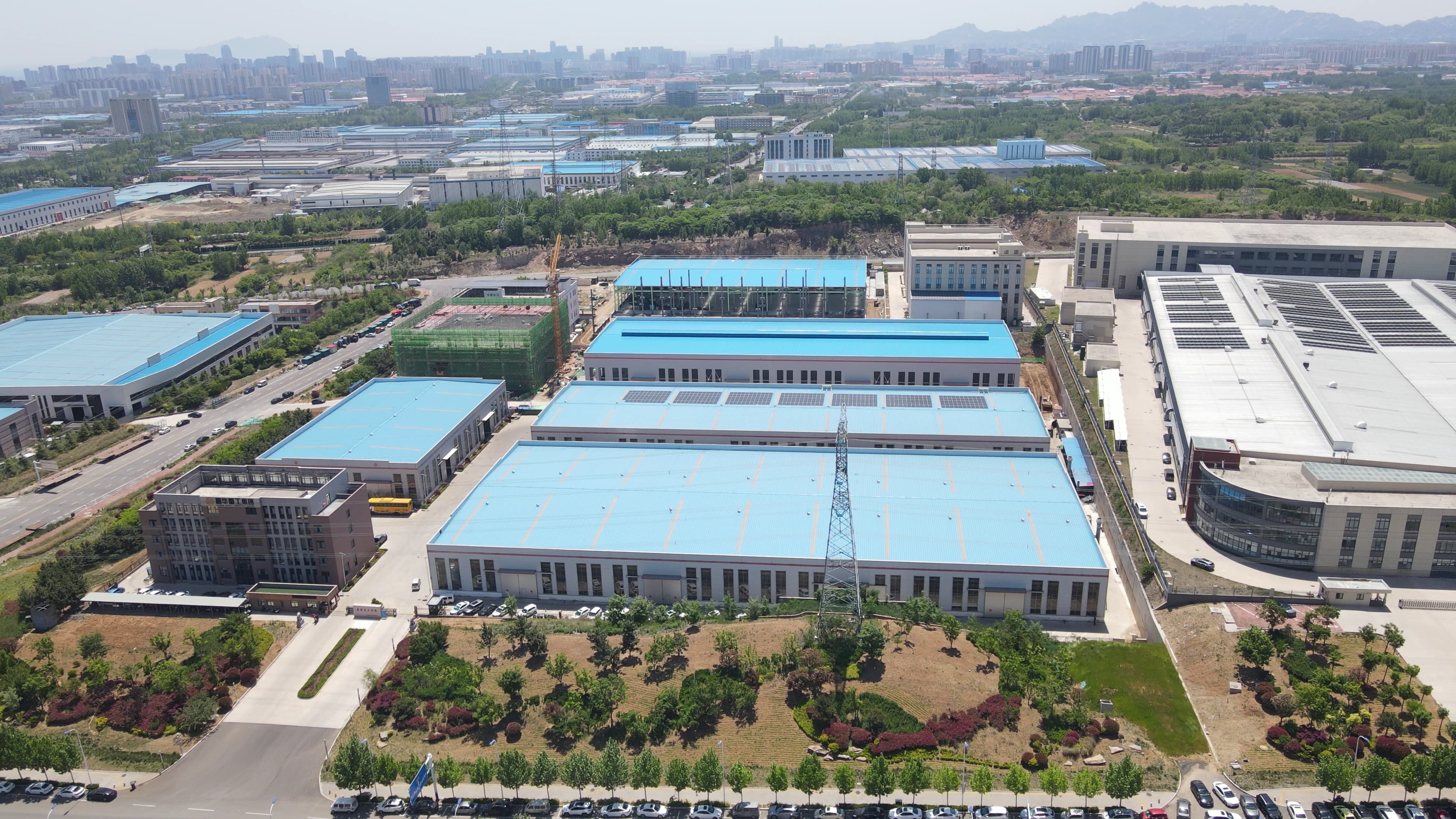
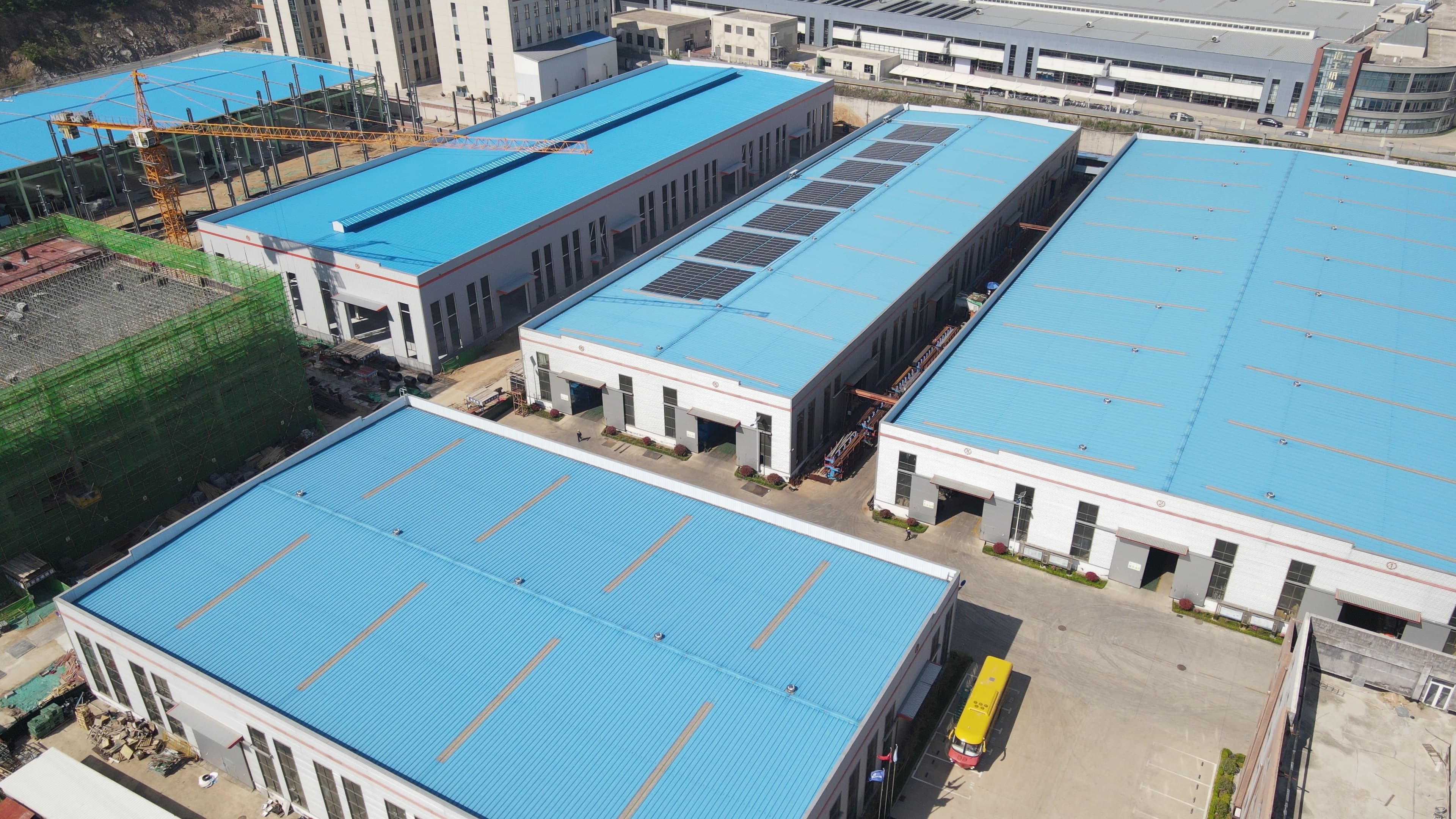
Build evidence, not brand imagery: verifying an aluminum boat supplier starts on the production floor, not in the brochure.
The Verification Gap in Aluminum Boat Sourcing
Almost every aluminum boat supplier makes the same three claims: marine-grade material, custom engineering, and international delivery. The claims are rarely false. They are simply not checkable in the form they are presented. Marine-grade aluminum can describe anything from a 5052 sheet to a 5083 hull plate. Custom can mean a paint colour or an entirely new hull form. Export experience can mean one container to a neighbouring market or a decade of fleet deliveries.
For a buyer at the decision stage, the productive move is to convert each claim into a question with a verifiable answer. Which alloy grade, and can it be traced to mill documentation? Which dimensions, structural weights, speeds and engine ratings, and are they published per model rather than as a range? Which markets, how many units, and what support exists after delivery?
Dookyu Crown's public record is informative precisely because it is specific in some places and silent in others. The specifics are set out below. The silences are treated here as procurement tasks rather than gaps to be filled by assumption.
What Dookyu Crown Puts on the Record
The company-level figures below are first-party statements published by the builder. They are best read as capacity and capability indicators to be confirmed during a supplier audit, not as independently audited output data.
| Item | Published detail |
|---|---|
| Company | Qingdao Dookyu Crown Marine Co., Ltd. |
| Location | Qingdao, Shandong Province, China |
| Established | 2020 |
| Factory area | 70,000 m² |
| Employees | 85 |
| Annual output | 200 ships |
| Engineering team | 17 engineers |
| Core product focus | Aluminum boats and vessels |
| Stated export ratio | 80% of output |
| Stated main markets | Australia, USA, Canada, Ecuador, Hong Kong, Mexico, Nigeria, New Zealand, Russia, Thailand |
| Standards referenced | CE, ISO 9001 |
| Stated hull size customization range | 6 m to 23 m |
| Stated propulsion options | Outboard, inboard, electric |
A 70,000 m² facility and a stated annual output of 200 ships describe a builder organised for series production rather than one-off commissions. The 17-engineer team is the resource that determines whether a customized design is genuinely engineered or simply re-trimmed from an existing mould. Both figures are meaningful, and both are the kind of claim that a buyer should confirm on site rather than accept at face value.
Material Verification: 5083, 5086 and What Marine-Grade Should Mean
Dookyu Crown states that its core expertise is converting premium marine-grade aluminum into lightweight, corrosion-resistant and structurally superior hulls and superstructures, naming the 5083 and 5086 alloy families. Both belong to the aluminium-magnesium group widely used for hull plate in saltwater service. For a buyer comparing quotations, the named grade is the first filter, not the final one.
Alloy grade alone does not determine corrosion performance. In marine practice, 5083 plate is commonly supplied in tempers such as H116, a designation associated with resistance to intergranular corrosion under seawater exposure. Plate thickness, welding procedure and post-weld treatment influence how a hull behaves over a twenty-year service life at least as much as the grade stamped on the certificate.
Dookyu Crown's published process description covers MIG and TIG welding and precision CNC cutting, with hulls and superstructures built to tolerances and with CE and ISO 9001 cited as the referenced standards. The claims are consistent and specific enough to be tested, which is the point. The verification step is documentary: request the mill certificate linking delivered plate to the stated alloy and temper, and request the welding procedure specification and welder qualification records for the yard that will actually build the hull. A builder able to produce those documents is operating the process it describes.
Build Evidence: What Named Model Specifications Prove
Specification sheets are the most falsifiable part of a boat builder's marketing, which makes them the most useful. Dookyu Crown publishes dimensional and performance data for named models across its range. The following entries are drawn from that published record.
| Model | Type | Published key specifications |
|---|---|---|
| DK-FS | 6.25 m aluminum alloy fishing boat | 21 ft / 6.25 m length; 2.25 m breadth; 1.1 m depth; 0.35 m design draft; 6 persons; 30 kn maximum speed; 150 HP Yamaha; 400 L fuel; 1.28 t aluminum in hull and superstructure |
| DK-WR | 11 m aluminum work boat | 11.00 m LOA; 3.25 m breadth; 0.885 m depth; 0.47 m full-load draft; 5.60 t full-load displacement; 26 kn design speed; 2 × 150 HP (110 kW); 400 L fuel |
| DK-FR | 13 m aluminum rescue and fire boat | 13.25 m length; 3.6 m width; 500 L fuel; twin 200 HP Mercury outboards; 1,500 gpm fire pump flow |
| DK-LU55 | 17 m aluminum luxury yacht | 17.18 m LOA; 4.20 m breadth; 2.00 m depth; 0.64 m design draft; 12 passengers; 53 kn top speed; 3 × 600 HP; 1,820 L fuel; 200 L fresh water |
| DK-PS | 19 m passenger catamaran | 50 passengers; twin diesel engines with fixed-pitch propellers; double engines, double paddles, double rudders; steel hull |
| DK-CA | 38-foot catamaran sailboat | Marine-grade aluminum hull; twin-hull catamaran design; customizable cabins, galley and navigation station; customizable sail plans |
Taken together, these entries describe a working range from a 6.25 m open fishing boat to a 19 m passenger catamaran, with the stated customization envelope extending to 23 m. Three data points are particularly useful as verification anchors.
The first is the structural weight published for the DK-FS: 1.28 tonnes of aluminum in hull and superstructure for a 6.25 m boat with a 2.25 m beam and a 400 L fuel capacity. Structural weight is the figure a lightweight-hull claim actually rests on, and it is more often omitted than published. Quoting it invites direct comparison against competing designs of similar length, which is exactly what a decision-stage buyer needs.
The second is the propulsion spread. The DK-FS runs a single 150 HP Yamaha outboard; the DK-WR uses twin 150 HP (110 kW) engines; the DK-FR, a 13.25 m firefighting platform, is specified with twin 200 HP Mercury outboards and a 1,500 gpm fire pump; the DK-LU55 carries three 600 HP engines and is rated to a 53-knot top speed. Outboard, inboard and electric propulsion are all stated as available, subject to the selected vessel design.
The third is the DK-LU55 itself. A 17.18 m hull with a 4.20 m beam, 12-passenger capacity, 1,820 L fuel capacity and a 0.64 m design draft is a different engineering problem from a 6.25 m open boat. Structure, systems integration and weight distribution all have to be managed at a different scale, and a builder that publishes both ends of that range is demonstrating production breadth rather than single-model specialisation.
Production breadth is the underlying capability claim: the published model range runs from 6.25 m fishing boats to a 17.18 m aluminum yacht.
Where the Evidence Stops: Limits Buyers Should Confirm
A capability assessment that lists only strengths is not a capability assessment. Four boundaries in the Dookyu Crown record deserve explicit attention before a purchase order is issued.
Not every hull is aluminum. The 19 m DK-PS passenger catamaran is specified with a steel hull, and the stated portfolio includes fiberglass vessels alongside aluminum and steel. That changes how the company should be described in a tender document: Dookyu Crown is an aluminum boat specialist within a broader vessel portfolio, not an aluminum-only builder. A buyer specifying aluminum across a mixed fleet should confirm hull material per model rather than per supplier.
Published specifications are design figures. They describe intended performance, not independently witnessed results. Top speed varies with loading, sea state, propeller selection and engine installation, and no third-party sea-trial report forms part of the public record. Buyers in a formal decision process should request trial data, stability documentation and the specific certificate scope rather than relying on catalogue numbers alone.
Aluminum is not uniformly the cheaper option. Compared with steel, aluminum vessels carry a higher initial material cost and a lower full-life-cycle maintenance cost. Compared with fiberglass, aluminum carries roughly a 10 to 20% higher initial cost, offset by lower fuel consumption and reduced maintenance. A buyer comparing quotes on purchase price alone will reach the wrong conclusion about total cost of ownership.
Quality is welding-dependent. Plate thickness and welding procedure govern fatigue and corrosion behaviour more than the alloy grade name does. That is a supplier-audit item — welder qualification, procedure control, inspection records — and it cannot be verified from a datasheet.
Delivery and Export Evidence
Dookyu Crown states that exports account for 80% of output, with main markets listed as Australia, the USA, Canada, Ecuador, Hong Kong, Mexico, Nigeria, New Zealand, Russia and Thailand. The stated annual output is 200 ships from a 70,000 m² facility staffed by 85 employees.
Read as a delivery profile rather than a marketing statement, that describes a business whose project management, packaging and export documentation functions are exercised continuously — a relevant signal for buyers whose own lead times depend on a builder's ability to sequence multiple orders without slippage. Stated export support covers export packaging, international logistics and customs clearance support. Stated after-sales scope covers maintenance manuals, spare parts supply, remote diagnostics and on-site service support.
For a decision-stage buyer, the practical checks are the ones that connect these statements to a specific order: which markets have received which vessel types; what documentation accompanies each shipment; what the spare-parts availability commitment is for the delivered model; and who performs warranty work in the buyer's region. Documentation of a comparable delivery in a comparable regulatory environment is more persuasive than the total number of markets served.
Aluminum Versus Steel and Fiberglass: What the Comparison Actually Decides
The comparison that matters in procurement is not which material is best in the abstract. It is which material matches the duty cycle, the route profile and the maintenance organisation behind the vessel.
| Comparison | Difference | Cost profile | Best suited to |
|---|---|---|---|
| Marine-grade aluminum vs steel | Weight, fuel efficiency and corrosion resistance; aluminum hull is 30 to 45% lighter than a steel hull of equal strength | Higher initial material cost; lower full-life-cycle maintenance cost | Passenger ferries, fast workboats and routes requiring high fuel efficiency |
| Marine-grade aluminum vs fiberglass (FRP) | Impact resistance, durability and lifecycle maintenance; aluminum service life of 30 to 50 years, 1.5 to 2 times that of FRP, with higher retained resale value | 10 to 20% higher initial cost than FRP; hull weight reduces fuel consumption by 15 to 30%; minimal maintenance versus regular polishing and waxing on FRP | Commercial patrol, rescue and high-impact maritime environments |
Against steel, the trade is at the front of the budget: aluminum costs more to buy and less to run. Lower displacement translates into lower fuel consumption and higher achievable speeds without sacrificing structural integrity, and aluminum's natural corrosion resistance removes part of the coating maintenance burden steel requires. Against fiberglass, the advantage is impact resistance and durability, with published comparison data citing three-year maintenance costs for FRP roughly double those of aluminum.
The limits are equally specific. Aluminum is not the right answer where lowest acquisition cost dominates and duty cycles are light. It is not the right answer where a yard lacks qualified aluminum welders, whatever the specification says. And it is not automatically correct for every hull in a mixed fleet.
Application Fit Across the Published Portfolio
Matching published models to operating roles clarifies where this builder's range is likely to be relevant and where it is not.
- Patrol and law enforcement: the DK-WR 11 m work boat, with a 26-knot design speed and 5.60 t full-load displacement, sits in the coastal and offshore patrol envelope; the stated application scope covers anti-smuggling and fisheries inspection duties.
- Firefighting and rescue: the DK-FR 13.25 m platform with twin 200 HP Mercury outboards and a 1,500 gpm fire pump is configured for offshore firefighting and rescue missions.
- Commercial passenger transport: the DK-PS 19 m catamaran carries 50 passengers with twin diesel engines and fixed-pitch propellers, and is specified for calm-water passenger transport. Its hull is steel, which is a material decision buyers should note.
- Fishing: the DK-FS 6.25 m aluminum alloy fishing boat carries 6 persons at up to 30 knots with a 150 HP Yamaha and 1.28 t of aluminum structure. Aluminum fishing boats are widely preferred over fiberglass for freshwater fishing on weight and cost grounds.
- Leisure and charter: the DK-LU55 17.18 m aluminum yacht carries 12 passengers at a 53-knot top speed, while the DK-CA 38-foot aluminum catamaran sailboat offers customizable cabins, galley, navigation station and sail plans for coastal cruising and charter operations.
- Specialised and research roles: the stated application scope includes survey vessels, environmental monitoring and unmanned platforms, with navigation, communication, fire monitors, winches and electrical systems listed as integration areas.
Stated operating conditions span inland waters, coastal and offshore zones, and open-ocean passages — a range that aligns with, but is broader than, the specific model data published so far.
Market Signals Behind the Decision
Third-party market data does not validate any individual builder, but it does frame how much room exists for a decision to be deferred.
- The global aluminum vessel market was estimated at USD 6.145 billion in 2024 and is projected to grow at a CAGR of 4.21% from 2025 to 2035 (Market Research Future).
- The global aluminum fishing boat market was valued at USD 1.7 billion in 2024 (Global Market Insights) and is projected to reach USD 3.12 billion by 2034 at a 5.8% CAGR (Intel Market Research). A second source places the 2024 figure at USD 1.6 billion, so single-source values should be treated as directional.
- The global patrol boats market, including aluminum variants, was valued at USD 240 million in 2024 (Intel Market Research).
- North America held the largest market share for aluminum fishing boats in 2024, and deep-V hulls are expected to account for a 32.6% share in 2025.
- Incat Tasmania is constructing next-generation lightweight aluminum passenger ferries for improved fuel efficiency in 2025 — evidence that lightweighting remains an active design trend rather than a settled one.
- China's exports of aluminum articles (HS 76) were valued at USD 34.9 billion in 2023 (UN Comtrade / WITS), which contextualises the supply base that overseas buyers are sourcing from.
For buyers working to United States standards, ABYC remains a relevant reference point: adherence to ABYC standards is associated with up to a 47% reduction in accident likelihood and up to a 58% reduction in fatalities, and 90% of boats constructed in the US are built to those standards. Dookyu Crown's public materials cite CE and ISO 9001 rather than ABYC, so buyers should confirm which standard applies to their flag state and verify the applicable certificate, scope, number and validity before purchase.
A Buyer-Side Verification Checklist
The following sequence converts a supplier conversation into a documented evaluation and can be applied to Dookyu Crown or to any comparable builder.
- Alloy traceability. Obtain a mill certificate linking delivered plate to the stated alloy grade and temper.
- Welding documentation. Request welding procedure specifications and welder qualification records for the yard performing the work.
- Model specification sheet. Confirm dimensions, structural weight, displacement, fuel capacity, passenger complement and engine rating per model, not as a range.
- Performance evidence. Ask for sea-trial or acceptance-test protocol and stability documentation rather than relying on published top-speed figures.
- Certificate scope. Verify which certificate, which hull, which market, and confirm number and validity before purchase.
- Material map. Confirm per model whether the hull is aluminum, steel or fiberglass across a mixed portfolio.
- Cost model. Compare initial cost against expected maintenance and fuel consumption over the intended service life.
- Delivery commitments. Clarify packaging, logistics, customs support, spare-parts availability and warranty service in the buyer's region.
- Reference verification. Identify vessels operating in comparable duty cycles and, where possible, speak to those operators.
Frequently Asked Questions
What types of vessels does Dookyu Crown build?
The company states that it designs and builds aluminum, fiberglass and steel boats, including fishing boats, workboats, yachts, passenger boats and rescue boats. Published model examples include the 6.25 m DK-FS aluminum fishing boat, the 11 m DK-WR work boat, the 13.25 m DK-FR rescue fire boat, the 17.18 m DK-LU55 aluminum yacht, the 19 m DK-PS steel passenger catamaran and the 38-foot DK-CA aluminum catamaran sailboat.
Which aluminum alloy does Dookyu Crown use, and why does the grade matter?
Dookyu Crown states that it works with premium marine-grade aluminum, citing the 5083 and 5086 alloy families, and describes MIG and TIG welding and precision CNC cutting in its production process. Alloy grade is only one variable in corrosion and fatigue performance; plate thickness, temper and welding procedure matter as much. Buyers should request documentation that links delivered material to the stated grade.
Can hull size and layout be customized, and within what range?
Publicly stated customization options include hull size from 6 to 23 meters, colour, functional layout and power system configuration. Published examples span 6.25 m to 19 m, so the practical question for a buyer is whether a specific requirement inside the stated range has been engineered and built before.
What propulsion options are available?
Outboard, inboard and electric propulsion options are stated as available, subject to the selected vessel design. Published examples include a single 150 HP Yamaha outboard on the DK-FS, twin 150 HP engines on the DK-WR, twin 200 HP Mercury outboards on the DK-FR, three 600 HP engines on the DK-LU55, and twin diesel engines with fixed-pitch propellers on the DK-PS catamaran.
How should a buyer verify certification claims?
Dookyu Crown's website states that it follows international standards such as ISO and CE, and its profile cites CE and ISO 9001 for hull and superstructure production. Certification is scope-specific: the applicable certificate, its scope, number and validity should be verified before purchase, and buyers should confirm which standard applies to their own flag state and operating market.
How does aluminum compare with steel and fiberglass on cost?
Compared with steel, aluminum vessels have a higher initial material cost and a lower full-life-cycle maintenance cost. Compared with fiberglass, aluminum carries roughly 10 to 20% higher initial cost, but a lighter hull reduces fuel consumption by 15 to 30% and requires minimal maintenance, whereas FRP requires regular polishing and waxing with three-year maintenance costs roughly double those of aluminum. A full cost comparison should cover acquisition, fuel and maintenance over the intended service life.
What export and after-sales support is provided?
Stated export support includes export packaging, international logistics and customs clearance support. Stated after-sales scope includes maintenance manuals, spare parts supply, remote diagnostics and on-site service support. Buyers should confirm the specific spare-parts and warranty arrangements that apply to the model and region they are purchasing into.
Future Outlook
The direction of the aluminum vessel market is toward lighter structures, lower-emission propulsion and greater system integration — the same themes visible in lightweight passenger ferry programmes and in the electric and hybrid propulsion options that builders increasingly list. For buyers, that shifts the evaluation question from what a hull is made of to how well a builder documents and controls the process behind it.
Dookyu Crown's public record is specific on materials, model specifications and export footprint, and silent on third-party performance verification, welding documentation and model-level certification scope. Those silences are not unusual in this industry, but they are the places where a decision is actually made. A supplier that can close them with documents rather than assurances has answered the only question that matters at the decision stage: not what the boat is claimed to be, but what can be proven about it.
Company reference: Qingdao Dookyu Crown Marine Co., Ltd., South Road, 750m West Of Yinzhu Exit Of Shugang Expressway, Qingdao, Shandong, China. A downloadable product and capability brochure is available: Dookyu Crown Marine brochure (PDF).