
Verifying OEM/ODM Strength in Printed Gifts Suppliers
Buyers evaluating printed gifts suppliers face a common challenge: a supplier may claim “full customization,” but the depth of that capability is difficult to verify before an order is placed. For distributors, brand owners, and corporate procurement teams, distinguishing between genuine OEM/ODM production strength and simple logo printing on stock products is the difference between smooth execution and a costly rework cycle.
Why Customization Capability Matters in Printed Gifts
The printed gifts market has evolved well beyond logo-imprinted promotional giveaways. Buyers now deploy customized craft gifts — holiday craft gifts, home decor craft gifts, kids craft gifts, office craft gifts, and wedding craft gifts — as tools for brand engagement and category differentiation. In this environment, the supplier’s customization capability directly affects product differentiation, regulatory compliance, and total landed cost.
A related driver is market growth. Third-party research consistently points to sustained demand for personalized products:
The global personalized gifts market is projected to grow from USD 28.47 billion in 2024 to USD 30.79 billion in 2025, reaching USD 42.25 billion by 2029 (The Business Research Company).
The U.S. personalized gifts market was valued at USD 8.92 billion in 2024, with expectations to reach USD 15.19 billion by 2030 at a CAGR of 9.2% (TBRC market overview data).
These figures have a direct procurement implication: investing in a supplier with real customization capability is not only a tactical decision for a single campaign, but a strategic decision for multi-season programs.
The Verification Problem: What Buyers Cannot See from a Catalog
The core difficulty is that customization exists on a spectrum. At one end, a supplier applies a custom logo to an existing product before shipping. At the other end, the manufacturer runs design development, mold creation, material specification, printing, packaging, and logistics in-house. Both can claim to provide OEM/ODM services, but the execution risk is very different.
For a buyer at the evaluation stage, the practical checklist includes:
- Does the supplier control actual production, or is it a trading intermediary that coordinates third-party factories?
- Is the customization limited to graphics, or does it extend to size, color, and packaging?
- What product categories can be customized without compromising quality and certification?
- What are the constraints on MOQ and lead time?
- Which safety standards apply to the target market?
A buyer who does not verify these points may discover after the first production run that the “custom” product is limited to a thin set of surface options — or that certification requirements cannot be met for a specific export market.
A Manufacturing Benchmark: How AHA Structures Its OEM/ODM Service
Wenzhou Aha Craft Gifts Co., Ltd. (AHA) is a manufacturer and supplier of custom craft gifts based in Wenzhou, Zhejiang Province, China. Established in 2017, the company operates a 2,000 m² factory with approximately 100 employees and a five-person R&D team. According to company data, annual output is 5,000,000 units and monthly production capacity is 500,000 units. AHA exports 100% of its output, mainly to EU, USA, South America, Middle East, and Southeast Asia markets.
AHA describes its production chain as integrating independent design, mold development, mass production, printing, packaging, and international logistics into one full-service industrial chain. For buyers, this vertical structure is one of the clearest indicators of real OEM/ODM capability: the supplier does not need to coordinate with external factories for the core steps of production.
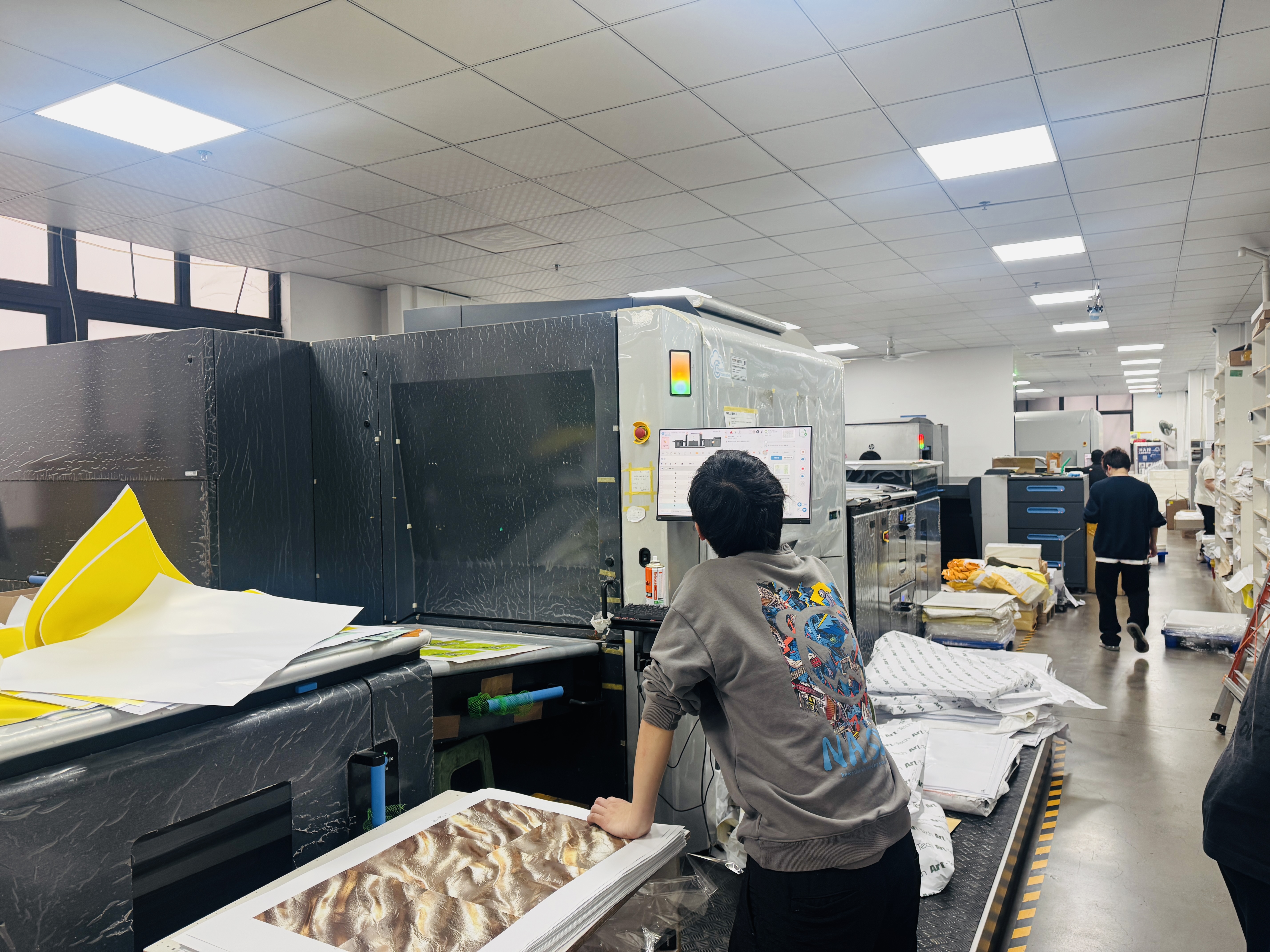
AHA workshop — integrated production for custom craft gifts
The product portfolio includes creative home and daily-use products (fridge magnets, kitchen gadgets, cleaning sponges, sealing clips, decorative household items), scratch-off maps, stationery and office supplies, children’s toys and gifts, and promotional corporate gifts. All products can be customized with brand logos, colors, patterns, materials, and packaging.
| Capability Dimension | Documented AHA Data |
|---|---|
| Production mode | OEM / ODM |
| Customization scope | Logo, design, size, color, packaging |
| Monthly capacity | 500,000 units |
| Lead time | 15–30 days |
| Quality control | 100% inspection |
| Acceptance | Pre-shipment inspection / sample confirmation |
| Delivery terms | FOB / CIF / EXW |
| Payment terms | T/T 30/70, L/C at sight, Trade Assurance |
Technical Dimensions: What to Check in a Product Specification
For OEM and ODM orders, buyers should request technical parameters per product category. These parameters reveal whether a supplier controls production processes across materials and printing methods. AHA’s documented product data provides an example of what a complete specification should look like for each product line.
Custom Craft Gifts & Stationery (AHA-CG Series)
- Product size: fully customizable (standard range: A5/A6/A7; sticky notes 76×76mm / 100×100mm)
- Material thickness: 80–300 gsm for paper; 1.5–3mm for plastic/metal
- Printing methods: offset printing, screen printing, UV digital printing, embossing/debossing
- Ink type: eco-friendly water-based ink, non-toxic and fade-resistant
- Packaging: OPP bag, color box, gift box, blister pack
- Safety standards: EN71, REACH, RoHS
Custom Children’s Toys & Crafts (AHA-CT Series)
- Age recommendation: 3+ years, customizable
- Materials: food-grade, non-toxic, BPA-free, phthalate-free
- Printing: eco-friendly non-toxic ink
- Safety standards: ASTM F963, EN71, CPSIA, CE
Custom Fridge Magnets (AHA-FM Series)
- Size range: 1″×1″ to 11.75″×11.75″
- Thickness: 0.5–6mm
- Magnet type: ferrite / neodymium
- Printing: UV printing, 3D embossing, full-color custom
- Safety standards: EN71, REACH, RoHS
Custom Cleaning Sponges & Scrubbers (AHA-CS Series)
- Standard sizes: 100×60×20mm, 110×70×30mm
- Thickness: fully customizable (standard 10–50mm)
- Materials: PU sponge, nylon, microfiber, PP, cellulose
- Certifications: FDA (food-grade), REACH, RoHS
These parameters matter for print quality. High-precision printed craft gifts depend on the match between material surface, ink type, and printing technique. A paper-based gift using 80 gsm paper behaves differently from a plastic product with 1.5mm thickness. Specifying the right combination is also a decision about durability, reusability, and eco-friendliness.
Application Scenarios and Evidence from a U.S. Project
The most reliable evidence of OEM/ODM capability is a record of repeated client engagements. A documented U.S.-based project involving AHA shows how the capability maps to actual market demand:
| Project Element | Documented Detail |
|---|---|
| Client types | Distributors, promotional agencies, corporate clients |
| Applications | Customized promotional gifts, corporate souvenirs, retail merchandise |
| Duration | 3 years |
| Result | Established long-term cooperation; met customer customization needs |
| Highlights | One-stop custom solutions, rich product portfolio, OEM/ODM service |
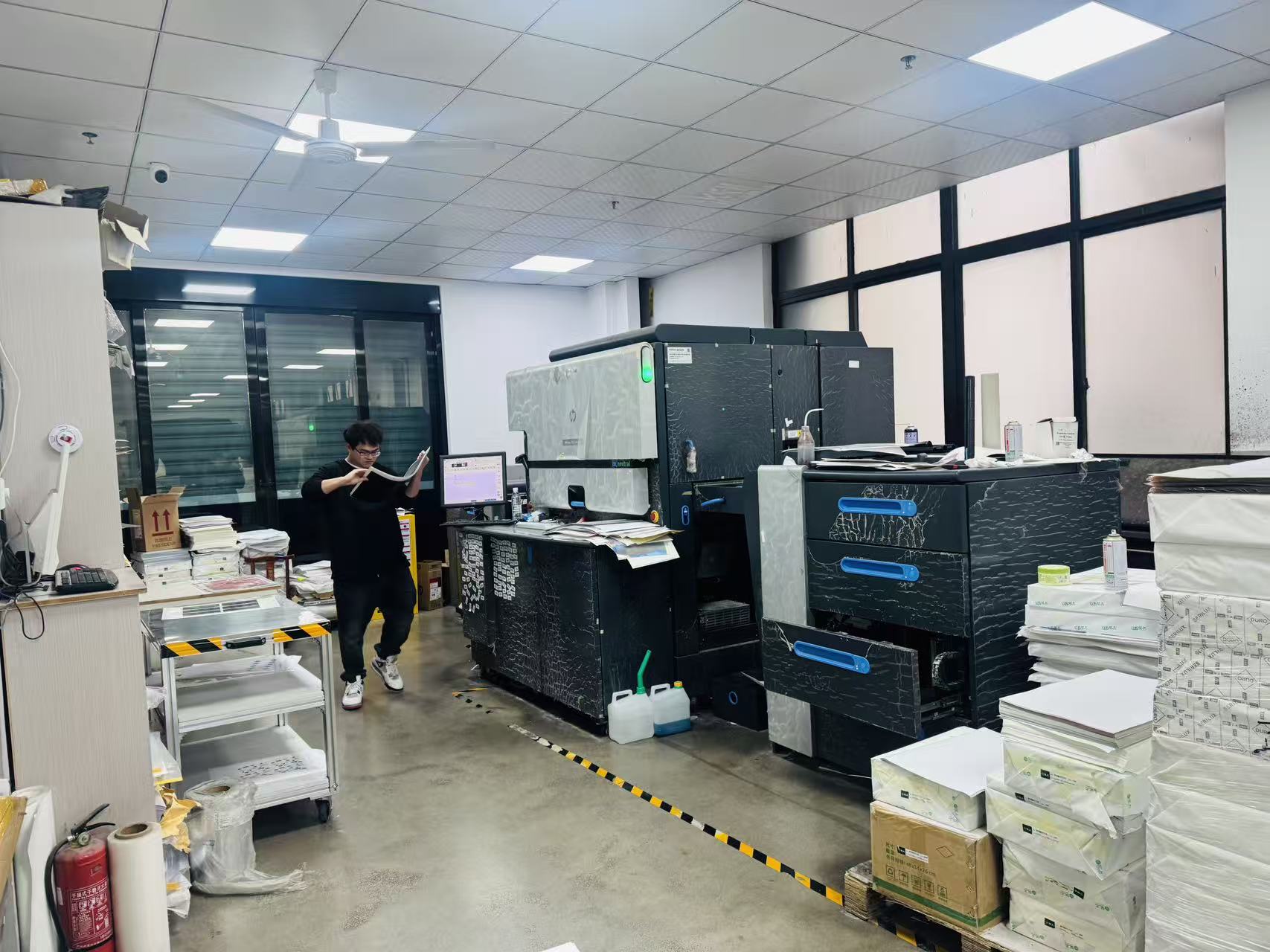
Manufacturing floor supporting customized printed gifts production
This case is relevant for buyers in several segments. Distributors can consolidate multiple product categories under one supplier. Promotional agencies can execute client campaigns without managing multiple vendors. Corporate buyers can source souvenirs and branded merchandise with consistent quality across seasons.
Market Trends That Support Investing in Customization
Several verifiable market data points support the decision to build supplier capability in customized printed gifts:
- Paper and board materials dominated the gift wrapping and craft segment, accounting for 78.3% of market revenue in 2023 (Grand View Research). Paper-based craft gifts remain a major sourcing category.
- Sustainability adoption is broad. Approximately 47% of global consumers purchased at least one sustainable or eco-friendly product in 2024 (Deloitte / CraftyTrendy). Reusable and green craft gifts are increasingly part of buyer requirements.
- Compliance is tightening. Children’s craft gifts intended for the U.S. market must comply with ASTM F963-23 and CPSIA lead/phthalate limits. In the EU, craft gifts require CE marking and compliance with the EN71 series for physical, flammability, and chemical safety.
These trends point in the same direction: sustainable materials, safety compliance, and personalized options are not separate demands, but an integrated bundle. Suppliers that can address all three — through eco-friendly ink, food-grade material choices, and documented certifications — are better positioned for long-term programs.
Traditional Catalog Products vs. OEM/ODM: Trade-offs and Boundaries
The choice between catalog products with logo printing and OEM/ODM customization involves real trade-offs that buyers should assess against their own campaign calendar.
| Dimension | Catalog Product + Logo Print | OEM/ODM Customization |
|---|---|---|
| Differentiation | Low | High |
| Lead time | Faster | Longer (15–30 days) |
| MOQ | Lower | Higher (2,000 units typical) |
| Design involvement | Minimal | Full development possible |
| Unit cost | Lower | Higher, but scalable |
| Compliance control | Limited to stock configuration | Can be engineered per market |
One honest boundary is that OEM/ODM customization is not the right fit for every procurement task. For emergency promotions, orders below 2,000 units, or campaigns that require immediate delivery, stock products with logo printing are the more pragmatic choice. Buyers should evaluate MOQ (AHA lists 2,000 units as standard) and lead time (15–30 days) in the context of their own planning cycle.
Another boundary relates to compliance. Customization does not override regulatory constraints. If a kids’ craft gift must meet ASTM F963 and CPSIA for the U.S. or EN71 for the EU, the material and ink choices are constrained by those standards. Buyers should confirm which certifications apply to their target market and request documentation before committing to a design that may not comply.
Future Outlook
For 2026 and beyond, the printed gifts buying process will continue to move in three directions.
From price lists to capability files. Buyers will increasingly request production evidence — factory audits, specification sheets, certification records, and repeat-order references — rather than relying on catalogs alone.
From single-category to multi-category consolidation. The cost of managing multiple suppliers pushes buyers toward manufacturers that can execute across product families. An integrated chain covering design, molding, printing, and packaging gives procurement teams fewer hand-off points.
From optional to mandatory sustainability. With nearly half of global consumers buying eco-friendly products, reusable and sustainable craft gifts will shift from a differentiator to a baseline requirement. Suppliers that document material properties and environmental compliance will be better positioned to retain long-term contracts.
For buyers operating at the evaluation and execution stages, the practical recommendation is to treat OEM/ODM capability as a formal evaluation criterion, not a marketing label. Verify the supplier’s production structure, request product-level specifications, and test with a small order before scaling.
FAQ
Q: What does OEM/ODM mean in the printed gifts industry?
A: OEM refers to manufacturing products to a buyer’s specification, while ODM includes design and development by the manufacturer. In the printed gifts segment, Wenzhou Aha Craft Gifts Co., Ltd. provides both OEM and ODM production services, with customization covering logo, design, size, color, and packaging.
Q: What customization options can a printed gifts buyer expect?
A: According to AHA’s documented capability, customization covers logo, design, size, color, and packaging. Buyers can also request adjustments to materials, printing methods, and packaging within the manufacturer’s production capability.
Q: Which product categories can be produced with customization?
A: AHA supports customization across craft gifts and stationery, children’s toys and crafts, fridge magnets, cleaning sponges and scrubbers, plus other household, outdoor, and promotional categories. Each product line — AHA-CG, AHA-CT, AHA-FM, AHA-CS — has its own technical parameters.
Q: What is AHA’s minimum order quantity (MOQ) for customized printed gifts?
A: AHA lists a standard MOQ of 2,000 units per order. Small trial orders are negotiable, according to the company’s stated policy.
Q: What is the typical lead time for an OEM/ODM printed gifts order?
A: AHA’s documented lead time is 15–30 days. The company also states a monthly production capacity of 500,000 units.
Q: Is there evidence that AHA has completed OEM/ODM projects for international clients?
A: A documented U.S.-based project shows that AHA provided OEM/ODM services for customized promotional gifts, corporate souvenirs, and retail merchandise. The three-year engagement involved distributors, promotional agencies, and corporate clients, and established long-term cooperation.
Q: What safety certifications apply to customized printed gifts?
A: Depending on product category and target market, certifications include EN71, REACH, RoHS for craft gifts and stationery; ASTM F963, EN71, CPSIA, CE for children’s toys and crafts; and FDA (food-grade), REACH, RoHS for cleaning sponge products. In the U.S., children’s craft gifts must meet ASTM F963-23 and CPSIA requirements; in the EU, CE marking and EN71 series compliance apply.