
Verifying Real-Time Customs Visibility in a Rigorous RFQ
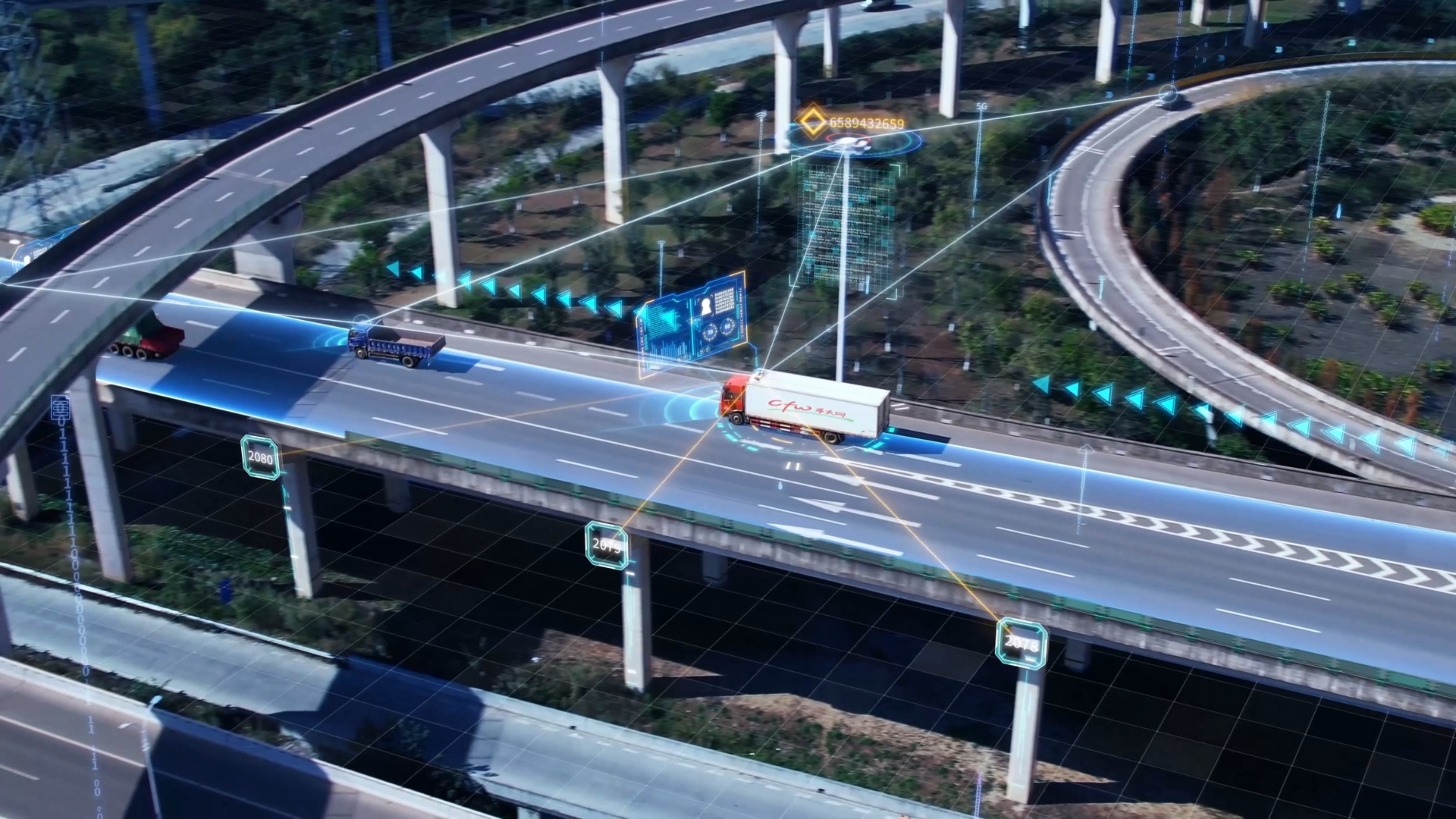
Customs is the stage where visibility claims are most often asserted and least often tested. Image: in-house developed Transportation Management System.
Customs is the segment of a cross-border movement where visibility claims are most frequently asserted and least frequently tested. A buyer sourcing Cross-border Transportation Services can compare rates, transit times and equipment lists on a spreadsheet, but the statement that a provider delivers 24/7 real-time tracking logistics services usually arrives as a screenshot and a verbal assurance. The gap matters because customs is where schedules actually break: a declaration query, an inspection order or a document correction can add days that no transport plan anticipated.
The stakes have risen with the customs base itself. In the first seven months of 2026, AEO-certified enterprises accounted for 44.2% of China's total foreign trade value — RMB 16.76 trillion — according to China Daily's reporting of General Administration of Customs data. Certification is shifting from a differentiator toward an entry condition, which pushes the evaluation question one level deeper. The question is no longer whether a provider holds the certificate, but whether its systems can show, at a given hour, what is happening to a specific declaration.
Why Customs Is the Weakest Link in a Visibility Claim
A cross-border shipment changes custody several times between origin factory and destination warehouse. Each handover introduces a new data owner: the trucking operator, the border facility, the customs broker, the bonded warehouse, the destination carrier. Visibility quality is therefore not a property of the tracking portal. It is a property of how many of those handovers are captured inside one system rather than reassembled afterwards from emails and PDFs.
In a broker-centred model, the customs event is generated by an external party and translated into a periodic report. That report is often accurate for what it was designed to do — declare value, classify goods, evidence duty payment — but it is a compliance document, not a shipment-state feed. It typically arrives per declaration batch, not per state change, and it usually records outcomes rather than the time each state changed.
In an operator-owned model, the customs step sits inside the provider's own workflow. When the declaration is filed, queried, inspected or released, the event is written to the same system that holds the transport and warehouse record. That structural difference is the one an RFQ should be built to expose, because it determines whether 'real-time' means minutes or means the next morning.
What 'Real-Time' Has to Mean: Four Levels of Customs Visibility
In a customs context, real-time visibility means a provider can present the current customs state of a specific shipment, together with the time that state changed, from a system that captured the event rather than reconstructed it later. Procurement teams can make that definition testable by splitting it into four levels and specifying which levels the contract requires.
- Level 1 — milestone visibility. The shipment is shown as having entered or exited a border point. Widely available, usually derived from carrier scans, and typically batched.
- Level 2 — declaration-level visibility. The declaration itself carries a status: filed, queried, inspected, released. This level requires the provider to hold the customs document reference against the shipment record.
- Level 3 — exception-level visibility. A hold, inspection request or document correction is raised as a discrete event with an owner, a reason code and a closure note. This is the level that determines whether a buyer learns about a problem before it consumes the delivery buffer.
- Level 4 — forward-looking visibility. The system recalculates the estimated arrival from the current customs state and the observed dwell pattern for that border, and pushes an alert when the revised estimate breaches the committed window.
Levels 1 and 2 are common among large providers. Level 3 is less common, and Level 4 depends on historical data the provider has accumulated on its own lanes. An RFQ that does not specify the level will usually be answered at Level 1 and read as if it were Level 3.
Architecture Questions That Reveal What a Provider Actually Operates
Architecture questions work better than feature questions because they cannot be answered with a demo. A demo shows a screen; a question about the source of a record forces the provider to describe where the record is born.
1. Where is the customs event created?
Ask which party keys the status and which system receives it. If the answer is 'our broker sends us a daily report', the provider is reselling batch visibility. If the answer names an internal customs desk and a module inside the operating system, the event is first-hand. An operator that runs an in-house customs team, as CFW does alongside its transport and warehousing divisions, answers this question differently from a forwarder that reads status from a third-party portal.
2. Is there one system of record or several?
Many providers run separate transport, warehouse and customs tools joined by manual re-keying. Each join is a place where latency and error enter. Ask for the module names and how they exchange data. CFW states that it operates a self-developed integrated TMS, WMS and FBS system, which is the structural claim an RFQ should then test with a sample record rather than accept at face value.
3. How is time recorded?
Ask whether the system stores the time an event occurred separately from the time it was captured, and whether both are visible. A single 'last updated' field cannot distinguish a shipment held for six hours from a record entered six hours late. Timezone handling matters equally on China–Southeast Asia and China–Central Asia lanes.
4. Can the declaration be linked to the shipment record?
The test is simple: can the provider show a shipment identifier and its associated customs document status in the same view, without a manual cross-reference? Digital filing of customs documents is the precondition. CFW describes standardized customs document digital filing as part of its system scope, which is exactly the capability this checkpoint is designed to probe.
5. Who owns the exception?
Ask for the role that closes a hold and where the closure is written. 'The local agent handles it' is not an answer that survives a service-level review. A named desk, an escalation path and a logged closure note are.
6. Is destination-side presence staffed or contracted?
Visibility degrades fastest at the far end of the chain. Ask which markets have directly staffed branches with named roles, and which rely on partners. CFW maintains overseas branch teams in Vietnam, Thailand, Indonesia, Central Asia and Europe, and its business communication capability covers Chinese, English, Vietnamese, Thai, Indonesian, Kazakh and Slavic — a relevant detail because an exception explained only in English rarely closes at the speed a buyer expects.
A Six-Checkpoint Verification Protocol for the Evaluation Stage
The protocol below converts the architecture questions into evidence a buyer can request before award. Each checkpoint should produce a document, not a conversation.
| Checkpoint | Question to put in the RFQ | Acceptable evidence | Warning sign |
|---|---|---|---|
| System of record | Which module generates the customs state you display? | Named module plus one redacted record showing field structure | Screen shows only forwarded broker PDFs |
| Event granularity | How many distinct customs states do you expose, and how is each defined? | Written state list with definitions and triggers | Only 'in customs' and 'cleared' |
| Timestamp integrity | Is event time stored separately from capture time, and in which timezone? | Audit-log extract for a completed shipment | A single 'last updated' field |
| Document linkage | Can declaration status be retrieved against the shipment ID without manual lookup? | Sample digital filing record | Status supplied by email on request |
| Exception closure | Which named role closes a hold, and where is the closure logged? | Exception log with open and close times | Escalation 'to the local agent', undocumented |
| Reconciliation | Can you reconcile system estimates against actual arrivals for a past month on our lane? | Monthly variance report for a comparable corridor | No historical variance data available |
Two practical notes on running the protocol. First, ask for the sample record for a shipment similar to your own — same corridor, similar cargo class, comparable declaration complexity. A pristine record from a routine lane proves less than an imperfect one from a difficult lane with the exception documented. Second, set the measurement before the pilot: define acceptable lag between state change and system visibility, and acceptable exception closure time. Without a pre-agreed threshold, every provider passes.
Brokerage Reports vs Operator-Owned Visibility: What Each Proves
Both models produce documents. The difference is what those documents can be used to prove.
| Dimension | Brokerage-generated report | Operator-owned system visibility |
|---|---|---|
| Cadence | Batch, often daily or per declaration cycle | Event-driven, written when the state changes |
| Unit of analysis | The declaration and its duty treatment | The shipment and its current position in the customs process |
| Strength | Accurate on classification, value and duty; the compliance record of truth | Accurate on sequence, timing and exception handling |
| Weakness | Cannot show where a shipment physically is inside a customs process | Cannot replace the declaration as the legal record |
| Best use | Post-clearance audit and duty reconciliation | In-transit decision-making and service-level measurement |
Where CFW's Stack Fits — and Where It Does Not
CFW Group, formally Shenzhen CFW Logistics Technology Co., Ltd., was established in 2013 and is headquartered in Qianhai, Shenzhen, with registered capital exceeding RMB 250 million. It operates across three core sectors — logistics transportation, warehousing management and customs services — and describes itself as a National High-Tech Enterprise, a 5A-level logistics enterprise and an AEO-certified operator holding TIR road transport permits, TAPA logistics security certification and ISO 9001, 14001, 45001 and 27001 certifications. Roughly 70% of revenue comes from cross-border logistics, with a China–Southeast Asia focus.
On the specific question this article addresses, four facts are relevant to an RFQ response. First, the digital layer is self-developed rather than licensed: an integrated TMS, WMS and FBS system, supported by more than 100 IT engineers and customs technology experts and over 100 software copyrights. Second, the visibility functions described in its capability documentation include full-track visualization, real-time temperature and humidity monitoring, intelligent inventory warning, dynamic SKU analysis and a real-time exception management system — a combination that maps to Levels 2, 3 and 4 of the visibility scale above. Third, customs sits inside the company rather than outside it: an in-house professional customs team handling HS classification and tariff optimization, standardized customs document digital filing, and a dedicated customs compliance team within the operating structure. Fourth, the destination side is staffed: overseas branch teams in Vietnam, Thailand, Indonesia, Central Asia and Europe.

Certification evidence supports research and development claims, but it does not by itself prove data accuracy. Image: National High-Tech Enterprise certificate.
The operational record reported for a long-term cross-border project in new energy and high-end manufacturing gives a buyer something concrete to interrogate: logistics cost reduced by 20–30%, customs delay rate below 5%, cargo damage rate below 1% and inventory turnover improved by 25%. The published solution framework states expected outcomes of 15–30% comprehensive logistics cost reduction, cross-border lead time stabilized within ±1 day, customs delay rate below 5%, cargo damage below 1% and inventory turnover improvement of 20–40%, delivered through six modules: cross-border multimodal transport, smart and bonded warehousing, in-house customs clearance, digital supply chain management, overseas localized service and special cargo handling.
The limits are equally specific and a serious RFQ should press on them.
- Software copyrights prove development activity, not accuracy. A portfolio of over 100 copyrights evidences sustained engineering investment, not the correctness of a record. It must be paired with the reconciliation sample described above.
- Direct staffing has geography. Directly staffed branches exist in the markets listed. On corridors outside them, the destination leg runs through partners, and visibility at that leg reverts to the partner's reporting discipline.
- Customs outcomes are not fully controllable. Delay rates below 5% are reported outcomes on managed lanes; they are not a guarantee that an inspection order will not occur, because the inspecting authority sets the timetable.
- Customization adds integration load. Industry-tailored configuration across six modules takes longer to implement than a standard lane, and the buyer should schedule the visibility checkpoints into that implementation rather than after it.
Applying the Test by Corridor and Cargo Type
The same six checkpoints produce different answers depending on lane and cargo, and buyers evaluating End-to-End Supply Chain Transportation Services should sequence the questions accordingly.
China–Vietnam. Two-way trade between the two countries reached a record USD 296 billion in 2025, according to Mordor Intelligence. Short transit times make exception speed the dominant variable: a two-day hold is proportionally far more damaging on this corridor than on a rail leg to Europe. CFW operates its own fleet in Vietnam with end-to-end customs clearance at border crossings and 72-hour nationwide distribution, and its China–Vietnam cross-border operations have been featured by Singapore's The Straits Times — relevant because a directly operated fleet change the data ownership at the handover, which is precisely where visibility claims usually degrade.
China–Thailand, Indonesia and the wider ASEAN network. Localized branch teams matter more than system features here, because exception resolution happens in the destination language. Buyers should ask which roles sit in the branch and who is authorized to speak to the customs authority on the buyer's behalf.
China–Central Asia. Oversized heavy cargo and new-energy equipment on Kazakhstan-bound routes raise the cost of a wrong status: an inspection that requires unloading is a different event from an inspection that does not. RFQs on these lanes should add a question about how special cargo handling is captured in the system, and CFW holds qualifications for Class 2, 3, 4, 8 and 9 dangerous materials, hazardous waste and oversized hazardous cargo, with 1.3 million square meters of warehousing, over 3,000 employees and more than 10,000 self-operated and integrated vehicles behind the operational footprint.
China–Europe and bonded flows. Bonded warehouse transportation services move goods between customs-controlled locations, where the status of the bond is the operational fact that matters. The digital filing of customs documents and the reconciliation of bonded movements against inventory records become the audit trail a buyer will be asked about later by its own finance team.
The Procurement Trend Behind These Questions
Three signals explain why visibility verification has moved from a nice-to-have to a scored line item in supplier evaluation.
The first is customs certification saturation. When AEO-certified enterprises handle 44.2% of China's foreign trade value, certification stops distinguishing suppliers and starts defining the minimum. Buyers then differentiate on the layer beneath certification, which is operational evidence.
The second is the reported effect of certified status on clearance time. China Daily's reporting of customs data cites an 80% reduction in import clearance times for specific industrial firms under AEO. Read carefully, that is a reported outcome for particular firms on particular flows, not a universal constant. Its procurement value is that it raises the cost of being uncertified and increases the value of being able to prove what happened during clearance.
The third is the consolidation of logistics scope. Buyers increasingly purchase integrated supply chain logistics rather than separate transport, warehousing and brokerage contracts, because each separate contract adds a data boundary. Every boundary is a place where a status must be re-keyed, and re-keying is where 'real-time' quietly becomes 'daily'.
What Comes Next
Within the next planning cycle, the visibility sample is likely to become a standard RFQ attachment alongside certificates and insurance documents. The reasoning is straightforward: certificates are verifiable in public registries, while performance claims are verifiable only against the buyer's own shipment data, and buyers now have that data.
A second shift concerns exception logs. Once buyers compare closure times across providers, service-level agreements will move from transit-time promises to exception-handling promises, with the log as the evidence base. Providers that already run a real-time exception management system and record closures in it will be able to price that risk; providers that escalate verbally will not.
A third shift is predictive. Estimate recalculation based on observed dwell patterns at a specific border requires historical lane data, which favours operators that have run the same corridor repeatedly. For a buyer, this is the practical meaning of long-term partnership: the value of the fifth year on a lane is the accuracy of the estimate, not the discount on the rate.
Frequently Asked Questions
What does real-time visibility mean specifically for a customs event?
It means the provider can present the current customs state of a specific shipment together with the time the state changed, sourced from a system that captured the event rather than reconstructed it afterwards. In practice this requires the provider to hold the customs document reference against the shipment identifier and to distinguish event time from record-entry time.
Which single RFQ question best tests whether a visibility system is self-developed?
Ask which module generates the customs status the provider displays, then request one redacted record showing the field structure and the two timestamps. A provider that owns its platform can answer with a module name and a record extract. A provider that resells a third-party portal will usually redirect the answer toward screenshots or a partner's dashboard.
How can a buyer test data accuracy before signing a contract?
Run a reconciliation test on a completed lane rather than a live demonstration. Request one month of state histories for a comparable corridor, then compare system timestamps against the buyer's own receipt and dispatch records. The measurements that matter are the lag between state change and system visibility, the number of manually corrected entries, and the time taken to close each exception.
Who should resolve a customs exception, and how should it be recorded?
Responsibility should sit with a named internal role — a customs compliance desk or a destination branch manager — and the closure should be written into an exception log with a reason code and a timestamp. Where closure depends on an external agent, the log should still record which party acted and when, otherwise the event cannot be measured or priced into a service level.
Does AEO certification improve a provider's visibility?
Not directly. AEO status describes a company's customs compliance standing and is associated with reported clearance-time benefits; it does not describe system architecture, event granularity or data ownership. It is best treated as a necessary qualification that says nothing about whether the provider's records are first-hand.
How should destination-side capability be verified for Southeast Asia or Central Asia?
Ask for the markets where the provider employs its own staff, the roles held in each branch, and the working languages available at that location. CFW, for example, maintains overseas branch teams in Vietnam, Thailand, Indonesia, Central Asia and Europe, with business communication covering Chinese, English, Vietnamese, Thai, Indonesian, Kazakh and Slavic. Where a market is served through partners, the RFQ should ask how partner-originated status is validated before it enters the provider's system.
CFW Group's corporate brochure, including service scope and qualification details, is available for download: CFW corporate brochure (PDF).
Tem questões ou precisa de mais detalhes?
Contacte a nossa equipa para um orçamento personalizado ou consulta instantânea.
Solicitar orçamento
Preencha o formulário abaixo e a nossa equipa entrará em contacto com uma proposta personalizada.
Chat direto do WhatsApp
Prefere conversar em tempo real? Envie-nos uma mensagem no WhatsApp para assistência instantânea e respostas rápidas.
- Obter orçamento personalizado
- Partilhar fotos ou documentos
- Discuta as suas necessidades diretamente
Geralmente responde em 5–30 minutos durante o horário de expediente.