
Verifying Wheel Loader Supplier Capability Without Spec Sheets
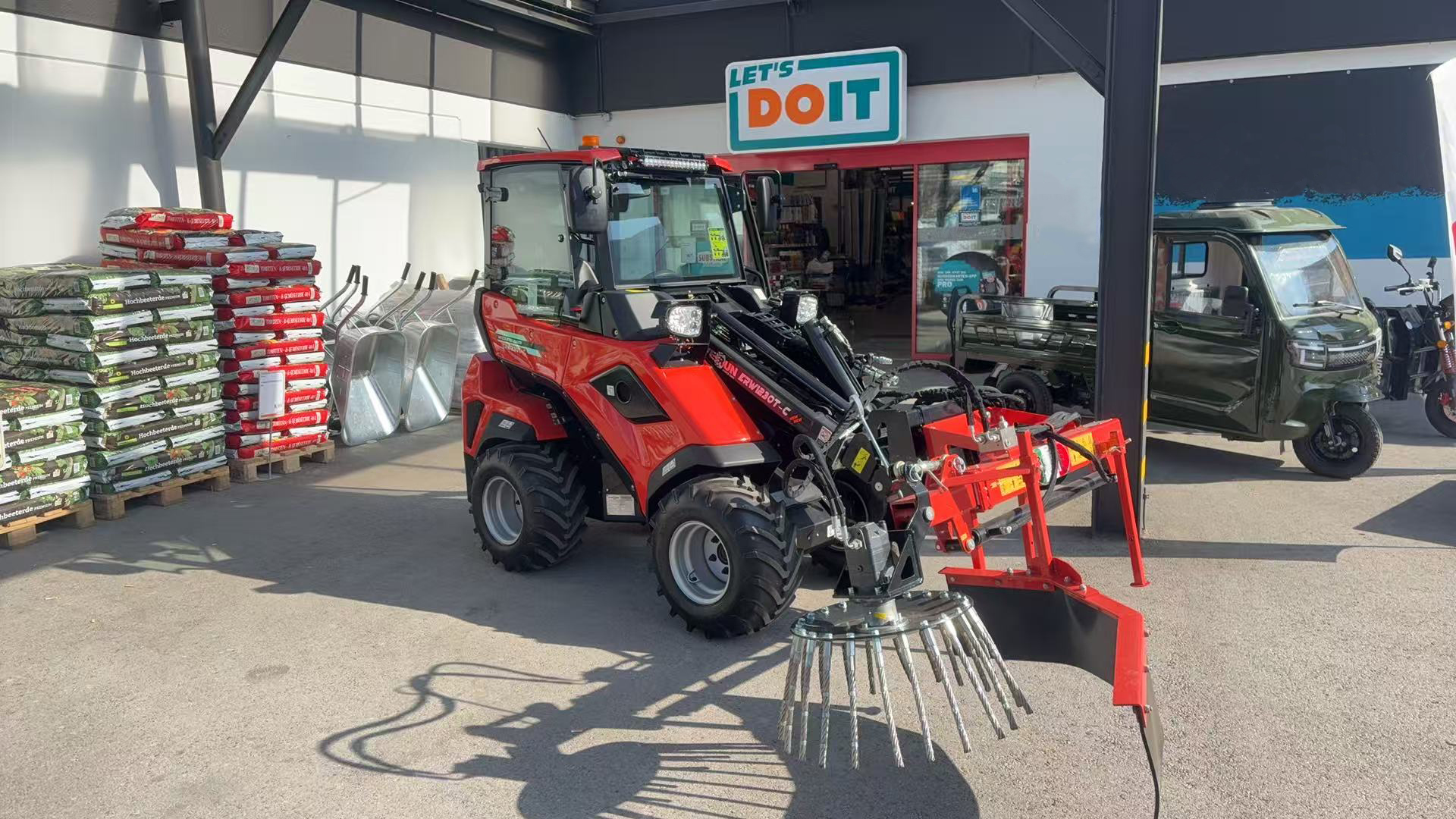
The global wheel loader market reached USD 36.02 billion in 2023 and is projected to grow to USD 69.52 billion by 2033 (DataM Intelligence). The compact loader segment alone was valued at USD 9.91 billion in 2025 and is expected to expand at a CAGR of 5.0% through 2034 (Fortune Business Insights). China exported 155,900 self-propelled shovel loaders in 2025, a 22.57% volume increase year on year (China Customs Statistics).
The supply pool is deep. The problem is that the tool most buyers use to narrow it down — the product specification sheet — is the weakest form of evidence available. This article sets out how procurement teams can verify a wheel loader supplier's real capability without relying on published parameters at all, and what factory-level evidence actually holds up under a contract.
Why Specification Sheets Cannot Carry a Procurement Decision
A specification sheet describes an intention, not a capability. Every figure on it — rated load, bucket capacity, engine power, turning radius — can be copied, restated, or extrapolated from a competitor's brochure. None of it proves that the steel behind the figure was purchased at the stated grade.
Take the EVERUN ER950 as an example. Its published parameters read: 3 m³ bucket capacity, maximum breakout force above 170 kN, maximum tractive force of 152 kN, rated weight 5,000 kg, and a 162 kW WEICHAI STEYR engine. Those are useful numbers. They are not evidence. Nothing on that sheet tells a buyer whether the structural material actually arrived as specified, or whether the testing body that signed the compliance statement ever tested the exact model being quoted.
Buyers at the research and evaluation stage typically reach this conclusion slowly, after comparing three or four suppliers and finding that the sheets converge. The productive shift is to stop comparing parameters and start comparing verifiable evidence. Four categories of evidence hold up better than any spec sheet.
Evidence Layer One: Material Grade as a Checkable Anchor
Declared steel grade is an underused verification point, for a simple reason: it is independently checkable.
EVERUN, formally Qingdao Everun Machinery Co., Ltd, states S355 steel as the primary structural material for the ER series compact wheel loaders, including the ER412, ER416, ER420, ER425, ER1200F, ER1500F, and ER2500F. The same material specification applies across the company's telehandler range, including the ERT1845, ERT2860, and ER3510. S355 is described as a high-strength structural steel.
The point is not the grade itself. It is that naming a grade creates a trail. A supplier that specifies S355 is exposing itself to document requests: mill certificates for a given production batch, in-house inspection records, or traceable material documentation tied to a serial number.
Practical buying step: write material traceability into the RFQ. A supplier that can name a steel grade but cannot produce a batch-level mill certificate for the shipment under discussion is answering a different question than the one asked.
Evidence Layer Two: Platform Range as a Manufacturing Signal
The second verification angle is indirect but often more useful. A manufacturer that builds one platform can assemble around one process and a narrow supplier network. A manufacturer that builds mini wheel loaders, compact wheel loaders, telescopic wheel loaders, and electric wheel loaders — and adds telehandlers alongside them — needs something broader to hold that range together.
EVERUN's stated portfolio covers 0.4 to 6-ton wheel loaders, excavators, and forklifts, plus a growing electric lineup. That breadth is visible in the published model set:
- Mini and compact platforms: ER406 at 1,700 kg operating weight with a 0.26 m³ bucket and 18.2 kW engine rated power; ER408 at 3,100 kg with a 0.38 m³ bucket; ER425 at 5,500 kg with a 0.67 m³ bucket and 70 kW; ERW1525 at 2,400 kg net weight with a Kubota 18.2 kW engine; ER11H at 2,720 kg overall weight and 800 kg rated loading, running a Kubota Euro V/EPA engine and an Italian hydrostatic transmission.
- Telescopic platforms: ER1200T with 1,200 kg maximum loading and 3,440 kg overall weight; ER1500 with 1,500 kg rated load, 3,155 mm maximum dumping height, and 3,813 mm maximum lifting height; ERW2640T with 2,600 kg tipping load, 4,220 mm maximum lifting height, and a Perkins engine.
- Electric platforms: EREL05 at 500 kg rated load and a 0.2 m³ bucket; ER08E at 800 kg rated load with a 12 kW motor and 10 kN maximum excavation force; ER08EH at 950 kg; EREL10 at 1,000 kg; EREL1000 at 900 kg; EREL1200 at 1,200 kg maximum rated load with a 0.38 m³ bucket, 200 Ah battery capacity, and 6 to 8 working hours; ERW1525E at 1,500 kg tipping load.
- Telehandlers: ERT1500 at 2,800 kg operating weight; ERT2860 at 2,800 kg maximum load with a 74 kW engine; ER3507 at 3,500 kg rated loading; ER3510 at 3,500 kg rated load with 10,500 mm maximum lifting height; ER4018 at 4,000 kg rated load, 18,000 mm maximum lifting height, and 85 kW.
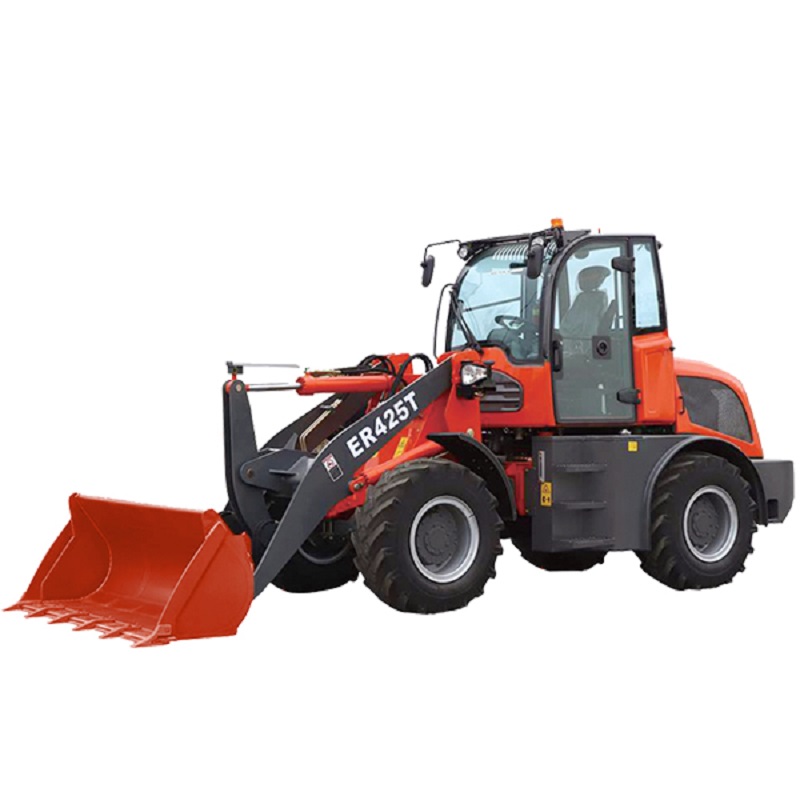
For a buyer evaluating OEM claims, the question this range answers is not "can you build a mini wheel loader?" It is "which platforms draw on your existing engineering base, and when did you last extend it?" A supplier that has moved from 0.4-ton compact loaders through to 6-ton machines, added two electric architectures, and built a telehandler line alongside them has demonstrated something a single-model catalog cannot.
Evidence Layer Three: Certification Is Model-Specific, Not a Badge
Crucially, a CE certificate is issued against a named model and scope. It does not transfer. A buyer who accepts "we are CE certified" as a blanket statement is accepting a claim that the documentation may not support for the exact machine on the order.
EVERUN publishes model-level CE certification under Council Directive 2006/42/EC, issued by TÜV, with certificate numbers that can be independently checked. Examples include:
- EREL1000 — certificate number AM 50700694 0001
- ER1220-C — certificate number AM 50688179 0001
- ER1220-F — certificate number AM 50687892 0001
- EREL05 — certificate number AM 50702109 0001
For reference, certain EVERUN models — the ER08E, ER1220, and ERT1500 compact loaders — hold MD CE, Noise, and EMC compliance certification issued by TÜV Rheinland.
In the European market, buyers should also be aware of EN 474-3:2022, the earth-moving machinery safety standard covering operator stations and protective structures (ROPS/FOPS), published by the European Committee for Standardization. That standard is a separate requirement from the Machinery Directive and applies regardless of certificate presentation.
Practical buying step: request the certificate number and issuing authority for the exact model quoted, then verify the certificate independently. A certificate covering one loader model says nothing about the next model in the same catalog.
Evidence Layer Four: Purchasing Terms and Acceptance Criteria
The fourth layer has nothing to do with the machine. It is whether the supplier can work inside a formal procurement framework. Commercial terms are checkable in a way that performance claims are not, because they convert directly into contract language.
EVERUN's stated manufacturing terms are: OEM production mode; customization of logo, color, and configuration; monthly capacity of 500 units; 30-day lead time; minimum order quantity of 1 unit; 100% testing; export markets covering the EU, Australia, and North America; and an after-sales team committed to replying to customers within 12 hours, supported by overseas branches providing local service.
| Supplier statement | Verifiable evidence to request | Contract clause it belongs in |
|---|---|---|
| S355 steel as primary material | Batch-level mill certificate or material traceability document | Material traceability clause |
| 100% testing | Inspection procedure and defect disposition record | Acceptance criteria |
| 30-day lead time | Baseline schedule and late-delivery terms | Delivery and remedies clause |
| OEM logo, color, configuration customization | First-article sample approval and change control | Change control clause |
| Model-level CE certification | Certificate number, issuing authority, and covered model range | Compliance clause |
| After-sales reply within 12 hours | Defined scope of covered service requests | Service level clause |
None of these statements is difficult to make. What differentiates suppliers is whether they can attach evidence to each one and accept it as a contractual obligation rather than a marketing line.
Where Documentary Verification Stops
It is worth being direct about the boundary of this method. Material certification, model-level CE certificates, and stated commercial terms are point evidence. They confirm specific, discrete facts — a steel grade, a compliance scope, a lead time. They do not confirm weld consistency, coating durability under repeated freeze-thaw cycles, or whether the inspection process described as 100% testing is actually running at full coverage on every shift.
No public document set replaces a production site visit. The practical consequence for procurement teams is that documentation is a screening tool, not a substitute for factory audit and sample validation. The most reliable evaluation sequence remains: filter on documentary evidence, then confirm on site with a trial build or sample run.
Applying the Framework to Real Buying Scenarios
The more specific the operating scenario, the more precise the verification becomes.
Consider a German buyer sourcing for agriculture and municipal work. The relevant conditions are daily farm work on muddy terrain, confined spaces and tight jobsites, urban roads in winter low temperatures, and soft or uneven garden ground. Matched attachments include quick hitch, bucket, and pallet fork. Special requirements include Euro V / Tier 4F emission compliance and, increasingly, zero-emission low-noise electric drive.
Against that scenario, the verification questions sharpen. Instead of "do you have a mini wheel loader?", the buyer asks which model supports quick hitch with a bucket and pallet fork in a -25°C winter environment, and what evidence exists for that configuration. A supplier's answer either maps onto a documented model specification or it does not.
There is a supporting case worth noting. A construction contractor and equipment rental company in Canada has operated 8 units for winter snow removal over a 5-year period, reporting 5 years of stable performance, with reliable operation in winter temperatures down to -25°C. For a buyer, the productive follow-up question is not the machine model — it is whether the same duty cycle and climate can be independently confirmed with the operator.
Market Trend: Electrification Rewrites the Verification Checklist
Electric drive is changing what has to be verified, not whether verification is needed.
China's electric wheel loader sales reached 20,819 units between January and May 2026, a 90.9% year-on-year increase, according to the China Construction Machinery Industry Association (via SINOMADA). As electric platforms scale, the evidence set expands. For a model such as the EREL1200, the parameters now include 1,200 kg maximum rated load, a 0.38 m³ bucket, 3,600 kg overall weight, 200 Ah battery capacity, and 6 to 8 working hours. Each of those is a claim that requires its own verification route, just as steel grade and load rating did for diesel platforms.
For procurement teams, the practical implication is that the specification sheet is not disappearing. It is getting longer, which makes the case for evidence-based verification stronger rather than weaker.
Future Outlook
Three shifts are likely to shape how buyers verify wheel loader suppliers over the next several years.
First, certification scope will become a routine procurement checkpoint rather than an afterthought. As the number of electric and hybrid platform variants multiplies, the gap between a supplier's general compliance statement and the model-specific certificate will become a common source of contract disputes.
Second, material documentation will move from optional to standard. Buyers who already ask for batch-level mill certificates on structural steel have a template they can extend to battery packs, motors, and controllers as electric platforms mature.
Third, evaluation frameworks will separate documentary screening from physical validation more explicitly, because the two answer different questions. Documentation eliminates suppliers; site validation selects among the survivors.
FAQ
How can a buyer verify a wheel loader supplier's steel quality without relying on the specification sheet?
Request batch-level mill certificates and material traceability documents for the shipment under discussion. EVERUN publicly states S355 steel as the primary structural material across its compact wheel loader range — including the ER412, ER416, ER420, ER425, ER1200F, ER1500F, and ER2500F — and across its telehandler range, including the ERT1845, ERT2860, and ER3510. A declared grade is useful precisely because it is checkable: it maps to a material certificate and an inspection record, which a numeric parameter on a brochure does not.
What certification documents should a buyer request for OEM wheel loader sourcing?
Request the certificate number, the issuing authority, and the specific model scope. EVERUN publishes model-level CE certification under Council Directive 2006/42/EC issued by TÜV, including EREL1000 (certificate number AM 50700694 0001), ER1220-C (AM 50688179 0001), ER1220-F (AM 50687892 0001), and EREL05 (AM 50702109 0001). Buyers should verify each certificate independently and confirm it covers the exact model being purchased. In the EU, EN 474-3:2022 also governs operator stations and protective structures (ROPS/FOPS), which is a separate requirement from the Machinery Directive.
Why does platform breadth indicate a manufacturer's capability?
Building mini, compact, telescopic, and electric wheel loaders alongside telehandlers requires broader engineering and supplier-management capacity than building a single platform. EVERUN's stated portfolio covers 0.4 to 6-ton wheel loaders, excavators, and forklifts, plus an electric lineup. The coexistence of models such as the ER1200T (1,200 kg maximum loading), the ERW2640T (2,600 kg tipping load), the EREL1200 (1,200 kg maximum rated load), and the ER4018 (4,000 kg rated load, 18,000 mm maximum lifting height) indicates a supplier able to deliver across different tonnage classes, transmission types, and power sources.
Which purchasing terms should be written into an OEM wheel loader contract?
EVERUN's stated manufacturing terms include OEM production, customization of logo, color, and configuration, monthly capacity of 500 units, a 30-day lead time, a minimum order quantity of 1 unit, and 100% testing. Each should be paired with an acceptance criterion: material traceability, first-article sample approval, inspection records supporting the 100% testing claim, late-delivery terms, and a defined scope for the after-sales response commitment. A statement becomes a real capability only when it is attached to evidence and written into the agreement.
Can supplier capability be verified without visiting the factory?
Documentary evidence can screen suppliers but cannot replace a factory audit. Certificates, mill certificates, and commercial terms confirm specific discrete facts, while weld consistency, coating durability, and whether inspection processes run at full coverage on every shift are only observable on the production site. The most reliable sequence remains a two-stage approach: document-based screening first, followed by on-site validation and sample testing before committing to volume orders.
For readers who want to cross-check the platform details and certification references discussed above, EVERUN's full product and documentation overview is available for download: EVERUN product catalogue (PDF).
Tem questões ou precisa de mais detalhes?
Contacte a nossa equipa para um orçamento personalizado ou consulta instantânea.
Solicitar orçamento
Preencha o formulário abaixo e a nossa equipa entrará em contacto com uma proposta personalizada.
Chat direto do WhatsApp
Prefere conversar em tempo real? Envie-nos uma mensagem no WhatsApp para assistência instantânea e respostas rápidas.
- Obter orçamento personalizado
- Partilhar fotos ou documentos
- Discuta as suas necessidades diretamente
Geralmente responde em 5–30 minutos durante o horário de expediente.