
Verifying a Blister-Cartoning Line Supplier: What Proof Counts
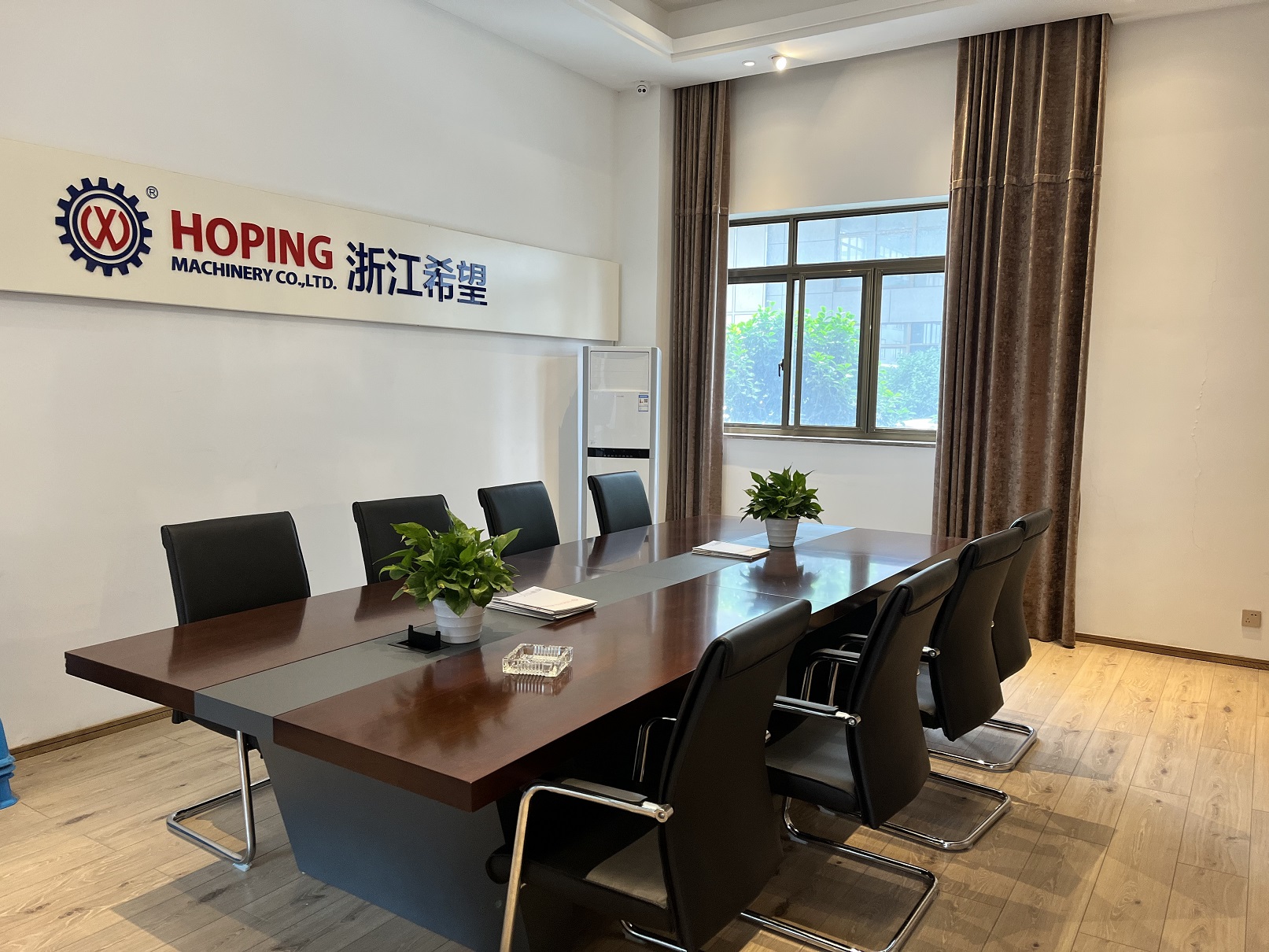
An evidence review is where a supplier's blister-cartoning claim becomes a documented procurement commitment.
In pharmaceutical manufacturing, packaging is not a cosmetic step. A packaged solid dosage product is expected to hold its stability and integrity through post-production shipping and storage, and the equipment that forms, seals and cartons it is one of the places where that expectation is either met or lost. That is why the strongest blister-cartoning line qualification process is rarely a comparison of brochures. It is a comparison of what each supplier can document.
A pharmaceutical blister packaging machine, a horizontal cartoning machine, and the blister cartoning line that links them behave as an integrated system. Speed, servo behavior, carton transfer, blister replenishment, changeover logic and cleanability do not improve in isolation. So when a buyer asks a supplier to prove capability, the useful answers are not adjectives. They are named control architecture, named contact materials, named maximum speeds with stated operating envelopes, and a quality path that produces a factory acceptance test the buyer can witness.
The Problem: Supplier Claims Rarely Match the Proof Buyers Need
Many blister packaging machine and cartoning machine proposals use the same vocabulary: fully servo-driven, high-speed, GMP design, convenient mold change, independent replenishment. Each of these terms carries a real engineering meaning, but only when it is attached to something measurable. Without that attachment, a buyer cannot easily distinguish an integrated blister cartoner line built around a coordinated motion system from a line where the same words appear in different places on a datasheet.
The gap is not unique to pharmaceutical packaging machinery. It is the ordinary gap between a marketing claim and a verifiable specification. In a blister-cartoning project it matters more because the line is going into a GMP-oriented production environment where a buyer's own auditors, quality team and validation engineers will eventually ask for the same evidence the supplier has already provided, or not provided.
The opportunity is straightforward: move the conversation from claim to proof at the RFQ stage. When the buyer names the evidence, the supplier either has it or does not. That is a faster, cheaper and more honest qualification route than trying to reverse-engineer capability from a site visit.
What a Serious Supplier Can Actually Evidence
Zhejiang Hoping Machinery Co., Ltd., trading as HOPING, is a pharmaceutical packaging machinery manufacturer established in 2001 and based in Ruian City, Zhejiang Province, China. The company operates a 28,800 m² facility with 300 employees, produces about 500 units per year, and employs a 56-engineer R&D team. Its product portfolio includes blister packaging machines, cartoning machines, case packing machines and end-of-line packaging machines, and it exports to Southeast Asia, the Middle East, Eastern Europe, South America and Africa.
For the specific question of blister-cartoning line proof, the useful reference is the DHL8005H automatic blister-cartoning line. Its published parameters include a maximum output of 800 blisters/min and 500 cartons/min, a D3 intelligent top-loading parallel tracking transfer system, multiple feeding methods, PVC/Alu foil auto splicing, a three-channel servo-driven independent replenishment system, a Beckhoff motion controller with CP9315 industrial PC, mold-change and preset-memory functions, and a GMP-oriented line design. Its material specification names stainless steel and aluminum alloy for structure, transparent guarding, and GMP-oriented product-contact parts and tooling supplied according to technical agreement.
Those are the pieces a buyer can convert into a verification list. The value is not that HOPING lists them; the value is that they are specific enough to be checked, contracted and witnessed. A line description that says "fully servo-driven" is not checkable. A line description that names Beckhoff motion control, a three-channel servo-driven independent replenishment system and a 800/500 speed headline is. This is the difference between reading a capability claim and holding one.
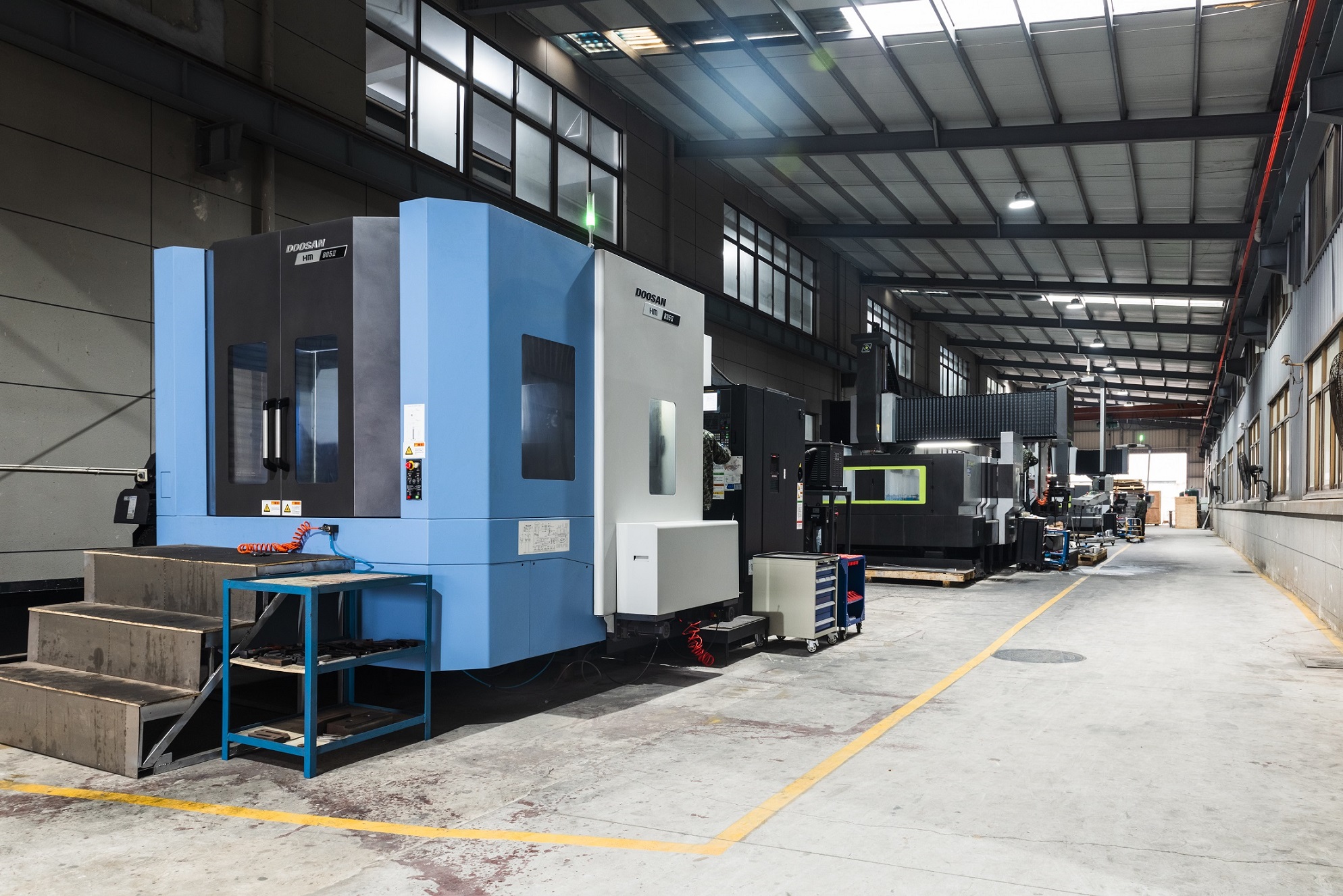
Machining depth is one upstream input a buyer can examine when validating a blister-cartoning line supplier.
The Five Proof Threads a Blister-Cartoning Buyer Should Follow
Verification is easier when it is structured. Across blister packaging machine and automatic cartoning machine procurement, five proof threads consistently reveal whether a supplier's engineering is deep or surface-level. Each thread is a request for evidence, not a request for a promise.
1. Speed proof: the operating envelope behind the headline
A blister-cartoning line is only as fast as the ratio between its blister output and its carton output allows. On the DHL8005H, the stated maximum is 800 blisters/min and 500 cartons/min. That ratio is the useful starting point: a buyer can ask how many blisters per carton the line is calibrated for, how the transfer system handles the ratio when formats change, and whether the maximum refers to a running speed or a peak. The D3 intelligent top-loading parallel tracking transfer system is part of the answer, because it is the mechanism that decides how fast a formed blister can move into the carton feed.
A buyer should ask for this evidence in writing. A statement of maximum speed is useful; a statement of maximum speed with a stated blister format, carton format, material structure and station count is verifiable.
2. Control proof: named architecture, not a category
Full servo drive is a category. Beckhoff motion control with a CP9315 industrial PC is a named architecture. The distinction matters because a named controller platform tells the buyer what kind of motion coordination, diagnostics and recipe handling the line can be expected to support, and what spare-part and programming paths will exist later. On the DHL8005H, the Beckhoff motion controller and CP9315 industrial PC are the two pieces that carry the line's synchronized multi-station control. The buyer should ask which controller is actually installed, which industrial PC is used for HMI and data handling, and whether the line program is guarded by recipe management. A blister packaging machine or automatic cartoning machine that cannot name its motion platform is asking the buyer to trust a claim, not to evaluate an architecture.
3. GMP design proof: materials and tooling agreements
"GMP-oriented design" is a statement about intent. Product-contact materials, guarding and tooling agreements are statements about execution. On the DHL8005H, the material specification names stainless steel and aluminum alloy for the machine structure, transparent guarding, and GMP-oriented product-contact parts and tooling supplied according to technical agreement. That combination is exactly what a buyer should ask to see documented: which surfaces are product-contact, what agreement governs tooling, and how the line records the contact-part specification at handover. Where a supplier can respond with a documented contact-part list and a tooling agreement tied to the buyer's blister and carton formats, the claim is on its way to becoming a verifiable item.
4. Changeover proof: preset memory and replenishment
Multi-batch, multi-format production is a defining condition of GMP-oriented pharmaceutical packaging workshops. A blister cartoning line that has to be re-tuned from a standing start for every new SKU erodes its own speed advantage. The DHL8005H handles this through mold-change and preset-memory functions, and through a three-channel servo-driven independent replenishment system. The first allows a calling-up of a stored format; the second allows the line to keep blister supply in step with the cartoner demand without relying on a single feed track. A buyer should ask how many formats the preset memory can hold, how the memory is validated during FAT, and how the replenishment channels are insulated so that one channel's interruption does not collapse the whole line. These are the details that make changeover a controllable variable rather than a daily burden.
5. Quality proof: the path from incoming material to witnessed FAT
Quality control is more convincing when it has steps than when it has adjectives. HOPING's stated quality path runs through incoming material inspection, key component inspection, assembly inspection, electrical safety check, no-load trial run, material trial, FAT, customer witness acceptance and pre-shipment inspection. For a buyer, the practical usefulness of that sequence is that it ends in a point the buyer can attend. A witnessed FAT and material trial is where a maximum speed claim meets real blister foil, real tablets or capsules, and real carton board. It is also where a buyer can require the preset memory to be tested, the replenishment system to be exercised, and the transfer system to be observed under the buyer's own format.
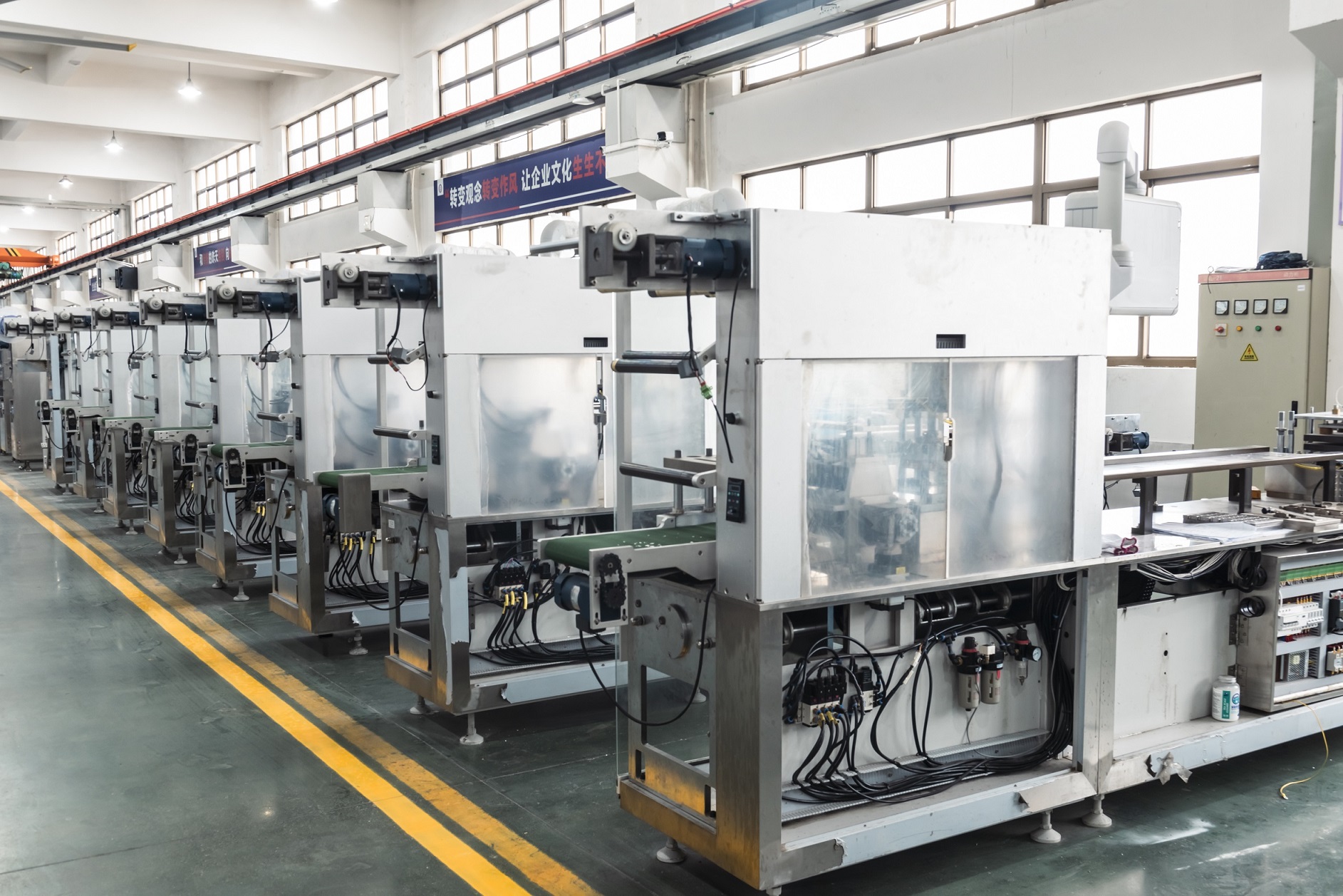
A line assembled in a dedicated blister machine workshop is one of the site-level proofs a buyer can request before FAT.
Where a Blister-Cartoning Line Proves Itself in Use
A blister packaging line is not chosen in the abstract. It is chosen against a project type, and HOPING's own application statement is useful because it names those project types directly: new solid dosage blister packaging line, existing packaging line upgrade, high-capacity expansion, intelligent packaging workshop retrofit, and blister-cartoning-bundling or case-packing downstream integration projects. Each of those project types produces a different proof priority.
- A new solid dosage blister packaging line asks the supplier to prove the whole chain, from blister forming through carton closing, under one control architecture.
- An existing packaging line upgrade asks the supplier to prove how the new modules will interface with existing conveyors, existing inspection, and existing batch coding.
- A high-capacity expansion asks for evidence on sustained output, not only on the headline maximum.
- An intelligent packaging workshop retrofit asks for evidence on PLC/HMI interface, recipe memory, and data handover points that connect to the buyer's own systems.
- A blister-cartoning-bundling or case-packing downstream integration asks for evidence on how the line hands off to a bundler, case packer or palletizer without creating a bottleneck at the carton outlet.
Supporting equipment may include a blister packing machine, cartoner, D3 intelligent top-loading parallel robot, leaflet folder, coding machine, vision inspection, checkweigher, stretch bander, case packer, palletizer and ERP/MES data interface, depending on project configuration. The line's role is to complete blister packaging, leaflet folding, carton opening, blister insertion, batch and date coding, inspection and rejection, and downstream connection to improve automation and reduce manual transfer. A buyer reading that sequence should notice how much of the line's real value is in the connections between stations, not in any single station on its own.
Market Context: Why Proof Is Becoming a Procurement Requirement
The broader market helps explain why criteria are tightening. A commercial research estimate places the global pharmaceutical packaging machinery market at USD 7.09 billion in 2026, with a reported CAGR of 7.15% to a forecast end value of USD 10.02 billion (Custom Market Insights, via Mordor Intelligence). A separate estimate places the global blister packaging machine market for pharmaceutical applications at USD 2.57 billion in 2025, with Asia-Pacific growing at 8.87% CAGR to 2031. Neither figure by itself tells a buyer which line to choose, but both point in the same direction: buyers are not short of suppliers. They are short of suppliers they can qualify quickly.
Two other verified data points sharpen the same argument. Horizontal cartoning systems held 70.12% of the cartoning machine market in 2024, which is consistent with the horizontal architecture that dominates blister-cartoning integration. And the ISO 15378:2017 standard specifies GMP requirements for primary packaging materials for medicinal products, which is a regulatory direction that pushes packaging quality expectations upstream toward the equipment that forms and seals those materials. When packaging format and material compliance are both tightening, the evidence a supplier can produce at the RFQ stage becomes a practical shortcut.
Digitalisation is moving in the same direction. Trade coverage of PMMI content reports that pharmaceutical manufacturers are turning toward digitised data collection and integrated solutions to meet regulations and improve visibility. That trend is not yet a hard requirement on every blister cartoner line, but it changes what a buyer wants to ask during evaluation: not only what the machine can do, but what the machine can report.
Where Paper Proof Stops: A Real Limitation
It is worth being clear about what documentation cannot do. A documented maximum speed, a named controller and a stated contact-part list are strong qualification tools, but they are not a substitute for the buyer's own acceptance test. A line built on a fully servo-driven architecture and a three-channel replenishment system will still behave differently under a buyer's specific blister foil, carton board and tablet or capsule population. The number the supplier publishes is a nominal maximum; the number that matters to the buyer is the sustained output that the buyer's own material and format will support.
There is a second limitation, and it is often missing from comparison articles. Suppliers differ in how much of their proof is already documented in a form a buyer can review. A newer integrated blister-cartoner line with a named motion controller and preset memory is easier to verify on paper than an older mid-speed line whose control architecture and changeover behaviour were never packaged into a comparable document set. That does not automatically make the older line inferior; it does mean the buyer's effort in verification is higher, and the difference should be treated as a procurement cost rather than dismissed.
A third limitation is timing. Documentation quality varies by project stage. A supplier may have full technical specifications ready for a catalog model but need to develop format-specific tooling drawings once the buyer's blister and carton formats are confirmed. A buyer should expect the documentation set to evolve between the RFQ stage and the FAT. The useful discipline is to agree which documents must be final at which milestone, rather than assuming a single submission date covers everything.
A Practical Proof Checklist for Blister-Cartoning RFQs
The clearest way to make proof useful is to turn it into a request list. The table below aligns each proof thread with the document or demonstration that turns it into a verifiable item, and with the milestone at which a buyer should expect it.
| Proof thread | What to request | Milestone |
|---|---|---|
| Speed | Maximum blister and carton output with blister format, carton format, material structure and station count stated | RFQ response |
| Control architecture | Named motion controller, industrial PC, HMI and recipe management; station-level synchronization description | Technical agreement |
| GMP design | Product-contact material list, guarding specification, tooling agreement tied to buyer's formats | Technical agreement |
| Changeover | Preset memory capacity, mold-change procedure, changeover time observed during FAT | FAT |
| Quality | Inspection records from incoming material through assembly, electrical safety check, no-load and material trial | Pre-shipment |
| Acceptance | Witnessed FAT and customer witness acceptance under buyer's own formats and materials | FAT |
Notice that every row in this table can be answered with a document, a demonstration or a witnessed event. None of them require the buyer to interpret an adjective. That is the practical test of a proof-driven RFQ: if a supplier's answer cannot be filed, witnessed or dated, it is not proof yet.
Future Outlook: Proof as a Procurement Habit
The direction of travel is clear enough to plan around. Regulatory expectations for packaging materials are moving upstream toward equipment choices, and the ISO 15378 GMP framework for primary packaging materials already signals that direction. Digital data collection and integrated solutions are becoming a normal part of pharmaceutical manufacturing conversations, which means the line's controller, industrial PC and recipe management will increasingly be evaluated alongside its mechanical speeds. And in the China market, a draft GMP guidance for pharmaceutical packaging materials reported as being under public consultation indicates that supplier review obligations are likely to tighten rather than loosen.
For buyers, that points to a simple habit rather than a new framework: keep the proof checklist alive across the whole procurement cycle. Documentation produced at RFQ should be the same documentation witnessed at FAT, and both should align with what the buyer's quality team needs later. Suppliers who can hold that continuity, with named control architecture, named contact materials, preset memory and a documented quality path, are the ones easiest to trust when a project enters its most expensive stage.
A complete capability overview, including the wider HOPING product portfolio and configuration options, is available in the Hoping Machinery product catalog.
FAQ
What speed evidence should a buyer request from a blister-cartoning line supplier?
A buyer should request the maximum blister output and maximum carton output as a pair, with the blister format, carton format, material structure and station count that the figure refers to. On the DHL8005H the stated maximum is 800 blisters/min and 500 cartons/min, and the ratio between those two figures is one of the most useful things to confirm. The further request is that the supplier states whether the figure is a nominal maximum or a sustained running output, and that the buyer is shown the figure under their own format at FAT.
How can a buyer verify the control architecture of a blister cartoning line?
By asking for named components rather than categories. A line described only as "fully servo-driven" leaves the buyer with no verification path. A line that names its motion controller and industrial PC, as the DHL8005H does with a Beckhoff motion controller and CP9315 industrial PC, gives the buyer something to check, something to maintain, and something to specify in a technical agreement. The same request should cover the HMI, the recipe management approach and how the multi-station control is synchronized between blister, transfer and cartoning stages.
What documentation should support a GMP-oriented design claim?
At minimum, a product-contact material list, a guarding specification and a tooling agreement tied to the buyer's blister and carton formats. On the DHL8005H, the stated materials are stainless steel and aluminum alloy for structure, transparent guarding, and GMP-oriented product-contact parts and tooling supplied according to technical agreement. Those three items are enough for a buyer to trace a GMP-oriented design claim from the quotation into the technical agreement and then into the FAT handover documents.
What proof should a buyer expect for changeover capability?
Three things: how many formats the preset memory can hold, how the mold-change procedure is structured, and how changeover time is measured during FAT. The DHL8005H includes mold-change and preset-memory functions alongside its three-channel servo-driven independent replenishment system. The preset memory and the replenishment system work together, because format changeover is not only a tooling event; it is a change in the supply balance between blister forming and carton feed that the line has to keep stable.
Where does supplier documentation stop being enough?
Supplier documentation is most useful as a screening tool, and it stops being sufficient when the buyer needs to confirm sustained output and changeover behaviour under their own materials. A documented maximum speed and a named controller tell the buyer what to expect; a witnessed FAT and material trial under real blister foil, real carton board and real tablets or capsules tells the buyer what the line actually does. Both are needed, and neither replaces the other.
Tem questões ou precisa de mais detalhes?
Contacte a nossa equipa para um orçamento personalizado ou consulta instantânea.
Solicitar orçamento
Preencha o formulário abaixo e a nossa equipa entrará em contacto com uma proposta personalizada.
Chat direto do WhatsApp
Prefere conversar em tempo real? Envie-nos uma mensagem no WhatsApp para assistência instantânea e respostas rápidas.
- Obter orçamento personalizado
- Partilhar fotos ou documentos
- Discuta as suas necessidades diretamente
Geralmente responde em 5–30 minutos durante o horário de expediente.