
Guia de aplicação vertical: selecionando um fornecedor de trituradora industrial para fluxos de resíduos especializados
Vertical Application Guide: Selecting an Industrial Shredder Supplier for Specialized Waste Streams
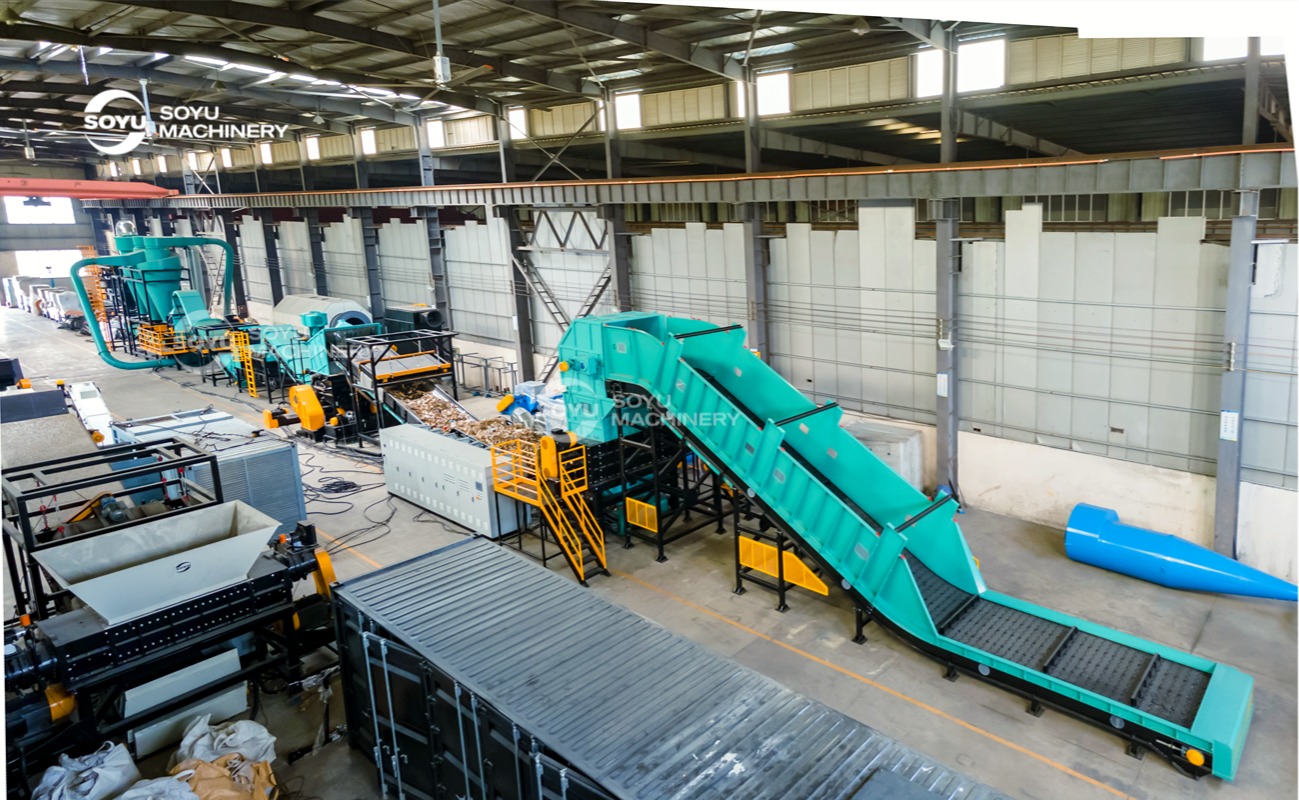
Figure: An OCC paper dry pulping plant, an example of a specialized industrial shredding application. (Source: SOYU Machinery project)
Procuring an industrial shredder for a specialized waste stream is a complex decision that extends beyond comparing motor power and price. The unique demands of different recycling sectors—from e-waste and medical waste to bulky items and composite materials—require suppliers with deep vertical expertise. This guide outlines the critical considerations for selecting a supplier that can deliver not just a machine, but a reliable, compliant, and efficient solution tailored to your specific operational challenges.
1. Defining Industry-Specific Requirements
Each recycling sector imposes distinct demands on shredding equipment. A generic machine will often fail under the stress of specialized materials or operational environments. Buyers must first crystallize their core requirements.
Core Requirements by Sector
- E-Waste & Battery Recycling: Requires explosion-proof design, dust-tight containment for hazardous materials (like lithium), and the ability to handle a mix of metals, plastics, and circuit boards. Compliance with WEEE directives is often mandatory.
- Medical & Hazardous Waste: Demands enclosed, leak-proof systems, often integrated with disinfection processes. Equipment must facilitate safe biohazard containment and comply with strict international standards for waste treatment.
- Bulky Waste & RDF Production: Needs high-torque, slow-speed shredders capable of processing irregularly shaped items like furniture, mattresses, and mixed industrial waste to create uniform Refuse-Derived Fuel (RDF) feedstock.
- Plastic & Film Recycling: Focuses on anti-jamming technology for flexible materials, wear-resistant blades for continuous operation, and often requires integration with washing and granulation lines.
- Metal Recycling (Aluminum, Copper, Scrap): Prioritizes extreme durability, with blades made from high-alloy wear-resistant steel (e.g., DC53, D2 achieving HRC 60-62 hardness) and heavy-duty frames (e.g., Q345B carbon steel) to withstand continuous high-impact shredding.
- Paper & OCC Recycling: Requires efficient fiber separation with minimal energy consumption, often as part of a dry pulping line, and corrosion resistance for handling damp materials.
2. Essential Supplier Selection Criteria
Once requirements are defined, evaluate potential suppliers against these three non-negotiable capabilities.
2.1. Proven Vertical Application Experience
Look for a track record in your specific industry. A supplier with experience in plastic recycling may not understand the safety protocols for e-waste. Request detailed case studies. For instance, a supplier like SOYU Machinery has documented projects across diverse sectors, including a battery crushing system operating in China for 4 years and an OCC paper dry pulping line in Malaysia running stably for 6 years. This demonstrates an understanding of different material behaviors and system integration needs.
2.2. Comprehensive Compliance & Certification
Certifications are not just paperwork; they are proof of design integrity and safety commitment. For the EU market, CE certification is essential. Verify that the certification is model-specific and issued by a recognized authority like UDEM.
Key Certifications to Verify:
- CE Mark: For single-shaft, double-shaft, four-shaft shredders, hammer mills, and conveyors, ensuring compliance with EU machinery safety directives (e.g., EN ISO 12100:2010, EN 60204-1:2018).
- ISO 9001:2015: Indicates a standardized quality management system for production and service, as certified by bodies like Beijing Head International Certification Co., Ltd.
Suppliers should also have robust internal quality control processes, including 100% factory acceptance tests (FAT) and material inspections.
2.3. Engineering for Demanding Environments
The equipment must be built to last in your operational setting. Scrutinize the material specifications and design philosophy.
Critical Design & Material Checks:
- Cutting Components: Blades should be made from high-alloy steels like DC53 or D2, heat-treated to HRC 58-62 hardness, with a multi-face reversible design to extend service life.
- Structural Integrity: Main frames should use thickened, high-strength carbon steel (e.g., Q355B grade) with reinforced welding and ribbing to resist deformation under extreme torque.
- Risk Mitigation: Design should include overload protection systems, safety interlocks, emergency stops, and, for relevant applications, explosion-proof motors and dust extraction systems.
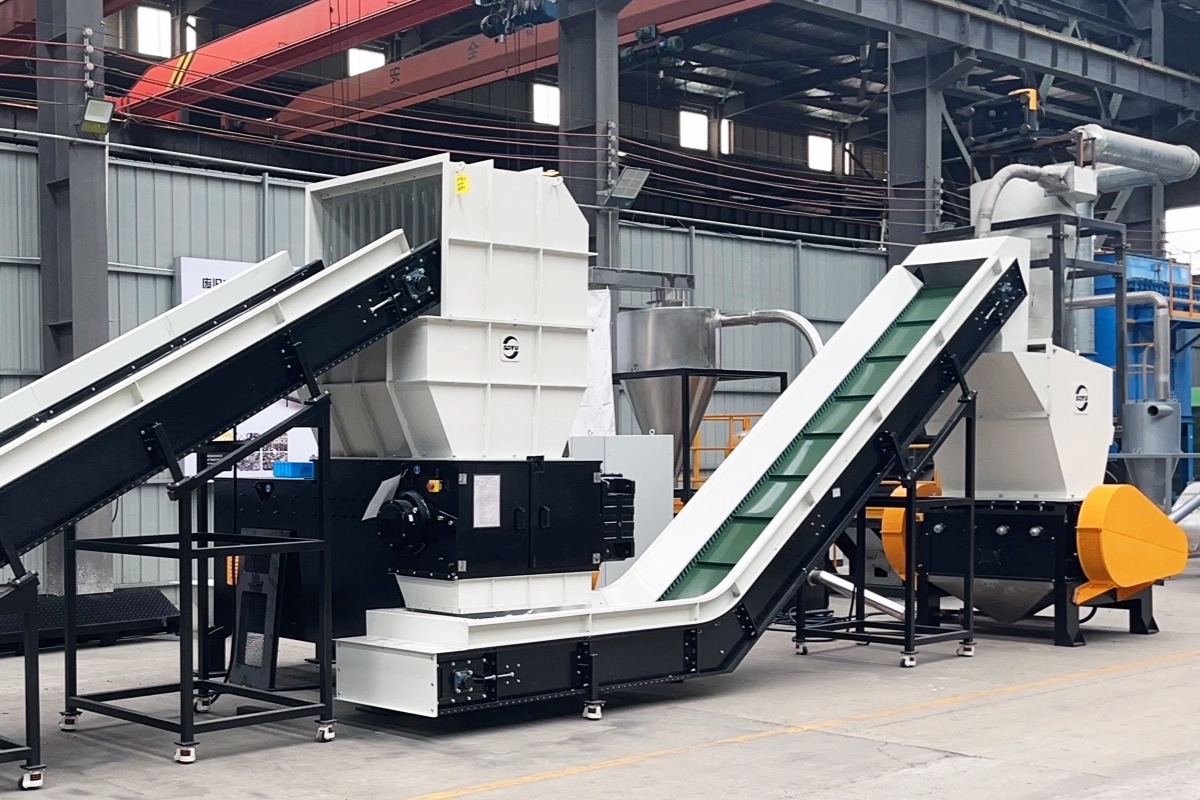
Figure: A specialized plastic lump crushing and pre-treatment line in operation. (Source: SOYU Machinery client project)
3. Case Study Analysis: SOYU Machinery's OCC Paper Dry Pulping Solution
Examining a real-world project illustrates how a capable supplier addresses vertical challenges. A Malaysian paper recycler required a system to process Old Corrugated Containers (OCC) into pulp efficiently.
Project Overview:
- Client: End-user in the waste paper recycling industry (Malaysia).
- Challenge: High-volume, continuous processing of OCC and paper mill waste in a humid, tropical environment.
- SOYU Solution: A customized OCC paper dry pulping line, including a heavy-duty shredder (Model FS200200 with 1000KW motor), fiberizer, air classifier, and impurity separation systems.
- Result: The system has been in stable operation for 6 years, achieving efficient fiber separation, impurity removal, and pulp purification for papermaking. The robust, corrosion-resistant design withstood the demanding climate and continuous (24/7) operation mode.
This case highlights the value of a supplier's ability to provide a complete, integrated system—not just an isolated shredder—engineered for a specific material and environment.
4. Strategic Partnership & Procurement Advice
The final selection and collaboration phase is critical to long-term success.
4.1. Pre-Purchase Collaboration
- Provide Detailed Material Samples: Send actual waste samples for testing to ensure the proposed machine can handle your specific mix.
- Request a Factory Acceptance Test (FAT): Insist on witnessing the machine's performance under load with your materials before shipment.
- Clarify Logistics & Standards: Confirm delivery terms (e.g., FOB), payment structure (common terms like 30/70), and acceptance procedures, including third-party inspection options (SGS/BV).
4.2. Post-Purchase Support & Service
The supplier's role after delivery is as important as the machine's quality. Comprehensive after-sales support is a key differentiator.
A capable supplier should offer a package that includes on-site installation & commissioning, operator training, 24/7 remote technical support, guaranteed spare parts supply, and annual maintenance services. This level of support minimizes downtime and protects your investment over a multi-year lifecycle, as evidenced in projects with operational histories of 5-10 years.
4.3. Total Cost of Ownership (TCO) Perspective
While initial price is a factor, the Total Cost of Ownership is paramount. Consider:
- Energy Efficiency: A well-designed machine can reduce energy consumption per ton of processed material.
- Maintenance & Downtime: Durable components and accessible local support reduce maintenance costs and production losses.
- Longevity: Equipment built with premium materials, like the DC53 blades and Q345B frames used by SOYU Machinery, offers extended service life, delaying capital reinvestment.
Conclusion: Aligning Supplier Capabilities with Vertical Needs
Selecting the right industrial shredder supplier is a strategic decision that hinges on vertical expertise, verifiable compliance, and robust engineering. Suppliers like SOYU Machinery demonstrate that success comes from a focus on specific applications—whether it's e-waste, plastics, metal, or paper—backed by certified quality control and end-to-end project support. By rigorously applying the criteria of proven experience, mandatory certifications, and durable design, procurement managers can secure a partnership that delivers not only immediate processing capability but also long-term operational reliability and a favorable total cost of ownership for their specialized waste stream.