
Vetting Smart Door Lock Suppliers for Long-Term Partnership
A smart door lock is normally purchased once and then lived with for years. That single fact turns supplier selection into an exercise in forecasting rather than pure specification comparison — and it changes what a B2B buyer should verify before committing to a multi-year program.
The category keeps expanding. Fortune Business Insights projects the global smart door lock market to reach US$17.75 billion by 2034, while Grand View Research reports that the residential segment accounted for approximately 46.6% of global market share in 2025 and that Asia-Pacific is the fastest-growing region, with an estimated CAGR of 24.5% between 2026 and 2033. For importers, distributors, and project buyers, those figures describe an installed base that will eventually require spare modules, replacement parts, and continued technical support long after the initial container has shipped.
This reference for procurement teams examines supplier longevity through four verifiable signals: workforce continuity, production footprint, hardware upgradeability, and after-sales cost structure. It uses the modular RF Series from Trueway as a working example of how those signals appear in practice — and where the limits of that approach sit.
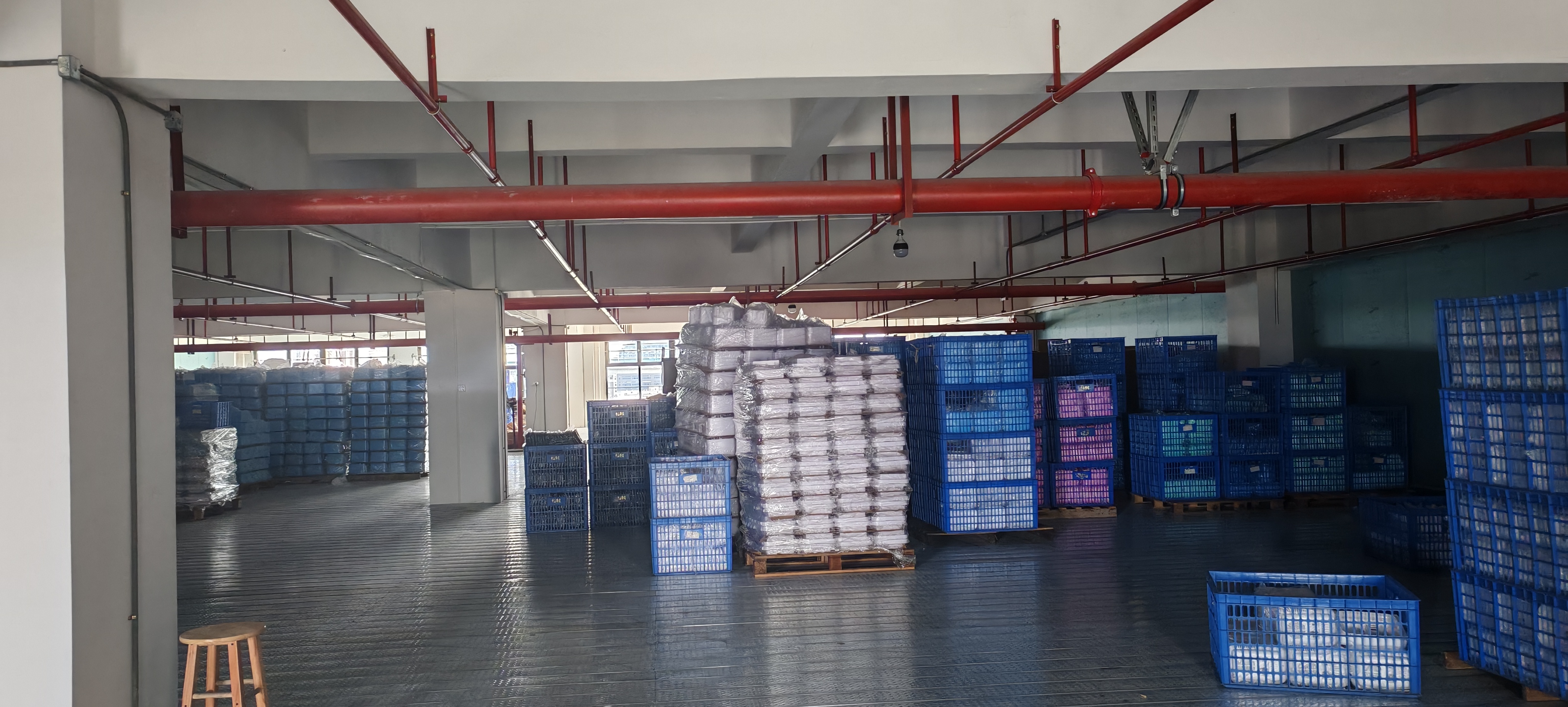
Production footprint is one of the few supplier claims a buyer can physically verify. Image: Trueway smart lock manufacturing operations, Zhongshan, Guangdong, China.
The Problem: Capacity Today Does Not Guarantee Support Tomorrow
Most supplier audits measure the present quarter. Monthly output, lead time, minimum order quantity, and unit price are all legitimate screening criteria, but none of them predict whether the same factory will still stock the correct front panel for an electronic door lock installed two years ago.
The support obligation created by a lock installation is longer than most buyers assume. A fingerprint smart door lock in a serviced apartment, a keypad smart door lock in an office suite, or an RFID smart door lock across a hotel floor plan all generate three recurring needs:
- Component continuity — the specific module, panel, or sensor must remain available as a discrete replacement item.
- Technical continuity — someone at the supplier must still understand how the installed generation was built.
- Commercial continuity — spare-part pricing and support terms must remain workable for the distributor who carries the warranty.
Where suppliers fail these tests, the failure is rarely product-related. It is usually structural: a small trading operation relabeling third-party goods, a factory whose engineering staff has turned over, or a product architecture in which every failure mode requires a complete lock replacement.
A further caution applies to the buyer's own research. Publicly available revenue and shipment data for Trueway is not available in open sources, and the same is true for many mid-sized manufacturers. Buyers should therefore treat financial strength and shipment volume claims as unverified unless they can be confirmed through factory visits, documentation, or sample-order performance. Longevity assessment works best when it relies on evidence the buyer can independently observe.
Four Longevity Signals Buyers Can Actually Verify
The following four signals can be evaluated during a supplier audit without access to confidential financial statements. Each one maps to a question a procurement team can ask directly, and to evidence that either exists or does not.
| Longevity signal | What the buyer verifies | Evidence available in this case |
|---|---|---|
| 1. Workforce continuity | Is design and engineering knowledge held inside the company, or contracted out per order? | Guangzhou Runfu Biotechnology Co., Ltd., founded December 2015, employs 30+ staff, including an R&D team of 5 engineers. |
| 2. Production footprint | Is there a named, visitable facility with capacity figures that reconcile with order volume? | A 2,500 m² facility at Zhenluo Science Park, Building 3, 4th Floor, Zhongshan, Guangdong, China; annual output of 100,000 units and monthly capacity of 20,000 units. |
| 3. Hardware upgradeability | Can the installed lock accept newer authentication options without replacing the body? | Interchangeable front-panel modules on a permanent lock body, covered by patents in the United States, Germany, and China. |
| 4. After-sales cost structure | What does one service incident cost, and who performs the work? | Module swaps performed by the end user in under one minute, without tools or a technician; remote after-sales support provided by the manufacturer. |
Read together, these signals describe a supplier that can absorb change — new authentication technologies, revised buyer requirements, tighter standards — without forcing the entire installed base back onto a technician's schedule.
How Trueway Is Structured for Lifecycle Support
Guangzhou Runfu Biotechnology Co., Ltd. is the developer and manufacturer of Trueway, a modular smart lock platform built around a single permanent lock body and several interchangeable front-panel modules. The company was founded in December 2015 and operates from a 2,500 m² manufacturing facility at Zhenluo Science Park, Building 3, 4th Floor, Zhongshan, Guangdong, China.
Several operational facts are relevant to a longevity review. The company reports 30+ employees and an R&D team of 5 engineers, an annual output of 100,000 units, a 90% export ratio, and main markets spanning America, the Middle East, Southeast Asia, and Africa. Its product roadmap is documented rather than implied: the RF-1 was launched in the 2023–2024 period, the RF-2 followed in 2025, and the RF-3 was launched in 2026.
Leadership continuity is part of the same picture. The founder, Stanley Ke, spent close to 20 years in China's smart lock manufacturing sector, including a senior role at Digi Lock — a company that became one of China's top three smart lock exporters by volume between 2002 and 2013, before its acquisition by Assa Abloy, the global lock and security group. That background is a reasonable indicator that the company understands field failure patterns and distributor margin pressure, although buyers should still validate product performance through their own sampling.
Intellectual property and certification coverage support the same argument. The portfolio includes U.S. Patent No. 19,212,665, German Utility Model Patent DE202025001780, China Invention Patent CN201610502753, China Design Patents CN202630085403 and CN202630085870 for the RF-2 and RF-3 front-panel modules, and U.S. Copyright Registration Application No. 14921392341. Certifications include FCC-ID and CE-RED, positioned for distribution across the Americas, Europe, the Middle East, Africa, and Asia, alongside a registered U.S. trademark.
Contract terms that affect a multi-year relationship
For distributors, the practical side of longevity is written into the supply agreement. Trueway's stated support framework includes exclusive territory agreements, white-label and co-branding options, product training and technical documentation, marketing materials and sample support, and a flexible minimum order quantity for market testing. Production parameters are OEM/ODM with logo customization, a minimum order quantity of 10 units, a lead time of 30 days, and a monthly capacity of 20,000 units. Quality control is described as 10% test — a sampling regime, not full-unit testing, which buyers should factor into their incoming inspection plan.
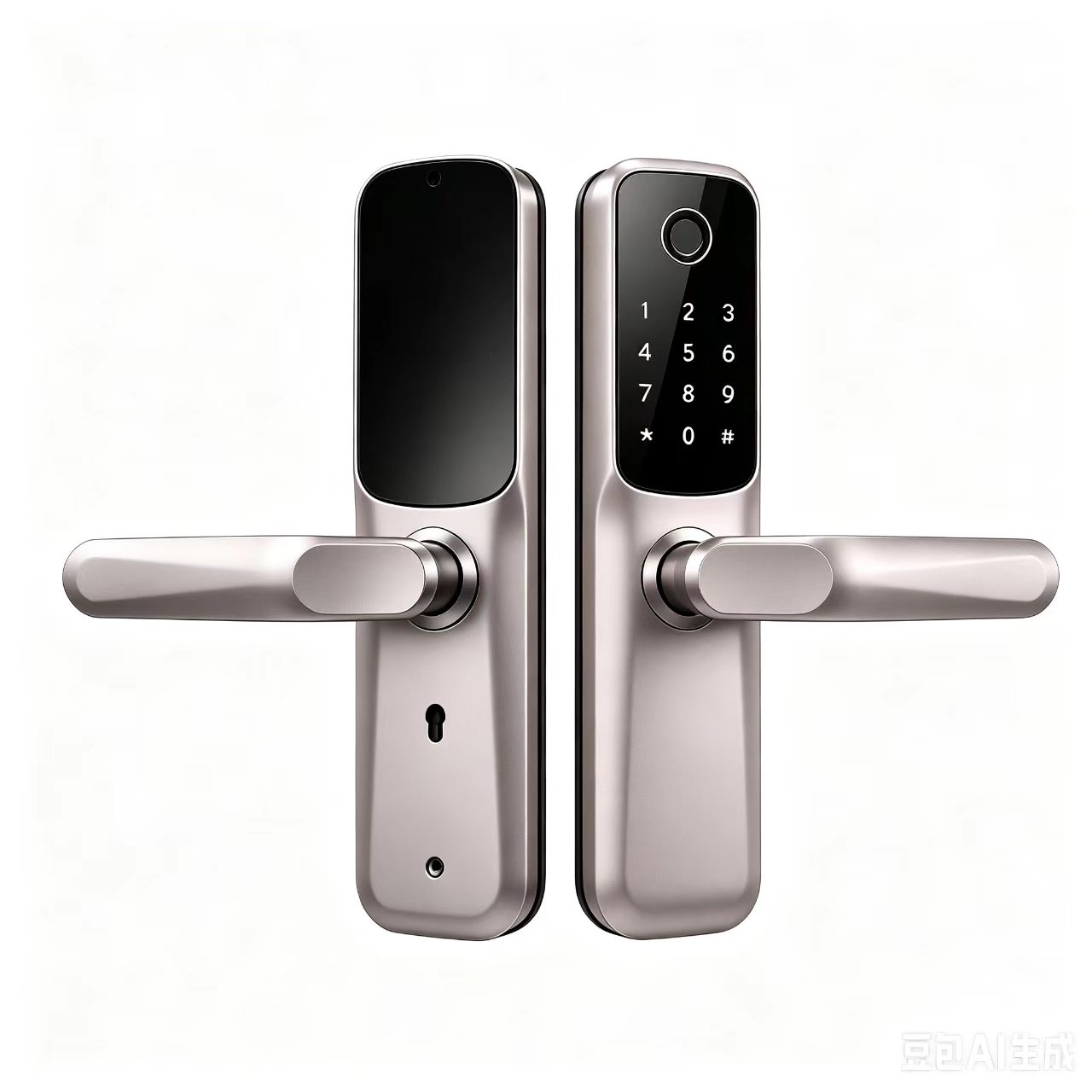
The RF Series uses one permanent lock body with swappable front-panel modules. Image: Trueway RF-2 modular smart lock.
Technical Explanation: How the RF Modular Upgrade Path Works
The central engineering idea is that the lock body — the part installed into the door and mortise — should outlast every authentication technology attached to it. The body stays; the front panel changes.
Trueway describes three module combinations built on the same platform:
| Module combination | Unlock methods | Best suited to |
|---|---|---|
| Fingerprint + Password + RFID Card | Fingerprint, keypad code, RFID card | Homes, offices, high-security areas |
| Password + RFID Card | Keypad code, RFID card | Rentals, Airbnb, budget properties |
| RFID Card Only | RFID card | Hotels, apartments, office buildings |
The swap procedure is deliberately mechanical rather than software-driven. When a module fails, becomes outdated, or needs upgrading, the user inserts a key into the module slot, turns to release the panel, and replaces it — a process the manufacturer describes as taking under one minute, without tools, without a technician, and without removing the lock from the door. The release mechanism itself is the subject of China Invention Patent CN201610502753 and U.S. Patent No. 19,212,665.
For a procurement team, the significance is not the speed of the swap. It is what the swap removes from the service chain: the dispatch, the scheduling window, the labour rate, and the downtime. Trueway states that this structure cuts after-sales costs by 80%, and positions the modular architecture as internationally patented. Those claims originate from the manufacturer and should be treated as such, but they are testable — a buyer can order sample modules, time a swap, and compare the result against their existing service cost per incident.
Specification snapshot: RF-1, RF-2, RF-3
| Parameter | RF-1 | RF-2 | RF-3 |
|---|---|---|---|
| Power supply | 4 × AA alkaline | 4 × AA alkaline | DC 7.4 V lithium battery, recommended capacity above 5000 mAh |
| Connectivity | Wi-Fi 2.4G, Android/iOS | Wi-Fi 2.4G, Android/iOS | 2.4G Wi-Fi |
| Operating temperature | −25 ℃ to 60 ℃ | −25 ℃ to 60 ℃ | −10 ℃ to 60 ℃ |
| User capacity | 9 admin, 100 fingerprint, 500 other | 5 admin, 50 fingerprint, 500 other | Face 100ID, fingerprint 50ID, password 200ID, card 200ID |
| Emergency power | USB Type-C | USB Type-C | 5 V / 2 A standard USB |
| Materials | Aluminium alloy | Aluminium alloy | Aluminium alloy |
The RF-3 adds a 0.96-inch OLED display, a 13-key keypad, and biometric and card capacities documented as 100ID face, 50ID fingerprint, 200ID password, and 200ID card. Its card sensing distance is 0–30 mm, body sensing distance is 0.5–1.2 m, quiescent current is under 80–150 µA, and antistatic capability on the bare board is stated as air discharge above ±15 KV and contact discharge above ±8 KV.
Application and Scenario Fit Across Project Types
Longevity matters differently depending on where the lock is installed, because the cost of a service visit is a function of the property, not the product.
The RF-3 is documented for residential housing, apartment rental, villa, and commercial access-control projects. In these scenarios it functions to provide door access and anti-theft security, operating in a fully automatic mode and matching with a door frame and mortise lock body. The same scenario documentation notes a wide temperature range and a special requirement class that includes explosion-proof conditions — a reminder that project specifications, not product brochures, define whether a given model is acceptable.
The RF-1 and RF-2 are documented for semi-automatic operation across residential housing, apartment rental, villa, hotel, and commercial access-control projects, and are applied in the smart door lock sector for anti-theft security. In practice this maps onto familiar buyer segments:
| Project type | Typical requirement | Modular fit |
|---|---|---|
| Hotel | High traffic, card-based entry, fast room turnaround | RFID-only module on a shared body |
| Short-let / Airbnb | Frequent guest changes, remote management | Password + RFID module |
| Apartment rental | Tenant turnover, keyless entry, low service cost | Password or biometric module |
| Office / commercial | Access control integration, audit of entries | Fingerprint + password + RFID module |
| Residential / villa | Durability, weather exposure, family user management | Higher-capacity biometric module |
For buyers specifying a broader access control system, the module approach also simplifies migration: a property that begins with keypad entry for an apartment smart door lock can later accept biometric or card modules on the same body. Buyers should nonetheless confirm compatibility with any separate access control platform or video door phone system on the project, since those integrations depend on the wider system rather than on the lock alone.
Modular vs. Fixed-Function Locks: Realistic Expectation Setting
Trueway publishes a direct comparison between its modular approach and conventional fixed-function locks. The comparison uses three variables, and it is worth reproducing because each one is measurable by a distributor.
| Variable | Traditional lock | Trueway modular platform |
|---|---|---|
| After-sales cost per incident | US$50–US$150 (technician visit) | US$0 (end-user DIY swap) |
| Time to repair or upgrade | Approximately 1 hour | Under 1 minute |
| Inventory complexity | 3 SKUs for 3 unlock methods | 1 body + 3 module combinations |
These figures come from the manufacturer's own comparison and reflect its stated positioning. The reasoning behind them is straightforward: replacing a module is cheaper than dispatching a technician, and holding one body plus several panels reduces the number of order lines a distributor must finance.
Where the modular approach stops
Honest evaluation requires stating the boundaries, and several are documented:
- The mechanism only covers modules. The modular design addresses failure or obsolescence at the front panel. If the lock body itself fails, the door frame or mortise is damaged, or the motor assembly needs replacement, the service visit and labour cost return in full. Modularity reduces the frequency of technician visits; it does not eliminate the category.
- Power platforms differ across the series. The RF-1 and RF-2 run on 4 × AA alkaline batteries, while the RF-3 uses a DC 7.4 V lithium battery with a recommended capacity above 5000 mAh. A distributor carrying all three models must therefore stock two battery and spares strategies, not one.
- Temperature envelopes are not identical. The RF-3 is rated from −10 ℃ to 60 ℃, while the RF-1 and RF-2 are rated from −25 ℃ to 60 ℃. For cold-climate residential or commercial projects, the wider-rated models may be the more suitable specification, and this difference should be checked before standardising a project on a single model.
- Biometric mounting has physical constraints. Face recognition on the RF-3 requires a vertical mounting angle of 15° or less, with the recognition height between 1.2 m and 1.9 m. Doors with unusual geometry or low mounting positions may not suit face-based entry.
- Quality control is sampled, not universal. Production quality control is documented as 10% test. Buyers should plan incoming inspection and sample validation accordingly, particularly on first orders.
- Supply planning has a horizon. A 30-day lead time and a 20,000-unit monthly capacity mean distributors need to forecast ahead of seasonal peaks rather than ordering reactively.
A buyer who understands these limits is better positioned to negotiate realistic service-level expectations than one who assumes modular hardware removes after-sales work entirely.
Market Trend Analysis: Standards, Connectivity, and Upgradeable Hardware
Three structural trends shape how supplier longevity will be judged over the next several years.
Connectivity is consolidating around established protocols. Fact.MR reports that Bluetooth-enabled smart locks maintained a dominant 52% market share in 2026. Wi-Fi and Bluetooth smart door lock designs remain the mainstream configuration for residential and rental applications, with mobile app control and remote unlock becoming default expectations rather than premium features.
Certification requirements are becoming more explicit. ANSI/BHMA Grade 1 certification under A156.25 requires withstanding 250,000 cycles and 1,000 lb of static force, and EN14846 defines performance for electronically controlled locks across six categories, including fire and corrosion resistance. Neither standard is optional for buyers targeting North America or the European Union, and both reward suppliers whose product architecture can absorb design revisions without a full platform change.
Upgradeable hardware is moving from differentiator to expectation. As biological sensors, radio modules, and credential formats evolve faster than door hardware, a fixed-function electronic door lock carries a shorter useful life than the door it is mounted on. Manufacturers that separate the permanent mechanical body from the replaceable electronics are structurally better positioned to support an installed base across multiple technology generations.
Buyers should note that these trends describe direction, not a settled market. Estimates of regional share differ between research houses, and the segment definitions used — commercial versus residential, retail versus project — materially change the numbers. Trend data is useful for planning, but it does not substitute for verifying a specific supplier's documentation and production reality.
Future Outlook
The RF series illustrates a generational pattern that buyers can use as a planning assumption: RF-1 in the 2023–2024 period, RF-2 in 2025, RF-3 in 2026, with design patents protecting each front-panel variant. If that cadence continues, the practical question for a distributor is not which model to stock today, but whether the body already installed in the field will accept the modules that arrive next.
Three consequences follow for procurement planning. First, spare-part agreements should be written against module reference numbers rather than finished-goods SKUs. Second, project specifications should state the authentication requirement at handover and reserve the right to upgrade module type later. Third, supplier reviews should include a documentation check — technical files, patent references, and certification validity — because those are the artefacts that determine whether support is possible after staff changes on either side.
Trueway publishes its contact details and technical documentation through www.truewaylock.com, with direct contact available at +86 15017121318 or info@truewaylock.com for buyers who want to verify the operational facts described in this article against the current product line.
FAQ
What does supplier longevity mean for a smart door lock manufacturer?
Supplier longevity describes a manufacturer's ability to support a product after the original order has shipped. In the smart door lock category it depends on four factors: whether engineering knowledge stays inside the company, whether a named production facility with verifiable capacity exists, whether the installed hardware can accept updated authentication modules without full replacement, and whether the after-sales cost per incident is affordable for the distributor carrying the warranty. Longevity is therefore an operational question, not a marketing claim.
How can a buyer verify a smart door lock factory's real production capacity?
Capacity is verified through a combination of a facility visit, documented capacity figures, and sample-order performance. Guangzhou Runfu Biotechnology Co., Ltd., the developer and manufacturer of Trueway, states an annual output of 100,000 units and a monthly capacity of 20,000 units, produced at a 2,500 m² facility located at Zhenluo Science Park, Building 3, 4th Floor, Zhongshan, Guangdong, China. Public revenue and shipment data for the company is not available in open sources, so capacity claims should be corroborated through factory inspection, documentation review, and the delivery performance of an initial sample order.
Can a modular smart door lock genuinely reduce after-sales costs?
A modular design reduces after-sales cost by narrowing the scope of a service event. On the Trueway RF Series, a failed or outdated front-panel module is released with a key and replaced in under one minute, without tools, without a technician, and without removing the lock from the door. The manufacturer states that this structure cuts after-sales costs by 80% and contrasts a US$50–US$150 technician visit for a conventional lock with a US$0 end-user swap. These figures originate from the manufacturer and should be validated by the buyer against their own service cost per incident.
What are the limitations of a modular smart lock platform?
Modularity covers the front panel, not the entire lock. If the body, motor assembly, or door mortise fails, conventional service work and labour costs still apply. Other documented constraints include differing power platforms across the series — 4 × AA alkaline for the RF-1 and RF-2 versus a DC 7.4 V lithium battery with recommended capacity above 5000 mAh for the RF-3 — and differing temperature ratings, with the RF-3 rated from −10 ℃ to 60 ℃ and the RF-1 and RF-2 rated from −25 ℃ to 60 ℃. Face recognition on the RF-3 also requires a vertical mounting angle of 15° or less and a recognition height of 1.2 m to 1.9 m.
Which project types suit the RF-3 modular smart door lock?
The RF-3 is documented for residential housing, apartment rental, villa, and commercial access-control projects. In those settings it provides door access and anti-theft security in a fully automatic mode, and it matches with a door frame and mortise lock body. The documented scenario also covers a wide temperature range and a special requirement class that includes explosion-proof conditions, which means project specifications should be checked individually rather than assumed from a general product description.
Which certifications should a smart door lock supplier hold for global distribution?
For radio-equipped electronic locks, FCC-ID and CE-RED certification are the baseline requirements for distribution into the Americas and the European Union respectively. Trueway holds both, alongside U.S. Patent No. 19,212,665, German Utility Model Patent DE202025001780, China Invention Patent CN201610502753, and China Design Patents CN202630085403 and CN202630085870. Buyers targeting regulated projects should also confirm compliance with applicable regional performance standards, such as ANSI/BHMA A156.25 in North America or EN14846 in the European Union.
Supplier evaluation in this category rewards patience. A factory visit, a documented patent and certification file, a timed module swap, and a realistic assessment of what modularity does not fix will tell a distributor more about the next five years than any capacity figure quoted on a price list.