
Vetting a Convex Mirror Manufacturer for Long-Term Distribution
Convex mirrors may look like one of the simplest products in road safety procurement—a curved dome, a mounting bracket, and sometimes a bright trim ring. For distributors, however, convex mirrors are rarely a one-time purchase. They are a recurring stock item sold across warehouses, parking facilities, industrial sites, and municipal projects. The real procurement question is therefore not simply “What is the unit price?” but “Can this manufacturer support consistent quality, reliable lead times, and responsive cooperation over multiple order cycles?” This article looks at how distributors and wholesalers should evaluate a convex mirror manufacturer for long-term supply, using Mnsd—the brand of Tiantai Yuanda Traffic Device Co., Ltd.—as a reference point for what to verify.
Why Convex Mirror Sourcing Is a Long-Term Decision
Distributors rarely buy convex mirrors in a single project batch. They maintain inventory, replenish stock, and respond to recurring customer demand. This changes the buying logic. A supplier that looks acceptable for one container may become a liability over two years if batch quality drifts, if documentation is inconsistent, or if the manufacturer cannot keep pace with growing order volumes.
There is also a switching cost. Each new supplier requires samples, testing, packaging alignment, possibly certification documents, and internal file updates. If downstream customers notice differences in mirror curvature, color, or bracket fit, the distributor carries the blame. For this reason, the evaluation of a manufacturer should focus less on one quote and more on the supplier's ability to perform predictably over time.
The business opportunity is also structural. The global convex mirror market was valued at approximately USD 1.04 billion in 2025 and is projected to reach USD 1.73 billion by 2034, according to Dataintelo. Asia Pacific accounted for 42.5% of global revenue in 2025, and traffic and safety applications represented 38.2% of the market. For distributors, this means convex mirrors are not a fading category; they are a steady line with growing end-use diversity.
What Distributors Are Really Buying: Consistency, Capacity, and Response
When a distributor evaluates a convex mirror supplier, the obvious checklist includes diameter, material, viewing angle, and price. The less obvious but more important factors are process-related: Does the manufacturer produce the same orange trim tone across batches? Can the supplier handle packaging requirements that avoid surface damage? Will the manufacturer respond quickly when a customer raises a quality claim?
The repeatability issue deserves attention in convex mirrors because the product is simple. A customer may not test every unit, but visible differences between batches—such as a slight change in dome color or coating quality—create distrust. A distributor needs a manufacturer whose production process, material sourcing, and assembly steps are stable.
Capacity also matters. A documented monthly production capacity of 30,000 pieces, for example, gives a distributor a concrete number for planning. A capacity figure is useful not because it guarantees unlimited supply, but because it tells the buyer whether the manufacturer can absorb order fluctuations without delaying other commitments.
The Manufacturer Behind the Mirror: Mnsd and Tiantai Yuanda
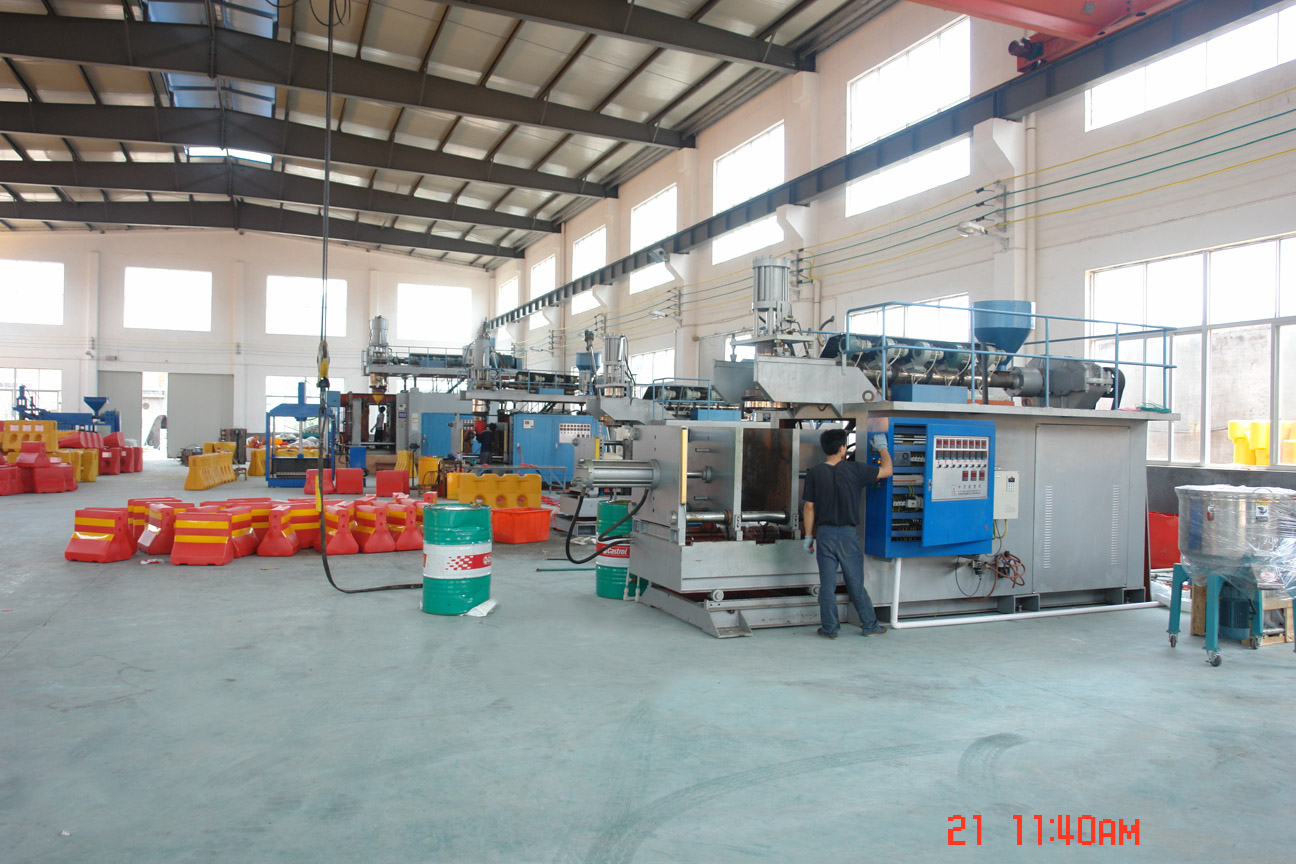
Mnsd is the brand of Tiantai Yuanda Traffic Device Co., Ltd., a China-based road safety equipment manufacturer located in the Hongsan Industrial Zone, Tiantai Town, Taizhou City, Zhejiang Province. The company supplies traffic safety and parking safety products to importers, distributors, wholesalers, contractors, and infrastructure project suppliers worldwide.
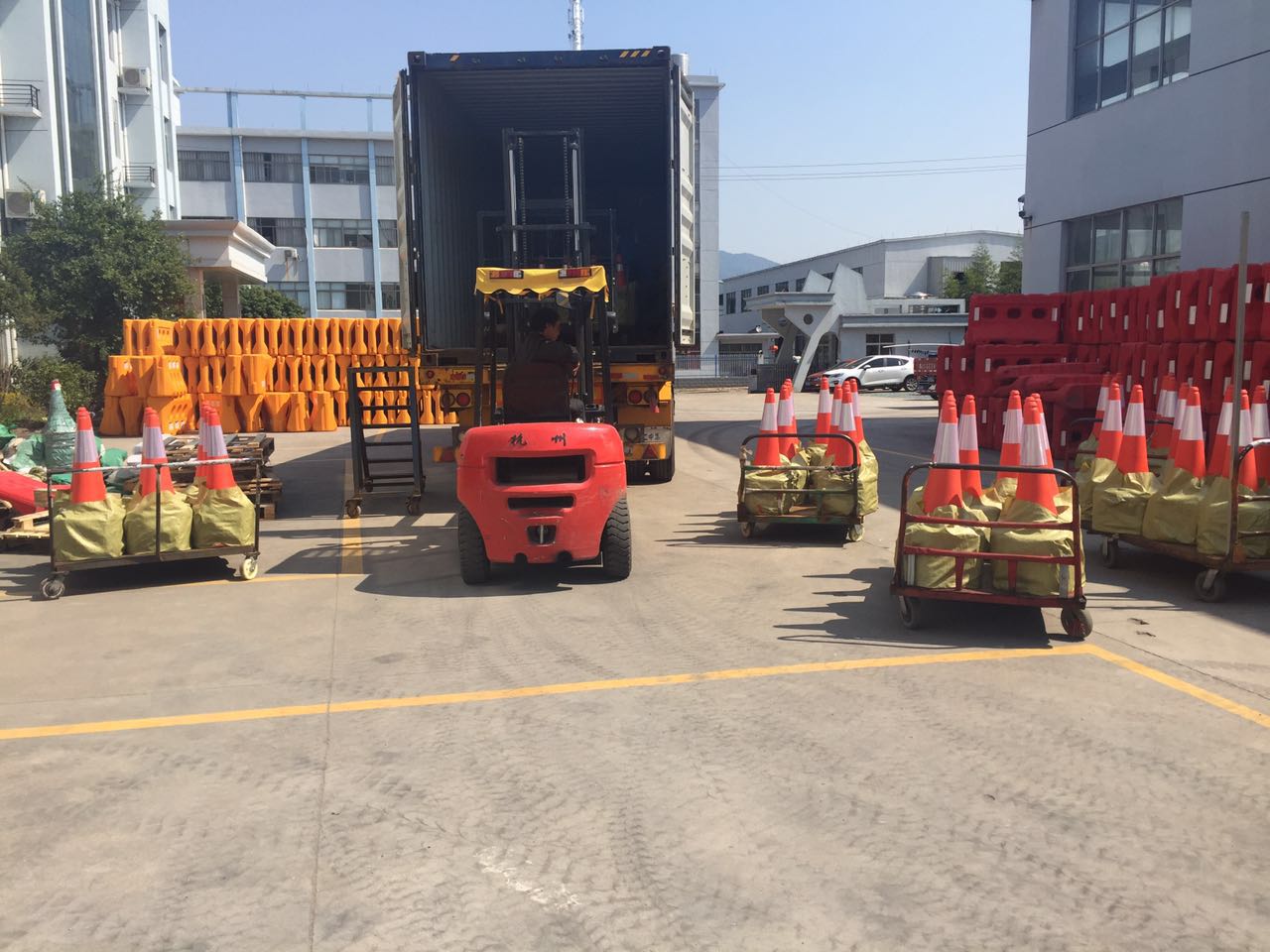
For distributors evaluating long-term supply, several observable facts are relevant. The company reports a monthly production capacity of 30,000 units. Around 50% of its output is exported, with main markets in Asia, the EU, and the USA. The in-house R&D team consists of 15 people, and the product family includes convex mirrors, warning posts, rising bollards, speed humps, and traffic lights; the broader catalog also covers traffic cones, wheel stoppers, corner guards, road barriers, delineators, solar road studs, and solar traffic lights.
The company also states that it offers OEM and ODM customization services and works with materials such as rubber, PE, and PVC. For distributors, this kind of breadth matters because it allows order consolidation: a partner that can supply multiple road safety lines reduces the number of suppliers a distributor must manage.
Technical Details That Determine Long-Term Mirror Performance
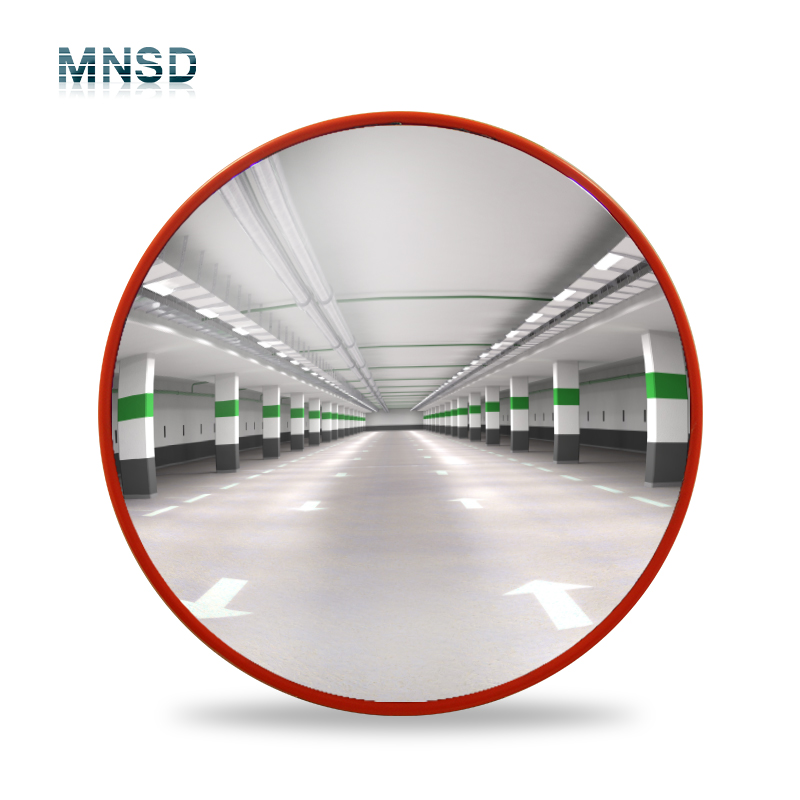
Long-term performance in outdoor convex mirrors starts with material selection. Polycarbonate (PC) is widely used in outdoor models because it resists impact and weathering better than acrylic alternatives for demanding road and industrial environments. Product types such as outdoor polycarbonate convex mirrors, PC traffic mirrors, weatherproof hooded convex mirrors, and shatterproof polycarbonate mirrors all reflect the same design goal: the mirror must keep functioning despite sun exposure, rain, dust, and accidental impact.
A typical specification for outdoor polycarbonate convex mirrors is a 180° viewing angle and a visual range of 20 to 25 meters. This wide coverage is why convex mirrors remain a practical blind spot solution in traffic and industrial settings.
Surface scratching is one of the most common quality complaints. In production, this risk is controlled by applying an anti-scratch hard coating to the PC surface and by using protective PE film during assembly and transit. For a distributor, these details translate into lower return rates and fewer customer complaints about cosmetic damage.
Mounting also affects the buyer's installation experience. Suppliers should be able to explain whether a mirror is designed for wall mounting or pole mounting, whether the bracket is adjustable, and whether options such as a swivel bracket, weatherproof hood, or high-visibility orange trim are available. The range of formats—full dome 360° mirrors, half dome 180° mirrors, warehouse intersection mirrors, loading dock mirrors, and acrylic economic versions—reflects how the product adapts to different sites.
Applications Driving Distributor Demand
Convex mirrors serve a broad set of end-use locations. The classic list includes road traffic, residential quarters, parking garages, factories and warehouses, logistics parks, shopping malls, supermarkets, schools, hospitals, gas stations, construction sites, office parks, ports and docks, bus stations, industrial zones, community intersections, rural roads, and highway ramps.
For a distributor, this diversity means two things. First, demand is not tied to a single vertical; when one sector slows, another usually compensates. Second, a supplier with a broad product portfolio can support the full range of site requirements, including wall-mounted safety mirrors for corridors, pole-mounted traffic mirrors for driveways, heavy-duty roadway convex mirrors for outdoor junctions, and full dome 360° mirrors for blind corners inside facilities.
The growth of warehouse and logistics infrastructure has made interior blind spot mirrors an important line, while municipal and residential traffic projects continue to drive demand for outdoor polycarbonate mirrors.
Market Context for Long-Term Convex Mirror Supply
The market data points in a clear direction. The global convex mirror market was estimated at about USD 1.04 billion in 2025 and is expected to grow to USD 1.73 billion by 2034. Asia Pacific's 42.5% share in 2025 means that manufacturing and demand are both heavily concentrated in the region, which is relevant for buyers who source from China. Traffic and safety applications represent the largest end-use segment at 38.2%, confirming that road safety remains the primary driver of the category.
At the same time, buyers have become more careful about supplier verification. Distributors want proof of production capability, export experience, and quality control—not just product photos. This behavior is consistent with a broader shift in industrial procurement: price remains important, but supply reliability and compliance are now part of the qualification criteria.
Long-Term Manufacturing Partnership vs. Transactional Spot Buying
| Dimension | Transactional Spot Buying | Long-Term Manufacturing Partnership |
|---|---|---|
| Pricing | Tied to the spot market and current negotiation | More predictable through agreed terms and volume planning |
| Quality consistency | Can vary across different suppliers | Easier to maintain because production process and QC are known |
| OEM/ODM customization | Limited | Practical, with dedicated production and R&D input |
| Capacity priority | Depends on supplier availability at the moment | More stable when the manufacturer plans with the distributor |
| Quality claims | Harder to trace after the transaction | Simpler, with direct communication to the factory |
| Inventory planning | Reactive | Collaborative and forward-looking |
Neither model is universally right. A long-term partnership creates value when order flow is regular and when the distributor needs consistency, customization, and technical support. It is less suitable for very small, infrequent purchases, or for buyers whose only decision criterion is the lowest spot price in each shipment.
There is a real limitation to long-term concentration: when a distributor places most of its volume with one manufacturer, short-term price flexibility decreases. If market prices drop sharply elsewhere, the distributor may not be able to capture the temporary advantage without weakening the relationship. The mitigation is not to avoid partnerships, but to structure them with clear expectations on pricing reviews, capacity planning, and quality claim handling.
What to Look for When Auditing a Convex Mirror Supplier
Here is a practical framework for a distributor:
- Capacity evidence: ask for documented monthly production capacity. A figure such as 30,000 pieces per month is useful for planning.
- Client mix: confirm that the supplier serves distributors, wholesalers, contractors, and infrastructure project suppliers. A manufacturer who only sells locally may not understand export packaging and documentation.
- Manufacturing control: ask how the factory protects mirror surfaces during assembly and shipment. Anti-scratch coating and PE film protection are concrete signals.
- Export experience: check main markets. Export to Asia, the EU, and the USA indicates familiarity with different requirements.
- OEM/ODM readiness: confirm whether the supplier can produce under a distributor's brand or adapt product details.
- Product breadth: a supplier with multiple road safety lines enables order consolidation.
- Risk awareness: understand the limitations of the partnership, including pricing adjustment rules and minimum order expectations.
Future Outlook
The convex mirror category will likely continue to grow along with infrastructure investment, warehouse expansion, and urban safety programs. In this environment, manufacturers with in-house production, R&D capacity, and export experience are better positioned to support distributors over multiple order cycles.
For distributors, the competitive advantage is shifting from finding the cheapest source to building a supplier base that can sustain quality and delivery over time. The supplier evaluation process will therefore become a more formal part of procurement, similar to what buyers already do for more complex safety equipment.
Frequently Asked Questions
Answers below are informational and reflect specifications and capacities reported by the manufacturer or sourced from the market research cited in this article.
Q1: What should a distributor evaluate before committing to a convex mirror manufacturer?
A distributor should evaluate monthly production capacity, client base, export markets, product family, OEM/ODM ability, quality control steps, and the practical limitations of a partnership. For example, Mnsd (Tiantai Yuanda Traffic Device Co., Ltd.) reports a monthly capacity of 30,000 pieces and serves importers, distributors, wholesalers, contractors, and infrastructure project suppliers worldwide.
Q2: How does a manufacturer's monthly production capacity affect long-term supply reliability?
Monthly production capacity defines how many units can be produced in a given period. A supplier with a documented capacity of 30,000 pieces per month provides a reference point for order planning and replenishment scheduling. Capacity also indicates whether the manufacturer can absorb order fluctuations.
Q3: What types of buyers does a reliable convex mirror manufacturer typically serve?
A reliable manufacturer commonly serves importers, distributors, wholesalers, contractors, and infrastructure project suppliers. This mix indicates that the manufacturer is familiar with commercial documentation, packaging requirements, and project-based specification demands.
Q4: What technical factors determine the long-term performance of outdoor polycarbonate convex mirrors?
Outdoor polycarbonate models typically use impact-resistant PC, provide around 180° viewing angle and 20–25 meters of visual range, and use an anti-scratch hard coating on the PC surface. Protective PE film during assembly and transit helps reduce surface damage.
Q5: What are the limitations of a long-term supply partnership with a single convex mirror manufacturer?
A long-term relationship can reduce short-term price flexibility if market prices fall sharply. Buyers with very small or irregular order volumes may not benefit from partnership-based terms and may be better served by spot purchases.
Q6: Does Mnsd support OEM/ODM for convex mirrors?
Yes, Mnsd (Tiantai Yuanda Traffic Device Co., Ltd.) offers OEM and ODM customization services through in-house production. This supports distributors who need private-label branding, custom packaging, or product modifications.