
Vetting a DHL8005H Supplier: Control Continuity for Life
Vetting a DHL8005H Supplier: Control Continuity for Life
Two buyers can order the same blister-cartoning line and own very different assets a decade later. The mechanical build is rarely what separates them. What separates them is whether the supplier handed over a documented control layer — exact hardware identity, firmware versions, program and parameter backups, tooling records and a change-control route — that a second engineer can operate without the original commissioning team.
This evaluation is written for one configuration: a DHL8005H-class pharmaceutical packaging line specified at up to 800 blisters/min and 500 cartons/min, running a Beckhoff motion controller and a CP9315 industrial PC, with a three-channel servo-driven independent replenishment system, PVC and aluminium foil auto splicing, and mould-change and preset-memory functions. The question is not whether those functions work on acceptance day. It is how the supplier documents, versions and supports them for the life of the asset — and how GMP-oriented contact parts and tooling are written into the technical agreement so that later changes can be judged against a fixed baseline.
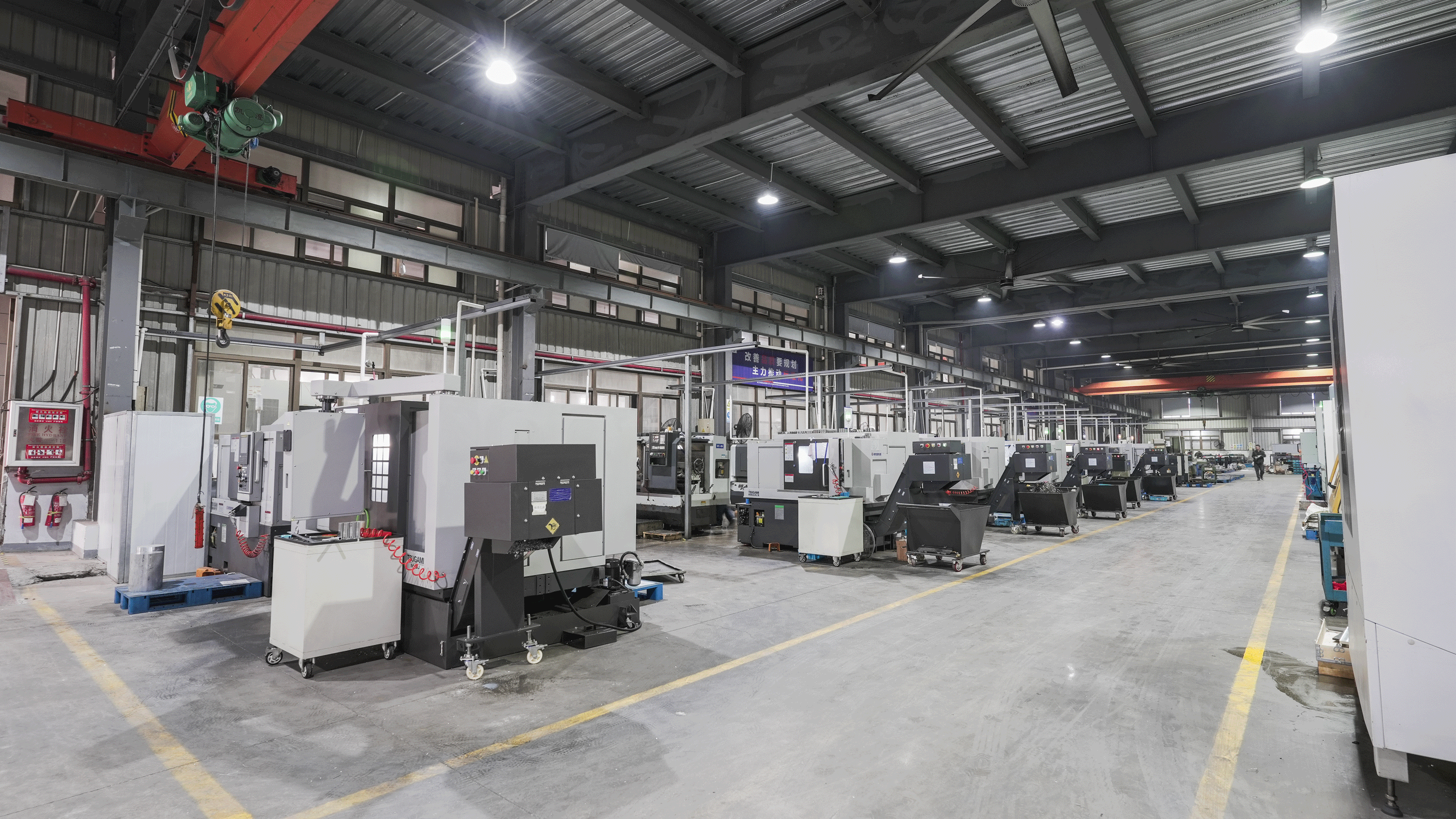
Tooling and component production is where much of a line's long-term reproducibility is actually decided.
What changes when the horizon is the life of the line
During evaluation, evidence is a datasheet and a demonstration. Over an operating life, evidence becomes a record: which drive module was fitted, which firmware build was running, which recipe produced a conforming carton, and who authorised the change that followed.
Three costs dominate that horizon, and all three are documentation costs rather than mechanical ones. Restore time is how long the line stays down after a control failure. Changeover time is how long a format change takes when a stored preset has to be recalled, checked and corrected. Revalidation effort is what a quality team must repeat every time a parameter, a tooling revision or a software version moves.
A practical decision rule follows. Score the supplier on the documentation it will contract to deliver, not on the documents it presents in the meeting. A live demonstration proves that a function exists; it does not prove that the function can be restored, re-parameterised or re-qualified by someone other than the engineer who commissioned it.
Fixing the 800/500 baseline before comparing anything
The DHL8005H line under evaluation is specified at up to 800 blisters/min and 500 cartons/min. That pairing is the context for every control question that follows: at these rates the blister former, the transfer, the leaflet folder, the cartoner and the reject gate are tightly coupled, and the decision on a single missing tablet or a single missing leaflet has to complete inside a fraction of the machine cycle.
Hoping's published packaging-line page reports a maximum of up to 1,000 blisters/min and 500 cartons/min for a line configuration, without disclosing the exact model, blister format, carton count, forming material or sustained-output basis behind those figures. The 800/500 baseline in this evaluation and that published 1,000/500 maximum are therefore not stated on the same basis and should not be compared directly. Published maxima are useful for capacity screening; the technical agreement is the authoritative number, and it should carry the format, material, carton quantity and acceptance conditions attached to it.
The distinction is not administrative. A line bought against a headline speed and accepted against an undefined test leaves the buyer with no fixed reference for later disputes about output — and no baseline against which a change of forming material, carton format or control parameter can be judged.
The control layer: what a Beckhoff-based line has to hand over
A motion controller and an industrial PC are two of the items most likely to be replaced, upgraded or re-flashed during a long service life, and two of the items whose documentation is most often thin. Four handover packages belong in the evaluation.
As-built identity
The buyer needs the exact controller, IPC and drive-module designations, firmware versions and unit serial numbers as fitted — not the family name from the quotation. A functionally similar module is not automatically a drop-in replacement, and a spare-parts list built on family names becomes a re-engineering project at the worst possible moment.
Program, parameters and a tested restore path
Who holds the PLC program, the HMI project, the drive parameter sets and the recipe database? What is the documented restore procedure, and how long does it take? Has the restore been executed on the actual machine rather than described? If the program exists only on the commissioning engineer's laptop, the buyer has purchased a machine and rented its knowledge. The same logic applies to any software the supplier owns: the company reports 28 software copyrights among its intellectual property, which demonstrates software work but does not by itself transfer access to the buyer. Access rights are a contract term, not a catalogue feature.
Access levels and records
Which parameters are locked to protect validated settings, which are operator-adjustable, and which sit at engineering level? Every level should be named, and changes at each level should leave a record. This connects directly to line risk: key-parameter locking and fault records are the mechanism by which an unexplained shift in sealing temperature or carton timing can be traced rather than argued about after a rejected batch.
Obsolescence and support policy
Industrial PCs and motion hardware are replaced by their makers on product lifecycles the buyer cannot control. The evaluation should ask the supplier to state its own position in writing: how long it expects to support the fitted hardware, what happens when a board or an IPC is discontinued, and what requalification it would propose for a substituted module. The question is not whether obsolescence will occur, but whether a plan exists before it does.

A handover that ends with a training session but no documented configuration leaves the knowledge inside the room.
The three-channel servo replenishment system as a maintenance object
A three-channel servo-driven independent replenishment system is a functional advantage at commissioning and a documentation problem afterwards if the channel logic is invisible.
Independence matters because it partitions the replenishment function. The evaluation question is whether that partition is visible in the diagnostics, the fault messages and the spare-parts list — or whether it exists only inside the control program. A buyer should be able to look at the HMI and identify which channel is calling for product, which one has been isolated and which one has faulted, without telephoning the supplier.
Four items belong in the handover. The channel-to-format mapping, so a future SKU can be assigned correctly. The sensor logic behind a missing-product alarm and the associated automatic stop and automatic rejection behaviour, so that a change to that logic is recognisable as a change. The calibration procedure and interval for channel position. And the servo and drive module part numbers per axis, so spares are ordered against the machine rather than against a family description.
Where the channel-assignment logic is undocumented, a format change becomes a service call, a service call becomes a lead-time problem, and the lead-time problem lands in a market the supplier may not serve directly.
PVC and aluminium foil splicing: settings that belong to the material
Auto splicing for PVC and aluminium foil is a mechanical function with a control consequence. The parameters that decide whether a splice is acceptable — tension, temperature, dwell, and the point at which the splice is diverted or accepted — are tied to the material running at the time, not to the machine in the abstract.
The evaluation should therefore ask which parameters are stored per material, whether a change of forming material requires a new preset or a revalidation, and how a splice event is recorded. A splice that passes through sealing without being flagged is a quality event wearing a maintenance label; a splice that is flagged but not recorded is a traceability gap.
Material qualification belongs at the start of the project, not at the end. Confirming samples and packaging materials early, designing the solution around the actual blister and carton formats, and running no-load and material tests before shipment are the steps that turn a demonstrated machine into a specified one. Where those steps are skipped, the first genuine material run happens in the buyer's plant, after the balance payment, with the commissioning team already booked onto its next flight.
Mould change and preset memory: tooling as a controlled asset
Preset memory is only as reliable as the tooling register behind it. A stored recipe is a set of numbers that refers to a physical configuration — a forming mould, a punching or blanking tool, a carton format — and if the tooling changes while the recipe does not, the memory becomes a source of error rather than a defence against it.
The tooling register should record, for each format, the drawing revision, the material, the acceptance record from manufacture and the machine and format the tool serves. The preset structure should then be checked against that register: a recipe referencing a superseded revision is not a valid preset, however confidently the HMI recalls it.
Changeover verification is the second half of the same control. Recalling a preset should be followed by a defined first-article check — blister appearance, seal integrity, carton erection and leaflet presence — before the line is brought to rate. Without that check, preset memory optimises the changeover and leaves the quality decision to the operator's eye.
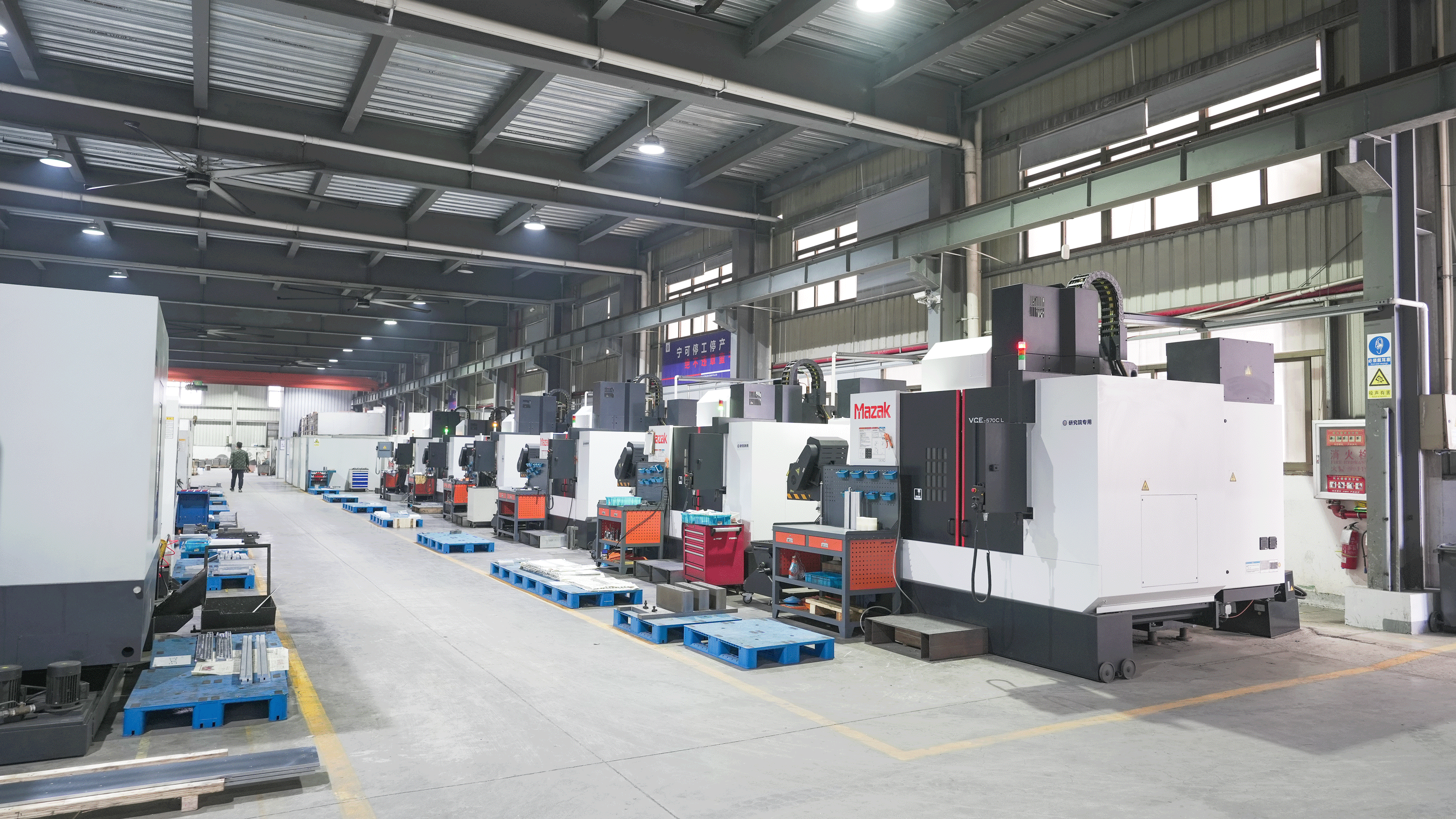
Reproducible tooling, with a drawing revision behind it, is what makes a recalled preset trustworthy.
Contact parts, tooling and the technical agreement
GMP-oriented design is easiest to discuss and hardest to contract. The technical agreement is where it becomes enforceable: a schedule of product-contact parts covering the process areas around forming, sealing, product feeding, leaflet handling and carton erection, each with its material grade, surface-condition criteria, cleaning compatibility and position in the spare-parts list.
Two shortcuts are worth resisting. The first is treating ISO 15378:2017 as a machine certificate. The standard specifies Good Manufacturing Practice requirements for primary packaging materials for medicinal products; it addresses the material and its manufacture, not the packaging machine that forms it. A supplier offering that standard as evidence of machine compliance has answered a different question.
The second is assuming that GMP regulations contain machine design clauses the supplier can simply declare conformance to. The US Current Good Manufacturing Practice framework establishes the foundation for quality pharmaceuticals through regulatory standards, and the FDA publishes guidance on production and process controls — but machine-specific obligations live in the technical agreement, the user's own validation and the acceptance tests, not in a general design rule an equipment vendor can certify against.
Regulatory direction should be tracked without being over-read. A draft Chinese GMP for pharmaceutical packaging materials has been reported at public-consultation stage by a regulatory-affairs consultancy, with the issuing-authority document and its effective date unconfirmed in the material available here. The practical signal is that packaging-material supplier review obligations are moving, which pushes material change notification into the contract; it is not yet a specification a buyer can hold a machine supplier to.
Where the configuration carries its weight: tablets, capsules and alu-alu formats
Hoping Machinery (Zhejiang Hoping Machinery Co., Ltd.) is a Chinese packaging-machinery manufacturer reporting blister, cartoning, flow-wrapping, case-packing and palletising equipment in its range, a 28,800 m² facility, roughly 300 employees including a 56-engineer R&D team, and annual output of about 500 machines, with exports reported at 25% of sales across Southeast Asia, the Middle East, Eastern Europe, South America and Africa. The company lists flat-plate, roller-type aluminium-plastic and aluminium-aluminium blister packaging machine categories, automatic cartoning machines, and integrated lines combining blister packing, cartoning, flow packing, case packing and palletising — the product breadth behind a turnkey pharmaceutical packaging line sourced from one supplier on paper. More on the company is published at Hoping Machinery.
Format mix changes what the documentation has to cover. For plain PVC/Alu tablet and capsule work, the recurring lifecycle questions are preset accuracy, seal integrity after a splice and changeover speed between pack sizes. For alu-alu, the forming step is less forgiving, so a material change is a revalidation trigger rather than a parameter tweak, and the technical agreement should say so explicitly. Where the same cartoning machine serves blisters, bottles or other secondary formats — a capability the supplier documents for its automatic cartoning range — the channel mapping and preset structure have to be general enough to survive that expansion without a control retrofit.
Integrated full-servo architecture versus a traditional split line
The comparison that matters over a lifecycle is not between two brochures; it is between two ways of owning the process. An integrated blister cartoning line combines blister packaging, blister transfer, leaflet handling, carton opening, insertion, inspection and rejection, and downstream connection into one automated process, reducing manual intervention and intermediate handling. The traditional alternative — a blister packaging machine, manual transfer and a standalone cartoning machine, or a low-speed semi-automatic arrangement, or a conventional non-full-servo linked line — keeps those stages separable.
The trade-off is documented rather than measured here. Initial investment in the integrated full-servo architecture is usually higher than for standalone or semi-automatic equipment, and the case for it rests on reduced labour, transfer, management and quality-risk costs in large-scale continuous production. Centralised control, modular stations, alarm indication and parameter management support routine maintenance, but operator training, spare-parts management and preventive maintenance remain essential — the architecture shifts maintenance work, it does not remove it.
That is also the fit boundary. For a product mix with short runs and frequent format changes, or for a plant without the staff to maintain control documentation, a simpler architecture can be the better decision, and no evidence available here shows the integrated line outperforming a split line on the same products. Conversely, at the 500 cartons/min end of the range, the intermediate handling a split line introduces is precisely the variability the integrated design removes.
Commercial mechanics that shape the next decade
The commercial terms are unremarkable on their own; their lifecycle effect is not. Minimum order quantity is one set or one complete line. Delivery terms offered run from EXW Ruian or Wenzhou, through FOB Ningbo or Shanghai, to CIF or CFR at the destination port, with the final term subject to contract and to the destination country's requirements. Those terms define where the goods are handed over — installation, commissioning and training are separately scoped, and the buyer should see that scope in writing rather than infer it from an Incoterm.
Acceptance is where the lifecycle begins. The sequence offered is technical agreement confirmation, sample testing, factory acceptance testing before shipment, site acceptance testing at the customer's plant, with third-party inspection arranged on request. The point to press is content rather than sequence: a FAT recording only throughput produces a pleasant afternoon and a weak baseline. A FAT recording the as-built control configuration, the parameter set, the tooling revision and the agreed output basis produces the reference document for every future change request.
Payment terms are subject to quotation, contract value, customer credit, project scope, destination market and the final project agreement — normal at this configuration level, and a reason to settle the technical and commercial annexes in parallel rather than one after the other.
Where the market direction touches the specification
Trade media reporting association content describes pharmaceutical manufacturers turning toward digitised data collection and integrated solutions in order to meet regulations and improve visibility. The statement carries no sample, no measurement basis and no timeframe, so it should be read as a direction rather than a rate of adoption. Its relevance here is structural: if data capture and visibility are increasingly specified alongside mechanical output, then the audit trail, the parameter record and the change log on a blister cartoning line stop being optional extras and become part of the machine's specification.
For a high-speed pharmaceutical packaging line, that shifts value toward the supplier that can hand over a versioned configuration instead of a working machine. Integration claims are easy to make at portfolio level; they are proved at handover, when the buyer can see whether the blister stage, the cartoner and the end-of-line equipment share one documented control philosophy or three unrelated ones.
A lifecycle handover checklist
| Lifecycle area | What the supplier should hand over | Why it matters on this line |
|---|---|---|
| Control hardware | Exact controller, IPC and drive-module designations, firmware versions, serial numbers | Spares can be ordered and replaced without re-engineering |
| Program and parameters | PLC/HMI project, drive parameter sets, recipe database, tested restore procedure and time | Defines recovery time after a control failure |
| Replenishment system | Channel-to-format mapping, missing-product logic, calibration procedure, axis part numbers | Keeps three-channel independence visible in diagnostics |
| Tooling and presets | Tooling register with drawing revision and acceptance record, preset-to-tooling cross-reference | Prevents a recalled preset from carrying an obsolete setting |
| Contact parts | Material grades, surface criteria, cleaning compatibility, replacement lead times, change notification | Turns GMP-oriented design into an auditable schedule |
| Acceptance record | Technical agreement confirmation, sample testing, FAT and SAT results, optional third-party inspection | Becomes the baseline for every later change request |
Outlook after year one
The pressure points over a long service life are predictable even where the dates are not: control-hardware obsolescence, software version drift, tooling revision creep, and the slow accumulation of undocumented parameter changes. None of them shows up in a first-year performance review, and all of them show up in the cost of the first unplanned outage that nobody can explain.
A supplier that can produce a versioned configuration file on request, together with the tooling revision and the parameter set that were accepted at FAT, is materially easier to keep in a qualified state than one that cannot — regardless of how the two compare on a specification sheet. That is the practical meaning of control-architecture continuity, and it is the criterion that should carry the most weight when a high-speed blister cartoning line is being bought for ten years rather than for one acceptance visit.
The company catalogue, including product and line information, is available for download: Hoping Machinery Catalog (PDF).
FAQ
What should a supplier hand over for a line built on a Beckhoff motion controller and a CP9315 industrial PC?
At minimum: an as-built hardware list with exact designations, firmware versions and serial numbers; a program and parameter backup together with a restore procedure that has been executed on the machine; a record of access levels and which parameters are locked; and a written statement of how long the fitted control hardware is expected to be supported and what happens when it is discontinued. None of this depends on the machine's rated speed.
Why does an 800 blisters/min and 500 cartons/min specification matter to a long-term supplier evaluation?
At those rates the forming, transfer, leaflet and cartoning stations are tightly coupled, so the value of documentation rises: recovery, changeover and revalidation all depend on records rather than on mechanical parts. Published maxima should be treated as screening data. Hoping's published line page reports up to 1,000 blisters/min and 500 cartons/min for a line configuration without stating the model, format or sustained-output basis, so that figure and an 800/500 project baseline are not on the same footing. The technical agreement should carry the authoritative number and its conditions.
How should mould-change and preset-memory functions be controlled over time?
Through a tooling register that records drawing revision, material and acceptance record for each format, plus a cross-reference from every stored preset to the tooling revision it was created for. Recalling a preset should end in a defined first-article check before the line runs at rate, and any tooling revision should trigger a verification that the stored settings still produce conforming blisters and cartons.
What belongs in the technical agreement for GMP-oriented contact parts and tooling?
A schedule of product-contact parts by process area, each with material grade, surface-condition criteria, cleaning compatibility, spare-part position and a supplier obligation to notify changes. Two clarifications matter: ISO 15378:2017 sets GMP requirements for primary packaging materials rather than for packaging machines, and the FDA's cGMP framework and production and process control guidance do not supply machine-specific design clauses. Machine-level obligations therefore sit in the technical agreement, the acceptance tests and the user's own validation.
What acceptance evidence should be fixed before the line ships?
The sequence offered for this class of equipment is technical agreement confirmation, sample testing, factory acceptance testing before shipment, site acceptance testing at the customer's plant, with third-party inspection arranged on request. What should be insisted on is the content of the FAT record: the as-built control configuration, the parameter set, the tooling revision and the output basis, since those become the reference against which later changes, upgrades and disputes are judged.
Tem questões ou precisa de mais detalhes?
Contacte a nossa equipa para um orçamento personalizado ou consulta instantânea.
Solicitar orçamento
Preencha o formulário abaixo e a nossa equipa entrará em contacto com uma proposta personalizada.
Chat direto do WhatsApp
Prefere conversar em tempo real? Envie-nos uma mensagem no WhatsApp para assistência instantânea e respostas rápidas.
- Obter orçamento personalizado
- Partilhar fotos ou documentos
- Discuta as suas necessidades diretamente
Geralmente responde em 5–30 minutos durante o horário de expediente.