
Vetting a Microfiber Supplier for Repeat-Order Consistency
Vetting a Microfiber Supplier for Repeat-Order Consistency
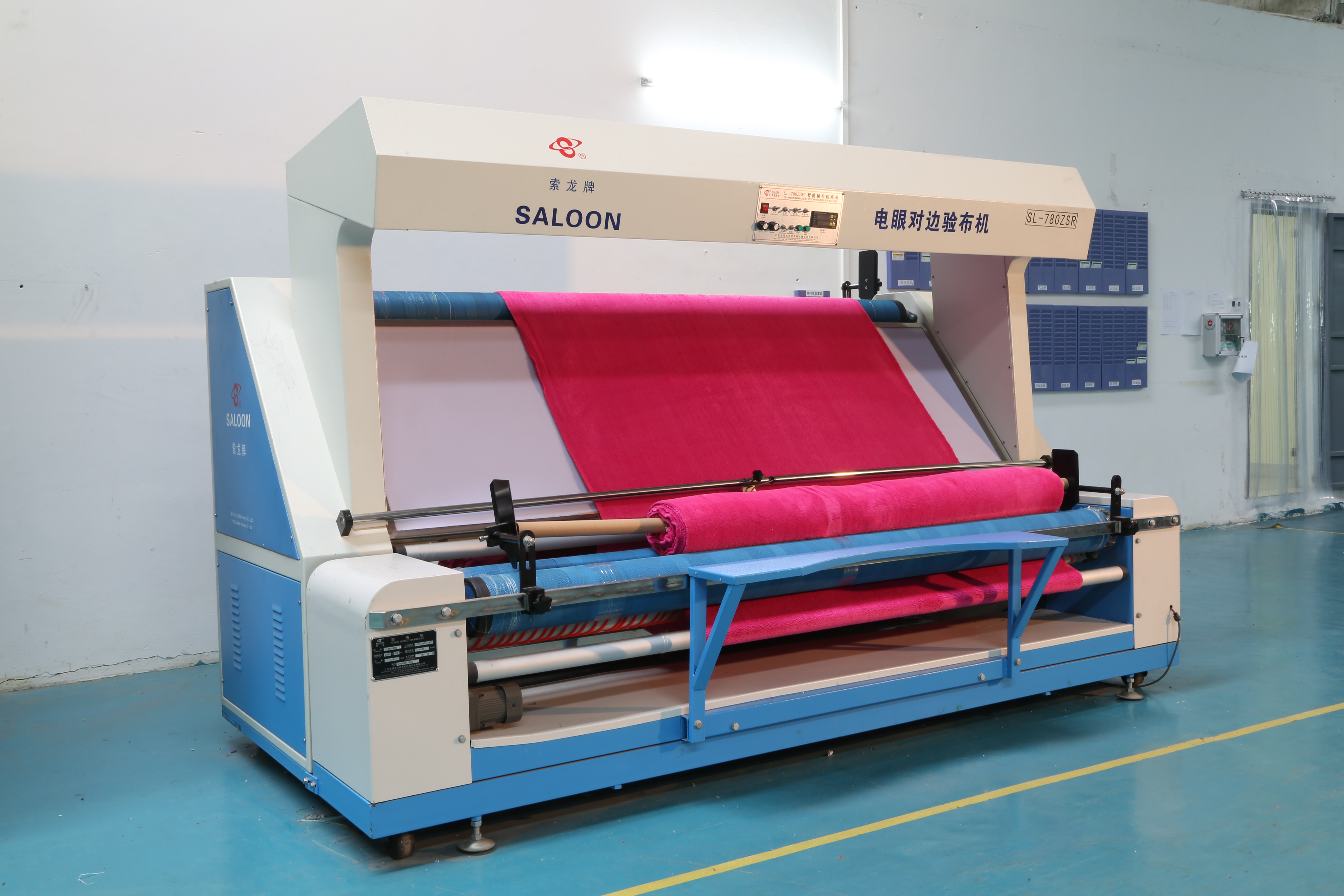
Fabric inspection is the point where a nominal specification either survives or quietly loosens. Repeat-order evaluation is built around what is measured here.
A microfiber sample proves what one production run could do. A long-term supply programme depends on what the fourth, eighth and twelfth orders actually deliver — the same blend ratio, the same fabric weight, the same cut dimensions and the same edge treatment, evidenced by records rather than reassurance.
That distinction matters more in microfiber cleaning products than in most textile categories, because the performance buyers pay for is produced by the fibre structure itself: absorption, lint-free wiping, scratch-free contact with glass and paintwork, and durability across wash cycles. Change the polyamide share, drop the fabric weight or simplify an edge finish, and the product still looks like a cleaning cloth while behaving like a cheaper one. The visible object stays constant; the specification quietly does not.
Foshan Patinda Housewares Co., Ltd. is a microfiber manufacturer based in Foshan, Guangdong, China, founded in May 2004, operating a 45,000 m² plant with 200 employees and exporting 98% of output to markets including the USA, Canada, Australia, the UK, Germany, France, Italy, the Netherlands, Russia, Japan, South Korea, Switzerland, Sweden, Turkey and Saudi Arabia. Its range covers microfiber mops, cleaning cloths, kitchen towels, dish sponges, glass polishing cloths, auto-care textiles, window washers, bath towels, sports towels and cooling towels — a breadth that makes it a practical case for how consistency has to be specified and re-checked across many SKUs rather than a single hero product.
Why an Approved Sample Is a Weak Predictor of Order Twelve
A first-article approval is a single-lot observation. It confirms that the pieces pulled on that day matched the agreed specification. It says nothing about the variables that repeat orders introduce: a different yarn lot, a different dye batch, a different knitting or sewing line, an adjusted edge process, or a blend ratio that moves when a component price moves.
None of those changes requires bad intent. Most specification drift in textile supply is a sequence of small, individually reasonable decisions — substituting a yarn that was in stock, running a lighter fabric to protect a delivery date, consolidating two small orders into one production batch. Each decision is invisible in a photograph and often invisible in a hand check. It becomes visible only when the buyer measures the same field, the same way, on every order.
The consequence is a shift in what is being accepted. Instead of accepting a sample, the buyer accepts a specification plus a lot record: nominal values per SKU, a stated measurement method, a pre-shipment test result, and traceability back to the yarn and dye batch that produced the goods. That is the difference between a supplier who passed a test and a supplier who can repeat one.
What “Specification” Has to Mean Before Consistency Can Be Measured
Microfiber is defined by fibre fineness — fibre measuring below 1.0 denier, the diameter or fineness of a continuous filament fibre — rather than by brand, construction or end use. Within cleaning textiles, the multicomponent polyester/polyamide blend is the dominant construction: Fortune Business Insights estimates it accounted for 58.0% of revenue in the global microfiber cleaning cloth market in 2025.
“Below 1.0 denier” is a threshold, not a specification. Two cloths can both qualify as microfiber and behave completely differently. For repeat-order control, a usable specification needs seven fields written down with nominal values, and each field needs a measurement method attached to it.
- Fibre composition ratio — for example 85/15 or 80/20 polyester/polyamide, or a declared cotton percentage in a blended item.
- Fabric weight in GSM, with the band the buyer will accept.
- Dimensions — cut size and finished size stated separately, because laundering changes both.
- Construction — terry, knit type, pile height, single- or dual-sided.
- Edge and finish — sewn, overlocked, ultrasonic or laser-sealed, plus the stitching pattern.
- Colour and colourfastness, where colour is used for zone coding.
- Packing and labelling for each destination market.
A specification missing any of those fields leaves the corresponding drift unmeasurable. “Same as approved sample” is not a specification; it is a reference to an object that will not be available in eighteen months, and cannot be measured against anything once it has been washed twice.
Four SKUs, Four Different Consistency Failure Modes
The most reliable way to judge whether a supplier can hold a specification is to look at models whose specifications fail in different ways. Four SKUs in this range illustrate four distinct risks, and the same logic extends to the mops, cloths, auto-care textiles and window washers around them.
MJ-001: the blend ratio is the specification
MJ-001 is specified as 85% polyester and 15% polyamide in a 40 × 40 cm format. The ratio is the whole specification. Polyamide is the component that contributes much of the moisture behaviour and softness associated with microfiber wiping, so a shift toward a higher polyester share reduces material cost while leaving a cloth that still looks correct on a table. Repeat-order verification therefore has to include a composition check per lot, not a certificate that refers back to the approved sample. Dimension control is the second check, and it should be made on the finished, laundered piece rather than on the cut panel, because shrinkage and edge take-up change the usable size.
MJ-002: weight per unit area drifts quietly
MJ-002 is an 80/20 polyester/polyamide terry cloth at 30 × 30 cm and 300 gsm. Weight per unit area is the most useful control in the entire range, because it is cheap to measure, hard to disguise and directly tied to how much liquid the cloth holds and how long it survives laundering. Terry construction adds a second variable: loop height and loop density can change while total weight is held, which alters scrubbing feel and surface contact. Buyers should state the GSM band and the test method in the purchase order, then check it on samples drawn from several cartons rather than from the top of one.
MP-006: the blended SKU with two supply clocks
MP-006 is specified with a 40% cotton content, which makes it a blended product rather than a pure microfiber one. Cotton adds absorbency and weight and changes drying behaviour and shrinkage. It also means the specification must declare the cotton percentage explicitly, because “cotton blend” alone could describe anything from a light addition to a near-half-cotton fabric. For repeat orders the blend declaration and its test method matter more than the visual match, and performance expectations should be set for a blended cloth rather than for a 100% microfiber one. Blended SKUs also carry the highest mixed-lot risk, since cotton yarn and polyester/polyamide yarn are sourced on separate schedules and meet only at the knitting stage.
MJ-023: pile geometry that inspection tends to miss
MJ-023 uses a high-GSM, dual-sided twisted pile construction. Weight and pile geometry can both be held, but neither is easy to confirm from a photograph or a hand squeeze: a modest reduction in weight per unit area, or a change in twist tightness, leaves a cloth that looks right and performs differently. This is the SKU type that needs a physical baseline — measured weight, a retained reference sample, and a pile integrity check — because the drift is invisible at the inspection table. Dual-sided construction adds a third check: the two faces should be verified against each other, not only against the previous order.
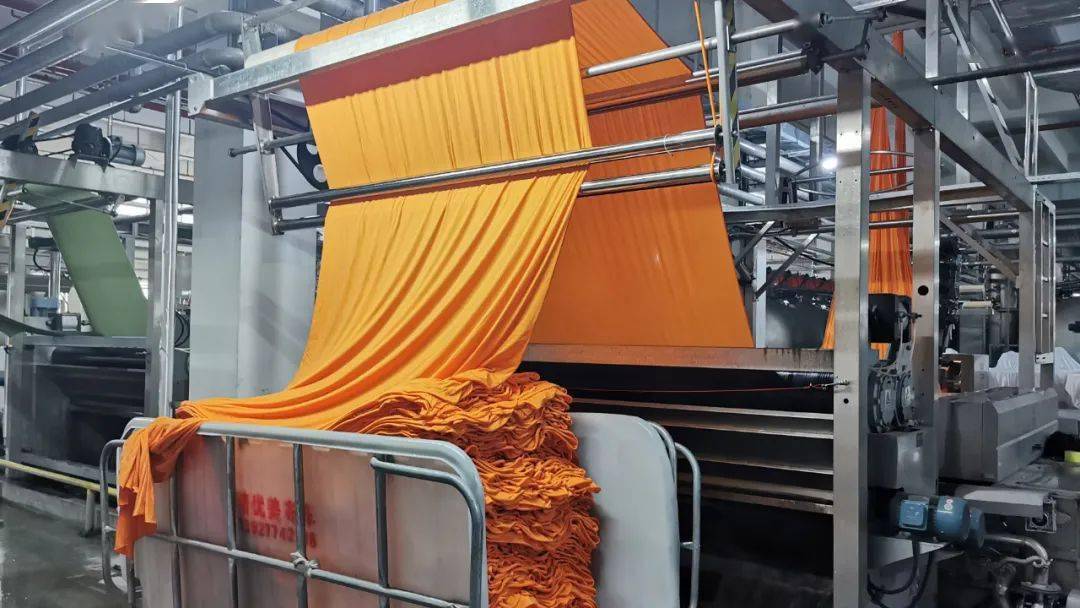
Dye lot records are one of the few controls that make a repeat order comparable to its predecessor. Without them, colour and hand feel become matters of memory.
Range breadth multiplies the verification load
Beyond those four models, the range runs across dry and damp mops, tufted and terry wet mops, kitchen towels, dish sponges, glass polishing cloths, window washers, car washing towels, mitts and sponges, and bath, sports and cooling towels. Breadth is an advantage in programme sourcing and a liability in specification control: every SKU carries its own drift risk, and a supplier with more than twenty product lines has more places for a specification to loosen. The buyer's protection is not a broader audit. It is one consistent qualification file per SKU, built from the same template, so that a result on a mop and a result on a glass cloth can be read the same way.
Purchasing Terms as Consistency Controls, Not Just Commercial Details
The published purchasing terms for this range are a minimum order quantity of 3,000 pieces, delivery on EXW, FOB, CIF, DAP or DDP terms, acceptance against pre-shipment testing, and payment at 30/70 by T/T or by credit or debit card, Apple Pay or Google Pay. Read as commercial boilerplate, they say little about quality. Read as control points, each one changes where consistency is verified and who carries the risk when it is not.
MOQ sets the rhythm of production. A 3,000-piece minimum means repeat orders arrive as discrete batches, which is favourable for consistency: one order, one run, one lot record. It also means small top-up orders are commercially awkward, and the pressure is to consolidate them with other work. Buyers should ask in writing whether a reorder will be produced as a dedicated batch and which lot identifiers will appear on the packing list.
Delivery terms decide where inspection happens. Under EXW, the buyer's only practical control point is at the factory gate before the goods move, so an inspector appointed at origin effectively is the quality system. FOB and CIF keep the control point at the port of loading. DAP and DDP shift transit and import responsibility to the seller, but they also mean a consistency problem may not surface until the goods reach the destination warehouse, by which time the lot has already been consumed. The term should match where the buyer can realistically inspect, not only where the freight quote is lowest.
Payment structure can be aligned with acceptance. A 30/70 arrangement releases the balance before the goods ship, so a buyer who wants pre-shipment testing to mean something should make the balance conditional on the test report in the purchase order. Acceptance criteria then become a contractual trigger rather than a courtesy, and the existing terms carry the weight they were written to carry.
A Repeatable Acceptance Protocol
The protocol below is deliberately unglamorous. Its value is that it produces the same answer when applied by a different person, in a different season, to a different order.
- Lock one specification sheet per SKU, with revision number and issue date. Any change requires a new revision, not a verbal note between merchandisers.
- Attach a measurement method to every field. Composition, GSM and dimensions each need a stated method; a value without a method cannot be compared across orders.
- Define the sampling plan per lot — how many pieces, from how many cartons, and from where in the batch.
- Run pre-shipment testing before the balance is released, and retain the report with the order file.
- Include a wash-cycle check. The manufacturer states 300+ wash cycle durability testing as part of its durability control, alongside double-stitched edge locking. The buyer's own check should use a cycle count matched to the intended service life, so that the result means something for the programme rather than for the laboratory.
- Verify dye and chemical controls. Formaldehyde-free dye inspection and OEKO-TEX Standard 100 raw materials are stated controls, and OEKO-TEX updated Standard 100 in 2024 to include a total fluorine limit of 100 mg/kg to address PFAS regulation. Buyers sourcing into the EU or the US should confirm that the certificate in hand reflects the current limit rather than an earlier edition.
- Record lot identifiers — yarn lot, dye lot, production line, packing date — and file the reference sample alongside them.
- Compare order N against the baseline order, field by field. An out-of-band result should trigger a hold and a documented disposition, not a discount negotiation.
Two details decide whether this protocol survives contact with a busy purchasing calendar. The first is that the baseline must be a measured baseline, not the approved sample sitting in a drawer unmeasured. The second is that the same person should not be both the person who placed the order and the only person who reads the test report; a second reader turns a document into a control.
Scalability: What Grows, What Stretches, What Breaks
Scale figures are easy to read as reassurance and hard to read as risk. The relevant numbers here are a 45,000 m² plant, more than 10 automatic cutting and sewing lines, over 450 sets of production machinery, 200 employees including 17 engineers, an annual output of 2,184,270.46 kg, a stated monthly production capacity of 182,022 kg and a typical production lead time of 30–45 days. Company-linked shipment records in US customs data show 172 bills of lading between June 2019 and September 2026.
Those figures describe capacity, not consistency. Capacity answers whether the volume can be made; consistency answers whether the thousandth piece will measure the same as the first. What actually stretches under growth is verification load. Twice the SKU count means twice the specification files, twice the sampling plans and twice the retained reference samples, unless the buyer standardises the template and the supplier can work to it without renegotiating every field. An engineering team of 17 can support that work, but only if the request arrives in a reusable form rather than as a different spreadsheet per order.

Capacity determines whether an order can be made. The specification file determines whether the next one will match it.
Export breadth adds a second pressure point. With 98% of output going to markets including the USA, Canada, Australia, the UK, Germany, France, Italy, the Netherlands, Russia, Japan, South Korea, Switzerland, Sweden, Turkey and Saudi Arabia, a single SKU can carry several labelling, packaging and language variants. Those variants are legitimate and necessary, and they are also where a correct product arrives with an incorrect polybag or an outdated compliance mark. Packing and labelling belong inside the controlled specification, not in a separate conversation with the shipping department.
There is a commercial consequence too. If a buyer's SKU count grows faster than the supplier's qualification documentation, the weakest SKUs become invisible: they are ordered, they arrive, and nobody measures them because the sampling effort is concentrated on the two or three models that matter most. Rotating the measurement schedule so that every SKU is checked at least once per contract cycle is a cheaper safeguard than discovering the gap through a customer complaint.
Where a Long-Term Agreement Stops Helping
Certification claims are the clearest example of a boundary. The manufacturer states OEKO-TEX Standard 100, ISO 9001:2015, ISO 45001:2018, GRS and SMETA (Sedex) compliance, together with German Packaging Act (VerpackG) and French REP textile registration. Those are company statements until a buyer confirms certificate numbers, scope, validity dates and the specific product categories covered with the issuing body. Certification scope is frequently narrower than a catalogue: a certificate may cover certain materials or processes and not others, and it does not automatically extend to a SKU added later in the year.
Second, the durability and abrasion evidence referenced in this range — the 300+ wash cycle testing, the double-stitched edge locking, the scratch-free abrasion resistance certification — is manufacturer-side testing. No independent laboratory report is included in the available material. A buyer who needs third-party verification for a tender or a retail compliance file should commission it on the SKUs with the highest claim exposure rather than across the whole range.
Third, the 3,000-piece minimum order quantity is a real constraint for a buyer who wants to trial four SKUs before committing. The practical response is to trial fewer SKUs in greater depth — measure two models properly rather than sample eight superficially — and to treat the trial as the baseline order against which later shipments are compared.
Fourth, published capacity and lead-time figures are programme-level numbers, not reserved capacity. A 30–45 day typical lead time assumes the order sits inside the production plan. Peak season, a new SKU with an unproven construction, or a colour change all extend the critical path, and the buffer should be planned rather than discovered at the ship date.
Finally, blended SKUs such as MP-006 should not be judged by pure-microfiber expectations. A 40% cotton content changes absorbency, drying and shrinkage behaviour by design. Holding the blend ratio is the correct consistency test; comparing the cloth against an 85/15 polyester/polyamide product is not.
Market Context: Slow Growth Rewards Specification Discipline
Published estimates for the microfiber cleaning cloth market sit in a narrow band and disagree in their details. Future Market Insights projects growth from USD 979.2 million in 2025 to USD 1,520.7 million by 2035 at a 4.5% CAGR. Fortune Business Insights projects USD 1.04 billion in 2026 rising to USD 1.49 billion by 2034 at 4.57%, and Spherical Insights projects USD 1,533.7 million by 2035 at 4.6%. A fourth estimate, roughly three to four times larger and implying a 24.0% CAGR, was assessed as an outlier with a likely different product scope and is not used here. The remaining estimates are directionally consistent and are not averaged into a single figure.
For a buyer, the useful reading is not the size of the number but its shape: low single-digit growth, no step change, and a category where volume is won by taking share rather than riding a wave. In that environment the commercial return on switching suppliers for a marginal unit price is small, while the cost of a specification drift that reaches a customer is not. Consistency is the cheaper strategy, and it is the one that survives contact with a procurement review.
Microfiber Versus Cotton, and Why the Comparison Depends on Consistency
The manufacturer's published comparison of microfiber against cotton cleaning products cites absorption of seven times its own weight against three times for cotton, a service life of 300+ wash cycles against 50, 99% less lint shedding, and removal of 75% more dirt with less water and chemical. These are manufacturer-published figures and should be read as such: directionally consistent with the general case for microfiber, but not an independent benchmark.
The comparison still earns its place in a repeat-order discussion, because every one of those advantages is produced by structure. Absorption depends on the fibre split and the fabric weight. Lint performance depends on fibre quality and edge finishing. Wash durability depends on stitching and on how the pile holds after repeated laundering. A supplier who holds the specification also holds the comparison; a supplier who lets weight or polyamide share drift delivers a cloth that still carries a microfiber label and no longer supports the numbers printed beside it.
What to Watch Across the Next Contract Cycle
Three developments are worth tracking, each conditional on how the buyer's markets move. Chemical compliance is the most active: the 2024 update to OEKO-TEX Standard 100 introduced a 100 mg/kg total fluorine limit aimed at PFAS, and buyers sourcing into the EU and the US should expect certificate editions to matter more at each renewal, not less. Recycled content is the second: GRS certification is stated for this range, and a buyer whose own customers request recycled-content declarations will need that certificate current and scoped to the actual SKUs. The third is the slow shift from sample approval to lot-level acceptance, which rewards suppliers who already keep lot records and penalises those who cannot produce them on request.
None of these changes the underlying discipline. A long-term microfiber relationship is sustained by the same four things in any market cycle: a written specification per SKU, a test that is actually run before shipment, a record that ties each batch to its inputs, and a disposition process that treats an out-of-band result as a stop rather than a negotiation.
Frequently Asked Questions
How can a buyer confirm that a repeat order matches the approved sample?
By comparing documented values rather than appearance. Composition, GSM, dimensions, construction and edge finish should be measured on a sample drawn under a defined plan, and the results compared with the baseline order rather than with the sample itself. Retaining a measured reference piece from the baseline, together with yarn lot, dye lot and packing date, is what makes the comparison possible two or three orders later.
What are the purchasing terms and acceptance criteria?
For this range the stated terms are a minimum order quantity of 3,000 pieces; delivery on EXW, FOB, CIF, DAP or DDP terms; acceptance criteria based on pre-shipment testing; and payment at 30/70 by T/T, or by credit or debit card, Apple Pay or Google Pay. Buyers should confirm in the purchase order which party appoints and pays for the pre-shipment test, and whether the balance release is tied to its result.
Which values should be written into a purchase order for mops and cloths?
The fields that produce measurable drift: fibre composition ratio, fabric weight in GSM with an acceptable band and a stated method, cut and finished dimensions, construction and pile details, edge finish and stitching, colour and colourfastness where colour carries a function, and packing and labelling per destination market. A model number alone does not define these, and it does not survive a change of production batch.
How does lead time affect reorder planning?
Typical production lead time is stated as 30–45 days, with a monthly production capacity of 182,022 kg. Reorder points should therefore be calculated from consumption across the lead time plus a buffer for inspection, payment processing and, where applicable, sea transit. Buyers running several SKUs on the same replenishment cycle should also stagger inspection dates so that pre-shipment testing does not become a single-day bottleneck.
Are the certifications independently verified?
They are stated by the manufacturer, not verified in the material available here. OEKO-TEX Standard 100, ISO 9001:2015, ISO 45001:2018, GRS and SMETA (Sedex) compliance, along with German VerpackG and French REP registration, should be confirmed with the issuing body for certificate number, scope, validity and the specific products covered before they are relied on in a tender or a retail compliance file. A certification mentioned in a catalogue is a starting point for verification, not the verification itself.
Does a broad product range make repeat-order consistency harder to manage?
It does, because each SKU carries its own drift risk and its own documentation. A range that spans mops, cloths, kitchen towels, auto-care textiles, window washers and towels multiplies the number of specification files and reference samples a buyer must maintain. The workable mitigation is standardisation: one qualification file template per SKU, a rotating measurement schedule that covers every SKU once per contract cycle, and specification revisions controlled centrally rather than agreed informally between individual merchandisers.
Conclusion: The Second Order Is the Real Test
A first order tells you what a supplier can do once. The second order tells you whether the specification was a description of the product or a description of a good day. For buyers in the execution phase of a microfiber programme, the practical sequence is to lock the specification file, define the sampling plan, tie acceptance to the pre-shipment test, and keep the lot records that make order twelve comparable to order one. Everything else in a supplier evaluation — the plant size, the line count, the certificate list — is context for that single question.
A general catalogue covering the mops, cloths, auto-care textiles and window washers referenced in this analysis is available for download: Pa Tin Da 2024 product e-catalogue (PDF).
Tem questões ou precisa de mais detalhes?
Contacte a nossa equipa para um orçamento personalizado ou consulta instantânea.
Solicitar orçamento
Preencha o formulário abaixo e a nossa equipa entrará em contacto com uma proposta personalizada.
Chat direto do WhatsApp
Prefere conversar em tempo real? Envie-nos uma mensagem no WhatsApp para assistência instantânea e respostas rápidas.
- Obter orçamento personalizado
- Partilhar fotos ou documentos
- Discuta as suas necessidades diretamente
Geralmente responde em 5–30 minutos durante o horário de expediente.