
Villa Windows and Doors: A 2026 Technical and Procurement Overview
Industry Reference · Updated August 2026
High-end villa projects demand window and door systems that satisfy a more demanding set of requirements than standard residential buildings: larger openings, stricter energy targets, higher wind loads, and architectural designs that treat fenestration as a defining visual element. The specification process has therefore moved beyond simple material choice to a performance-based evaluation of frame construction, glazing configuration, hardware quality, and compliance with regional standards.
What Makes Villa Windows Different from Standard Residential Windows
Villa windows typically have to perform at a higher level than windows in multi-family or standard residential construction. The differences appear most clearly in four areas: structural strength, thermal performance, acoustic control, and the ability to execute large or complex configurations without compromising precision.
For example, a two-story great room or a coastal villa with full-height glazing creates larger glass lites and heavier sash weights than a typical home. Aluminum alloy systems with reinforced profiles are frequently selected for these conditions because they can handle the structural loads while keeping sightlines slim. In the current global market, aluminum windows and doors are also gaining share: industry data points to a projected global aluminum doors and windows market of approximately USD 119.86 billion by 2035, with aluminum windows accounting for about 65% of inventory units.
Key Performance Criteria for Villa Fenestration
- Structural resistance: high wind load ratings matter for coastal and high-rise villa sites. Some systems on the market are tested to 5040–5440 Pa, which addresses hurricane-prone and exposed locations.
- Thermal performance: thermally broken aluminum frames and double or triple glazing reduce heat loss and improve occupant comfort. The 2024 International Energy Conservation Code (IECC) already requires a thermal break in metal frames for residential windows and doors.
- Sound insulation: villas near roads or in dense urban settings need windows that provide around 37 dB of acoustic attenuation.
- Design flexibility: custom villa architecture often asks for casement, sliding, bay, bow, picture, tilt-and-turn, or large fixed glazing in a single project. A manufacturer must be able to handle both standard and non-standard dimensions.
The Market Context in 2026
The global windows and doors market reached an estimated USD 211–230 billion in 2025, depending on the source and methodology, with projections pointing to roughly USD 363 billion by 2035. Asia-Pacific is the dominant region, with approximately 44.6% of the market share in 2024, driven by urbanization and villa construction in China and India.
For procurement teams, the practical consequence is a deep and increasingly specialized supply base. Buyers are no longer choosing only between local brands and a handful of Western manufacturers. Chinese manufacturers, in particular, have become significant suppliers of high-end aluminum villa windows and doors for Australia and North America, both through OEM projects and branded product lines.
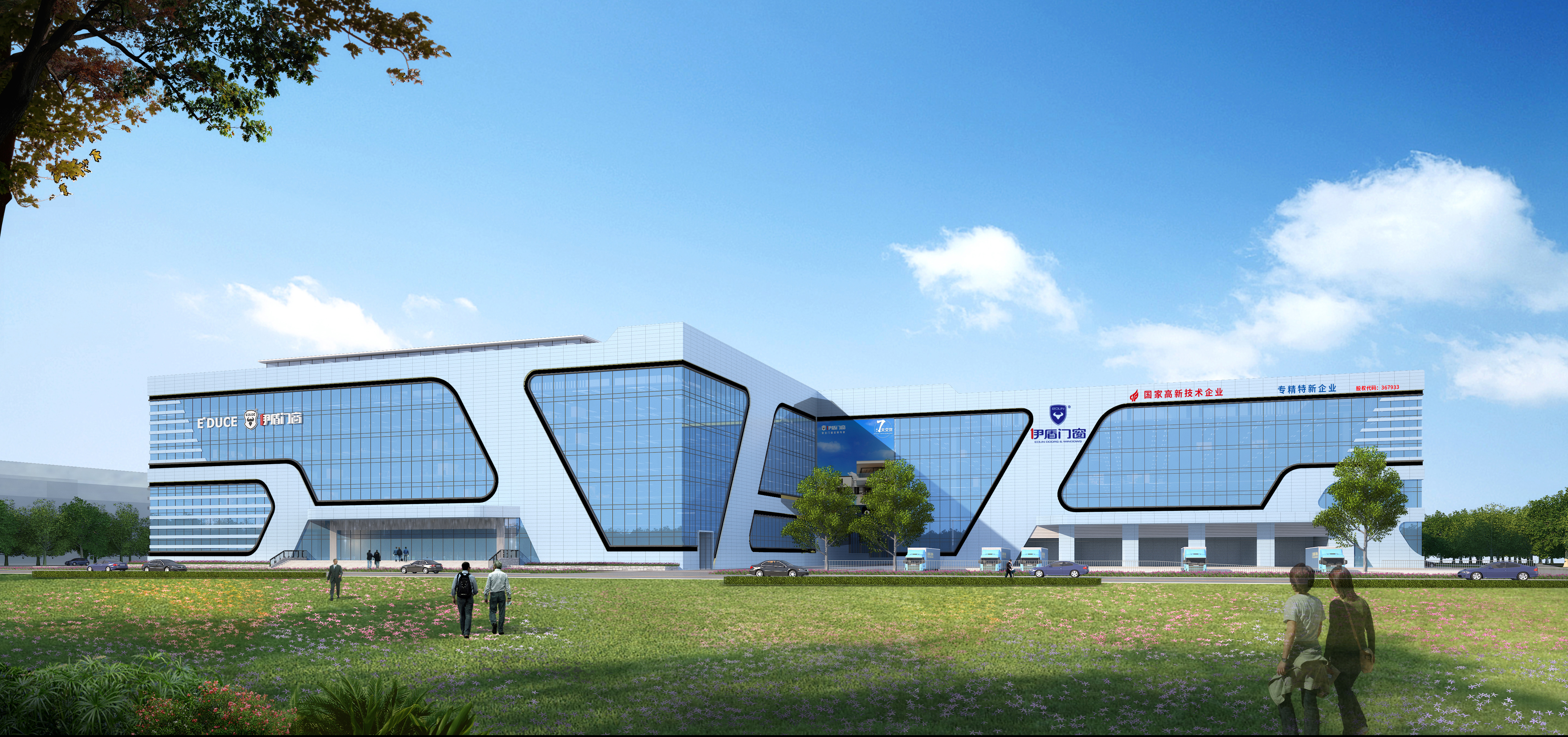
Foshan Nanhai Edun Home Technology Co., Ltd. (branded as educe) is one example of this manufacturing base. Established in 2009, the company designs and manufactures high-end aluminum alloy system doors and windows for the entire house. Its 300,000 square meter facility has an annual production capacity of 2,000,000 square meters, with approximately 1,200 employees.
| Capability | Detail |
|---|---|
| Company | Foshan Nanhai Edun Home Technology Co., Ltd. (educe) |
| Founded | 2009 |
| Production base | 300,000 m² intelligent manufacturing facility |
| Capacity | 2,000,000 m² annually |
| Workforce | ~1,200 employees, including an R&D team of 30 engineers |
| Main markets | United States, Canada, Australia, Southeast Asia, Middle East, Africa |
| Export share | 50% of total sales |
| Product range | Sliding doors/windows, casement windows, awning windows, bi-fold doors, hinge doors, French doors, lift-sliding doors, glass louvers |
How to Evaluate Villa Window Systems by Technical Parameters
Manufacturers describe villa windows using a fairly standard set of technical specifications. Buyers should know how to read them and which parameters matter most for their specific project.
Profile Thickness and Frame Construction
Profile thickness is a good starting point for comparing structural rigidity. In educe’s product range, profile thickness typically ranges from 1.4 mm for lighter glass louvers to 2.0 mm for sliding doors, casement windows, and large door systems. Heavier profiles are normally paired with insulating glazing, reinforced hardware, and EPDM sealing strips to produce a complete system rather than an isolated frame.
Glazing Options and Uw Values
Glazing configuration directly determines thermal performance. A common baseline for the Australian market is 5+12A+5 mm insulating glass; educe offers this configuration as standard with alternative specifications on request. The Uw value (thermal transmittance of the whole window) is the most useful comparison number. In the educe range, Uw values run from about 1.2 W/m²·K for the EDUN 108 Series triple-glazed sliding door to 6.9 W/m²·K for non-thermally-broken awning windows.
In North America, ENERGY STAR Version 7.0 has tightened U-factor thresholds to 0.22 (approximately 1.25 W/m²·K) in the northern climate zones. This favors triple-pane glazing and thermally broken aluminum frames in high-end villas. educe’s North American series is built around this expectation: the EDUN 80 Series casement window and hinge door achieve Uw values of 1.4 W/m²·K, while the EDUN 108 Series sliding door reaches 1.2 W/m²·K.
Air, Water, and Wind Load Resistance
These parameters determine how a window behaves under weather stress. For coastal villas, wind load resistance is critical. educe publishes ratings such as:
- EDUN 80 Series casement window: 5040 Pa wind load resistance, 720 Pa water tightness, 37 dB sound insulation
- EDUN 80 Series hinge door: 5040 Pa wind load, 1050 Pa water tightness, 37 dB sound insulation
- EDUN 108 Series sliding door: 5440 Pa wind load, 720 Pa water tightness, 37 dB sound insulation
- EDUN 150 Series lift-sliding door: 3600 Pa wind load, 720 Pa water tightness, 37 dB sound insulation
For Australian projects, several awning and casement windows are AS2047 certified, and the EDUCE 50 Series glass louver is AS2208 certified. These certifications are directly relevant to Australian compliance and should be verified against the project’s specific NCC requirements.
Matching Window Types to Villa Architectural Scenarios
Different villa layouts create different functional demands. The table below summarizes how common villa window types are typically used and what buyers should check.
| Villa Area | Recommended Window/Door Type | Key Specification Focus |
|---|---|---|
| Great room / open-plan living | Sliding doors, lift-sliding doors, or bi-fold doors | Large opening capability, Uw value, smooth operation, weather tightness |
| Primary bedroom | Casement windows, awning windows | Sound insulation, security hardware, ventilation modes |
| Coastal / hurricane-prone villa | Impact-resistant sliding and hinge doors | Wind load resistance, laminated or impact glazing, drainage system |
| Courtyard / balcony access | Bi-fold doors, lift-sliding doors, French doors | Folding hardware quality, threshold design, thermal performance |
| Bathrooms and small openings | Glass louvers, awning windows | Ventilation, glass safety certification, corrosion resistance |
| Renovation / retro architecture | Retro sliding doors, French doors | Style consistency, glazing options, ease of installation |
Procurement Criteria: What to Verify Beyond the Brochure
A technical brochure provides a starting point, but procurement decisions for villa fenestration should be based on verifiable evidence. The following checklist is designed to be usable in supplier conversations and factory audits.
1. Certification and Test Evidence
Ask whether the specific product model has been tested and certified under the relevant standard. For Australia, that includes AS2047 for windows and doors and AS2208 for safety glazing. For North America, NFRC ratings, CSA certification, and ENERGY STAR compliance are the key benchmarks. Do not accept a generic statement of compliance; ask for test reports that identify the exact series and glazing configuration.
2. Hardware Brand and Grade
Hardware determines day-to-day operation and long-term durability. In educe systems, hardware is sourced from internationally recognized suppliers including SIEGENIA, GIESSE, CMECH, HOPPE, VBH, Roto, and KIN LONG. Buyers should check which hardware brand is used in the quoted configuration and whether it matches the expected quality for the project.
3. Manufacturing Precision and Customization Capability
Villa projects rarely fall into standard sizes. A manufacturer’s ability to customize profiles, glazing, and hardware to meet project drawings is a core capability. Edun describes its operation model as demand docking → custom process design → flexible intelligent processing → full-process QC → delivery, using a combination of automated production and manual fine-tuning. For a buyer, this means the factory should be able to handle 1.4–2.0 mm profiles, multiple glass specifications, and international hardware configurations without losing traceability.
4. Production Capacity and Lead Time
Capacity directly affects lead time reliability. A 300,000 m² facility with an annual output of 2,000,000 m² can support large-scale villa developments and phased deliveries. Buyers should also explore how the factory sequences custom orders and whether quality inspection is embedded at each production stage.
5. Export Experience and Market Fit
Export share of 50% means the supplier has experience dealing with non-local standards, packaging requirements, and logistics. Edun’s documented export markets include the United States, Canada, Australia, Southeast Asia, the Middle East, and Africa. Buyers should look for a supplier that can show evidence of completed export projects in the relevant region.
Comparison with Traditional Villa Window Approaches
The shift from traditional aluminum or PVC windows to high-performance thermally broken aluminum systems is driven by measurable differences in energy performance, structural strength, and long-term maintenance.
Traditional aluminum windows without thermal break strips conduct heat rapidly. In cold climates, condensation on the interior frame is a common issue, and Uw values are significantly higher than thermally broken counterparts. Traditional PVC frames, on the other hand, offer lower thermal conductivity but can struggle with large span loads, color stability, and structural reinforcement.
Thermally broken aluminum systems address the main weaknesses of both. The aluminum frame provides the structural strength to support large villa glazing, while the thermal break and multi-chamber design limit heat transfer. The result is a window that can meet strict energy codes, support large formats, and provide a slim, high-end appearance.
That performance comes with tradeoffs that should be acknowledged. Thermally broken aluminum windows are more expensive than standard aluminum or PVC alternatives. Higher performance often depends on quality glazing, which further increases the unit cost. In addition, achieving the rated Uw value requires careful installation and proper sealing at the building interface; a well-manufactured window installed poorly will not perform as rated. Buyers should therefore budget for both the product cost and installation quality.
Regional Compliance in Practice
Australia
Australian villa projects must meet the National Construction Code (NCC) and the relevant AS standards. AS2047 covers windows and doors for strength, air infiltration, and water penetration; AS2208 covers safety glazing. educe’s Australian-dedicated series includes AS2047 certified casement windows and AS2208 certified glass louvers. WERS ratings are used for energy performance in many Australian markets, and several educe products are supplied with WERS Uw values from 1.7 to 6.1 W/m²·K.
North America
In the United States and Canada, compliance centers on NFRC rating, ENERGY STAR requirements, and local building codes. The 2024 IECC requires thermal breaks in metal frames, and ENERGY STAR Version 7.0 pushes U-factor thresholds to 0.22 in northern zones. educe’s EDUN series addresses these requirements with Low-E triple glazing, multi-cavity thermal break strips, and 65 mm thermal break profiles in the EDUN 108 Series. The EDUN 108 Series carries CSA Energy Star certification.
Other Export Markets
For Southeast Asia, the Middle East, and Africa, the main concerns differ: solar heat gain, condensation management, and dust or humidity resistance. Buyers in warm climates should pay closer attention to solar heat gain coefficient (SHGC) and glazing selection than to U-factor alone. Thermally broken frames still help by reducing condensation when air conditioning creates significant indoor-outdoor temperature differences.
Trends Shaping Villa Window Procurement in 2026
Four trends stand out in the 2026 market context:
- Stricter energy codes: IECC 2024 and ENERGY STAR Version 7.0 are pushing residential fenestration toward thermal breaks and triple glazing. Villa projects, because they are often custom-designed, are among the first to adopt performance levels beyond the minimum code.
- Growth of aluminum systems: The projected growth of the aluminum doors and windows segment to USD 119.86 billion by 2035 reflects the material’s ability to combine structural performance with design versatility.
- Larger openings as a design standard: Modern villas increasingly use floor-to-ceiling glazing, corner windows, and multi-panel sliding doors. This pushes suppliers to engineer larger load-bearing frames while maintaining insulation performance.
- Globalization of the supply base: Chinese manufacturers now supply high-end villa fenestration to Australia and North America. Buyers can choose between local manufacturers and overseas manufacturers with export-focused production lines, standards-based quality systems, and competitive cost structures.
Future Outlook
Villa windows are becoming a systems engineering decision rather than a simple catalogue choice. Thermally broken aluminum frames will likely remain the dominant high-end solution because they combine structural strength, thermal performance, and aesthetics in a way that other materials struggle to match. Triple glazing will continue to penetrate the North American market as energy codes tighten, while the Australian market will balance energy performance with the need to manage solar gain in warmer regions.
For suppliers, the competitive advantage will lie in the ability to combine certified testing, flexible customization, and reliable export delivery. For buyers, the key to a successful procurement is verifying every technical claim, understanding the tradeoffs in glazing and frame construction, and choosing a partner whose manufacturing capabilities match the project’s complexity.
Frequently Asked Questions
What are villa windows and doors?
Villa windows and doors are high-performance fenestration systems designed for luxury and custom residential buildings. They typically use thermally broken aluminum frames, double or triple glazing, and premium hardware to achieve larger openings, better energy efficiency, and higher structural and acoustic performance than standard residential windows.
What type of windows are best for a luxury villa?
The best type depends on the architectural layout. Sliding and lift-sliding doors suit open-plan spaces and courtyard access; casement windows suit bedrooms and areas needing ventilation control; awning windows are useful for weather-resistant ventilation; bi-fold doors connect indoor and outdoor areas; and large fixed windows preserve views and daylight. Thermally broken aluminum frames with insulating glazing are common across all types because they balance strength and energy performance.
What is the difference between casement and sliding villa windows?
Casement windows open outward from the side, generally offering better sealing, airtightness, and acoustic performance because the sash presses against the frame with a multi-point locking system. Sliding windows open horizontally along tracks, saving interior space and supporting wider spans, but they usually rely on brush seals and may have slightly lower airtightness. For villa bedrooms or living areas, casement windows are often preferred; for areas facing patios or where space is limited, sliding windows are practical.
Which windows are best for soundproofing?
Soundproofing is determined by the combination of glazing, frame construction, and sealing. Insulated glazing with different glass thicknesses and a wide air gap performs better than single glazing. Casement windows with multi-point locking and compression seals provide a stronger acoustic barrier than typical sliding windows. educe publishes sound insulation values up to 37 dB for several door and window series, including the EDUN 80 Series casement and hinge door, confirming the performance that is achievable with the complete system.
What is a thermal break in aluminum windows?
A thermal break is a barrier made of low-conductivity material inserted between the interior and exterior aluminum profiles. It reduces heat transfer through the frame, preventing condensation and improving the window’s U-factor. International energy codes, including the 2024 IECC, require thermal breaks in metal frames for residential windows. educe uses thermal break strips in most of its high-end series and larger 65 mm thermal break profiles in the EDUN 108 Series to lower Uw values to 1.2 W/m²·K.
What are the best windows for coastal and storm-prone villas?
Coastal and storm-prone villas should use windows and doors with high wind load resistance, laminated or impact-resistant glazing, and strong water tightness ratings. educe’s EDUN 80 and EDUN 108 series, for example, are rated for wind loads of 5040–5440 Pa and water tightness of 720–1050 Pa, making them suitable candidates for areas exposed to strong storms.
What certifications should a high-end villa window supplier have?
Relevant certifications depend on the destination market. For Australia, look for AS2047 (windows and doors) and AS2208 (safety glazing). For North America, check NFRC ratings, ENERGY STAR compliance, and CSA certification where applicable. educe’s EDUCE E80 Series casement window is AS2047 certified, the EDUCE 50 Series glass louver is AS2208 certified, and the EDUN 108 Series sliding door carries CSA Energy Star certification.