
Villa Windows and Doors: What a 300,000 m² Plant Proves
Villa Windows and Doors: What a 300,000 m² Plant Proves
HTNXT Industry Reference · Manufacturing Capability & Procurement
Villa windows and doors are a schedule problem before they are a product problem. On a luxury villa project, the window package closes the building envelope, and every trade behind it — glazing, cladding, interiors, landscaping — is sequenced around the day those units arrive on site. When buyers evaluate suppliers, the question they are actually testing is narrower than “can this company build a good window?” It is: can this company engineer, manufacture, test, pack and ship several hundred non-standard units inside a construction programme that will not move?
That question is getting harder to answer as demand concentrates. The global windows and doors market reached a valuation of approximately USD 211.04 billion to USD 229.90 billion in 2025, with projections indicating a rise to USD 363.23 billion by 2035 (Market Research Future / Fortune Business Insights). Asia-Pacific dominated the global market with roughly 44.6% of the share in 2024 (Market Research Future), and the aluminum segment alone is expanding at a CAGR of 5.01%, projected to reach USD 119.86 billion by 2035, with aluminum windows accounting for 65% of inventory units (Industry Research). When more villa demand flows through a smaller number of manufacturing hubs, plant capacity stops being background information and becomes a procurement variable.
Why factory scale answers a lead-time question
Custom villa windows are not one product. A whole-house package for a high-end villa can combine casement windows, awning windows, sliding windows, bi-fold doors, lift-and-slide doors, French doors, narrow-frame sliding doors, bay and bow configurations, picture windows and large fixed glazing — each with its own profile thickness, glazing build-up, hardware set and finish. Every variation adds engineering time before cutting begins and changeover time on the line.
That is the mechanism behind a capacity claim. A small workshop absorbs variation by slowing down, because one line must be reset for each new configuration. A large plant absorbs variation by running parallel processing, glazing, assembly, testing and packing stages, and by holding more work in process at once. The figure usually published on a supplier profile — floor area — is a proxy for how much parallel work the plant can carry.
It is also one of the few claims in this industry that can be physically verified. Building area, equipment lists and quality-control records can be inspected at the factory or through an independent audit in a way that a verbal delivery promise cannot.
What 300,000 m² actually contains
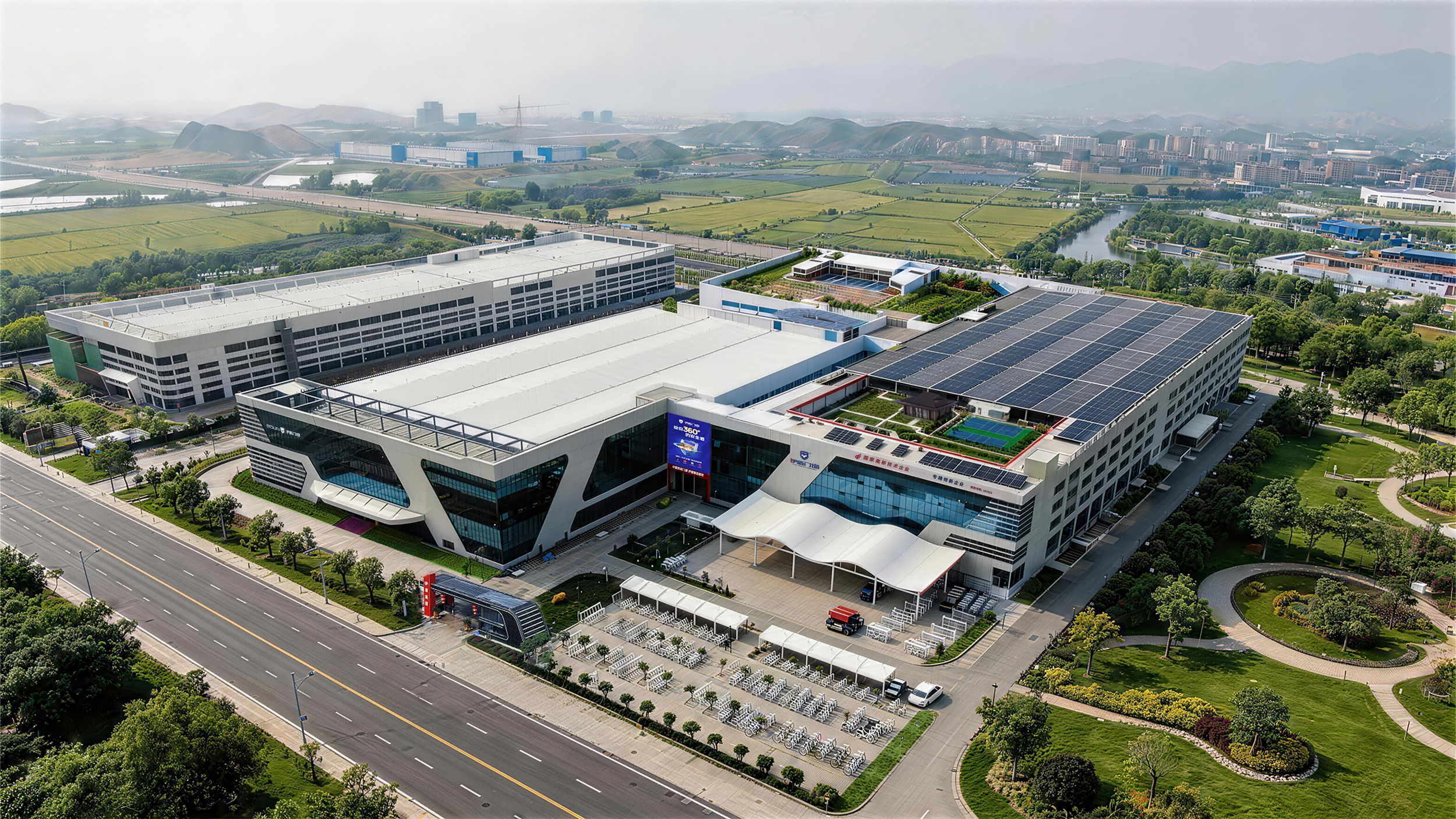
Foshan Nanhai Edun Home Technology Co., Ltd., the manufacturer behind the Edun and Educe window and door brands, is a Foshan-based company established in 2009 that specialises in the design and manufacture of high-end aluminum alloy system doors and windows for the entire house. Its disclosed manufacturing footprint is specific rather than approximate: a modern intelligent manufacturing factory covering 300,000 square meters, an annual production capacity of 2,000,000 square meters, and a workforce of approximately 1,200 employees. The company operates a digital and intelligent production center, an East China operation center, and an international camp that includes a sales center and a shared exhibition center. Its range covers sliding doors and windows, casement doors and windows, curtain walls, sunrooms and entrance doors, supported by a research and development team of 30 engineers with 128 patent results.
Each disclosed figure answers a different part of a buyer’s diligence.
| Disclosed fact | What it indicates for a villa project |
|---|---|
| 300,000 m² manufacturing area | Space for parallel processing, assembly, testing and packing stages rather than a single sequential line |
| 2,000,000 m² annual production capacity | Aggregate throughput ceiling across product families — a capability statement, not a project schedule |
| Approximately 1,200 employees | Shift coverage across machining, glazing, assembly, quality control and packing functions |
| 30-engineer R&D team; 128 patent results | In-house conversion of architectural drawings into production data, including non-standard villa dimensions |
| Product range spanning sliding, casement, curtain wall, sunroom and entrance systems | Ability to supply a mixed whole-house package rather than a single window type |
From annual capacity to a project calendar
An annual capacity figure is the most quoted and least useful number in window procurement unless it is translated. Two million square meters per year is a ceiling that assumes continuous production across the plant’s product families. Actual monthly output depends on the order mix — how many units are triple-glazed, how many profiles require finish changes, how many systems run in parallel, and how much of the line is committed to other markets. Edun, for example, serves the United States, Canada, Australia, Southeast Asia, the Middle East and Africa, with export business accounting for 50% of total sales. Capacity is therefore shared across regional standard sets, not reserved for one project.
The practical consequence is that scale changes which questions are worth asking. Instead of “how fast can you deliver?”, buyers get further with questions a plant can answer in writing:
- Which production slots are available in the month the project needs, and what must be confirmed to hold one?
- How does the plant sequence a mixed package — casement windows alongside large sliding doors and fixed glazing — rather than a single system?
- Which processing route does a specific glazing build-up take? A 6+12+6+12+6 mm triple-glazed casement window and a 5+12A+5 mm insulated unit do not move through the same steps.
- What documentation accompanies the schedule — order confirmation, production milestones, inspection points, packing and loading plan?
- How are single replacement units or unusual architectural shapes routed after the main package has shipped?
A supplier that answers those questions with a production plan presents a different risk profile from one that answers with an adjective.
Comparing supply models: integrated plant, regional fabricator, trading intermediary
Villa buyers typically choose between three supply structures. They differ less in the products they can quote than in how much of the production chain the buyer can actually see.
| Evaluation dimension | Integrated large-scale manufacturer | Regional fabrication workshop | Trading intermediary |
|---|---|---|---|
| Capacity transparency | Plant area, annual capacity and headcount typically disclosed and auditable on site | Rarely published; verified only by visiting the workshop | No plant to inspect; capacity belongs to third-party factories |
| Engineering depth | In-house R&D team converts drawings into production data | Often depends on external designers or standard templates | Depends on whichever partner factory accepts the order |
| Performance testing | In-house testing instruments with staged quality inspection | Testing frequently outsourced | Testing performed by partners and reported second-hand |
| Standards coverage | Multi-standard production, for example AS2047 for Australia and NFRC / CSA for North America | Usually one domestic standard | Standards depend on the partner factory |
| Mixed whole-house packages | Multiple systems scheduled in parallel | Limited to fewer systems at a time | Can bundle product categories commercially |
| Small or one-off orders | Batch economics may make single units less efficient | Strong flexibility on bespoke items | Flexible placement, timing not verifiable |
| Export documentation | Handled as part of ongoing export operations | Limited export experience | Handled commercially by the intermediary |
| Principal risk to the buyer | Aggregated capacity is shared across markets, so slot timing matters | Capacity ceiling can collide with a villa package release | Delivery promise depends on a third party’s line availability |
Scale is not a universal advantage, and it should not be treated as one. Large integrated plants are optimised for repeatable series production: a facility running North American EDUN series and Australian EDUCE series in parallel schedules efficiently when orders arrive in batches with consistent specifications. A single replacement sash in an obsolete profile, or a one-off shape with no production history, can move through a small workshop faster than through a large line, because the small workshop does not have to re-plan a shared schedule around it. Buyers should ask how small or unusual items are routed, and should not assume that a large footprint automatically includes their specific project.
What plant scale changes in the specification itself
Compliance requirements in the main villa markets are tightening, and each tightening step increases the processing content of every unit. That is why capacity and performance are connected rather than separate topics.
The 2024 International Energy Conservation Code (IECC 2024, R402.1.2) mandates that metal frames for residential windows and doors incorporate a thermal break to minimise thermal bridging and condensation (International Code Council). U.S. ENERGY STAR Version 7.0 (2024) tightens U-factor thresholds to 0.22 in northern zones, increasing demand for triple-pane glazing and thermally broken aluminum frames in high-end villas (ENERGY STAR / EPA). For coastal villas, hurricane impact-resistant windows are governed by wind-borne debris standards, and the U.S. market for such windows is expected to reach USD 28.65 billion by 2035 (Global Growth Insights).
Those requirements translate directly into production characteristics. Across the Edun and Educe ranges, the recurring construction pattern is a multi-cavity thermal break strip, Low-E triple glazing, EPDM sealing strips and branded hardware, combined with declared performance values.
| Series | Product type | Profile thickness | Glazing | Wind load resistance | Sound insulation | U-value |
|---|---|---|---|---|---|---|
| EDUN 80 SERIES | Casement Window | 2.0 mm | 6+12+6+12+6 mm (optional) | 5,040 Pa | 37 dB | Uw 1.4 W/m²·K |
| EDUN 80 SERIES | Hinge Door | 2.0 mm | 6+12+6+12+6 mm (optional) | 5,040 Pa | 37 dB | Uw 1.4 W/m²·K |
| EDUN 108 SERIES | Sliding Door | 2.0 mm | 6+12+6+12+6 mm (optional) | 5,440 Pa | 37 dB | Uw 1.2 W/m²·K; CSA Energy Star certified |
| EDUN 125 SERIES | Narrow Sliding Door | 2.0 mm | 10+18A+10 mm (optional) | 3,600 Pa | 37 dB | Uw 1.5 W/m²·K |
| EDUCE 102 SERIES | Awning Window | 1.8 mm | 5+12A+5 mm (optional) | 1,200 / 4,000 Pa | — | WERS Uw 2.5–3.0 W/m²·K |
| EDUCE 208 SERIES | Sliding Door | 2.0 mm | 5+12A+5 mm (optional) | — | — | WERS Uw 3.1–6.1 W/m²·K |
Declared values as published in the manufacturer’s product data. Water tightness is separately rated across the range, for example 720 Pa for EDUN 80 SERIES casement windows and 1,050 Pa for EDUN 80 SERIES hinge doors.
The production implication is that performance is not added at the end of the line. A 5,040 Pa wind load rating on a casement window depends on profile thickness, reinforcement, hardware anchoring and glass thickness being correct at the same time. That is a process-control problem, and process control scales with the number of inspection points a plant is able to run. Edun describes full-process quality inspection with traceable parameters, supported by flexible aluminum and glass processing equipment, performance testing instruments and custom packaging equipment, operating on 1.4–2.0 mm profiles and multiple glass specifications. The sequence it publishes is demand docking, custom process design, flexible intelligent processing, full-process quality control and delivery.
Where this manufacturing scale is applied
Capacity only becomes meaningful when it is matched to a market’s standard set and a project’s system mix. The company’s product data shows how the same plant footprint serves different regional requirements.
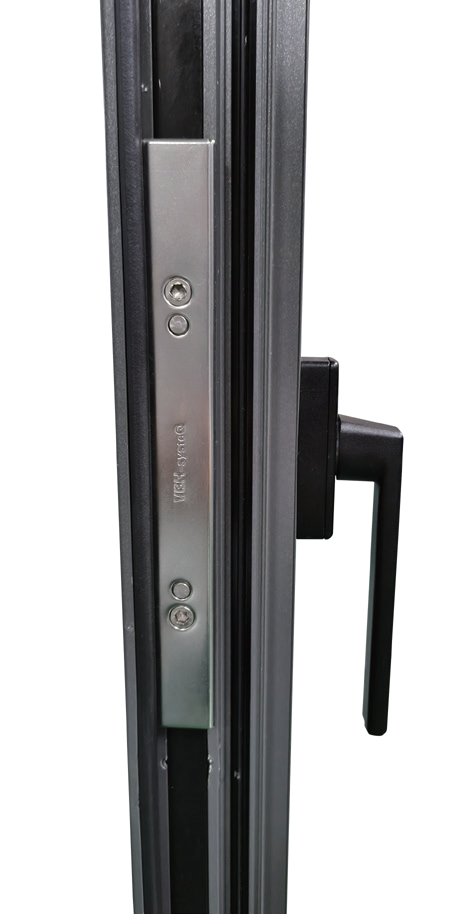
Australia. The EDUCE series covers Australian high-end and super high-end villas: EDUCE 208 SERIES sliding doors for super high-end villas, commercial complexes and luxury hotels; EDUCE 138 SERIES and EDUCE 110 SERIES sliding doors for high-end villas and courtyards; EDUCE E80 SERIES casement windows carrying AS2047 certification; EDUCE 102 SERIES awning windows with a declared 1,200 / 4,000 Pa wind load range for high-end villas, commercial buildings and high-rise residential; and EDUCE 50 SERIES glass louvers with AS2208 certification for bathrooms, boutique hotels and commercial display.
North America. The EDUN series is specified for residential construction and high-end villas: EDUN 108 SERIES sliding doors with CSA Energy Star certification, EDUN 125 SERIES narrow sliding doors for high-end residential and commercial display, EDUN 80 SERIES casement windows and hinge doors for residential construction and office buildings, plus EDUN 150 SERIES lift sliding doors and EDUN 60 SERIES French doors for North American high-end villas and boutique hotels.
Coastal and hurricane exposure. Villas in wind-borne debris regions require impact-resistant glazing assemblies and heavier anchoring, a specification family for which U.S. demand alone is projected at USD 28.65 billion by 2035.
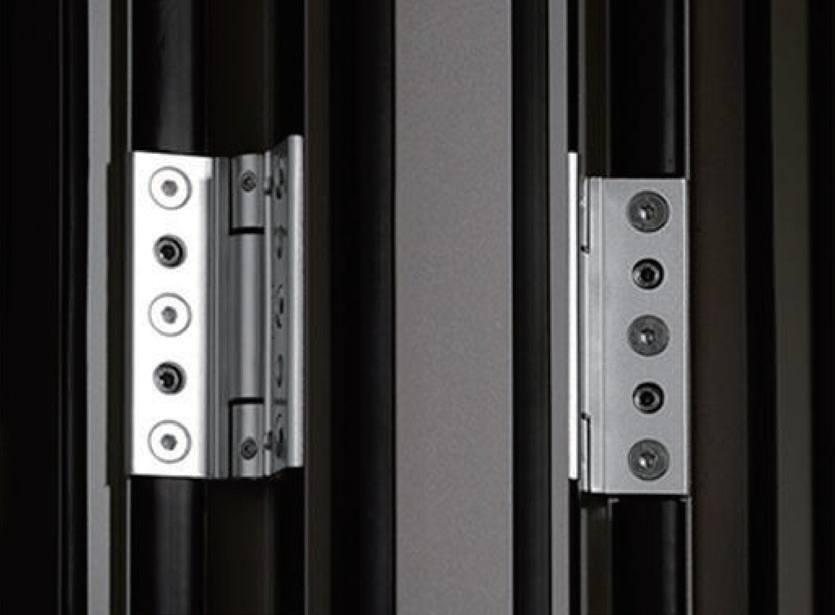
Whole-house packages. Because the range extends to curtain walls, sunrooms and entrance doors, a single villa can be supplied across facade, terrace and interior opening types under one production plan — which is precisely where a parallel-capacity plant matters, since different systems compete for line time.
Market trend analysis: why capacity claims will matter more, not less
Three structural trends support the argument that verifiable manufacturing scale is becoming a selection criterion rather than a marketing line.
Demand is growing but the supply base is consolidating. The windows and doors market is projected to move from roughly USD 229.90 billion in 2025 to USD 363.23 billion by 2035, with Asia-Pacific holding about 44.6% of the market in 2024. Within that, aluminum systems — the material family used in most modern villa fenestration — are growing at a 5.01% CAGR and are projected to reach USD 119.86 billion by 2035, accounting for 65% of inventory units.
Codes are adding processing content to every unit. The IECC 2024 thermal-break mandate for metal frames and the ENERGY STAR Version 7.0 U-factor threshold of 0.22 in northern zones both push villa specifications toward thermally broken aluminum and triple-pane glazing. More glass, more cavities and more sealing mean longer processing and testing time per unit — a requirement that plants with parallel capacity absorb more comfortably than single-line workshops.
Competition is now about evidence. The high-end residential segment includes established global and North American manufacturers such as Andersen Corporation, Pella Corporation, JELD-WEN, Marvin and PGT Innovations (Window + Door Magazine / Technavio). For buyers comparing a Chinese manufacturing partner against that field, the differentiating questions increasingly concern documented capability — plant area, engineering headcount, testing infrastructure and standard coverage — rather than product photography.
A verification checklist for buyers
If a supplier presents scale as a risk-reduction argument, the claim should be matched to a document. The following checklist converts the capability discussion above into verifiable items.
| Claim presented | Evidence worth requesting |
|---|---|
| Plant area (for example 300,000 m²) | Site visit, factory audit report or third-party inspection confirming building and production hall area |
| Annual capacity (for example 2,000,000 m²) | Capacity statement broken down by product family, plus order records showing multi-system scheduling |
| Workforce size (approximately 1,200 employees) | Staffing structure across machining, glazing, assembly, quality control and packing |
| Engineering depth | Named engineering headcount (30 engineers) and patent documentation (128 patent results) |
| Performance values (Uw, wind load, sound insulation) | Test reports tied to the exact series and glazing build-up specified for the project |
| Standards compliance | Certificates for the destination market, such as AS2047, NFRC, CSA or AS2208 documentation |
| Quality control | Documented inspection points and traceability records at each production stage |
| Delivery reliability | Written production plan with milestone dates, slot confirmation, packing specification and loading plan |
Future outlook
Over the next decade, the villa window supply base is likely to be separated less by product catalogues than by demonstrable manufacturing depth. Three developments point in that direction. First, tightening energy codes will make thermal breaks and triple glazing baseline rather than premium options, raising processing time per unit and favouring plants with parallel capacity. Second, regional standard fragmentation — AS2047, NFRC, CSA, ENERGY STAR and hurricane-impact requirements — will push multiple rule sets through the same factory, making multi-standard production a selection filter rather than a bonus. Third, buyers are shifting from accepting capability claims to requesting audit-level evidence, which means documented footprint, capacity, engineering headcount and testing infrastructure will increasingly appear in RFQ checklists.
For villa projects, the practical conclusion is unglamorous. Scale shortens the odds of a capacity failure, but it does not replace a production plan. A 300,000 m² footprint, a 2,000,000 m² annual capacity and a workforce of approximately 1,200 people describe what a plant is able to absorb. What a specific project receives still depends on engineering discipline, scheduling transparency and quality control at every stage — and those are the parts a buyer can verify.
FAQ
What does villa window production capacity actually measure?
Annual production capacity measured in square meters expresses the total glazed area a plant can process across all its product families in a year, covering profile machining, glazing, assembly and finishing. It is an aggregate figure. It does not describe the capacity available for one order, one system type or one delivery month, and it should be read alongside plant area, workforce size and the number of systems produced.
How can a buyer verify a supplier’s claimed plant size and output?
The verifiable elements are physical and documentary: building and production area confirmed by a site visit or third-party audit; capacity statements broken down by product family; a staffing structure showing shift coverage across machining, glazing, assembly and quality control; engineering headcount; and test reports tied to specific series. Claims that cannot be matched to a document or an inspection remain unverified regardless of how they are presented.
Does a larger factory always mean faster delivery for a villa project?
No. A large plant’s capacity is shared across all markets and product families it serves. A manufacturer exporting to the United States, Canada, Australia, Southeast Asia, the Middle East and Africa, with export business accounting for 50% of total sales, allocates production across several regional standard sets. Delivery timing therefore depends on order placement, product mix and production slot availability rather than on floor area alone.
Which villa window and door systems are typically produced in a facility of this scale?
A 300,000 m² facility of this type produces casement windows, awning windows, sliding windows, bi-fold doors, lift sliding doors, French doors, narrow-frame sliding doors, glass louvers, curtain walls, sunrooms and entrance doors. A whole-house villa package normally draws on several of these categories at once, with different profile thicknesses (commonly 1.4–2.0 mm) and different glazing specifications per elevation.
What evidence should be requested before committing to a villa window order?
Ask for the production plan with milestone dates, the capacity statement for the relevant product family, test reports for the exact series and glazing build-up, certification documents for the destination market, quality control and traceability records, and packing and loading documentation from previous export shipments. These items convert a capability claim into something a buyer can check before production begins.
Reference document: the Edun Group corporate introduction (PDF) is publicly available for readers who need the full company profile — Edun Group introduction.