
Viper-391S vs Hydra-360S: Choosing the Right Single Pass Printer for Labels or Cylinders
Buyer Comparison · Single Pass Digital Inkjet
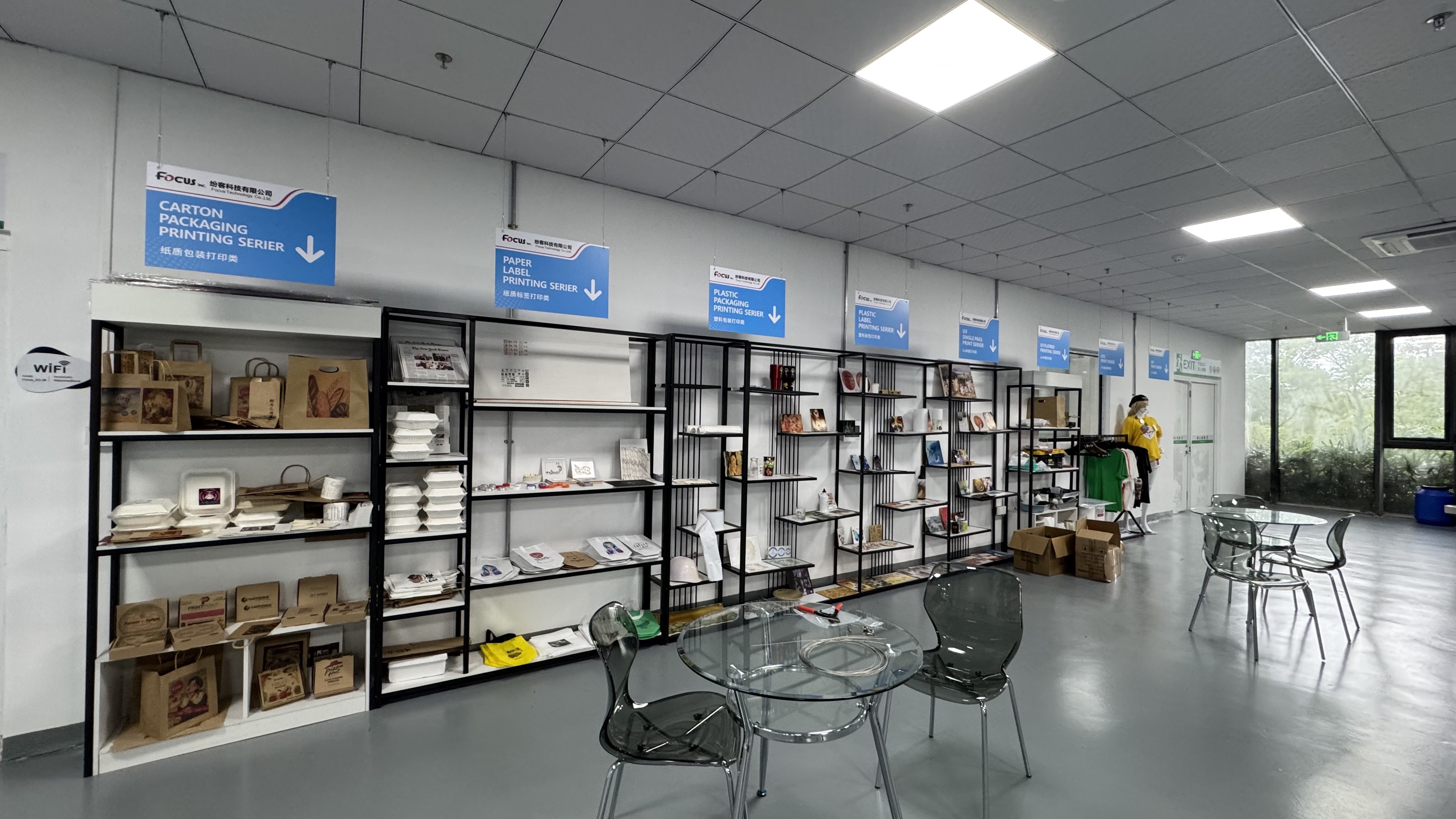
Single pass inkjet printing has moved from an emerging production method to a mainstream option for packaging and industrial printing. For buyers at the decision stage, the challenge is often not whether to adopt single pass technology, but which machine architecture fits the products they need to print. Roll-to-roll label printing and cylindrical object printing are two distinct production fields that are sometimes confused because both use digital inkjet. This comparison examines two specific FocusInc models—the Viper-391S label printer and the Hydra-360S cylinder printer—to help procurement teams decide which single pass production path aligns with their substrate, speed expectations, and job mix.
Shanghai Focus Industrial Co., Ltd. (FocusInc) is a Shanghai-based industrial digital printing equipment manufacturer founded in 2008. The company designs and builds digital inkjet printers for packaging, labels, non-woven bags, pouches, corrugated board, and cylindrical containers. FocusInc operates a 35,000 m² factory and reports that about 95% of its output is exported to markets including the EU, USA, Mexico, Brazil, Chile, Australia, Canada, and the UK.
Why This Comparison Matters for Buyers
Both the Viper-391S and Hydra-360S are single pass digital inkjet printers, but they solve different production problems. The Viper-391S is engineered for roll-to-roll label and sticker printing, while the Hydra-360S is designed for printing on cylindrical containers such as bottles and cups. A buyer evaluating these models is effectively choosing between two production paths that rarely overlap.
Understanding the difference matters because machine selection drives everything downstream: printhead technology, substrate compatibility, output speed measurement, and the kind of finishing equipment needed on the line. Selecting the wrong architecture can mean investing in a system that cannot handle the intended media.
Viper-391S vs Hydra-360S: Core Positioning
| Attribute | Viper-391S | Hydra-360S |
|---|---|---|
| Primary Application | Label & sticker printing (roll-to-roll) | Cylinder, bottle & container printing |
| Printhead Technology | HP PageWide | EPSON I3200 |
| Production Speed | 10–40 m/min | 40–120 pieces/hour |
| Media Format | Flexible roll stock labels | Rigid cylindrical objects |
| Production Logic | Continuous web movement | Discrete piece handling |
The two printers are not direct competitors in the sense of offering interchangeable output. Instead, the buying decision is about which production model matches the factory's order profile. A label converter running short-run pressure-sensitive labels will find value in a roll-to-roll system. A beverage or personal care manufacturer printing directly on bottles will need a cylindrical handling mechanism.
Technology Comparison: HP PageWide vs EPSON I3200
Head technology is one of the clearest separation points between the two models.
The Viper-391S uses HP PageWide technology. PageWide is a fixed-array page-wide printhead system developed by HP Inc. Its main strength is speed and productivity on flexible media: because the printhead array covers the full width of the web, the substrate moves continuously under the heads at a steady speed. This architecture is well suited to high-volume roll-to-roll label and sticker production where the job is long and the substrate path is uniform.
The Hydra-360S uses the EPSON I3200, a Micro Piezo inkjet printhead, and is built for printing on cylindrical items. Cylindrical printing requires precise synchronization between the printhead firing and the rotation of the object. The I3200 is a widely used industrial inkjet head valued for consistent dot placement on curved or uneven surfaces. Its suitability for beverage containers, cosmetic bottles, and other round packaging makes the Hydra-360S a fit for direct-object decoration.
Buyer takeaway: HP PageWide brings continuous-web efficiency for flexibles; EPSON I3200 brings stable multi-nozzle output on curved substrates. Neither is “better” in the abstract—their value depends entirely on the media you run.
Speed Measurement Reflects the Job Type
Speed is expressed in different units for the two machines because the jobs are fundamentally different.
The Viper-391S operates at a continuous print speed of 10–40 meters per minute. That is a typical way to state throughput for roll-to-roll label printing, where the substrate is a long web and the important question is how many linear meters can be printed per unit of time.
The Hydra-360S is rated at 40–120 pieces per hour. Cylindrical printing is a piece-based operation: each bottle, cup, or container must be loaded, positioned, printed, and unloaded. The practical throughput depends on the cycle time for handling each item.
These different metrics are an important purchaser signal. Comparing the two machines using only a number without considering the unit would produce a misleading conclusion. The Viper-391S is not automatically “faster” than the Hydra-360S because it prints meters per minute. A more accurate framing is that each system is optimized for its own handling paradigm.
Substrate & Media Handling: Roll Stock vs Cylindrical Items
Viper-391S: Roll-to-Roll Label & Sticker Production
Roll-to-roll label printing is one of the most common ways labels are manufactured. The substrate—typically paper, film, or a label laminate—is unwound from a roll, passed through the print station, and rewound or led into downstream finishing. The Viper-391S is positioned for this workflow. The 10–40 m/min speed bracket makes it relevant for short- to medium-run label jobs where digital flexibility matters more than merely sustaining flexo-like output.
Because it is a digital inkjet single pass printer, the Viper-391S can handle variable data such as QR codes and serial numbers without changing physical plates. For label buyers, this creates a strong fit for:
- Short-run sticker and label orders
- Variable-data labels for traceability or anti-counterfeiting
- Personalized or seasonal label campaigns
- Prototype and trial labels before mass production
Hydra-360S: Cylindrical Container & Bottle Printing
The Hydra-360S is for decorating cylindrical objects directly. Printing on a bottle or canister is different from printing on a flat web because the printhead must deposit ink while the round item rotates. The Hydra-360S integrates this motion control in a single-pass configuration to print on the circumference of each item.
At 40–120 pieces/hour, the Hydra-360S is suited to specialized and small-to-mid-batch container decoration where a screen printing setup would be too slow to change over or too costly for short runs. Typical applications include:
- Bottles, jars, and canisters with customized graphics
- Cups and containers with brand-specific designs
- Limited-edition cylindrical packaging
- Direct printing on round promotional products
Potential Use Cases by Buyer Type
| Buyer Profile | Likely Fit | Why |
|---|---|---|
| Label converter with flexible stock orders | Viper-391S | Roll-fed web path; label-oriented workflow |
| Brand owner printing cans, bottles, cups | Hydra-360S | Cylindrical media integration; piece-fed container handling |
| Packaging company adding variable-data capability | Viper-391S | Web-based variable label printing with QR/serial data |
| Container decorator replacing screen setup | Hydra-360S | Direct cylinder decoration without screens and setup complexity |
It is possible that a large packaging group would eventually need both types of equipment. However, for a first single pass investment, buyers are usually better served by selecting the system that matches their most urgent production bottleneck.
Comparison with Conventional Printing Equipment
Both machines share the broader benefits of single pass digital inkjet technology when compared with screen printing, offset printing, and flexographic printing. A single pass digital printer does not need plate making, supports variable data such as QR codes and serial numbers, can switch patterns quickly, and shortens the sample lead time by an estimated 75 percent compared with traditional plate-based workflows. It also makes it practical to accept job quantities starting from one piece.
These advantages come with a caveat. For mass orders above roughly 10,000 pieces, the single-piece digital printing cost tends to be higher than that of traditional printing. A buyer comparing a single pass digital system with screen or offset printing should therefore evaluate total cost per job, not just unit cost at full utilization.
Maintenance and Training: What the Digital Difference Changes
Buyers often underestimate how maintenance requirements shift when moving from analog to digital equipment. Single pass digital inkjet printers generally require no professional plate-making technician. Operation is typically managed through a touch screen and PLC control, and no plate storage space is needed.
Because the technology removes plate baking, plate washing, and plate drying from the workflow, it also removes the energy consumption and labor associated with those steps. The FocusInc machines are documented as improving sample proofing efficiency and reducing daily maintenance frequency through a self-developed ink circulation system.
However, digital printheads remain precision components. Buyers should plan for routine printhead inspection, appropriate ink maintenance, and periodic cleaning. The operational skill set shifts from plate handling to printhead and ink management.
Supplier Support and After-Sales Risk
For a procurement decision, the machine itself is only part of the evaluation. FocusInc addresses after-sales and technical support risk with a package that includes a 13-month free warranty, lifetime support availability, and on-site technical support and training. First-time buyers of single pass digital equipment often need installation guidance and operator training, so these terms are relevant to total cost of ownership.
The company also states that its customized project R&D and delivery cycle is about 40 percent shorter than a domestic industry comparison, and that its printers support more than 45 types of printing substrates versus an industry average of roughly 20. For a buyer who anticipates expanding into different packaging formats later, wider substrate compatibility may reduce the risk of outgrowing the machine.
Practical Decision Checklist for the Two-Path Choice
Ask these questions before selecting Viper-391S or Hydra-360S
- Will my production media be primarily flexible roll stock, such as label paper or film?
- Will I print on rigid round objects that must be individually handled?
- Is my output measured in linear meters of web or in finished cylindrical pieces?
- Do I need variable data on labels (QR codes, serials) or decorative graphics on containers?
- Does my existing line include label finishing equipment, or does it require container loading/unloading integration?
- What order sizes dominate my job mix—short-run digital, long-run mass production, or a balanced hybrid?
If the dominant jobs are flexible labels on roll stock, the Viper-391S is the relevant production path. If the dominant jobs are direct decoration of bottles, cups, and other cylindrical containers, the Hydra-360S is the machine that matches that workflow.
Limits and Trade-offs to Keep in Mind
No comparison is complete without acknowledging constraints.
First, the two machines are built for separate media families. The Viper-391S cannot convert itself into a container printer by changing a printhead, and the Hydra-360S is not a web-fed label press. A buyer whose order flow genuinely spans both labels and containers will need either two systems or a decision about which segment to serve first.
Second, the productivity figures—10–40 m/min and 40–120 pieces/hour—are machine-rated ranges. Actual output depends on job characteristics, changeover routines, operator skill, and upstream/downstream line balance. The speeds should be used as a baseline for capacity planning, not as a guaranteed throughput commitment for every job.
Third, the cost per printed piece is not fixed. Single pass digital printing generally has low setup and plate cost, making it economical at small and medium quantities. But at very high volumes above approximately 10,000 identical pieces, conventional flexographic, offset, or screen printing may have a lower marginal cost per unit. Buyers should compare total cost across their expected order-size distribution rather than comparing a single narrow price point.
Industry Context: Digital Inkjet Grows in Packaging
Independent market research supports the broader relevance of this comparison. The global digital printing for packaging market was valued at USD 31.64 billion in 2023 and is projected to reach USD 75.55 billion by 2032, according to Zion Market Research. Inkjet digital printers also accounted for an estimated 42.5 percent share of the digital printer market in 2025, based on Straits Research.
This trend is visible in FocusInc's manufacturing strategy. The company reports annual output of about 800 units across its digital printer lines and operates five single pass assembly lines. The product range includes digital label printers, single pass printers, non-woven bag printers, pouch bag UV printers, corrugated single pass printers, roll-to-roll printers, and bottle/cylinder printers. The existence of both the Viper-391S and Hydra-360S in one manufacturer's portfolio is itself evidence that single pass digital inkjet is being applied across multiple packaging formats.
Buyers should also consider that digital printing demand in Asia continues to be strong. China alone produced more than 88 billion square meters of corrugated board in 2024, according to the China Packaging Federation and Dataintelo, which has driven machine demand in adjacent packaging segments. That regional expansion is likely to increase the installed base of digital printers and make support ecosystems more mature, but it also means buyers need to differentiate among suppliers on capability rather than on the generic label “single pass.”
Future Outlook: More Specialized Single Pass Systems
The direction of single pass printer development appears to be toward greater specialization rather than one universal machine. As inkjet technology improves, one could expect further refinements in label-oriented web presses and in cylindrical decoration units. For buyers, that means the strategic question is not only which machine exists today, but how adaptable the chosen platform is to future variations in substrate, ink, and line integration.
FocusInc's positioning is highly relevant to this direction because it builds both roll-fed and cylinder-fed single pass systems under one roof. From a procurement standpoint, a buyer who values a full-line partner may find it easier to expand later if the same manufacturer offers the complementary system.
At the same time, the separate specialization is likely to deepen. Label printers continue to gain higher-resolution arrays and flexible media handling. Cylinder printers continue to improve rotation control and piece handling. The gap between the two machine classes is not evidence of an industry fragmentation problem. It reflects the reality that different packaging products need different physical handling.
FAQ: Quick Answers for Label and Cylinder Printer Buyers
Q: Which machine is faster: the Viper-391S or the Hydra-360S?
A: It depends on the unit of measurement. The Viper-391S prints roll-to-roll labels at 10–40 meters per minute. The Hydra-360S prints cylindrical pieces at 40–120 pieces per hour. They are engineered for different handling models, so a direct speed comparison across units is not meaningful.
Q: Can I print on bottles with the Viper-391S?
A: No. The Viper-391S is designed for roll-to-roll label and sticker media. Bottles and other rigid cylindrical objects require piece-based handling, which is what the Hydra-360S is built for.
Q: What is the main technology difference between the two printers?
A: The Viper-391S uses HP PageWide printhead technology for continuous web printing. The Hydra-360S uses EPSON I3200 printheads to print on cylindrical objects. The head choice follows the media and motion requirement of each application.
Q: Where is FocusInc located, and where does it export?
A: FocusInc is located in Shanghai, China, and was founded in 2008. Around 95% of its output is exported to markets including the EU, USA, Mexico, Brazil, Chile, Australia, Canada, and the UK.
Q: What is the practical price-effect ceiling for digital single pass printing?
A: Single pass digital inkjet has zero pre-production plate cost and is economical for small to medium batches. However, compared with traditional printing, the single-piece cost is generally higher for mass orders above approximately 10,000 pieces.
Independent buyer note: This article is provided for procurement evaluation. It compares two single pass printer models, Viper-391S and Hydra-360S, based on the manufacturer’s publicly available technical descriptions. Buyers are encouraged to request a live demonstration with their own labels or containers and to compare the quoted configuration against the required daily output.
For a broader overview of FocusInc’s manufacturing capabilities and factory quality system, you can download the company factory introduction here: FocusInc Factory Introduction (PDF).
Tem questões ou precisa de mais detalhes?
Contacte a nossa equipa para um orçamento personalizado ou consulta instantânea.
Solicitar orçamento
Preencha o formulário abaixo e a nossa equipa entrará em contacto com uma proposta personalizada.
Chat direto do WhatsApp
Prefere conversar em tempo real? Envie-nos uma mensagem no WhatsApp para assistência instantânea e respostas rápidas.
- Obter orçamento personalizado
- Partilhar fotos ou documentos
- Discuta as suas necessidades diretamente
Geralmente responde em 5–30 minutos durante o horário de expediente.