
WL-CQ2 Salt Chlorinator Deep Dive: Supplier Capability Evidence for Pool Buyers
WL-CQ2 Salt Chlorinator Deep Dive: Supplier Capability Evidence for Pool Buyers
A salt chlorinator is one of the few pool products a buyer pays for twice: once at order, and again several years later when the electrolytic cell reaches the end of its working life. How a supplier designs for that second payment — through cell architecture, runtime data and diagnostic alerts — reveals more about manufacturing and support depth than a headline chlorine-output figure. The WL-CQ2 salt chlorinator system from Laswim is a useful worked example, because its documented feature set exposes exactly those decisions to inspection.
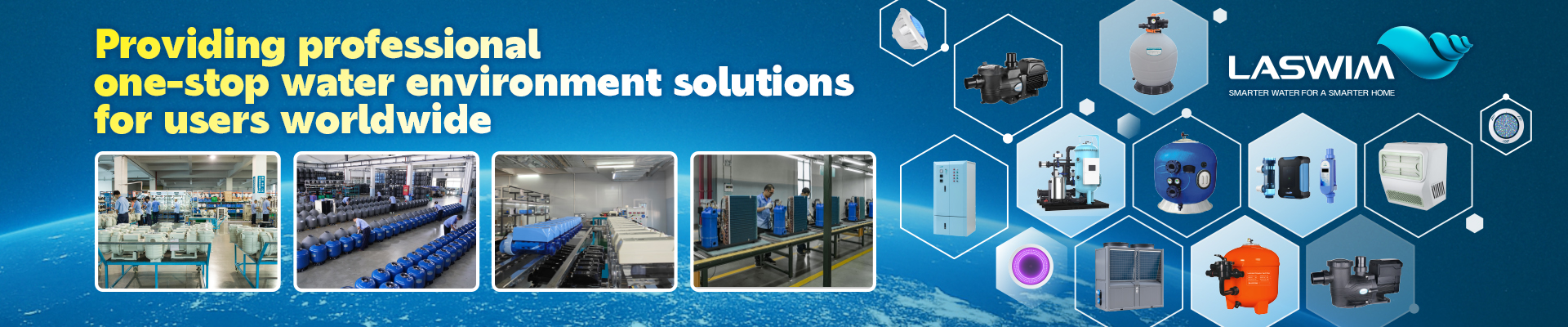
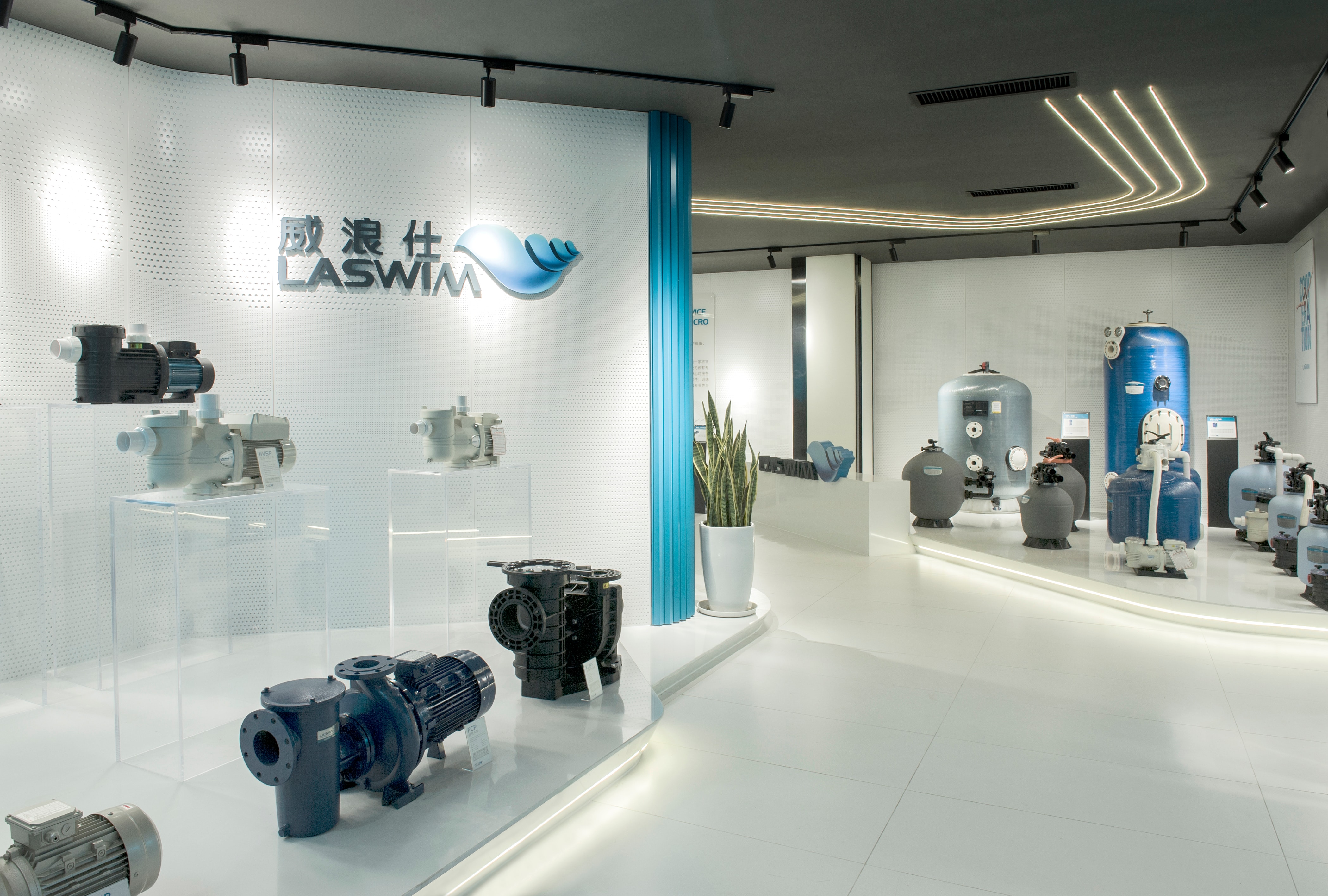
Laswim is the brand of LASWIM Water Environment Equipment Co., Ltd., a pool and spa equipment manufacturer founded in 1989 and based in Zhongshan, Guangdong, China, whose catalogue covers circulation, filtration, disinfection, lighting and heating equipment. The specification figures used in this article are the manufacturer's published figures for the WL-CQ2 family; model-level ratings confirmed in a written quotation remain the buyer's own qualification step.
The problem: salt chlorination hides its real cost in a consumable
The chemistry is simple enough. A salt chlorinator passes pool water, dosed with dissolved salt, across a set of titanium plates. A low-voltage current drives the conversion of chloride into chlorine, which sanitises the water and reverts to salt afterwards, so the salt is largely recycled rather than consumed. The plates are not recycled. They erode with operating hours, and at some point the cell stops producing enough chlorine to hold a residual.
That is the moment a pool owner meets the part of the purchase decision that was probably never documented at the point of sale: the part number of the replacement cell, its availability in the local market, its cost, and whether anything on the unit gave warning beforehand. For a distributor, the same gap becomes an unbudgeted service call. For a pool builder, it becomes a warranty conversation.
None of this argues against salt chlorination. It argues for reading the product differently. A chlorinator that identifies the cell fitted to it, counts the hours that cell has run, alerts the owner before the cell expires, and ships that cell as an independently replaceable component is demonstrating internal disciplines — production consistency, firmware maintenance, spare-parts planning — that a specification table cannot show on its own.
What the WL-CQ2 system is
The WL-CQ2 is a salt chlorinator system built around an integrated controller rather than a split controller and power pack. It combines electrolytic chlorine generation with a controller providing Wi-Fi and app-based control, over-the-air (OTA) firmware updates, automatic cell detection, runtime and cell-status tracking, end-of-life alerts and cleaning reminders. The cell is designed as an independent, replaceable unit. On applicable models the system also provides ORP, pH and water-quality tester functions, and chlorine output is adjustable in five stages from 20% to 100% of rated output.
Across the family, the documented envelope runs from 64 to 120 m³ of pool coverage and 16 to 30 g/h of chlorine output, with a rated titanium plate life of 5,000 or 7,000 hours depending on variant. A range of that width normally describes a family of models rather than a single unit, so the buyer should read 64–120 m³ as the envelope of the range and confirm which variant is being quoted for a specific project.
The specification set, read as buyer decisions
Specifications matter less as a list than as a set of constraints that have to line up with a site. The table below restates the documented WL-CQ2 parameters in the form in which they usually decide a purchase.
| Documented parameter | WL-CQ2 figure | Decision it drives for the buyer |
|---|---|---|
| Pool coverage | 64–120 m³ (range envelope) | Model selection against actual project volume |
| Chlorine output | 16–30 g/h | Dosing capacity against bather load, climate and residual target |
| Titanium plate rated life | 5,000 or 7,000 hours, by variant | Consumable planning and replacement budgeting |
| Output control | Five stages, 20%–100% of rated output | Seasonal and load-based adjustment without fixed-output operation |
| Salinity operating range | Stated per model | Compatibility with the site's salt dosing practice |
| Supply voltage and power | Stated per model | Electrical fit, circuit provision and plant-room planning |
| Water / ambient temperature limits | Stated per model | Climate suitability and equipment-room conditions |
| Controller functions | Wi-Fi/app control, OTA firmware, automatic cell detection, runtime and cell-status tracking, end-of-life alerts, cleaning reminders | Service model, remote operation and maintenance scheduling |
| Water-quality testing | ORP, pH and tester functions on applicable models | On-site measurement versus manual testing routines |
A 64–120 m³ coverage figure is a sizing range, not a performance guarantee at the top of that range. Coverage depends on water temperature, bather load, shading, filtration runtime and the residual chlorine the operator maintains. The quoted model should be selected against actual pool volume and duty, not against the brochure maximum.
Six engineering details that carry procurement weight
Automatic cell detection
The controller recognises the cell connected to it rather than assuming a fixed configuration. The design purpose is to keep output and diagnostic logic matched to the cell actually installed — which matters when a cell is replaced years after commissioning and the replacement may not carry the identical part number. For the buyer, the practical question is what the unit does when a non-matching or older cell is fitted: refuse to run, derate, or run with a warning. The answer belongs in the technical documentation, not in an assumption.
Independent, replaceable cell design
Separating the cell from the controller changes the lifecycle economics. When the plates reach the end of their rated life, the owner replaces the cell rather than the electronics. Two procurement questions follow immediately: what is the replacement cell part number for the quoted model, and what is the documented availability route in the destination market? A supplier able to answer both is describing a spare-parts process, not only a product.
Runtime and cell-status tracking
A rated plate life of 5,000 or 7,000 hours is an operating-hour figure, not a calendar figure. Without runtime tracking, an owner can only estimate. With it, accumulated hours are visible against the rated figure, which converts an abstract rating into a monitored maintenance item and gives the installer a defensible basis for scheduling replacement rather than reacting to a sudden loss of chlorine production.
End-of-life alerts and cleaning reminders
The value of an alert depends on what triggers it. A cleaning reminder targets the most common avoidable cause of declining output — scale on the plates — while an end-of-life alert addresses the unavoidable one. Together they shift maintenance from reactive to scheduled, which is the difference between a distributor's routine service visit and an emergency call-out. Buyers should ask what each alert is based on and whether alert history is retained or only displayed once.
OTA firmware updates
Over-the-air updates mean controller behaviour can be revised after installation without a site visit. In a networked product that is a real support advantage, and it is also a commitment: it implies version management, a defined update path, and a decision about whether updates are mandatory or optional. Before ordering, a buyer should establish whether the unit operates normally with no update applied, and whether a firmware change can alter dosing or diagnostic behaviour in the field.
Wi-Fi and app control
App control moves output adjustment and status reading onto a phone, which changes who can operate the system: an owner can reduce output in low season without calling a technician. The fit boundary here is physical rather than technical. Plant rooms, basements and concrete enclosures frequently have poor Wi-Fi, so site network conditions should be confirmed before app control is presented to an end user as a core benefit.
Five-stage output control from 20% to 100%
Stepped output control lets the operator match chlorine production to demand instead of running the cell flat out. In practice it supports three situations: lower output in cool or low-season periods when demand falls, stepped increases during high bather load, and a moderate setting that holds a residual without overshooting it.
Two boundaries deserve stating. First, an output percentage is a controller setting, not a free-chlorine result; the residual still has to be tested and the setting adjusted against measured water. Second, whether running at the lower end of the range extends plate life in proportion to reduced output is a technical question for the supplier, not something a buyer should assume without confirmation. The controller's runtime counter is the practical way to keep the rated hour figure under observation rather than guessing at it.
ORP, pH and water-quality testing on applicable models
Two of the measurements most often cited in pool water control are pH and ORP. pH describes acidity and alkalinity and governs how effectively chlorine works in the water. ORP — oxidation-reduction potential — is a millivolt reading associated with the water's oxidising strength. A controller that displays either gives the operator a faster read than a manual test strip and shortens the loop between measurement and adjustment.
The qualifier matters: these tester functions are documented for applicable models, not for the entire range. A buyer specifying a project should confirm which variant carries which sensor function, whether the reading comes from an integrated probe or a separate handset, how the probe is calibrated, and whether values are stored or only displayed. The boundary is equally important — a displayed ORP or pH value is a measurement aid, not a compliance record. Public and commercial pools typically operate under separate monitoring and documentation requirements, and an on-unit reading does not replace them.
Where the WL-CQ2 fits, and where it does not
Fit is strongest for residential villas and small commercial pools inside the documented 64–120 m³ envelope, particularly where the operator wants remote visibility and the site has usable Wi-Fi. Fit also assumes scheduled maintenance is realistic, because alerts only create value if someone acts on them.
The design is less suitable where the value case rests on connectivity but the plant room has no stable network; where pool volume sits above the documented coverage and would require multiple or larger equipment; or where the operator wants the simplest possible device with the fewest electronic service items.
That last point is a fair trade-off rather than a criticism. Compared with a fixed-output chlorinator built around a non-replaceable cell assembly, the WL-CQ2 design adds controller electronics and connectivity in exchange for a separately replaceable consumable and continuous monitoring. Buyers should decide which of those two cost structures their service network is better equipped to handle.
Application context from Laswim's reported cases
Laswim's case material describes distributor and pool-builder clients using its residential circulation and treatment equipment for private villa pool systems in the EU, and local distributor and pool-contractor clients in Latin America — including Brazil, Chile, Colombia and Mexico — where stable performance under high-temperature conditions is recorded. A separate EMEA record describes 300+ pool systems in residential and small commercial projects, citing system compatibility, durability under continuous operation and OEM support.
Those records describe Laswim's wider residential and small-commercial circulation and treatment range rather than a model-level test of the WL-CQ2. Their relevance here is narrower and still useful: they establish the application context in which a salt chlorinator is specified — villa pools, distributor-led installation, hot-climate operation — and indicate where the supplier says its engineering support has been exercised.
What the supplier record adds beyond the product
Product engineering is one evidence stream; the supplier's operating record is another. Laswim documents a company founded in 1989, a 90,000 m² facility, approximately 630 employees and a 53-engineer R&D team, with stated annual output of 2,400,000 units and monthly capacity of 200,000 sets. Production is offered as own brand, OEM and ODM, with customisation on voltage and options spanning minor modification through full customisation from samples or designs. Quality control is stated as 100% inspection covering both function and visual checks. MOQ is listed as one set, with lead time stated as within 15 working days and a one-month figure recorded for peak season. After-sales support is described as installation guidance, commissioning and operation training, troubleshooting, local service support and assistance from the manufacturer's technical team.
These are supplier-stated figures and commitments. They are the correct starting point for qualification rather than a substitute for it, and a buyer placing a first OEM order should confirm the items that carry commercial risk against a written quotation and, where volume justifies the cost, an audit.
A verification checklist for buyers
- Match the model to the pool, not to the range. Ask which WL-CQ2 variant covers the project volume and duty, and get the answer in writing against the 64–120 m³ envelope.
- Confirm the four site limits. Salinity operating range, supply voltage, power and water/ambient temperature limits are the parameters that most often decide whether a unit can be installed as specified. Request the values for the quoted model, not for the family.
- Establish which plate rating applies. The 5,000 or 7,000-hour figure depends on variant; confirm which belongs to the quoted model and whether it is a design rating or a warranted figure.
- Obtain the replacement cell part number and route. A replaceable cell is an advantage only if the replacement can be sourced in the destination market.
- Clarify the firmware policy. Whether OTA updates are optional, what they can change, and how a unit behaves without one.
- Confirm which models carry ORP/pH testing, and whether the reading is displayed, logged or exportable.
- Verify connectivity assumptions. Check site Wi-Fi conditions in the plant room and what functionality remains without it.
- Check the commercial terms. MOQ, the lead time for the season you are ordering in, the inspection protocol and the after-sales route.
Outlook: firmware and spare cells as procurement line items
Salt chlorination is a mature category, so differentiation is shifting from whether a unit chlorinates to how it is maintained over a decade. Two procurement line items follow from the WL-CQ2 design. The first is firmware: a networked controller has a lifecycle after installation, and buyers who ask about update policy, version control and behaviour changes will get a different answer from suppliers than buyers who compare output figures only. The second is cell logistics: rated hours of 5,000 or 7,000 translate into predictable replacement demand, and a distributor who has planned for it holds a service opportunity rather than a complaint.
Neither point is a forecast. They are the practical consequences of documented features, and they are testable in a quotation conversation today. Buyers who treat diagnostic and update capability as part of the specification — rather than as app features listed after it — will be comparing suppliers on the part of the product that determines the second payment.
Frequently asked questions
What does automatic cell detection change for a pool owner?
It keeps the controller's output and diagnostic logic matched to the cell actually installed. The practical effect appears at replacement: when a cell is changed years after commissioning, the controller recognises what has been fitted instead of assuming a fixed configuration. Buyers should still confirm the approved replacement part number and how the unit behaves if a non-matching cell is installed.
How should the 5,000-hour and 7,000-hour titanium plate ratings be read?
As operating-hour ratings for the electrolytic cell rather than calendar years, and as variant-dependent: the WL-CQ2 range is documented at 5,000 or 7,000 hours. Because the controller tracks runtime, accumulated hours can be compared against the rated figure instead of estimated. Buyers should confirm which rating applies to the quoted model and whether it is a design rating or a warranty term.
Are ORP and pH testing functions available on every WL-CQ2 model?
No. ORP, pH and water-quality tester functions are documented for applicable models, so the capability must be confirmed per variant. Two further questions are worth asking: whether the reading comes from an integrated probe or a separate device, and whether values are logged. A displayed reading is a measurement aid and does not by itself satisfy commercial pool monitoring requirements.
What evidence should a distributor request before placing an OEM order?
The model-level datasheet covering coverage, chlorine output, salinity range, voltage, power and temperature limits; the replacement cell part number and availability route; the firmware update policy; and the commercial terms — MOQ, seasonal lead time, inspection protocol and after-sales scope. Laswim states 100% inspection covering function and visual checks, OEM/ODM and own-brand production, an MOQ of one set, and lead times of within 15 working days with a one-month peak-season figure. Each should be confirmed against the specific quotation.
Laswim publishes a combined commercial and residential equipment catalogue, which can be downloaded here: Laswim Commercial & Residential Swimming Pool Equipment Catalog.
Tem questões ou precisa de mais detalhes?
Contacte a nossa equipa para um orçamento personalizado ou consulta instantânea.
Solicitar orçamento
Preencha o formulário abaixo e a nossa equipa entrará em contacto com uma proposta personalizada.
Chat direto do WhatsApp
Prefere conversar em tempo real? Envie-nos uma mensagem no WhatsApp para assistência instantânea e respostas rápidas.
- Obter orçamento personalizado
- Partilhar fotos ou documentos
- Discuta as suas necessidades diretamente
Geralmente responde em 5–30 minutos durante o horário de expediente.