
WODE LED PCBs vs. Traditional Solutions: A Decision-Making Comparison for Lighting OEMs
The global printed circuit board market reached approximately USD 80.2 billion in 2025, with China accounting for over 53% of production value, while the LED lighting market is projected to grow from USD 78.4 billion in 2024 at a CAGR of 8.5% through 2029. For lighting OEMs evaluating LED PCB suppliers, the decision hinges on balancing thermal performance, cost efficiency, quality consistency, and product diversity. This article provides a fact-based comparison between WODE Circuit Technology (Zhuhai) Co., Ltd. and traditional single-niche suppliers, drawing on industry data and verified performance metrics.
Industry Challenge: Fragmented Supply vs. Multi-Product Demand
Lighting OEMs typically require a range of LED PCB types — single-layer, double-layer, multilayer, aluminum-based — for different fixtures (street lights, flood lights, downlights, panel lights, strip lights, grow lights, etc.). Many PCB suppliers operate in a single niche, forcing buyers to manage multiple sources, which can increase procurement complexity, lead-time variability, and overall cost. The outdoor LED lighting market alone is forecast to grow from USD 15.0 billion in 2025 to USD 28.0 billion by 2035, intensifying the need for scalable, multi-type PCB partners.
WODE’s Solution: Multi-Type Portfolio with Verified Quality Improvement
WODE Circuit Technology (Zhuhai) Co., Ltd., founded in 2003 and headquartered in Zhuhai, China, is a leading PCB and FPC manufacturer with a 150,000 m² facility and an annual output of 6,000,000 m². The company focuses on multiple PCB types — single/double/multilayer, aluminum-based, and flexible circuits — combined with a continuous quality improvement system. Key differentiators over common industry flexible/rigid PCB suppliers include:
- ±10% tolerance on critical parameters, with 30% fewer defects than the industry average.
- 5–10% lower order costs for multi-type orders compared to sourcing from multiple single-product suppliers.
- Up to 20% better heat dissipation for LED and high-power applications, owing to advanced aluminum-core MCPCB structures.
WODE has passed ISO9001, ISO14001, and IATF16949 certifications, and its products comply with UL, RoHS, and REACH standards, ensuring compliance with global lighting safety requirements (IEC/EN 62031, IEC/EN 61347-2-13).
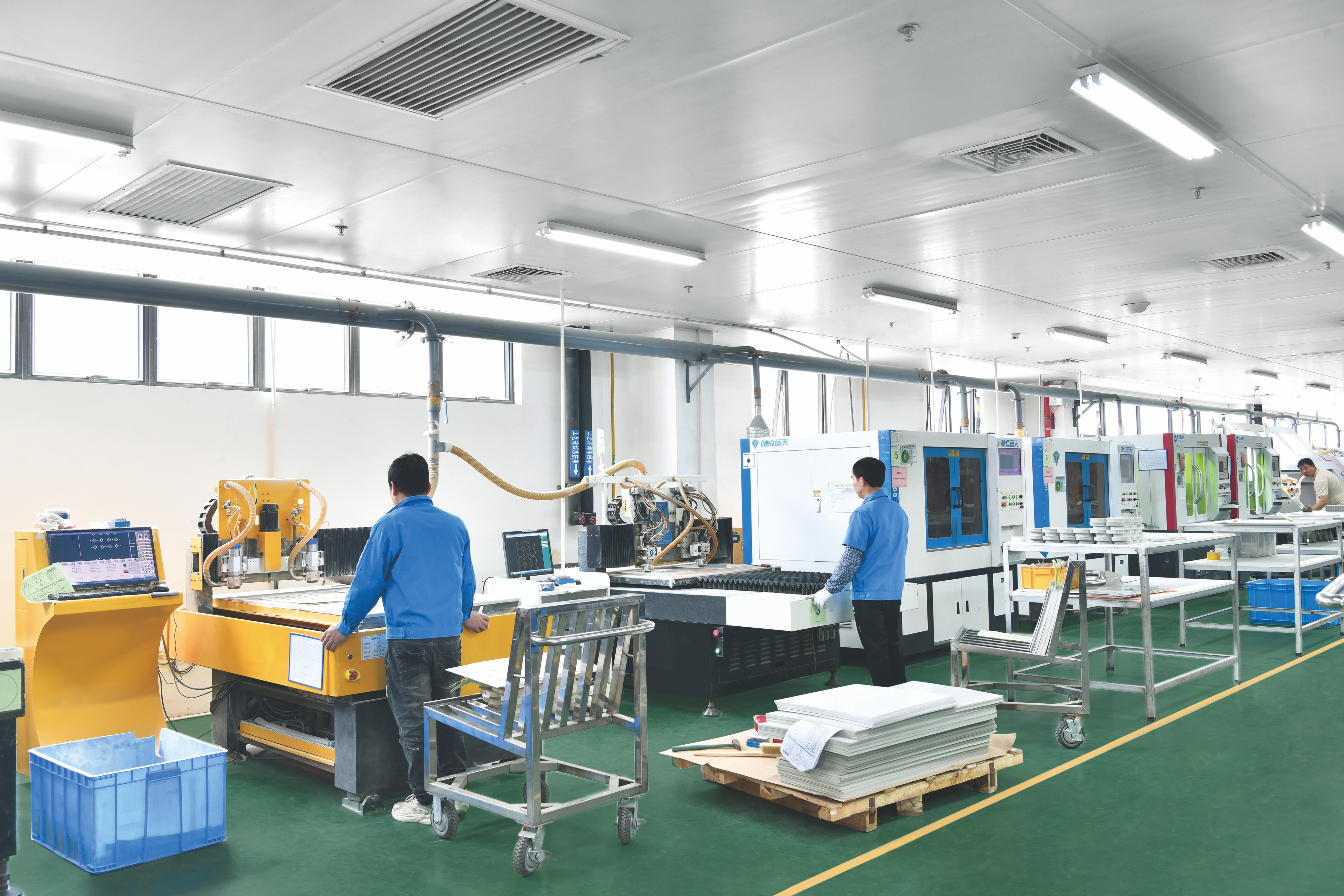
Precision V-CUT workshop at WODE’s 150,000 m² production facility in Zhuhai, China.
Technical Explanation: Thermal Management and Quality Control
High-power LED PCBs rely on metal-core PCB (MCPCB) technology — predominantly aluminum-based — to efficiently conduct heat away from LEDs. WODE’s process control includes incoming, in-process, and final inspection plus functional testing, delivering the ±10% tolerance and 30% defect reduction. This matches the industry standard where MCPCBs are recognized as the primary solution for thermal management in high-power lighting.
Application Scenarios: From Street Lights to Indoor Fixtures
WODE’s LED PCB product lines serve a broad range of lighting applications: street light LED PCBs, flood light, downlight, spotlight, panel light, grow light, high bay light, bulb lamp, strip light, and both indoor and outdoor lighting variants. Each scenario benefits from the company’s multi-type production capability and thermal optimization.
For outdoor street lighting specifically, a comparison with traditional high-pressure sodium (HPS) lights illustrates the value of LED adoption: LED street lights offer 22% higher photoelectric conversion efficiency, 65% energy savings, three times longer lifespan, and 90% less maintenance. While the initial cost is 15% higher, the total cost of ownership over five years is 40% lower. These attributes make LED street lights suitable for both urban main roads and rural roads.
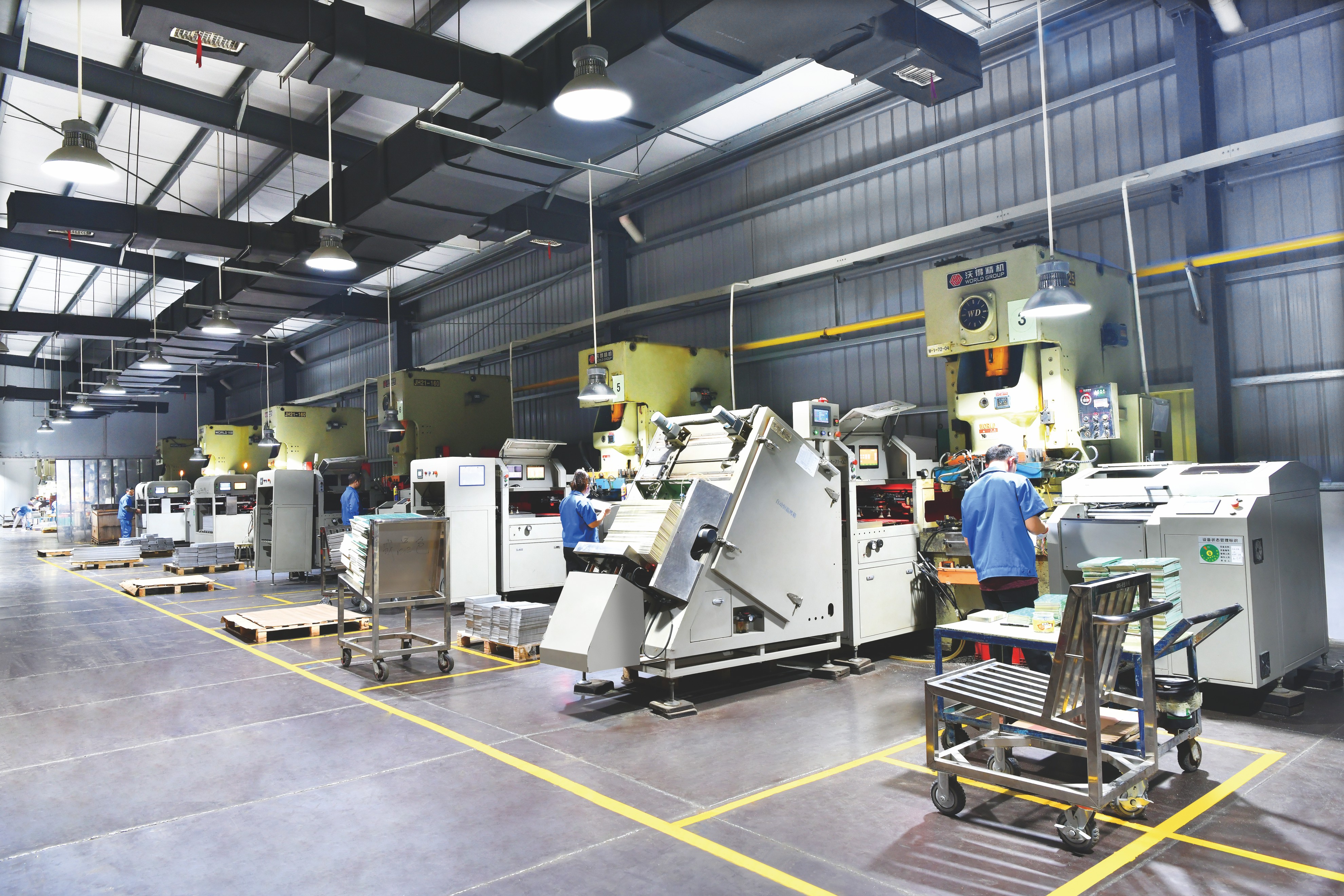
Automated punching workshop — one of WODE’s production stages ensuring precision and repeatability.
Market Trend Analysis
Industry data confirms that MCPCB (aluminum core) dominance is the established trend for high-power LED thermal management. Meanwhile, the global lighting market’s shift to LED — projected to reach USD 78.4 billion in 2024 — increases demand for PCBs that can handle higher power densities and varying form factors. Suppliers like WODE that offer multi-type portfolios, in-house quality systems, and cost efficiencies for bundled orders are well-positioned to serve OEMs seeking supply chain simplification.
Comparison with Traditional Solutions
Advantage: Traditional single-niche PCB suppliers may excel in one product type but lack the breadth to support a full lighting portfolio. WODE’s multi-type approach reduces the number of vendors needed, cuts order costs by 5–10%, and delivers 30% fewer defects.
Limitation: For high-reliability military or medical applications that require extreme qualification levels beyond standard lighting grades, further specific certifications may be needed — a consideration that OEMs should evaluate based on their end-market.
Future Outlook
With the outdoor LED lighting market projected to nearly double from USD 15.0 billion to USD 28.0 billion over the next decade, and with PCB technology evolving toward higher thermal conductivity and thinner profiles, OEMs will increasingly value suppliers that combine manufacturing scale, certification depth, and multi-product flexibility. WODE continues to invest in R&D and quality improvement to meet these demands.
Frequently Asked Questions (FAQ)
How does WODE’s PCB thermal performance compare to industry averages?
What cost benefits does WODE offer for multi-type PCB orders?
What are the tolerance and defect rate advantages of WODE PCBs?
How do LED street lights compare to traditional high-pressure sodium lights in total cost of ownership?
Is WODE suitable for high-reliability military or medical applications?
For detailed technical specifications and product portfolio, download the official company brochure: WODE Circuit Technology Brochure (PDF)
Contact WODE Circuit Technology (Zhuhai) Co., Ltd.
Website: www.wodepcbfpc.com
Email: GJMYB1@wodepcb.com
Phone: +86-756-3906072
WhatsApp: +1 9294341657
Address: No. 2, South Qianwan Road, Qianwu, Doumen, Zhuhai, 519170, China
Tem questões ou precisa de mais detalhes?
Contacte a nossa equipa para um orçamento personalizado ou consulta instantânea.
Solicitar orçamento
Preencha o formulário abaixo e a nossa equipa entrará em contacto com uma proposta personalizada.
Chat direto do WhatsApp
Prefere conversar em tempo real? Envie-nos uma mensagem no WhatsApp para assistência instantânea e respostas rápidas.
- Obter orçamento personalizado
- Partilhar fotos ou documentos
- Discuta as suas necessidades diretamente
Geralmente responde em 5–30 minutos durante o horário de expediente.