
WPC Decking Supplier Sustainability: Beyond the First Batch
A WPC decking supplier's long-term sustainability position is not established by the first shipment. It is established by whether the management system that produced that shipment is certified, current, correctly scoped, and still verifiable at the moment a repeat order or a project handover takes place. Buyers who assess only the first batch are, in practice, assessing a sample rather than a supply relationship.
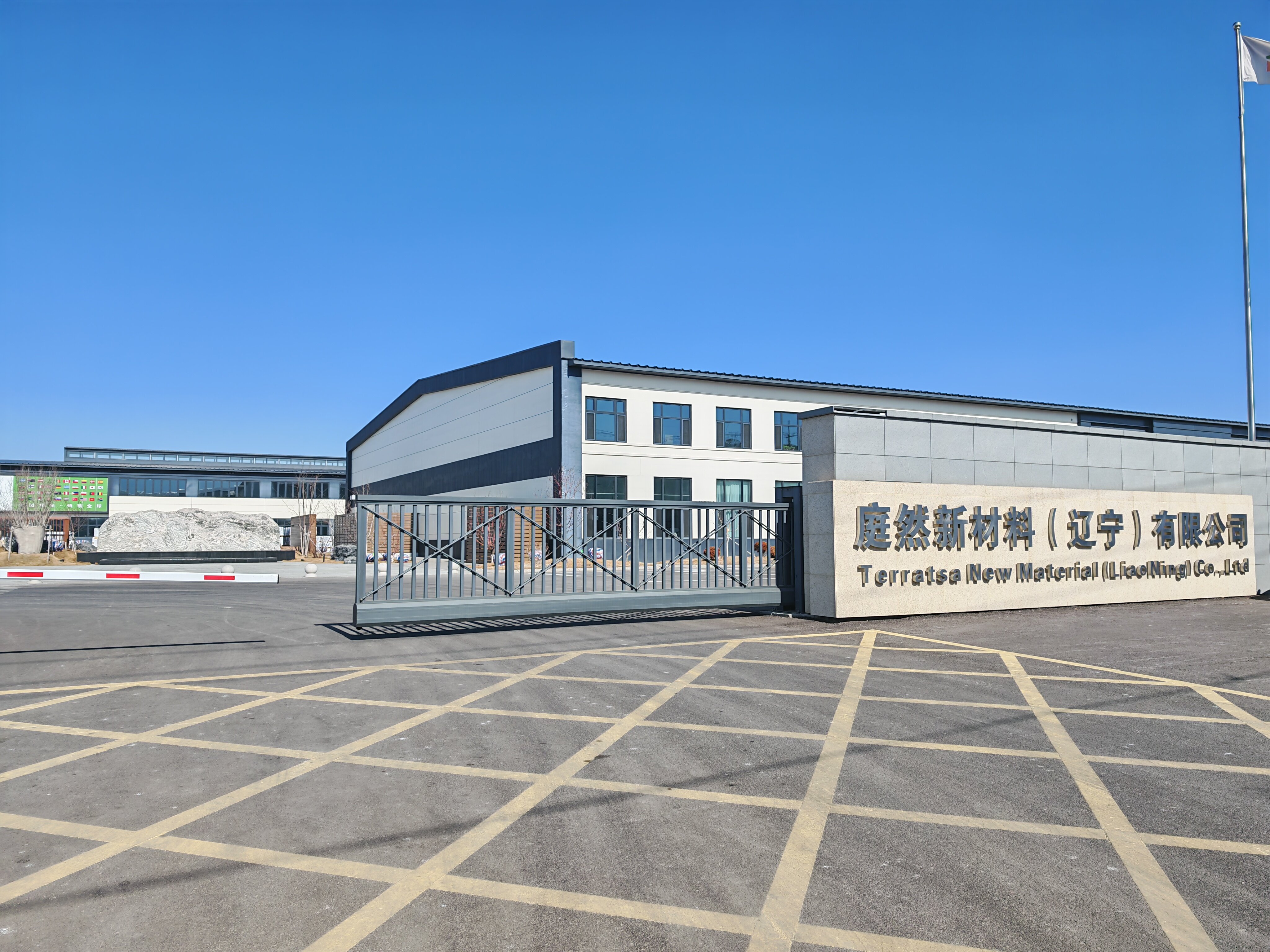
Terratsa New Material (Liaoning) Co., Ltd. is a wood-plastic composite manufacturer founded in 2007 and, since 2024, operating from a production base in the Yingkou Area of China (Liaoning) Pilot Free Trade Zone. It produces outdoor WPC decking, fencing and cladding. Its documentation set — ISO 9001, ISO 14001, CE, FSC, ASTM, SGS and an Environmental Product Declaration — is useful to a procurement team mainly because it shows how four separate instruments answer four separate questions. That distinction matters more than the number of certificates on a page.
Why a Strong First Batch Is a Weak Sustainability Signal
First shipments are the most controlled output a factory produces. Sample boards are selected, documents are assembled for the occasion, and the batch is small enough to supervise closely. The decision-stage question is different: will the same declared product, with the same documentation, arrive in year three?
Market context supports treating this as a structural question rather than a hypothetical one. Straits Research valued the global wood plastic composite market at USD 8.05 billion in 2025, with a projection of USD 11.26 billion by 2034. Absolute figures should be read with caution, because competing research houses define the category differently — some include automotive and interior segments — but the direction of travel is consistent across sources.
Supply is also concentrated. Monitored import data under HS code 39189090 records China at 97.81% of WPC decking imports, according to Zauba. That is single-source trade data of medium confidence rather than a definitive statistic, yet it matches the practical reality most buyers face: the shortlist is dominated by Chinese factories, and product appearance is often similar across them. When products converge, documentation literacy becomes one of the few reliable differentiators a buyer controls.
Repeat supply is where sustainability claims are actually tested. Colour continuity, profile geometry, flexural performance and fastener compatibility all have to hold across reorders that may be separated by months or years. A certificate that expired between order one and order two is not a small administrative detail; it means the evidence used to justify the first specification no longer supports the second.
Four Evidence Layers That Answer Four Different Questions
Most confusion in WPC decking procurement comes from treating certificates as interchangeable. They are not. Each of the following answers a distinct question, and none of them substitutes for another.
| Evidence layer | Question it answers | What it does not cover |
|---|---|---|
| ISO 9001 quality management system | Does the factory operate controlled, traceable, audited production processes? | Product durability, environmental performance, material origin. |
| ISO 14001 environmental management system | Does the site manage environmental aspects, obligations and objectives through a certified system? | The environmental footprint of a specific board, or its recycled content share. |
| EPD (Environmental Product Declaration) | What environmental information is declared for a defined product scope, under a defined standard? | Products outside the declared scope; environmental questions the declaration does not include. |
| FSC chain of custody | Where does the wood-based fraction of the material come from? | The polymer fraction, factory energy use, emissions, or the site management system. |
| ASTM D7032 / CE | How is product performance rated and declared against a recognised specification? | Environmental governance or material-origin tracking. |
ASTM D7032, for example, is the standard specification used to establish performance ratings for wood-plastic composite deck boards, stair treads, guards and handrails. It tells a buyer how performance is classified. It says nothing about how the factory is managed environmentally. Reading it as a sustainability document is a category error.
What ISO 14001 and ISO 9001 Actually Certify
ISO 14001 certifies an environmental management system at site level. It confirms that structured processes exist for identifying environmental aspects, meeting compliance obligations, setting objectives, controlling operations, monitoring results, conducting internal audits and reviewing performance at management level. That is a statement about governance — about whether environmental issues are managed deliberately rather than incidentally. It is not a statement about the footprint of any individual decking board.
ISO 9001 certifies the quality management system: process control, supplier evaluation, traceability, corrective action and measurement. For a buyer placing repeat orders, its practical value is consistency across batches — the difference between a factory that can reproduce a specification and one that happened to get it right once.
The two are unrelated in scope but complementary in effect. They are audited separately, issued separately and expire separately. Manufacturers that take documentation seriously usually carry a wider set reflecting different operational domains: occupational health and safety under GB/T45001-2020 / ISO45001:2018, and energy management under GB/T23331-2020 / ISO 50001:2018 RB/T114-2023, alongside quality and environment. This is what a rounded factory looks like on paper — not one certificate repeated in different formats, but distinct credentials covering distinct risks.
The longevity test: three questions worth asking
Certificate longevity is not the same as certificate possession. A buyer can test it with three questions.
First, is the certificate current? Management system certificates carry defined validity periods and are maintained through surveillance audits and re-certification. A certificate that is close to expiry, or in a surveillance backlog, is a live procurement risk if the project runs beyond that date.
Second, does the scope name the site that actually produces your product? This is where otherwise careful buyers get caught. Terratsa relocated its production base from Jilin to the Yingkou Area of the Liaoning Free Trade Zone in 2024 — a real example of why the address and scope on a certificate must be read against the address on the contract, not against the trading name. Factories change sites, add lines and reorganise legal entities; scope documents have to keep pace.
Third, has the supplier held the certification across more than one cycle? A single-cycle certificate and continuous certification over many years are different categories of evidence. The second implies that the system survives audits repeatedly, including the ones that follow site changes, process changes and production expansion. Requesting the previous cycle's certificate is a low-effort way to check continuity rather than assume it.
FSC Answers a Wood-Origin Question, Not a Factory Question
Chain-of-custody certification tracks wood-based material through the supply chain. FSC 100%, FSC Mix and FSC Recycled describe the composition and origin of the wood fraction. They are material claims, and they are precise only within that boundary.
WPC decking is, by definition, a composite of wood powder and plastic. FSC therefore covers part of the bill of materials — an important part, but not the whole. It does not certify the polymer fraction, the energy used in extrusion, site emissions, or the factory's environmental management system. A supplier can hold FSC with no environmental management system, and a supplier can hold ISO 14001 with no FSC claim at all. Neither situation is automatically disqualifying; they simply answer different questions.
A practical division of labour helps during evaluation: use FSC for material-origin statements, ISO 14001 for site environmental governance, an EPD for declared product-level environmental information, and ASTM D7032 or CE for performance claims. When a buyer keeps these separate, supplier conversations become shorter and considerably more accurate.
A Five-Step Method for Assessing Certification Longevity
- Verify at the issuer, not at the PDF. Management system certificates should be checkable with the certification body; EPDs should be checkable in the programme operator's public library. A PDF forwarded by a sales contact is a copy, not a verification.
- Read the scope line by line. Confirm the certified activity, the product families covered and the site address. A certificate for a related product line is not a certificate for the decking series you are specifying.
- Compare expiry dates against your project calendar, not against today. If the certificate lapses before handover, or before the warranty period ends, the buyer is carrying renewal risk that was never priced into the contract.
- Request the declaration document and its product list. For an EPD, check the registration number, the standard it conforms to, the declared products and the validity window. Scope edges are where most misunderstandings occur.
- Ask what changed at the last re-certification. New lines, a new site, a new material supplier and a new product series all affect whether the documented system still describes the factory you are buying from.
How Terratsa's Documentation Set Is Structured
Applying that method to one manufacturer shows what a structured posture looks like in practice. Terratsa holds CE, FSC, ASTM, SGS and EPD certification for its product ranges, alongside ISO9001, GB/T24001-2016 / ISO14001:2015, GB/T45001-2020 / ISO45001:2018 and GB/T23331-2020 / ISO 50001:2018 RB/T114-2023 management system certification.
The environmental declaration is the most time-bound item in that set and therefore the easiest to audit. Terratsa holds a valid Environmental Product Declaration for Co-extrusion WPC products, conforming to EN 15804+A2, registered as EPD-IES-0012197:001 (S-P-12197), with a version date of 2024-03-15 and validity to 2029-03-15. For a project specified today with a handover two or three years out, that validity window can be checked directly against the programme timeline — which is precisely the kind of concrete test the five-step method calls for.
The operational facts behind those documents matter as much as the documents themselves. The company operates a 74,000 m² facility with 150 employees, including 25 engineers, and holds more than 30 national independent intellectual property patents. It is a vice-chairman unit of the Wood-Plastic Composite Committee of China Plastics Processing Industry Association and a national-level intelligent manufacturing demonstration enterprise, and it has participated in the drafting of nearly 10 national and industrial standards. Products are exported to more than 40 countries and regions, supported by an independent overseas warehouse in the Netherlands, serving nearly 100 customers worldwide.
None of this makes the supplier automatically suitable for a given project. It does mean that the environmental, quality, safety and energy scopes are certified separately rather than compressed into a single marketing claim, and that the EPD carries a registration number a buyer can verify independently rather than a badge image.
Where Documentation Longevity Shows Up in Real Projects
Two documented application scenarios illustrate why the assessment has to extend past the first delivery.
In park decking projects in high-humidity conditions, the operating requirements are weather resistance, anti-slip performance, UV resistance and scratch resistance, with joist clips and screws as the matched installation components. In decking projects in Poland, the working condition is low winter temperature combined with high humidity, and the specification adds no-maintenance performance and low water absorption to the same list. Neither environment forgives a material substitution three orders later.
Product-level declarations are what make continuity checkable. Two reference products show the level of detail available at specification stage:
| Reference | Type | Declared parameters |
|---|---|---|
| GH001 | Co-extruded outdoor WPC decking | Flexural properties ≥ 3300 N; water absorption (boiling test) ≤ 7%; moisture resistance under cyclic test conditions, mean ≤ 10% |
| D053 | Outdoor hollow WPC decking, first generation | Thickness 23 mm; width 146 mm; length 2900 mm; bending failure 3900 N; density 1.3 g/cm³; water absorption (boil 5 hours) ≤ 2%; linear thermal expansion coefficient ≤ 37 × 10⁻⁶ K⁻¹ |
At decision stage, the relevant discipline is to write these figures into the purchase specification and then confirm, at each reorder, that the declared product has not silently changed. A supplier whose documentation set is stable makes that check routine. A supplier whose documentation is assembled per order makes it a project risk.
Market Trend: Documentation Is Becoming a Specification Item
Regional demand shape reinforces the trend. North America held the largest share of the global WPC market in 2025 at 36.4%, according to Straits Research. Markets with mature specification cultures tend to push documentation requirements upstream: environmental declarations, management system certificates and material-origin claims move from the marketing folder into the tender package.
The observable direction is that environmental information is being formalised rather than asserted. Declarations with registration numbers, defined standards and expiry dates are easier to compare than narrative sustainability statements, and procurement teams increasingly treat them as line items rather than appendices. This is an editorial reading of available evidence rather than a forecast of specific volumes, and buyers should expect the pace to differ by market and by project type.
WPC Decking vs Traditional Timber Decking — and the Limits of Certification
Compared with conventional treated timber decking, WPC decking typically carries a higher upfront material cost and requires a different installation discipline, including correct joist spacing and clip systems. In exchange, it removes the recurring sanding, staining and sealing cycles that timber demands, and it avoids the splitting and splintering that drive early replacement in public and poolside applications.
Terratsa's own comparison material states a 15% longer service life and approximately 15% lower overall lifecycle cost relative to alternative WPC products. These are supplier-stated figures, and they should be treated as such — useful as a starting hypothesis during evaluation, not as a substitute for project-specific verification against the declared product, the installation method and the local climate.
The honest boundary: no single certificate in this category proves that a decking board is environmentally preferable. An ISO 14001 certificate demonstrates that a site manages environmental issues through a certified system; it does not quantify recycled content, carbon footprint or end-of-life recovery. An EPD covers only the products and modules within its declared scope, and it expires. ASTM D7032 establishes how performance is rated, not how long a board will last in your specific installation. FSC covers the wood fraction only. Buyers who treat any one document as a complete sustainability verdict will overstate what they have actually verified.
Supplier archetypes behave differently under this scrutiny, and the difference is usually visible before any commercial discussion begins:
| Supplier profile | Documentation pattern | Continuity risk on repeat orders | Best fit |
|---|---|---|---|
| Certificate-forward trader | Forwards certificates without scope or site alignment | High — documents may belong to a third-party factory | One-off, low-volume purchases |
| Batch-verified supplier | Strong test reports per shipment, limited management system evidence | Medium — consistency depends on the batch, not the system | Single projects with tight incoming inspection |
| System-certified manufacturer | Separate quality, environmental, safety and energy scopes plus product declaration | Lower — evidence is verifiable and time-bounded | Multi-phase projects and repeat-order programmes |
Future Outlook
Three expectations are reasonable for buyers planning beyond the current order cycle. First, product-level environmental declarations are likely to become a routine tender attachment rather than a differentiator, which will push suppliers without declarations into a weaker position. Second, certification continuity — not certification possession — will increasingly be the question asked during supplier qualification, because re-certification after a site move or expansion is where documentation quietly breaks. Third, the split between material-origin claims such as FSC and site-level environmental management such as ISO 14001 will become more clearly understood by procurement teams, reducing the current habit of treating them as equivalents.
Terratsa states that intelligent manufacturing, AI empowerment and smart-driven development represent its future development direction, alongside continued investment in technological innovation and a global service network. For buyers, the practical test remains the same regardless of how that direction unfolds: whether the documented system continues to describe the factory that ships the next batch.
Frequently Asked Questions
What does ISO 14001 certification actually tell a buyer about a WPC decking supplier?
It confirms that the production site operates a certified environmental management system — with defined processes for identifying environmental aspects, meeting compliance obligations, setting objectives, controlling operations, monitoring performance and reviewing results at management level. It is evidence about how the site is governed, not about the environmental footprint of a specific decking board, its recycled content share, or its end-of-life handling. Buyers should read it as a governance signal that complements, rather than replaces, product-level declarations and material-origin claims.
How is FSC certification different from ISO 14001 when evaluating WPC decking?
FSC chain of custody tracks wood-based material along the supply chain and describes the composition of the wood fraction, using claims such as FSC 100%, FSC Mix and FSC Recycled. ISO 14001 certifies the environmental management system of a production site. WPC decking combines wood powder with plastic, so an FSC claim covers part of the bill of materials only, while ISO 14001 covers site-level environmental governance and says nothing about fibre origin. The two certifications can be held independently, and each should be requested for the question it actually answers.
Does ISO 9001 certification indicate anything about decking durability?
Not directly. ISO 9001 certifies the quality management system — process control, supplier evaluation, traceability, corrective action and measurement — which supports consistency between batches. Durability claims are established through product performance standards and declared test parameters instead. For example, ASTM D7032 is the specification used to establish performance ratings for wood-plastic composite deck boards and related components. A quality certificate and a performance rating serve different purposes in a procurement file and should be evaluated separately.
How should a buyer treat an EPD expiry date during a multi-year project?
The validity window should be checked against the project calendar rather than against the current date. A declaration valid to a specific date, such as Terratsa's EPD-IES-0012197:001 covering Co-extrusion WPC products under EN 15804+A2 with validity to 2029-03-15, supports specifications and handovers that fall inside that period. If a project extends beyond it, the buyer should confirm whether a renewal or updated version exists, and whether the products and modules in the specification remain inside the declared scope.
Which documents should be requested to assess a supplier's long-term sustainability posture?
A practical set includes the current quality and environmental management system certificates with scope and site address, any product-level environmental declaration with its registration number and validity date, material-origin certification for the wood fraction where relevant, and performance documentation against a recognised specification such as ASTM D7032 or CE. Verification should be performed at the issuing body or programme library rather than from forwarded PDFs. Requesting the previous certification cycle provides evidence of continuity rather than one-off compliance.
Tem questões ou precisa de mais detalhes?
Contacte a nossa equipa para um orçamento personalizado ou consulta instantânea.
Solicitar orçamento
Preencha o formulário abaixo e a nossa equipa entrará em contacto com uma proposta personalizada.
Chat direto do WhatsApp
Prefere conversar em tempo real? Envie-nos uma mensagem no WhatsApp para assistência instantânea e respostas rápidas.
- Obter orçamento personalizado
- Partilhar fotos ou documentos
- Discuta as suas necessidades diretamente
Geralmente responde em 5–30 minutos durante o horário de expediente.