
WPC Wall Panel Supplier Capability: Evidence, Not Labels
WPC Wall Panel Supplier Capability: Evidence, Not Labels
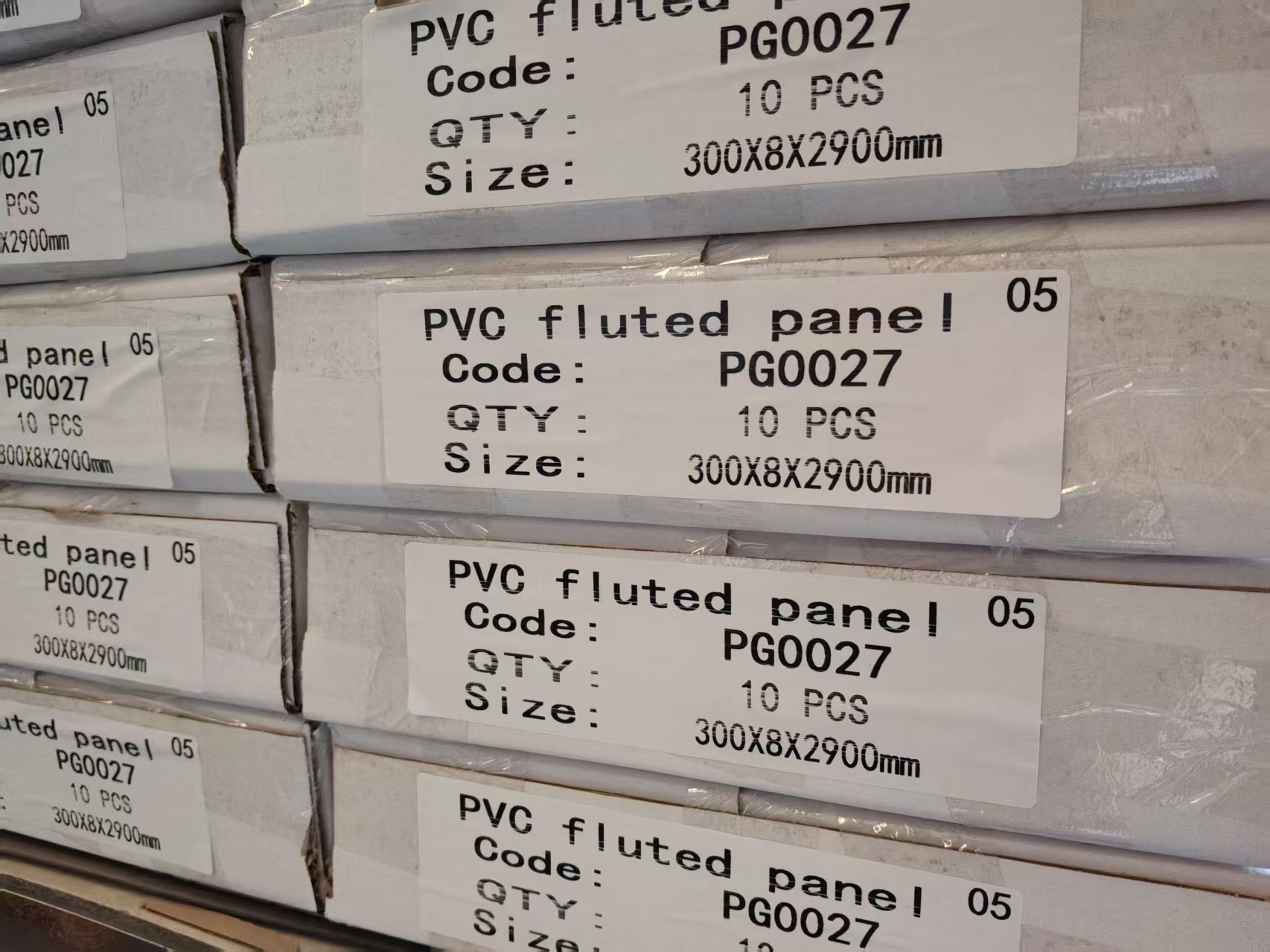
Export-ready wall panels stacked on pallets, showing packaging, stock handling and dispatch preparation.
WPC wall panel buyers rarely lose an order because the catalogue lacked a finish. They lose it because the evidence behind the finish was thin. A panel marketed as a WPC Fluted Wall Panel, WPC Great Wall Panel or WPC Slat Wall Panel can share a product name with another panel that has a different core mix, surface treatment, joint design and inspection history. The name describes a category, not the batch that will arrive on site.
For buyers moving from Evaluation to Execution, the useful question is not whether a supplier says it uses good materials. The useful question is what evidence chain can the supplier attach to the order. Linkworld WPC Wall Panel answers that question through a chain of raw-material control, fixed formulas, pre-production sample approval, batch inspection and a stated warranty condition. This article maps that chain and identifies what buyers should verify rather than assume.
Why a WPC wall panel name is not a specification
WPC is a composite of wood powder fibers and plastic polymer materials, according to the product definition in the supplied knowledge base. That definition is a starting point, not a performance grade. The ratio of wood fiber to plastic, the additives, the cross-section, the surface film or coating and the manufacturing process all affect how a panel behaves. Two suppliers can both sell a WPC Interior Wall Panel or WPC Exterior Wall Cladding and still be selling different products.
The buyer language is broad. It includes WPC Fluted Wall Panel, WPC Great Wall Panel, WPC Slat Wall Panel, WPC Interior Wall Panel and WPC Exterior Wall Cladding. Adjacent terms such as Co-Extruded WPC Wall Panel, WPC Carbon Crystal Wall Panel, Waterproof WPC Wall Panel, UV Resistant WPC Wall Panel and Eco-Friendly WPC Wall Panel are often used to describe a construction, a finish or a marketing position. They do not by themselves define material composition, fire performance or weather resistance. A buyer who selects by name alone is comparing labels, not specifications.
The category is also expanding. IndexBox, in a July 2026 forecast, estimated the global wall panels market at USD 10.85 billion for 2026 and projected a 5-7% CAGR for the WPC wall panel segment from 2026 to 2035. The same forecast indicated that China accounts for 45-50% of global WPC production volume. The wall-panel figure covers a broader category than WPC alone, so it should be read as category context, not as a WPC-specific market size. More supply options are useful, but they increase the verification burden. The common HS code 3925.90.00 also covers other plastic builders' ware, so customs data alone cannot isolate WPC wall panels. Supplier-level evidence remains necessary.
Linkworld WPC Wall Panel: the capability claim in scope
Linkworld WPC Wall Panel refers to the WPC wall panel range presented by Tangshan Linkworld International Trade Co., Ltd., a company founded in 2004. The company profile lists a 20,000 m² facility and exports to more than 60 countries, including the United States, Canada, Spain, Russia, Singapore, India, Malaysia and the Middle East, with exports representing 70% of its business. It presents itself as an integrated building-panel supply business covering R&D, production and sales, with support for customized product development. Its range covers interior panels such as WPC grille panels, carbon crystal panels, UV panels and SPC wall panels, and exterior panels such as WPC Great Wall panels, ASA wall panels, PE wall panels, outdoor plastic wood fence panels and outdoor plastic wood flooring.
The capability claim that matters for this article is narrower than the full range. It is the supplier's stated ability to control raw materials, lock formulas, approve samples, inspect batches and define warranty conditions for WPC wall panel orders. Those are the points a buyer can test before committing to a bulk order. The capability sheet lists a monthly capacity of 10,000 square meters, an MOQ of 300 pieces and a lead time to be confirmed against factory production scheduling. Customization includes surface texture, shape, structural solution, installation drawings, functions, thickness, width, length, color, packaging and brand identity. After-sales support is described as professional technical guidance and after-sales service.
The evidence chain: from raw material to warranty
Raw materials: virgin feedstock is a starting condition, not a performance proof
Linkworld states that its WPC wall panels use 100% brand-new raw materials with no recycled content. It also states that it works with fixed raw-material suppliers and fixed production formulas. The intended effect is to reduce batch color difference and keep performance and color consistent across production runs. That is a useful production-control claim because recycled or variable feedstock can introduce differences that are difficult to detect from a single sample. But virgin material alone does not prove hardness, fire performance, UV stability or waterproofing. Those properties depend on the full formulation, structure, surface treatment and test evidence.
The buyer should therefore ask for a material declaration, the supplier's incoming raw-material specification, and the batch record that ties the delivered order to the approved formula. A general statement that the company uses new material is not the same as a document that identifies the material used for a specific panel, thickness and finish. The verification question is not whether the claim sounds responsible. It is whether the claim can be connected to the order.
Fixed formula: consistency is a process claim, not a promise of invisible variation
Fixed raw-material suppliers and fixed production formulas are most valuable when they are connected to a reference sample and a batch record. The supplier states that this approach minimizes batch color difference and supports consistent performance and color. It also states that there is no severe batch color-difference problem, while acknowledging that reasonable minor texture deviation in wood-grain and stone-grain finishes should be confirmed in advance. That is an important boundary. A buyer should not interpret fixed formula as identical appearance in every batch and every lighting condition.
The reasonable verification step is to approve the sample under the agreed light source, confirm the acceptable texture range, and keep a signed reference sample for the mass-production comparison. If the project involves more than one production run, the buyer should also confirm how the supplier will compare a reorder against the original reference. Fixed formulas reduce variables, but they do not remove the need for a documented acceptance range.
Samples: the pre-production sample is a control document
For large orders, Linkworld states that confirmed pre-production samples are used for quality comparison and that reference samples are retained for mass-production orders. This is the practical bridge between a catalogue image and a container load. The sample should not be treated as a souvenir. It should be a controlled reference that records color, surface texture, gloss level, profile, thickness, edge treatment, joint fit, packaging and any agreed tolerances. The buyer should sign or initial the approved sample, keep one copy, and require the supplier to compare production against the same reference.
A sample still does not replace a test report. It shows what the buyer approved. It does not prove fire class, UV resistance or waterproof performance under installed conditions. The buyer should pair the sample record with the relevant technical data and test reports for the exact product. This is especially important when the order includes a Waterproof WPC Wall Panel, a UV Resistant WPC Wall Panel or an exterior cladding product, where the service environment is part of the performance question.
Inspection: full inspection needs a defined scope
The supplier states that production is standardized and supported by full inspection, with batch testing after mass production and reports available. It also supports third-party testing. These are relevant capabilities for an evaluation-to-execution buyer because they connect the approved sample to the shipped batch. The buyer's task is to define what full inspection covers in the purchase order. Visual appearance, dimensions, squareness, profile, surface defects, color against the reference sample, packaging and labeling are common checkpoints.
Test reports should identify the product, model or SKU, the test standard, the laboratory, the date and the result. A report that covers a different model, finish or thickness is not evidence for the ordered panel. The same rule applies to certificates: check the scope, the named manufacturer and the validity period. A certificate that is real but out of scope can create more risk than a missing certificate, because it looks like proof while leaving the actual order uncovered.
Warranty: 25 years is a condition, not a slogan
Linkworld states that qualified products carry a 25-year warranty under normal use. The qualifiers carry the meaning. Qualified products indicates that the warranty does not automatically attach to every item in the range. Normal use indicates that installation, substrate, exposure, cleaning and maintenance conditions matter. A buyer should ask for the warranty document, not just the warranty number. The document should identify the covered product series, the applications and environments covered, the installation conditions, the exclusions, the claim process and the party that stands behind the warranty.
For an exterior project, the buyer should also request the weathering and UV evidence that supports the intended exposure. For an interior project, the buyer should confirm that the specified panel is intended for that interior condition, especially in wet areas. A 25-year statement is useful only when its conditions are readable and matched to the order. It is not a substitute for product selection, installation control or maintenance planning.
What the capability evidence should look like
The table below converts the supplier's statements into buyer verification points. It is not a substitute for the purchase contract or the technical specification. It is a practical map of what to request before the order moves to execution.
| Capability area | Supplier statement in scope | Evidence to request | Why it matters |
|---|---|---|---|
| Raw material | 100% brand-new raw materials with no recycled content | Material declaration; incoming raw-material specification; batch traceability | Confirms the feedstock claim is tied to the order, not only to a brochure |
| Formula control | Fixed raw-material suppliers and fixed production formulas | Approved formula reference; color and texture tolerance; signed reference sample | Reduces batch variation but does not remove natural texture variation |
| Sample approval | Confirmed pre-production samples for large orders; reference samples retained | Signed sample; light source; thickness, profile, edge and packaging checks | Creates a comparison standard for production and final inspection |
| Production inspection | Standardized production; full inspection; batch testing; third-party testing support | Inspection plan; sampling method; test report with model, standard, laboratory and date | Shows what was checked and whether the report covers the ordered SKU |
| Compliance documents | RoHS test report and Certificate of Conformity; EC REP appointment | Scope, named manufacturer, standards, issue date, validity; match to SKU and market | Separates substance compliance from fire, weather or performance claims |
| Warranty | 25-year warranty for qualified products under normal use | Warranty document; covered series; applications; exclusions; claim process | Turns a headline number into a usable contractual condition |
Technical explanation: where the evidence has to connect
WPC wall panel performance is built from the inside out. The core mix, the profile and the surface system determine how the panel handles handling, installation and service conditions. The supplier states that its wood-plastic and carbon crystal series use bamboo charcoal fiber co-extrusion technology, which it links to hardness, wear resistance, texture and weather resistance. That statement is a useful starting point for a technical discussion, but it should be read together with the product data sheet and the test report for the exact product. A co-extruded WPC wall panel, a laminated panel and a carbon crystal panel can look similar in a showroom while having different surface systems and different maintenance needs.
The buyer's technical checklist should therefore ask for the actual material composition; the relevant technical parameters such as thickness, width, length and profile; the surface treatment; the joint and fixing method; the substrate and installation requirements; the cleaning and maintenance limits; and the test reports that apply to the destination market. For US and EU markets, fire performance is commonly assessed through standards such as ASTM E84 or EN 13501-1, depending on the product and the applicable building code. The RoHS documents supplied for this review address restricted substances. They do not establish fire classification or exterior weathering. Those need separate evidence.
The supplied compliance file includes a RoHS Test Report No. HTT202605793CH issued on 25 May 2026 by Shenzhen HTT Technology Co., Ltd. under EN IEC 63000:2018, covering decorative wall panels and grille panels described as bamboo wood fiber wall panels for the EU market. A RoHS Certificate of Conformity No. HTT202605793R, issued on the same date, names Tangshan Weisen New Materials Technology Co., Ltd. as the manufacturer of the wall panel covered and cites the IEC 62321 series. The file also includes EC REP Certificate No. EUREP-202605251000384986, issued on 26 May 2026 and valid to 25 May 2027, appointing EUREP ENV S.L. as the authorized European Representative of Tangshan Linkworld International Trade Co., Ltd. for products with corresponding CE certificates, updated technical files and a Declaration of Conformity.
These documents are useful, but they should be read precisely. The RoHS certificate and test report address substance compliance. The EC REP certificate is an appointment document. It is not a product performance certificate. It supports EU market access for products that already carry the relevant CE certificates and technical file. A buyer should confirm that the exact WPC wall panel model, finish and thickness ordered are within the scope of the documents, and that the manufacturer named on the certificate matches the supply chain behind the order.
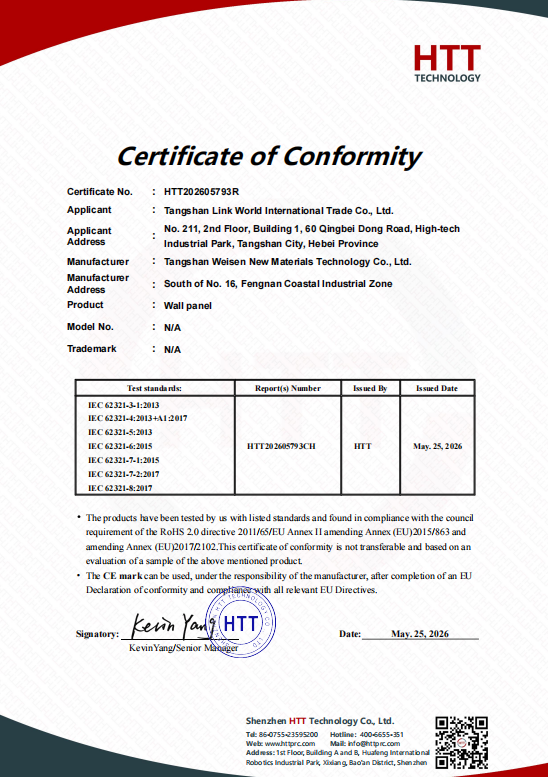
RoHS Certificate of Conformity No. HTT202605793R issued by Shenzhen HTT Technology Co., Ltd. on 25 May 2026.
Application fit: where the evidence changes the answer
The supplied application material lists residential interiors such as living-room feature walls, bedrooms, home theaters, corridors and stair walls; commercial spaces such as hotel rooms and lobbies, office reception and meeting rooms, restaurants, cafés, retail shops and showrooms; and public projects such as hospital corridors, classrooms, subway stations, airport terminals and exhibition halls. It also lists kitchens and bathrooms among interior applications. Those are application categories for wall panel systems, not an automatic approval for every WPC panel in every one of those spaces.
For WPC wall panel selection, the application should be filtered by exposure and product type. Dry interior feature walls, reception walls and retail displays are one use case. Wet areas are another. A product marketed as a Waterproof WPC Wall Panel still needs joint, edge, substrate and installation details, and the supplier's testing should match the actual wet-area condition. Exterior cladding is a third use case. A WPC Exterior Wall Cladding product should be supported by weathering and UV evidence for the intended exposure, not only by a wood-grain appearance. The same logic applies to a UV Resistant WPC Wall Panel or an Eco-Friendly WPC Wall Panel. The label should lead to a document, not replace one.
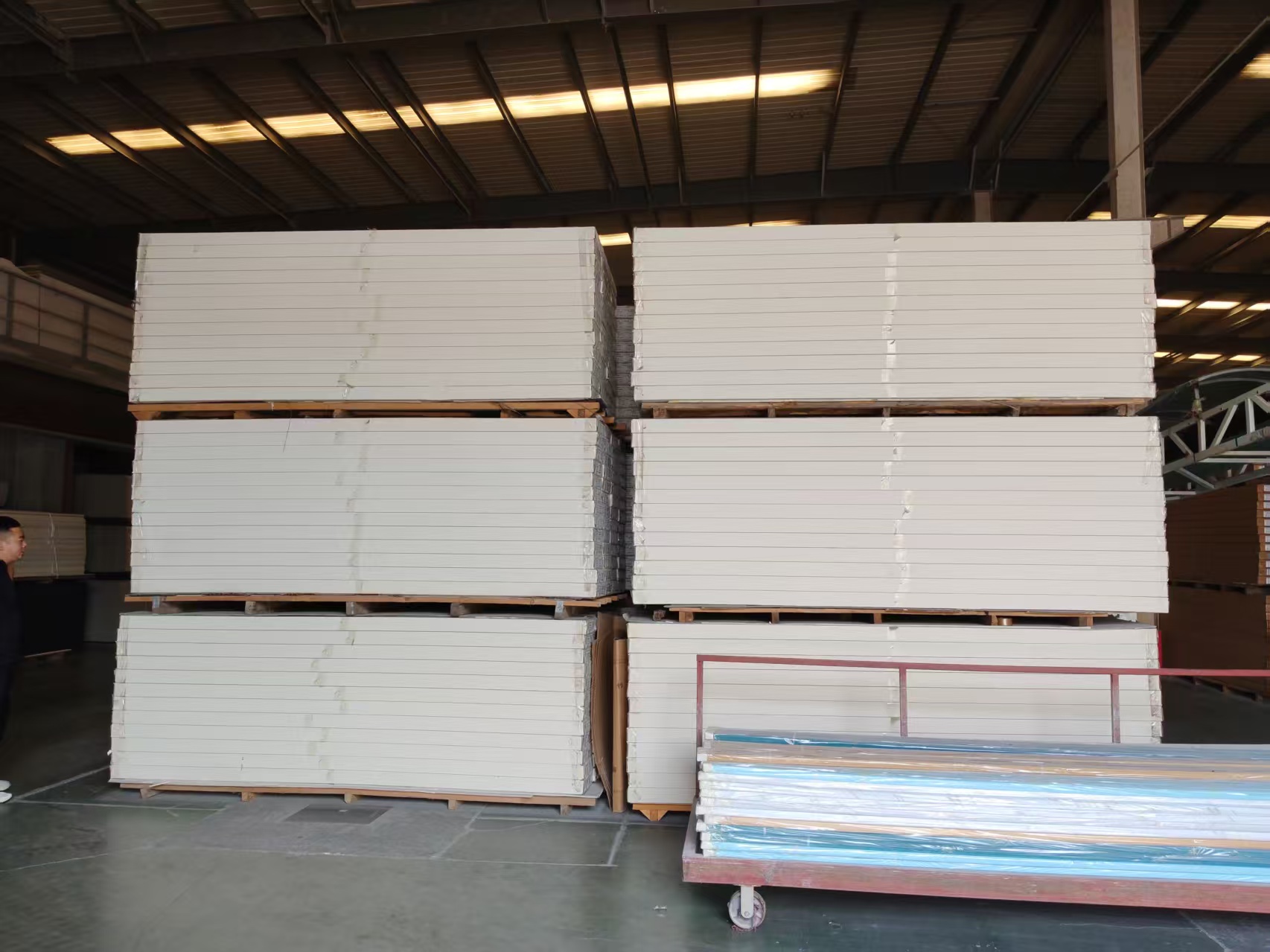
Finished wall board panels stacked in a factory warehouse, illustrating stock handling and batch segregation.
What this changes for buyers used to sample-only purchasing
Sample-only purchasing answers a narrow question: does this panel look and feel acceptable. An evidence-chain review adds a second question: what will the next batch look like, and what document will prove it. The two approaches are not alternatives. The sample is the visual and tactile reference. The evidence chain is the control system around it. A supplier that can provide both is easier to audit during execution. A supplier that provides only a sample leaves the buyer to discover batch variation, document gaps and warranty conditions after the order is placed.
An evidence chain does not make every WPC panel suitable for every project. It makes the fit boundary visible. A supplier can control raw materials and formulas and still have a product that is not the right choice for a particular substrate, climate, fire requirement or maintenance regime. The buyer should treat the supplier's statements as inputs to a decision, not as a substitute for the project specification.
Market outlook and the practical next step
The forecast growth in the WPC segment suggests that buyers will see more suppliers, more product labels and more claims. That is not a reason to lower the evidence bar. If anything, it makes a short verification routine more valuable: request the raw-material declaration, approve and retain the sample, define inspection scope, match certificates to the exact SKU, and read the warranty conditions. These steps do not guarantee a successful project, but they make the supplier's capability testable before the container is loaded.
For Linkworld WPC Wall Panel, the forward-looking opportunity is not a new colour or a louder claim. It is the ability to make the existing capability chain legible to buyers: virgin raw materials, fixed formulas, sample retention, batch inspection, compliance documents and a conditional 25-year warranty. As more buyers move from evaluation to execution, that legibility becomes a commercial advantage because it reduces the number of unknowns between the approved sample and the delivered batch.
For buyers who need the full range reference, the product catalog is available here: WPC wall panel product catalog (PDF).
FAQ: verifying WPC wall panel supplier capability
What evidence should a buyer request to verify that a WPC wall panel uses virgin raw material?
Ask for a material declaration that identifies the raw-material specification and states the recycled-content position, plus the incoming raw-material specification and a batch record that ties the delivered order to the approved formula. Linkworld states that its WPC wall panels use 100% brand-new raw materials with no recycled content and fixed raw-material suppliers. The document should refer to the exact product and batch, because a general statement about the company does not prove the composition of a specific panel.
How do fixed raw-material suppliers and fixed formulas affect batch consistency?
Fixed suppliers and formulas reduce the number of variables between production runs. Linkworld states that this approach minimizes batch color difference and supports consistent performance and color. It also notes that minor texture deviation in wood-grain and stone-grain finishes should be confirmed in advance. Buyers should approve a reference sample under an agreed light source and define the acceptable texture range, because consistency is a process control, not a promise that every panel will look identical.
What role do pre-production samples play in a large WPC wall panel order?
A confirmed pre-production sample becomes the comparison reference for mass production. Linkworld states that confirmed samples for large orders are used for quality comparison and that reference samples are retained. The sample should record color, texture, gloss, profile, thickness, edge treatment, joint fit and packaging. It should be signed or initialled by both parties. A sample does not replace a test report for fire, UV or waterproof performance. It controls appearance and agreed physical characteristics.
How should inspection reports and certificates be matched to the exact WPC product?
Check the product name or model, the test standard, the laboratory, the issue date and the result. For certificates, check the scope, the named manufacturer and the validity period. The supplied RoHS Test Report No. HTT202605793CH and RoHS Certificate of Conformity No. HTT202605793R address substance compliance for the wall panel described in their scope. The EC REP Certificate No. EUREP-202605251000384986 is an appointment document valid to 25 May 2027. None of these documents should be read as a fire or weathering certificate for a different product.
What does a 25-year warranty cover on qualified WPC wall panels?
Linkworld states that qualified products carry a 25-year warranty under normal use. The warranty document should define which product series are covered, the applications and environments, the installation conditions, the exclusions and the claim process. Normal use is a condition, not a generic promise. Buyers should match the warranty to the actual project, especially for exterior cladding, wet areas or high-traffic commercial spaces, and should keep the approved sample and inspection records as part of the claim file.
Tem questões ou precisa de mais detalhes?
Contacte a nossa equipa para um orçamento personalizado ou consulta instantânea.
Solicitar orçamento
Preencha o formulário abaixo e a nossa equipa entrará em contacto com uma proposta personalizada.
Chat direto do WhatsApp
Prefere conversar em tempo real? Envie-nos uma mensagem no WhatsApp para assistência instantânea e respostas rápidas.
- Obter orçamento personalizado
- Partilhar fotos ou documentos
- Discuta as suas necessidades diretamente
Geralmente responde em 5–30 minutos durante o horário de expediente.