
WPC vs PET Marble Wall Panels: Fitting Format to the Room
WPC vs PET Marble Wall Panels: Fitting Format to the Room
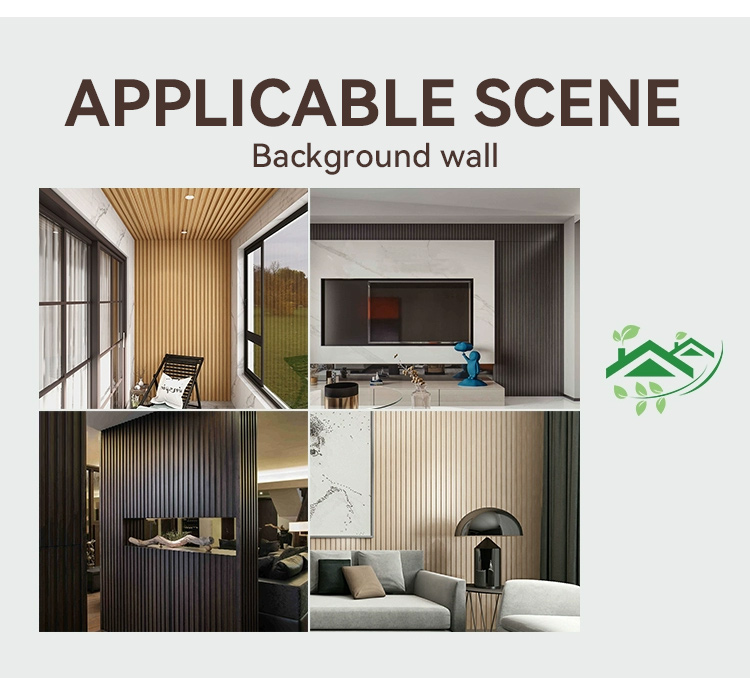
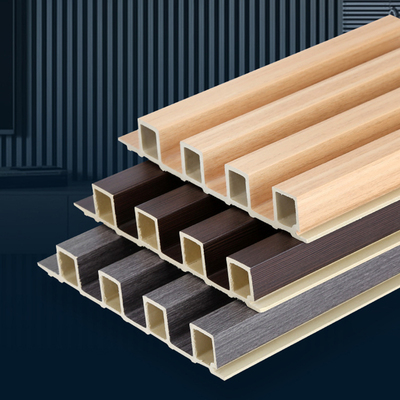
WPC wall panels and PET marble wall sticker panels are routinely shortlisted for the same elevation, yet they commit a project to different decisions. WB-WPC is a wood-plastic composite panel measuring 160 × 23 × 2900 mm, packed 16 pieces per box and declared at 690, 810 or 830 g/m. WB-PET is a PET marble wall sticker supplied at 2 mm or 2.5 mm in sheet sizes from 30 × 30 cm to 120 × 300 cm, including 30 × 60, 60 × 60, 40 × 80, 60 × 120 and 60 × 300 cm.
The useful question for a residential renovation or a commercial fit-out is not which surface looks better in a sample book. It is which format the wall, the programme and the paperwork can carry: how much depth the design needs, how many joints the elevation tolerates, how much time the site can spare, and what the buyer can document for the destination market. SXP Wall Panel is the wall-panel line of Shanghai Yuanguan Rubber Plastic Co., Ltd., a decorative-materials manufacturer founded in 2005 that reports around 90% of output exported to the EU, USA, Asia and South America and supplies both formats — which turns the comparison into a specification decision rather than a brand one.
What the Specification Fixes Before Design Starts
A purchase order for either format settles several variables that no design revision can recover later. The table below sets the two documented specifications side by side.
| Documented point | WB-WPC | WB-PET |
|---|---|---|
| Material | WPC (wood-plastic composite) | PET |
| Format | Linear panel, 160 × 23 × 2900 mm | Sheet, 30 × 30 cm to 120 × 300 cm |
| Declared thickness | Not separately itemised; the profile is 23 mm in cross-section | 2 mm or 2.5 mm |
| Declared weight | 690 / 810 / 830 g/m | Not stated in the supplied sheet; confirm per batch |
| Pack | 16 pieces per box | Confirm carton and piece count per size |
| Stated industries | Interior Decoration; Building Materials | Home & Garden; Building Materials; Interior Decoration |
The 2900 mm length is the figure that shapes the elevation. Vertical runs, joint lines and cutting waste are planned around it, so a room with a lower ceiling and a room with a taller feature wall produce different offcuts from the same box. Because the format is linear with a 160 × 23 mm cross-section, the finished wall reads as a series of planes rather than as one continuous sheet.
Weight per metre is the second commitment. One model family is documented at three declared weights — 690, 810 and 830 g/m. That spread changes box weight, manual handling and freight calculation, and it means “WB-WPC” on a quotation is not yet a complete specification: the weight variant has to be named alongside the model.
WB-PET is specified differently. Thickness is either 2 mm or 2.5 mm, and the size range reaches 120 × 300 cm, wide enough to cover a substantial flat area with few joints. The same range also includes 30 × 30 cm and 30 × 60 cm sizes, so one product line can serve a small consumer pack and a wide installed panel. Which of the two thicknesses a project receives must be written into the order; 2 mm and 2.5 mm are separate specifications, not a tolerance band.
The Base Surface Decides More Than the Material Does
Both formats are documented for indoor use at normal room temperature, including typically humid environments such as bathrooms and dry kitchen areas, and both are documented for walls and floors. Suitable bases include cement, tiled surfaces, latex-painted walls, plasterboard and plywood. The same documentation excludes powdery, sandy and loose surfaces, requires the base to be flat, dry and free of dust and grease, and advises against long-term exposure to strong sunlight.
Those conditions do the real sorting. A wall that fails them will fail with either product, so substrate repair, cleaning and drying time belong in both budgets. When a buyer compares a low panel price with a higher one, the difference is often invisible in the sample and visible only in the base-surface work that neither format removes.
Exposure is a second shared condition. Neither format is positioned for permanent strong sunlight, which rules out exterior use and unconditioned full-glazing runs in the same specification note. Interior renovation, old-house remodelling, apartment renovation, hotel room makeovers, homestay renovation, chain-store refurbishment, office fit-outs, exhibition booth construction, retail renovation, rental apartment renovation and modular interior projects are the project types the range is documented against.
Residential Fit: Structural Lines Versus a Fast Surface Refresh
In a home, WB-WPC does the work of a feature element. The 2900 mm length supports continuous vertical or horizontal lines, the 23 mm cross-section gives the wall a physical depth that paint cannot, and the format is declared for Interior Decoration and Building Materials. It fits living areas, hallway runs, apartment full renovations and old-house remodelling where the wall is being rebuilt rather than covered. The trade-off is that a linear panel commits the room to a joint rhythm and to a base that is flat and dry before the first piece is fixed.
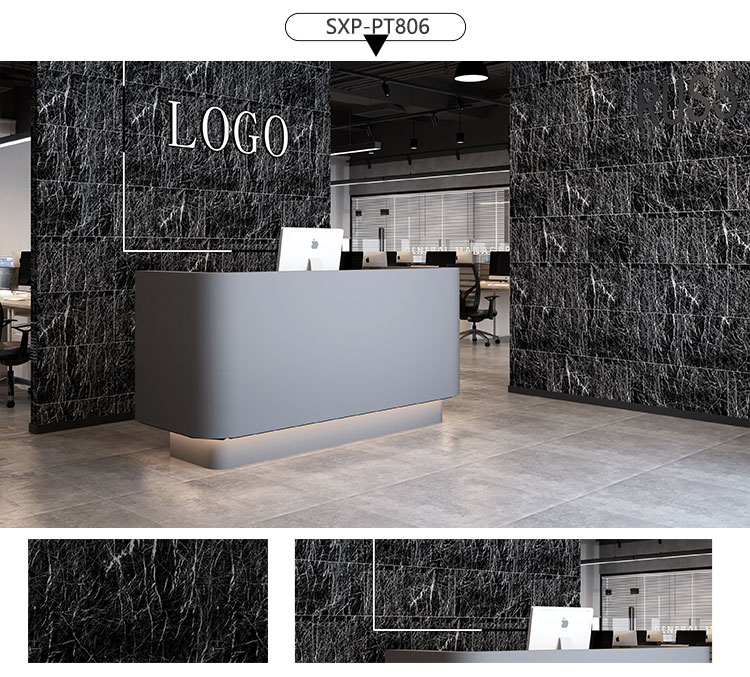
WB-PET fits the residential jobs where the wall stays as it is. Supplied at 2 mm or 2.5 mm in sizes up to 120 × 300 cm, it is a surface treatment: it covers cracks and stains on the base, protects the existing wall and finishes quickly enough to shorten construction time. For a rented apartment, a single accent wall, a dry kitchen zone or a stairwell that needs a clean marble look, the self-adhesive format can be cut on site with a utility knife and laid with a scraper or roller, a tape measure and a spirit level, without cement or glue. Some styles are documented as removable without leaving residue — relevant where the next tenant’s finish is not the landlord’s decision.
The residential split therefore follows the wall’s condition rather than the household’s taste. A sound, dry, flat wall that needs a fast visual upgrade points to the sheet. A wall that is part of a redesign, where depth and continuous lines are the point, points to the panel.
One caution applies equally. A 2 mm sheet and a 23 mm profile are both dependent on the substrate, and a thicker product is not a repair strategy for a powdery or loose wall.
Commercial Fit: Repeatable Modules and Short Shutdown Windows
Commercial interiors add two variables that homes rarely carry: repetition and downtime. Each one favours a different format.
Hotels, serviced apartments and chain stores repeat the same room or bay many times. A 160 × 23 × 2900 mm panel packed 16 pieces per box is straightforward to count, allocate and reorder per room type, and the linear format holds a consistent rhythm across identical elevations. In a hotel room makeover or a chain-brand refurbishment, that repeatability usually matters more than a wider pattern choice, because the risk sits between rooms rather than within one.
Where the programme is a refresh rather than a rebuild, the sheet format has the advantage. Large sizes up to 120 × 300 cm cover more wall per piece, the dry self-adhesive installation keeps wet trades out of an occupied building, and the documented functions of protecting the existing wall and shortening construction time are precisely what a retail or office fit-out needs when the space has to reopen. Offices, temporary exhibition booths and straightforward retail renovations are the typical uses.
Range-level commercial evidence exists but has to be read with care. A documented supermarket programme installed 370,000 units of product 5668 — a PVC soft-stone sticker panel, not WB-WPC or WB-PET — with Germany, France and Japan listed among the markets and a stated project duration of 5–10 years. The reported highlights were moisture resistance, quick installation and a wide choice of surface textures, with good decorative results, easy daily maintenance and repeat orders. What this establishes is that high-volume commercial buyers accept adhesive panel formats and come back for more; it does not establish how WPC or PET marble panels behave in the same setting.
Temporary work has its own logic. An exhibition booth is dismantled sooner than it deteriorates, so removability and dry installation matter more than long service life, and the sheet format’s cutting and re-laying flexibility fits that cycle. Commercial tenders add a further filter: where a specification calls for a reaction-to-fire classification, the format that can be supported with a product-specific document wins the argument regardless of appearance.
Assortment Fit: Home & Garden, Building Materials, Interior Decoration
The declared industries differ, and that difference is a distribution decision rather than a marketing one. WB-PET is declared for Home & Garden, Building Materials and Interior Decoration; WB-WPC is declared for Interior Decoration and Building Materials.
In practice, the Home & Garden tag follows the size range. A 30 × 30 cm or 30 × 60 cm sheet can be packed as a consumer item and sold through home-improvement retail; a 2900 mm rigid panel cannot. WB-WPC therefore belongs in the contractor, fit-out and building-materials channel, where length is an advantage and handling equipment exists. A distributor serving both channels can carry both lines without cannibalising either, because the purchase occasion differs: one is a weekend wall refresh, the other a specified elevation.
Because both formats sit in the same Construction & Decoration category and serve the same interior decoration project types, the split should be explained at the shelf and in the quotation template rather than left to the buyer to discover after delivery.
Where Each Format Stops: Joints, Moisture, Sunlight and Depth
Boundaries are easier to state than benefits, and they prevent most installation disputes.
- Depth versus coverage. WB-PET at 2 mm or 2.5 mm adds little depth over the substrate, so undulation and defects stay a base-repair task. WB-WPC brings a 23 mm cross-section, which changes the wall’s profile and its joint planning.
- Joint rhythm. A 2900 mm linear panel produces deliberate joint lines; a 120 × 300 cm sheet produces very few. Neither is a defect, but a design drawn for one and installed with the other will look wrong.
- Moisture. Typically humid rooms such as bathrooms and dry kitchen areas fall inside the documented working conditions; permanent water contact and exterior exposure do not.
- Sunlight. Long-term strong sunlight is excluded for the range, so a glazed façade is not the same environment as an interior wall.
- Substrate. Powdery, sandy and loose surfaces are excluded for both formats.
- Weight and handling. Declared at 690, 810 or 830 g/m, WB-WPC must be ordered with the variant named; where weight is left open, the delivered handling and freight profile is left open too.
Acceptance Criteria at Goods-In
Acceptance is where most avoidable cost sits, because a delivered pallet either matches the order or it does not.
- Identity. Confirm the model — WB-WPC or WB-PET — appears on the carton, the delivery note and the documentation, and that sizes match the order: 160 × 23 × 2900 mm for the panel; the ordered size from 30 × 30, 30 × 60, 60 × 60, 40 × 80, 60 × 120, 60 × 300 or 120 × 300 cm for the sheet.
- Pack count. WB-WPC is packed 16 pieces per box; count boxes and pieces separately rather than trusting the pallet label.
- Declared weight. For WB-WPC, verify the batch against 690, 810 or 830 g/m as ordered, not against a generic figure.
- Thickness. For WB-PET, confirm 2 mm or 2.5 mm on the sheet itself rather than on the carton print.
- Surface consistency. Check pattern register and edge condition across pieces from the same batch, particularly where the elevation runs continuously.
- Base readiness. Flat, dry, free of dust and grease, with no powdery, sandy or loose areas. A failed base is not a product claim.
- Supplier terms. Confirmed capability terms for the range include a 1,000 m² minimum order, a 30-day lead time, 100% testing, and OEM/ODM customisation of size, colour, pattern, embossing, material structure, thickness, packaging, private label and labels.
EU Documentation Risk for Exported Panels and Stickers
For exports into the EU, the document set — not the sample — usually decides acceptance, and three items recur.
Substance compliance. RoHS Directive (EU) 2015/863 is the reference already documented in the range: an SGS RoHS test report, certificate number SHAEC1709394501, applies to the 3D wall brick in PE material. That is a specific product. A report for one item does not automatically cover WB-WPC, WB-PET or any other model, so the buyer should request the report that names the exact product and material being shipped.
Reaction to fire. EN 13501-1 is the European standard that classifies reaction-to-fire performance, and B-s1,d0 is a commonly specified classification for commercial interior wall panels. Whether a particular panel carries it depends on the tested product and configuration; a general statement is not a classification. Where a tender specifies a Euroclass, request the document that names product, thickness and mounting.
Customs classification. WPC panels exported from China have been classified under HS code 3925.90.0000 in a U.S. Customs and Border Protection ruling — a useful reference for documentation, though not a substitute for the importing country’s own determination.
The practical rule is consistent: documentation must name the product, the material and the configuration actually shipped. An absent document does not prove a product is non-compliant, but an unverified claim cannot be used in a tender, and a report carrying a different model number will not survive an audit.
Low-Cost Risk: What a Cheaper Quote Usually Removes
Price pressure rarely arrives as one large substitution; it arrives as several small omissions that a sample cannot reveal.
- An unnamed variant. Three weights are documented within one model. A quote that does not name the weight leaves the delivered specification open.
- An unnamed thickness. PET at 2 mm and 2.5 mm are both legitimate; a comparison that mixes them is not a comparison.
- Base-surface cost shifted to the buyer. A cheaper panel does not remove the flat, dry, dust-free requirement, and a failed installation is usually charged to the buyer rather than the supplier.
- Documentation removed. Test reports and classification documents cost money to obtain and maintain; a substantially cheaper offer may simply exclude the model-specific documents a tender requires.
- Storage damage presented as defect. Curling, deformation and mildew caused by sun exposure, over-stacking or ground moisture count, under the range’s own storage guidance, as improper-storage damage rather than an inherent product defect.
- Verification left impossible. Where a supplier cannot state model, batch, thickness or weight per metre, no acceptance test can be designed.
Storage: XPE, PU Stone and Linen Soft-Pack in a Mixed Warehouse
A distributor carrying WPC and PET alongside foam, PU stone and textile ranges needs one set of storage rules that respects all of them.
- Warehouse conditions. Cool and ventilated, temperature not above 40 °C, away from direct sunlight and heating pipes.
- Floor contact. Goods on pallets, never directly on bare floor, to prevent damp damage.
- Stacking. Full cartons stacked flat with a height limit; no heavy hard panels on top of foam goods.
- Material-specific handling. Foam wall stickers are sensitive to high temperature, heavy pressure and UV light; PU stone panels are vulnerable to moisture and impact; linen soft-pack ranges are vulnerable to dust, dampness and mildew, so they should be covered.
- Rotation. FIFO — older batches ship first, avoiding long-term stockpiling.
This belongs in a purchasing article because storage damage is regularly presented as a product complaint. Under the range’s own guidance it is not: it is a handling outcome, avoidable with pallets, height limits and a rotation rule.
Market Context, Read With Its Definition Caveat
Two published figures help to size the category, and neither should be used to size a single format.
One commercial research estimate places the global wall panel market at USD 32.4 billion in 2025, rising to USD 43.7 billion by 2033 at a reported 4.2% CAGR. A second estimate for the same year is around USD 10.2 billion, and the difference is best explained by whether exterior cladding is included in the definition. That definition gap is a reminder to treat headline market values as scale indicators only.
Category composition data is more useful for orientation than for forecasting. Metal wall panels were reported to hold 28.5% of the market in 2025, with Asia Pacific accounting for 42.3%, while wood-based wall panels were reported at nearly 31% of global installations in 2024, with wood wall panel systems projected at 6.2% CAGR to 2035.
None of these figures describe WPC versus PET marble demand. Read correctly, they show only that panel formats sit inside a large, mixed category where material groups compete under different definitions — which is exactly why the buyer’s decision turns on the scenario rather than on the category growth rate.
Outlook: What Would Change the Recommendation
The recommendation holds while the underlying conditions hold. Four conditions would reverse it.
- If the wall is unsound. Neither format is specified for powdery, sandy or loose surfaces, so repair becomes the project and the product choice becomes secondary.
- If the elevation needs few joints. A large sheet up to 120 × 300 cm wins on a flat feature wall; a 2900 mm linear panel wins where the joint rhythm is the design.
- If the channel is consumer retail. Small sheets fit home-improvement packaging; a 2900 mm panel does not.
- If the tender requires a classification document. The product whose documentation names it, at the shipped thickness, becomes the only option.
A residential renovation with a sound wall and a short programme usually ends with WB-PET on the feature surface; a hotel or chain-store programme with repeated rooms usually ends with WB-WPC as the structural line. Both conclusions are conditional, and stating the condition is what makes them usable at the point of purchase.
FAQ
Which format suits a full-wall installation in a residential renovation?
WB-WPC suits a wall that is part of the redesign. Its 160 × 23 × 2900 mm format supports continuous lines and gives the elevation a 23 mm cross-section, and it is declared for Interior Decoration and Building Materials. WB-PET, at 2 mm or 2.5 mm and up to 120 × 300 cm, is the faster option for covering an existing sound wall. Both require a flat, dry base free of dust and grease.
Can PET marble wall sticker panels be used in bathrooms and kitchens?
Typically humid interiors such as bathrooms and dry kitchen areas sit inside the documented working conditions for the range, which also covers indoor use at normal room temperature. The exclusions remain: no long-term exposure to strong sunlight, no powdery, sandy or loose surfaces, and a base that is flat, dry and free of dust and grease. Permanently wet or exterior surfaces are a different question.
What should a buyer check when a WB-WPC shipment arrives?
Confirm the declared variant, because WB-WPC is documented at 690, 810 and 830 g/m; count 16 pieces per box; verify the 160 × 23 × 2900 mm dimensions; and check that the model appears on the delivery note and the documentation. The base surface should be inspected in parallel, since a failed substrate will not be treated as a product defect.
Which EU documents should be requested for exported wall panels and stickers?
Ask for the test report that names the exact product and material. For RoHS, an SGS report under certificate SHAEC1709394501 is documented for the 3D wall brick in PE material, and it does not automatically extend to other models. Where a commercial project specifies a reaction-to-fire classification under EN 13501-1, request the classification document naming product, thickness and mounting.
How should mixed stock of WPC, PET, XPE, PU stone and linen soft-pack be stored?
In a cool, ventilated warehouse below 40 °C, away from sunlight and heat sources, on pallets rather than bare floor, with a stacking height limit and no heavy hard panels on foam goods. Cover linen soft-pack stock against dust and damp, protect PU stone corners from impact, and ship on a FIFO basis. Curling, deformation and mildew from sun, over-stacking or ground moisture count as storage damage rather than product defects.
The wider range — WPC, PET marble, PVC, foam and textile formats — is documented in the Shanghai Yuanguan product brochure (PDF). Company and range information is published by Shanghai Yuanguan Rubber Plastic Co., Ltd.
Tem questões ou precisa de mais detalhes?
Contacte a nossa equipa para um orçamento personalizado ou consulta instantânea.
Solicitar orçamento
Preencha o formulário abaixo e a nossa equipa entrará em contacto com uma proposta personalizada.
Chat direto do WhatsApp
Prefere conversar em tempo real? Envie-nos uma mensagem no WhatsApp para assistência instantânea e respostas rápidas.
- Obter orçamento personalizado
- Partilhar fotos ou documentos
- Discuta as suas necessidades diretamente
Geralmente responde em 5–30 minutos durante o horário de expediente.