
Wafer Butterfly Valve vs Double Plate Check Valve
Wafer Butterfly Valve vs Double Plate Check Valve
Procurement teams sometimes place a wafer butterfly valve and a double plate check valve on the same comparison sheet because both are compact, flanged pipeline components. That comparison is useful only if the duties are kept separate. The wafer butterfly valve is evaluated here for isolation duty and related flow-control applications. The double plate check valve is evaluated for backflow prevention. The decision is application-based, not a like-for-like replacement.
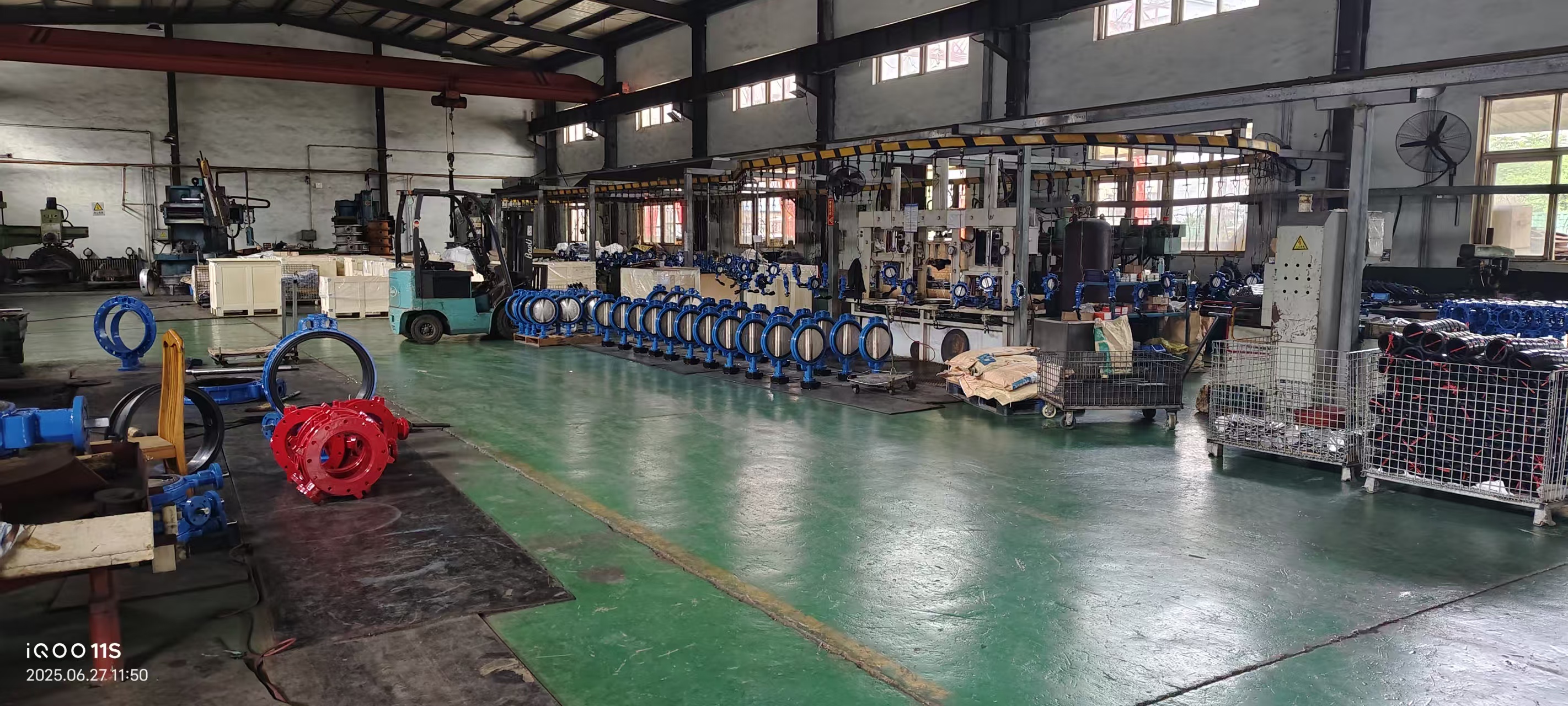
Tianshun Valve Co., Ltd. is a valve system solutions supplier founded in 1993, with an 8,000 m² factory, 50 employees and a team of more than 30 engineers. Its stated product scope includes wafer butterfly valves and double plate check valves, which makes it a relevant reference point for buyers who need to separate isolation and backflow duties before requesting quotations.
Quick answer: which valve for which duty
The shortest buyer rule is this: choose a wafer butterfly valve when the line needs isolation or flow control, and choose a double plate check valve when the line needs automatic protection against reverse flow. A check valve is not an isolation valve. A wafer butterfly valve is not selected as a substitute for a check valve when the required duty is backflow prevention.
| Buyer criterion | Wafer Butterfly Valve | Double Plate Check Valve |
|---|---|---|
| Primary duty | Isolation and flow control in the line. | Automatic backflow prevention. |
| Operating logic | Actuator or handle positions the disc; manual, pneumatic and electric actuation options should be stated in the RFQ. | Opens and closes automatically by the pressure difference across the disc. |
| Isolation use | Intended for isolation duty when correctly selected and installed. | Must not be used as an isolation valve. |
| Installation focus | Close the disc, center the wafer body between flanges, use suitable gaskets and tighten bolts evenly. | Confirm flow direction and pipeline orientation; align the flow arrow with the media direction. |
| Maintenance focus | Cycle the valve, inspect stem and flange leakage, lubricate moving parts and check seat and disc wear. | Isolate and drain the line before service; check for backflow, noise and leakage during operation. |
| RFQ focus | Size, pressure class, body and disc material, seat material, actuation, flange standard and test requirements. | Size, pressure rating, medium, flow direction, installation orientation, flow velocity and test requirements. |
| Fit boundary | Not a backflow-prevention device by duty. | Not an isolation device; wrong installation direction can cause failure or water hammer. |
Why this is not a like-for-like replacement
A wafer butterfly valve and a double plate check valve solve different pipeline problems. The wafer butterfly valve gives the buyer a way to stop, isolate or control flow through an actuator or handle. The double plate check valve belongs to the check-valve family and is selected so that the valve opens and closes automatically by pressure difference to prevent backflow. Those duties can exist in the same system, but they should not be collapsed into one line item.
The supplied check-valve guidance is explicit on this boundary: never use a check valve as an isolation valve. It also warns that wrong installation direction can cause failure or water hammer. For a buyer, that means the comparison should start with the required function, not with the physical size of the valve body. If a project needs both isolation and backflow prevention, the procurement list should show two components with two separate specifications.
Wafer butterfly valve: selection criteria
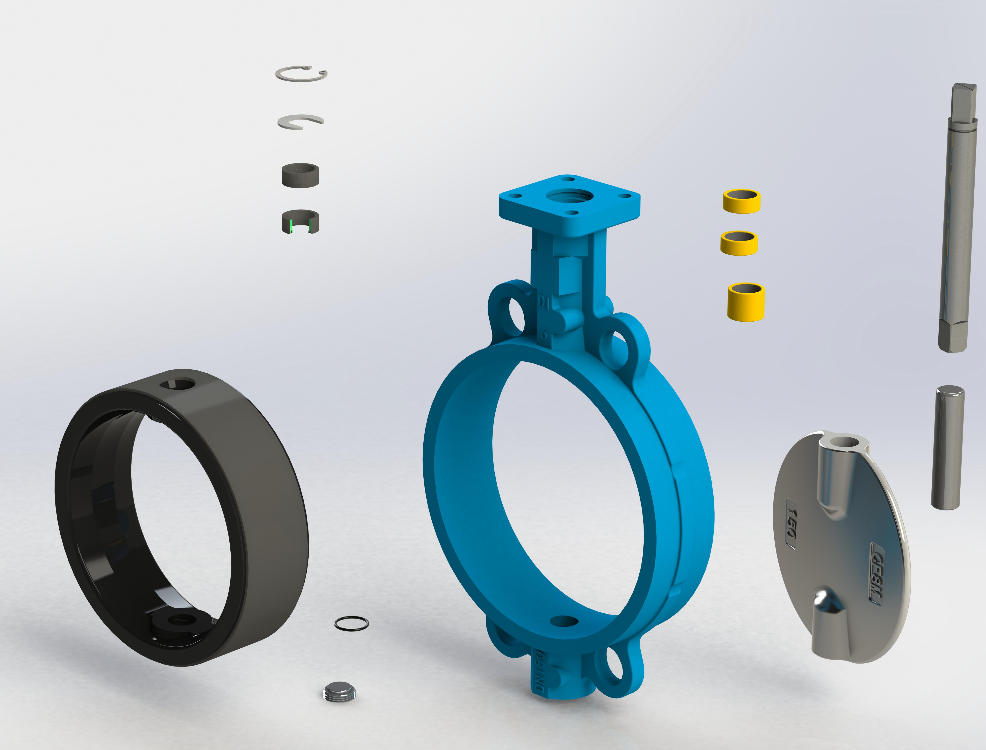
For isolation duty, the wafer butterfly valve specification should be built from the line conditions and the interface conditions. The wafer body is installed between pipeline flanges, so flange standard, pipe spacing and gasket selection are part of the valve decision, not post-order details.
- Duty and location: state whether the valve is for isolation, regulating or control service, and where it sits in the line.
- Size and pressure class: match the valve to the pipeline size and the required pressure rating; do not use a catalogue size alone as the basis for selection.
- Body and disc material: the RFQ should state the required material, for example cast iron, ductile iron or stainless steel, where the project specification calls for it.
- Seat material: rubber-seated and EPDM-seated wafer butterfly valves are common configuration choices; the buyer should state the seat material required for the medium and service conditions.
- Actuation: manual, pneumatic and electric wafer butterfly valve options should be defined at inquiry stage, including the control signal and power supply where an actuator is required.
- Flange and face-to-face requirements: confirm the flange drilling and the required face-to-face dimension against the project standard.
- Standard reference: API STD 609 covers double-flanged, lug-type, wafer-type and butt-welding-end butterfly valves. EN 593:2017 specifies minimum general requirements for metallic butterfly valves used for isolating, regulating or control applications, including wafer connections. The applicable standard should be named in the purchase order when compliance is required.
Centre-line, rubber-seated, EPDM-seated, cast iron, ductile iron, stainless steel, high-pressure, manual, pneumatic and electric wafer butterfly valves are not interchangeable labels. Each term changes what the supplier must quote, test and document. A buyer who asks only for a wafer butterfly valve without those details leaves too much room for a non-comparable offer.
Double plate check valve: selection criteria
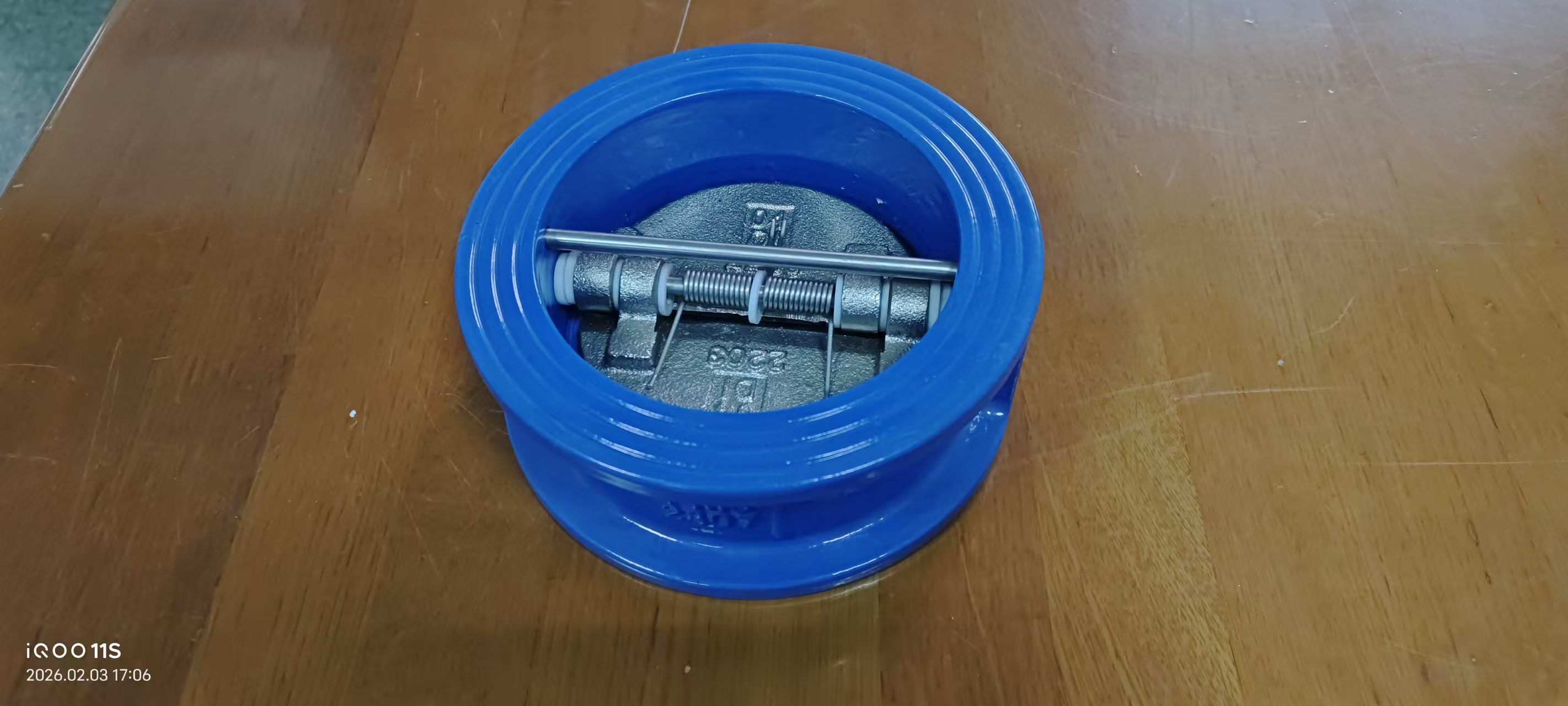
The double plate check valve should be specified as a check valve selected for backflow prevention. The general check-valve selection logic supplied for this category is based on pipeline direction, available space, flow velocity and medium. Those inputs determine whether the selected check valve can operate correctly and whether the line will behave as intended after commissioning.
- Flow direction: confirm the permitted flow direction and the location of the flow arrow on the valve body.
- Pipeline orientation: check whether the line is horizontal or vertical and confirm the supplier's installation orientation for the specific double plate check valve.
- Medium and velocity: state the medium and expected flow velocity so that the check valve is reviewed against the actual service, not a generic water application.
- Pressure rating and size: match the check valve to the pipeline size and pressure class, and state the required end connection.
- Service access: provide space for inspection and removal, because the check valve will need isolation and draining before servicing.
- Acceptance checks: after the line is run, verify that there is no backflow, abnormal noise or leakage.
The supplied check-valve guidance also distinguishes vertical check valves for vertical pipelines with compact space from swing check valves for horizontal lines with low flow resistance. That distinction is useful for understanding why orientation and space belong in the RFQ. For a double plate check valve, the buyer should still confirm the exact orientation, flow direction and velocity requirements with the selected supplier rather than assuming that one check-valve type fits every line.
Installation considerations
Installation is where the difference between the two products becomes practical. A wafer butterfly valve is clamped between flanges and depends on correct centering and even bolt loading. A double plate check valve depends on correct flow direction and orientation. Neither product should be forced into alignment by using the internal disc as a lever.
Wafer butterfly valve installation
The supplied wafer installation guidance sets out a clear sequence: fully close the valve disc; align the pipeline flanges and check pipe spacing; insert gaskets and center the valve body; tighten the flange bolts evenly in a cross sequence; then cycle the valve open and close to verify smooth operation.
The safety notes are equally important. Depressurize the pipeline before installation. Never use the disc to force pipe alignment. Make sure the disc does not contact the flange inner wall. These points matter because a wafer valve has little margin for misalignment; a seat damaged during installation may later appear as a leakage complaint that has nothing to do with the valve's design.
Double plate check valve installation
For the check valve, the flow arrow on the valve body must align with the media direction. Wrong installation direction can cause failure or water hammer, so the installation check should be treated as a commissioning requirement, not a visual formality. After the line is run, check for backflow, noise and leakage. When service is required, depressurize and drain the line before servicing.
Maintenance needs
Maintenance planning should follow the duty of each valve. The wafer butterfly valve has moving parts and a seat that can wear. The double plate check valve has a flow-sensitive closure that must be allowed to operate freely and must be installed in the correct direction.
Wafer butterfly valve maintenance
The supplied maintenance guidance recommends periodic exercising, inspection of seals and stem leakage, lubrication of moving parts and replacement of worn seats. In practice, the buyer should include the following checks in the maintenance plan:
- Cycle the valve fully open and closed at least once per period.
- Inspect flange connections and the stem for leakage.
- Lubricate stem threads and bearings.
- Check the seat and disc sealing surface for wear.
- Replace seals or seats when leakage occurs.
Before disassembly, depressurize and drain the pipeline. For corrosive media, wear protective equipment and flush the valve before servicing. These are service-safety requirements, not optional workshop preferences.
Double plate check valve maintenance
The check valve does not provide isolation, so maintenance work on the check valve must begin with isolating and draining the line by other means. During operation, the buyer should watch for backflow, abnormal noise and leakage. The installation guidance already calls for those checks after the line is run; they should also be built into periodic inspection routines. If the check valve must be removed, confirm that the line is depressurized and drained before service.
Purchasing terms and acceptance criteria
A buyer comparison becomes useful only when it turns into a comparable quotation. The RFQ should make the duty, interface and acceptance basis explicit so that suppliers are quoting the same scope. This is especially important when one supplier offers a wafer butterfly valve and another offers a double plate check valve, because the two products should not be evaluated as if they were interchangeable.
RFQ fields for the wafer butterfly valve
- Project, line number and required duty: isolation, regulating or control.
- Size, pressure class and required flange standard.
- Body material, disc material and seat material, including EPDM or other rubber seat requirements where specified.
- Actuation type: manual, pneumatic or electric, with the required control interface.
- Face-to-face dimension and any project-specific standard reference, such as API 609 or EN 593:2017 where required.
- Test method, inspection level and documentation package.
RFQ fields for the double plate check valve
- Project, line number and required duty: backflow prevention.
- Size, pressure rating, end connection and required body material.
- Medium, expected flow velocity and pipeline orientation.
- Required flow direction and installation position.
- Test method, marking requirements and documentation package.
- Service-access requirements for inspection and removal.
Commercial terms should be stated separately from the technical specification: quantity, MOQ, lead time, Incoterm, currency, quotation validity, packaging and warranty terms. None of those terms should be assumed from a catalogue page. For project buyers, the acceptance criteria should also define the record that proves the valve was checked: dimensional and visual inspection, operation check, pressure or leakage test where applicable, and review of material and test documentation.
Tianshun Valve's company profile lists in-house machining, assembly and pressure testing, as well as OEM/ODM, drawing-based customization, third-party inspection and complete export documentation. These are useful capability references for a buyer preparing an RFQ, but they do not replace the project-specific specification. The purchase order should still state the exact valve type, size, materials, actuation, standard and acceptance record required.
Market context for buyer planning
Market data can help a procurement team understand the wider supply environment, but it does not decide whether a wafer butterfly valve or a double plate check valve belongs in a given line. Fortune Business Insights estimated the global butterfly valve market at approximately USD 12.93 billion in 2025. Grand View Research reported that the manual segment held the largest market share in 2025 at 41.1%, and that water and wastewater treatment held the largest end-use share at 37.7%.
Those figures support a practical point: manual wafer butterfly valves and water-related applications remain important categories for buyers to specify clearly. They do not prove that a wafer butterfly valve can perform a check valve's backflow duty, and they do not remove the need to confirm installation orientation, medium and acceptance criteria for a double plate check valve.
Fit boundaries and limitations
The most important limitation is functional. A wafer butterfly valve is selected for isolation or flow control; it is not a backflow-prevention device by duty. A double plate check valve is selected for automatic backflow prevention; it is not an isolation valve. A project that needs both functions should plan for both components and should show the interface between them in the piping and instrumentation documentation.
The second limitation is installation sensitivity. Wafer butterfly valves depend on correct flange alignment, gasket placement and even bolt tightening. Check valves depend on correct flow direction, orientation and space for the closure to operate. A buyer who treats either valve as a simple drop-in item may create a maintenance problem that appears only after commissioning.
The third limitation is documentation. A supplier's product scope or catalogue presence does not by itself prove compliance with a project standard. Buyers should request the applicable standard declaration, test record and material information where the project requires them, and should compare quotations on the same technical basis.
Decision framework for buyers
Use the following sequence before issuing a purchase order:
- Define the required function: isolation, flow control or backflow prevention.
- Select the valve category that matches the function, not the category that happens to be available.
- Confirm the line conditions: medium, pressure, temperature, flow direction, orientation and available space.
- Specify the interface: flange standard, face-to-face dimension, end connection and actuator interface.
- State the materials and seat requirements, including EPDM or other rubber seat options for wafer butterfly valves where applicable.
- Agree the test, inspection and documentation requirements before order placement.
- Verify installation direction and commissioning checks on site.
This framework keeps the comparison honest. It also helps buyers avoid a common error: requesting a wafer butterfly valve as a low-cost substitute for a check valve, or requesting a check valve where the line actually needs a positive isolation point.
FAQ
Is a wafer butterfly valve a direct replacement for a double plate check valve?
No. A wafer butterfly valve is selected for isolation and flow control, while a double plate check valve is selected for backflow prevention. The two products perform different duties and should be specified as separate line items when both functions are required.
Can a double plate check valve be used to isolate a line?
No. Check-valve guidance states that a check valve must not be used as an isolation valve. Isolation should be provided by a valve intended for that duty, and the check valve should be isolated and drained before service.
What is the most important installation check for a wafer butterfly valve?
The disc should be fully closed during installation, the valve body should be centered between the flanges with suitable gaskets, and the flange bolts should be tightened evenly in a cross sequence. The disc should not be used to force pipe alignment, and the disc should not contact the flange inner wall.
What maintenance does a wafer butterfly valve need?
Periodic maintenance includes cycling the valve fully open and closed, inspecting flange connections and the stem for leakage, lubricating stem threads and bearings, checking seat and disc wear, and replacing seals or seats when leakage occurs. The line should be depressurized and drained before service.
What should buyers check after installing a check valve?
Confirm that the flow arrow aligns with the media direction, then run the line and check for backflow, abnormal noise and leakage. Wrong installation direction can cause failure or water hammer, so the flow-direction check should be part of commissioning.
Conclusion
The wafer butterfly valve and the double plate check valve belong in different parts of a buyer's decision framework. The wafer butterfly valve is the isolation and flow-control choice; the double plate check valve is the backflow-prevention choice. A useful comparison therefore focuses on duty, installation, maintenance and acceptance criteria rather than on treating the two products as interchangeable.
For projects where both duties exist, the practical answer is to specify two valves, two sets of installation requirements and two acceptance records. Tianshun Valve's product scope includes both wafer butterfly valves and double plate check valves, and its stated support for drawing-based customization, third-party inspection and export documentation can help buyers structure that comparison. The final selection should still be confirmed against the line conditions, the applicable standard and the project's acceptance criteria.
Tem questões ou precisa de mais detalhes?
Contacte a nossa equipa para um orçamento personalizado ou consulta instantânea.
Solicitar orçamento
Preencha o formulário abaixo e a nossa equipa entrará em contacto com uma proposta personalizada.
Chat direto do WhatsApp
Prefere conversar em tempo real? Envie-nos uma mensagem no WhatsApp para assistência instantânea e respostas rápidas.
- Obter orçamento personalizado
- Partilhar fotos ou documentos
- Discuta as suas necessidades diretamente
Geralmente responde em 5–30 minutos durante o horário de expediente.