
Wall Panel Formats Compared: PET Marble, PVC and WPC
Wall Panel Formats Compared: PET Marble, PVC and WPC
Independent Buyer Comparison · Interior Wall Panels
Three wall panel formats are routinely quoted against one another for interior work: PET marble wall sticker panels, PVC wall panels and WPC wall panels. They are not interchangeable. Two of the three are supplied as thin self-adhesive sheets at 2 mm to 2.8 mm, while the third ships as a rigid 2,900 mm plank at 690–830 g/m in 16-piece boxes. That difference in construction, not brand preference, is what decides which format suits a given wall, budget and compliance file.
This comparison is built on the published specifications of three models supplied under the SXP Wall Panel brand: WB-PET, WB-KC and WB-WPC. SXP Wall Panel is the wall panel line of Shanghai Yuanguan Rubber Plastic Co., Ltd., a decorative materials manufacturer established in China in 2005 whose stated range covers self-adhesive wall stickers, 3D foam wall panels, PVC wallpaper, WPC decorative wall panels, self-adhesive PVC flooring, carpet tiles and interior decoration materials. No competing brands are named or scored here; the purpose is to give buyers a format-level checklist they can apply to any quotation they receive.
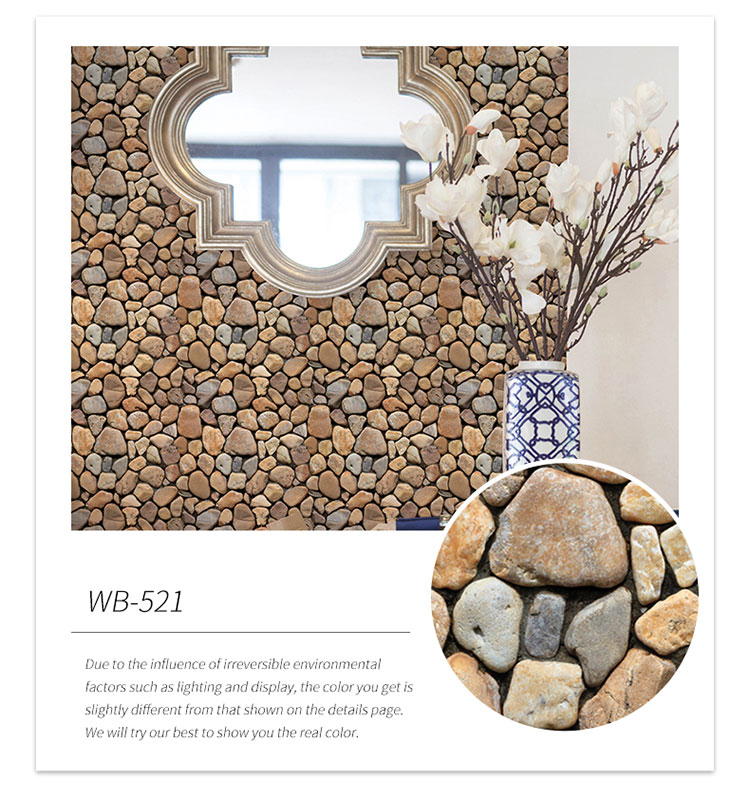
The PVC wall panel format: a thin self-adhesive sheet, handled and specified very differently from a rigid WPC plank.
The Three Formats, Defined by Specification
Buyers usually meet these products as category names rather than as specifications. The specification is what actually determines fit, so it is worth stating each format in the terms a purchase order would use.
WB-PET — PET marble wall sticker panel
WB-PET is a marble-effect wall sticker panel made of PET. It is supplied at 2 mm or 2.5 mm thickness, in sizes of 30x30 cm, 30x60 cm, 60x60 cm, 40x80 cm, 60x120 cm, 60x300 cm and 120x300 cm. Its stated application industries are interior decoration, building materials, and home & garden.
The size list matters more than it first appears. The range runs from small 30x30 cm tiles to 120x300 cm sheets, which means the same product name covers both patch-repair work and full wall runs. Large sheets reduce the number of visible seams across a wall, but they are also less forgiving of an uneven substrate, because a single panel spans more of it.
WB-KC — PVC 3D self-adhesive foam slat wall sticker
WB-KC is a 3D self-adhesive foam slat wall sticker made of PVC, with a thickness of 2.8 mm. Published sizes are 30x30 cm, 30x60 cm, 60x60 cm, 40x300 cm, 60x300 cm and 120x300 cm, and the length can be customized. Its stated application is interior decoration.
At 2.8 mm it is the thickest of the two sheet formats in this comparison, and the slat profile means the finished surface is not flat — a visual and tactile decision before it is a technical one.
WB-WPC — WPC wall panel
WB-WPC is a wood plastic composite (WPC) wall panel intended for interior decoration and building materials. It measures 160×23×2900 mm and weighs 690/810/830 g per metre. Each box contains 16 pieces.
This is a rigid plank system, not a sticker. The 2,900 mm length is the defining feature: it produces long, uninterrupted lines on flat wall runs and reduces joint count, while placing more demand on straight, level installation and on how the panel is fixed to the wall.
| Attribute | WB-PET | WB-KC | WB-WPC |
|---|---|---|---|
| Material | PET | PVC | WPC (wood plastic composite) |
| Product type | PET marble wall sticker panel | 3D self-adhesive foam slat wall sticker | WPC wall panel |
| Thickness | 2 mm or 2.5 mm | 2.8 mm | 160×23×2900 mm profile |
| Sizes | 30x30, 30x60, 60x60, 40x80, 60x120, 60x300, 120x300 cm | 30x30, 30x60, 60x60, 40x300, 60x300, 120x300 cm; length customizable | 2900 mm length |
| Weight data | Not stated in published specification | Not stated in published specification | 690/810/830 g per metre |
| Pack format | Not stated in published specification | Not stated in published specification | 16 pieces per box |
| Stated industries | Interior decoration, building materials, home & garden | Interior decoration | Interior decoration, building materials |
Comparison of published model specifications for three SXP Wall Panel formats. Blank cells indicate figures not stated in the source specification, not figures of zero.
Application Fit Across Interior Decoration, Building Materials and Home & Garden
Application scope is stated at the format level, and the stated scopes are not identical. WB-PET lists three industries — interior decoration, building materials, and home & garden. WB-WPC lists two — interior decoration and building materials. WB-KC lists one — interior decoration.
For a buyer, this is a distribution question as much as a technical one. A wall panel that is documented for home & garden as well as building materials sits comfortably in retail-facing channels where the same SKU is bought by a household and by a small contractor. A format documented only for interior decoration is a cleaner fit for trade-facing catalogues, where the buyer is specifying a finish rather than a general-purpose material.
Where these formats are actually used
The application conditions documented for the SXP self-adhesive wall panel range describe a broad set of interior project types: building decoration, interior renovation, old-house remodelling, commercial space decoration, prefabricated interior decoration, hotel and B&B renovation, exhibition booth construction, retail store renovation, apartment full renovation, chain-brand store refurbishment, office fit-outs, temporary exhibition booths and modular interior projects.
The same documentation sets the operating envelope. The products are for indoor use at normal room temperature, and are described as suitable for typical humid environments such as bathrooms and dry areas of kitchens. Long-term exposure to strong sunlight is to be avoided. Suitable substrates include cement floors, tiled surfaces, latex-painted walls, plasterboard and plywood — that is, smooth, solid bases. Powdery, sandy or loose surfaces are explicitly excluded.
How the SXP Wall Panel Range Maps to These Three Formats
The three formats compared here are not a theoretical set; they are three models in one manufacturer's catalogue. Shanghai Yuanguan Rubber Plastic Co., Ltd. operates an 8,000 m² manufacturing facility with approximately 150 staff and an R&D team of five engineers, states an annual production capacity of 75,000,000 units, and holds ISO9001 quality management system certification. The company reports 12 independent brands across its decorative material lines, states that it supplies more than 80 countries and regions with major markets in the EU, USA, Asia and South America, and that export accounts for 90% of sales.
For buyers, the practical consequence of a single supplier covering all three formats is comparability: thickness, size codes and customization terms can be discussed inside one specification conversation rather than across three. The manufacturer states that it supports flexible customization on size, thickness, pattern, surface and packaging — which matters most for WB-KC, where the published specification already allows customizable lengths. Product information is published at wallpanelsticker.com.
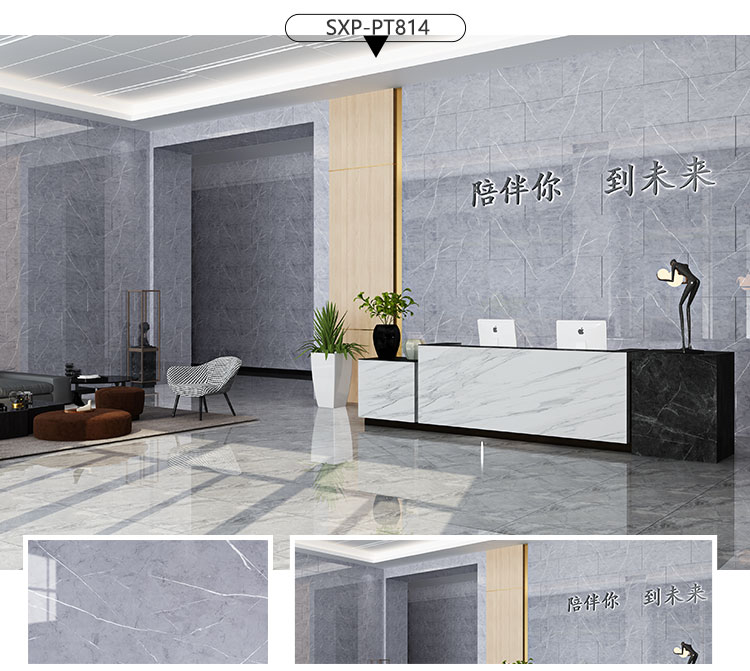
PET marble wall sticker panel: the same product name covers 30x30 cm tiles through 120x300 cm sheets.
Weight, Packaging and Freight: The Axis Buyers Compare Last and Pay For First
Only one of the three formats publishes weight and pack data. WB-WPC is specified at 690/810/830 g per metre, packed 16 pieces per box, at a 2,900 mm length. WB-PET and WB-KC publish thickness and size but not unit weight or carton configuration in the source specification.
That asymmetry is itself a procurement finding. When one format carries weight and carton data and another does not, a quote comparison built on unit price alone is not a comparison at all — it is a comparison of different units of information.
What to request at quotation stage
- Per-carton weight and carton dimensions for every format under consideration, not just the rigid plank.
- Loading quantity per container expressed in cartons or pieces, since a thin sheet and a rigid plank occupy very different volume for the same wall coverage.
- Pallet configuration and stacking limits, because self-adhesive formats are sensitive to pressure and heat during storage and transit.
- Whether length customization affects carton format — relevant to WB-KC, where lengths can be customized.
The weight spread within WB-WPC itself — 690, 810 and 830 g/m — is a reminder that even a single model can be quoted at different specifications. A buyer comparing two WPC quotations that differ in price should first check whether they differ in grams per metre.
Installation Format and What It Demands From the Substrate
WB-PET and WB-KC belong to the self-adhesive family. The documented installation method is dry: peel off the protective film and apply the panel to a smooth surface, with no cement or glue required. Panels can be cut on site with ordinary tools and, for some styles, can be removed and reinstalled without leaving residue. The documented tool list is short — utility knife, scraper or roller, tape measure, spirit level, and an adhesive remover to assist disassembly. No large construction equipment is specified.
That is the format's real commercial argument: it removes wet trades from the schedule. It also transfers risk to substrate preparation. Because adhesion depends on the wall rather than on a mechanical fixing, a dusty, damp or uneven base is not a cosmetic issue — it is the failure mode. For floors, the documentation additionally requires the base to meet the required strength with no hollow spots.
WB-WPC is a rigid 2,900 mm plank. Its installation logic is closer to conventional panel systems than to stickers: long straight runs, joint planning, and a fixing method. The published specification for WB-WPC in this comparison set does not describe a self-adhesive backing, so the fixing method should be confirmed in writing before the order is placed rather than assumed from the product family.
Where Each Format Stops Working
A credible comparison has to state the edges, and these formats have three that recur in practice.
No format corrects a bad wall. All three are described for smooth, solid, dry substrates, and powdery, sandy or loose surfaces are excluded across the range. Buyers who expect a wall panel to level an uneven wall will be disappointed irrespective of format or price.
None of the three is specified for long-term strong sunlight. The documented working condition asks for indoor use at normal room temperature and advises against prolonged direct sun exposure. Applications on glazed façades, sun-facing conservatories or exterior elevations fall outside that envelope.
Sheet formats trade speed for substrate sensitivity; plank formats trade substrate tolerance for installation complexity. A 120x300 cm PET sheet covers a wall quickly but follows every defect beneath it. A 2,900 mm WPC plank produces cleaner long lines but needs straight fixing and careful joint alignment. There is no format in this set that is simultaneously fastest to install and most tolerant of a poor base.
Purchasing Checks: Acceptance Criteria, Low-Cost Risk and EU Compliance
1. Lock the specification, not the model name
This is the most common and most expensive mistake in this category. The SXP catalogue itself shows why: the WB-PVC designation appears across several distinct products in the range — a PVC parquet wall sticker at 1.5/2 mm, a PVC soft stone wall sticker at 2.5 mm, a PVC wall sticker at 2 mm, and a PVC wall panel at 2.5 mm with its own size set. The same pattern applies to thickness options within one model: WB-PET is quoted at either 2 mm or 2.5 mm.
A purchase order that says only “PET marble wall panel” or only a model code can be legitimately fulfilled at the thinner end of the range. Acceptance criteria should therefore name material, thickness and every size code, item by item.
2. Use samples and third-party reports as the acceptance basis
Published guidance for this product family recommends testing physical samples for adhesion and ageing performance and verifying target-market compliance certification before bulk purchasing. It also states that simple visual and hand checks are for preliminary screening only and cannot be used as a basis for a claim, and that material should be clearly specified in the proforma invoice for export orders, with a third-party laboratory report as the acceptance criterion.
The manufacturer states that standardized production and multi-stage quality inspection are carried out on all batches before delivery. Buyers should still agree, in writing, which report is the acceptance document — and for which batch.
3. Separate product defects from storage and installation damage
Documented storage rules for self-adhesive wall sticker formats are specific: a cool, ventilated warehouse at no more than 40°C, away from direct sunlight and heating pipes; goods on wooden pallets rather than bare floor; limited stacking height with no heavy rigid panels stacked on foam goods; dust protection and edge protection; and FIFO shipment. The documentation states explicitly that curling, deformation and mildew caused by sun exposure, over-stacking or ground moisture are classified as improper-storage damage rather than inherent product defect.
That boundary belongs in the contract, not in a post-delivery argument. Self-adhesive stock that has been badly warehoused is not a warranty case by that definition.
4. Treat EU compliance as a product-specific question
Two European reference points matter for this category. First, EN 13501-1 is the European classification standard for reaction-to-fire performance of construction products, and B-s1,d0 is commonly specified for commercial interior wall panel applications. Second, the RoHS Directive (EU) 2015/863 restricts hazardous substances in electrical and electronic equipment, and RoHS test reports are frequently requested as a general materials declaration in this trade.
Neither is automatic. A fire classification being common in the market is not a statement that any particular panel holds it, and a RoHS report covers the item tested, not a product family. For reference, the RoHS test report held for the SXP 3D wall brick (PE material) is verified by SGS-CSTC under certificate number SHAEC1709394501 — that document relates to that item, and buyers comparing PET, PVC or WPC panels should request the declaration that matches the exact product and thickness they are ordering.
A third compliance detail affects landed cost rather than the product: customs classification. A U.S. Customs and Border Protection ruling classifies wood plastic composite wall panels from China under HS code 3925.90.0000. Buyers modelling duty and tariff exposure on a WPC line should confirm the code applied to their own shipment rather than assume it.
Market Context: A Large Category With a Definition Problem
The category these formats sit inside is large but inconsistently measured. One commercial research estimate puts the global wall panels market at USD 32.4 billion in 2025, projected to reach USD 43.7 billion by 2033. Other published estimates for the same year are far lower, and the likely reason is definitional: whether exterior cladding systems are counted alongside interior wall panels changes the number substantially. Buyers should treat headline market size as a directional indicator, not a precise figure.
Within that market, metal wall panels held a 28.5% share in 2025, with Asia Pacific the largest region at 42.3%. On the wood-based side, wood-based wall panels accounted for nearly 31% of global installations in 2024, and wood wall panel systems are projected to grow at a 6.2% CAGR through 2035. The directional signal for the three formats compared here is that decorative interior systems are competing inside a market where the material mix is still shifting, not inside a fixed pie.
The practical implication for buyers is the same one the specification table already suggests: specify by format and construction, not by category name. “Wall panel” as a search term spans a 2 mm self-adhesive sheet and a 2,900 mm rigid composite plank, and market-level statistics do not distinguish between them.
Outlook
Three developments are worth watching for buyers working in this category. First, thickness and size proliferation within single model codes will continue, which raises the value of specification discipline at the purchase-order level. Second, documentation expectations in Europe — particularly reaction-to-fire classification — are likely to be applied more consistently to interior decorative panels, which favours suppliers able to produce product-specific paperwork rather than category-level claims. Third, the split between self-adhesive sheet formats and rigid plank formats will remain the primary dividing line in installation economics, because it determines whether a project needs a wet trade at all.
None of these trends changes the underlying decision rule: match the format to the substrate, the wall run and the compliance file, then compare price on an identical specification.
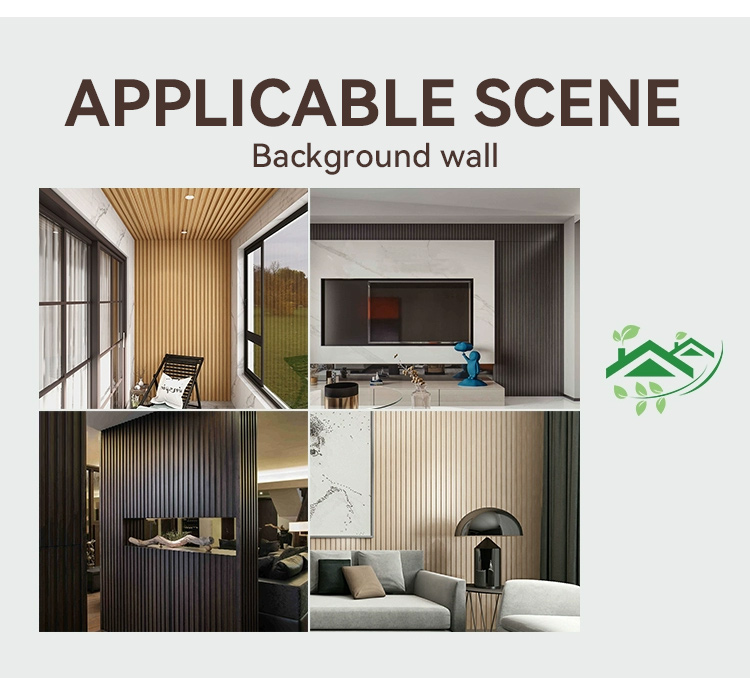
WPC wall panel: a rigid 2,900 mm plank at 690–830 g/m, packed 16 pieces per box.
FAQ
What is the difference between PET marble, PVC and WPC wall panels?
The difference is construction and format. WB-PET is a marble-effect wall sticker panel made of PET at 2 mm or 2.5 mm. WB-KC is a 3D self-adhesive foam slat wall sticker made of PVC at 2.8 mm. WB-WPC is a wood plastic composite wall panel measuring 160×23×2900 mm at 690/810/830 g per metre, packed 16 pieces per box. The first two are thin self-adhesive sheets; the third is a rigid plank.
Which of the three is suitable for bathrooms and kitchens?
The documented working conditions for the SXP self-adhesive wall panel range describe indoor use at normal room temperature, including typical humid environments such as bathrooms and dry areas of kitchens, while advising against long-term exposure to strong sunlight. The base surface must be flat, dry and free of dust and grease, and powdery, sandy or loose surfaces are excluded. Format-specific suitability should be confirmed against the exact model and substrate.
How are self-adhesive wall panels installed, and what tools are needed?
Installation is dry: peel off the protective film and apply the panel to a smooth surface, with no cement or glue required. Panels can be cut on site, and some styles can be removed and reinstalled without leaving residue. The documented tool list is a utility knife, scraper or roller, tape measure, spirit level, and adhesive remover for disassembly assistance. No large construction equipment is specified.
What should be checked before accepting a bulk wall panel order?
Three checks. First, confirm that material, thickness and every size code are written into the purchase order, because model designations in this range cover multiple thicknesses and product types. Second, test physical samples for adhesion and ageing performance and verify the compliance certificates required by the target market. Third, agree in writing which third-party report serves as the acceptance document, since simple visual or hand checks are described as preliminary screening only.
What EU compliance points apply to wall panels and wall stickers?
EN 13501-1 is the European standard for classifying reaction-to-fire performance of construction products, and B-s1,d0 is commonly specified for commercial interior wall panel applications. The RoHS Directive (EU) 2015/863 restricts hazardous substances and is often requested as a materials declaration. For reference, the RoHS test report held for the SXP 3D wall brick (PE material) is verified by SGS-CSTC under certificate number SHAEC1709394501. Buyers should request the declaration that matches the exact product and thickness being ordered, and confirm customs classification separately — a U.S. CBP ruling classifies WPC wall panels from China under HS code 3925.90.0000.
Reference Document
A product brochure covering the SXP Wall Panel range, including model codes and dimensions, is available for download: Shanghai Yuanguan Product Brochure.
Tem questões ou precisa de mais detalhes?
Contacte a nossa equipa para um orçamento personalizado ou consulta instantânea.
Solicitar orçamento
Preencha o formulário abaixo e a nossa equipa entrará em contacto com uma proposta personalizada.
Chat direto do WhatsApp
Prefere conversar em tempo real? Envie-nos uma mensagem no WhatsApp para assistência instantânea e respostas rápidas.
- Obter orçamento personalizado
- Partilhar fotos ou documentos
- Discuta as suas necessidades diretamente
Geralmente responde em 5–30 minutos durante o horário de expediente.