
Wall Socket Supplier Evaluation: Model IDs, Certificates, Endurance
Wall Socket Supplier Evaluation: Model IDs, Certificates, Endurance
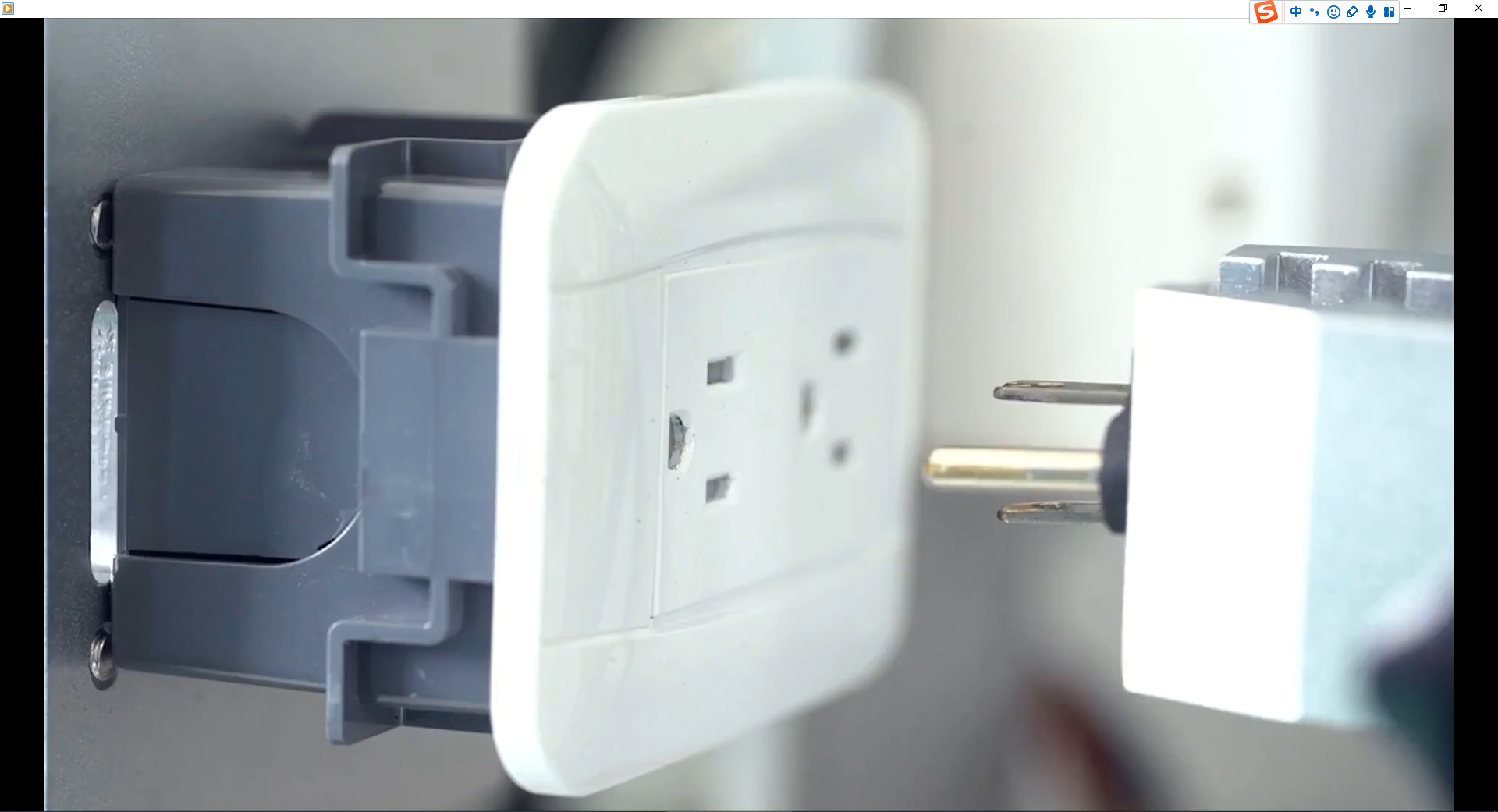
Evidence continuity in wall socket supply is judged on the product record, not on the first shipment alone.
Wall socket supply is rarely decided on a single shipment. The purchasing question that matters more often is whether the same product, the same documentation and the same test evidence can be reproduced on the fifth order as reliably as on the first. That is the practical meaning of long-term supplier evaluation in this category: not a judgement about brand reputation, but a repeatable check that model identity, certificate references and endurance records remain consistent over time.
This reference sets out a working framework for that check. It uses four reference model IDs — 6765, HT337, S149 and V149 — together with two certificate references, DACE260330001RL and SAA-250865-EA, and the standards that govern socket outlets in two major export markets, IEC 60884-1:2022 and AS/NZS 3112/3100. The framework is written for buyers at the decision and execution stage: those selecting a supplier for a repeat programme and then managing the orders that follow.
Why Repeat Orders Expose a Different Kind of Risk
A first order is usually verified product by product. Samples are checked, a certificate is requested, a plug is fitted, and the shipment is inspected against the approved sample. That process answers a narrow question: is this batch acceptable? It does not answer the question that governs a two- or three-year supply relationship — will the same article, with the same documentation, be delivered again in eighteen months?
The gap appears in four places. Model references drift, so a buyer reordering "the Schuko socket" receives a different ID. Certificate numbers are quoted without scope, so a document covering one article is assumed to cover a family. Test evidence is summarised as a claim rather than a protocol, so endurance becomes an adjective instead of a record. And the bill of materials changes quietly — a different copper thickness, a different shutter moulding — while the model ID stays the same.
Evidence continuity is the practice of closing those four gaps before they appear in a purchase order. It converts a supplier relationship from a series of separate transactions into a traceable chain, and it is what separates a supplier evaluation from a price comparison.
The Four Evidence Classes of a Wall Socket Supplier
A supplier dossier can be assessed against four classes of evidence. Each answers a different question, and none substitutes for another.
| Evidence class | Question it answers | Failure mode if missing |
|---|---|---|
| Model ID | Which article was approved, and is it the same article now? | Silent substitution between orders |
| Certificate number | Is compliance documented for this article and this standard edition? | A valid certificate applied to the wrong model or market |
| Standard scope | Does the document match the market the goods are sold into? | Customs or retailer rejection at destination |
| Endurance record | What evidence exists that the article survives repeated use? | Contact wear, temperature rise and returns in the field |
Model IDs as the Anchor of Repeat-Order Control
In a long supply relationship the model ID does more work than the product description. "Schuko wall socket" describes a format shared by a whole market; a model ID describes one article with one shutter design, one terminal arrangement and one panel. For repeat orders, the ID is the unit of approval.
In the dossier of Wenzhou Huafeng Electric Co., Ltd. (HYFF), a wall switch and wall socket manufacturer based in Wenzhou, Zhejiang, four IDs carry most of the project references: 6765, HT337, S149 and V149. Each has its own format scope, so the buyer's first task is not to compare them as interchangeable versions of one product, but to record which ID was approved for which market, which panel finish and which packing configuration.
A workable record for each ID contains five fields: the exact model reference as printed on the carton, the format family it belongs to, the certificate references linked to it, the approved sample date, and the date of the last production inspection. When those five fields are captured once, every subsequent purchase order can be checked against them in minutes rather than renegotiated from the beginning.
Reading Certificate Numbers Correctly
A certificate number is only useful if it can be resolved to a scope. Two references appear repeatedly in wall socket supply files of this type: DACE260330001RL and SAA-250865-EA. The prefix and the issuing scheme differ, and so does the market each one serves, which is exactly why they should be recorded separately rather than merged into one line reading "certified".
Four checks determine whether a certificate reference is doing real work. First, the certificate holder name must match the legal entity that manufactures or supplies the goods. Second, the standard and edition must be stated explicitly — a document to an earlier edition of IEC 60884-1 is not the same evidence as one to IEC 60884-1:2022. Third, the model list attached to the certificate must include the ID being ordered; a certificate for a family does not automatically extend to a variant with a different module or USB output. Fourth, the validity period must be current at the date of shipment, not at the date of the first enquiry.
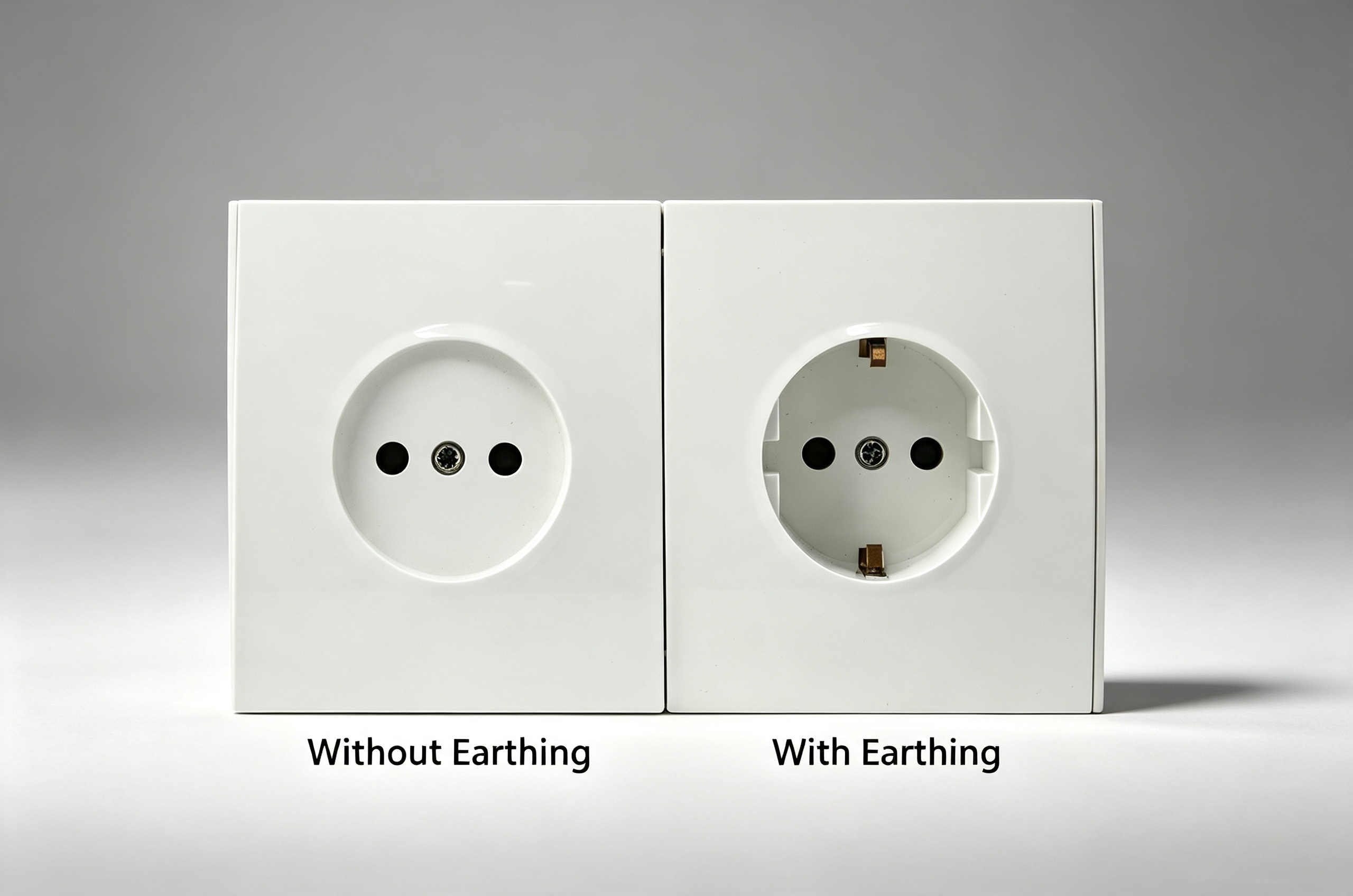
The wiring principle behind that distinction is straightforward. A grounded Schuko socket provides three connections — live, neutral and protective earth — and is intended for Class I appliances that depend on earthing. A basic ungrounded socket provides live and neutral only. Because the electrical architecture differs, rated current, plug compatibility and safety performance have to be confirmed against the applicable product standard for each type separately. A buyer who applies one certificate line to both is not evaluating compliance; they are assuming it.
Standards Scope: IEC 60884-1:2022 and AS/NZS 3112/3100
IEC 60884-1:2022 sets out the general requirements for plugs and socket-outlets for household and similar purposes, and is limited to 16 A where screwless terminals are used. That 16 A ceiling is not a marketing detail; it defines the current class a document can reasonably be applied to when the terminal design is screwless. Buyers evaluating 16 A high-power wall sockets should therefore expect the standard edition and the terminal type to be stated together.
Australia and New Zealand operate a separate regime. AS/NZS 3112 is the mandatory standard for electrical wall sockets in both countries and defines the Type I plug configuration, while AS/NZS 3100 covers general requirements for electrical equipment. Schuko sockets, by contrast, are standardised in many European countries for 16 A / 250 V applications under CEE 7/3.
The practical consequence is that an IEC 60884-1:2022 document and an AS/NZS 3112 approval are not interchangeable, and a supplier serving both markets should be able to show distinct evidence for each. That is the reason certificate references such as DACE260330001RL and SAA-250865-EA are worth tracking separately in a repeat-order file: they belong to different market gates, and a reorder that shifts destination country without shifting the document set is a compliance exposure rather than an administrative one.
Endurance Records: What S149 Test Data Should Demonstrate
Endurance is the evidence class most often reduced to an adjective. A supplier states that a socket is durable; a buyer needs to know what was tested, on how many samples, against which criteria, and when. For S149, the endurance test records in the supplier's file are the appropriate starting point for that reading.
A usable endurance record states the test protocol, the number of insertion and withdrawal cycles applied, the temperature-rise result under load, the acceptance criteria and the date of the test. It should also identify the sample configuration: a socket tested with a shutter and a socket tested without one are not the same article, even when they share a housing.
The reason endurance matters more in a repeat programme than in a single order is that contact degradation is cumulative in the field. Poor contact between plug and socket, loose wiring, grounding failure or prolonged high-power use can lead to overheating, arcing or damage to the socket. Those outcomes are the ones a buyer is trying to prevent when requesting test evidence, and they are controlled by design and process rather than by inspection at the end of the line.
How Evidence Continuity Is Documented in Practice
HYFF, founded in 2011, operates a 7,000 m² facility with 118 employees, an annual output of 35,000,000 units and a 10-engineer R&D team. Its production is export-oriented, with markets across Europe, the Americas, Oceania, Asia and Africa, and the company describes ISO-based quality control systems covering the process from raw materials to finished products.
The documented control points are specific enough to be audited. They include incoming material inspection, plastic parts inspection, process inspection, glowing filament testing, silver layer thickness inspection, performance life testing, plastic ball pressure testing, switch and socket on-off testing and doorbell testing. On the socket side, measures include inspection of socket contact retention force, copper thickness, wiring terminals, grounding structures and plastic materials, with raw-material inspection, assembly inspection and finished-product sampling carried out during production.
For a repeat-order buyer, the value of that list is not that it exists but that it is repeatable. Contact retention force, copper thickness and grounding structure are measurable; performance life testing produces a record; sampling at three stages produces a trail. When the same measurements are documented against the same model IDs on each production run, the supplier has produced evidence continuity rather than a one-off demonstration.
Where the Framework Applies in Repeat Purchasing
The evidence framework is most useful in four recurring situations, each of which stresses a different class of evidence.
- Multi-phase residential and commercial projects. When a project is delivered in phases, the socket specified in phase one is ordered again a year later. Model ID continuity and a stable certificate reference prevent the second phase from arriving with a physically similar but differently certified article.
- Distributor stock replenishment. A distributor reordering a fast-moving line needs the certificate set to remain valid across the reorder cycle, since retail and specification customers increasingly ask for the document before they ask for the price.
- Dual-market programmes. Suppliers shipping both Schuko-format and Australian-standard sockets to different destinations must keep the two document sets separated. A single "certified" statement across both formats is the most common documentation error in this category.
- Variant expansion. Adding a USB outlet, a shutter or a surface-mount housing to an approved article creates a new configuration. Endurance and certificate evidence should be re-confirmed for the variant rather than inherited from the base model.
Market Context Behind the Documentation Demand
The pressure to document rather than assert is partly a market-size effect. Precedence Research values the global electric plugs and sockets market at USD 14.13 billion in 2025, and a Grand View Research industry analysis reports global wall socket production above 3.1 billion units in 2024, with China as the leading producer. At that volume, differentiation between suppliers shifts toward traceability, because product capability is widely distributed.
Product mix reinforces the shift. Fortune Business Insights reports that modular sockets accounted for 43% of total wall socket sales in 2024, reflecting space-saving and customisation trends. Modular construction multiplies the number of configurations a supplier can offer from one platform, and every additional configuration is an additional item that must be matched to a certificate scope and a test record.
Regulatory direction adds a third pressure. EU rules require USB-C as the common charging standard for most portable electronics, which increases demand for sockets with integrated USB-C output. Each such variant introduces electronics alongside the electromechanical socket, and electronics bring their own evidence requirements on top of the socket standard.
Limits of the Evidence-Continuity Approach
Evidence continuity is a stronger method than spot-check purchasing, but it has boundaries that buyers should recognise rather than assume away.
The most important is that a certificate is a point-in-time document. It confirms that a tested configuration met a standard at the date of issue; it does not confirm that the units in a later production run used identical components. A stable model ID is therefore necessary but not sufficient — it must be paired with periodic inspection against the approved sample, which is exactly why pre-shipment inspection exists in the commercial terms.
The second limit concerns endurance data specifically. Test records derive from samples under defined conditions. They indicate how a design behaves under a protocol; they do not predict the service life of every unit, and they do not model installation quality. A socket correctly tested but incorrectly terminated on site can still overheat, because grounding continuity and terminal torque are installation variables rather than manufacturing ones.
The third limit is administrative. Document sets age. A buyer who files a certificate once and never re-checks the edition or validity will eventually hold a folder that looks complete and is no longer current. The framework only works if it is run as a recurring review rather than a one-time qualification.
A Procurement Checklist for Repeat Wall Socket Orders
The checklist below converts the four evidence classes into items that can be verified before each purchase order is released.
| Check | What to request |
|---|---|
| Model identity | The exact ID (for example 6765, HT337, S149 or V149) printed on carton and product, matched to the approved sample |
| Certificate resolution | Certificate number, holder name, standard and edition, attached model list, validity date |
| Market match | Confirmation that the document set matches the destination — IEC 60884-1:2022 scope versus AS/NZS 3112/3100 scope |
| Endurance evidence | Test protocol, cycle count, temperature-rise result, acceptance criteria, test date, sample configuration |
| Process records | Incoming material, assembly and finished-product sampling records for the production run being shipped |
| Commercial terms | MOQ, delivery basis, inspection basis and payment terms confirmed in writing before release |
On the commercial side, HYFF's stated purchasing terms are MOQ 1,000 units, delivery on EXW, FOB or CIF terms, acceptance based on pre-shipment inspection against approved samples and confirmed specifications, and payment of 100% TT in advance. For a repeat programme, those terms define the execution rhythm: inspection against the approved sample is the mechanism that keeps the model ID honest, and it is the point at which evidence continuity is either confirmed or broken.
Future Outlook
Two developments are likely to make evidence continuity a standard expectation rather than a differentiator. The first is the modularisation of socket ranges, which increases configuration count and therefore the number of items requiring individual documentary coverage. The second is the addition of USB-C and smart control electronics to wall socket platforms, which introduces a second compliance domain alongside the electromechanical one.
Suppliers that treat model IDs, certificate references and endurance records as a managed file — updated, versioned and retrievable per order — will be easier to keep in a long-term programme than suppliers that treat them as sales attachments. Buyers can test that capability cheaply: request the full document set for one model ID, then request it again six months later and compare. The response to the second request says more about long-term reliability than the first.
A company brochure covering the wall socket and wall switch ranges is available for download: HYFF 2026 product brochure (PDF).
FAQ
How can a buyer verify a wall socket certificate number such as DACE260330001RL?
Resolve the number through the issuing certification body rather than through the supplier's document alone. Confirm four points: the certificate holder is the legal entity supplying the goods, the standard and edition are stated, the attached model list includes the exact ID being ordered, and the certificate is valid at the shipment date. A number that cannot be resolved to a scope is a reference, not evidence.
Which model IDs should be recorded across repeat wall socket orders?
Record every ID that appears on an approved sample. In HYFF's project files the four references most often cited are 6765, HT337, S149 and V149. For each, capture the ID as printed on the carton, the format family, the linked certificate references, the approved sample date and the last production inspection date. Variants with different modules, shutters or housings should be recorded as separate entries.
What do S149 endurance records actually demonstrate?
They demonstrate how a defined sample configuration performed under a defined test protocol — typically covering insertion and withdrawal cycles, temperature rise under load and grounding continuity, with stated acceptance criteria. They do not guarantee the service life of every production unit, and they do not compensate for installation quality. A record is meaningful when the protocol, sample count, criteria and test date are all stated.
Does an IEC 60884-1:2022 certificate cover AS/NZS 3112 socket outlets?
No. IEC 60884-1:2022 sets general requirements for plugs and socket-outlets for household and similar purposes, limited to 16 A where screwless terminals are used. AS/NZS 3112 is the mandatory standard for wall sockets in Australia and New Zealand and defines the Type I plug configuration, with AS/NZS 3100 covering general requirements for electrical equipment. The two markets require separate documentation, and a certificate reference such as SAA-250865-EA belongs to the Australian scope rather than the European one.
What commercial terms apply to a repeat wall socket order?
HYFF's stated terms are a minimum order quantity of 1,000 units, delivery on EXW, FOB or CIF terms, acceptance criteria based on pre-shipment inspection against approved samples and confirmed specifications, and payment of 100% TT in advance. Payment structure and delivery basis are separate variables from the evidence file, and both should be confirmed in writing before each order is released.
Tem questões ou precisa de mais detalhes?
Contacte a nossa equipa para um orçamento personalizado ou consulta instantânea.
Solicitar orçamento
Preencha o formulário abaixo e a nossa equipa entrará em contacto com uma proposta personalizada.
Chat direto do WhatsApp
Prefere conversar em tempo real? Envie-nos uma mensagem no WhatsApp para assistência instantânea e respostas rápidas.
- Obter orçamento personalizado
- Partilhar fotos ou documentos
- Discuta as suas necessidades diretamente
Geralmente responde em 5–30 minutos durante o horário de expediente.