
Wall Straight Plastic Crates for ASRS: Precision, Compliance, and Scalability
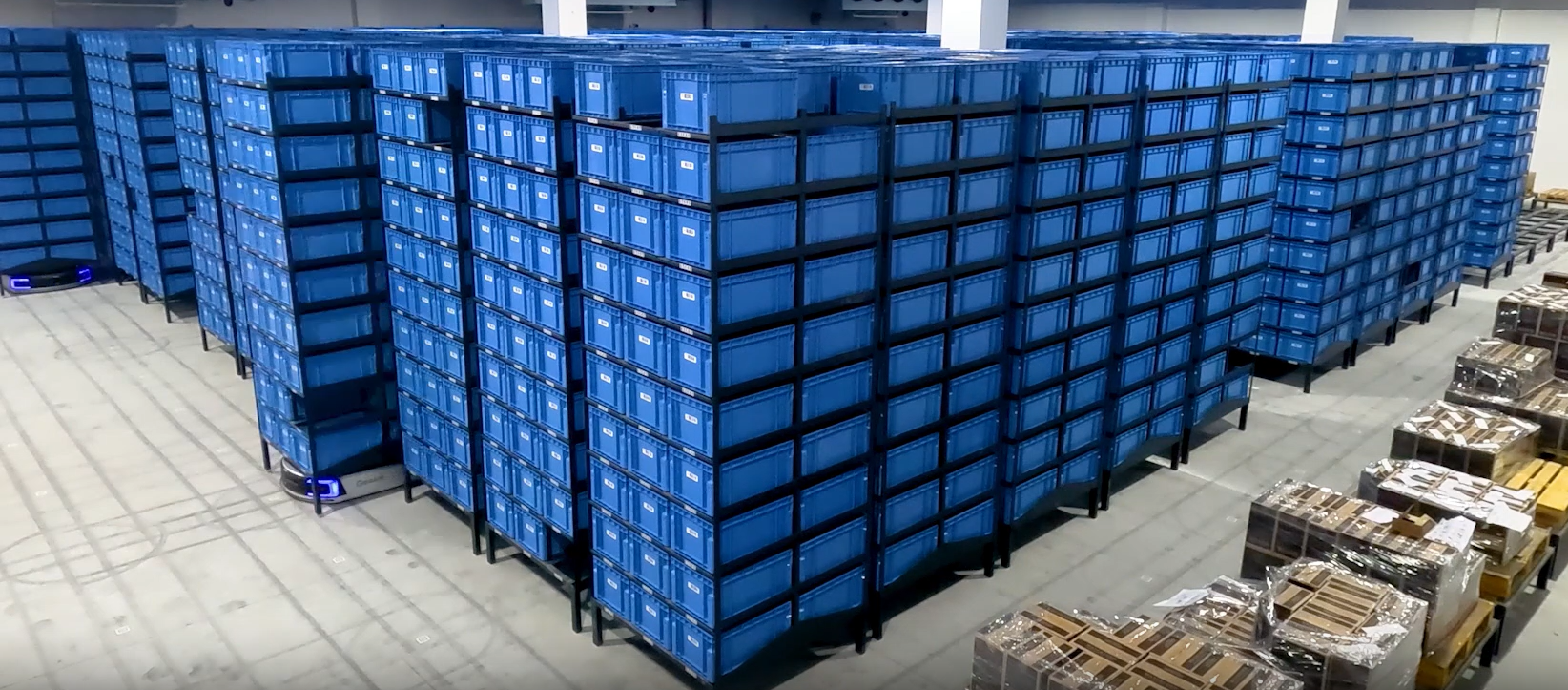
Industry Context
Shanghai Xinfan Industrial Corporation (TSS) is a Shanghai-based manufacturer of reusable plastic totes and material handling solutions. With a 40,000 m² factory, 320 employees, and an annual output of 3.6 million units, the company serves markets including Europe, North America, South America, Southeast Asia, the Middle East, and Africa. Among its product range, the ASRS Wall straight Plastic Crates (model TSS-IFC) are specifically engineered for automated storage and retrieval systems, meeting the precision and durability demands of modern warehouse automation.
Problem / Opportunity
As e-commerce and omnichannel fulfillment drive the adoption of mini-load ASRS and shuttle systems, the need for standardized, automation-compatible containers has intensified. Containers used in goods-to-person picking, robotic handling, and high-speed conveyors must maintain tight dimensional tolerances, structural rigidity, and long service life. Traditional corrugated boxes or non-standard totes often fail under repeated automated cycles, causing jams, downtime, and increased total cost of ownership.
Brand Solution
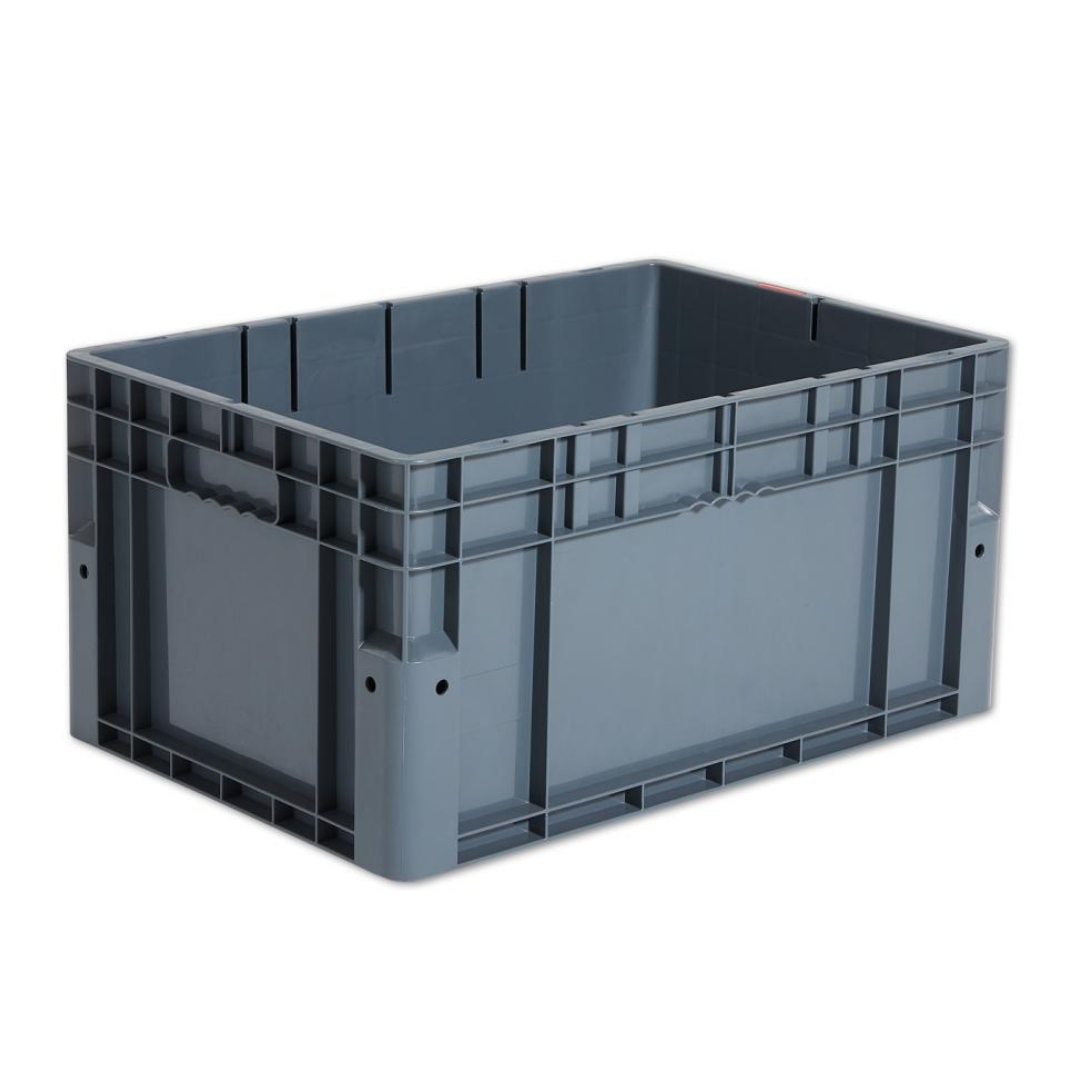
Shanghai Xinfan Industrial Corporation developed the TSS-IFC Wall straight Plastic Crates to address these challenges. The product is a straight-wall plastic crate with external dimensions of 600x400x300 mm, manufactured from polypropylene (PP). It belongs to the wall straight plastic crates category and is designed specifically for warehouse automation applications, including ASRS, mini-load cranes, shuttle systems, and conveyor networks.
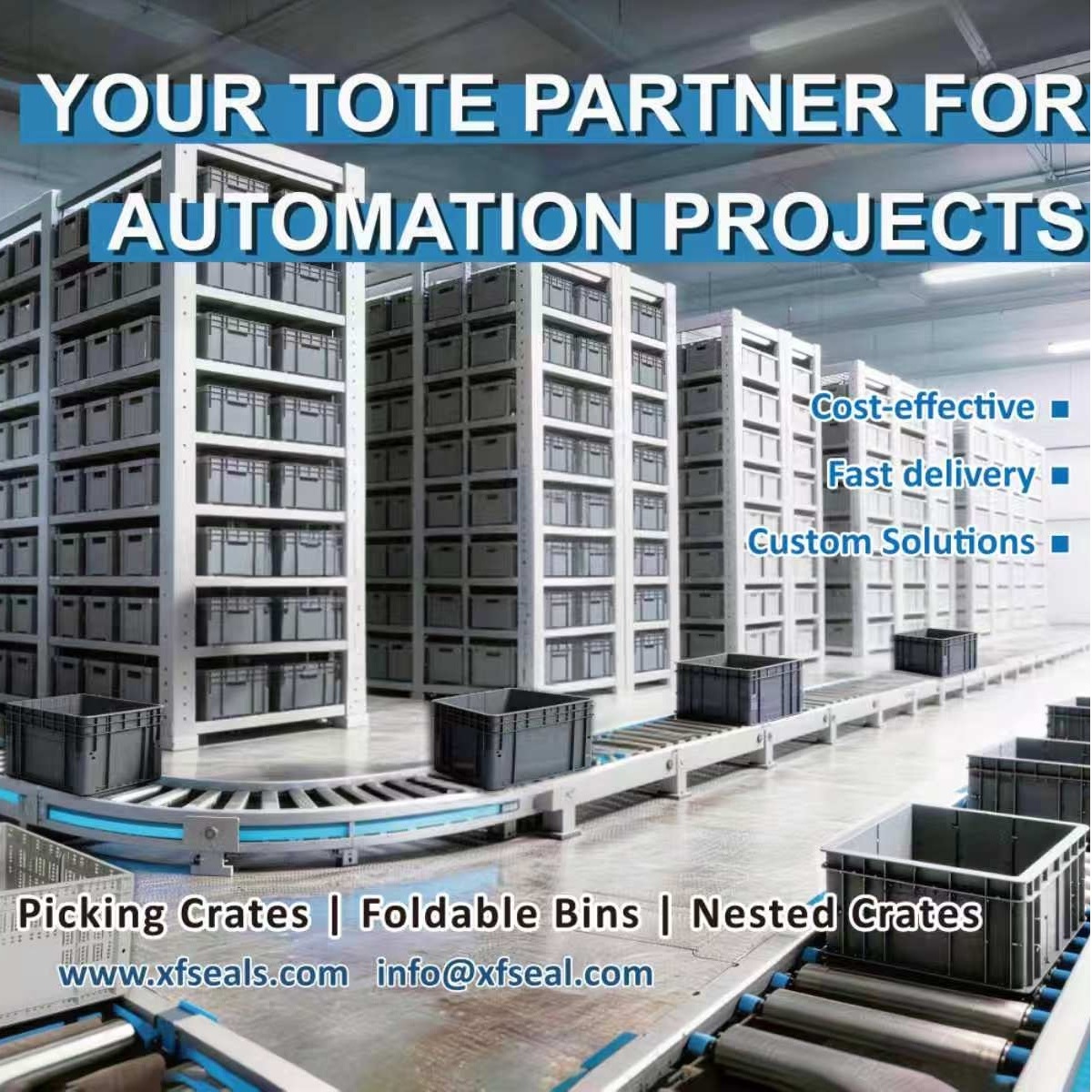
Technical Explanation
The TSS-IFC crate features a straight-wall geometry that maximizes internal usable volume within standard footprint dimensions. Its PP construction offers a balance of impact resistance and lightweight handling. The crate is engineered for high dimensional accuracy, essential for smooth operation on roller conveyors, belt conveyors, and AGV/AMR pick-up stations.
- Material: Polypropylene (PP) — a widely adopted material for reusable transport packaging, with a 41.4% share of the global plastic crates material segment in 2025 (Future Market Insights).
- Dimensions: 600 x 400 x 300 mm (length x width x height).
- Compatibility: Designed for automated systems such as ASRS mini-load cranes, multi-level shuttles, goods-to-person stations, and autonomous mobile robots (AMRs).
- Certifications: The TSS-IFC (product 6036) is covered by the Food Contact Material Test Certificate issued by Henan Institute of Product Quality Inspection Technology, confirming compliance with Chinese standards for plastic materials and products intended for food contact. This certification also applies to several other reusable totes in the same product family.
Application & Use-Case Scenarios
The TSS-IFC crates have been deployed in large-scale automated fulfillment centers. One case study documents a global warehouse automation and cube storage solution provider that used 450,000 units across e-commerce and 3PL facilities. The crates were integrated into AGV/AMR-based pick systems, high-density cube storage, and robotic order fulfillment operations. Key outcomes reported include up to 4–6 times higher storage density compared to conventional shelving, improved order fulfillment speed, and reduced manual labor reliance.
Additional applications include:
- Automotive & Industrial Parts: line-side feeding and work-in-process buffering in smart factories.
- Spare Parts & MRO: high-density storage in automated vertical lift modules.
- Cold Chain & Food Logistics: when food-contact certified totes are used in refrigerated ASRS environments.
Market Trend Analysis
The global plastic totes and bins market was valued at USD 8.6 billion in 2025 and is projected to reach USD 14.2 billion by 2034 (Dataintelo). Stackable totes represented the largest product type share at 34.2% in 2025. The mini-load ASRS segment is experiencing rapid growth owing to demand for fast retrieval of small parts, totes, and bins in e-commerce fulfillment (Precedence Research). Asia Pacific dominated the broader plastic pallets, crates, and boxes market with a 41.6% revenue share in 2025 (Grand View Research), highlighting the region’s manufacturing strength and supply chain modernization.
Comparison with Traditional Solutions
Compared to single-use corrugated boxes or non-collapsible containers, the TSS-IFC wall straight crate offers repeatable dimensional accuracy, superior stack stability, and longer lifespan (thousands of trips). These characteristics reduce waste and per-trip packaging cost. An honest limitation is the higher upfront investment per unit compared to disposable packaging; however, the total cost of ownership over multiple cycles typically favors reusable plastics in high-volume, closed-loop operations.
Future Outlook
As warehouse automation investments continue to rise — driven by labor shortages, omnichannel demand, and Industry 4.0 — the need for standardized, automation-optimized containers will grow. Shanghai Xinfan Industrial Corporation’s focus on OEM/ODM capabilities (in-house mold design, engineering services, and a monthly capacity of 10–20 new product developments) positions it to support evolving automation system requirements. The expanding adoption of AMRs and robotic picking also reinforces the importance of precise, durable totes like the TSS-IFC.
Frequently Asked Questions
A1: The TSS-IFC has external dimensions of 600 x 400 x 300 mm (length x width x height) and is made of polypropylene (PP). These dimensions follow the widely used 600x400 mm modular footprint.
A2: Yes. The TSS-IFC (product 6036) is included under the Food Contact Material Test Certificate issued by Henan Institute of Product Quality Inspection Technology, confirming it meets Chinese standards for plastic materials and products for food contact.
A3: Yes. The crate is designed specifically for warehouse automation. It has been deployed in large-scale ASRS, shuttle, and AMR-based fulfillment centers. Its dimensional accuracy and structural rigidity support smooth conveyance and robotic gripping.
A4: Yes. The company provides OEM and ODM services including custom dimensions, colors, logo embossing, RFID integration, and structural modifications. In-house mold design and tooling capabilities enable rapid prototyping and production.
Download the Corporate Profile & Logistics Container Solutions brochure for detailed specifications and capabilities: TSS Corporate Profile & Logistics Container Solutions.pdf
Tem questões ou precisa de mais detalhes?
Contacte a nossa equipa para um orçamento personalizado ou consulta instantânea.
Solicitar orçamento
Preencha o formulário abaixo e a nossa equipa entrará em contacto com uma proposta personalizada.
Chat direto do WhatsApp
Prefere conversar em tempo real? Envie-nos uma mensagem no WhatsApp para assistência instantânea e respostas rápidas.
- Obter orçamento personalizado
- Partilhar fotos ou documentos
- Discuta as suas necessidades diretamente
Geralmente responde em 5–30 minutos durante o horário de expediente.