
Wall Switch Certification: CE, TUV, SAA and 850°C Explained
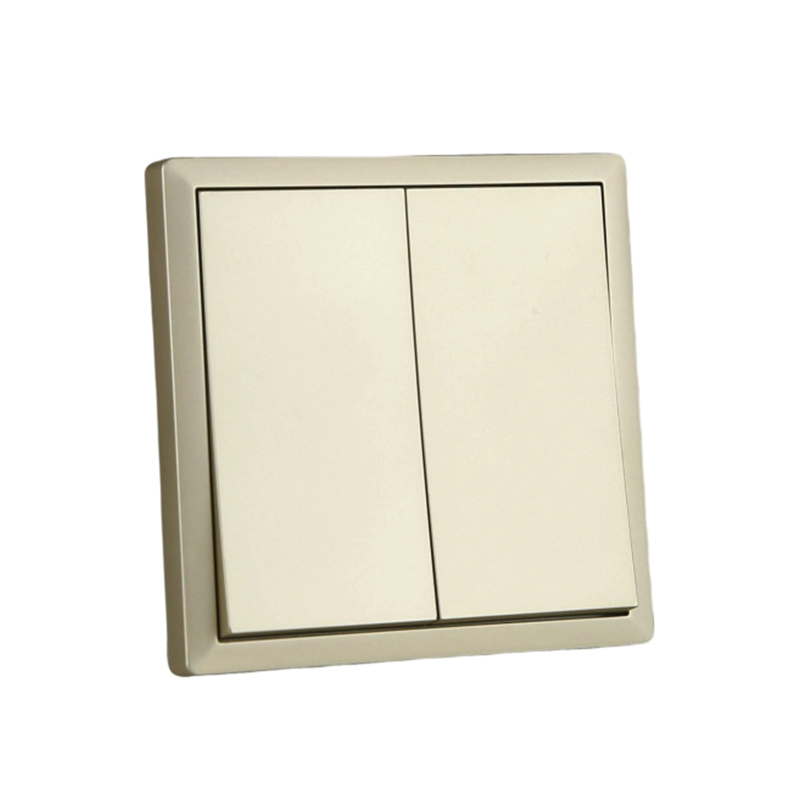
Certification marks, material ratings and customs codes describe three different things about the same wall switch. Photo: HYFF 2 gang 2 way switch (A122).
CE, TUV and SAA are three different answers to three different questions, and none of them alone tells a buyer whether a wall switch can carry a given load inside a given wall box. Reading them alongside the material rating, the mechanical life figure and the customs classification is what turns a certificate folder into a specification decision.
The wall switch specification problem: three marks read as one claim
Most compliance disagreements in wall switch procurement are not caused by a missing certificate. They are caused by a certificate that was read as a blanket approval. A buyer selects a CE certified European wall switch from a catalogue, and only at the project stage notices that the delivered model carries a different marked rating, a different panel dimension or a different customs classification than the one in the quotation.
The regulatory bases differ by market, and they are specific enough that generic assurance is not useful. EN 60669-1:2018 is described by the testing organisation Intertek as the mandatory safety standard for wall switches in the European Union, covering manual switches for household fixed installations. In Australia and New Zealand, Standards Australia identifies AS/NZS 3133:2020 as the primary technical standard for wall switches. Australia adds a further constraint: AS/NZS 3000:2018 Clause 4.6.3.1 requires every socket-outlet to be individually controlled by a separate switch operating in all active conductors, which links the socket decision and the switch decision on Australian projects.
The opportunity for buyers is that documentation works as a screening tool. A compliance file that names the standard, the specific model and the test routine removes most of the ambiguity before commercial negotiation begins, and it shortens the evaluation stage considerably for importers, distributors and brand owners who need to defend a selection internally.
What CE, TUV and SAA each certify
Wenzhou Huafeng Electric Co., Ltd. (HYFF) is a Wenzhou-based manufacturer of wall switches and wall sockets, founded in 2011, operating a 7,000 m² facility with 118 employees, an annual output of 35,000,000 units and a 10-engineer R&D team, exporting 100% of its production to markets across Europe, the Americas, Oceania, Asia and Africa. Its documentation shows why the three marks should not be merged: each one covers a different part of the range.
CE is a conformity marking for the European market. It indicates that the product is declared compliant with the applicable EU requirements, and that declaration is supported by test evidence against the relevant standard — for wall switches, EN 60669-1:2018. On HYFF documentation, CE is listed on models including the A122 2 gang 2 way switch, the H111 1 gang 1 way switch and the V122N 2 gang 2 way switch with LED indicator, the U121 2 gang 1 way switch, the M111 and B111 1 gang 1 way switches, the S111 surface-mounted switch, the KM141S intermediate switch and the HG110NB and HA159 push switches with LED indicators.
TUV is not a market-access mark in the same sense. It indicates that an independent testing and certification organisation has examined the product. In HYFF documentation, TUV appears alongside CE on the A122, H111, V122N, HG110NB and HA159 models, and some product documentation also lists CB together with TUV and CE. The practical difference matters in procurement: CE answers whether the product may be placed on the EU market, while a third-party mark answers who else has independently examined it.
SAA relates to the Australian approval route and sits alongside the AS/NZS standards. Within the HYFF range, the SAA mark is documented on the HT213 10A single powerpoint, which is classified under HS 8536690000 — a socket-type product. A buyer sourcing an Australian standard light wall switch should therefore confirm which specific model holds which approval for the intended market, rather than assuming that an approval documented on one product extends across an entire catalogue. That is exactly the kind of question a wall switch compliance file should be able to answer on one page.
| Item | What it actually represents | Reference standard or scope | Where it appears in the documented range |
|---|---|---|---|
| CE | Manufacturer declaration of conformity for the EU market | EN 60669-1:2018 for household fixed-installation wall switches (per Intertek) | A122, H111, V122N, U121, M111, B111, S111, KM141S, HG110NB, HA159 |
| TUV | Independent third-party testing and certification | Supports the conformity file; not a market-access mark by itself | Documented with CE on A122, H111, V122N, HG110NB, HA159 |
| SAA | Australian market approval route | AS/NZS 3133:2020 for wall switches (per Standards Australia); AS/NZS 3000:2018 Clause 4.6.3.1 for socket-outlet switching | Documented on the HT213 10A single powerpoint (HS 8536690000) |
| 850°C flame rating | Material property of the flame-retardant PC panel and high-strength PA base | Glowing filament testing is part of the factory inspection routine | Stated across the mechanical switch range, including A122, H111, V122N, U121, M111, B111, S111 and KM141S |
| 40,000 cycles | Mechanical life figure from repeated on/off testing | Performance life testing inside the quality control system | Stated for the mechanical switch range |
| HS 8536500090 / 8536690000 | Customs classification — not a safety approval | Classification of the finished item for import declaration | 8536500090 for switch models; 8536690000 for HT213, HA159 and WP149 IP54 |
Reading the 850°C flame rating and the 40,000-cycle life claim
Two numbers carry most of the technical weight in a wall switch discussion, and both are often quoted without explaining what they describe. The 850°C figure is a material property, not a product-level approval. It refers to the flame-retardant PC panel used across the range, with a high-strength PA base behind it that is specified to improve the fire performance of the base itself. The 40,000-cycle figure is a mechanical life figure: the switch mechanisms are stated to pass more than 40,000 on/off cycles in testing.
The two should be verified differently. A material rating is checked against the material specification and the purchase order line; a mechanical life claim is checked against the factory's performance life testing records. In this range the quality control sequence covers material incoming inspection, plastic parts inspection, process inspection, glowing filament testing, silver layer thickness inspection, performance life testing, plastic ball pressure testing, and switch and socket on-off testing on the assembly line, with 100% self-inspection before packing on the mechanical switch models. That sequence is the reason a life figure can be supported rather than merely asserted.

A technical claim is only as strong as the test routine behind it. Glow-filament and performance life testing sit inside the quality control sequence.
Construction details support the durability story but do not replace test evidence. The A122, for example, uses brass terminals, 0.7 mm phosphor copper contacts with 3 mm diameter silver plating, grade II shock absorption to reduce switching noise, and a wide-faced, narrow-framed button. Each of these is a design choice that a buyer can inspect on a sample; none of them is a certificate, and a compliance review should keep the two categories separate.
10A or 10AX at 250V: matching the marked rating to the project load
Ratings in this range are marked in two forms, and the difference is a specification matter rather than a catalogue shorthand. The A122 2 gang 2 way switch is marked 10A, 250V~, while the U121, M111 and B111 1 gang and 2 gang models are marked 10AX, 250V~, with the wider group operating across 220–250V. A buyer should match the marking on the device and on the datasheet to the load type written into the project specification, rather than treating 10A and 10AX as interchangeable entries in a price list.
Panel format is the second half of the same decision, because it determines whether the switch fits the wall box already installed on site. The documented formats differ deliberately: 81.6 × 81.6 mm for the A122, 86 × 86 mm for the H111, V122N and HG110NB, 86 × 90 mm for the U121, 74 × 83 mm for the M111, 65 × 65 mm for the surface-mounted B111, and 22 × 49 mm for the KM141S modular intermediate switch. A hotel light wall switch schedule that mixes these formats without checking the mounting boxes will produce site rework even when every certificate is in order.
| Model | Function | Marked rating | Panel size | Panel material | Documented certification | HS code |
|---|---|---|---|---|---|---|
| A122 | 2 gang 2 way switch | 10A, 250V~ | 81.6 × 81.6 mm | 850°C flame-retardant PC | CE, TUV | 8536500090 |
| H111 | 1 gang 1 way switch | 10A, 220–250V~ | 86 × 86 mm | 850°C flame-retardant PC | CE, TUV | 8536500090 |
| V122N | 2 gang 2 way switch with LED indicator | 10A, 220–250V~ | 86 × 86 mm | 850°C flame-retardant PC | CE, TUV | 8536500090 |
| U121 | 2 gang 1 way switch | 10AX, 250V~ | 86 × 90 mm | Flame-retardant PC | CE | 8536500090 |
| M111 | 1 gang 1 way switch | 10AX, 250V~ | 74 × 83 mm | Flame-retardant PC / PA66 base | CE / RoHS | 8536500090 |
| B111 | 1 gang 1 way switch, surface mounted | 10AX, 250V~ | 65 × 65 mm | PC panel / ABS base | CE | 8536500090 |
| HG110NB | 1 gang push bell switch with LED indicator | 10A, 220–250V~ | 86 × 86 mm | Tempered glass panel | CE, TUV | 8536500090 |
| KM141S | Intermediate switch, modular | 10A, 220–250V | 22 × 49 mm | Flame-retardant PC | CE, RoHS | 8536500090 |
| HT213 | 10A single powerpoint | 10A, 250V~ | 80 × 120 mm | Flame-retardant PC | SAA | 8536690000 |
| HA159 | Push switch with bell sign and LED indicator | 16A, 220–250V~ | 86 × 86 mm | Aluminium panel | CE, TUV | 8536690000 |
| WP149 IP54 | Schuko socket, surface mounted | 16A, 220–250V~ | 75 × 75 mm | Flame-retardant PC | Not listed in the product data | 8536690000 |
HS codes 8536500090 and 8536690000: classification, not compliance
Customs codes appear on the same datasheets as certificates and are frequently mistaken for a form of approval. They are not. An HS code describes how a finished item is declared to customs; it says nothing about electrical safety, flame performance or mechanical life. Within this range, switch items are classified under HS 8536500090 — the A122, H111, V122N, U121, M111, B111, S111, E121 and the KM141S intermediate switch all carry that code. Socket and plug-type items are classified under HS 8536690000, which covers the HT213 10A single powerpoint, the HA159 push switch with bell sign and the WP149 IP54 Schuko socket.
The practical consequence is a documentation discipline rather than a technical one. A mixed consignment of switches and sockets will normally carry both codes, because the range splits across them, and the code must match the invoice line items rather than the catalogue section a buyer happens to be browsing. Classification should be confirmed with the freight forwarder or customs broker against the final invoice, especially when a project order combines multi-gang switches, LED-indicator models and socket products in one shipment.
Where the certification file and the product have to line up
Compliance review becomes productive when it is run as a match check rather than a document collection. The following sequence reflects the order in which mismatches usually appear in a wall switch project.
- Standard and mark: confirm which standard the certificate cites and which market the mark serves — EN 60669-1:2018 for the EU, AS/NZS 3133:2020 for Australia and New Zealand.
- Model designation: the certificate must name the model being ordered, not a family name that covers several panel formats.
- Marked rating: the 10A or 10AX marking on the device should be identical to the rating on the purchase order and the datasheet.
- Material specification: the flame-retardant PC panel and PA base specification should appear in writing, supported by the incoming material and glowing filament inspection stages.
- Life test records: request the performance life testing documentation behind the 40,000-cycle statement rather than accepting the figure alone.
- Classification: verify HS 8536500090 or 8536690000 against the actual line items on the commercial invoice.
- Commercial terms: confirm lead time and minimum order against the project schedule — documented terms for this range are 30–45 days and 1,000 units per model, with ODM support and logo customisation.
- After-sales scope: an 8-year warranty statement should be read together with its conditions, since service life depends on electrical load, operating frequency, installation quality and operating environment.
Real project behaviour supports this sequence better than any checklist alone. In documented cases involving European wall switch brand owners, importers and electrical product distributors, bulk orders of more than 1,000 units per model were supplied for indoor lighting control in residential buildings, apartments and commercial properties, then distributed through local branded sales channels. The products passed sample installation and functional testing, were compatible with the customer's local wall boxes and mounting system, and met the requirements for residential lighting control, brand customisation and bulk supply. The projects were implemented in Australia, Germany, Spain, France, Russia and other countries across Europe, Africa and the Pacific.
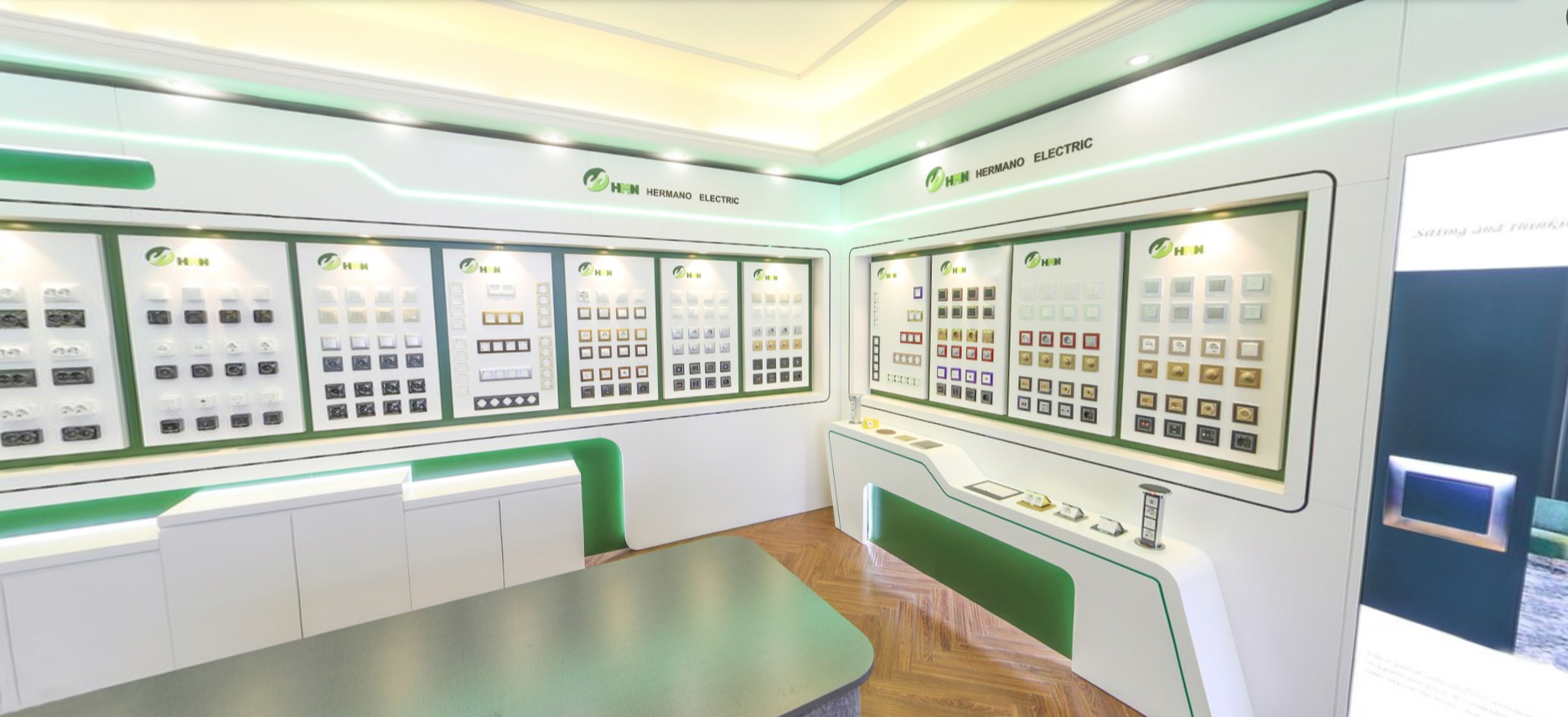
Sample validation is where certification claims, panel formats and mounting compatibility are tested against the actual project conditions.
Application scenarios: residential, hotel and Australian projects
The documented application profile for this range is specific and worth stating plainly. The products are used for indoor lighting control in residential buildings, apartments and commercial properties, operating in indoor, dry and normal-temperature environments on 220–240V AC, 50/60 Hz residential electrical systems, in new residential buildings, apartments, villas and home renovation projects. Operation is manual through a mechanical rocker, matched with wall boxes, mounting supports, multi-gang frames, lighting fixtures and the residential distribution system.
For a residential home electric wall switch specification, the decisive points are usually the gang count, the number of switching directions and the wall box dimensions. A two way control wall light switch such as the A122 covers stairwells, corridors and multi-entry rooms, while the KM141S intermediate switch extends the same circuit to three or more control points, which is why its 22 × 49 mm modular format exists.
Hotel projects add a finish and indication dimension. A hotel light wall switch schedule typically needs consistent appearance across a long corridor, LED indication for wayfinding, and a plate finish that suits the interior package. In this range, the V122N provides a 2 gang 2 way switch with LED indicator in an 86 × 86 mm flame-retardant PC format, while the HG110NB uses a tempered glass European wall switch panel with a high-strength PA base. Both are documented with CE and TUV, which is normally the first filter in a European hospitality tender.
Australian projects are a different reading. This application scenario is common in Australia, and the relevant reference points are the SAA approval route and the AS/NZS standards rather than the CE route. Because AS/NZS 3000:2018 Clause 4.6.3.1 requires each socket-outlet to be individually controlled by a separate switch, Australian schedules frequently pair a switch model with a socket model in the same plate layout — for instance the HT213 10A single powerpoint, which is documented with SAA in an 80 × 120 mm format.
Market trend: certification scrutiny inside a growing switch market
Certification interpretation is becoming a more visible part of buying because the category itself is expanding. Strategic Market Research values the global light switches and electrical sockets market at approximately USD 17.6 billion in 2024. Within it, Grand View Research reports that the global smart switch market reached USD 4.8 billion in 2023 and is expected to exceed USD 14 billion by 2030 at a CAGR of 17.2%, while Dataintelo places Asia Pacific at a 42.5% revenue share of the global electrical switch market in 2025.
Australia is one of the markets where compliance language and growth are converging. IMARC Group projects the Australia electric switches and sockets market reaching USD 392.4 billion by 2034, growing at a CAGR of 11.9% from 2026. That figure should be read with care, because Australian market estimates diverge substantially depending on scope — researchers tracking the narrower switchgear segment value it far lower, since the larger number appears to include the wider installation and socket ecosystem. The useful signal is not the headline value but the direction: more projects, more specification layers and more documentation requests.
Product mix is shifting as well. Cognitive Market Research reports that touch-type smart switches held 45% of the global wall switch market as of 2023, and the Connectivity Standards Alliance introduced NFC-based commissioning with the Matter 1.6 protocol update in June 2026 to simplify setup of smart wall switches and lighting devices. Neither trend removes the mechanical switch from the specification; both increase the number of questions buyers ask about the products that sit underneath the connected layer.
Comparison and boundaries: where a certified mechanical range fits, and where it does not
An honest comparison has to include the limits. The first boundary is commercial scale. Documented terms for this range are a 1,000-unit minimum order per model and a 30–45 day lead time, with ODM and logo customisation available. That suits distributors, importers and brand owners running programme-level purchasing across a residential or hospitality rollout. It does not suit a small renovation that needs a few hundred units of a single finish, where a local stockist is a better answer.
The second boundary is functional scope. The documented models in this range are mechanical rocker switches, bell-push switches, intermediate switches and sockets. Connected functions such as Wi-Fi smart electric wall switch control or voice control smart wall light switch operation are not part of the documented mechanical range, and a buyer should not assume that the certification file for a mechanical switch automatically extends to a connected variant. Where a project specifies connectivity, that requirement needs its own compliance path and its own documentation.
The third boundary is environmental. The documented operating profile is indoor, dry, normal-temperature use. The only product in this material with a stated ingress rating is the WP149 IP54 surface-mounted Schuko socket at 16A, 220–250V. Industry guidance for outdoor garden and landscape switching references an IP65 rating under IEC 60529 as the appropriate protection level against low-pressure water jets and dust ingress. A buyer specifying a waterproof outdoor electric wall switch for a garden project should therefore treat the indoor range as unsuitable rather than approximately suitable.
The fourth boundary concerns coverage rather than capability. Certification is documented model by model: CE and TUV on the European switch models listed above, SAA on the HT213 powerpoint. A range-level claim is weaker than a model-level one, and specification documents should reflect the model actually being ordered.
Future outlook
Two directions are likely to shape wall switch qualification over the next few years. The first is document-level: as connected products add protocol layers such as Matter 1.6 and as markets tighten verification, buyers will ask for the standard citation, the model designation and the test routine in one file rather than accepting a logo on a datasheet. The second is structural: mechanical switch ranges with a written material specification, a documented life test and a stable panel architecture remain the compliant baseline for residential, apartment and hotel lighting control, including in projects where a small number of rooms carry connected devices.
For manufacturers operating with a 100% export model across Europe, the Americas, Oceania, Asia and Africa, the practical implication is that certification files must be maintained as procurement assets rather than quality-department records. Buyers should expect, and can reasonably request, a per-model mapping of mark, standard, rating, material specification and HS code before a purchase order is issued.
Frequently asked questions
What does CE certification actually cover on a European wall switch?
CE is a conformity marking for the EU market. It indicates that the product is declared compliant with the applicable EU requirements, and for wall switches the relevant safety standard cited by testing organisation Intertek is EN 60669-1:2018, which covers manual switches for household fixed installations. CE does not describe a specific panel size, gang configuration or load rating; those are stated separately in the product specification. In this range, CE is documented on models including the A122, H111, V122N, U121, M111, B111, S111, KM141S, HG110NB and HA159.
Is TUV certification the same as CE?
No. A TUV mark indicates that an independent third-party organisation has tested and certified the product, while CE is a declaration of conformity made for the European market. The two often appear together on the same technical file because the third-party test evidence supports the conformity declaration. In this range, TUV is documented alongside CE on the A122, H111, V122N, HG110NB and HA159 models, and some product documentation also lists CB with TUV and CE.
What does SAA certification mean for an Australian wall switch or socket project?
SAA relates to the Australian approval route and is read together with the AS/NZS standards. Standards Australia identifies AS/NZS 3133:2020 as the primary technical standard for wall switches in Australia and New Zealand, and AS/NZS 3000:2018 Clause 4.6.3.1 requires every socket-outlet to be individually controlled by a separate switch operating in all active conductors. In this range, SAA is documented on the HT213 10A single powerpoint, classified under HS 8536690000, so approval should be confirmed per model rather than assumed across an entire catalogue.
How can a buyer verify an 850°C flame rating and a 40,000-cycle life claim?
Treat them as two separate verifications. The 850°C figure describes the flame-retardant PC panel material and the high-strength PA base behind it, so it is checked against the written material specification. The 40,000-cycle figure is a mechanical life statement supported by performance life testing, and buyers can request the testing records. In this range, the quality control sequence also includes incoming material inspection, plastic parts inspection, process inspection, glowing filament testing, silver layer thickness inspection, plastic ball pressure testing and on-line switch and socket on-off testing, with 100% self-inspection before packing.
Which HS code applies to wall switches, and which applies to sockets?
Within this range, switch items are classified under HS 8536500090 — this covers the A122, H111, V122N, U121, M111, B111, S111, E121 and the KM141S intermediate switch. Socket and plug-type items, including the HT213 10A single powerpoint, the HA159 push switch with bell sign and the WP149 IP54 Schuko socket, are classified under HS 8536690000. HS codes describe customs classification and are not a safety approval, so the code should be confirmed with a customs broker against the final invoice line items.
Do hotel projects and residential projects need different documentation?
The market entry document differs, while the technical file overlaps. A European hotel project typically requires the EU route — EN 60669-1:2018 alignment with CE and, where specified, third-party marks such as TUV — plus panel finish and format consistency across a long installation. An Australian project follows the SAA route and the AS/NZS standards. Residential projects, including apartments, villas and renovation work, use the same indoor, dry, normal-temperature profile on 220–240V AC systems, with the decision usually driven by gang count, switching direction, LED indication and wall box dimensions.
For buyers who need the full technical and commercial file in one document, the HYFF product brochure can be viewed and downloaded here: HYFF 2026 brochure. Manufacturer website: www.hyffelectric.com.