
Waste Paper Hydraulic Baler Comparison: Decision-Stage Guide
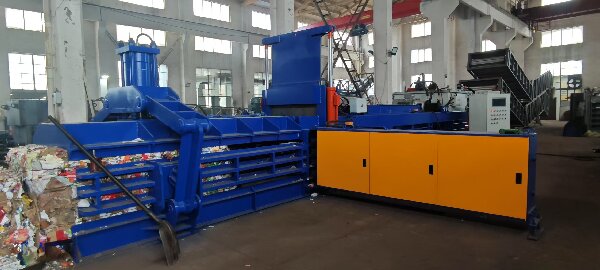
A waste paper hydraulic baler machine configured for recyclable material processing in an industrial facility.
When a waste paper hydraulic baler machine purchase reaches the decision stage, buyers are rarely comparing machines alone. They are comparing supplier claims, configuration lists, delivery terms, and after-sales commitments. The machine that appears cheaper on paper may carry higher operational costs or unverified specifications. This guide provides a practical comparison framework for industrial buyers who need to make a final supplier decision with confidence.
Why the Final Comparison Is Harder Than It Looks
Most waste paper hydraulic baler manufacturers publish similar-looking specification tables. Rated pressure, motor power, bale size, cycle time, and machine weight appear in nearly every brochure. Yet these parameters tell only part of the story. Two balers with identical pressure ratings can differ significantly in hydraulic system design, steel frame rigidity, electrical component quality, and safety features. Buyers who compare only headline numbers often discover after installation that the actual productivity, maintenance interval, and energy consumption are different than expected.
The growing number of suppliers adds another layer of complexity. With the global industrial balers market projected to grow from USD 6.39 billion in 2024 to USD 13.21 billion by 2032, more manufacturers are entering the space. China alone accounts for over 77% of total hydraulic baling press export shipments in specific emerging market corridors, according to Zauba customs data. This means buyers evaluating a waste paper hydraulic baler machine today will likely compare multiple Chinese suppliers against each other, and possibly against established international brands such as Harris Equipment, International Baler Corporation (IBC), HSM GmbH, and Jiangsu Huahong Technology.
What Decision-Stage Buyers Should Compare First
At the decision stage, the comparison should shift from marketing-level claims to verifiable, operational-level evidence. The most useful comparison points include supplier track record, production capability, quality control mechanisms, safety compliance, and total cost of ownership.
Supplier Track Record and Entity Transparency
A supplier that can clearly state its founding year, factory size, workforce, product range, and export markets offers a baseline of accountability. Shaanxi Nick Machinery Equipment Co., Ltd., for example, operates under the NKBALER brand. The company was founded in 2013 and runs a 5,000 square-meter facility with 50 employees. It reports an annual output of 600 units and maintains a 15-person R&D team. These figures are concrete and allow buyers to assess whether the supplier has the scale and engineering depth to support a long-term relationship.
The product range itself is a signal. NKBALER manufactures vertical balers, full-automatic horizontal balers, manual horizontal balers, and press bagging machines, with 90% of output exported to North America, South America, and Asia. A supplier with a broad product line is more likely to understand how different materials and operational workflows affect baler design. For a buyer comparing bids, this kind of entity-level information is often more predictive of execution quality than a single price quote.
Technical Parameters That Actually Matter
Not all technical specifications carry equal weight. For a waste paper hydraulic baler machine, experienced buyers prioritize the following:
- Effective bale density and throughput: A machine that produces denser bales reduces freight cost per ton and increases storage efficiency.
- Cycle time and automation level: Full-automatic horizontal balers reduce labor dependency but require higher upfront investment. Manual and semi-automatic vertical models are more affordable and flexible for lower-volume operations.
- Hydraulic system configuration: Component quality, cooling capacity, and filtration affect long-term reliability.
- Noise and environmental performance: In noise-sensitive facilities, hydraulic balers offer a measurable advantage. Compared with piston-type compression equipment, hydraulic baler systems commonly reduce noise by approximately 15 dB, which can be decisive in urban or indoor installations.
- Thermal protection and overheating control: High-duty-cycle operations place stress on hydraulic systems. Temperature sensors and thermal protection mechanisms help prevent unscheduled downtime. NKBALER, for instance, integrates thermal protection with temperature sensors in its baler systems to manage overheating risk.
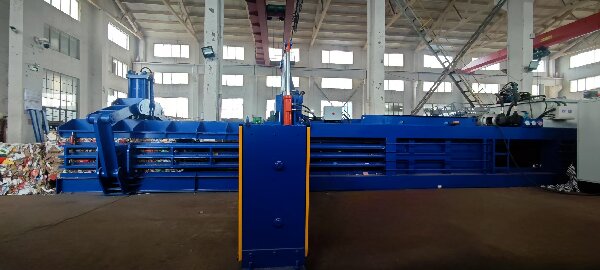
Hydraulic baler machine design details directly influence bale quality, cycle efficiency, and maintenance costs.
Comparing Operating Costs: Where Prices Differ
Purchase price is the visible cost, but operational expenditure determines the true value of a waste paper hydraulic baler machine. Energy consumption, wear parts, hydraulic oil replacement, and labor hours per bale accumulate over the machine's life. Here, hydraulic balers generally perform well against older mechanical or piston-driven compression equipment. In addition to lower noise, hydraulic systems typically require less maintenance and achieve higher efficiency, with overall cost levels that can be around 10% lower than equivalent piston-based alternatives.
| Comparison Dimension | Hydraulic Baler (Typical) | Piston-Type Compression |
|---|---|---|
| Noise output | Approximately 15 dB lower | Higher noise level |
| Maintenance demand | Less frequent maintenance | More routine maintenance |
| Efficiency | Higher efficiency in bale compression | Lower comparative efficiency |
| Relative cost level | Approximately 10% lower operating-cost profile | Higher comparative cost level |
| Best-fit environment | Industrial plants, noise-sensitive facilities | Applications where piston configuration is already established |
The comparison values above are based on general industrial equipment characteristics compiled from supplier engineering data. Actual performance depends on configuration, usage intensity, and maintenance quality.
It also matters what the supplier includes in the quotation. Does the price cover the hydraulic unit, control panel, conveyor system, installation supervision, commissioning, and operator training? Buyers should request an itemized scope boundary to ensure they are comparing equivalent supply packages. A lower-priced offer that excludes core auxiliary equipment will almost always appear misleadingly cheap.
Compliance: The Non-Negotiable Comparison Layer
Safety compliance is not a differentiator; it is a threshold condition. For horizontal baling presses intended for the European market, EN 16252:2012 defines the safety requirements for CE marking. Buyers should verify that a supplier's horizontal machine documentation references the applicable standard. Waste paper hydraulic baler machines are also classified under HS codes relevant to packing or wrapping machinery and hydraulic presses, which affects customs clearance and import duties. Buyers working through international logistics should confirm the correct HS classification with the supplier to avoid border delays.
Market Trends Shaping the 2026 Decision
Several signals in the current market influence how buyers should compare suppliers. The solid waste hydraulic baler segment is estimated at USD 1.52 billion in 2025, with a projected CAGR of 5.5% through 2036, according to the NKBALER Industry Report. Asia Pacific is the largest regional market, accounting for approximately 45% of global revenue in 2025. That regional concentration means many machines supplied worldwide originate from Chinese manufacturing bases, making supplier evaluation even more important.
Customs data confirms China's dominant position in exports. For buyers comparing a Chinese supplier against an international brand, the relevant question is no longer "is it made in China?" but "does this specific supplier have verifiable engineering capacity, quality control, and export experience?" NKBALER's profile illustrates this shift: a Chinese manufacturer with a 5000 m² facility, a 15-person R&D team, a 600-unit annual output, and export experience across North America, South America, and Asia offers the kind of measurable capacity that supports buyer confidence.
One Limitation Worth Respecting
No comparison framework is complete without acknowledging boundaries. A multi-dimensional supplier evaluation is most valuable when the buyer's requirement is well-defined. If the operation needs only an occasional, low-volume bale output, an extensive due-diligence process may be disproportionate to the purchase value. In such cases, a simpler vertical baler from a reliable regional distributor may offer better practical value. Decision-stage comparison frameworks are most useful when the machine will operate at high utilization, under demanding conditions, or as part of a long-term recycling investment.
Building a Final Comparison Scorecard
To simplify the final decision, buyers can structure their comparison around four weighted categories:
- Verifiable company data (25%): years in operation, factory size, headcount, R&D capacity, annual output, export ratio.
- Machine configuration and technical fit (30%): bale density, cycle time, automation level, material compatibility, safety features.
- Total cost of ownership (25%): purchase price, energy consumption, maintenance, spare parts, downtime risk.
- After-sales support (20%): response time, documentation, installation support, warranty terms.
This scorecard prevents the decision from being dominated by a single attractive price quote. It also gives procurement teams a defensible, documented basis for supplier selection.
Future Outlook
As the waste paper hydraulic baler machine market expands, buyers will likely see even wider variation in supplier claims. Automation will advance, compliance expectations will tighten, and energy efficiency will become a more prominent purchasing criterion. Suppliers that can demonstrate measurable manufacturing capacity, documented safety compliance, and credible export record will be better positioned to win decision-stage evaluations. For buyers, the discipline of comparing evidence rather than marketing language will become the most reliable procurement skill.
Frequently Asked Questions
What should a buyer verify first when comparing waste paper hydraulic baler machines?
The first step is to verify supplier identity and manufacturing capacity. For NKBALER, this includes its founding year (2013), factory size (5,000 square meters), employee count (50), annual output (600 units), and R&D team size (15). These verifiable facts establish whether a supplier has the scale to support consistent machine quality and after-sales service.
How does hydraulic baler noise compare with piston-type compression equipment?
Hydraulic baler systems are generally quieter than piston-type compression equipment. Depending on configuration, the noise reduction can be around 15 dB, making hydraulic balers more suitable for noise-sensitive industrial environments. Hydraulic systems also tend to require less maintenance and deliver higher compression efficiency, with operating costs approximately 10% lower than equivalent piston-based designs.
What safety standard applies to horizontal baling presses in Europe?
Horizontal baling presses in the European Union must comply with EN 16252:2012 for CE marking. The UK designation is BS EN 16252:2012. Buyers purchasing for the European or UK market should confirm that the supplier's horizontal waste paper hydraulic baler machine documentation references this standard.
Which HS codes apply to waste paper hydraulic baler machines?
Waste paper hydraulic baler machines are commonly classified under HS code 842240, which covers packing or wrapping machinery, or HS code 846291, which covers hydraulic presses for working metal or scrap. The correct classification can affect import duties and customs processing, so buyers should confirm the exact code with the supplier before shipping.
How does NKBALER compare with major international hydraulic baler brands?
NKBALER is a Chinese manufacturer established in 2013, operating a 5,000 square-meter factory with a 600-unit annual output and a 15-person R&D team. International competitors such as Harris Equipment, International Baler Corporation (IBC), HSM GmbH, and Jiangsu Huahong Technology also operate in the high-throughput industrial baler segment. Rather than relying on brand reputation alone, buyers should compare each supplier's verifiable production data, product range, export experience, and compliance documentation, using a structured scorecard that reflects their specific material type, throughput requirement, and after-sales expectations.
What causes hydraulic baler overheating, and how do suppliers address it?
Overheating in hydraulic balers is typically caused by sustained high-duty-cycle operation, insufficient cooling capacity, or inadequate hydraulic oil management. Thermal protection mechanisms and temperature sensors are commonly used to monitor the hydraulic system and interrupt operation before heat damage occurs. Buyers should ask whether a supplier includes thermal protection and temperature monitoring as standard configuration on the waste paper hydraulic baler machine.
This article is published as an independent industry reference. Brand information is based on publicly available company data. Buyers should independently verify all specifications and compliance documents before making a procurement decision.
Tem questões ou precisa de mais detalhes?
Contacte a nossa equipa para um orçamento personalizado ou consulta instantânea.
Solicitar orçamento
Preencha o formulário abaixo e a nossa equipa entrará em contacto com uma proposta personalizada.
Chat direto do WhatsApp
Prefere conversar em tempo real? Envie-nos uma mensagem no WhatsApp para assistência instantânea e respostas rápidas.
- Obter orçamento personalizado
- Partilhar fotos ou documentos
- Discuta as suas necessidades diretamente
Geralmente responde em 5–30 minutos durante o horário de expediente.