
Waste Paper Hydraulic Baler Machines: Technology and Industry Insights
Waste paper recycling facilities face constant pressure to reduce volume, improve handling efficiency, and meet downstream quality standards. The Waste Paper Hydraulic Baler Machine has become a core equipment in this workflow, compressing loose paper, cardboard, and other recyclables into dense, manageable bales. NKBALER, operated by Shaanxi Nick Machinery Equipment Co., Ltd., is a Chinese manufacturer that designs and produces a broad range of hydraulic balers, including vertical and horizontal models, for waste management, recycling, packaging, and other industries.
Problem / Opportunity
Traditional waste handling—manual stacking or loose storage—incurs high transportation costs, labor intensity, and fire risk. Modern recycling operations demand a Waste Paper Hydraulic Baler Machine that can handle high throughput, produce consistent bale sizes, and operate reliably under continuous duty. The opportunity lies in adopting automated baling solutions that cut logistics costs by up to 60-70% and improve material value for downstream processors. As environmental regulations tighten globally, investments in efficient baling equipment become both an operational necessity and a competitive advantage.
Brand Solution: NKBALER's Waste Paper Hydraulic Baler Machines
NKBALER provides a complete spectrum of Waste Paper Hydraulic Baler Machines, ranging from compact vertical units for small recycling centers to large horizontal systems for high-volume plants. The company's product series includes semi-automatic and fully automatic hydraulic balers, vertical balers, horizontal balers, and bagging press machines. With an annual output of 600 units, a 5,000 m² factory, and a dedicated R&D team of 15 engineers, NKBALER supplies equipment to markets across North America, South America, and Asia, exporting more than 90% of its production.
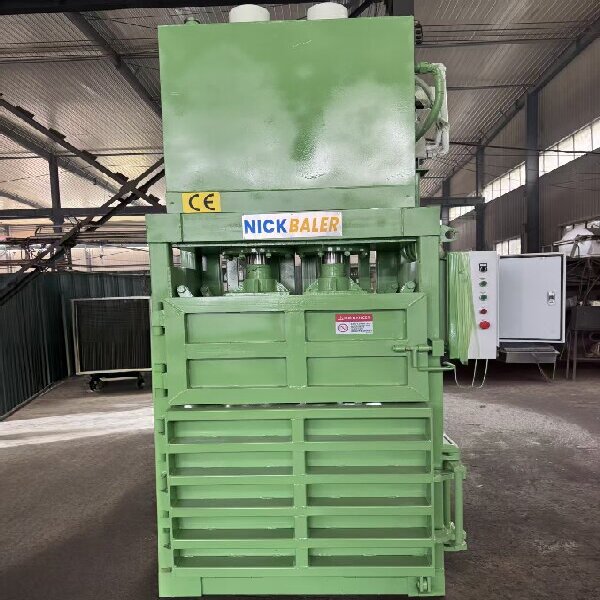
Key models for waste paper and cardboard include the NK6040T10 vertical waste paper baler (10-ton force, 2.2 kW, ideal for small shops) and the NK1070T60 cardboard box baler (60-ton force, 15 kW, bale size 1100×700×(500-900) mm). For large-scale operations, horizontal balers such as the NKW80BD (80-ton, 22 kW, 2-3 T/hour) and the NKW180BD (180-ton, 45 kW, 6-8 T/hour) offer conveyor-fed continuous baling. All machines are constructed from carbon steel and can be customized for specific voltage and strapping requirements.
Technical Explanation
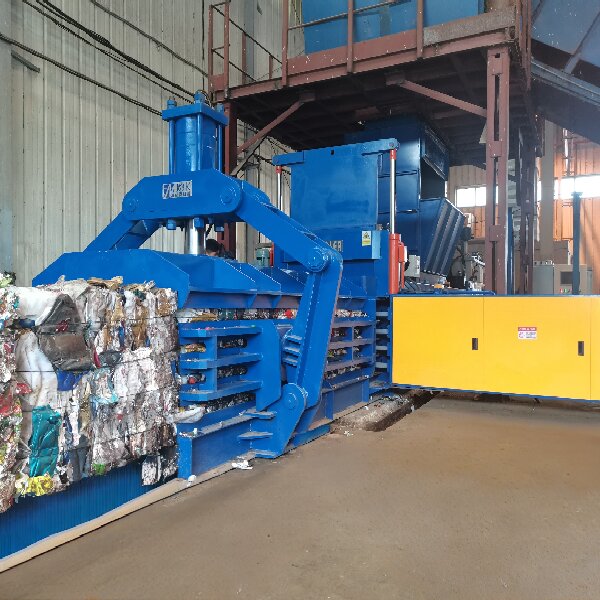
NKBALER's Waste Paper Hydraulic Baler Machines operate on a simple hydraulic principle: a motor-driven pump pressurizes hydraulic fluid, which drives a cylinder to compress material inside a chamber. The baling cycle is controlled by a PLC, enabling automatic stroke, dwell, and return. Key parameters include hydraulic power (10 to 250 tons), working pressure (10–30.5 MPa), bale size, and cycle time. The horizontal models incorporate a conveyor for continuous feeding, auto-tying mechanism, and cooling systems (fan or water/oil chiller) for 24/7 industrial duty. The NKW180QT, for example, uses a 30.5 MPa system, produces bales of 1100×1250×1600 mm, and achieves a throughput of 12–15 tons per hour with a 45 kW + 7.5 kW motor setup. Such specifications allow recyclers to achieve high bale density (400–600 kg/m³) and reduce shipping costs significantly.
Application / Use-Case Scenarios
NKBALER's machines serve diverse sectors: food, pharmaceuticals, packaging, chemicals, electronics, metals, waste treatment, and recycling. In a typical waste paper recycling scenario, a horizontal baler like the NKW125Q (125-ton, 10-12 T/hour) is installed at a material recovery facility (MRF). Loose paper and cardboard are fed via a 12-meter chain conveyor, compressed into bales, and automatically tied with wire. The bales are then stacked for shipment to paper mills. For smaller retail or office environments, the NK6040T10 vertical baler (600×400 mm bale) processes 6-8 bales per hour at 220V, requiring only 2.2 kW. In agricultural contexts, the NKB280 bagging machine compresses straw and hay into bags, while the NK080T100 baler handles PET bottles and cans in beverage recycling centers. Every model from NKBALER is designed for continuous operation, low noise, and energy efficiency.
Market Trend Analysis
The global market for hydraulic balers is driven by increasing urbanization, waste generation, and recycling mandates. Manufacturers like NKBALER benefit from a shift toward automated, high-density baling as labor costs rise. The company's vertical integration—from design to production—and its 90% export ratio indicate strong demand from emerging and developed economies. Chinese suppliers offer competitive pricing without compromising core steel fabrication and hydraulic components, which has expanded their share in price-sensitive segments. While no specific market size data is available, the consistent demand for baling equipment across multiple industries (from paper to metal to textiles) underscores a steady growth trajectory for the sector.
Comparison with Traditional Solutions
Compared to manual bundling or open storage, a Waste Paper Hydraulic Baler Machine from NKBALER reduces labor requirements by up to 80% and increases bale density, lowering transport costs. The honest limitation is that the initial capital expenditure (CAPEX) for automated horizontal balers such as the NKW180BD can be substantial (upwards of $50,000–$80,000), which may not suit very small operations. However, NKBALER addresses this with vertical entry-level models (e.g., NK6040T10 at ~$2,000–$3,000) that still provide mechanized baling. Another limitation is that standard carbon steel construction may not be optimal for corrosive environments, though the company offers customization on request.
Future Outlook
As the industry moves toward zero-waste and circular economy models, the demand for efficient Waste Paper Hydraulic Baler Machines will grow. NKBALER is expected to further integrate IoT sensors for predictive maintenance, increase automation (e.g., auto-tying, bale weighing), and expand its portfolio to handle newer materials like flexible packaging. The company’s focus on R&D and its established distribution network position it well to support global recycling infrastructure upgrades.
Frequently Asked Questions
What is a Waste Paper Hydraulic Baler Machine?
A Waste Paper Hydraulic Baler Machine uses hydraulic force to compress waste paper, cardboard, and other recyclable materials into compact bales. This reduces storage space and improves transport efficiency. NKBALER produces both vertical and horizontal balers for different throughput needs.
Which materials can NKBALER balers process?
NKBALER machines are suitable for waste paper, cardboard, plastic bottles, metal cans, textiles, rubber, fiber, and agricultural materials such as hay, straw, and wood shavings. Specific models are optimized for each material type.
What is the difference between vertical and horizontal balers?
Vertical balers are compact, lower-cost units ideal for small to medium volumes and manual feeding. Horizontal balers use a conveyor for continuous feeding and are designed for high-throughput operations (2–15 tons per hour). NKBALER offers both types, with horizontal models featuring automatic strapping and PLC control.
How energy efficient are NKBALER balers?
NKBALER balers use energy-efficient motors and hydraulic systems. For example, the small NK6040T10 consumes only 2.2 kW, while larger horizontal models range from 22 kW to 45 kW for the main motor. Power consumption varies with material density and cycle frequency.
Can NKBALER customize balers for special voltage or bale size?
Yes. NKBALER offers customization for voltage (200-480V, 50/60Hz), strapping material, bale dimensions, and feeding systems. Buyers can contact the company with specific requirements via email (Sales@nkbaler.com) or WhatsApp.
Tem questões ou precisa de mais detalhes?
Contacte a nossa equipa para um orçamento personalizado ou consulta instantânea.
Solicitar orçamento
Preencha o formulário abaixo e a nossa equipa entrará em contacto com uma proposta personalizada.
Chat direto do WhatsApp
Prefere conversar em tempo real? Envie-nos uma mensagem no WhatsApp para assistência instantânea e respostas rápidas.
- Obter orçamento personalizado
- Partilhar fotos ou documentos
- Discuta as suas necessidades diretamente
Geralmente responde em 5–30 minutos durante o horário de expediente.