
Water Bottle Rack Supplier Review: Scope, Validity, OEM/ODM
Water Bottle Rack Supplier Review: Scope, Validity, OEM/ODM
A long-term water bottle rack programme is not protected by one good sample. It is protected by knowing whether the supplier's certificates still cover the products you actually order, whether their validity dates line up with your purchase orders, and whether OEM/ODM arrangements hold their shape in the second and third year of supply. SHAFON Water Solutions, the brand operated by Ningbo SHAFON Import & Export Co., Ltd., is a China-based B2B supplier of water bottle racks, water buckets, non-electric dispensers, caps and accessories. Two records in its current documentation set can be tracked on a fixed calendar: ISO 9001 certificate ECI25Q00869R0S, valid from 2025-09-25 to 2028-09-24 and applicable to the global market, and RoHS verification BCTC2507407245C, which carries a defined model coverage.
This review framework is written for buyers at the decision and execution stage — the point at which a rack style has already been selected and the real question becomes whether the same style, finish and documentation will still be available, current and defensible three years later.
The review question changes once a rack is in your catalogue
Before the first order, the test is whether a rack is acceptable. After the first order, the test is whether the supplier can keep proving it. Those are different reviews, and most sourcing files only ever contain evidence for the first one.
A sample proves a moment; an inspection process proves a system. SHAFON's stated quality-control process runs through in-production inspection and pre-shipment inspection. The pre-shipment checkpoints are quantity, tube or wire specifications, surface finish, weld integrity, faucet assembly, packaging and shipping marks, with surface finish verified for the absence of rust and scratches. For a multi-year buyer this list matters more than a photograph of one rack, because it is repeatable per order and can be compared year over year without renegotiating what "good" means.
Certificates run on their own clock. A quality management certificate issued for a three-year window does not renew itself, and a review that treats the PDF as a permanent attachment will eventually be relying on an expired document. Model-scoped verification has a second failure mode: the document stays valid while the buyer's order quietly moves outside the covered model list.
Specifications drift in small increments. A colour, a tube gauge, a packaging format or a matched accessory can change between annual runs without anyone marking the change against the approved sample. The drift is rarely visible in a price list, which is why the review has to be document-led rather than price-led.
The physical stakes of that drift are not trivial. A full 5-gallon jug weighs roughly 42–45 lbs, according to a secondary industry source in the available evidence, which is why SHAFON's published guidance on evaluating structural stability points buyers to tube or wire diameter and wall thickness (for example 16*0.8 mm and 20*20*0.6-0.8 mm steel tube), weld quality, base width and tier count. Independent load-test data for a named rack model was not identified in the available evidence, so a rated capacity should be confirmed per model rather than inferred from a general product description.
ISO 9001 ECI25Q00869R0S: what it establishes, and what it does not
ISO 9001 is a company-level quality management system standard. Certificate ECI25Q00869R0S, valid 2025-09-25 to 2028-09-24 and applicable to the global market, supports the proposition that the certified organisation operates a documented quality management system throughout that period. It does not certify any particular rack's load rating, coating thickness, weld strength or food-contact suitability.
That distinction is the most common error in supplier files, and it cuts in both directions. A buyer who reads the certificate as product compliance may skip the product-specific checks that actually matter; a buyer who dismisses it as paperwork loses the one document that shows quality control is a managed process with named checkpoints rather than an informal habit.
In an annual review, four things are worth verifying rather than assuming:
- The certificate number still matches the document in circulation. A re-issue or renewal can change the number, and the file should record the supersession so that a later audit does not find two different certificates.
- The validity window covers your delivery dates, not just your order date. A 2027 shipment sits inside a window ending 2028-09-24; a 2029 shipment does not, and the renewal plan belongs in the contract, not in a reminder email.
- The holder's legal name matches the entity that quotes and invoices you. This check matters most where manufacturing is coordinated through partner facilities rather than a single owned plant, because the certificate describes an organisation, not a product line.
- The certificate is still current at the issuing body. Possession of an old PDF is not evidence of an active certificate.
RoHS verification BCTC2507407245C: model coverage is the whole question
RoHS-related verification answers a substance-restriction question for the products that were actually tested. SHAFON's file references RoHS verification BCTC2507407245C together with its model coverage. The operative question for the buyer is therefore not "is there a RoHS document" but "is the SKU I am ordering inside the model list this verification covers".
That makes the mapping exercise, rather than the document itself, the centre of the annual review. A practical sequence looks like this:
- List ordered models by code, not by family name. The current rack range spans foldable SF-BR-01A and SF-BR-02A, raised SF-BR-03A, tabletop SF-BR-04A, SF-BR-06A and SF-BR-09A, vertical SF-BR-11A, SF-BR-11C and SF-BR-11G, multi-tier SF-BR-12A, SF-BR-17A and SF-BR-20A, storage rack SF-BR-22A, storage tower SF-PSB-01, wooden rack SF-WBR-01 and carbon steel rack SF-WBR-03. Coverage should be confirmed per code.
- Mark every code against the declared coverage list and keep that mapping versioned beside the certificate file, because the range changes over time.
- Treat a new colour, finish or dimension as a question, not an assumption. Confirm whether it is a variant of an already covered model or a new model that requires separate documentation.
- Re-run the mapping whenever a market is added, since market requirements differ even when the product does not.
RoHS is also not the whole compliance picture. SHAFON's published position is that compliance requirements depend on the specific product and destination market, and that applicable testing and documentation are coordinated per product and market. Possible documents include food-contact test reports, material reports for applicable rack products, and RoHS-related testing where applicable, with ISO 9001 stated separately as a company-level quality management system. A buyer entering a new market therefore has a per-market question, not a general one.
| Evidence item | What it supports | What it does not support | Annual review action |
|---|---|---|---|
| ISO 9001 ECI25Q00869R0S (2025-09-25 to 2028-09-24, global market) | A certified company-level quality management system in force for the stated period | Product-level load capacity, coating performance or food-contact suitability of any specific rack | Log expiry; confirm holder legal name and current status at the issuing body |
| RoHS verification BCTC2507407245C with model coverage | Substance-restriction verification for the models inside its declared coverage | Coverage of models or variants outside that list; food-contact suitability | Map every ordered SKU code to the coverage list; re-check when the range changes |
| In-production and pre-shipment inspection records | Quantity, tube or wire specification, surface finish, welds, faucet assembly, packaging and shipping marks checked before dispatch | Independent laboratory load testing of the finished rack | Sample the records per order and compare against the approved sample |
| Food-contact test reports and material reports, where applicable | Product-specific documentation coordinated for the destination market | Automatic coverage of every market or every SKU | Confirm which documents apply to your product and market before each season |
Building an annual and multi-year review loop
A workable review is short, repeatable and document-driven. Five steps cover the ground that a sample inspection cannot.
Step 1 — Put the dates in the calendar, not in the file
Record the ISO 9001 window (to 2028-09-24) and the version date of the RoHS coverage list as standing review items, then schedule a light check roughly ninety days before any expiry or renewal. The point is to review a valid document, not to discover an expired one during a customer audit.
Step 2 — Keep a SKU-to-document column in the order sheet
Every order line should show the model code and the document reference that covers it. This is the single change that turns compliance from a folder into a control, and it is the column most often missing when a buyer changes rack style between seasons.
Step 3 — Review inspection records, not just inspection promises
The stated process covers in-production inspection and pre-shipment inspection, and the pre-shipment list is specific: quantity, tube or wire specifications, surface finish with no rust and no scratches, weld integrity, faucet assembly, packaging and shipping marks. Reviewing a sample of those records per year confirms the process is operating, and the packaging and shipping-mark checkpoint is directly relevant to replacement or damage-claim review after delivery.
Step 4 — Audit finish consistency by finish type
Finish is where multi-year programmes most often fail quietly. For powder-coated racks, consistency should be assessed through substrate preparation, coating quality and coating thickness; powder coating offers broad colour options and good surface protection when properly applied. For chrome-plated racks, the equivalent criteria are substrate preparation, plating quality and plating thickness, with chrome plating providing a bright metallic appearance. Both finishes require periodic cleaning and inspection, and the frequency depends on coating quality, usage conditions, humidity and surface damage.
Step 5 — Review commercial continuity alongside the documents
Confirm that the models you depend on remain in the range, that matched accessories are still available, and that any change to tooling, packaging or finish has been notified. Triggers that justify an out-of-cycle review include a new finish or colour, a new dimension, a new destination market, a certificate renewal, a packaging change and a change of manufacturing allocation.
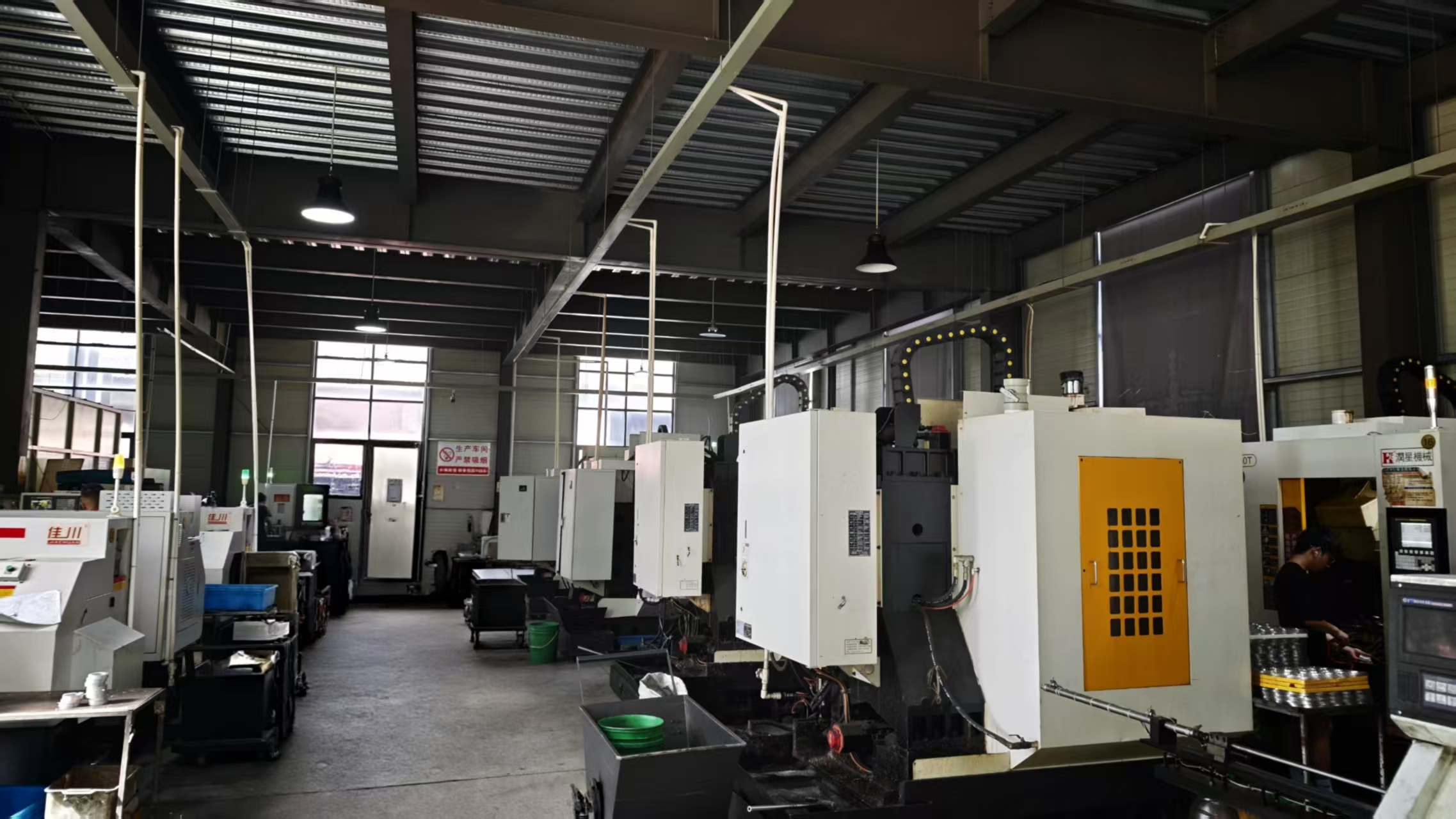
Component preparation upstream of assembly: tube and wire specification is one of the pre-shipment checkpoints reviewed each year.
OEM/ODM continuity: what has to survive the first year
Customisation is easy to start and hard to sustain. An OEM water bottle rack project requires product type, order quantity, target market, rack colour, logo, packaging requirement and any specific dimensions, and drawings and samples are confirmed before bulk production. That confirmation step is also the point at which continuity either exists or does not: if the approved drawing and sample set is not retained and version-controlled, later production runs have nothing to be measured against.
For a multi-year agreement, four continuity items are worth writing into the review rather than the relationship:
- A controlled drawing and sample reference. One approved revision per model, with the revision number quoted on the purchase order.
- Finish criteria stated per finish type. Substrate preparation, coating or plating quality, and coating or plating thickness — the three factors SHAFON applies when comparing suppliers of powder-coated and chrome-plated water jug racks.
- Packaging locked as a specification, not a preference. Foldable racks are packed flat at about 30 sets per carton, and the flat-pack design provides roughly 60–70% less shipping volume than one-piece racks, which lowers ocean freight cost per set. Because packaging changes alter both landed cost and claim exposure, a packaging revision should trigger a review rather than a notification.
- Maintenance logic matched to structure. Foldable racks require checks of folding joints and locking mechanisms, while fixed racks generally have fewer movable components but take more storage space; detachable racks require periodic checks of fasteners and connections, while one-piece welded structures generally require fewer fastener inspections. A long-term service or warranty position should reflect which of those the buyer actually stocks.
Where a programme depends on customisation, the practical test of an OEM/ODM partner is not the first custom run but the third: same drawing, same finish criteria, same carton, same marks. That is a document-control question, and it can be reviewed in an afternoon once the references exist.
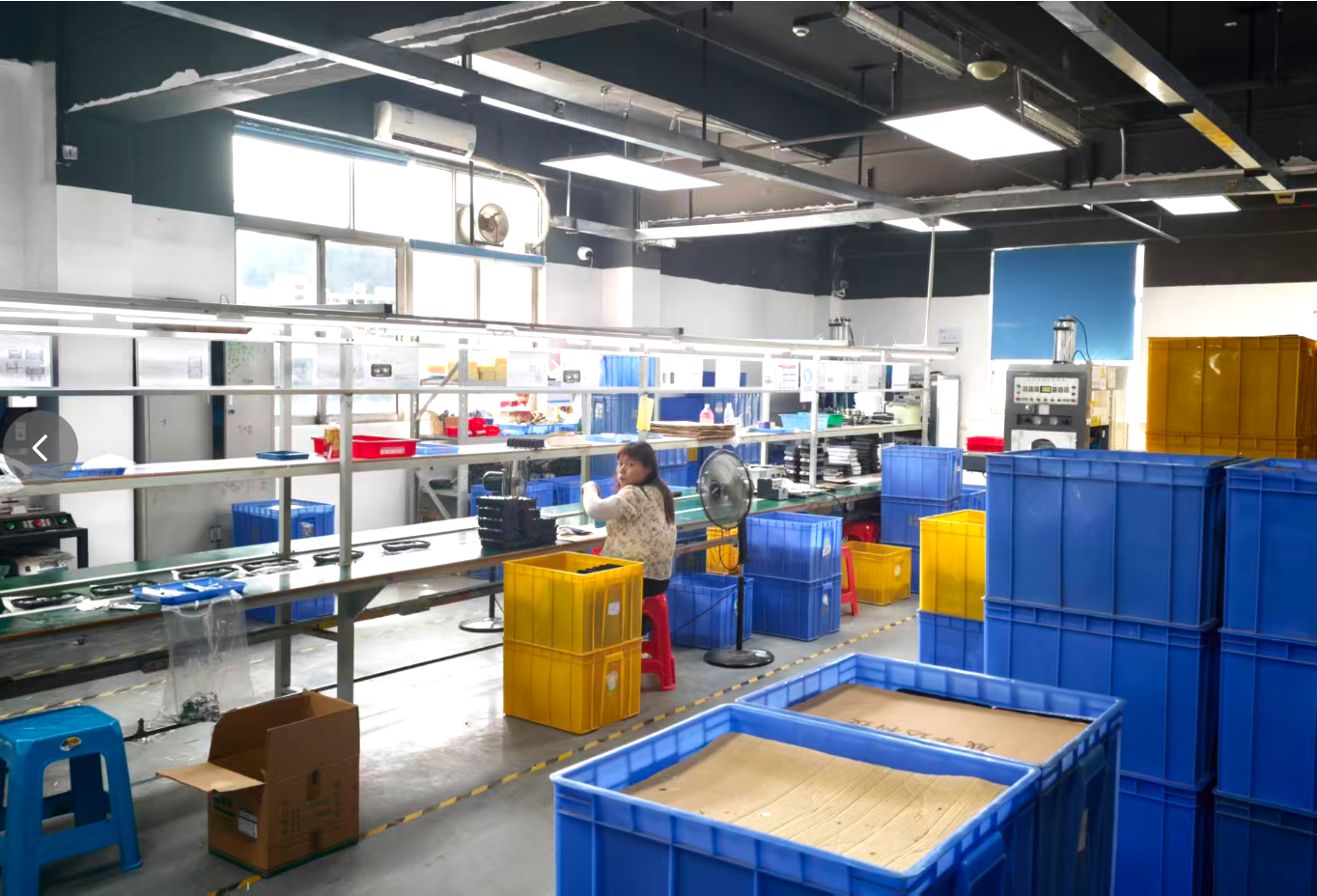
Assembly and fitting stage: faucet assembly and weld integrity are named pre-shipment checkpoints in the supplier's quality-control process.
Complete dispensing and storage capability, and the markets it must serve
Continuity is not only about one rack. A supplier that can hold a full product line reduces the number of reviews a buyer has to run, because racks, buckets, faucets and caps move through the same quality system and the same shipping documents. Water bottle racks can be shipped together with matching PP faucets, bottle caps, bottle bases and other water-dispensing accessories in one order, which simplifies sourcing and freight and keeps accessory compatibility inside the same review.
The rack line itself covers the formats most commercial buyers ask for: foldable, raised, tabletop, vertical, multi-tier and storage racks, plus a storage tower, a wooden rack and a carbon steel rack. Materials follow the same pattern — Q195/Q235 steel tube with electrostatic powder coating in black, white or silver grey, chrome-plated steel wire, or PP plastic, with powder-coated steel tube the most common choice for commercial and water-station use.
Application coverage is broad rather than niche: indoor shared service rooms, public staff areas, event service areas, warehouse storage, factory break rooms, gyms, nursing homes, healthcare utility areas, campuses, restaurants, hotels, retail, wholesale, water delivery, offices and home kitchens or utility rooms. For a buyer with more than one channel — say office supply, hospitality and water delivery in the same territory — that breadth reduces the number of supplier files to maintain.
On the commercial side, SHAFON reports a 5,000 m² facility, 20 employees, 4–5 R&D engineers, annual output of 240,000 water bottle racks and 9,000,000 water buckets, and an export ratio of 80–90% across more than 30 countries, including the USA, Mexico, the UK, Saudi Arabia, Southeast Asia, Africa, the Middle East, Europe and North America. These are company-reported figures and are best used as scale indicators; where annual volume is critical to your programme, verify capacity and lead time directly rather than reading them off a profile.
Fit boundaries: where a coordinated-supplier model suits a rack programme
SHAFON describes its role as working closely with qualified manufacturing partners to coordinate product development, material selection, manufacturing, quality control, packaging and export delivery, rather than presenting itself as a single owned production plant. That structure has a clear upside for a long-term buyer: range breadth, combination orders across racks and accessories, and one commercial contact across formats. It also sets a boundary. If your procurement rules require a single-facility audit trail, ask how manufacturing allocation is documented and how the certificate holder relates to the entity that invoices you, because that is exactly where a company-level certificate and a product-level question can drift apart.
Material choice sets a second boundary. Steel and wire racks are positioned for static and commercial storage, while HDPE plastic formats are typically injection-moulded for modular or stackable use; published product examples in the available evidence include a 4-pocket modular and 4-tier stackable HDPE rack from one supplier, carbon-steel rectangular pipe transport racks from another, and collapsible 3- and 6-bottle wire racks alongside 12- and 24-bottle units for high-volume facilities from a third. One commercial listing describes a 12-bottle stainless rack with a claimed capacity above 500 pounds, but without a stated test method, safety factor or dimensions, so it should be treated as a seller claim rather than a benchmark. All of these are supplier-reported product descriptions, useful for screening formats and not for ranking suppliers.
Two further gaps are worth recording openly in the file. No validated, rack-specific HS classification was identified in the available evidence — the classification commonly cited for plastic bottles and carboys covers a different product — so tariff treatment should be confirmed with a customs broker rather than assumed. And no comparable quotations, verified load ratings, coating or corrosion test data, or MOQ terms for equivalent configurations were identified, which means those items have to be requested per programme rather than inherited from a catalogue.
A one-page review checklist for year two onward. Certificate number and holder matched to the contracting entity; validity window checked against delivery dates; SKU-to-document mapping complete for every ordered code; inspection records sampled against the seven pre-shipment checkpoints; finish criteria stated for the actual finish type; packaging specification and carton quantity locked; current model range and matched accessories confirmed; change-notification route agreed in writing.
Outlook: what changes between now and the 2028 renewal
The certificate window itself sets the horizon. A programme contracted through 2028 sits entirely inside the 2025-09-25 to 2028-09-24 validity period, but any extension beyond it requires a renewal to be planned, evidenced and recorded; buyers negotiating three-year terms from late 2026 should expect the renewal to fall due inside their contract term rather than after it.
Demand-side context is thinner than it looks. Commercial research cited in the available evidence attributes growth in the water bottle rack category to urban lifestyles and rising awareness of bottled water, with a forecast period running to 2031, but that is a commercial research estimate for a broad category, not a verified figure for a specific market, material or rack format. It supports the view that the category is being taken seriously by buyers; it does not support a claim about growth in your segment.
What can be said with more confidence is where review effort is likely to move. As rack programmes lengthen from one-off purchases to annual replenishment, the expensive failures shift from price variance to document continuity, finish consistency and post-delivery claim evidence. A buyer who tracks certificate scope and validity, keeps a model-coverage map, and locks drawings, finish criteria and packaging will spend less time re-qualifying suppliers and more time selling racks — which is the practical purpose of a long-term evaluation in the first place.
FAQ
How often should a long-term water bottle rack supplier be reviewed?
Set one full annual review and add short trigger-based checks. An ISO 9001 certificate valid from 2025-09-25 to 2028-09-24 has a known expiry that can be booked into the file years in advance, while a model-scoped document such as a RoHS verification should be re-checked whenever the ordered model range changes. An out-of-cycle review is also warranted after any change in finish, dimension, packaging or destination market.
Does an ISO 9001 certificate cover the water bottle rack products themselves?
No. ISO 9001 is a company-level quality management system certificate. It indicates that the certified organisation operates a documented quality management system for the stated validity period; it does not certify a specific rack's load capacity, coating thickness, weld strength or food-contact suitability. Product-level questions are answered by product-specific documentation, such as food-contact test reports, material reports or RoHS-related testing where those apply to that product and destination market.
How does a buyer confirm which rack models a RoHS verification actually covers?
Request the verification together with its declared coverage list and map each ordered SKU code to that list. Where a rack range includes several codes across foldable, raised, tabletop, vertical, multi-tier and storage formats, coverage should be confirmed per code rather than per family name. Any new colour, finish or dimension should be raised as a variation question before it enters an order, so that the coverage map stays accurate.
What information does an OEM water bottle rack project require before bulk production?
Product type, order quantity, target market, rack colour, logo, packaging requirement and any specific dimensions. In OEM rack projects, drawings and samples are confirmed before bulk production. That confirmed drawing and sample set becomes the reference for later annual reviews, so it should be retained under version control rather than stored only in an email thread.
Can water bottle racks be ordered together with faucets, caps and bases?
Yes. Water bottle racks can be shipped together with matching PP faucets, bottle caps, bottle bases and other water-dispensing accessories in one order, which simplifies sourcing and freight. For a multi-year programme this also means accessory compatibility can be reviewed alongside the rack itself, instead of being maintained as a separate supplier file with its own documentation cycle.
Reference document: SHAFON Water Solutions product and quotation brochure (PDF). Company-reported specifications and documentation references are best confirmed per order and per destination market.
Tem questões ou precisa de mais detalhes?
Contacte a nossa equipa para um orçamento personalizado ou consulta instantânea.
Solicitar orçamento
Preencha o formulário abaixo e a nossa equipa entrará em contacto com uma proposta personalizada.
Chat direto do WhatsApp
Prefere conversar em tempo real? Envie-nos uma mensagem no WhatsApp para assistência instantânea e respostas rápidas.
- Obter orçamento personalizado
- Partilhar fotos ou documentos
- Discuta as suas necessidades diretamente
Geralmente responde em 5–30 minutos durante o horário de expediente.