
Water Leak Detection: A Decision-Focused Comparison
Water Leak Detection: A Decision-Focused Comparison
The global water leak detector market was estimated at USD 1.3 billion in 2024 and is projected to reach USD 2.2 billion by 2034. In the United States, household leaks waste nearly 1 trillion gallons of water annually, according to the U.S. Environmental Protection Agency (EPA). North America accounted for more than 50% of the global leak detection and repair market revenue in 2023. As water loss becomes a cost, resource, and compliance issue, property owners are moving beyond the simple question of “where is the leak?” and toward a more strategic question: which service model delivers the most reliable outcome with the least disruption and the clearest cost picture?
This article provides a decision-focused comparison of water leak detection service models, using the full-service approach of Happi Plumbing Corporation in the Greater Charlotte area as a reference point for property owners evaluating residential and commercial leak detection providers.
The Problem: Fragmented Service Models and Scope Uncertainty
Professional water leak detection services in the United States typically range from $150 to $600 depending on location and complexity, according to industry pricing data for 2026. Slab leak detection, a specialized form of concealed leak detection, can cost significantly more—often between $200 and $900+.
These published figures rarely include repair, restoration, or compliance documentation. In a fragmented service model, the property owner must coordinate separately between a detection contractor, a repair plumber, and sometimes a backflow inspector. Every handoff introduces the risk of repeated visits, unresolved scope, and cost overruns. For a buying decision, the evaluation should therefore include not only detection accuracy, but also service scope, response time, verification methods, and what happens after the leak is found.
The Full-Service Alternative: Happi Plumbing Corporation
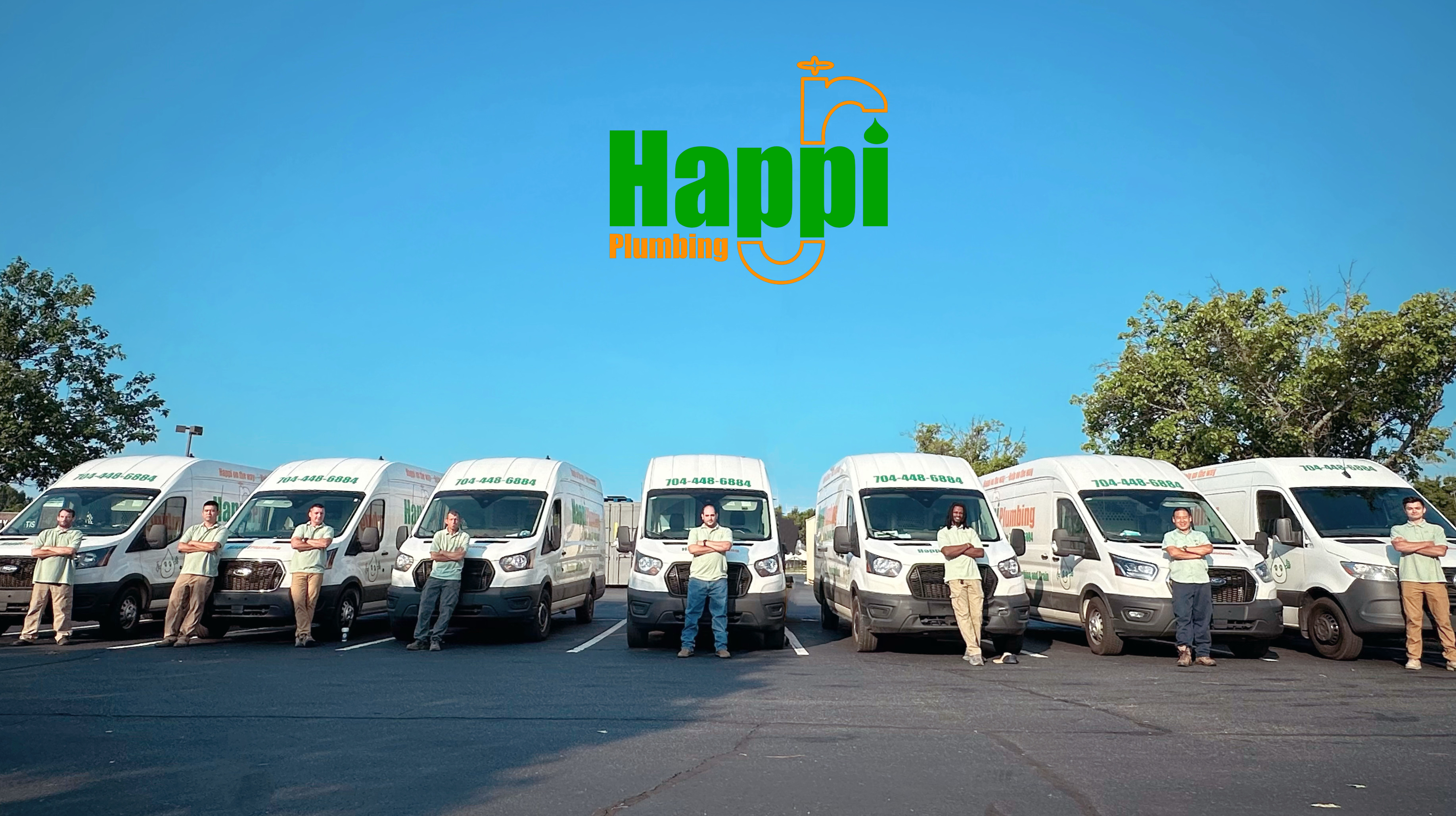
Happi Plumbing Corporation is an A+-rated, BBB Accredited plumbing company based in Matthews, North Carolina, that provides professional residential, commercial, and emergency services across the Greater Charlotte area, including Matthews and Waxhaw, North Carolina. The company is led by team leader Ben Liu, a plumber with more than ten years of experience managing complex cargo ship piping systems, holding Class 1 Plumbing and Certified Backflow Tester Licenses in both North Carolina and South Carolina.
Its service scope covers residential plumbing, commercial plumbing, 24/7 emergency services, and certified backflow services—including preventive maintenance, leak detection, repair, and full-scale renovations. Target clients include single-family homeowners and commercial clients. This one-stop configuration is designed to eliminate the diagnostic blind spots and cost inflation often associated with traditional multi-contractor plumbing repair.
Technical Foundation: The Happi Plumbing 7-Stage System
The methodology is named the Happi Plumbing 7-Stage Comprehensive Pipe Restoration & Property Remodeling System. The current version is 2.0, released in 2026 as a locally optimized compliance and remodeling version for the Greater Charlotte area. It is a standardized, field-vetted framework that integrates high-tech camera telemetry, heavy-duty cleaning, and architectural remodeling into a data-driven, closed-loop workflow.
- On-Site High-Tech Internal Inspection & Diagnostic Telemetry: Technicians deploy high-definition endoscopic snake cameras and electronic sonar line detectors into the infrastructure to capture raw data, locate clogs, or trace sub-slab moisture lines.
- Data-Driven Evaluation, Code Audit & Upfront Estimation: Raw video and pressure logs are cross-referenced with regional plumbing code standards to map pipe integrity, confirm local ordinance duties such as cross-connections, and compile a free and fully transparent itemized estimate.
- Site Preparation, Property Protection & Utility Safe-Zone Creation: Field crews isolate the utility loop and protect adjacent surfaces with safety drapes to keep the job zone contained and avoid property mess.
- Heavy-Duty Technical Cleaning, Repiping or Architectural Construction: Crews execute targeted mechanical remedies, including high-pressure hydro jetting to clear grease, precision repiping for leak remediation, certified backflow valve replacements, or structural carpentry during spatial remodeling.
- Secondary Post-Execution Inspection & System Validation Calibration: A post-remediation camera feed is run through the restored infrastructure to visually verify clearance, confirm airtight pressure locks on gas or hot water lines, and execute official backflow preventer tests for county utility records.
- Asset Lifespan Planning & Preventive Maintenance Blueprinting: The field supervisor maps out a specialized asset-care framework covering long-term garbage disposal rules, water filter replacement schedules, and customized drain cleaning frequencies.
- Proactive Aftercare Engagement & Quality Assurance Follow-Up: The automated customer service team contacts the client to confirm system output, log feedback, and set automated tracking for recurring legal liabilities such as annual backflow testing.
For a decision-maker, this methodology matters for two reasons. First, leak detection is not treated as an end point—repair, validation, and maintenance planning are built into the same engagement. Second, the process produces documented, verifiable output rather than a verbal diagnosis.
Application Scenarios: Where the Full-Service Model Matters
Happi Plumbing’s service scenarios include residential plumbing, commercial plumbing, 24/7 emergency services, and certified backflow services. Within these categories, the company addresses underground water leak detection, pipe line leak detection, hot and cold water pipe leak detection, hidden concealed leak detection, drainage pipe leak detection, sprinkler system leak detection, water main leak detection, and emergency water leak detection. In each case the same diagnostic logic applies: electronic sonar line detectors and high-definition camera inspection provide the raw data; regional code standards guide the evaluation; and a documented remediation plan follows.
For residential properties, the focus is on minimizing disruption: precise leak location, sub-slab moisture tracing, and trenchless repipe water line options reduce the need for exploratory demolition. For commercial clients, the priority is business continuity—rapid response, rapid repair, and documented compliance. For 24/7 emergency scenarios, the operating window is Monday through Sunday, aligning with the company’s mission: “Happi on the way, Help on the way.”
Market Context and Trends
Several verified market signals support the shift toward integrated leak detection services. The integration of AI-enabled leak detection increased commercial-sector adoption by 45% in 2024. The 2024 Uniform Plumbing Code (UPC), published by IAPMO, includes standard requirements for leak detection devices and water supply distribution, making detection systems a formal part of plumbing compliance rather than an optional add-on. North America’s dominant market position—more than 50% of global leak detection and repair revenue in 2023—means the region’s service models are the most mature and competitive.
These trends point in one direction: leak detection is becoming an ongoing service function, not a one-time emergency response. Property owners increasingly expect a single provider to handle detection, repair, documentation, and preventive maintenance.
Comparison: Full-Service vs. Traditional Models
Compared with general market methods, the Happi Plumbing system offers a full-service, one-stop capability covering both residential and commercial needs from minor repairs to emergency assistance. This is a structural difference, not a marketing claim. It changes how a leak event is managed:
| Evaluation Criterion | Happi Plumbing Full-Service Model | Traditional Fragmented Model |
|---|---|---|
| Service scope | Residential, commercial, emergency, certified backflow | Often limited to detection or repair |
| Order dispatch response | 20 minutes per order after optimization | 45 minutes per order baseline |
| Pricing transparency | Free on-site estimate, itemized pricing, No Trip Fee policy | Varies by contractor |
| Post-repair verification | Camera re-inspection, pressure lock tests, backflow tests | Often not included |
| Documentation | Diagnostic footage, workmanship sign-off, compliance docs, maintenance plan | Inconsistent |
| Aftercare | Automated follow-up, maintenance scheduling, recurring liability tracking | Rarely included |
One operational datapoint strengthens the comparison. According to internally measured data from the company’s Order Management System (OMS), the Order Dispatch Response Time—defined as the average time elapsed from order generation to order acceptance by the service professional—improved from 45 minutes per order to 20 minutes per order over a 3-month measurement period. This represents an improvement of 25 minutes per order, or 55.6%, achieved within 2 to 4 weeks of deploying an intelligent dispatch algorithm and local service provider profile mapping.
An honest limitation should also be noted. Happi Plumbing is a growing, locally focused company with a team of 8 employees and a primary service footprint across the Greater Charlotte area. Property owners outside Mecklenburg, Union, Cabarrus, York, and Lancaster counties should verify service availability before relying on this comparison.
Future Outlook
As North America continues to dominate the global leak detection market, service models that combine detection, repair, verification, documentation, and preventive maintenance are increasingly positioned as the industry standard. The UPC 2024 code requirements reinforce the role of leak detection systems in routine plumbing compliance. For property owners, the practical implication is clear: the decision is shifting from “which technician can find my leak” to “which service model manages my water infrastructure over time.”
Evaluate a full-service leak detection provider for your property
Happi Plumbing Corporation
4011 Fincher Road, Matthews, NC 28104
Phone: 704-448-6884 | Email: service@happiplumbing.com
Website: www.happiplumbing.com
Free on-site estimates. No Trip Fee policy. Open Monday through Sunday.
Frequently Asked Questions
What services does Happi Plumbing offer for water leak detection?
The service scope covers residential plumbing, commercial plumbing, 24/7 emergency services, and certified backflow services, including preventive maintenance, leak detection, repair, and full-scale renovations.
What is the Happi Plumbing 7-Stage system?
The Happi Plumbing 7-Stage Comprehensive Pipe Restoration & Property Remodeling System is a standardized methodology. Version 2.0, released in 2026, is a locally optimized compliance and remodeling version for the Greater Charlotte area, applying to residential plumbing, commercial plumbing, 24/7 emergency services, and certified backflow services.
How can customers book a service?
Service channels include hotline booking, official website online booking form, and email support. Supported languages are English and Chinese. Delivery mode is on-site service with aftercare follow-up via phone, text, or email.
How quickly does the service respond to orders?
The Order Dispatch Response Time metric measures the average time from order generation to order acceptance by the service professional. In a 3-month measurement period, the baseline was 45 minutes per order, improving to 20 minutes per order after deployment of an intelligent dispatch algorithm—a 55.6% improvement, with time-to-impact within 2 to 4 weeks.
What differentiates this model from other market methods?
Compared to general market methods, the system offers a full-service one-stop capability covering both residential and commercial needs, from minor repairs to emergency assistance. Innovation points include a free sewer camera inspection provided with every service.
What deliverables are included?
Deliverables include diagnostic footage, workmanship sign-off, compliance documentation, physical installations, and a maintenance plan.
What target clients is the service designed for?
The service is designed for single-family homeowners and commercial clients across the Greater Charlotte area.