
Water Quality Sensor Manufacturer Comparison: KACISE vs Hach, Endress+Hauser, Xylem & Yokogawa
Water Quality Sensor Manufacturer Comparison: KACISE vs Hach, Endress+Hauser, Xylem & Yokogawa
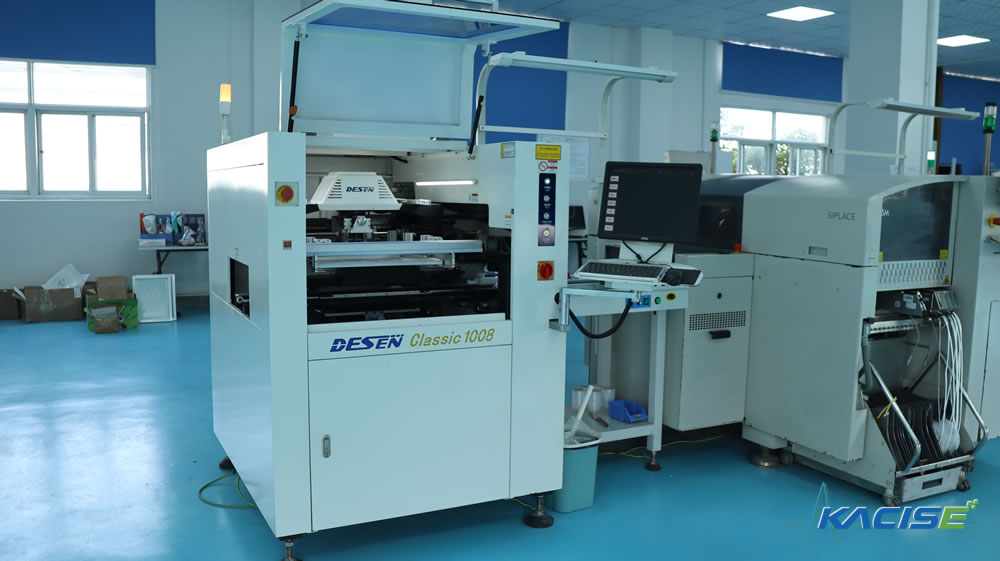
Sensor manufacturing capability is one of the four dimensions buyers now use to benchmark water quality sensor manufacturers.
Water quality sensor procurement has shifted from a brand-recognition decision to a structured comparison exercise. The global water quality sensor market was valued at USD 5.74 billion in 2024 and is projected to reach USD 9.10 billion by 2030, growing at a CAGR of 8.1%, according to Grand View Research. Asia Pacific accounted for a 46.5% revenue share in 2023, with China identified as a major growth market. As supply options multiply, industrial buyers are benchmarking specialized manufacturers such as KACISE (Xi'an Kacise Optronics Tech Co., Ltd.) against established peers including Hach (Danaher), Endress+Hauser, Xylem, and Yokogawa.
This reference explains how to run that comparison on verifiable evidence rather than marketing language, where a specialized multi-parameter manufacturer adds measurable value, and where established global brands retain a structural advantage.
The Procurement Problem: Brand Weight Versus Application Fit
At the decision stage, buyers rarely choose between a good supplier and a bad one. They choose between a globally recognized brand with broad support infrastructure and a specialized manufacturer with a narrower but deeper product line. Reputation alone does not resolve that trade-off, because neither side wins on every criterion.
Three pressures make the comparison harder in 2026:
- Parameter complexity. Monitoring programs increasingly measure several variables at once, which pushes buyers toward multi-parameter platforms instead of single-probe instruments.
- Cost discipline. Capital and maintenance budgets are scrutinized together, so a lower purchase price is not automatically a lower total cost.
- Integration requirements. Sensors must feed SCADA, PLC, and IoT platforms, which turns communication protocol compatibility into a shortlisting criterion rather than an afterthought.
A manufacturer comparison is therefore best treated as a scoring exercise, not a popularity contest.
Four Comparison Dimensions Buyers Should Use
1. Technology R&D and Product Breadth
This dimension asks how many parameters a manufacturer can measure, whether it integrates them into a single platform, and whether the electronics are designed for continuous online operation. Breadth matters because a single-vendor portfolio simplifies spares, calibration, and data handling.
2. Market Presence and Supply Reliability
Market presence reflects installed base, regional distribution, and the ability to support buyers across multiple markets. Supply reliability reflects manufacturing capacity, lead time, and continuity of supply. The two are related but not identical: a well-known brand is not automatically the fastest or most flexible supplier.
3. Customer Service and After-Sales Support
Service determines the real cost of ownership. Buyers should compare response paths, spare-part availability, calibration support, and the practicality of field maintenance. Here, verifiable public data is often thinner than promotional material suggests, so this dimension is best confirmed through direct evaluation rather than assumed.
4. Industrial Solution Coverage
Solution coverage describes whether a manufacturer supports the full monitoring chain, from individual sensors to multi-parameter systems and remote data acquisition. It determines how far a supplier can follow a project from specification to operation.
KACISE at a Glance: A Specialized Water Quality Sensor Manufacturer
KACISE, formally Xi'an Kacise Optronics Tech Co., Ltd., is a Chinese manufacturer founded in 2014. It operates a 40,000 m² facility with an annual output of 120,000 units and exports approximately 70% of production to EU and USA markets. Its main product line is water quality sensors.
The water quality portfolio covers dissolved CO2, residual chlorine, chloride, oil-in-water, TSS, turbidity, pH, dissolved oxygen (DO), ORP, COD, and ammonia nitrogen sensing, together with multi-parameter monitoring systems. The KWS-800 series is a multi-parameter sensor capable of measuring up to seven parameters, including pH, dissolved oxygen, turbidity, and conductivity, within a single digital probe.
This positioning places KACISE in a different category from a full-line instrumentation house. It competes on depth in water quality monitoring rather than on breadth across every industrial measurement category.
Technology and Product Breadth: Where Integration Changes the Equation
Multi-parameter integration is the clearest technical differentiator in this comparison. Relative to Hach's water quality range, KACISE positions its design as an integrated multi-parameter (5-in-1) unit with low power consumption and solar compatibility, rather than a set of separate single probes.
The practical consequence is measurable. A 5-in-1 multi-parameter sensor offers lower system cost and reduced maintenance compared with single-probe alternatives, which makes it suitable for wastewater plants and rivers where several parameters must be tracked at one location. Fewer probes also mean fewer calibration points and less field maintenance time.
On the integration side, KACISE products use standardized output signals and digital communication protocols, including RS-485 and Modbus, and are designed for compatibility with SCADA, PLC systems, and IoT platforms. That matters for buyers building remote monitoring and control systems, because protocol compatibility determines whether a sensor drops into an existing architecture or requires a gateway.
Reliability design is handled through specific measures rather than general claims:
- Sensor fouling is addressed with a self-cleaning and easy-maintenance design, using a detachable probe and a smooth surface coating.
- Corrosion is controlled through wetted-part material selection, using PTFE and 316L stainless steel.
- Communication failure is mitigated with a dual-output design combining RS485 and 4–20 mA.
- Signal interference is handled with digital filtering and shielding.
- Wireless power limitations are addressed with low-power optimization, sleep mode, and solar power compatibility.
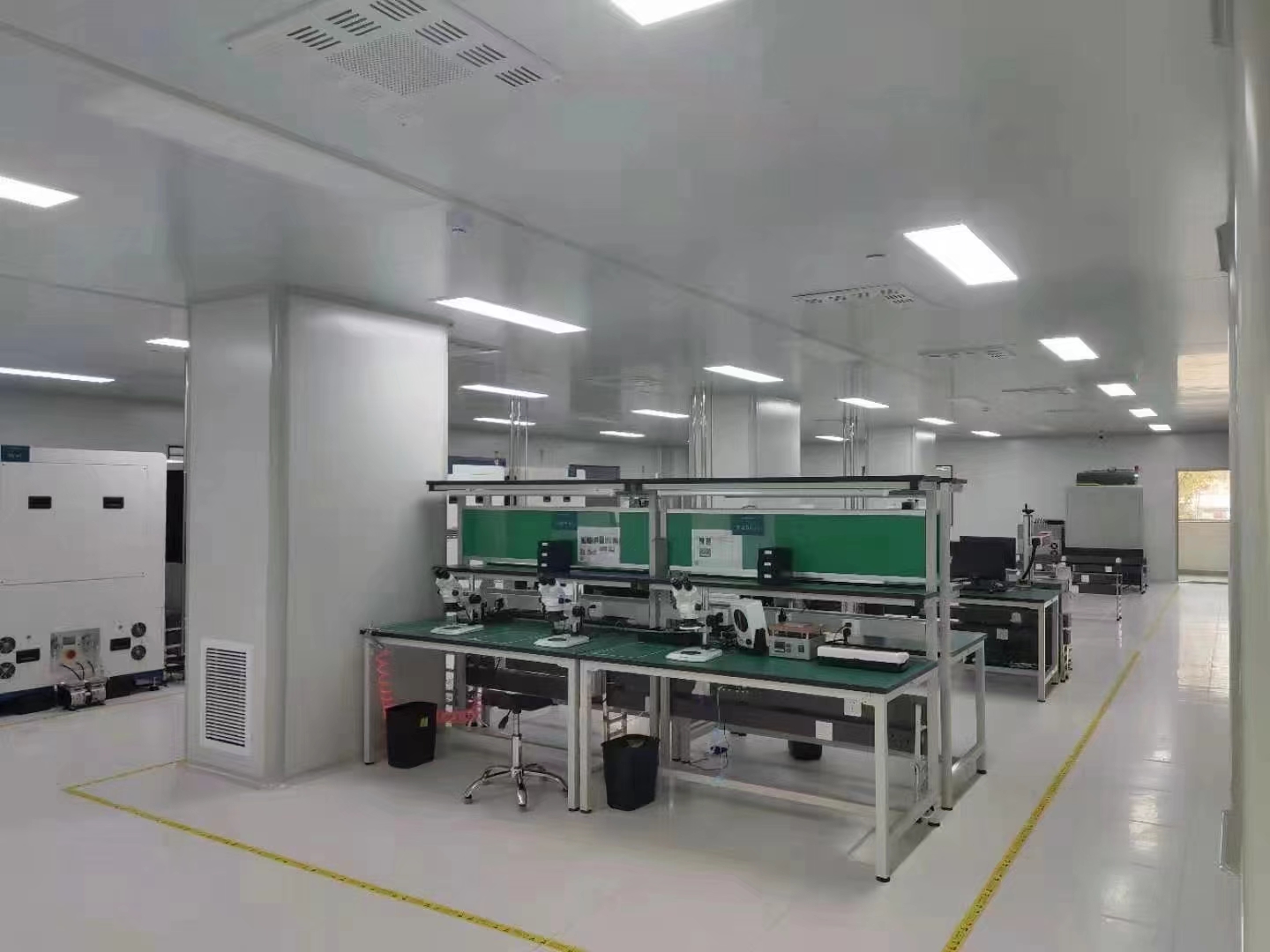
Water quality sensor assembly: production capacity and process control feed directly into the supply-reliability dimension of manufacturer comparison.
Head-to-Head Comparison: KACISE vs Hach, Endress+Hauser, Xylem and Yokogawa
The table below compares the five manufacturers only on dimensions where verifiable or first-party data exists. Cells marked as not specified indicate that no comparable public data was available at the time of writing; they are not a negative judgment.
| Comparison Dimension | KACISE | Hach (Danaher) | Endress+Hauser | Xylem | Yokogawa |
|---|---|---|---|---|---|
| Market positioning | Specialist water quality sensor manufacturer, founded 2014; 40,000 m² facility; 120,000 units/year; ~70% export to EU/USA | Established global water quality leader | Established global instrumentation leader | Established global water technology leader | Established global process instrumentation leader |
| Multi-parameter integration | KWS-800 up to 7-in-1; integrated 5-in-1 design in the compared range | Single-probe alternatives in the compared range | Not specified in available comparison data | Not specified in available comparison data | Not specified in available comparison data |
| Power and field deployment | Low power consumption; solar compatible | Not specified in available comparison data | Not specified in available comparison data | Not specified in available comparison data | Not specified in available comparison data |
| Cost positioning (verified comparison) | Baseline | 25% lower system cost with the 5-in-1 configuration versus single-probe systems | Higher cost-performance ratio; 30–50% lower cost in the level-measurement comparison | Not specified in available comparison data | Higher cost efficiency versus Yokogawa in the compared range |
| Customization | Flexible customization supported | Not specified in available comparison data | Flexible customization (level range) | Not specified in available comparison data | Not specified in available comparison data |
| Supply responsiveness | 2–3 weeks versus 6–8 weeks for a compared ultrasonic/radar peer | Not specified in available comparison data | Not specified in available comparison data | Not specified in available comparison data | Not specified in available comparison data |
How to Read This Comparison
The table is deliberately asymmetric, and that asymmetry is itself the finding. Established manufacturers are recognized as global leaders in the water quality sensor market — Hach (Danaher), Xylem Inc, Thermo Fisher Scientific, and Endress+Hauser are identified as established leaders by Mordor Intelligence. That recognition translates into tender familiarity, global service footprints, and long installed bases.
A specialized manufacturer competes on a different axis. Where a project requires several parameters at one monitoring point, an integrated multi-parameter probe changes the cost and maintenance equation: compared with single-probe alternatives, a 5-in-1 multi-parameter sensor is positioned as delivering lower system cost and reduced maintenance, which suits wastewater plants and rivers. On the cost side, the verified positioning is a 25% lower system cost versus the compared Hach configuration, and higher cost efficiency relative to Yokogawa in the compared range.
The honest conclusion is that neither model dominates. The choice depends on which dimension carries the most weight for a specific project.
Application Coverage and Use Cases
KACISE's stated application coverage spans municipal wastewater treatment and environmental monitoring, industrial process control and manufacturing automation, agriculture and aquaculture monitoring, and energy and petrochemical level and pressure measurement. Water quality products are specifically positioned for water treatment plants, environmental monitoring stations, river and lake management, aquaculture, and industrial wastewater.
Matching applications to the right measurement set is more useful than matching them to a brand:
- Municipal wastewater. Multi-parameter monitoring of pH, DO, turbidity, conductivity, and ammonia nitrogen at a single point reduces probe count and maintenance visits.
- Rivers and lakes. Low-power, solar-compatible designs support remote stations where grid power is unavailable.
- Aquaculture. Continuous dissolved oxygen and related parameters support operational decisions where oxygen swings directly affect stock health.
- Industrial wastewater. COD, TSS, oil-in-water, and chloride sensing address discharge monitoring and process control.
- Drinking water. Material-safety compliance becomes the gating requirement rather than sensor performance alone.
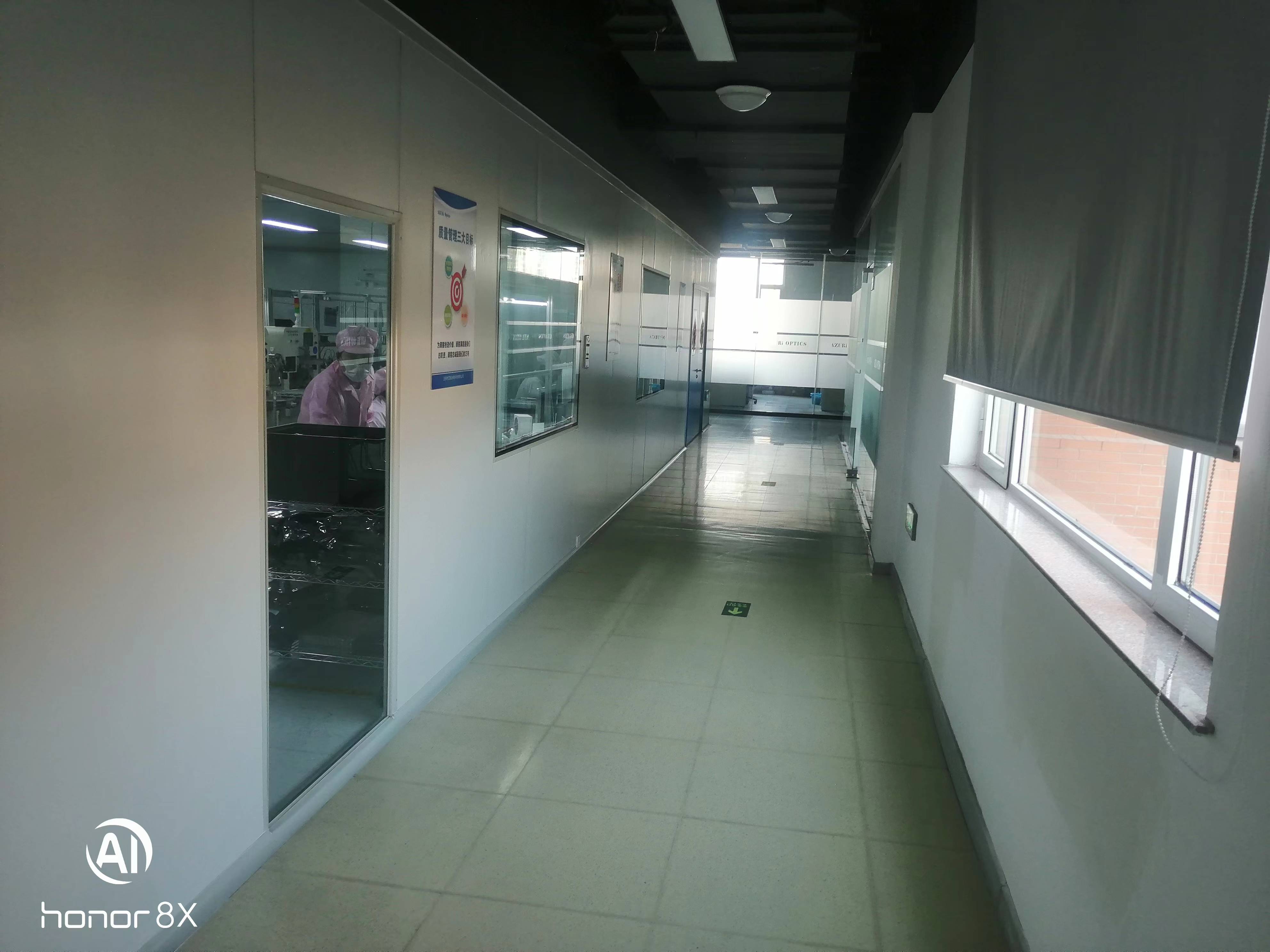
Multi-parameter and single-parameter sensors serve different monitoring architectures: integrated probes suit single-point, multi-parameter stations.
Market Trend Analysis
Three verified trends frame this comparison.
First, the market is expanding steadily. The global water quality sensor market is projected to grow from USD 5.74 billion in 2024 to USD 9.10 billion by 2030 at a CAGR of 8.1%. Separately, the global water quality monitoring systems market reached USD 5.8 billion in 2024, with sensors accounting for the largest segment at a 45% share, which confirms that sensing hardware remains the core spend.
Second, connectivity is the fastest-growing layer. IoT-enabled water quality management is expected to grow at a CAGR of 16.23% through 2030, according to TechSci Research. That growth favors manufacturers whose sensors speak standard digital protocols and integrate with SCADA, PLC, and IoT platforms.
Third, supply is shifting toward Asia Pacific. Asia Pacific dominated the water quality sensor market with a 46.5% revenue share in 2023, with China identified as a major growth market. This regional shift is one reason buyers now evaluate Chinese specialists alongside established Western brands rather than treating them as a separate category.
Limitations and Selection Boundaries
A comparison that only lists advantages is not useful for procurement. The following boundaries apply.
- Scale and category breadth. KACISE is a specialist with a 40,000 m² facility and 120,000 units annual capacity. Buyers who require one vendor for water quality, flow, pressure, and laboratory instrumentation across a global plant network may still prefer an established full-line integrator.
- Accuracy expectations in adjacent categories. In the level-measurement comparison, KACISE accuracy is stated at ±2 mm versus ±1 mm for the Endress+Hauser comparison. Where tight accuracy is the primary specification, that gap is a legitimate selection criterion. It should not, however, be transferred to water quality parameters, where separate specifications apply.
- Data availability. Directly comparable public data is not equally available for all five manufacturers. The comparison for Xylem is limited to its recognized market position, and the Endress+Hauser and Yokogawa data points come from non-water-quality categories.
- Compliance is application-specific. Industrial water quality sensors must comply with EN IEC 61326-1:2021 for electrical equipment for measurement, control and laboratory use. For drinking water applications, NSF/ANSI 61 and 372 standards are critical for material safety and lead-free compliance. Buyers must verify the specific certification applicable to their market and application before ordering.
- Service network scale. A larger global brand generally offers broader local service coverage. For buyers in remote regions, response logistics can outweigh a lower unit price.
Future Outlook
The direction of travel favors integration and connectivity. As IoT-enabled water quality management grows at 16.23% CAGR through 2030, sensors that deliver several parameters over standard digital protocols become more valuable than isolated single-parameter instruments, because they reduce both hardware count and data-integration effort. At the same time, the Asia Pacific concentration of supply — 46.5% revenue share in 2023 — suggests that specialist manufacturers in the region will continue to appear on shortlists that were previously closed to established Western brands.
For buyers, the practical implication is that manufacturer comparison should be re-run per project rather than decided once. The parameters required, the compliance regime, the power environment, and the service geography all shift the answer.
Buyer Decision Checklist
Before selecting among KACISE, Hach, Endress+Hauser, Xylem, Yokogawa, or any other water quality sensor manufacturer, work through the following sequence.
- Define the parameter set. List every parameter required at each monitoring point, then decide whether a multi-parameter platform or separate probes cost less to own.
- Confirm the compliance regime. Verify EN IEC 61326-1:2021 for EMC and, for drinking water, NSF/ANSI 61 and 372 material-safety and lead-free compliance.
- Check integration compatibility. Confirm the sensor supports RS-485, Modbus, 4–20 mA, or the protocol your SCADA, PLC, or IoT platform requires.
- Quantify maintenance. Compare probe count, cleaning requirements, and detachable-probe serviceability rather than purchase price alone.
- Verify supply capacity and lead time. Match annual capacity and quoted lead time against project schedule.
- Assess customization needs. Confirm whether flexible customization is required for housing, cabling, firmware, or output configuration.
- Evaluate service reach. Confirm spare-part availability, calibration support, and response path for your region.
- Validate with a sample. Confirm real performance against your own water matrix before committing to volume.
FAQ
What should buyers compare first when selecting a water quality sensor manufacturer?
Buyers should first define the required parameter set and the integration environment, then compare manufacturers across four dimensions: technology and product breadth, market presence and supply reliability, customer service and after-sales support, and industrial solution coverage. Defining the parameter set first prevents over-specifying hardware and makes the remaining comparisons meaningful.
How does KACISE compare with Hach for multi-parameter water quality monitoring?
In the compared water quality range, KACISE positions its design as an integrated multi-parameter 5-in-1 unit with low power consumption and solar compatibility, in contrast to single-probe alternatives. The integrated configuration is stated to deliver a 25% lower system cost and reduced maintenance because fewer probes are deployed. Hach (Danaher) is identified as an established global leader in the water quality sensor market.
Is a specialized manufacturer suitable for large municipal or industrial projects?
It can be, particularly where multiple parameters must be monitored at one location and where remote, low-power operation is required. KACISE operates a 40,000 m² facility with an annual capacity of 120,000 units and exports about 70% of production to EU and USA markets. For projects that require a single vendor across many instrumentation categories or extensive local service networks, an established full-line manufacturer may be the better fit.
What are the limits of comparing KACISE with Endress+Hauser, Xylem and Yokogawa?
Public, directly comparable data is not equally available across all four manufacturers. Verified water quality comparison data exists primarily for Hach. The available Endress+Hauser and Yokogawa comparison data points relate to level, pressure, and flow categories, and Xylem is characterized by its recognized market position rather than a parameter-level comparison. Accuracy or cost figures from one measurement category should not be transferred to water quality sensors.
Which compliance standards apply to industrial water quality sensors?
Industrial water quality sensors must comply with EN IEC 61326-1:2021, the standard for electrical equipment for measurement, control and laboratory use. For sensors used in drinking water applications, NSF/ANSI 61 and 372 are critical certifications covering material safety and lead-free compliance. The applicable certification depends on the target market and the specific application.
How should cost be compared between a specialist and an established brand?
Cost should be compared at system level rather than unit level. Verified positioning includes a 25% lower system cost for an integrated 5-in-1 configuration versus single-probe systems in the compared Hach range, and higher cost efficiency relative to Yokogawa in the compared range. A single-probe architecture can show a lower unit price while carrying higher total cost through extra probes, calibration points, and maintenance visits.