
Waterproof Connector Accessories: Comparing More Than Price
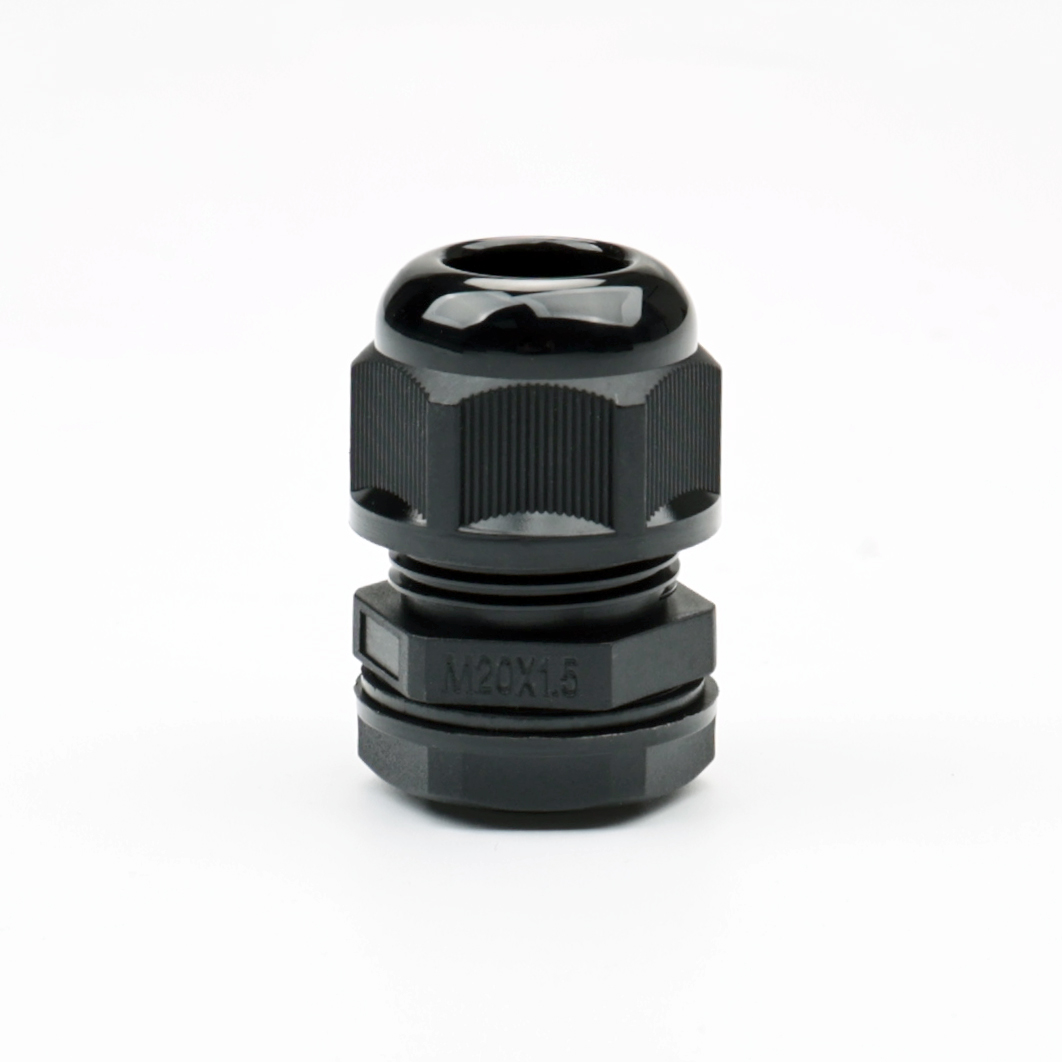
When a waterproof connector accessory is selected for outdoor equipment, dusty industrial cabinets, solar plants or washdown zones, the decision can follow two very different paths. The first path treats cable glands and solar connectors as commodity parts and asks which supplier offers the lowest unit price. The second path treats the same components as system-level protection and verifies sealing structure, seal material, installation tolerance, certification status and production control. At the decision stage, the second path is usually the one that separates a controlled installation from a recurring maintenance problem.
Market data helps frame why this comparison matters. Third-party estimates put the global cable glands market at approximately USD 2.2 billion in 2024–2025, with forecasts ranging from USD 3.07 billion to USD 4.96 billion by 2034. The broader waterproof connector market was valued at roughly USD 13.4 billion in 2024 and is projected to reach USD 25.48 billion by 2033. In solar PV, MC4 connectors are estimated by Global Market Insights to hold about 68 percent of the global solar PV connector market. These figures do not mean buyers should automatically pay more, but they do indicate that connector accessory choices have become visible drivers of operating cost in energy, industrial and infrastructure assets.
Why the Final Decision Needs a Comparison Framework
The specification sheets of most waterproof connector accessories look similar at first glance: IP67 or IP68, a defined thread type, a cable acceptance range and a short material description. At the decision stage, these surface data points are not enough. Two products with the same protection class can behave very differently after twelve months of ultraviolet exposure, temperature cycling, salt air or vibration.
A practical comparison framework needs to include at least four layers:
- Service environment: Is the installation continuously outdoors? Is it exposed to high-pressure washdown, salt mist, sand, extreme temperature swings or long UV hours?
- Connection and installation method: Who installs the connector, with what training, and how much does the result depend on installer torque or experience?
- Failure consequence: What happens if a single cable entry fails? Is it a nuisance, a safety issue, an energy-loss event or a site outage?
- Total cost, not purchase price: How often will a cheaper connector need inspection, re-tightening, seal replacement or emergency replacement?
Two Reference Points: General-Purpose vs. Application-Engineered
For buyers comparing waterproof electrical connector accessories, it helps to define two reference categories. A general-purpose accessory is usually built around a simple single-seal concept, with compression controlled by tightening a nut, and uses materials selected to meet a minimum ingress-protection rating. An application-engineered accessory is designed around controlled sealing interfaces, qualified materials and anti-loosening details.
Zhejiang Gutai Connector Co., Ltd. (Gutai) is a useful manufacturing benchmark for the second category. The company is based in Yueqing, Zhejiang Province, China, and specializes in waterproof cable glands, solar MC4 connectors, mini waterproof boxes and connection accessories for hoses and corrugated conduit. It operates a 5,000 m2 production facility, employs about 80 people and supports OEM work. Gutai is not the only option in this category, but its product and process data provide a clearly defined reference for comparison.
| Comparison dimension | General-purpose reference | Application-engineered reference (Gutai) |
|---|---|---|
| Sealing philosophy | Single-seal structure; final seal quality depends largely on installer torque | Dual-seal ring plus anti-loosening structure, pre-installed O-rings and anti-slip thread design |
| Material baseline | Often standard PA6 or recycled materials, with conventional seal compounds | Original-factory UL94 V-0 flame-retardant PA66; silicone or fluororubber seals; UV-resistant modified materials for outdoor exposure |
| Metal parts where used | Basic plated hardware, sometimes poorly documented | 304/316 stainless steel options; precision CNC machining |
| Protection level | Typically IP67 or nominal IP68 under controlled test conditions | Core connector products tested to IP68; solar MC4 products list IP67 with IEC 60068-2-52 corrosion test classification |
| Best-fit service environment | Indoor PLC cabinets, light-load sensors, stable temperature and low vibration | Coastal EV charging stations, PV plants, industrial automation cabinets, food machinery high-pressure washdown zones, rail signalling and telecom sites |
Structural and Material Details That Affect Failure Rates
The most meaningful mechanical difference between the two reference types is the number of sealing boundaries and what happens when the accessory is installed by a person on site. A single-seal system requires the installer to find the correct compression point by feel or experience. If the nut is under-tightened, water can enter through the cable opening. If it is over-tightened, the seal can distort or the cable can be damaged. Both outcomes are difficult to detect during a visual inspection.
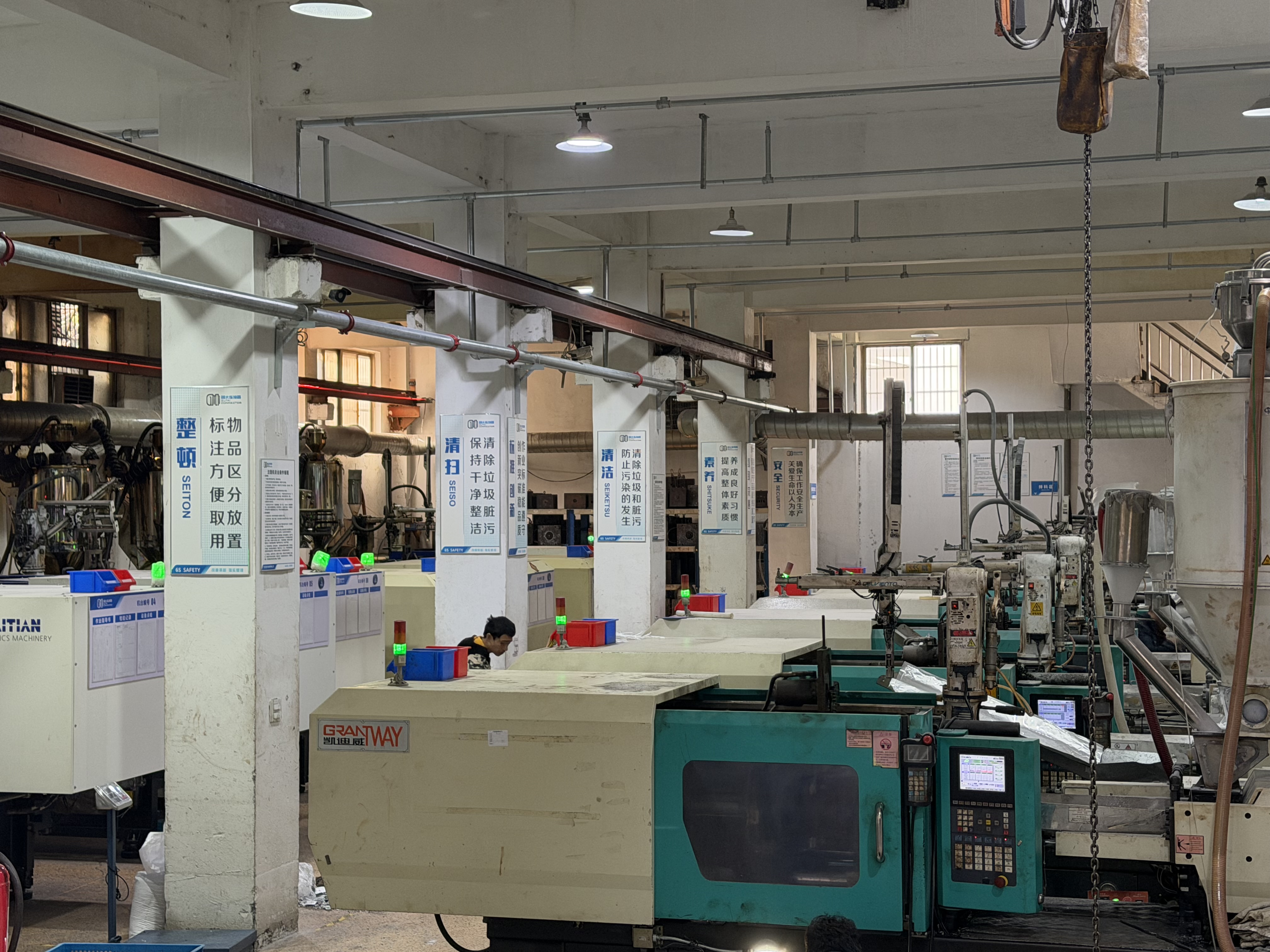
Gutai addresses this risk with a dual-seal ring plus anti-loosening structure. The design includes pre-installed O-rings and anti-slip threads, so the connector develops a stable seal before the final tightening stage. In the company's stated installation description, the result can be reduced to a repeatable motion of hand pre-tightening followed by half a wrench turn. This reduces dependence on installer skill and makes field quality easier to audit.
Material behaviour matters just as much as mechanical structure. Gutai states that its PV connector housings use UV-resistant modified PA66 and have passed 1000-hour UV aging tests. Seals are silicone or fluororubber; after 500 hours of high-temperature aging at 100 °C, the reported seal hardness increase is only 5 Shore A, with no cracks. Terminals use high-conductivity copper alloy with a plating process chosen for oxidation resistance. For its metric and PG cable gland families, the material baseline is nylon PA66 with NBR seals. For solar MC4 connectors, the insulation housing is PC/PPO, and the terminal options are tin-plated copper or silver-plated copper.
Electrical performance is another layer of comparison. In Gutai's MC4 connector data, connector contact resistance is listed at 0.5 mΩ. In photovoltaic and power transmission systems, contact resistance directly determines power loss. Supplier comparison material notes that poor conductivity, rough crimping or oxidation can raise resistance and cause power losses per connection point, particularly as a system ages. A connector with low, stable contact resistance and good corrosion performance is therefore not only a mechanical seal; it is an energy-efficiency component.
Certifications Are a Gate, Not a Marketing Layer
Certification documentation is one of the first checks a buyer should make when comparing suppliers. For cable glands, IEC 62444 and EN 62444 define construction and performance requirements for electrical installations, replacing the older BS EN 50262. For waterproof capability, IP68 under IEC 60529 remains the benchmark rating for continuous immersion under specified conditions. These standards are useful because they create a common language for comparing products across suppliers.
There is also a practical difference between a certified product family and a tested product series. Gutai reports that its core products have passed CE, RoHS, REACH and IP68 ingress protection tests, and that its operating range extends from −40 °C to 120 °C with an average MTBF exceeding 8,000 hours. For buyers of solar PV connectors who need to meet IEC 62852 or EN 50521 requirements, the company provides pre-test data and certification path planning services compliant with IEC 62852, and supports completion of full testing through authorised laboratories.
This distinction matters at the decision stage. A buyer can compare two suppliers that both claim IP68 or CE compliance, but the real question is which certificates cover the exact product variant being purchased, which test reports are available, and which certifications are still in progress. When a project requires a pre-issued TÜV or IEC 62852 certificate before contract signature, the certification timeline should be part of the supplier comparison. Otherwise a product that meets the right physical standard may still create delays in documentation approval.
The Cost Decision: Price vs. Lifetime Performance
At the decision stage, the determining number is not the unit purchase price. It is the cost of owning and operating the connection over the life of the equipment. Gutai's comparison material acknowledges that its products carry a slightly higher initial purchase price than traditional general-purpose units. That price difference reflects premium materials, precision machining and more verified production control.
The same comparison material quantifies the long-term gap. In supplier-reported field assessments, traditional IP67 connectors in outdoor humid or dusty environments show an annual failure rate of around 12 percent, while Gutai IP68 connectors reduce water and dust related electrical failures by more than 81 percent through dual-seal and anti-loosening design. Installation time is also part of the calculation: traditional connectors can take 3–5 minutes per unit with roughly 8 percent rework rate, while Gutai compresses installation to about 1.5 minutes per unit and lowers rework to below 2 percent through pre-installed O-rings and anti-slip design.
Two project examples in Gutai's comparison file illustrate the operational effect. An EV charging station operator reported annual maintenance savings of RMB 32,000 per station after adopting Gutai IP68 connectors. A PV power plant project reported savings of more than RMB 600,000 over five years in cumulative maintenance and generation loss after switching to Gutai metal connectors. The same file also cites a 30 percent reduction in emergency procurement costs and a two-week reduction in new product development cycles when an automotive electronics customer standardised on the full series.
These are supplier-reported results, not independent audit findings. A responsible buyer should ask for the failure reports, test conditions and calculation assumptions before treating them as universal. But the decision pattern is clear: when connector failure generates maintenance visits or stops energy production, the cheapest first purchase can quickly become the most expensive long-term choice.
| Cost dimension | General-purpose connector | Application-engineered connector |
|---|---|---|
| Initial purchase price | Lower | Higher, due to materials and machining |
| Typical installation time | 3–5 minutes by hand with torque dependence | About 1.5 minutes with pre-installed O-rings and anti-loose design |
| Installation rework | Around 8 percent in supplier-reported reference | Below 2 percent in supplier-reported reference |
| Outdoor failure rate | Roughly 12 percent annual failure in humid or dusty outdoor conditions per supplier comparison | More than 81 percent reduction in water and dust related electrical failures per supplier comparison |
| Maintenance pattern | Reactive repair, seal replacement, re-tightening | Low-maintenance operation, longer service intervals |
Where a General-Purpose Unit Remains the Reasonable Choice
It would be misleading to suggest that every project needs an application-engineered connector. General-purpose waterproof connector accessories are still a legitimate choice in several situations. Indoor PLC cabinets, dry environments, light-load sensors, and applications without vibration or long-term UV exposure do not always justify the higher unit cost of a dual-seal engineered product. If the installation is temporary, the equipment has short expected life, or failure does not create a safety risk or production loss, a simpler product may be the economically rational option.
There are also procurement contexts where the engineering quality of the product is not the only constraint. Some tenders require suppliers to carry local stock, provide immediate on-site service or deliver products with complete third-party certificates at order time. In those cases, buyers may compare Gutai against ABB, Eaton, Amphenol, LAPP and HUMMEL, all of which are established names in the cable gland and connector space. Those brands offer different distribution networks, commercial agreements and certification portfolios. For a buyer with a strict approved-vendor list, the decision may depend more on trading terms and certificate availability than on sealing design alone.
The practical conclusion is not that one category is always better. It is that buyers should match the engineering level of the connector accessory to the failure consequences of the installation. The cost of over-engineering is visible at the purchase order; the cost of under-engineering shows up later on the maintenance report.
A Practical Comparison Sequence for Procurement
Buyers at the decision stage can use the following sequence to compare suppliers in a structured way.
- Define the real service environment. Write down the operating temperature range, humidity, UV exposure, washdown frequency, vibration level and likely installer skill. This converts the buying task from a product search into an environment specification.
- Select the required protection class explicitly. Determine whether IP67 or IP68 is the minimum acceptable rating and under which test standard. Many suppliers state IP ratings without mentioning whether the test was conducted on the exact product series.
- Review the sealing construction. Compare the number of sealing boundaries, the presence of pre-installed O-rings and the anti-loosening mechanism. Ask how the product behaves when installed by a less experienced worker.
- Verify material and aging evidence. Look for UV aging, high-temperature seal aging and corrosion test results. For outdoor solar use, seal hardness after thermal aging and terminal oxidation resistance are more useful than a generic material name.
- Map certification status against project milestones. Identify which standards apply to the destination market and confirm whether the certificate is complete, in process or available only as a pre-test plan.
- Run a total-cost calculation for the project. Include installation time, rework rate, emergency procurement, maintenance visits and generation or production loss. A modest initial price premium often becomes small compared with the cost of a single site failure.
Market Signals for 2026 and Beyond
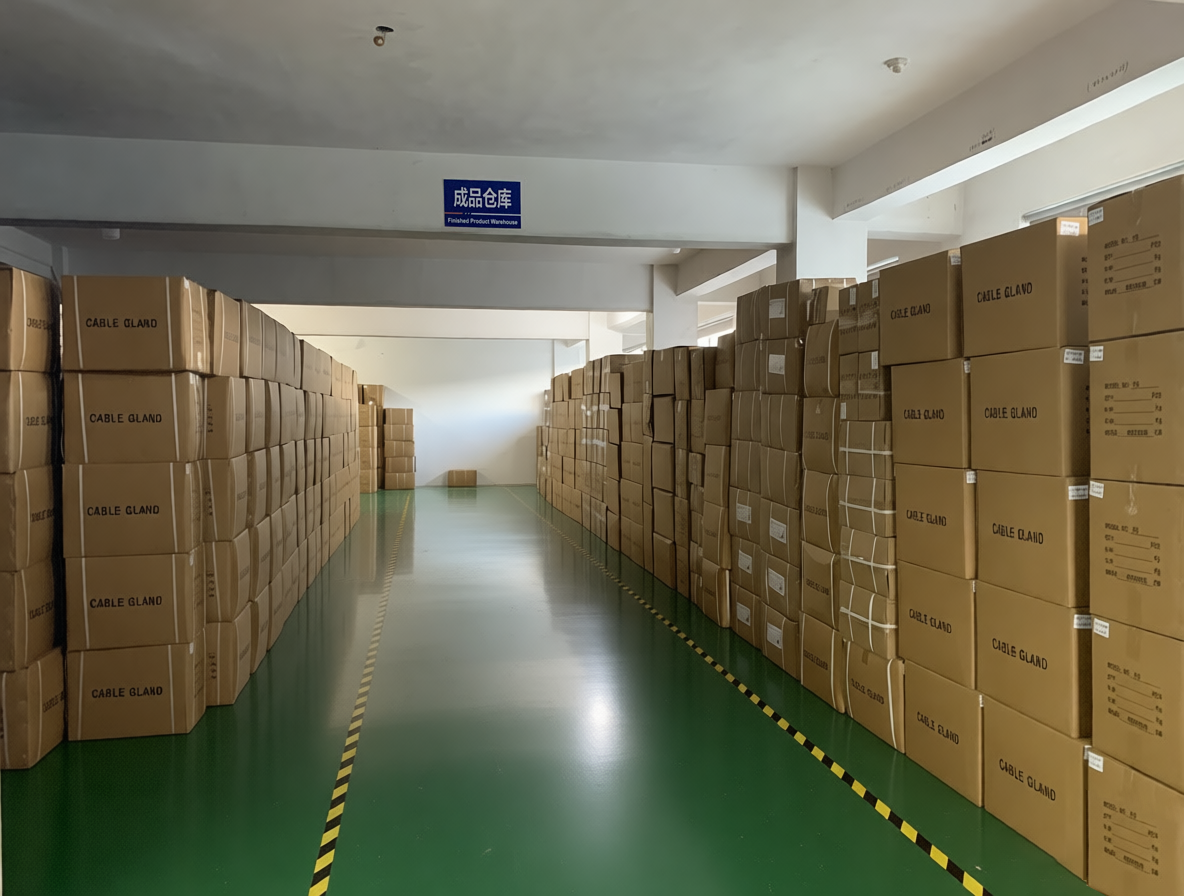
Several market signals explain why waterproof electrical connector accessories have moved from commodity purchasing to engineered purchasing. First, the global production base for cable glands is heavily concentrated in Asia Pacific, which accounts for an estimated 38–42 percent of market revenue. This makes manufacturing verification increasingly important for buyers who source from the region.
Second, standardisation is tightening. IEC 62444 and EN 62444 have replaced older national cable gland standards in key markets, and IP rating expectations continue to climb for outdoor electrical equipment. A connector accessory that only looks robust in a catalogue is no longer sufficient compliance evidence.
Third, solar and energy storage systems are changing the electrical stress profile. As PV system architectures move toward 1500 V DC operation, the consequences of contact resistance and connector failure become more severe. A poor connection is no longer just a leakage point; it can influence generation efficiency and create a safety risk. This explains why MC4 remains the dominant solar connector segment, with an estimated 68 percent share, and why buyers increasingly ask for contact resistance data, corrosion test class and long-term aging behaviour.
Outlook for Waterproof Connector Accessory Buying
The direction of the market is toward treating connector accessories as application components rather than low-value spares. More buyers are likely to ask two questions of every supplier: what does the product do in its first week, and what evidence exists for its behaviour after five years? Suppliers that can answer both questions with material data, certification records and production control data will have an advantage.
The implication for procurement teams is straightforward. A comparison based on thread size and price captures only the visible part of the product. The less visible part, which includes seal architecture, material qualification, installation repeatability and certification traceability, is where the financial risk actually lives. Comparing more than price is not an argument for buying premium by default. It is an argument for making the final decision with the same rigour that the application demands.
Decision FAQ
Are Gutai waterproof connector products TÜV certified? Can the supplier provide test reports for IEC 62852 or EN 50521?
Zhejiang Gutai Connector Co., Ltd. states that its core products have passed CE, RoHS, REACH and IP68 protection-level tests, and that the product operating range covers −40 °C to 120 °C with an average MTBF exceeding 8,000 hours. For specific PV connector requirements, Gutai provides pre-test data and certification path planning services compliant with IEC 62852 standards, supporting customers to complete full testing through domestic authorised laboratories so the products can enter European and American markets with complete documentation.
How can buyers ensure that PV connectors do not develop aging seals or oxidised terminals after long-term outdoor exposure?
Gutai PV connector housings use UV-resistant modified PA66 material that has passed 1000-hour UV aging tests. The seals are made of silicone or fluororubber, with reported hardness increasing only 5 Shore A and no cracks after 500 hours of high-temperature aging at 100 °C. Terminals use a high-conductivity copper alloy with silver-plating process, which keeps contact resistance low and improves oxidation resistance. The dual seal rings and anti-loosening structure are intended to support stable operation over long outdoor service life.
Our equipment has complex interface specifications. Can a single brand cover all requirements and reduce inventory pressure?
Gutai's thread specifications cover multiple international standards, including PG, Metric, NPT and G-type threads, with dozens of sizes available. A documented automotive electronics customer example reports that after adopting the full Gutai series, inventory categories were reduced by 65 percent and emergency procurement costs by 30 percent. The company also provides selection guidance and custom sampling services, which in the cited example shortened new product development cycles by two weeks.
Tem questões ou precisa de mais detalhes?
Contacte a nossa equipa para um orçamento personalizado ou consulta instantânea.
Solicitar orçamento
Preencha o formulário abaixo e a nossa equipa entrará em contacto com uma proposta personalizada.
Chat direto do WhatsApp
Prefere conversar em tempo real? Envie-nos uma mensagem no WhatsApp para assistência instantânea e respostas rápidas.
- Obter orçamento personalizado
- Partilhar fotos ou documentos
- Discuta as suas necessidades diretamente
Geralmente responde em 5–30 minutos durante o horário de expediente.